Yes, you can grow muscle while cutting, but the honest answer is more nuanced than a simple yes. For most people, especially beginners or those returning after a break, cutting can actually produce real muscle gains alongside fat loss. For experienced lifters, the realistic goal shifts more toward muscle retention and recomposition rather than dramatic new growth. Either way, you are not stuck choosing between losing fat and keeping muscle. To learn more about the underlying training adaptations, see how you can grow muscle while cutting, even in a calorie deficit. The right deficit size, enough protein, and smart training make both happen at once.
Can You Grow Muscle While Cutting? Evidence-Based Guide

Marcus Kellerman
24 Apr 2026

Muscle gain on a calorie deficit: what's actually possible

Research consistently shows that lean mass is maintained on average during caloric restriction combined with resistance training. A large meta-analysis found that when people diet with resistance training, pooled lean mass loss is roughly 0.3 kg and not statistically significant, while fat mass drops meaningfully. That means most people are holding on to nearly all their muscle while actively losing fat, which is a very different story than the old-school fear of losing everything you built the moment you eat less.
Whether you go beyond retention into actual new muscle growth depends heavily on three things: how trained you already are, how large your calorie deficit is, and how consistently you hit your protein and training targets. Beginners have a strong advantage here. Because their muscles are highly responsive to training stimulus, even a moderate deficit does not suppress muscle protein synthesis enough to block new growth. Trained athletes sitting at a lower body fat percentage with a more aggressive deficit are working against anabolic resistance and limited recovery capacity, which makes actual new growth much harder but not impossible.
The concept that ties all of this together is body recomposition: losing fat and gaining or maintaining muscle simultaneously. It is real, it is well-documented, and it happens most reliably when your deficit is moderate (not extreme), your protein is high, and your training volume stays up. If you are new to lifting, overweight, or returning after time off, you are in the best position to recomp aggressively. If you are lean and experienced, your target is maximum muscle retention with steady fat loss, which is still a legitimate and valuable outcome.
What cutting actually changes in your body
A calorie deficit does several things that matter for muscle. Energy availability drops, which directly reduces the resources your body has for muscle protein synthesis. Research has documented a phenomenon called anabolic resistance during caloric restriction, where the muscle-building signal from resistance exercise is blunted compared to eating at maintenance. Your muscles still respond to training, but the response is somewhat dampened, which is why the details of how you eat and train become more important, not less.
Hormones shift too. Testosterone and IGF-1 tend to drift lower during significant restriction, and cortisol, the catabolic stress hormone, tends to creep up. This hormonal environment makes recovery slower and muscle breakdown easier. Sleep quality and quantity matter even more during a cut because growth hormone secretion during deep sleep is one of the few anabolic signals your body can still produce reliably when calories are low.
Training performance also changes. You will likely notice your strength staying relatively stable even when the scale drops, which is actually a good sign. Research confirms that strength tends to be more resilient than lean mass during energy restriction. That said, your work capacity and ability to recover between sessions can dip, especially if the deficit is steep. This is not a failure of your program; it is physiology telling you to manage volume and intensity thoughtfully rather than just grinding harder.
How to train while cutting to keep (or build) muscle

The biggest training mistake people make on a cut is slashing volume along with calories. Evidence clearly shows that higher weekly resistance training volume, roughly 10 or more sets per muscle group per week, is associated with little to no lean mass loss during caloric restriction. When you drop volume too much, you remove the primary signal telling your muscles they are needed, and the body has less reason to hold onto them.
Keep training close to your normal volume and intensity. Prioritize compound movements like squats, deadlifts, rows, presses, and pull-ups because they recruit the most muscle and give you the most stimulus per unit of effort, which matters when recovery is tighter. Aim to progress, or at least maintain, the weights you are lifting. You do not need to set personal records every week, but treating every session like maintenance work without any progressive challenge accelerates muscle loss.
Cardio has a place during a cut, but it needs to be managed. Moderate cardio helps create or deepen the calorie deficit without forcing you to eat so little that protein targets become hard to hit. The problem is that excessive cardio, especially high-volume, high-intensity work stacked on top of heavy lifting, increases total recovery demand at a time when your body has fewer resources to recover with. Keep most cardio at moderate intensity, limit very high-intensity cardio sessions to two or fewer per week, and make sure it is not eating into your sleep.
A simple training framework for a cut
- Train each major muscle group at least twice per week with 10 or more working sets total per muscle group per week
- Keep compound lifts as the backbone of every session: squats, hinges, presses, rows, and carries
- Maintain or slightly reduce training weight before you cut volume; intensity protects muscle better than total session count
- Add 2 to 4 moderate cardio sessions per week (20 to 40 minutes each) rather than daily long bouts
- Take one or two full rest days per week; active recovery like walking is fine but keep it light
Nutrition targets that protect muscle during a cut
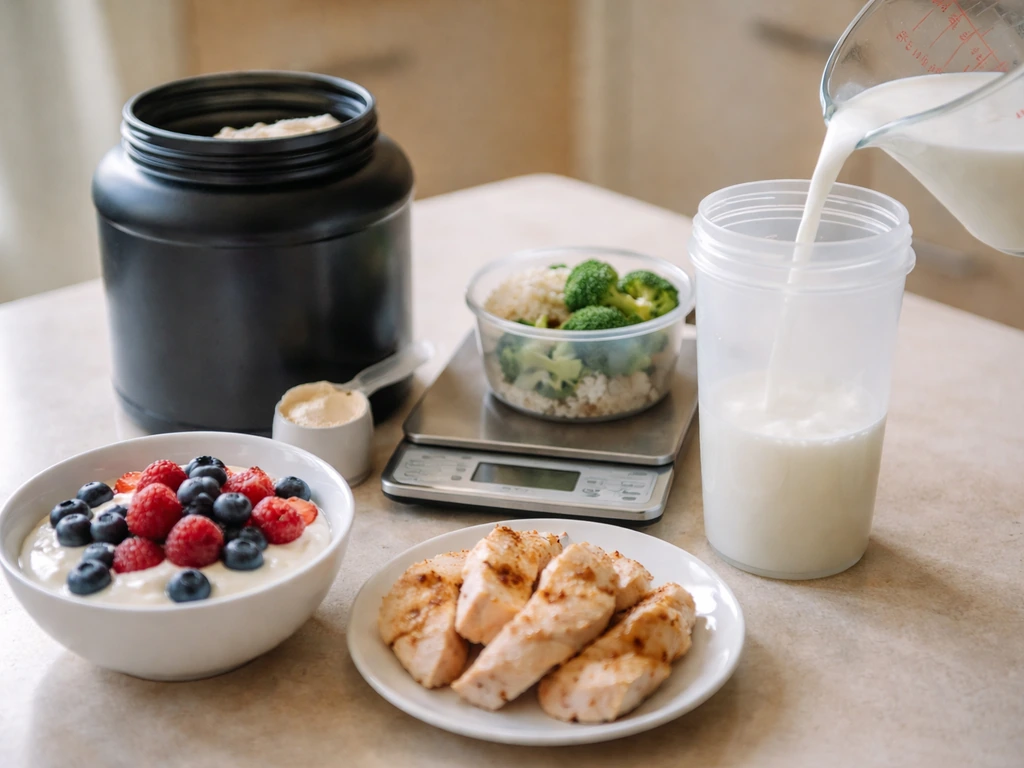
The single most important nutrition variable during a cut is protein. High protein intake directly counteracts anabolic resistance, and the research on this is solid. During pronounced energy restriction, elevated protein intake has been shown to prevent increases in muscle protein breakdown and partially preserve synthesis rates, especially when combined with resistance training. Aim for 0.7 to 1 gram of protein per pound of bodyweight per day (roughly 1.6 to 2.2 grams per kilogram). If you are leaner, closer to the top end. If you carry more body fat, the middle of that range works well.
For total calories, a moderate deficit of 300 to 500 calories below your maintenance is the sweet spot for most people. Research confirms that larger energy deficits impair lean mass gains significantly more than smaller ones, even when training is held constant. A meta-analysis reported that energy deficiency impairs lean mass (but not strength) gains during resistance training larger energy deficits impair lean mass gains significantly more than smaller ones. Aggressive cuts of 700 or more calories below maintenance do produce faster fat loss, but they also reliably sacrifice more muscle and tank training performance. The slower pace of a moderate deficit pays off in better body composition outcomes.
Fat intake should not drop below about 0.3 to 0.4 grams per pound of bodyweight (roughly 20 to 25 percent of total calories). Fat supports hormone production, including testosterone, and going too low makes the hormonal environment for muscle retention worse. The remaining calories after protein and fat are accounted for go to carbohydrates. Carbs are your training fuel, and keeping them reasonably high supports workout performance and reduces the cortisol spike from hard training sessions. If you are wondering can you grow muscle without carbs, the practical answer is that you can, but performance and training quality usually suffer when carb intake is too low Carbs are your training fuel. Time your larger carbohydrate servings around your workouts when possible.
| Nutrient | Target | Why it matters |
|---|---|---|
| Protein | 0.7 to 1 g per lb bodyweight (1.6 to 2.2 g/kg) | Directly preserves muscle protein synthesis and counters anabolic resistance |
| Total calories | 300 to 500 below maintenance | Moderate deficit spares lean mass better than aggressive restriction |
| Dietary fat | 0.3 to 0.4 g per lb bodyweight minimum | Supports hormone production including testosterone |
| Carbohydrates | Remaining calories after protein and fat | Fuels resistance training performance and manages cortisol |
Supplements that actually help during a cut
Protein supplements are the most practically useful tool during a cut, not because whole food protein is inferior, but because hitting 0.7 to 1 gram per pound while eating in a deficit is genuinely harder. A quality whey or plant-based protein shake makes it easier to hit your targets without adding too many total calories. Whey in particular has a high leucine content, which is important for triggering muscle protein synthesis.
Creatine monohydrate is the second supplement worth keeping on a cut. It helps maintain strength and training output when energy is limited, and it has a small but real effect on preserving lean mass during restriction. The dose is simple: 3 to 5 grams daily, no loading phase required. It is cheap, safe, and one of the most well-researched supplements in existence.
Caffeine can support training performance when energy is lower than usual. A dose of 3 to 6 mg per kilogram of bodyweight before training sessions is the effective range from research. Just be careful not to use it to mask fatigue from chronic sleep debt, because that debt will catch up with your muscle retention eventually. Beta-alanine is sometimes recommended during cuts for its ability to buffer muscular fatigue during higher-rep work, and there is reasonable evidence behind it, but it is a secondary priority compared to protein and creatine. A systematic review and meta-analysis in British Journal of Sports Medicine concludes that beta-alanine’s effects on exercise capacity and performance depend on the exercise modality and time domain being studied.
Beyond those, the supplement industry will sell you a lot of fat burners, branched-chain amino acids, and cutting stacks that are not worth the money once protein is adequate. BCAAs in particular are redundant if you are already hitting your total daily protein target. Skip the expensive extras and put the money into whole food protein sources and good sleep.
How to track whether your cut is actually working
Tracking on a cut requires looking at multiple signals together, because the scale alone will mislead you constantly. Body recomposition, where fat is dropping and muscle is holding or growing, can show up as almost no scale change for weeks even when your body composition is improving significantly. This is especially true early in a cut and in beginners.
- Weigh yourself daily and look at the weekly average trend, not individual fluctuations. A downward trend of 0.5 to 1 pound per week suggests a reasonable deficit.
- Take monthly progress photos in the same lighting and pose. Visual changes in muscle definition often show up in photos before they show up on the scale.
- Track key lifts weekly. If your main compound lift weights are holding steady or dropping only slightly, you are almost certainly maintaining muscle. A significant strength drop over several weeks is a warning sign.
- Measure waist circumference and key body measurements monthly. Losing inches while weight stays flat is a classic recomposition signal.
- Monitor energy, sleep quality, and mood. Persistent fatigue, irritability, or a noticeable drop in training motivation usually signals the deficit is too aggressive or recovery is being neglected.
If you are losing weight too fast (more than 1.5 pounds per week consistently), add 100 to 200 calories, most easily from carbohydrates, and reassess over two more weeks. If the scale is not moving at all and body measurements are unchanged over four weeks, reduce calories by 100 to 150 per day. Adjust based on data, not impatience.
Common mistakes that kill muscle during a cut
- Cutting too aggressively: deficits above 700 calories reliably increase muscle loss and tank performance, making it harder to sustain the training volume that protects muscle
- Skimping on protein: dropping protein to save calories is counterproductive; protein is the most metabolically expensive macronutrient and the one that directly preserves muscle tissue
- Slashing training volume: reducing sets and sessions too much removes the signal that tells your body to keep muscle; keep volume close to your normal baseline
- Neglecting sleep: poor sleep elevates cortisol, reduces growth hormone output overnight, and impairs muscle protein synthesis even when training and nutrition are dialed in
- Doing too much cardio: stacking excessive cardio on top of lifting increases recovery demands at a time when your capacity to recover is already reduced
- Expecting linear progress: recomposition is slow, and the scale fluctuates; expecting a steady downward line leads to premature changes that derail what is actually working
Realistic timelines and what to expect
If you are a beginner or returning to training, you can realistically expect to lose 0.5 to 1 pound of fat per week while gaining noticeable muscle over a 12 to 16 week cut. Your strength will likely climb even as the scale drops, which is the clearest sign that recomposition is happening. At 8 to 12 weeks you should see visible changes in muscle definition, and body measurements should be shifting even if the scale number seems stubborn at times.
If you are an experienced lifter, the timeline is the same but the goal shifts. A 12 to 16 week cut at a moderate deficit, with protein and volume maintained, should produce meaningful fat loss with very little lean mass loss. True muscle gain on top of that is possible but will be small, maybe 1 to 2 pounds over a full 16-week cut under ideal conditions. That is not a failure; that is what the research predicts for trained individuals.
The question of whether you can grow muscle while cutting connects closely to related questions about specific dietary approaches. Whether you are wondering about cutting without carbs, working through a calorie deficit without traditional bulking, or experimenting with fasting or ketogenic eating during a cut, the underlying principles stay consistent: protein needs to be high, resistance training volume needs to stay up, and the deficit needs to be moderate rather than extreme. Whether you are fasting for religious reasons or using it as a diet strategy, the key is still the same: keep protein high and resistance training consistent. Whether you are wondering about cutting without carbs, working through a calorie deficit without traditional bulking, or experimenting with fasting or ketogenic eating during a cut, the underlying principles stay consistent: protein needs to be high, resistance training volume needs to stay up, and the deficit needs to be moderate rather than extreme can you grow muscle without calorie surplus. The approach you can sustain consistently will always outperform the aggressive approach you abandon after three weeks.
Start with your protein target today. Get that dialed in before worrying about anything else. Then set a moderate calorie deficit of 300 to 500 calories below maintenance, keep your training volume where it is or close to it, and give the plan a full 12 weeks before drawing conclusions. That is the most direct path to losing fat and keeping the muscle you have worked to build.
FAQ
Can you grow muscle while cutting if you’re already lean (for example, under 12% body fat)?
You can still gain or at least retain muscle, but the odds of noticeable new growth drop because recovery capacity and training responsiveness are lower at that body fat level. Expect mostly muscle retention and small gains, and prioritize a moderate deficit (closer to 300 calories than 500), keeping weekly sets high, and not letting performance crash for weeks.
What if my strength numbers keep dropping during my cut, does that mean I’m losing muscle?
Not always, but a sustained drop in performance, especially on your main lifts, usually signals recovery is compromised, which raises the risk of lean mass loss. Try reducing the deficit by 100 to 200 calories, keep volume closer to your baseline (avoid extra sets), and tighten sleep timing before adding more food.
Is it better to cut faster or slower if my goal is to keep muscle?
Slower is generally better for preserving lean mass. A deficit around 300 to 500 calories works better than an aggressive 700+ deficit because larger deficits more consistently blunt training output and increase lean mass loss. If you must diet faster for a deadline, compensate by protecting volume, protein, and sleep and expect a smaller chance of muscle gain.
How do I know if my body is recomposing when the scale isn’t moving?
Use at least two signals: waist and other measurements plus performance trends. Also track whether fat is dropping visually (arm, chest, glute changes) and whether strength or reps are stable. Early in a cut, weight can stall from water shifts, glycogen changes, and less gut content, so don’t judge by the scale alone.
Can I cut and grow muscle if I’m lifting fewer days per week?
Yes, but you need enough weekly hard sets to replace what you’d get from more frequent training. If you train 2 days instead of 4, you often need slightly higher sets per session to reach about 10+ total sets per muscle group per week (adjust for your experience and recovery). Consistency matters more than how the sets are distributed.
What protein target should I use if my weight fluctuates during the cut?
Recalculate based on your current or target bodyweight, and keep the target range consistent. If your weight drops quickly, your “grams per pound” will also shift, so aim for the 0.7 to 1 g per pound range using your average weight over the last 1 to 2 weeks, not a single weigh-in.
Should I eat my carbs around workouts, and do I have to?
It’s not mandatory, but timing larger carb portions around training can help maintain performance, which indirectly supports muscle retention. If training feels flat, put a larger share of carbs in the pre-workout meal and the post-workout meal, then let the rest of the day be lower carb.
Can I build muscle while cutting if I don’t hit 10+ sets per muscle group per week?
You can still maintain some muscle, especially if you’re a beginner, but your chance of gaining muscle drops as training volume falls. If you’re currently below that range, start by adding manageable volume (for example 4 to 6 effective sets per week to 8 to 10) rather than making a big jump all at once.
What’s the minimum effective dose of creatine and caffeine on a cut?
Creatine monohydrate is typically 3 to 5 g daily, with no loading needed. For caffeine, use 3 to 6 mg per kg before training if you tolerate it, and avoid using it to cover poor sleep. If sleep is short, dose caffeine lower or skip it, since poor recovery is a bigger driver of lean mass loss than missed supplements.
Do I need to track macros perfectly, or can I just “eat less”?
You can be flexible, but protein and deficit size are the non-negotiables. If you struggle with accuracy, focus first on hitting protein daily, then set calories with a simple method (weigh food occasionally, use a food scale for protein meals, then adjust). If progress stalls, use measurements and weekly weight averages to refine calories rather than changing everything at once.
Can I cut muscle if I do a lot of cardio, like 2 hours a day?
High-volume cardio can work against muscle retention when combined with heavy lifting because it increases total recovery demand at a time when energy is limited. If you want cardio, keep most sessions moderate, limit very hard sessions to about two or fewer per week, and watch sleep and training performance as your guardrails.
What should I do if I’m losing more than 1.5 pounds per week and my performance is dropping?
That’s a warning sign the deficit may be too aggressive for your body. Add 100 to 200 calories, preferably from carbohydrates, and reassess over two weeks while keeping protein and training volume steady. If performance continues to slide after the adjustment, consider adding a smaller amount again and ensure sleep is adequate.
If I’m doing keto or cutting without carbs, can I still grow muscle?
Muscle retention is still possible, but the tradeoff is workout performance and total training quality can drop for some people when carbs are very low. If you choose low carb, lean more on protein sufficiency, keep volume close to baseline, and monitor performance carefully. If your main lifts drop for multiple weeks, increase carbs (even a modest amount) or reduce deficit.