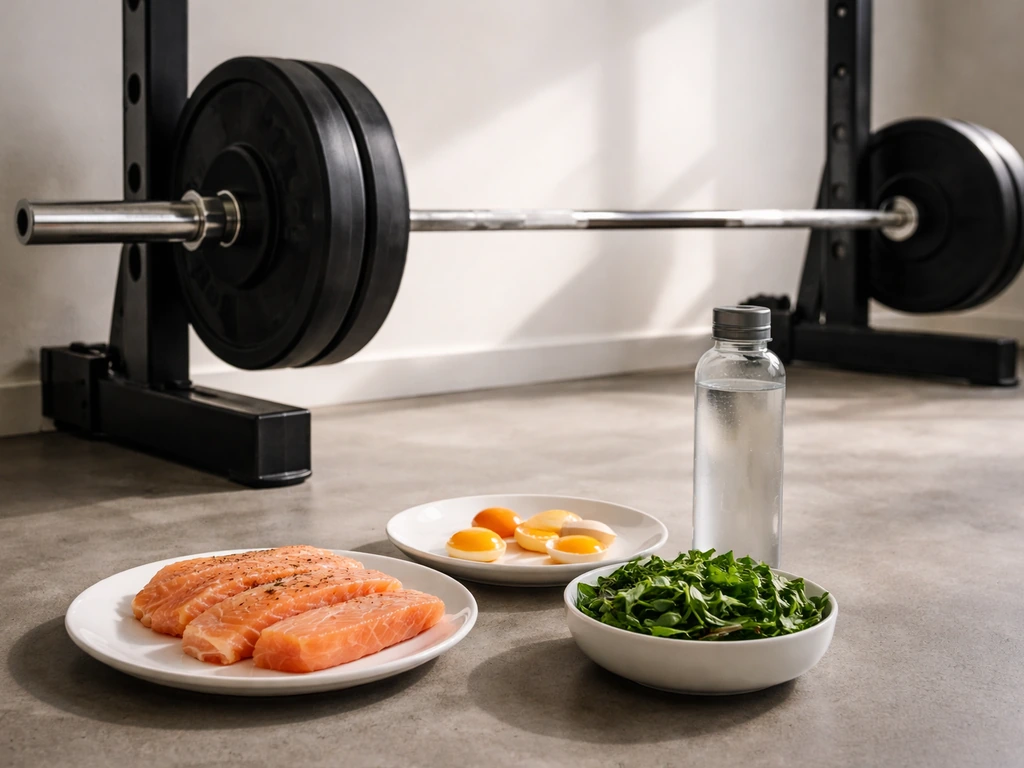
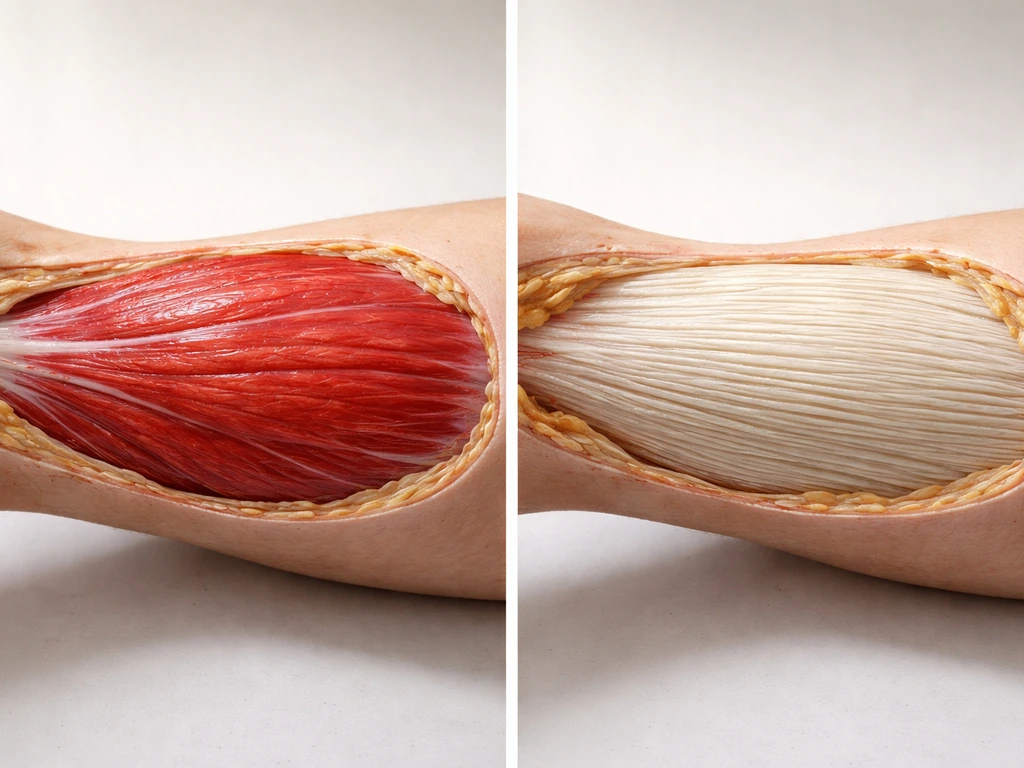
This matters more if you are already lean or training hard than if you are a beginner or someone primarily trying to recompose your body. It also matters whether you are doing true keto (under 50 g of carbs per day) or just eating relatively low carb (100–150 g). Those are meaningfully different situations, and the research treats them differently.
Why carbs actually help with muscle growth

Carbs fuel resistance training by loading your muscles with glycogen, which is the stored form of glucose your muscle fibers burn during sets. During a typical multi-set resistance workout, muscle glycogen drops by roughly 25 to 40 percent. That depletion adds up over a full session, and if you start a workout already glycogen-depleted, you will fatigue faster and produce less force. Research on glycogen and resistance training confirms that starting exercise with low muscle glycogen can accelerate fatigue, impair isotonic force production, and hurt isometric strength, all of which are relevant to quality hypertrophy work.
The same research does note that the impact depends on your training volume and intensity. Lower-volume sessions with longer rest periods tend to be less glycogen-dependent than high-volume, high-frequency hypertrophy programs. So a bodybuilder doing 20 sets per muscle group per week is more affected by carb restriction than someone doing three full-body sessions with moderate volume. Recovery is the other side of this. Restoring glycogen after training is part of what allows your muscles to perform again the next session at full capacity. Without carbs, that restoration is slower, which matters if you train frequently.
What actually drives hypertrophy when carbs are off the table
The three non-negotiables for muscle growth are mechanical tension (progressive overload in your training), sufficient protein to support muscle protein synthesis, and enough total calories to avoid being in a deficit that is too steep. Carbohydrates are not on that list. They are a performance enabler, not a trigger for hypertrophy itself. If you nail the other three, muscle can grow.
Protein is your most important lever here. The International Society of Sports Nutrition recommends 1.4 to 2.0 g of protein per kilogram of bodyweight per day for people doing resistance training, with more recent guidance pointing toward 1.6 to 1.8 g/kg as a practical daily target. On top of that, spreading protein across the day matters: aim for roughly 0.25 to 0.40 g per kilogram per meal, every three to four hours. For an 80 kg person, that is about 28 to 32 g of protein per sitting, four times a day. On a low-carb or keto diet, you have to get that protein from meat, eggs, fish, dairy, and protein supplements since your usual carb-adjacent sources (beans, grains) are largely off the menu.
Total calories are the second lever. You can't grow muscle in a large deficit even with perfect protein and training, which is something worth understanding clearly. If you want to explore that limitation in more depth, the science behind growing muscles in a calorie deficit explains exactly where the ceiling is and who can push it. On a low-carb plan, calories come primarily from fat and protein rather than carbohydrates. That is workable, but it requires intention because fat is calorie-dense and easy to either overeat or undereat if you are not tracking.
Low-carb vs. keto vs. zero carbs: what to expect from each

These are not the same thing, and lumping them together is where a lot of the confusion around carbs and muscle comes from. Here is how to think about the differences:
| Approach | Carb Range | Glycogen Status | Muscle Growth Potential | Best Suited For |
|---|
| Low-carb | 50–150 g/day | Partially depleted | Good with adequate protein and calories | Most people reducing carbs without going keto |
| Ketogenic (keto) | Under 50 g/day | Chronically low; relies on ketones | Possible but evidence is mixed and not consistently better than higher-carb diets | Fat loss priority; individuals who adapt well to keto |
| Zero/near-zero carb | Under 10–20 g/day | Severely depleted | Hardest to maintain performance; most limited ceiling for volume | Rare; not generally recommended for maximizing hypertrophy |
The research on keto and muscle specifically is not encouraging if your primary goal is maximizing muscle mass. An 8-week randomized controlled trial in trained men found that a ketogenic diet, even with a caloric surplus and resistance training, did not appear useful for increasing lean body mass. A systematic review and meta-analysis echoes this, finding that the effects of ketogenic diets on muscle outcomes and strength are controversial and not consistently better than non-ketogenic approaches. One trial in competitive natural bodybuilders did show decreases in fat mass on keto, but lean mass and strength changes were variable.
If you are already asking yourself about building muscle on a keto diet specifically, the honest answer is that most of the evidence says keto is better for fat loss than for maximizing hypertrophy. You can maintain muscle on keto, and some people do build it slowly, but the ceiling is lower than with a moderate-carb approach for most trained individuals.
A short-term performance dip when you first go low-carb is almost universal. Most people adapt over four to six weeks as their bodies get better at using fat and ketones for fuel. After that adaptation, training feels more normal, though high-intensity anaerobic output (which describes most weight training) tends to remain somewhat compromised compared to a carb-fueled state. The people most affected are those doing high-volume hypertrophy programs, frequent training splits, or anything that demands repeated explosive efforts.
How to eat without carbs and still hit your muscle-building targets
Protein first, every time
Without carbs competing for plate space, protein becomes even more central to your meals. Good low-carb protein sources include eggs, chicken, beef, salmon, tuna, Greek yogurt (in moderate amounts), cottage cheese, whey or casein protein powder, and hard cheeses. The goal is hitting 1.6 to 2.0 g of protein per kilogram of bodyweight daily, spread across three to five meals. For most people, that means protein at every meal is non-negotiable, not optional.
Building calories from fat
On a low-carb or keto plan, fat makes up the bulk of your calories. Healthy fat sources that work well include olive oil, avocado, nuts and nut butter, fatty fish, coconut oil, and full-fat dairy. Fat is calorie-dense at 9 kcal per gram, so it is actually easier to hit your calorie targets than it sounds. The risk is going too far in either direction: eating too little because fat feels heavy, or eating too much and sliding into a surplus that adds more fat than muscle. Tracking your intake for even two to three weeks gives you a useful baseline.
One practical framework for a muscle-building low-carb day: aim for at least 27 to 30 kcal per kilogram of bodyweight as a floor (per ISSN guidance), with protein covering 30 to 40 percent of calories and fat covering most of the rest. For an 80 kg person eating at maintenance or a slight surplus, that is roughly 2,400 to 2,600 kcal, with 130 to 145 g of protein and 170 to 200 g of fat.
Micronutrients and fiber
Removing carbs also removes a lot of vegetables, fruits, and legumes that you might normally rely on for fiber, potassium, magnesium, and other micronutrients. This is a real gap that needs addressing. Focus on low-carb vegetables: leafy greens, broccoli, cauliflower, zucchini, asparagus, and peppers are all good options that keep carbs low while supplying fiber and micronutrients. Fiber matters for digestion and satiety; aim for at least 20 to 25 g per day even on a strict low-carb plan. MedlinePlus recommends that adults get 38 g of fiber per day for men and 25 g per day for women (ages 19 to 50) Fiber matters for digestion and satiety.
Training adjustments that actually make a difference on low-carb

The biggest practical shift is expecting and accepting a performance dip for the first three to six weeks. Do not interpret reduced strength or endurance during this window as muscle loss. It is mostly a glycogen and adaptation issue, not tissue loss. During this phase, it helps to reduce total weekly training volume by 20 to 30 percent temporarily rather than grinding through full volume with poor performance. Dropping a set or two per exercise and prioritizing quality over quantity lets you keep progressive overload moving without accumulating excessive fatigue.
Rest intervals matter more on low-carb. Longer rests of two to three minutes between sets allow more complete phosphocreatine recovery and reduce the demand on glycolytic pathways. Longer inter-set rest intervals have been shown in a longitudinal study of trained men to produce larger strength increases than shorter rests Longer rests of two to three minutes between sets allow more complete phosphocreatine recovery. This is one area where training smarter beats training harder. Compound lifts like squats, deadlifts, rows, and presses remain the best drivers of mechanical tension and hypertrophy regardless of diet, so keep those at the core of your program.
If you are training fasted or in a restricted eating window, the considerations around muscle growth get more layered. The research on growing muscle while fasting covers those specific trade-offs in detail. Similarly, if you are simultaneously trying to reduce body fat while keeping carbs low, the question of building muscle while cutting is directly relevant to understanding your realistic expectations.
One strategy worth considering if you find your performance really suffers is targeted carb timing: consuming a small amount of fast-digesting carbohydrates (20 to 40 g) around your workout window only, while keeping the rest of the day very low-carb. This approach sits between strict keto and traditional carb cycling and can partially restore training quality without fully abandoning carb restriction. It is not for everyone, but it is a pragmatic middle ground for lifters who want the benefits of low-carb eating without fully sacrificing performance.
Supplements and practical recovery tips
Creatine monohydrate
Creatine is the single most evidence-backed supplement for anyone doing resistance training, and it matters even more on a low-carb diet. It works by increasing phosphocreatine availability in muscle, which directly supports ATP regeneration during high-intensity efforts, partially compensating for reduced glycogen-fueled output. A systematic review and meta-analysis found that creatine combined with resistance training produces greater strength gains than resistance training alone in adults under 50. More practically, research shows creatine supplementation can produce measurable strength improvements in as little as two weeks. The standard dose is 3 to 5 g of creatine monohydrate per day. No loading phase is needed, though some people do a loading week of 20 g/day split into four doses to saturate faster.
Electrolytes
When you drop carbohydrate intake, your kidneys excrete more sodium, which takes water and other electrolytes with it. This is why so many people feel terrible in the first one to two weeks of low-carb eating (the commonly called 'keto flu'). The fix is straightforward: increase sodium intake deliberately. Salting food more liberally, drinking broth, and using electrolyte supplements that include sodium, potassium, and magnesium all help. A well-formulated low-carb diet should actively account for electrolyte needs, not treat them as an afterthought. Aim for at least 2,000 to 3,000 mg of sodium per day (more if you sweat heavily during training), 3,000 to 4,000 mg of potassium from food, and 300 to 400 mg of magnesium.
Hydration and sleep
Low-carb eating reduces total body water (since glycogen holds water in muscle), so active hydration matters more than it would on a higher-carb diet. Aim for at least 35 ml of water per kilogram of bodyweight per day, more on training days. Sleep is the one recovery variable that no supplement replaces: seven to nine hours per night is when growth hormone peaks and muscle protein synthesis is prioritized. If sleep is short, everything else you do nutritionally becomes less effective.
A sample low-carb muscle-building day
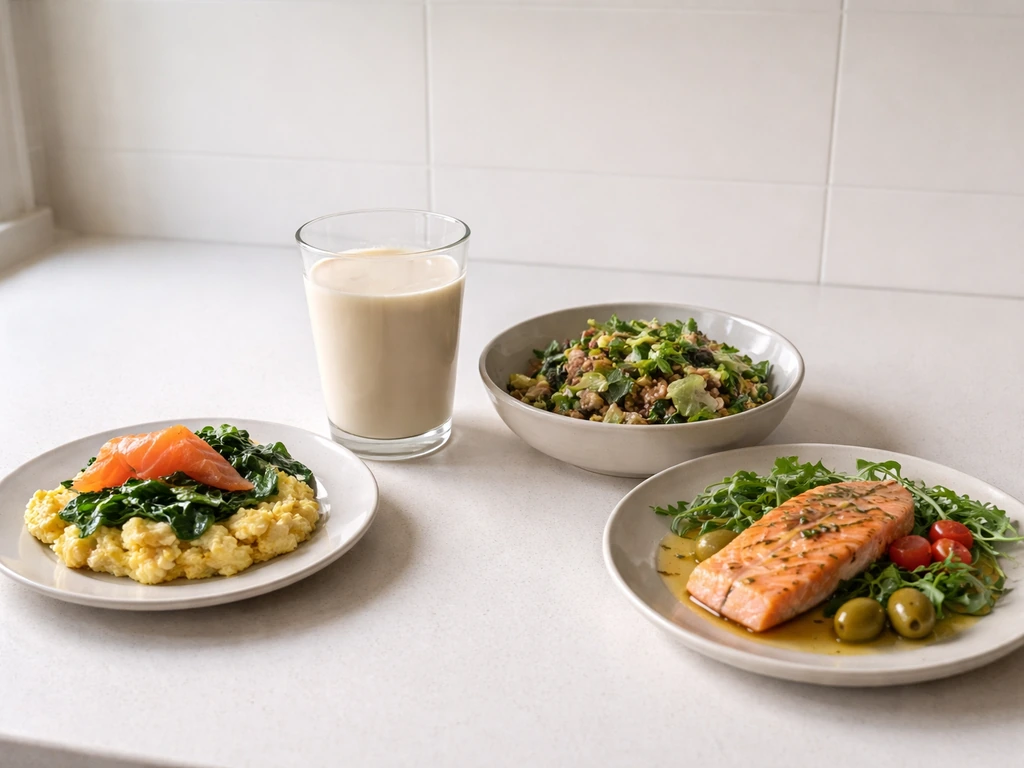
- Meal 1 (breakfast): 4 whole eggs scrambled in butter, 100 g smoked salmon, large handful of spinach, black coffee or water
- Meal 2 (mid-morning): 40 g whey protein shake with water, 30 g mixed nuts
- Meal 3 (pre-training or lunch): 200 g ground beef or chicken thighs, 150 g broccoli and zucchini sautéed in olive oil, 1/2 avocado
- Post-training: 5 g creatine monohydrate, electrolyte drink or broth
- Meal 4 (dinner): 200–250 g fatty fish (salmon or mackerel) or steak, large salad with olive oil and vinegar, roasted cauliflower
- Optional Meal 5 (if calories are short): 150 g full-fat Greek yogurt or a casein protein shake before bed
This framework keeps protein above 160 g for an 80 kg person, calories in a slight surplus, and carbs under 50 g while still supplying fiber and micronutrients from vegetables.
Myths worth clearing up
The biggest myth is that carbs are required for muscle growth. They are not. They are useful, especially for performance, but the actual trigger for hypertrophy is mechanical tension applied to muscle fibers and adequate protein available to rebuild them. A second common misconception is that keto causes muscle wasting. It does not, as long as protein intake is sufficient and resistance training is maintained. Some people see a drop in scale weight when going keto, but most of that is water and glycogen, not muscle tissue. A third myth worth addressing: carbs protect muscle when you are dieting. This is partly true in the sense that carbs help maintain glycogen and therefore training performance, which indirectly preserves muscle, but the real protector is protein intake and training stimulus. If you want a deeper look at muscle retention during a cut, the evidence around building muscle without a calorie surplus is directly relevant to where the real levers are.
Realistic timelines and who this works best for
If you are new to lifting, you will likely still make strength and muscle gains on a low-carb diet in your first several months simply because the training stimulus is novel. Beginners have the most forgiving response to nutrition variation. Intermediate and advanced lifters will notice a more meaningful difference, particularly in high-volume or high-frequency programs. For those individuals, low-carb muscle building works best as a moderate rather than strict carb restriction, or with targeted carb timing around training.
Older adults should be especially attentive to protein on a low-carb plan. Anabolic resistance means the muscle protein synthesis response to a given protein dose is somewhat blunted with age, which makes hitting the upper end of the protein range (closer to 2.0 g/kg) more important, not less. Creatine is also particularly valuable here for the same reason.
In terms of visible results, expect strength gains in two to four weeks once the initial adaptation phase settles, with measurable changes in muscle size (visible or tape-measured) typically showing up between six and twelve weeks of consistent training and adequate nutrition. The timeline is not meaningfully different from a carb-fueled approach if you protect protein and total calories. What you are really trading is a somewhat lower ceiling on training volume and intensity for the benefit of whatever drew you to low-carb eating in the first place.
If your situation involves eating very little overall and training hard, it is also worth understanding the specific dynamics of building muscle without a calorie surplus, since low-carb diets can sometimes accidentally push total energy intake down further than intended. Keep an eye on the calorie side of the equation, not just the macronutrient one.