If you grow stronger, here's what actually happens: your muscles adapt to progressively heavier mechanical tension, your nervous system gets more efficient at recruiting muscle fibers, and over weeks and months your body composition shifts in a direction most people genuinely want. The practical question is how to make that happen reliably, and the answer comes down to four things you control every week: your training stimulus, your nutrition, your recovery, and your consistency. Get those four levers right and strength gains are nearly inevitable. Get even one badly wrong and you'll spin your wheels wondering why nothing's changing.
What If I Grow Stronger? A Step-by-Step Strength Plan

Marcus Kellerman
28 May 2026

What 'getting stronger' actually means (it matters which one you want)
Before you build a plan, it's worth being clear about what you're chasing, because the training looks different depending on your goal. 'Stronger' can mean three distinct things, and most people are somewhere between all three.
- Maximal strength: how much you can lift for one all-out rep. This is the domain of powerlifters and anyone training heavy compound lifts with low reps (1–5). The nervous system and mechanical efficiency matter as much as raw muscle size here.
- Muscle size (hypertrophy): bigger muscles are generally stronger muscles, but the rep ranges, volume, and training structure are somewhat different from pure strength work. Most people wanting to 'get stronger' actually want this, combined with some performance improvement.
- Strength endurance: being able to sustain effort over multiple reps or a long session. This is more relevant for sport athletes, but it's worth knowing because training for it (high reps, shorter rest) produces less maximal strength than moderate-to-heavy training.
For the vast majority of people asking this question, the sweet spot is building muscle while adding strength, using moderate-to-heavy loads in the 6–15 rep range. That's what this guide focuses on. If you're a competitive powerlifter chasing a 1RM, some of this applies but you'll need more specificity around peaking. If you're a complete beginner, almost anything will work at first, but the framework below will work faster and safer than random effort.
Do a fast self-audit before you change anything

Most people who feel stuck aren't missing a secret program. They're under-eating, under-sleeping, or training without enough progressive challenge. Before adding supplements or switching routines, run through these four checks honestly.
Training
Are you lifting heavier than you were three months ago? If not, your training isn't producing enough stimulus. Are you doing the same weights, the same reps, the same exercises on repeat? That's maintenance mode at best. Beginners often see progress for a while just by showing up, but that window closes fast. You need a system that forces you to do slightly more than last time, every single week.
Nutrition
Are you hitting at least 1.4 g of protein per kilogram of bodyweight daily? For most people trying to build strength, 1.6–2.0 g/kg is the target. Are you eating enough calories overall? You can't build muscle out of nothing. Even people in a slight calorie deficit can make strength gains if they're newer to training, but most will stall without adequate fuel.
Recovery
Are you sleeping 7–9 hours most nights? Research shows even athletes average around 7.2 hours, which is often below what their training load actually demands. Sleep is when muscle protein synthesis is elevated and growth hormone is released. Chronic short sleep directly blunts strength adaptations.
Baseline constraints
How long have you been training consistently? A beginner (under one year of structured training) can gain strength much faster than someone with five years under the bar. Your age matters as context, not as a ceiling: older adults absolutely build muscle and strength, but recovery may take longer and protein needs may sit toward the higher end of the range. Any injuries, movement limitations, or medical conditions should shape your exercise selection, not stop you from training.
The training approach that actually builds strength
The most important concept in any strength program is progressive overload: you have to give your muscles a slightly harder challenge than they faced last time, consistently, over months and years. Without that, you're just maintaining. Everything else in training is just a vehicle for delivering that stimulus.
Progressive overload in practice
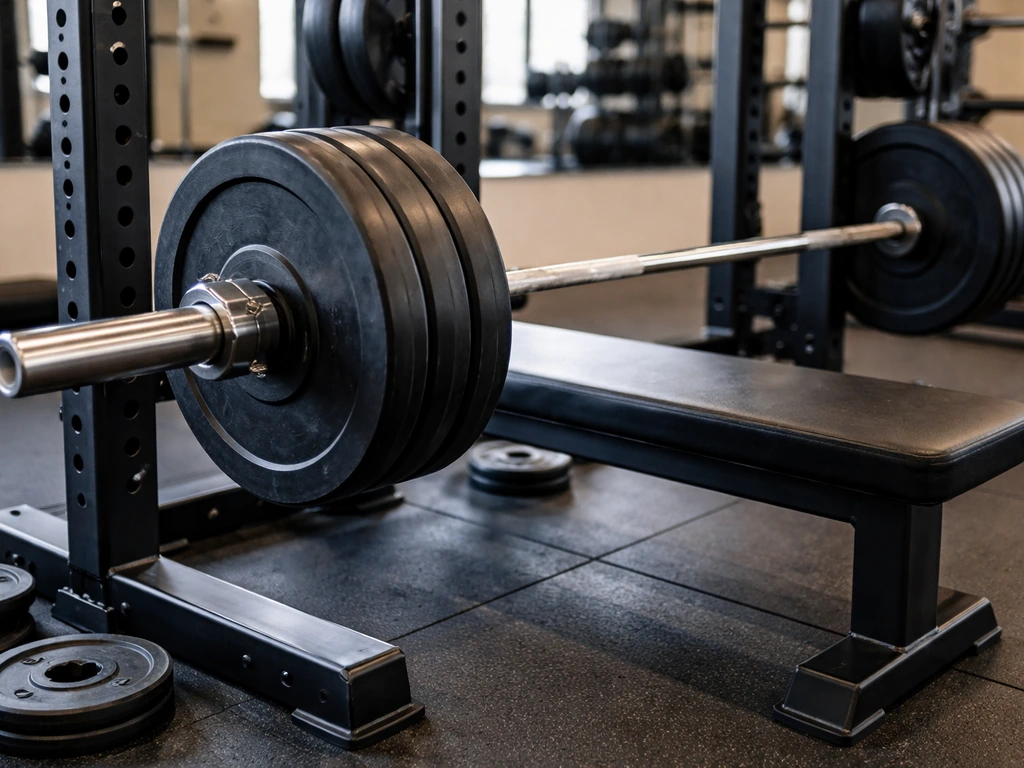
The simplest form is adding weight when you can complete all your target reps with good form. If you're doing 3 sets of 8 reps on bench press and you hit all 24 reps cleanly, add 2.5–5 kg next session. If you can't add weight yet, add a rep. If you can't add a rep, reduce rest time slightly, improve your range of motion, or slow the eccentric (lowering) phase. The key is that something should be harder than last time.
Rep ranges and intensity
For combined strength and muscle growth, training in the 6–12 rep range at roughly 65–80% of your 1-rep max is well supported. Research suggests the 70–79% 1RM zone produces particularly strong strength outcomes. That said, you don't need to calculate percentages obsessively. A simpler rule: the weight should feel challenging in the last 2–3 reps of each set, but not so heavy that your form breaks down. Leaving 1–3 reps 'in the tank' (rather than training to failure every set) is generally safer and more sustainable, especially early on.
Sets and weekly volume
Aim for roughly 10–20 working sets per muscle group per week, depending on your training age and recovery capacity. Beginners can make excellent progress at the lower end (10–12 sets/week per muscle). More experienced lifters may need 15–20+ sets to continue progressing, but more isn't always better: returns diminish at high volumes, and many people get better results from doing 12–15 quality sets than cramming in 25 sloppy ones.
Training frequency
Training each muscle group at least twice per week consistently outperforms once-per-week training for both hypertrophy and strength, when total weekly volume is similar. A full-body routine three times a week works great for beginners. An upper/lower split four days a week is an excellent next step. Push/pull/legs six days a week is effective for advanced lifters but requires real recovery discipline. The best frequency is honestly the one you'll actually stick to week after week.
Exercise selection
Build your program around compound movements: squats, deadlifts, bench press, rows, overhead press, pull-ups. These recruit the most muscle mass per exercise and allow the heaviest progressive loading. Add isolation work (curls, lateral raises, leg curls) as accessory work, not as the foundation. For beginners, even a simple three-lift full-body program three days a week will produce dramatic results in the first 6–12 months.
What to eat to get stronger: protein, calories, and carbs

Protein: how much and when
Protein is the single most important nutrition variable for strength and muscle gains. The International Society of Sports Nutrition recommends 1.4–2.0 g of protein per kilogram of bodyweight per day for people actively training. For most people trying to build strength, shoot for 1.6–2.0 g/kg. For a 75 kg person, that's roughly 120–150 g of protein daily. Older adults and people in a calorie deficit should sit toward the top of that range.
Spreading that protein across the day matters more than most people realize. Aim for 3–5 protein-containing meals spaced roughly 3–4 hours apart, with each meal delivering around 20–40 g of protein (or about 0.25 g/kg of your bodyweight). Your muscles can use protein for growth for up to 24 hours after training, so missing one post-workout shake isn't catastrophic, but consistently front-loading all your protein in one or two meals is leaving gains on the table.
Calories: how much you actually need
You can't build muscle efficiently in a large calorie deficit. Here's how to think about your calorie approach based on your current situation:
| Goal | Calorie approach | Expected outcome |
|---|---|---|
| Build muscle and strength (lean bulk) | Modest surplus of 200–400 kcal/day above maintenance | Muscle and strength gain with minimal fat |
| Recomposition (new to training or returning) | At or near maintenance calories | Muscle gain and some fat loss simultaneously |
| Cutting (losing fat while preserving muscle) | Deficit of 300–500 kcal/day, high protein | Strength may stall; muscle preservation is the goal |
| Experienced lifter, significant deficit | Not recommended for strength gains | Strength loss likely without very high protein |
Carbohydrates: the underrated strength tool
Carbohydrates fuel your training sessions directly. Glycogen (stored carbohydrate) is the primary fuel for high-intensity resistance training, and training with depleted glycogen stores means weaker sessions, lower volume, and slower strength progress. Around training, aim for 1–4 g of carbohydrate per kilogram of bodyweight in the 2–3 hours before your session. After training, carbs help replenish glycogen and create a hormone environment (via insulin) that supports muscle protein synthesis. If you're low-carb by preference, you can still gain strength, but you may find performance and recovery improve significantly when you add carbs around your workouts.
Supplements worth considering (and which ones to skip)
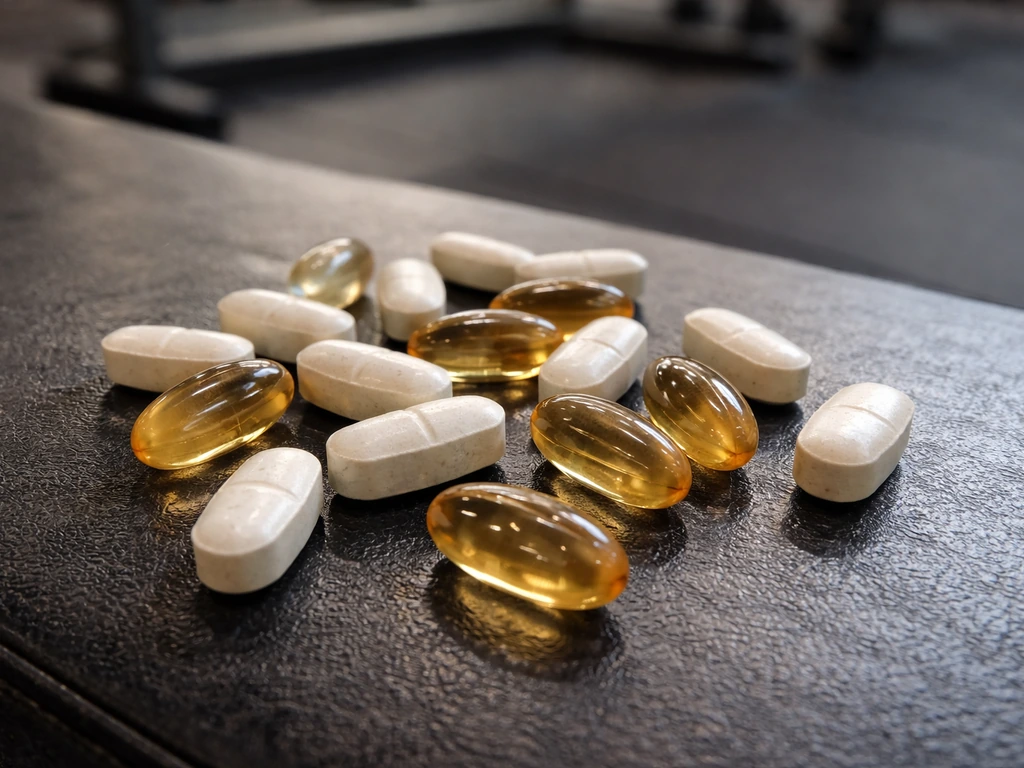
Most supplements are optional noise. A few have genuinely strong evidence. Here's an honest breakdown.
Creatine monohydrate (do this one first)
Creatine is the most well-researched and effective supplement for improving high-intensity exercise capacity and supporting lean mass gains during training. It works by increasing the availability of phosphocreatine in muscle cells, which allows you to do more work per set before fatigue kicks in. The ISSN endorses it as effective and safe across a wide range of populations, with no adverse health risks found at doses of 0. 3–0.
8 g/kg/day across studies lasting up to five years. The standard approach is either a loading phase (around 5 g taken four times daily for 5–7 days to rapidly saturate stores, then 3–5 g/day for maintenance) or simply starting at 3–5 g/day and reaching saturation in 3–4 weeks. In its position stand, the ISSN gives a creatine loading example of ingesting 5 g creatine monohydrate (or about 0.
3 g/kg) four times daily for 5, 7 days to rapidly increase muscle creatine stores [5 g creatine monohydrate (or about 0. 3 g/kg) four times daily for 5–7 days](https://pmc. ncbi. nlm.
nih. gov/articles/PMC5469049/). Both work. Timing doesn't matter much; just take it consistently.
Caffeine (useful, but use it smart)
Caffeine at 3–6 mg/kg of bodyweight, taken 30–90 minutes before training, consistently improves strength and power output. For a 75 kg person, that's roughly 225–450 mg, which is about 2–4 cups of coffee. Regulators including EFSA consider habitual intakes up to 400 mg/day safe for non-pregnant adults. The main practical risks are sleep disruption (avoid caffeine within 6 hours of bedtime) and tolerance buildup if you're already a heavy daily coffee drinker. Cycling off caffeine for a week every month or two can restore sensitivity.
Beta-alanine (optional, for higher rep work)
Beta-alanine at 4–6 g/day increases muscle carnosine levels, which buffers the acid buildup that causes the 'burn' during higher-rep sets. It takes at least 4 weeks of consistent use to build meaningful effects. The main side effect is a harmless tingling sensation (paresthesia), which you can reduce by splitting doses into smaller amounts (around 1.6 g each) or using a sustained-release form. It's more relevant if you're doing sets of 12–20 reps or high-volume training. For heavy, low-rep work, the benefit is smaller.
Everything else
Protein powders (whey, casein, plant-based blends) are a convenient way to hit your daily protein target, not a magic muscle builder. BCAAs are largely redundant if you're eating enough total protein. Pre-workout blends often contain caffeine, creatine, and beta-alanine alongside a lot of marketing, so check the label and buy the ingredients separately if cost matters. Keep in mind that dietary supplements in general are not pre-approved by the FDA the way drugs are, so third-party tested products (NSF, Informed Sport) are worth choosing when possible.
If you're curious about specific growth-focused supplements and their side effect profiles, it's worth understanding what you're actually putting in your body. If you are considering testosterone-boosting products, reviewing testostro grow side effects can help you gauge potential risks and decide whether it's worth it side effect profiles. Products marketed for rapid size or hormonal effects (like certain growth syrups, powders, or amino blends) vary widely in what they actually contain and how well they're regulated.
Products marketed for rapid size or hormonal effects (like certain growth syrups, powders, or amino blends) vary widely in what they actually contain and how well they're regulated fast grow amino side effects. If you're considering growth syrups, be sure to weigh strong body grow syrup side effects and talk to a professional before using anything beyond creatine and other evidence-backed options.
Growth supplements and body-building powders can have side effects, so it's smart to understand what’s in them and how your body might react before using them regularly body grow powder side effects.
Recovery is where strength actually gets built
Training is just the stimulus. The adaptation happens during recovery. This is the part most people underinvest in because it doesn't feel productive.
Sleep: the non-negotiable

Aim for 7–9 hours of sleep per night. Research on athletes consistently shows sleep extension (even adding 46–113 minutes per night over multiple nights) measurably improves physical and cognitive performance. Poor sleep raises cortisol, lowers testosterone, reduces muscle protein synthesis, and makes your next training session worse. If your schedule genuinely won't allow 7 hours, even small improvements (consistent sleep timing, cooler room, no screens for 30 minutes before bed) compound over weeks.
Soreness vs. fatigue: know the difference
Delayed onset muscle soreness (DOMS) typically peaks 24–72 hours after an intense or unfamiliar session. It's normal, especially when you're new to training or trying new exercises. But soreness is not a reliable indicator of a good workout, and you don't need to be sore to be making progress. Fatigue is different: it's a systemic feeling of being run-down, unmotivated, and weaker than usual across multiple sessions. Soreness says 'that muscle worked hard'; fatigue says 'the whole system needs a break.' Learn to tell them apart.
Deloads: planned rest that pays off
A deload is a planned week of reduced training stress, typically every 4–8 weeks depending on your training intensity and how you're feeling. You might cut volume by 40–50% (fewer sets) while keeping intensity moderate, or just take the week lighter across the board. The goal is to let accumulated fatigue dissipate so your next training block starts from a recovered baseline. People who skip deloads often plateau or get injured not from overtraining in one session, but from accumulated fatigue that never fully clears.
Stress management
Your body doesn't distinguish between the stress of a hard training session and the stress of a brutal work deadline or a difficult personal situation. High chronic stress elevates cortisol, which competes directly with muscle-building signals. You don't need to eliminate life stress (good luck), but recognizing it as part of your recovery equation matters. In high-stress weeks, pulling back on training volume slightly is smarter than grinding through and wondering why you feel terrible.
How to track progress and fix it when strength stalls
What to actually track
Track the numbers that tell you whether the four levers are working. You don't need a fancy app, just a notebook or phone note with this information recorded consistently.
- Strength numbers: log the weight and reps for your main compound lifts every session. This is your primary progress indicator.
- Bodyweight and measurements: weigh yourself at the same time of day (ideally morning, after the bathroom) and take weekly averages. Measure waist, hips, and limb circumference monthly.
- Daily protein intake: use a food tracking app for at least 2–3 weeks until you have a clear sense of your baseline. Most people overestimate their protein by 30–40%.
- Sleep duration and quality: even a simple subjective 1–10 rating each morning tells you a lot over time.
- Session performance: note how a session felt. 'Strong and energetic' vs. 'flat and unmotivated' over several weeks is a useful signal.
When strength stalls: the troubleshooting checklist

If you've been consistent for 4+ weeks and strength isn't moving, work through these in order before overhauling your program.
- Check your protein: are you actually hitting 1.6–2.0 g/kg daily, consistently? Track for three days and see what the number actually is.
- Check your calories: are you eating enough? Strength stalls in a large deficit are normal. If you're trying to lose fat and gain strength simultaneously, your progress will be slower, and that's fine, but manage expectations.
- Check your progressive overload: look back at your training log. Have weights or reps actually increased over the last 4–6 weeks? If not, you need to push slightly harder in sessions.
- Check your sleep: have you averaged less than 7 hours for the past few weeks? Even one week of short sleep can blunt strength measurably.
- Check your exercise selection: are your main lifts actually allowing you to load progressively? Some machines and exercises have small loading jumps and make progress hard to measure. Compound barbell and dumbbell exercises are clearer.
- Consider a deload: if you've been training hard for 8+ weeks without a break, accumulated fatigue may be masking your real fitness level. Take a deload week and retest.
- Check your consistency: strength gains accumulate over months, not days. Missing 2–3 sessions per week for several weeks compounds into a significant training deficit that can look like a plateau but is just inconsistency.
What realistic progress looks like
Beginners can expect to add 2.5–5 kg to main lifts every one to two weeks in the first 3–6 months. Intermediate lifters may add that much in a month. Advanced lifters might spend a full training cycle (8–16 weeks) to add 5 kg to a lift. These timelines aren't discouraging; they're just honest. The people who make the most long-term progress are the ones who stay patient during the slower phases rather than constantly switching programs chasing faster results.
Start here: your action checklist for this week
- Calculate your protein target: multiply your bodyweight in kg by 1.6–2.0. That's your daily protein goal in grams. Track your food for three days this week to see where you actually land.
- Plan your training frequency: commit to training each muscle group at least twice this week. Full body three times, or upper/lower four times, both work.
- Pick your main compound lifts and log your starting weights and reps today. These are your baseline.
- Apply progressive overload this week: if you can hit all your target reps, add weight or a rep next session.
- Start creatine monohydrate at 3–5 g/day if you aren't already. That's the single supplement most worth your money.
- Audit your sleep this week: track hours for seven days. If you're averaging under 7, identify one thing you can change (earlier bedtime, phone out of the bedroom).
- Schedule your next deload: if you've been training hard for more than 6 weeks without a break, plan a lighter week in the next 2 weeks.
- Set a check-in reminder for four weeks from now: review your strength numbers, bodyweight, and protein logs. That's your first real data point for whether the plan is working.
FAQ
What if I grow stronger but my weight doesn’t change, should I worry?
Not necessarily. Strength can rise with minimal scale change if your body recomposition is offsetting (fat loss or muscle gain with similar net weight). The better check is whether your performance improves (more reps at the same weight, or the same reps with heavier loads) and whether your measurements, photos, or waist trend in the desired direction over 4 to 8 weeks.
What should I do if I’m getting stronger in some lifts but stalling on others?
Treat it like a recovery and stimulus mismatch. Common fixes are reducing that lift’s weekly hard sets by 20 to 40%, increasing specificity by practicing the movement more often (for example, twice weekly instead of once), and keeping the rep range consistent with the goal (roughly 6 to 12 for strength plus muscle). Also check that your accessory work isn’t stealing recovery from the priority lift.
What if I hit a plateau for 3 to 6 weeks, do I need a new program?
Usually not. First verify the basics that drive progressive overload: you are adding reps or load somewhere each week, you are eating enough protein and total calories for your goal, and sleep is not slipping. If those are solid, run a deload (4 to 8 weeks in, depending on intensity and how you feel) and then restart with slightly lower training volume for 1 to 2 weeks before pushing again.
How heavy should the weights be if I want to get stronger and also build muscle?
Aim for effort-based progression rather than exact percentages. Use a load where you finish sets with about 1 to 3 reps left in reserve, especially for compound lifts. If your last reps turn into grinding or form breaks, drop the weight a bit and build back up over the next sessions.
What if I can’t add reps or weight every week, does that mean I’m doing it wrong?
Not always. Some weeks are “progress by small margins,” for example the same weight but better bar path, less rest, slower lowering, or one extra rep on one set. Use a weekly target like “add either load, reps, or an extra high-quality set,” and only judge over multiple weeks, not single sessions.
Should I train to failure to get stronger?
For most people, no, not as the default. Training close to failure occasionally can help, but doing it on every set often increases fatigue and makes it harder to progress. Keep most sets at 0 to 3 reps in reserve, and reserve true failure for a small portion of accessory work or later in the session.
What if my soreness is low, does that mean my workout didn’t work?
Low soreness does not mean low results. Soreness is influenced by novelty and eccentric stress, not directly by your stimulus quality. Focus on whether you are improving performance, managing fatigue, and hitting the planned progression. Use fatigue and recovery markers (energy, sleep quality, strength across sessions) instead of soreness alone.
How do I tell the difference between normal fatigue and overreaching?
Normal fatigue should improve after a lighter day or a short taper in training stress. Overreaching often shows up as several sessions in a row with weaker performance across multiple lifts, poor motivation, disrupted sleep, or soreness that lingers beyond the typical 72-hour window. If that pattern persists, cut volume, add rest days, or schedule a deload.
What if I miss a workout, how should I adjust the rest of the week?
Don’t try to “make up” the missed work by doubling everything. Recalculate weekly volume based on your normal target sets, then redistribute if needed. For example, move one planned session to the next available day, and keep total sets and intensity close to plan rather than stacking too much on one day.
Do I need carbs around training if I’m trying to build strength?
They are especially helpful if you notice weak sessions or stalled volume when eating fewer carbs. If you are already performing well on your current diet, you can keep lower-carb. If performance is slipping, try adding 1 to 4 g carbohydrate per kg in the 2 to 3 hours before training and see whether your set quality and ability to progress improves.
Should I increase protein immediately if I want to get stronger, or focus on calories first?
Protein is the first nutrition lever, but calories determine whether you can sustain training volume. If you are under-eating, raising protein alone may not fix stalled progress. A practical approach is to hit your protein target first, then adjust calories based on weight trend and energy, aiming for a small surplus if you are trying to build and recover quickly.
What if creatine upsets my stomach or makes me feel bloated?
That can happen, usually from dose timing or taking too much at once. Try lowering the daily dose (for example, 3 to 5 g without loading), splitting into two smaller servings, and taking it with a meal. Consistency matters more than loading. If gastrointestinal issues persist, pause and reassess other factors like overall fiber intake and hydration.
How much caffeine is too much if I’m trying to gain strength?
More is not better. Stick to a moderate dose and a consistent timing window so sleep is protected. If you are already cutting it close on sleep, scale the dose down or take it earlier. A simple rule is to avoid caffeine within 6 hours of bedtime, then adjust based on how your sleep responds.
When should I consider a deload if I’m not sure whether I need it?
If you complete 4 to 8 weeks of hard training, and you notice performance flattening, rising perceived effort, or sleep getting worse, a deload is often a smart move even if you are not “burned out” yet. The deload works best when it is planned, not forced by injury or a major slump.
What supplements actually help, and what should I avoid expecting?
Creatine is the most reliable, protein powder is convenient for hitting your target, and caffeine can boost session output for some people. Expect minimal magic from most “testosterone booster” or rapid-size products because effects vary and regulation is inconsistent. If you choose additional supplements, prioritize transparency (third-party testing) and be cautious if a product’s claims depend on hormonal changes.