Yes, you can absolutely build muscle after 40. Your body still responds to resistance training and protein, and the basic rules of muscle growth haven't changed. What has changed is your margin for error: recovery takes longer, hormones are less forgiving, and the same program a 22-year-old runs might wreck your joints in two months. The fix isn't to train less or give up on meaningful progress. It's to train smarter, eat enough of the right things, and respect recovery in a way most younger lifters can ignore. This guide gives you the exact plan to do that.
How to Grow Muscles After 40: Training and Nutrition Plan

Marcus Kellerman
18 May 2026

What actually changes after 40
After 40, three things shift that matter most for building muscle: hormone output, recovery capacity, and what researchers call anabolic resistance. None of them make muscle growth impossible, but they do raise the bar for how well you need to execute.
Hormones
Testosterone and growth hormone both decline gradually starting in your 30s. By your mid-40s, free testosterone can be 20-30% lower than your peak. This matters because both hormones support muscle protein synthesis and speed recovery between sessions. Lower levels don't shut down muscle growth, but they do mean you need to hit your training and nutrition targets more consistently to get the same stimulus younger lifters get with less precision.
Anabolic resistance
Research confirms that older adults can show chronic deficits in cumulative muscle protein synthesis after weeks of resistance training compared to younger adults. This blunted response is called anabolic resistance, and it's real. But here's the important nuance: anabolic resistance is not a hard ceiling. Studies also show that when protein intake and training volume cross a certain threshold, older adults can produce muscle protein synthesis responses that look a lot more like younger adults. The takeaway is that dose matters enormously. Skimping on protein or doing too little volume won't cut it after 40 the way it might have at 25.
Recovery

Connective tissue repairs more slowly after 40. Tendons and ligaments respond to load but on a longer timeline than muscle, which is why sudden spikes in training volume are one of the most common reasons lifters over 40 get hurt. Your central nervous system also takes longer to recover from very high-intensity work. Soreness lingers a day or two longer than it used to. That's not a reason to back off permanently. It's a reason to build volume more gradually and protect recovery as seriously as you protect training.
The training plan that works after 40
The fundamentals are the same as they've always been: progressive overload, sufficient volume, and enough frequency to keep the growth signal consistent. Building muscle after 50 follows the same core rules, but you typically need tighter consistency with recovery and nutrition how to grow muscle after 50. What changes is how you apply them.
Frequency

Train each muscle group 2 times per week. This gives you enough stimulus frequency to drive growth while leaving adequate recovery between sessions. Full-body or upper/lower splits both work well. Bro splits where you hammer a muscle once a week and then leave it for 6 days tend to underperform for adults with slower recovery, because the growth window closes before you revisit the muscle.
Volume: how many sets per week
Start with 10 to 14 hard sets per muscle group per week. A hard set means you're finishing within 3-4 reps of failure. If you're coming back from a long break or you're brand new to lifting, start at the lower end (8-10 sets) and add one set per muscle group every 2 weeks. Going from zero to 20 sets a week is a fast path to overuse injury after 40. Build the volume, don't dump it all in at once.
Rep ranges and load
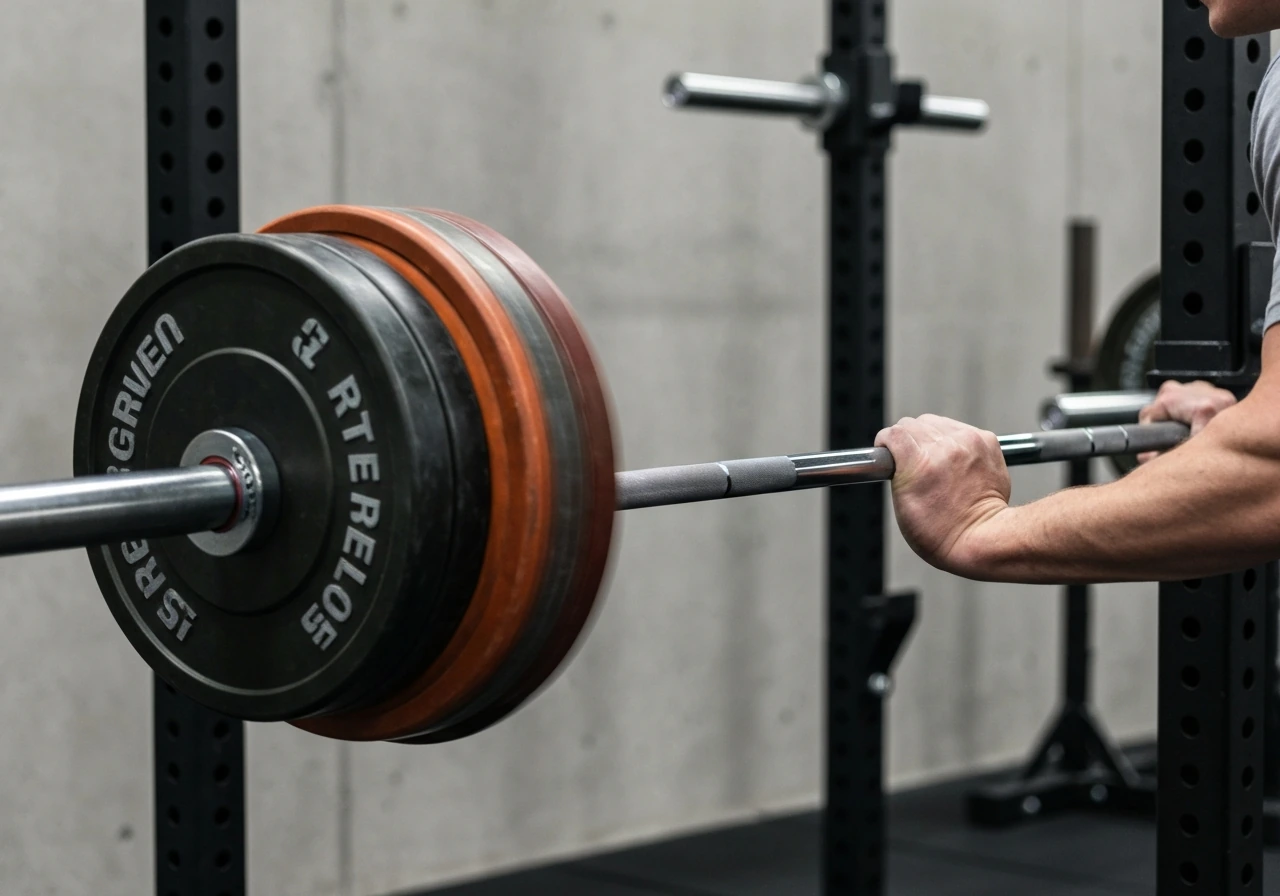
Work in the 6 to 15 rep range for most of your training. Hypertrophy research is clear that muscle grows across a wide rep range as long as you're training close to failure. For older lifters, spending more time in the 8-12 range and less time at very heavy singles or triples is generally wiser. Heavy loads on joints that have accumulated decades of use is where injuries happen. You can still lift heavy, just don't make grinding 1-rep maxes the centerpiece of your week.
Progressive overload
Overload is non-negotiable. Your body adapts to the demands you give it, and if those demands don't increase over time, growth stalls. Track your weights and reps every session. When you can complete the top end of your rep range with good form (say, 3 sets of 12), add 2.5 to 5 lbs next session. If you can't add weight, add a rep. If you can't add a rep, focus on technique and sleep quality before assuming you've hit a plateau. After 40, the gains come more slowly but they still come when overload is present.
Periodization and deloads
Plan a deload every 4 to 6 weeks. A deload isn't a week off. It's a week where you keep the same exercises and frequency but cut volume by roughly 40-50% and reduce intensity slightly. Deloads let connective tissue catch up, reduce accumulated fatigue, and almost always result in better performance the week after. Older lifters who skip deloads are the ones who end up with tendinopathy, elbow pain, or shoulder issues that sideline them for months.
Exercise selection and technique for lifters over 40
Lead with compound movements
Squats, deadlifts, rows, presses, and chin-ups should form the backbone of your training. These movements recruit the most muscle mass, produce the strongest hormonal response, and give you the best return on your training time. After 40, they're still the best tools you have. You just need to be more selective about variations.
Choose joint-friendly variations
The barbell back squat is a great exercise. It's also one that loads your spine heavily and demands significant hip and ankle mobility. If your hips ache or your lower back flares up, swap to a goblet squat, safety bar squat, or leg press while you work on mobility. The same principle applies across the board: flat barbell bench causes shoulder pain for a lot of people over 40, while a slight incline or using dumbbells fixes it. Romanian deadlifts are often easier on the lower back than conventional. You're not compromising by using variations. You're just choosing the tool that lets you apply load without pain.
Where isolation work fits in
Isolation exercises like curls, lateral raises, tricep pushdowns, and leg curls are genuinely useful after 40 because they let you add volume to a muscle without loading the joints that are already taking the brunt of your compound work. If your shoulders are beat up from pressing, you can still hammer lateral raises and cable flyes. Treat isolation work as supplemental volume, not the centerpiece.
The most important technique cue
Control the eccentric (the lowering phase) on every rep. Slow, controlled lowering puts more mechanical tension on the muscle fibers and reduces the momentum and joint stress that come with sloppy, fast reps. A 2-3 second eccentric on most exercises makes a significant difference in both safety and stimulus. It also forces you to use weights you can actually control, which is where most joint problems come from anyway.
Nutrition for building muscle after 40
Calories: eat enough to actually build
You cannot build meaningful muscle in a significant calorie deficit. After 40, with anabolic resistance in the picture, you need to be especially precise here. A modest surplus of 200 to 300 calories above your maintenance level is enough to support muscle growth without excessive fat gain. If you're not sure where your maintenance is, track your food intake for 2 weeks and observe your weight trend. Flat weight at a given intake is roughly your maintenance.
Protein: the single most important nutrition variable
For people over 40 doing resistance training, aim for 1.6 to 2.2 grams of protein per kilogram of bodyweight per day. The International Society of Sports Nutrition supports a range of 1.4 to 2.0 g/kg/day for exercising individuals broadly, but given anabolic resistance, staying toward the upper end is a sensible default for most lifters over 40. For a 180 lb (82 kg) person, that's roughly 130 to 180 grams of protein daily. Spread it across 3 to 4 meals with at least 35 to 40 grams per sitting. This matters because older muscle is less sensitive to smaller protein doses, so hitting a meaningful threshold per meal improves your muscle protein synthesis response.
Carbohydrates: fuel the training, protect the muscle
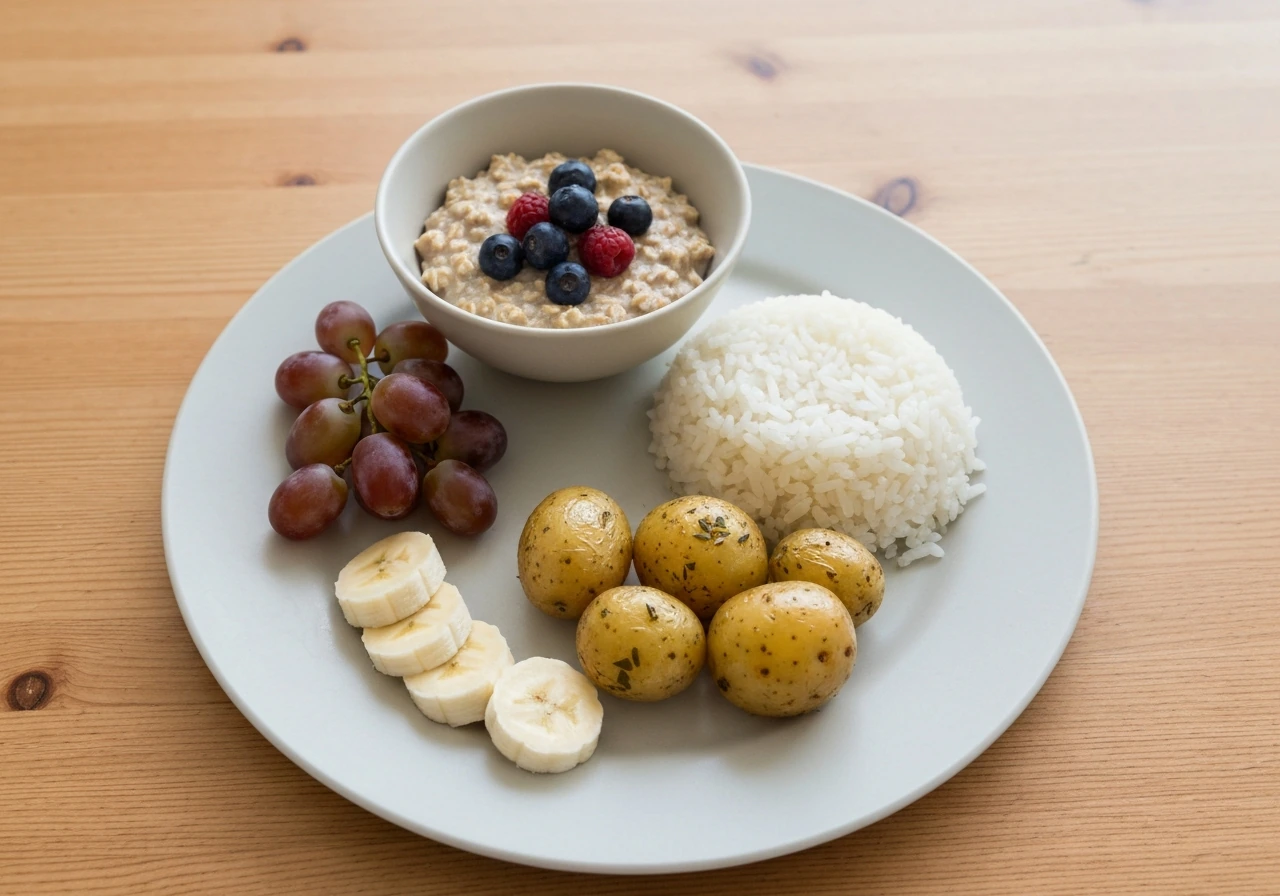
Carbohydrates are not the enemy after 40. They fuel your training sessions and replenish muscle glycogen, which directly affects how hard you can work and how fast you recover. Aim to consume the bulk of your carbohydrates around your workouts: a meal or snack with moderate carbs 1 to 2 hours before training, and carbs plus protein within 2 hours after. Total carbohydrate needs vary by training volume, but a reasonable starting point is 3 to 5 grams per kilogram of bodyweight per day for people training 3 to 5 days per week.
Fiber and food quality
After 40, gut health and inflammation management matter more than they used to. Getting 25 to 35 grams of fiber per day from vegetables, legumes, and whole grains supports digestive health, keeps blood sugar stable, and helps manage low-grade systemic inflammation that can slow recovery. Most people aren't hitting this number. It's worth tracking for a week to see where you stand.
Supplements worth taking
Most supplements are not worth the shelf space. A handful have genuine evidence behind them, and for lifters over 40 specifically, a few of those matter more than average.
| Supplement | Dose | What it does | Priority for 40+ |
|---|---|---|---|
| Creatine monohydrate | 3-5 g daily | Increases phosphocreatine stores, improves strength output, supports muscle protein synthesis | High |
| Whey protein | 20-40 g per serving as needed | Convenient high-quality protein source to hit daily targets | Medium to high |
| Vitamin D3 | 1000-2000 IU daily (check blood levels) | Supports testosterone production, immune function, and muscle function | High, especially if you're deficient |
| Omega-3 fatty acids | 2-3 g EPA/DHA daily | Reduces inflammation, may improve muscle protein synthesis sensitivity in older adults | Medium to high |
| Caffeine | 3-6 mg/kg body weight pre-workout | Improves strength, endurance, and focus during training | Optional, context-dependent |
Creatine is the single supplement with the most consistent evidence for muscle and strength gains in older adults. It's safe, inexpensive, and the research specifically on adults over 40 and 50 is positive. Start with 3 to 5 grams per day and don't bother with a loading phase. Vitamin D is worth checking via a blood test because deficiency is extremely common and directly affects muscle function and hormone health. Whey protein is just food in powder form, useful when you're struggling to hit protein targets through whole foods alone.
Recovery, sleep, and managing joint issues
Sleep is when you actually grow

Growth hormone release, muscle protein synthesis, and nervous system recovery all peak during sleep. After 40, most people are getting by on 6 hours and wondering why they're not recovering. Aim for 7 to 9 hours. If that sounds unrealistic, treat it as a training variable, not a lifestyle luxury. Poor sleep raises cortisol, depresses testosterone, increases appetite for junk food, and directly reduces your muscle-building response to training. You're not going to out-train chronically bad sleep.
Managing stress
Chronic high cortisol from work stress, poor sleep, and under-eating competes directly with the anabolic hormones you need to build muscle. You don't need to eliminate life stress, but you do need recovery practices that help manage it: walking, time outdoors, deliberate breathing, or whatever genuinely works for you. Treating stress as a recovery factor alongside sleep and deloads is especially relevant after 40 because the hormonal margin for error is smaller.
Joint and tendon management
Tendon pain, elbow aches, knee discomfort, and shoulder tightness are common after 40, but they're not a reason to stop lifting. They're a reason to be smarter. If something hurts during a movement, find a pain-free variation and keep training around it. Most tendon issues respond well to isometric loading (holding a contraction under load) as a short-term pain management tool while the tissue adapts. Joint pain that persists for more than 2 to 3 weeks despite modifying training is worth getting looked at professionally. Don't train through sharp, worsening pain.
Practical recovery tools
- Deload every 4 to 6 weeks: cut volume by 40-50%, keep frequency and exercise selection the same
- Prioritize 7 to 9 hours of sleep, especially on nights after hard training sessions
- Get 8,000 to 10,000 steps of daily low-intensity movement: walking keeps blood flowing without adding recovery load
- Use heat (sauna, warm bath) post-workout to support circulation and reduce stiffness
- Don't use ice routinely post-workout. The inflammation blunting effect may interfere with adaptation signals
- Address mobility work for the joints that limit your technique: hips and thoracic spine are the most common culprits
How long it takes and how to track progress
Realistic timelines after 40
In the first 8 to 12 weeks, most of your strength gains come from neural adaptation, not muscle growth, so don't expect the mirror to change dramatically. Visible muscle development typically becomes noticeable between 3 and 6 months of consistent training and adequate protein. After that, expect roughly 0. 5 to 1 lb of muscle per month if everything is dialed in.
That rate is slower than what research suggests for younger adults, and that's fine. In a year, 6 to 10 lbs of actual muscle is a meaningful, visible transformation. This is the realistic bar, not a pessimistic one. After 8 years in the gym, you can still build muscle, but you usually need more precision with training variables and recovery than you did earlier on.
What to track
Track three things: your strength numbers, your body measurements, and how you feel in training. Strength going up (more weight or reps on the same movements) is the most reliable early signal that the muscle-building stimulus is working. Body measurements at the chest, arms, thighs, and waist give you monthly data that the scale can't. The scale alone is a poor tracker because muscle and fat can change simultaneously in ways that keep bodyweight flat. Photos every 4 to 6 weeks are also useful, even if they feel awkward, because changes that are invisible day-to-day become obvious when you compare 3-month intervals.
When and how to adjust
If strength is stalling after 4 to 6 weeks and you feel beat up, reduce volume and prioritize sleep. If strength is progressing but you're not seeing body changes, look at total calories and protein first. If you're recovering well and progressing, add a set per muscle group and stay the course. The adjustment framework is simple: more volume when you're recovering well and progressing, less when recovery is the bottleneck. After 40, recovery is almost always the variable to manage first.
Your starting point today
If you're just getting started or returning after time off, here's what to do this week. Pick a 3 or 4 day upper/lower or full-body program. Start with 8 to 10 hard sets per muscle group per week. Hit 1.6 to 2.0 grams of protein per kilogram of bodyweight every day. Get 7 to 8 hours of sleep. Add 2.5 to 5 lbs to your main lifts when you can complete all reps with solid form. Reassess after 6 weeks. The people who build the most muscle after 40 aren't the ones doing the most complicated program. They're the ones who execute the basics with consistent precision for months at a time. That's entirely within reach.
If you're pushing further into your 50s and 60s, the same principles apply with even more emphasis on recovery and joint health. For a more age-specific approach, see the full guide on how to grow muscle after 60. The conversation around building muscle after 50 and after 60 covers those specific adjustments in more depth, but the foundation you build now transfers directly.
FAQ
How long does it usually take to notice muscle growth after 40?
Expect strength to rise in the first 8 to 12 weeks, but visible size changes are often noticeable later. Many people see meaningful visual differences between 3 to 6 months if protein, calories, and training volume are on target, then slower gains afterward (roughly 0.5 to 1 lb of muscle per month when dialed in).
If I lift but my weight stays the same, how do I know I’m gaining muscle after 40?
Use at least two tracking signals, strength progress and body measurements. Scale weight can stay flat because fat loss and muscle gain can offset each other. Take waist and photos every 4 to 6 weeks, and aim for reps or load increases on your main lifts as the earliest confirmation.
What should I do if I can’t recover enough to train each muscle group 2 times per week?
Keep the frequency, but reduce the weekly set count per muscle. For example, start with 6 to 8 hard sets per muscle instead of 10 to 14, and add volume only when strength is still moving and soreness is not lingering excessively. If you’re consistently beat up, your recovery capacity is the limiter, not your effort.
How close to failure should I train if I’m worried about joint or tendon irritation after 40?
Aim to finish with 2 to 4 reps in reserve on most sets, and only take select sets to very near failure. This keeps the stimulus while reducing the odds of form breakdown and excessive tendon stress, especially on compounds where connective tissue is slower to adapt.
Is it a mistake to do heavy singles or very low reps after 40?
Not necessarily, but they should not dominate your plan. If you want heavier work, keep it small and controlled, use it for skill and strength, and still do most hypertrophy work in the 6 to 15 rep range. Avoid frequent grinding, and swap to machine or dumbbell variations if joint discomfort appears.
Do I need a calorie surplus every week to grow muscles after 40?
You do need calories above maintenance most of the time, but you can use a smaller surplus and adjust based on results. If your scale weight and strength are not moving in the right direction after 2 to 3 weeks, add about 100 to 200 calories per day, rather than jumping to a large surplus that increases fat gain.
What if I’m hitting my protein target but still not gaining muscle?
Check the basics that protein cannot fully fix. First, ensure you are getting enough weekly hard sets in each muscle. Second, confirm you are actually progressing (weight or reps) within the rep range. Third, reassess sleep and total calories, because under-eating and poor sleep can blunt the training response.
Should I take creatine if I have kidney concerns or take medication?
Creatine is generally well-supported for muscle gains, but if you have kidney disease, a history of significant kidney problems, or you take medications that affect kidney function, get medical guidance first. Also consider splitting the dose (for example, 3 g twice daily) if it upsets your stomach.
How do I pick the right deload schedule if my recovery is slower than average?
If you feel beat up or your performance dips for 1 to 2 weeks, deload earlier rather than waiting for the calendar. A practical rule is every 4 to 6 weeks, but if tendon soreness or persistent fatigue accumulates sooner, pull volume down by about 40 to 50% and reduce intensity slightly for that week.
What’s the best way to manage tendon pain while still building muscle?
Avoid training through sharp, worsening pain, but you can often continue with modified loading. Choose a pain-free variation and consider adding isometric holds for the irritated tissue as short-term support. If symptoms persist beyond about 2 to 3 weeks despite modifications, get a professional evaluation.
Does sleep need to be perfect to grow, or can I compensate with more training?
You can’t fully compensate. If sleep drops, your recovery and hormone environment worsen, and appetite and cravings can push you off-target nutritionally. Treat sleep as a “training variable,” aim for 7 to 9 hours when possible, and if you cannot, reduce volume until performance stabilizes.
What should I do in the first 6 weeks if I’m returning after a long break?
Use a conservative volume ramp and focus on clean progression. Start around the lower end of hard sets (about 8 to 10 per muscle per week), prioritize controlled eccentrics, and only add sets every couple of weeks if strength and joint comfort are stable. Reassess after 6 weeks rather than expecting rapid hypertrophy immediately.