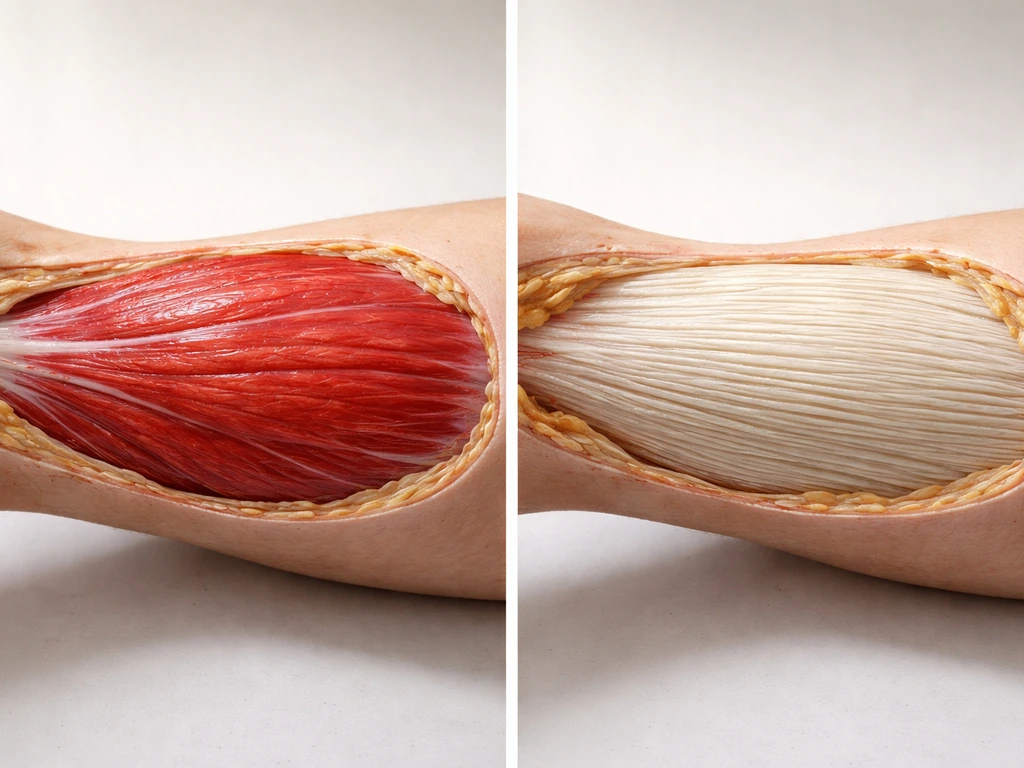
Yes, you can absolutely build muscle after 50. Not "maintain what you have" or "slow the decline", actually build new muscle. The research is clear on this, and I've seen it play out in practice over and over. What changes with age is the rate and the conditions under which growth happens, not your fundamental ability to grow. If you train consistently, eat enough protein, and recover properly, your body will respond. Let's get into exactly how to make that happen.
How to Grow Muscle After 50: Step-by-Step Plan
Marcus Kellerman
6 Apr 2026
What actually changes after 50 (and what doesn't)
Your muscles don't stop responding to training after 50, but the physiology does shift in ways worth understanding. A systematic review and meta-analysis found that [resistance training increases skeletal muscle fiber size in older adults](https://pmc. ncbi. nlm.
nih. gov/articles/PMC7473942/), including both slow-twitch (MHC I) and fast-twitch (MHC II) fibers. The biggest changes are hormonal and cellular. Testosterone and growth hormone both decline, which affects how quickly you recover and how readily your body builds new tissue.
At the cellular level, you have fewer satellite cells available (these are the repair cells that fuse to muscle fibers to help them grow), and there are changes in myosin heavy chain expression, particularly a decline in MHC IIa, that affect fast-twitch fiber function. This is part of what drives sarcopenia, the age-related muscle loss that can accelerate if you're sedentary.
The practical upshot: muscle protein synthesis (the process that builds new muscle tissue) becomes slightly less efficient after 50, meaning you need more of the right stimulus to trigger a strong anabolic response. You also need more recovery time between hard sessions. But here's the thing, muscles can grow after 50, and multiple well-controlled studies back this up. blank" rel="noopener noreferrer">A systematic review and meta-analysis of randomized controlled trials in very elderly adults found that resistance training improved both muscle strength and whole-muscle hypertrophy. If it works in the very elderly, it works for a healthy 50-year-old who trains smart.
One more thing to address upfront: the idea that soreness equals growth or that intensity alone drives results. Neither is true at any age, but after 50 chasing soreness is a fast track to overtraining and injury. Mechanical tension (lifting progressively heavier loads over time) is your primary tool for growth, not grinding yourself into the ground every session.
Your training plan: frequency, volume, and progression
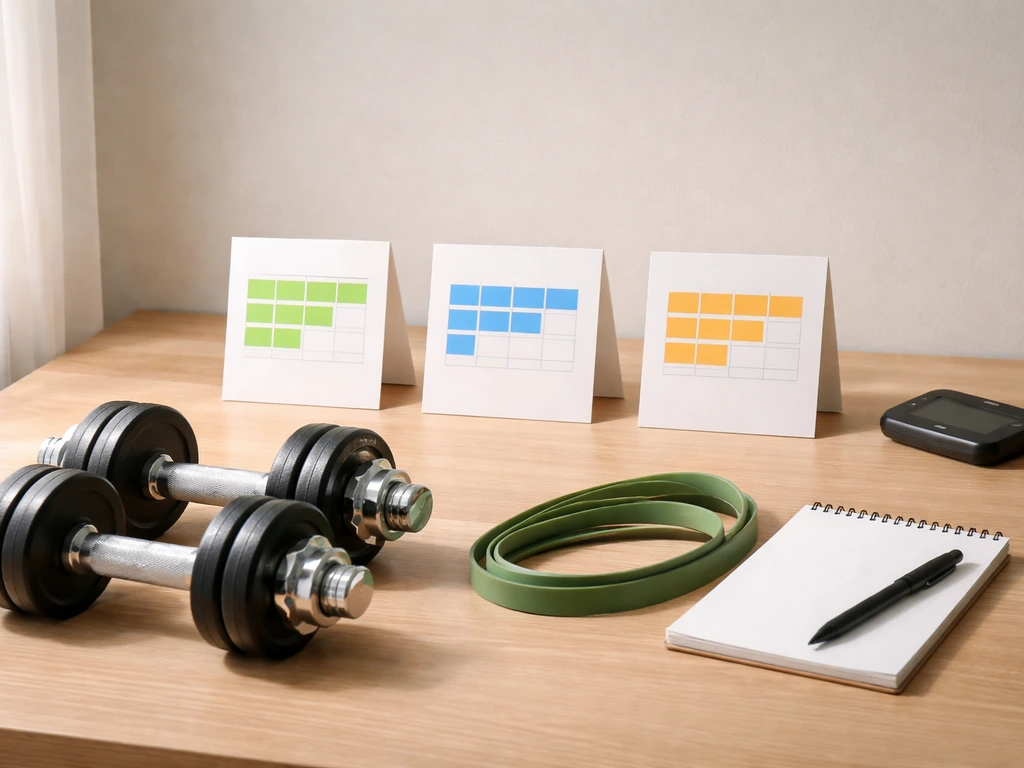
For most people over 50, three full-body strength sessions per week hits the sweet spot. You get enough frequency to stimulate each muscle group twice or more per week, which is important for maximizing the muscle protein synthesis signal, while giving you enough recovery time between sessions. A Monday-Wednesday-Friday or Tuesday-Thursday-Saturday split works well for most schedules.
Volume is where a lot of beginners go wrong in both directions. Too little and you don't create enough stimulus; too much and recovery falls apart. Research on resistance training dose-response suggests that favorable hypertrophy tends to occur at over roughly 9 weekly sets per muscle group. For a beginner over 50, I'd start at 8 to 10 sets per major muscle group per week and build from there. Split across three sessions, that's 3 sets per muscle group per session, very manageable. Intensity-wise, work in the 6 to 15 rep range. You don't need to go ultra-heavy; moderate loads taken close to failure are effective for hypertrophy and are easier on your joints.
Progression is the single most important training variable. You must give your body a reason to adapt. The simplest approach: add one rep each session until you hit the top of your rep range, then add a small amount of weight (2.5 to 5 lbs on upper body, 5 lbs on lower body) and start back at the bottom. This is linear progression and it works extremely well for the first 6 to 12 months. After that, when gains slow down, more advanced progression strategies like periodization become worth exploring.
A simple starter weekly template
| Day | Session Type | Focus |
|---|---|---|
| Monday | Full-body strength | Squat pattern, push, pull, hinge |
| Tuesday | Rest or light walk | Active recovery |
| Wednesday | Full-body strength | Squat pattern, push, pull, hinge |
| Thursday | Rest or light walk | Active recovery |
| Friday | Full-body strength | Squat pattern, push, pull, hinge |
| Saturday | Optional light activity | Mobility or easy cardio |
| Sunday | Full rest | Recovery |
Each session should take 45 to 60 minutes. Warm up for 5 to 10 minutes with light cardio and dynamic mobility work before you touch a weight. Keep rest periods at 2 to 3 minutes between heavy compound sets, this matters more as you age because your nervous system takes longer to recover between efforts.
Exercise selection and keeping your joints healthy
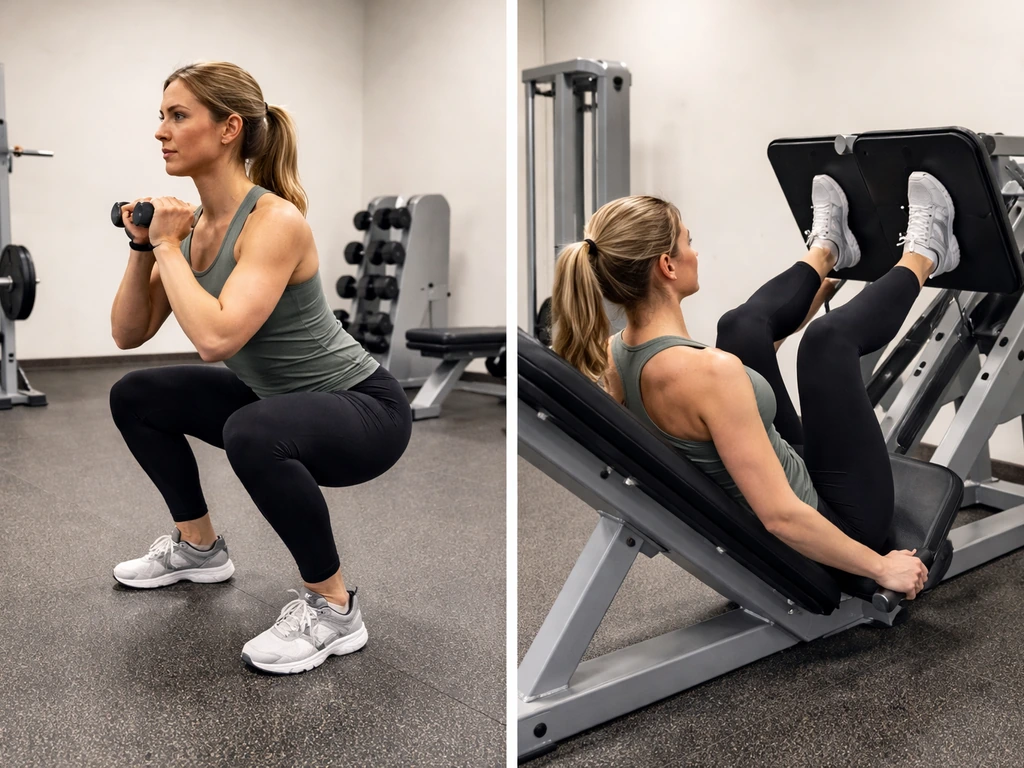
The best exercise for you is the one that challenges the target muscle without causing joint pain. That sounds obvious but it's where a lot of people over 50 go wrong by blindly copying a young powerlifter's program. Your exercise selection needs to respect your individual movement history, any existing joint issues, and your current mobility.
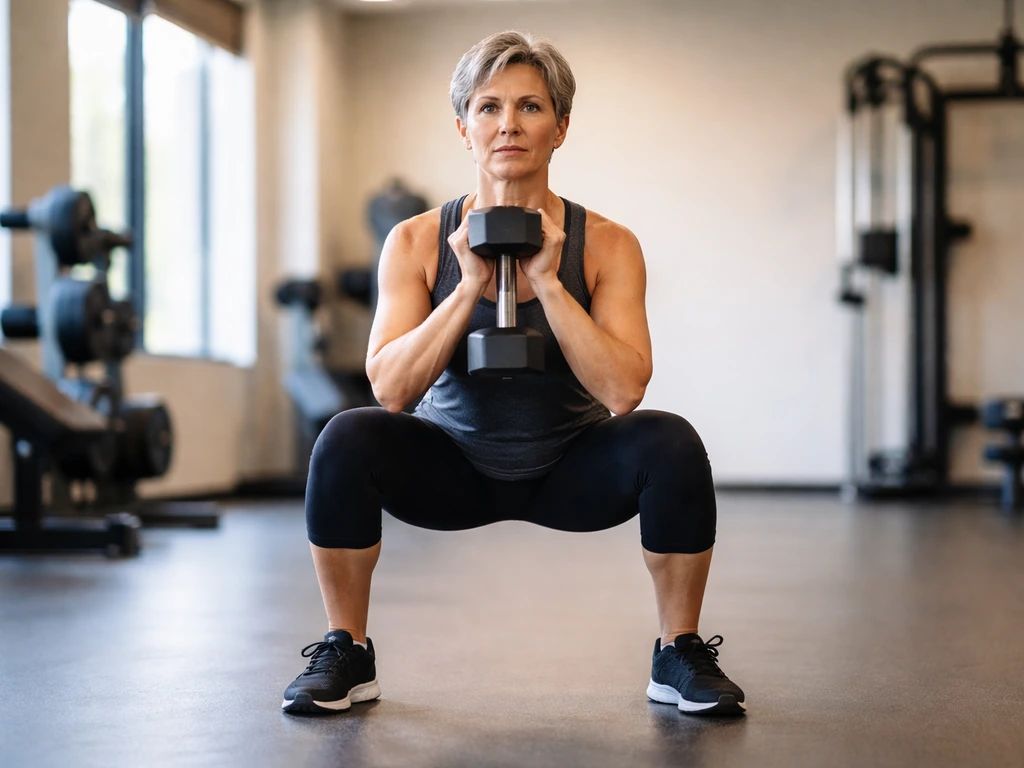
For lower body, goblet squats and leg press are excellent starting points if back squats cause knee or low back discomfort. Romanian deadlifts and hip hinges are generally safer than conventional deadlifts from the floor for people with disc issues. For upper body, dumbbell pressing variations tend to be more shoulder-friendly than barbell bench press because your arms can move in a more natural arc. Rows (cable, dumbbell, or machine) are non-negotiable for back health and posture, most people over 50 need more pulling work, not more pushing.
- Squat pattern: goblet squat, leg press, box squat, or safety bar squat
- Hinge pattern: Romanian deadlift, trap bar deadlift, kettlebell deadlift
- Push: dumbbell bench press, incline press, landmine press, machine chest press
- Pull: cable row, dumbbell row, lat pulldown, chest-supported row
- Carries and core: farmer's carries, plank variations, pallof press
Form tips: move through a full range of motion that your joints allow, control the lowering phase (take 2 to 3 seconds on the way down), and never sacrifice form to add weight. If something hurts, not muscle burn, but joint pain, stop and find a variation that doesn't hurt. Pain is not a training stimulus; it's a signal to adjust.
Nutrition: protein, calories, and when to eat
Protein is the most important nutritional variable for building muscle at any age, and the target after 50 is higher than most people expect. General population guidelines (0.8g per kg of bodyweight) are set for preventing deficiency, not for building muscle. For active adults over 50, aim for 1.6 to 2.2 grams of protein per kilogram of bodyweight per day. For a 180 lb (82 kg) person, that's roughly 130 to 180 grams of protein daily. This higher target matters because muscle protein synthesis becomes less sensitive to lower doses of protein with age, you need a larger per-meal dose to get the same anabolic response a younger person gets from less.
Per meal, aim for at least 35 to 40 grams of protein. This is roughly the dose needed to maximally stimulate muscle protein synthesis in older adults, compared to around 20 to 25 grams in younger adults. Spread this across 3 to 4 meals. Good sources: chicken, eggs, Greek yogurt, cottage cheese, beef, fish, and protein powder when whole food isn't convenient.
On calories: if you want to build muscle while staying lean (a body recomposition approach), eat at roughly maintenance calories. If you want to maximize muscle gain, a modest surplus of 200 to 300 calories above maintenance is enough, you don't need a big bulk. Gaining fat aggressively after 50 creates its own metabolic problems and makes the eventual cut harder. Prioritize protein, fill the rest of your calories with whole foods (vegetables, fruits, whole grains, healthy fats), and keep ultra-processed food to a minimum. Fiber matters here too, high-fiber diets support gut health, hormone regulation, and overall energy levels, all of which affect your training quality.
Meal timing does matter somewhat after 50. Getting protein in within 1 to 2 hours after training is worth doing, and don't skip breakfast, starting the day with a protein-rich meal (30 to 40g) sets a good anabolic tone. A protein-containing snack before bed (like cottage cheese or a casein shake) can also support overnight muscle protein synthesis.
Supplements worth taking (and the ones you can skip)

I'll be straight with you: most supplements are not worth your money. A small handful have solid evidence behind them for people over 50.
Creatine monohydrate is the one I'd put at the top of the list. It's the most well-researched performance supplement in existence, it's cheap, it's safe for long-term use, and it's particularly beneficial for older adults. Creatine supports phosphocreatine resynthesis in muscle, which helps you perform more work per session, and more work over time means more muscle. There's also emerging evidence it supports cognitive function in older adults as a bonus. Dose: 3 to 5 grams per day, no loading phase needed. Just take it consistently.
Vitamin D is worth checking. Most people over 50 are deficient, and low vitamin D is associated with poor muscle function and reduced strength gains. Get your blood levels tested; if you're below 40 ng/mL, supplement with 1,000 to 2,000 IU per day. Protein powder is a tool, not a magic supplement, use it to hit your daily protein targets when whole food falls short, not as a replacement for a real diet.
Skip the testosterone boosters, BCAAs (if you're already hitting protein targets), and anything marketed specifically for "aging" or "hormonal support" without peer-reviewed evidence. These categories are largely hype with minimal return.
| Supplement | Benefit for 50+ | Recommended? | Dose |
|---|---|---|---|
| Creatine monohydrate | Strength, power output, muscle volume | Yes — strong evidence | 3-5g daily |
| Vitamin D3 | Muscle function, strength, bone health | Yes, if deficient | 1,000-2,000 IU/day |
| Protein powder | Hits daily protein targets conveniently | Yes, as a food tool | As needed |
| Omega-3 fish oil | May reduce inflammation, supports recovery | Optional | 1-3g EPA/DHA daily |
| Testosterone boosters | No meaningful effect on testosterone | No | — |
| BCAAs | Redundant if protein intake is adequate | No | — |
Recovery, sleep, and staying injury-free
Recovery is where muscle growth actually happens, the training is just the signal. After 50, recovery takes longer than it did at 25. If you're sore 72 hours after a session, that's your body telling you it needed more time. The fix is usually more sleep, more protein, and occasionally a lighter session rather than skipping entirely.
Sleep is non-negotiable. Seven to nine hours per night is the target. Growth hormone is predominantly released during deep sleep, and poor sleep directly blunts muscle protein synthesis and elevates cortisol (a catabolic hormone). If you're training hard and sleeping 5 hours a night, you're working against yourself. Prioritize sleep as seriously as you prioritize training.
Managing soreness: light movement on rest days, walking, swimming, cycling at low intensity, speeds recovery without adding stress. Contrast showers, foam rolling, and mobility work are all useful. What doesn't help much: static stretching immediately before lifting (save it for after), and excessive ice bath use right after training (there's evidence it can blunt the hypertrophic response).
Injury prevention comes down to four things: warm up properly, don't train through joint pain, progress slowly, and include mobility and stability work. Your tendons and ligaments adapt more slowly than your muscles, so early in a program your muscles will get stronger faster than your connective tissue can keep up. This is why the first few months should feel almost too easy from a weight perspective, you're building a foundation, not racing to a max.
What results to expect and how to track them
Here's the honest timeline. In weeks 1 to 4, most of your strength gains come from neural adaptation, your nervous system getting better at recruiting muscle fibers, rather than actual muscle growth. You'll feel stronger but won't look dramatically different. Visible muscle changes typically start around weeks 6 to 12. After 3 to 6 months of consistent training, the difference is usually noticeable both in the mirror and in functional performance. Realistic muscle gain for a 50-year-old man training consistently is roughly 1 to 1.5 lbs of muscle per month in the first year; for women, roughly 0.5 to 1 lb per month. Those numbers are lower than what a 25-year-old might achieve, but they add up meaningfully over time.
Research confirms that hypertrophy magnitude is age-dependent, older adults tend to see slightly smaller absolute gains than younger adults in the same program, but the growth is real and measurable. For context, people who are curious about how to grow muscle after 60 face a similar picture: the gains are there, just requiring a bit more patience and precision.
Track progress with more than just the scale. Bodyweight fluctuates with water and food volume and isn't a reliable short-term measure of muscle gain. Better tracking tools: strength logs (are your lifts going up?), monthly progress photos taken in consistent lighting, body measurements at the chest, arms, waist, and thighs, and how your clothes fit. If your lifts are going up and your measurements are changing, the program is working regardless of what the scale says.
Your first-week action plan
- Set up your three training days for the week before you do anything else.
- Session 1: goblet squat 3x10, dumbbell Romanian deadlift 3x10, dumbbell bench press 3x10, cable row 3x10, plank 3x30 seconds.
- Calculate your daily protein target (bodyweight in lbs x 0.8 = grams of protein per day as a minimum floor; aim for 1.0 x bodyweight in lbs for muscle building).
- Buy creatine monohydrate and start taking 5 grams daily — any time of day is fine.
- Log every session: exercises, sets, reps, and weights used. This is how you ensure progression week to week.
- Get to bed 30 minutes earlier than usual this week. Just this one change will improve your first week of training more than any supplement.
- Repeat sessions 2 and 3 using the same exercises. Try to add one rep to at least two exercises by session 3.
If you're coming from a longer period of inactivity, the principles here apply whether you're starting fresh at 50 or getting back to it after years away. The people who see the best results are rarely the ones who train the hardest out of the gate, they're the ones who train consistently over months and years. If you're thinking about how to grow muscles after 40, the approach is very similar with a few adjustments; the fundamentals of tension, protein, and progressive overload don't change with the decade.
One myth worth addressing before you head into your first session: that building muscle after 50 is fundamentally different from building it at any other age. It isn't. The mechanisms, mechanical tension, progressive overload, adequate protein, sufficient sleep, are the same. The adjustments are in the details: slightly higher protein per meal, a bit more recovery time, smarter exercise selection. People sometimes ask whether you can grow muscle after 40 as if the answer might somehow be no. It isn't no at 40, and it isn't no at 50 either. You just have to be willing to do the work consistently and give it enough time.
FAQ
How long will it take before I can actually see muscle changes after 50?
Expect noticeable changes later than you might in your 20s. Most people get clear strength improvements in the first 4 weeks, visible size changes often start around 6 to 12 weeks, and larger mirror or measurement shifts are usually more obvious after 3 to 6 months. If nothing changes after 12 weeks, reassess load progression and whether weekly sets and protein targets are truly being hit.
What if I cannot train three full-body days per week because of work or recovery?
If 3 days is not realistic, you can still build muscle with 2 days per week, but you need to manage volume and recovery carefully. Aim for about 8 to 12 weekly sets per muscle group, spread across your two sessions, and keep intensity close to failure while using a slower progression at first. If you are very sore after day 1, your total weekly volume is probably too high for your current recovery.
How close to failure should I train, without overdoing it?
Use “reps in reserve” style effort. Most sets should end with roughly 0 to 3 reps left in the tank (RIR 0-3) for major lifts, but do not make every set all-out. If joints feel beat up or soreness lingers beyond 72 hours, reduce effort slightly or swap one movement for a joint-friendlier variation next week.
Do I need supplements for muscle growth after 50?
Not many. Creatine monohydrate is the main one with consistent benefits, especially for older adults. Protein powder is useful only as a convenience tool to reach daily protein. For other supplements like testosterone boosters or “aging” blends, the evidence is weak and they often distract from the basics, training progression, protein, and sleep.
What protein target should I use if I am overweight or trying to lose fat?
The article’s numbers are based on body weight, but for fat loss you can reduce stress by using a consistent method. A practical approach is to use your target body weight or lean-mass estimate to set protein, then keep resistance training progressive. Even during a deficit, higher protein supports muscle retention, but you should still avoid cutting so aggressively that training quality collapses.
How do I know my weekly sets are the right amount if I am recovering slowly?
A useful decision rule is performance consistency. If your reps and loads are trending down week to week, you are likely exceeding your current recovery capacity. For beginners over 50, starting around 8 to 10 sets per muscle group per week is safer, then add only when you can complete sessions with stable technique and minimal joint pain.
Is soreness required for hypertrophy after 50?
No. Soreness can happen, but it is not the goal and it is not a reliable growth marker. After 50, chasing soreness often increases joint stress and slows recovery. Focus on progressing mechanical tension and doing enough challenging sets, even if you feel little soreness.
What should I do if a lift causes joint pain but not muscle burn?
Treat joint pain as a stop signal. Keep training, but swap the movement for a pain-free variation (example: leg press or goblet squat instead of back squat, incline or dumbbell pressing instead of barbell bench). Then reassess your range of motion and load, and prioritize strict technique and controlled lowering.
How should I progress if linear progression stalls after a few months?
When you hit plateaus, you can shift from adding reps every time to changing the training plan. Common next steps are periodization blocks, reducing frequency or volume temporarily, using a deload, or adjusting exercise selection. Also check that you are actually working close enough to failure, because poor effort can mimic a “bad program” plateau.
Do I need to do mobility work before every workout?
Some mobility and light activation in the warm-up can help you access your best safe range of motion, but it should not replace strength work. Keep pre-lift stretching brief, focus on dynamic mobility and gradual ramp-up sets, and save longer stretching for after training or rest days.
How can I track muscle gain if the scale is not going up?
Use multiple signals. Strength trends in your key lifts are one of the best indicators. Also track monthly photos in consistent lighting, tape measurements at chest, arms, waist, thighs, and how clothes fit. If strength improves while measurements stay stable, consider slightly increasing weekly sets or refining progression speed.
What recovery options actually help if I feel too sore after 50?
The most effective tools are sleep, adequate protein, and sometimes reducing training intensity or total volume for 1 week. On rest days, use light movement like walking to promote circulation, and choose low-stress cardio. Avoid using passive strategies that can blunt training adaptation right after sessions, like frequent, aggressive ice baths.
Is it safe to start if I have been inactive for years?
Yes, but your first months should feel easier than you expect from a loading perspective. You are rebuilding connective tissue tolerance, not testing your max. Start with the recommended frequency, keep range of motion controlled, use conservative progression, and focus on technique. If you cannot complete prescribed sets with good form, scale loads down and increase consistency first.