Yes, your muscles can grow if you work out every day, but only if you're smart about how you do it. The mistake most people make is treating every session like a max-effort test, hammering the same muscles hard day after day. That kills recovery and stalls growth. Done right, daily training means rotating muscle groups, managing intensity, and hitting enough weekly volume per muscle to actually trigger adaptation. You don't need to rest every other day, but your muscles do need recovery time after each hard session before you train them hard again.
Will Muscles Grow If You Workout Everyday? A Practical Guide

Marcus Kellerman
23 Apr 2026

Muscle growth vs just working out every day
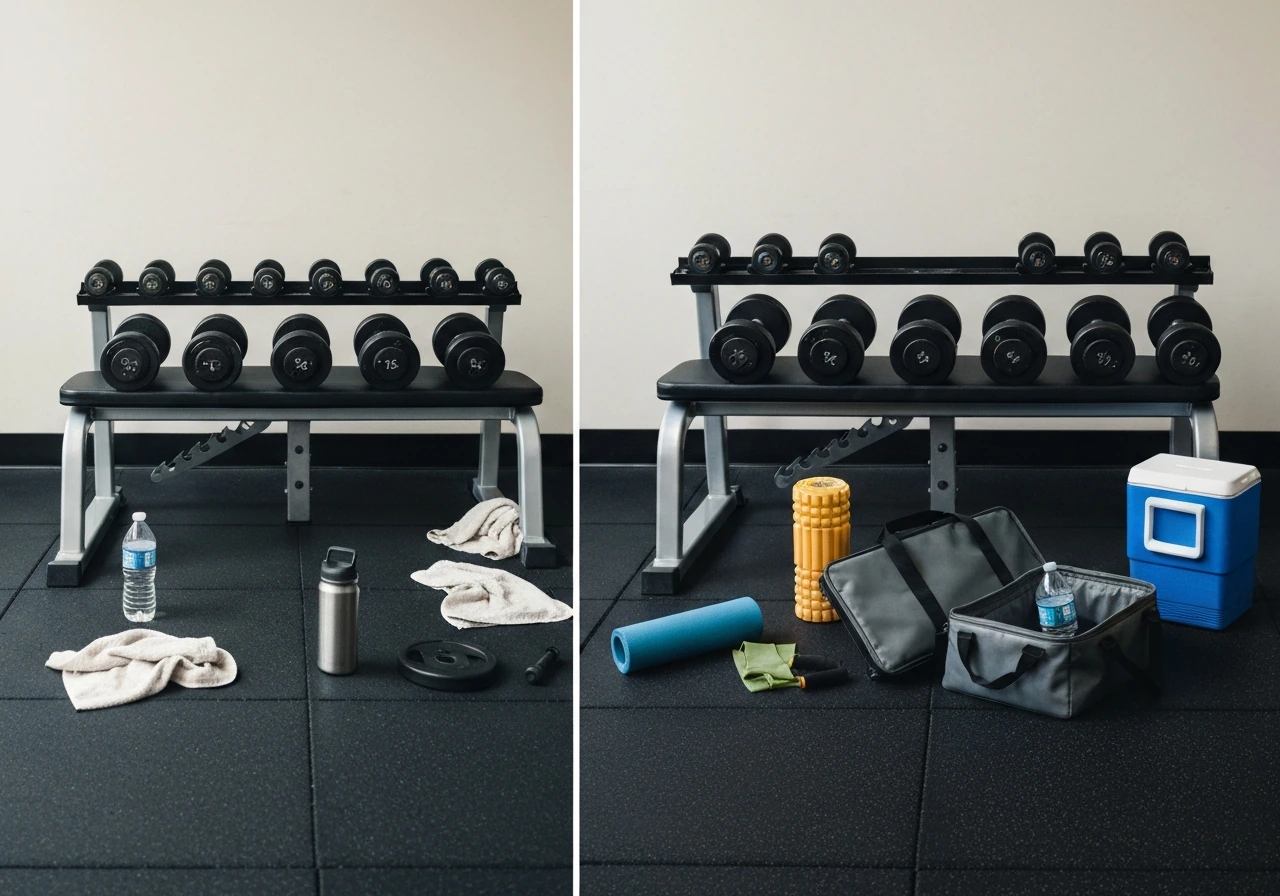
Working out every day and building muscle are not the same thing. You can train seven days a week and make zero size gains if the stimulus isn't right. Muscle growth, technically called skeletal muscle hypertrophy, happens when training creates enough mechanical tension in the muscle fibers to trigger an increase in muscle protein synthesis. Your body then repairs and rebuilds those fibers slightly thicker and stronger during the recovery period after training. If you skip or shortcut recovery, that rebuilding process gets interrupted.
The key variables that drive hypertrophy are: sufficient proximity to failure (you need to push sets hard enough that the last few reps are genuinely challenging), adequate weekly set volume per muscle group, and enough recovery between hard sessions on the same muscle. Daily training can check all three boxes, but only if you design it that way. Most people who say they work out every day but aren't growing are either not pushing close enough to failure, not getting enough total weekly sets, or grinding the same muscles hard without rest.
How daily training affects muscle protein synthesis and recovery
A hard resistance training session elevates muscle protein synthesis for roughly 24 to 48 hours afterward in that specific muscle group. At the same time, blank" rel="noopener noreferrer">delayed onset muscle soreness, commonly called DOMS, tends to peak somewhere around 24 to 48 hours post-session and generally subsides by about 72 hours. If you want the practical “how to make muscles grow after workout” plan, also see the section on how delayed DOMS and recovery timing affect growth. That timing matters a lot. If you train the same muscle group intensely again before synthesis has done its job and soreness has resolved, you're accumulating fatigue without accumulating growth.
This doesn't mean you can't train daily. It means you can't train the same muscle group at maximum effort daily. A full-body brutal session every morning is a recipe for stalled progress and mounting fatigue. But an upper-lower split, a push-pull-legs rotation, or a structure where you alternate hard and lighter sessions keeps daily training from becoming a recovery problem. Research consistently shows that training a muscle group twice per week produces better hypertrophy outcomes than once per week when total weekly volume is matched, and spreading that volume across more days (while keeping per-session intensity appropriate) tends to work very well.
What to actually do: frequency, volume, and intensity
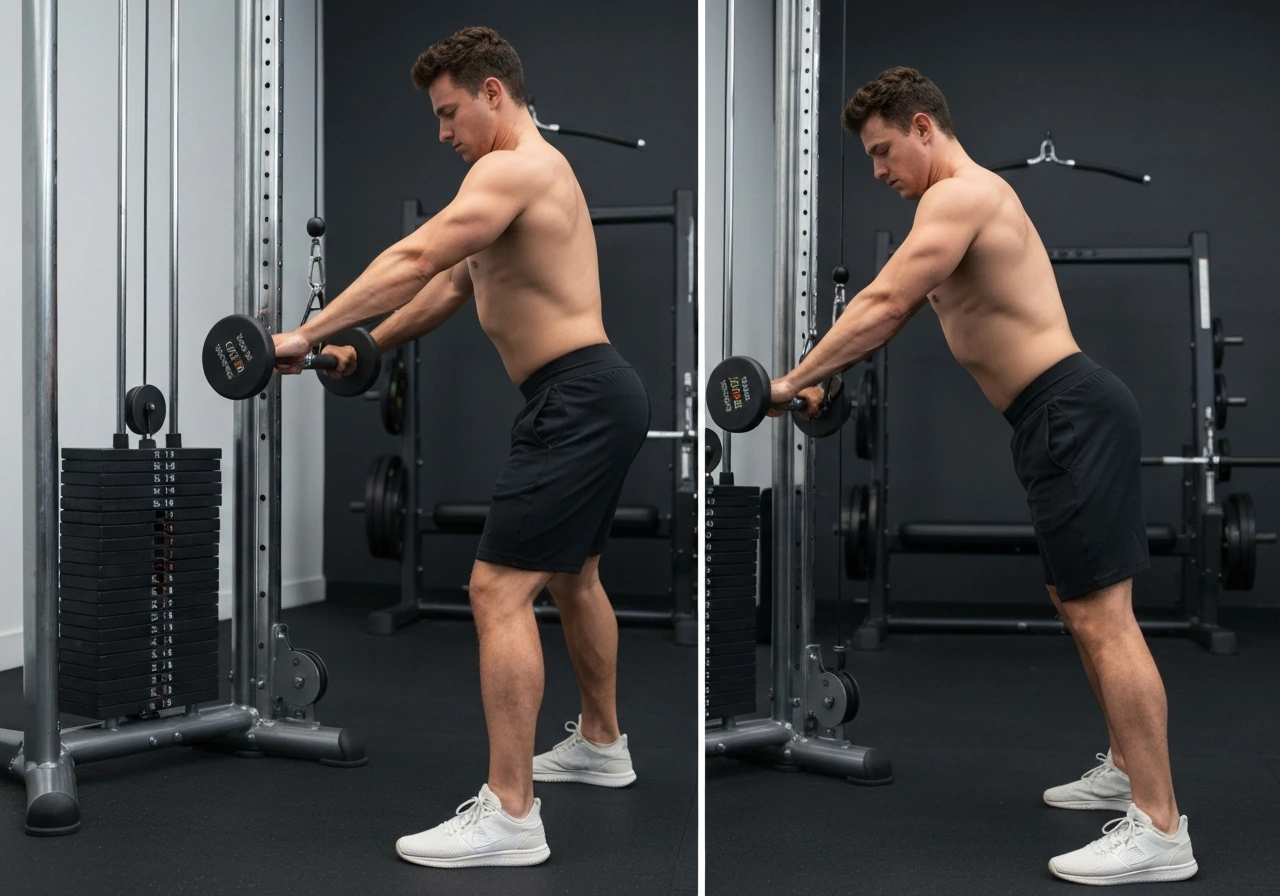
The evidence points to a clear dose-response relationship between weekly sets per muscle group and hypertrophy. Fewer than 5 sets per week per muscle produces minimal growth. Somewhere in the range of 10 to 20 sets per week per muscle is where most people see meaningful hypertrophy, and going beyond 20 may help advanced trainees who can recover from higher loads. The goal of daily training should be to distribute that volume intelligently across the week, not to max out every session.
For intensity, you don't need to grind every set to absolute failure. Working within a few reps of failure (leaving roughly 1 to 3 reps in reserve) stimulates hypertrophy effectively while keeping cumulative fatigue manageable across a full week of training. Going to failure on every set of every session every day piles up fatigue fast, which undermines the quality of subsequent sessions and slows overall progress.
Structuring daily workouts to allow growth
The most practical approach for daily training is a muscle group split. Push/pull/legs is a classic structure that lets you train six days and rotate muscle groups every two days, so each muscle gets worked twice per week with adequate recovery in between. Upper/lower splits work similarly on a four-day rotation, with extra days used for lighter accessory work, cardio, or active recovery. A few practical frameworks:
- Push/Pull/Legs (PPL) run twice per week: chest/shoulders/triceps, back/biceps, legs, repeated, with one lighter active recovery or mobility day
- Upper/Lower split (4 days hard, 3 days light or active): each muscle group hit twice per week at full effort
- Full-body sessions every other day with the remaining days used for low-intensity cardio or mobility work, keeping training stress low on off days
- Alternating heavy compound days with lighter accessory or isolation days targeting the same muscle groups at reduced load
The common thread: no muscle group gets hit hard two days in a row. If you trained chest and triceps hard on Monday, you can train legs or back on Tuesday without any recovery conflict. Daily training works when you respect that rule.
How much muscle growth to actually expect
Realistic timelines matter here, because if you don't know what to expect, you'll either quit too early or assume something is wrong when it isn't. Beginners tend to respond faster than trained individuals, which is well supported in the research. For newer trainees, noticeable changes in strength often come within the first two to four weeks, largely due to neuromuscular adaptations (your nervous system learning to recruit muscles more efficiently) rather than actual size increases. True structural hypertrophy takes longer to become visible.
One nuance worth knowing: early changes in muscle size can be partly explained by fluid shifts and localized swelling from muscle damage, not just fiber growth. This is why that initial pump or slight thickness you notice in the first couple of weeks isn't pure hypertrophy. Meaningful, measurable muscle growth typically accumulates over months, not days. A realistic expectation for a committed beginner in their first year is somewhere around 1 to 2 pounds of muscle per month under good training and nutrition conditions. Intermediate and advanced lifters grow much more slowly, often measured in pounds over a whole year.
| Experience Level | Expected Monthly Muscle Gain | When You'll Notice Changes |
|---|---|---|
| Beginner (0-1 year) | ~1-2 lbs/month | Strength gains in 2-4 weeks; visible size in 2-3 months |
| Intermediate (1-3 years) | ~0.5-1 lb/month | Visible changes over several months of consistent work |
| Advanced (3+ years) | ~0.25-0.5 lb/month | Slow, requires precision in training and nutrition |
Nutrition basics: protein, calories, and carbs
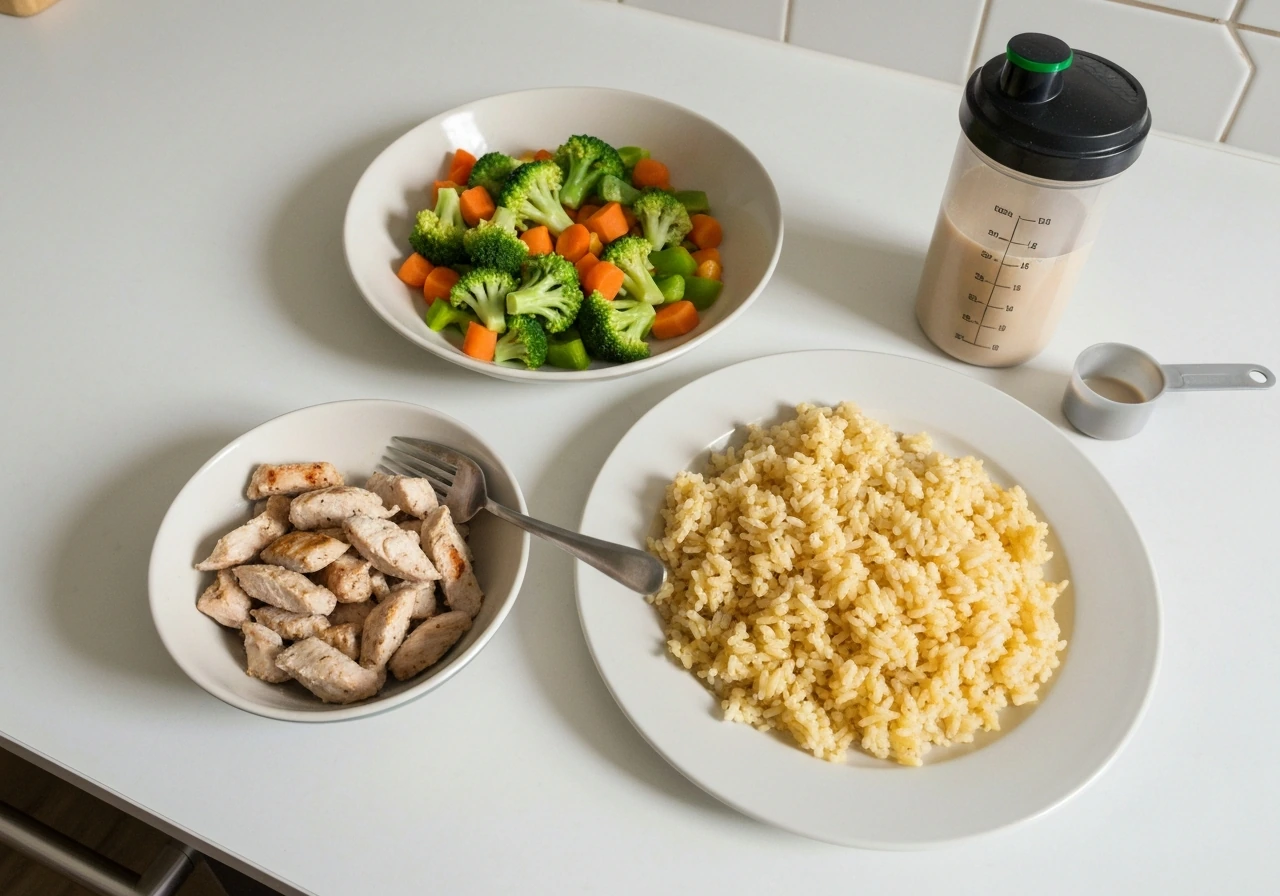
Training every day without eating enough to support it is one of the most common reasons people plateau. Your muscles can't grow if the raw materials aren't there, and daily training actually increases your need for both protein and total calories.
Protein
The ISSN recommends 1. 4 to 2. 0 grams of protein per kilogram of bodyweight per day to optimize training adaptations for most active individuals, with strength-focused athletes often landing around 1. The ISSN position stand recommends a daily protein intake of 1.
4 to 2. 0 g/kg/day for active individuals to optimize training adaptations [1. 4 to 2. 0 g/kg/day protein intake](https://pmc.
ncbi. nlm. nih. gov/articles/PMC2117006/).
6 to 1. 7 g/kg/day. For a 180-pound (82 kg) person, that works out to roughly 115 to 164 grams of protein daily. Spreading that across multiple meals matters too, but not in an obsessive way.
The key is making sure each meal contains a substantial protein dose, not just scattering tiny amounts across six meals and hoping it adds up. Think 30 to 50 grams per meal depending on your size and daily target.
Calories
To build muscle, you generally need to be in a calorie surplus, meaning eating slightly more than you burn. This doesn't mean eating everything in sight. A modest surplus of roughly 200 to 300 calories above your maintenance needs is enough to support muscle growth while minimizing unnecessary fat gain. If you're training daily and eating at maintenance or below, your body simply doesn't have the surplus energy to build new tissue. You might maintain what you have, but growth will stall.
Carbohydrates
Carbs often get treated as optional for muscle building, but they genuinely matter for training performance, especially when you're training every day. Carbohydrates are your muscles' primary fuel source during resistance training, and chronically low carb intake can deplete muscle glycogen, making your sessions feel flat and reducing the quality of the stimulus. Strength athletes commonly work within a range of 4 to 7 grams of carbohydrate per kilogram of bodyweight per day, though your individual needs depend on your training volume and intensity. Prioritizing carbs around your training sessions, eating some before and some after, helps maintain glycogen availability and supports recovery.
Recovery fundamentals: sleep, soreness, overtraining, and deloads
If daily training is the machine, recovery is the fuel. You can have the best program and eat perfectly, and still not grow if recovery is neglected. Here's what actually matters:
Sleep
Sleep is the most underrated muscle-building tool most people have complete access to. Most of your muscle repair and hormonal recovery happens during sleep. Research also shows a clear bidirectional relationship between training stress and sleep quality: when you're overreaching, sleep often suffers, and poor sleep then makes overreaching worse. Treat 7 to 9 hours as a non-negotiable target when training daily. If your sleep quality starts deteriorating when you ramp up training volume or frequency, that's a legitimate signal your recovery is slipping.
Soreness and what it actually means
Soreness is not a reliable indicator of a good workout, and the absence of soreness does not mean you didn't grow. DOMS peaks around 24 to 48 hours post-session and is largely a product of eccentric muscle contractions and unaccustomed training. As you become more trained and your body adapts, you'll get less sore from the same workouts, which is normal and expected. Training through mild soreness is fine. Training a muscle group intensely when it's severely sore and still not recovered will undermine the quality of that session and extend the recovery timeline.
Overtraining: recognize it before it sets in
There's a meaningful difference between everyday training fatigue, functional overreaching (short-term performance dip that resolves within about two weeks of reduced load), and actual overtraining syndrome. Overtraining syndrome involves a prolonged performance decline lasting more than two months, disrupted sleep, persistent mood changes, and systemic symptoms across multiple body systems. Most people training hard don't hit true overtraining syndrome, but non-functional overreaching is more common and worth watching for. Signs to take seriously include consistently declining performance despite adequate sleep and nutrition, persistent joint or tendon soreness, worsening sleep quality, and lack of motivation that doesn't resolve with a few easier days.
Deload weeks
A deload is a planned period of reduced training volume and intensity, typically lasting one week, inserted every four to eight weeks of hard training. Deloads are not a sign of weakness or wasted time. They let accumulated fatigue dissipate so you can come back and push harder in the following training block. If you're training daily, deloads become more important, not less. You can still train every day during a deload, just at significantly reduced volume and intensity, for example, cutting sets by half and keeping loads lighter.
Common mistakes and practical weekly examples
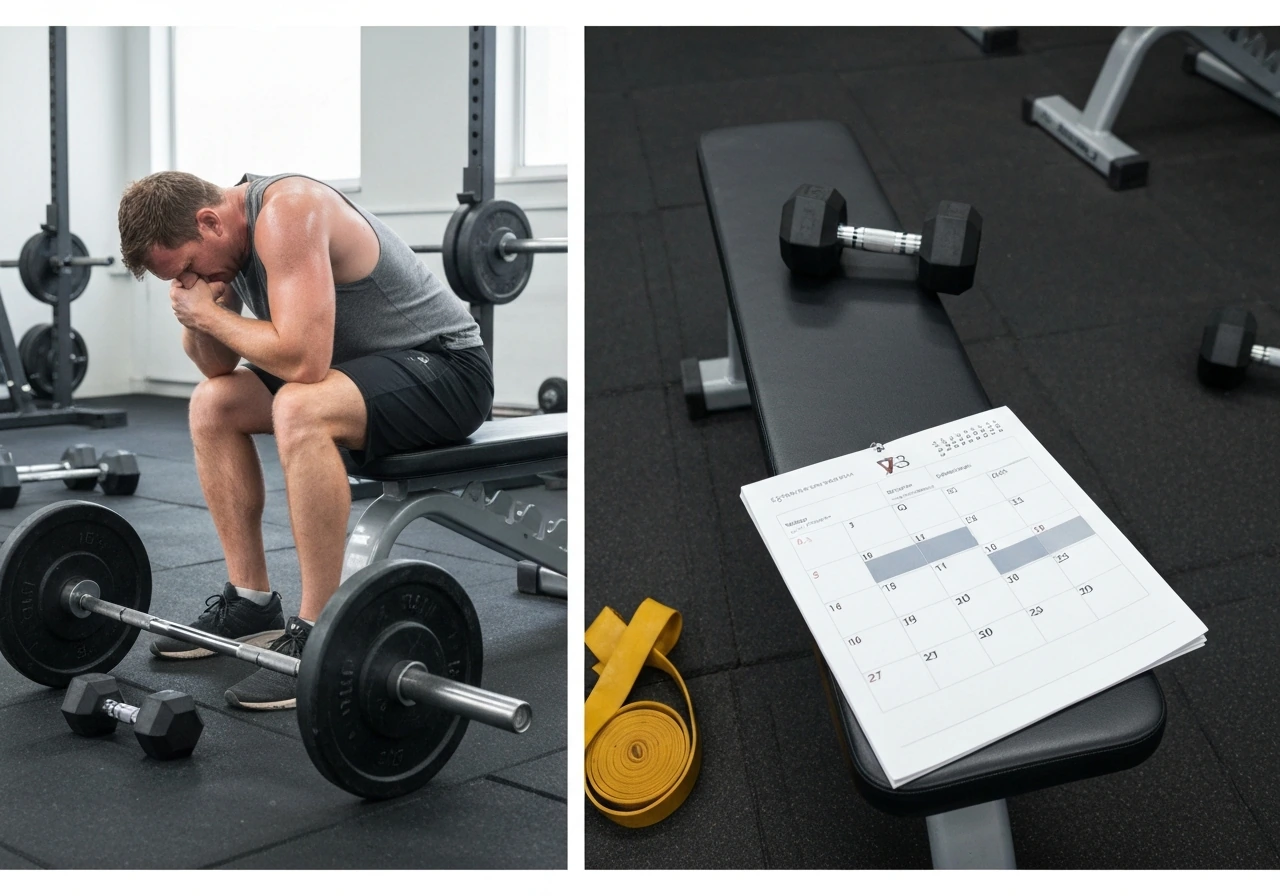
The most common mistakes
- Doing the same full-body hard session every single day: this is the fastest way to accumulate fatigue without growth because no muscle group gets adequate recovery
- Under-eating protein: many people training daily consume only 0.6 to 0.8 g/kg, which is well below what's needed to support hypertrophy
- Eating at a calorie deficit and expecting to gain muscle: it's very difficult to build significant muscle while in a deficit, especially as a non-beginner
- Ignoring fatigue signals: pushing through genuine overreaching symptoms rather than taking a lighter day or deload week
- Training every set to absolute failure, every session: this magnifies cumulative fatigue without proportionally improving hypertrophy outcomes
- Not tracking weekly volume per muscle: many people have no idea how many sets per muscle they're actually getting; without tracking, it's easy to over-train some muscles and neglect others
Practical weekly plan for beginners (daily training)
If you're newer to lifting and want to train every day, a full-body approach on three to four days with active recovery or light movement on the remaining days is a solid starting point. Each full-body session should include two to three sets per major muscle group (legs, push, pull), working to around 2 to 3 reps from failure. You'll hit each muscle group at least twice per week across the week, which is the sweet spot for beginners.
| Day | Session Type | Focus |
|---|---|---|
| Monday | Full-body strength | Squat, row, press, hinge (2-3 sets each, near failure) |
| Tuesday | Light/active recovery | Walking, mobility, stretching, or light cardio |
| Wednesday | Full-body strength | Slightly different exercise selection, same approach |
| Thursday | Light/active recovery | Low-intensity movement, foam rolling |
| Friday | Full-body strength | Progressive overload focus, beat Monday's numbers |
| Saturday | Light full-body or accessory | Isolation work, lighter loads, not to failure |
| Sunday | Rest or very light activity | Walk, yoga, or complete rest |
Practical weekly plan for intermediate lifters (daily training)
If you've been training consistently for a year or more, a push/pull/legs structure run twice per week with one recovery day works well for daily training. Each muscle group gets hit twice per week at reasonably high effort, and total weekly volume per muscle can reach 12 to 18 sets, which sits squarely in the evidence-supported hypertrophy range.
| Day | Session Type | Primary Muscles |
|---|---|---|
| Monday | Push (heavy) | Chest, shoulders, triceps |
| Tuesday | Pull (heavy) | Back, biceps, rear delts |
| Wednesday | Legs (heavy) | Quads, hamstrings, glutes, calves |
| Thursday | Push (moderate/volume) | Chest, shoulders, triceps at slightly lower load |
| Friday | Pull (moderate/volume) | Back, biceps with more isolation emphasis |
| Saturday | Legs (moderate/volume) | More unilateral work, hamstring and glute focus |
| Sunday | Active recovery | Light cardio, mobility, or complete rest |
The bigger picture here is that muscle growth comes down to consistently delivering the right stimulus, eating enough to support it, and recovering well enough to actually adapt. Training every day is a viable and effective approach when structured correctly. The questions about how many days muscles grow after a workout, or how to make muscles grow faster after training, ultimately come back to the same answers: enough weekly volume, adequate protein and calories, and honest recovery management.
After a workout, muscles grow because training triggers skeletal muscle hypertrophy during the recovery period. The questions about how many days do muscles grow after workout also depend on when your recovery and muscle protein synthesis peak after training. Get those three right and daily training becomes an asset, not a liability. For a quick answer to what is it called when muscles grow after exercise p4, that process is skeletal muscle hypertrophy.
If you're wondering what is called when muscles grow after exercise persona 4, that process is skeletal muscle hypertrophy, so focus on the recovery period that drives it.
FAQ
How many days in a row can I train before I need a break to still grow?
If you structure your split so the same muscle is not trained hard on consecutive days, most people can train 6 to 7 days weekly. The bigger limiter is how you’re handling fatigue, so plan a deload every 4 to 8 weeks and use performance or soreness trends (declining reps, worse sleep) to decide when to reduce load sooner.
Will I grow if I work out every day but my sets are mostly “easy” ?
Likely not. For hypertrophy, you generally need sets that are challenging, typically leaving about 1 to 3 reps in reserve. If most sets end with 5+ reps left, you might burn calories and improve fitness, but muscle growth stimulus is usually too small.
If I can recover fast and feel good, should I still avoid training the same muscle two days in a row?
Feelings are a poor tracking tool. You can be “okay” while accumulating fatigue that reduces effort quality, load, or range of motion. A practical check is whether you can keep reps near your target and maintain similar performance two sessions in a row for that muscle.
Do I have to go to failure to maximize muscle growth with daily training?
No. Going to failure every set daily usually just increases fatigue and can reduce the quality of later sets. Many people grow well when they stop 1 to 3 reps shy of failure and only take one or two sets per session closer to failure.
Is DOMS required for muscle growth if I’m training every day?
No. You can grow with little soreness, especially as you adapt. If your goal is hypertrophy, focus on progressive overload within a rep range and consistent weekly volume rather than chasing soreness as a success metric.
What should I do if my muscles are getting bigger but my strength is not improving?
That can happen early from technique improvement and swelling, but stalled strength often signals training stimulus is being capped, usually by insufficient load progression or too much fatigue from daily intensity. Try tracking performance on key lifts weekly and increase load or reps gradually rather than only increasing exercise variety.
How do I know whether I’m under-recovering if I train daily?
Watch for a combination of signs: performance decline lasting more than a week, worsening sleep quality, persistent joint or tendon discomfort, and motivation dropping. If this happens, reduce weekly sets by about 30 to 50% for a week or two and reassess before continuing the same intensity.
Can I still work out daily if I’m not eating in a surplus?
You can keep training and maintain some muscle, but real growth tends to require a calorie surplus or at least energy intake high enough to support recovery. A useful decision aid is bodyweight trend, if weight is flat for 2 to 3 weeks and training performance is not rising, you’re probably not fueling enough.
How should I distribute protein when I train every day?
Aim for roughly 1.4 to 2.0 grams per kilogram per day, then spread it so each meal has a meaningful dose, often 30 to 50 grams. If you’re training twice a day, you can align one larger dose with the post-workout window, but total daily protein matters more than timing minutiae.
Do I need carbs every day to grow if I’m training daily?
You do if your training sessions rely on high-quality effort. Low carb intake can reduce glycogen and make workouts feel flat, leading to lower loads and fewer effective hard sets. A practical approach is to prioritize carbs around training and adjust based on performance and fullness.
How many weekly sets should I target if I’m training 6 to 7 days per week?
A common evidence-based range is about 10 to 20 hard sets per muscle per week for most trainees, with fewer than 5 usually yielding minimal growth. Since you’re training daily, the key is not hitting those sets as “daily max,” but distributing them across days with adequate rest between hard exposures.
Should I change my split if I’m a beginner versus more advanced?
Yes. Beginners often benefit from 3 to 4 full-body days with lighter extra movement on off days, because they adapt quickly and can improve skill and recovery. More advanced lifters can better tolerate a push pull legs or upper lower rotation twice per week per muscle, as long as effort and volume are controlled.
What’s the safest way to start daily training without stalling?
Start by choosing a split where no muscle group is hard two days in a row, use moderate volume first, and keep most sets 1 to 3 reps from failure. Give yourself 2 to 4 weeks to establish the routine, then adjust sets or intensity based on performance trends and bodyweight changes.
When should I schedule a deload if I’m training every day?
If you’re training daily with moderate to high intensity, deloads become more important. Insert one when performance trends dip for more than 1 to 2 weeks or when sleep and motivation start slipping. During the deload, cut volume roughly in half and keep loads lighter so you stay consistent without compounding fatigue.