Your muscles start responding to a workout within hours, but the actual growth process spans closer to 48–72 hours after a session, and the cumulative gains you can see in the mirror take weeks of consistent training. There's no single "day" when your muscle grows. It's a staggered biological process that kicks off immediately after you leave the gym and keeps running well into the next two to three days, which is exactly why recovery, protein, and sleep matter so much in that window.
How Many Days Do Muscles Grow After a Workout?

Marcus Kellerman
21 Apr 2026
The realistic muscle growth timeline after lifting

Here's how the timeline actually breaks down after a resistance training session:
| Time after workout | What's happening in the muscle |
|---|---|
| 0–3 hours | Hormonal and metabolic signaling ramps up; mTOR pathway activation begins; muscle is primed for protein uptake |
| 3–8 hours | A burst of translation and transcription initiation; muscle protein synthesis (MPS) rises measurably; anabolic sensitivity is high |
| 8–24 hours | Ribosome-related gene expression dominates; MPS continues to climb; a delayed myofibrillar synthesis peak can appear around 24–30 hours |
| 24–48 hours | Muscle remains anabolically sensitive to protein feeding; structural repair and remodeling underway; DOMS often at or near its peak |
| 48–72 hours | Sensitivity to protein ingestion likely persists; repair transitions toward net growth if nutrition and rest are adequate; soreness typically fading |
| Days to weeks | Visible hypertrophy accumulates through repeated sessions; measurable size changes require weeks of consistent overload |
The short answer: your muscles are actively in a growth-supportive state for at least 24 hours after a workout, probably up to 48 hours, and that window is when your nutritional choices and sleep quality have the biggest impact. But don't confuse "growth process running" with "you'll see bigger muscles tomorrow." Visible changes in muscle size require weeks of consistent stimulus and positive protein balance, not a single good session.
What "muscle growth" actually means: repair vs. hypertrophy
When people ask how long it takes for muscles to grow, they're often blending two different things together: short-term repair and long-term hypertrophy. That long-term increase in muscle size is called hypertrophy. For a simple definition of hypertrophy and why it is the key outcome most people want, see what is called when muscles grow after exercise persona 4. These overlap, but they're not the same.
Short-term repair is your body patching up the microscopic structural disruption caused by training, especially eccentric (lowering) movements. Your muscle fibers experience mechanical stress, some myofibrils are disrupted, and your body launches an inflammatory and repair response. This is normal and necessary, but it's not growth in the sense most people mean.
Hypertrophy is the net increase in muscle protein content and cross-sectional area that accumulates when muscle protein synthesis consistently outpaces muscle protein breakdown over time. This requires a repeated training stimulus, adequate protein, enough calories, and proper recovery. The molecular groundwork gets laid in those first 24–48 hours after each session, with key transcription and translation activity firing in waves across the first day, but the actual structural gains build up across weeks and months.
Both processes involve MPS, and both are happening simultaneously after a workout. But repair is about restoring what was stressed; hypertrophy is about adding more than what was there before. You need both to go right.
Soreness does not equal growth (here's what it actually tells you)

Delayed onset muscle soreness (DOMS) typically shows up 12–48 hours after training, peaks somewhere between 24–72 hours, and usually resolves within 5–7 days. It's especially pronounced after unaccustomed exercise or heavy eccentric loading, and it genuinely hurts. But here's the thing: soreness is a poor indicator of whether your muscles are growing.
Research is clear on this. DOMS correlates weakly with accepted markers of exercise-induced muscle damage and has little reliable relationship to hypertrophy outcomes. Creatine kinase (a commonly measured damage marker) can actually peak later than soreness itself, around 48–72 hours in some protocols, while the soreness experience is already fading. These processes are running on different clocks.
What this means practically: a workout that leaves you barely sore can absolutely drive muscle growth, and a workout that leaves you destroyed for three days isn't necessarily better for hypertrophy. If you've been training a muscle group consistently and you're no longer getting sore from it, that's adaptation, not failure. The stimulus is still working. Chasing soreness as a proxy for a good workout is one of the most common mistakes I see, especially in newer lifters.
How long protein synthesis stays elevated (and why staggering protein matters)
Muscle protein synthesis doesn't just spike right after your workout and then drop off. The elevation in MPS is measurable within hours of training and, importantly, your muscle's sensitivity to protein ingestion stays elevated for at least 24 hours and likely up to 48 hours post-exercise. This is one of the most practically useful pieces of information in all of muscle physiology.
One study tracking time-under-tension resistance exercise found that myofibrillar protein synthesis didn't become significantly elevated until 24–30 hours into recovery, with a feeding-induced increase following that. So the idea that you have a 30-minute post-workout window and then it's gone is simply not supported by the evidence. The window is much longer, and it matters across the entire day.
This is also why how you distribute protein across the day matters, not just whether you had a shake within 10 minutes of your last rep. Research supports staggering protein intake in multiple feedings across the day to better match the repeated pulses of MPS sensitivity after exercise. A single large bolus doesn't maximize the anabolic response as well as multiple moderate doses spread through the recovery window. Practically, that maximal anabolic stimulus from around a 20g protein dose has been reported at roughly 5 hours after exercise, not immediately, which tells you the machinery takes time to engage fully.
How much total protein do you need? A large meta-analysis of 49 studies found that gains plateau around 1.6 g per kilogram of bodyweight per day for most healthy adults. Going higher than that doesn't hurt, but it's unlikely to produce additional hypertrophy. For a 180 lb (82 kg) person, that's roughly 130–135g of protein per day, spread across meals.
The recovery factors that speed up or slow down your timeline
The 24–48 hour growth window is not a fixed, guaranteed period where your body automatically builds muscle. It's an opportunity, and what you do (or don't do) in that window determines whether you capitalize on it. Several variables shift the outcome meaningfully.
Sleep
This one is non-negotiable. Even a single night of total sleep deprivation is enough to induce anabolic resistance in skeletal muscle and push the hormonal environment toward catabolism. That means less protein synthesis, more breakdown, and a blunted response to the workout you just did. If you're training hard but sleeping poorly, you're consistently leaving gains on the table. Aim for 7–9 hours; this is where a large portion of the actual growth signal gets executed.
Protein intake (total and timing)
As covered above, hitting around 1.6 g/kg/day distributed across multiple meals is the evidence-based target for most adults. Don't rely on one big post-workout meal. Eat protein at breakfast, lunch, dinner, and consider a protein-containing snack in the evening, especially given that MPS sensitivity can persist well into the second day after training.
Total calorie intake
Protein synthesis is an energy-expensive process. If you're eating in a significant calorie deficit, your body prioritizes survival over muscle building, and MPS gets blunted. You don't need a massive surplus to build muscle, but being consistently underfed is one of the fastest ways to stall hypertrophy. Especially in the 48 hours after a session, eating enough matters.
Training volume and frequency
Higher training frequency is associated with greater hypertrophy in most comparative studies, but the relationship isn't unlimited. If you train every day, your key concern is whether you recover enough to keep triggering hypertrophy rather than just fatigue will muscles grow if you workout everyday. Research comparing 1x, 2x, and 3x per week training of the same muscle group found similar outcomes for strength and hypertrophy when total weekly volume was matched, suggesting frequency matters up to a point. Most people benefit from training each muscle group at least twice per week, with sufficient recovery between sessions. Back-to-back days for the same muscle group is not ideal when MPS and repair are still running their course.
Deloads and fatigue management
Accumulated fatigue blunts recovery and growth. A planned deload period (a week of reduced volume or intensity) appears to maintain hypertrophy gains while allowing recovery from accumulated training stress. Skipping all deloads and training at maximum volume indefinitely works against the recovery timeline, not with it.
Considerations for older adults
If you're over 50 or 60, the fundamentals are the same but the margin for error on protein is tighter. Older muscle shows what researchers call anabolic resistance, a blunted MPS response to both exercise and protein ingestion. This doesn't mean you can't build muscle; the evidence is clear that resistance training works at any age. But it does mean you likely need to be more precise about protein intake. Recommendations for older adults generally land in the range of 1.2–1.6 g/kg/day, with an emphasis on at least 0.4 g/kg per meal to hit the threshold needed to meaningfully stimulate MPS. Higher-quality protein sources (leucine-rich foods like eggs, dairy, and lean meats) are especially effective.
What to actually do in the first 48–72 hours and beyond
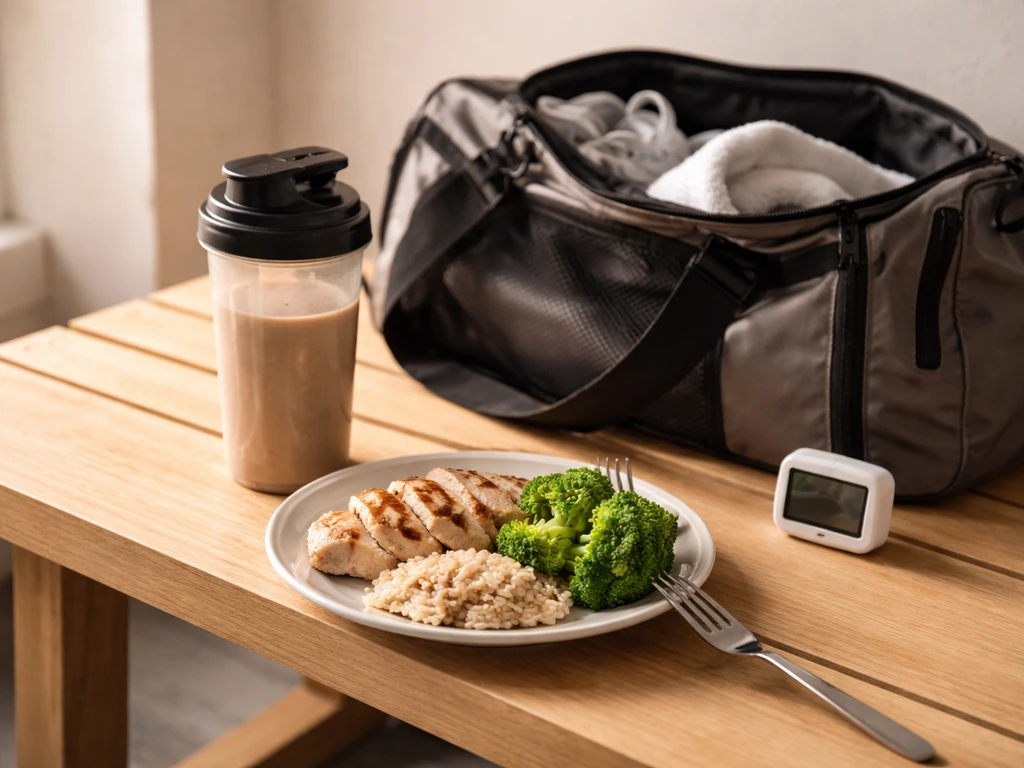
Here's the practical side. After a resistance training session, you have a real, extended window to support muscle growth. Don't waste it on vague intentions.
First 24 hours after your session
- Eat 20–40g of protein within 1–2 hours of finishing your workout. You don't need a shake immediately, but don't skip protein entirely for hours afterward.
- Continue hitting your protein target across the rest of the day through regular meals, not one large dump at dinner.
- Eat enough total calories. This is especially easy to mess up on training days when some people inadvertently undereat.
- Hydrate adequately. Muscle protein synthesis requires water for cellular processes, and even mild dehydration impairs performance and recovery.
- Prioritize your sleep that night. This is where the hormonal environment for muscle repair is most favorable. Treat it as part of your training.
24–48 hours after your session
- Keep protein intake consistent. Your muscle is still anabolically sensitive, especially if you did high-volume or unaccustomed training.
- Light movement (walking, easy cycling) on this day can help with DOMS and circulation without interfering with recovery.
- Avoid training the same muscle group at high intensity if MPS and repair are still running. This isn't the day for another heavy leg session if you trained legs yesterday.
- Don't interpret soreness as a signal to do more. If you're sore, that's damage/repair happening. Adding more damage on top doesn't accelerate growth.
Planning your next session and building a smarter schedule
For most people, training a muscle group every 48–72 hours (twice per week at minimum) hits the sweet spot between adequate recovery and sufficient stimulus frequency. A simple upper/lower split or push/pull/legs rotation naturally spaces sessions for the same muscles 48–72 hours apart, which aligns well with the MPS timeline. If you're a beginner, three full-body sessions per week works well because you're adapting to the stimulus itself. More experienced lifters can push toward four to five sessions per week with a proper split.
The bigger picture: muscle growth is not something that happens in one workout or even in one week. What you're doing in the 48 hours after each session is building the conditions for growth to happen over weeks and months. Nail your sleep, distribute protein consistently through the day, eat enough total calories, and schedule your next session before that muscle's sensitivity window closes entirely.
If you're wondering how to make muscles grow after workout, focus on recovery in the first 48 to 72 hours by prioritizing sleep, enough protein, and enough total calories. If you're wondering how to make muscles grow after workout, focus on recovery in the first 48 to 72 hours by prioritizing sleep, enough protein, and enough total calories. Do that repeatedly, with progressive overload, and the size will come.
There's no shortcut, but the timeline is actually more forgiving than most people think, as long as you use the window correctly.
If you're also curious about how muscles grow at the cellular level, or whether training every single day is viable for growth, both of those questions connect directly to the timelines covered here and are worth exploring as your understanding deepens.
FAQ
If muscles grow for 48 to 72 hours, will I lose gains if I don’t eat right after my workout?
Not immediately. MPS sensitivity can stay elevated for at least 24 hours and likely up to 48, so missing a perfect post-workout shake is usually not the real problem. The bigger issue is failing to hit your total daily protein and calories across the day after training, especially if you also sleep poorly.
How can I tell the difference between “I’m not sore” and “my workout wasn’t productive”?
Soreness is a weak signal of hypertrophy. A better check is performance and progression, such as adding reps, sets, or load over successive sessions while maintaining good form. If a muscle group keeps improving and you can train it again in 48 to 72 hours, your stimulus is likely working even without soreness.
Should I train the same muscle group again as soon as the soreness fades?
Not necessarily. Soreness can peak later and fade at different rates than the processes that support growth. Use timing based on recovery capacity and fatigue, not just how you feel. If your performance is dropping, your warm-up sets feel harder than usual, or you are repeatedly missing reps, that’s a sign to give more than 48 to 72 hours.
Does the “growth window” change if I do eccentric-heavy training (for example, heavy negatives)?
It can. Eccentric work tends to cause more structural disruption and often increases delayed soreness, but the key takeaway is that the recovery burden is higher. That means you may need extra time, lower volume, or a slower progression to keep MPS-supported training quality high for the next session.
Is it better to have one large protein meal after training or multiple smaller ones?
Multiple feedings are usually more effective than a single bolus because your muscle sensitivity to protein stays elevated across the next day. Practical approach: aim for about 20 to 40 g of high-quality protein per meal (then adjust for your body size) and include protein at breakfast and lunch, not just dinner or a post-workout shake.
What if I train fasted or I only eat carbs after my workout?
Carbs alone won’t replace the protein your muscles need to build. If you train fasted, prioritize protein and adequate calories within the next several hours and across the rest of the day. For best results, include a protein-containing meal soon after training rather than relying on carbs to “trigger” growth.
How much protein timing matters for muscle growth compared with daily total?
Daily total matters first. Timing helps because protein ingestion matches the periods when MPS sensitivity is elevated. If you consistently hit your daily target but only eat it at one time, you may still grow, but you are leaving some efficiency on the table compared with spreading it across 3 to 5 feedings.
Can I build muscle if I’m in a calorie deficit?
Yes, but it’s harder and growth is slower. In a deficit, MPS can be blunted, so you may need more consistency in sleep and protein and you may see slower hypertrophy. If you want maximum muscle gain, keep the deficit small or cycle calories, and expect less change in the “48 to 72 hour” window even if you hit your meals.
Do I have to hit the 24 to 48 hour window for every set or every muscle?
You need the window for the sessions that matter, meaning the training you actually recover from and then repeat with sufficient volume. If you train a muscle hard but your recovery is chronically poor, the window won’t convert into progression. Think in weekly training cycles, where each session supports the next rather than demanding perfect timing each day.
If I’m older and anabolic resistance is higher, what should I do differently after workouts?
You may benefit from larger per-meal protein portions and more consistency. A useful target is to include at least 0.4 g/kg per meal to reliably stimulate MPS, and keep sleep tight because older adults often have less margin for poor recovery. Don’t assume a small post-workout serving is enough.
How much sleep do I really need to avoid “anabolic resistance”?
For most people, 7 to 9 hours is the practical target. Even one night of total sleep deprivation can blunt your anabolic response, making the 24 to 48 hour period after training less productive. If you cannot get 7 hours regularly, consider reducing training volume for a week to protect recovery.