The single best exercise pattern for building muscle is the big compound movement: squats, deadlifts, hip hinges, horizontal and vertical presses, and rows. If you can only do one thing, pick a heavy compound lift that loads a large amount of muscle tissue under tension through a full range of motion. For most people, that means a squat or hinge pattern for the lower body and a press or pull pattern for the upper body. These four categories cover virtually every muscle group, they're backed by the strongest evidence for hypertrophy, and they scale from beginner to advanced without needing a gym full of machines.
Best Exercise to Grow Muscle: Your Evidence-Based Guide

Marcus Kellerman
5 May 2026

What 'grow' actually means here
When most people search for the best exercise to grow, they mean one of two things: getting bigger muscles (hypertrophy) or getting stronger. These overlap but they're not the same thing, and the distinction matters for how you train. Hypertrophy is a physical increase in muscle fiber cross-sectional area. Strength is the nervous system's ability to express force. You can get meaningfully stronger without much visible size change, especially as a beginner, because your nervous system gets more efficient first. And you can add size without your one-rep max going up dramatically, especially at higher rep ranges.
For this article, 'grow' means hypertrophy: making your muscles measurably bigger. The two main drivers are mechanical tension (loading a muscle under stretch) and sufficient training volume accumulated over time. Metabolic stress (the burn and pump) contributes too, but tension and volume are the primary levers you can control. The good news is that size and strength training are about 80% the same in practice, especially for anyone who's been lifting for less than two or three years.
Which exercise is actually best for you, given your situation

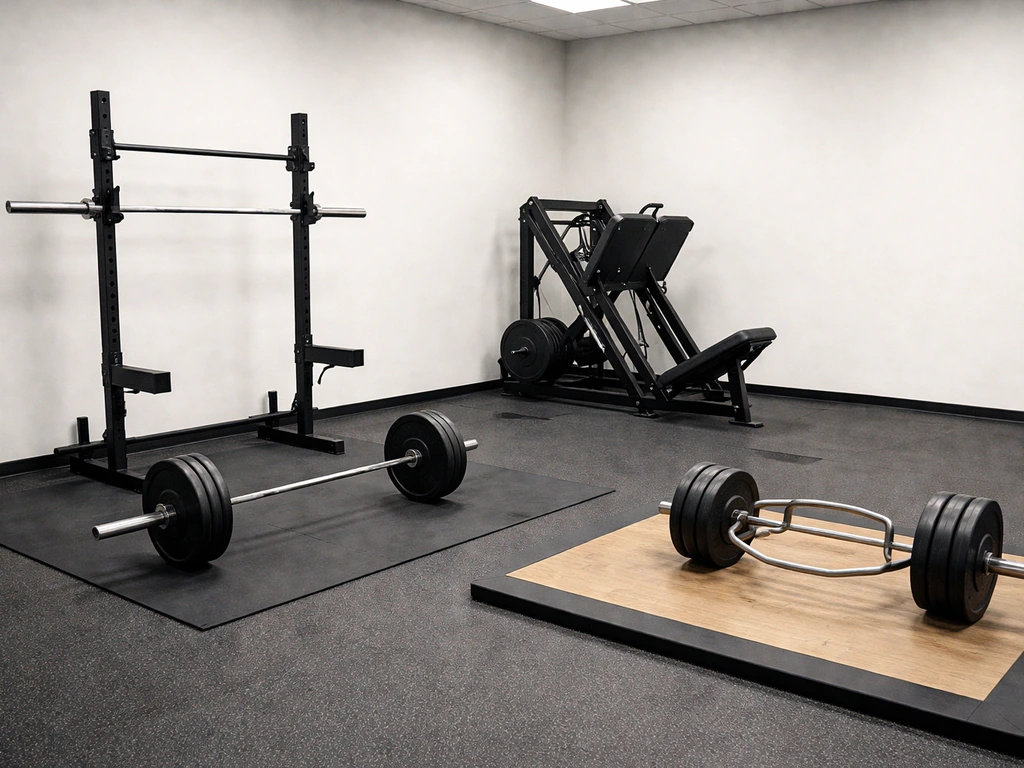
There's no universal single best exercise because your constraints matter. Someone with a healthy back who trains in a gym with a squat rack will get enormous results from barbell back squats. Someone with knee pain, no barbell, or limited mobility needs a different answer. The framework below helps you match exercise type to your actual situation.
Compound vs. isolation: why compounds win for growth
Compound exercises recruit multiple muscle groups in one movement. A barbell row works your lats, traps, rhomboids, rear delts, and biceps simultaneously. A bicep curl works your biceps and a little brachialis. For the same time investment, compounds produce more total muscle stimulus, which is why every time-efficient training review consistently puts multi-joint movements at the top of the priority list. Isolation exercises are not useless, they're genuinely valuable for bringing up lagging muscles or working around an injury, but they should be accessories to a compound-first program, not the foundation.
Choosing by goal and equipment access
| Situation | Best compound choice(s) | Reasonable alternative |
|---|---|---|
| Full gym access, no injuries | Barbell back squat, deadlift, bench press, barbell row | Any machine compound (leg press, cable row, chest press) |
| Home gym or dumbbells only | Dumbbell goblet squat, Romanian deadlift, dumbbell press, dumbbell row | Bodyweight squat, push-up, inverted row |
| Knee pain or limited mobility | Hip hinge (Romanian deadlift), seated leg press, step-up | Leg extension + leg curl combo if squatting is off-limits |
| Lower back issues | Goblet squat, trap bar deadlift, leg press | Split squat, step-up, cable pull-through |
| Older adult (60+) | Trap bar deadlift, goblet squat, seated chest press, cable row | Any loaded compound with a machine for stability |
| Beginner with no equipment | Bodyweight squat, push-up, hip hinge with a backpack | Progress to bands or dumbbells as soon as possible |
The key principle: choose the version of each pattern that lets you load the muscle through a full range of motion without pain and with good enough form that you can progressively add weight or reps over weeks. A goblet squat you can do safely beats a barbell squat you can't control.
The top exercise picks across each movement pattern
Rather than naming one single exercise as the best ever (a misleading oversimplification), here are the top picks per pattern. Build your program around one from each category and you'll stimulate nearly every muscle in your body.
- Squat pattern: Barbell back squat (or goblet squat for beginners and older adults). Loads the quads, glutes, hamstrings, and core through a large range of motion under heavy load. Nothing matches it for lower body muscle development in people who can do it pain-free.
- Hinge pattern: Conventional deadlift or Romanian deadlift (RDL). The RDL is arguably the more hypertrophy-focused of the two because it keeps constant tension on the hamstrings and glutes without the brief rest at the floor. Trap bar deadlifts are an excellent middle-ground for those with back sensitivity.
- Horizontal push: Barbell or dumbbell bench press. Targets the pecs, front delts, and triceps. Dumbbells offer a slightly greater range of motion at the bottom and reduce shoulder strain for many people.
- Vertical or horizontal pull: Barbell row, cable row, or lat pulldown. Rows and pulldowns together hit the lats, traps, rhomboids, rear delts, and biceps. If you can do pull-ups bodyweight, those are elite for lat development.
- Overhead press (bonus): The barbell or dumbbell overhead press rounds out upper body development by targeting the medial and front deltoids and upper traps in a way rows and bench don't fully cover.
How to program these for actual muscle growth
Getting the exercise right is only half the equation. How you program it, sets, reps, effort level, rest, and progression, determines whether your muscles actually adapt and grow or just get fatigued.
Sets and reps
The research is clearer than most people think on this. Hypertrophy happens across a wide range of rep counts, from around 5 reps to 30+ per set, as long as sets are taken close to muscular failure. A 2017 meta-analysis found similar hypertrophy outcomes across low and high loads when effort was matched. What matters more than hitting a specific rep number is accumulating enough weekly sets per muscle group. Aim for 10 to 20 working sets per muscle group per week, starting at the lower end if you're new and building over months. For each exercise, 3 to 5 sets of 6 to 15 reps is a practical sweet spot that balances load, volume, and joint stress.
How hard to push: proximity to failure
You don't need to grind every set to absolute failure, but you need to be close. Research on proximity to failure consistently shows that leaving more than 3 or 4 reps in the tank (what coaches call RIR, or Reps in Reserve) produces meaningfully less hypertrophy than finishing a set with 0 to 2 reps left. A practical target: end each working set where you could do maybe 1 or 2 more reps with good form, but not 5. That's roughly an RIR of 1 to 2. For compound lifts, stopping at 2 RIR protects technique and reduces injury risk. For isolation work like curls or leg extensions, going to 1 RIR or true failure occasionally is lower risk.
Tempo and rest
You don't need a complicated tempo protocol. A controlled lowering phase of about 2 to 3 seconds (eccentric) followed by a normal or slightly explosive concentric (lifting) phase is sufficient. Exaggerated slow tempos reduce the load you can use and may actually limit total mechanical tension. Rest 2 to 3 minutes between sets for compound exercises. This allows enough nervous system recovery to push close to your performance ceiling on the next set. Shorter rest (60 to 90 seconds) is fine for isolation work.
Progressive overload: the non-negotiable
Your muscles only grow if they're given a reason to. Progressive overload means systematically increasing the demand over time. The most practical ways to do this: add a small amount of weight (2.5 to 5 lbs on upper body lifts, 5 to 10 lbs on lower body) once you can complete your target reps with 2+ RIR in reserve across all sets. If you can't add weight, add a rep. If you can't add a rep, add a set. If none of those work, it's usually a recovery or nutrition issue, not a programming one. Track your sets, reps, and weights every session. Without a log, you're guessing.
How to tell you're actually growing
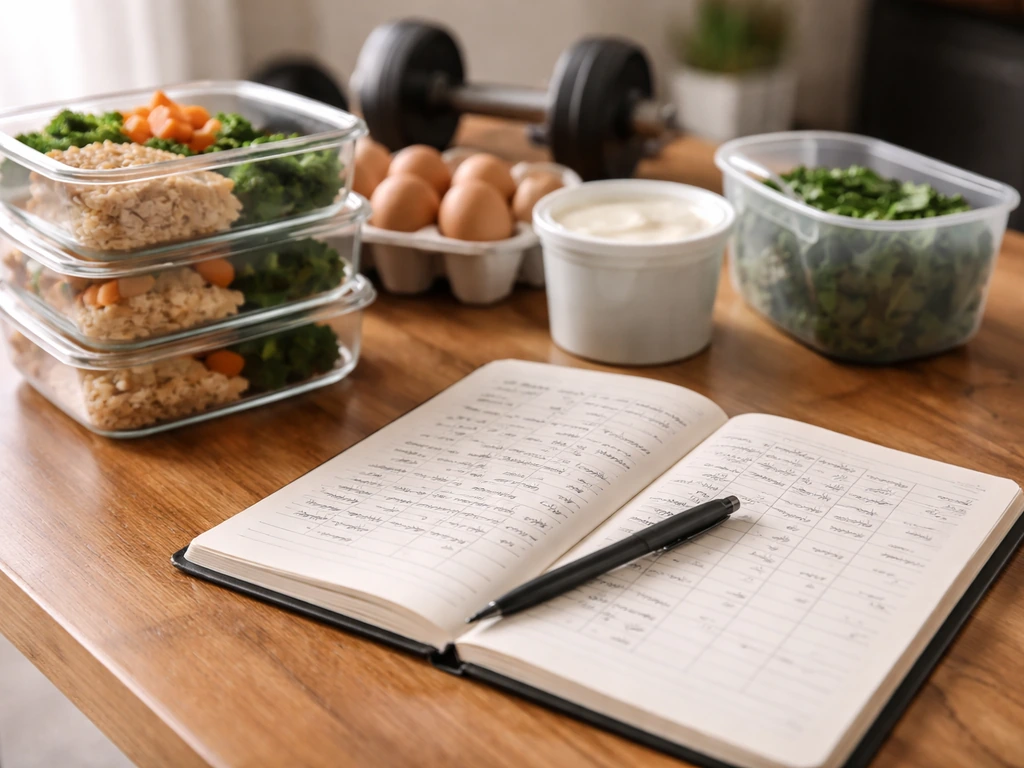
Muscle soreness is not a reliable growth signal. You can be sore without growing and grow without being sore. The real indicators are simpler and more measurable.
- Your logged weights and reps are trending upward over weeks and months. If you benched 135 lbs for 3x8 six weeks ago and you're now doing 145 lbs for 3x8 at the same effort level, your muscles have grown to support that.
- Your body measurements or photos show change. The scale can be misleading, especially if body fat is shifting at the same time. A tape measure around the upper arm, thigh, or chest, tracked monthly, is more informative.
- Your recovery between sessions feels appropriate. If you're consistently destroyed for 4 to 5 days after a workout, volume or intensity is too high and growth will stall. Mild fatigue that clears in 24 to 48 hours is the target.
- Your performance doesn't regress over time. Consistent strength progression across your main lifts over a 12-week block is a reliable proxy for hypertrophy, especially in the first 1 to 2 years of training.
Why growth stalls and how to fix it
Most plateaus have one of five causes, and they're nearly always fixable.
- Not eating enough: Muscle growth requires a calorie surplus or at least calorie maintenance. If you're eating at a significant deficit, you won't grow, period. Even a modest 200 to 300 calorie daily surplus is enough to support hypertrophy without excessive fat gain.
- Not enough protein: Protein is the raw material for muscle protein synthesis. The evidence supports a target of around 1.6 to 2.0 g of protein per kg of bodyweight per day for maximizing muscle gain. For a 180 lb (82 kg) person, that's roughly 130 to 165 grams per day.
- Not enough volume or effort: If you're doing 3 sets of 10 and stopping at 5 reps in reserve, you're leaving gains on the table. Check both your weekly set count per muscle and your proximity to failure on each set.
- Not sleeping enough: Sleep is when muscle protein synthesis peaks. Chronic short sleep (under 6 to 7 hours) measurably impairs recovery and adaptation. This is not optional and can't be supplemented around.
- Doing the same thing for too long: Your body adapts to the specific stimulus you give it. After 6 to 12 weeks on the same program, it's reasonable to vary load ranges, exercise selection, or volume distribution to maintain the adaptive signal.
- Too much randomness: Constantly switching programs, exercises, or rep schemes every week prevents the progressive overload that drives growth. Pick a program, run it for at least 8 to 12 weeks, and track your numbers.
Nutrition and recovery: the things that make the exercise work
Exercise is the trigger. When muscles work out, they help neurons to grow so your body can generate more force during training Exercise is the trigger.. Nutrition and recovery are what actually build the muscle. If you focus on progressive overload, enough weekly training volume, and proper nutrition and sleep, you can indeed grow new muscle cells through hypertrophy Nutrition and recovery are what actually build the muscle.. You can have perfect programming and still stall if the inputs aren't there.
Protein targets
Aim for 1.6 to 2.0 grams of protein per kilogram of bodyweight daily. The ISSN positions this range as effective for optimizing training-induced muscle gains in both younger and older adults. Spreading intake across 3 to 5 meals or protein-containing snacks throughout the day maximizes muscle protein synthesis signaling compared to eating it all at once. Each meal ideally contains at least 30 to 40 grams of protein to fully stimulate synthesis. Animal proteins (chicken, eggs, dairy, beef, fish) are most efficient, but well-planned plant protein combinations can hit the same targets.
Calories and carbohydrates
You need sufficient total calories to build muscle. Carbohydrates fuel resistance training performance and replenish muscle glycogen after sessions. A moderate daily surplus of 200 to 400 calories above your maintenance level is enough to support hypertrophy in most people without gaining excessive fat. If you're a beginner or returning after a break, you can build muscle at maintenance or even a small deficit initially, but this window closes quickly. Prioritize carbohydrates around your training sessions for performance and recovery.
Creatine: the one supplement worth considering
Creatine monohydrate is the most consistently supported supplement for muscle growth. A 2025 systematic review and meta-analysis found that creatine combined with resistance training produced roughly 1 to 2 kg more lean mass than placebo plus training. The mechanism is straightforward: creatine increases phosphocreatine availability, letting you push harder on sets near failure, which means more quality stimulus per session. Dose is simple: 3 to 5 grams daily, no loading phase needed. It's inexpensive, widely available, and has a strong safety record across decades of research.
Sleep and recovery
Target 7 to 9 hours of sleep per night. This isn't a soft suggestion. Growth hormone pulses during deep sleep stages, and muscle protein synthesis rates are elevated during sleep recovery. A related systematic review in the PMC version reiterates that sleep supports key brain functions and that the impact of sleep deprivation varies by context, such as muscle group and exercise type. Consistently sleeping under 6 hours impairs both anabolic signaling and gym performance, cutting into the returns from all the training and protein you're doing right. If sleep is genuinely limited (shift work, new parent), minimize training volume rather than training intensity, and keep protein high to preserve what you've built.
Your concrete next steps for this week
Don't overthink the starting point. Here's what to actually do in the next 7 days based on everything above.
- Pick one exercise from each of the four patterns: a squat variation, a hinge, a push, and a pull. If you're not sure which version fits your body and equipment, use the table above.
- Train each pattern at least twice this week, for 3 to 4 working sets of 6 to 12 reps per exercise, stopping 1 to 2 reps before you'd genuinely fail.
- Log every set: exercise, weight, reps. This is the foundation of knowing whether you're progressing.
- Hit your protein target today. Calculate your bodyweight in kg, multiply by 1.6, and that's your daily gram target. Use a food tracker for one week to see where you actually land.
- If you're not taking creatine and have no medical reason to avoid it, start 5 grams daily mixed into water or a shake.
- Commit to 8 weeks on this program before changing anything. Real adaptation takes time and consistency beats novelty every time.
The mechanics of muscle growth are genuinely well understood at this point. Exercise does not magically create new brain cells, but physical activity can support brain health in multiple ways does exercise grow new brain cells. Tension, volume, proximity to failure, protein, calories, sleep. It's the application that trips people up, either overcomplicating it with too many exercises and constant program hopping, or underdelivering on effort and nutrition. Nail the big compound movements, push your sets hard enough, eat enough protein, and show up consistently. That's the full answer.
FAQ
What’s the best exercise to grow if I can only choose one movement to start with?
If you want the single best starting “grow” option, pick a heavy compound you can repeat safely, for example a squat or a hip hinge depending on comfort, then add an upper-body press or row. The fastest path is usually one lower-body pattern plus one upper-body pattern, because they cover more muscle groups with less exercise selection error.
How close to failure should I really train for muscle growth (and what if my form breaks)?
Try to keep at least 1 to 2 reps in reserve on most sets, but prioritize form and consistency over chasing failure. When technique starts to degrade, stop the set early, reduce the load slightly next week, and aim to add volume or reps instead of forcing more weight.
If I do a compound exercise and an isolation movement for the same muscle, how should I count sets?
Set volume per muscle group is what matters most. If you do, for example, a compound lift plus one accessory for the same muscle, split your weekly sets between them rather than doubling them. A practical check, for each muscle group target 10 to 20 hard sets per week total across all exercises.
What’s the best exercise to grow if I have knee pain?
If you have knee pain, a hinge pattern (like a safer deadlift variation) or a squat variation that keeps pain low (often a box squat or goblet squat with controlled depth) is usually a better “best” choice than forcing barbell back squats. The best exercise is the one that lets you train close to failure through a pain-free range.
What’s the best exercise to grow if my lower back limits my lifting?
If your back is the limiting factor, consider exercise versions that reduce spinal loading and improve stability, such as trap-bar deadlifts or supported rows instead of unsupported hinges, and a short-range press or machine-supported variations if needed. Always choose a setup where your low back stays neutral and you can progress without sharp pain.
How do I progress if I’m not getting stronger or adding weight week to week?
Progressive overload can be done with rep targets, load targets, and set targets, but you need a consistent “working weight” you can build from. A common mistake is switching exercises or stances every session, which prevents you from accumulating measurable progress.
Can too much training volume make me stall even if I’m eating and sleeping well?
Yes, but it needs to be intentional. If your weekly sets are far above what you can recover from, soreness and fatigue can rise without more growth. Reduce volume by about 20 to 40% for a week, keep effort near your usual proximity to failure, then rebuild.
Is there a best rep range for growing, or should I mix reps?
If your goal is to maximize hypertrophy, you can include higher reps for joints that tolerate them, like 12 to 20 on accessories, but you still need some moderate load work for tension. Aim for most work in a 6 to 15 rep range, then use heavier sets for compounds if your joints handle it.
How long should I rest between sets for the best muscle growth?
Rest can make or break effort. Compounds usually need about 2 to 3 minutes so you can keep quality reps near your target RIR. If you rest only 30 to 60 seconds on squats or deadlifts, you may turn the session into conditioning instead of tension-focused hypertrophy.
What should I track if muscle soreness isn’t a reliable growth signal?
Soreness is optional. The more useful sign is performance trend, you should be able to match or improve reps or load at your chosen RIR on your next session. If you feel wrecked but your reps and weights are dropping, that points to recovery or volume being too high.
My numbers aren’t improving, how do I tell whether it’s programming versus recovery?
A simple sleep and recovery bottleneck check is, if you consistently get under about 6 hours or you miss protein targets, your training adaptation slows. In that case, reduce training volume first, then correct protein and sleep, because increasing intensity without enough recovery usually worsens plateaus.
Do I need to cycle creatine, and what if I get GI discomfort?
Creatine is generally safe for most healthy adults and works best when taken daily, even on rest days. If you notice stomach upset, split the dose (for example 2 to 3 grams twice daily) with food and use a consistent brand to make the timing easier to manage.