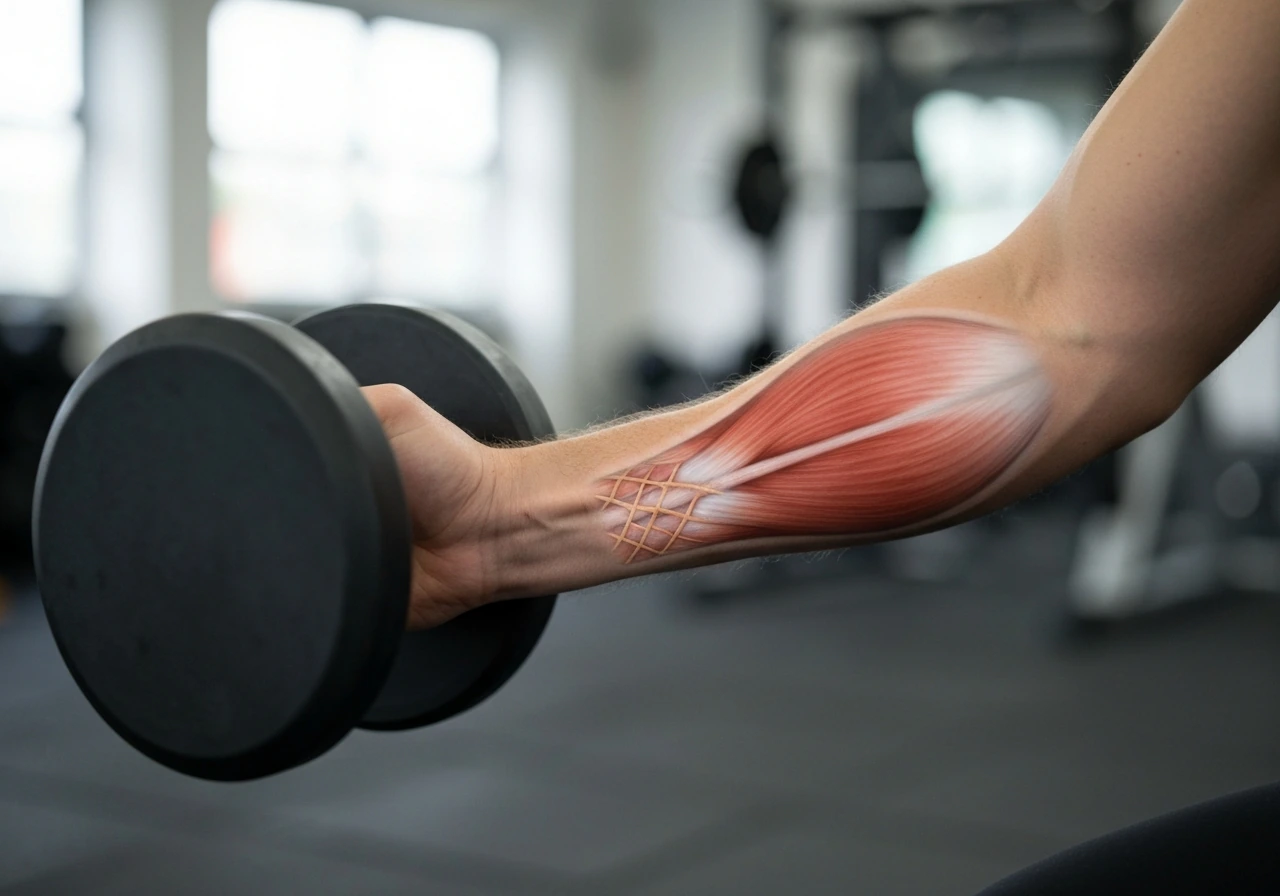
Veins don't grow the way muscles do. What actually happens is that your blood volume increases, your veins dilate functionally, and the capillary network inside your muscles gets denser over time. The result is that your veins can look noticeably bigger or more prominent after training, but that's mostly about blood redistribution, vascular tone, and less subcutaneous fluid sitting between your skin and vessels, not new vein wall tissue being built.
Do Veins Grow With Muscles? What Changes With Training

Marcus Kellerman
25 Apr 2026
Do veins actually change with exercise?
Yes, but not in the way most people assume. When you work out, your veins don't add new layers of tissue the way a muscle adds new protein fibers. Instead, your circulatory system makes a series of functional and structural adaptations that together make your veins more visible and your overall vascular system more efficient. The key distinction is that muscles remodel their actual fibers, while veins respond mainly by changing their diameter, tone, and the volume of blood they're carrying at any given moment.
That said, real long-term changes do happen. Your plasma volume can expand, your capillary density in muscle tissue increases, and your endothelial function (how well the inner lining of your vessels responds to blood flow demands) improves measurably with consistent training. So it's not just a cosmetic illusion. There are genuine adaptations underneath the surface, they're just not veins 'growing' in the muscular sense.
What's actually changing inside your circulatory system
Plasma volume expands fast

One of the most underappreciated adaptations to exercise is plasma volume expansion. Research shows a single intense exercise session can expand your plasma volume by roughly 10% within 24 hours. Your plasma is the liquid portion of blood, and when there's more of it, your veins carry a larger total volume, which makes them look fuller and sit closer to the surface. This happens surprisingly quickly, within days to a couple of weeks of starting a new training program, and it partly explains why people notice vein changes even before they've built significant muscle.
The muscle pump drives blood back to your heart
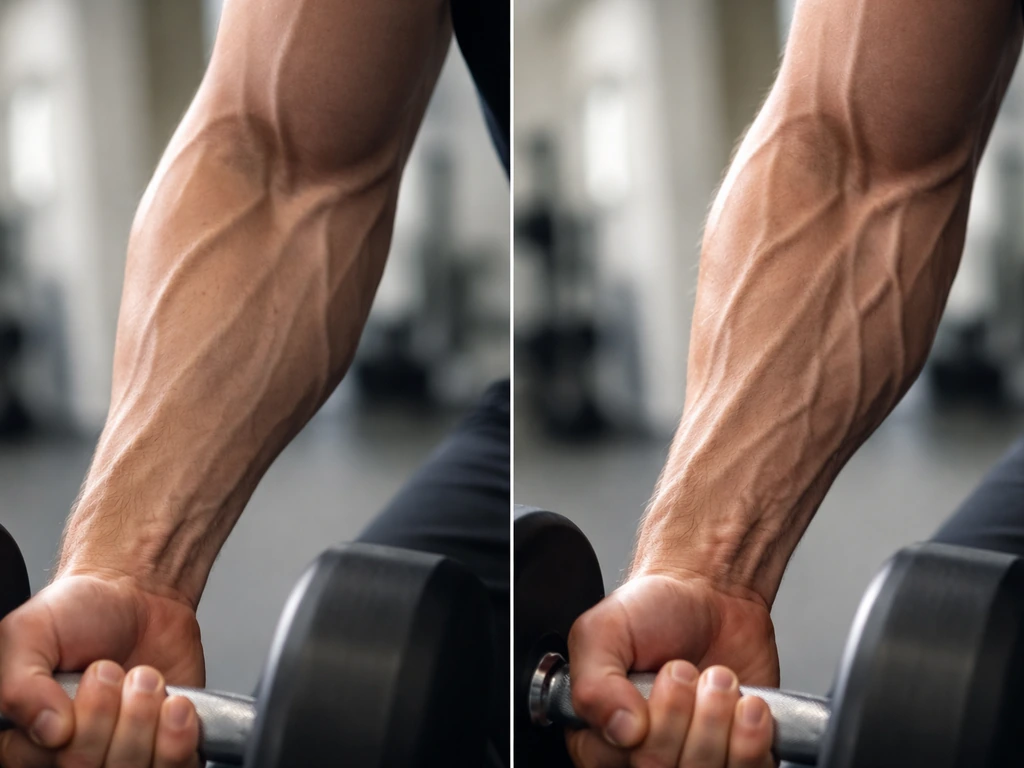
During exercise, your muscles rhythmically contract and compress the veins running through them. Combined with one-way venous valves, this squeezes blood upward toward your heart, a mechanism called the skeletal muscle pump. This is the primary reason your veins look engorged mid-workout. It's a functional pressure and volume effect, not structural growth. When you stop exercising, venous return slows, blood pools briefly, and veins look temporarily larger before the effect fades over minutes to hours.
Capillary density increases with training
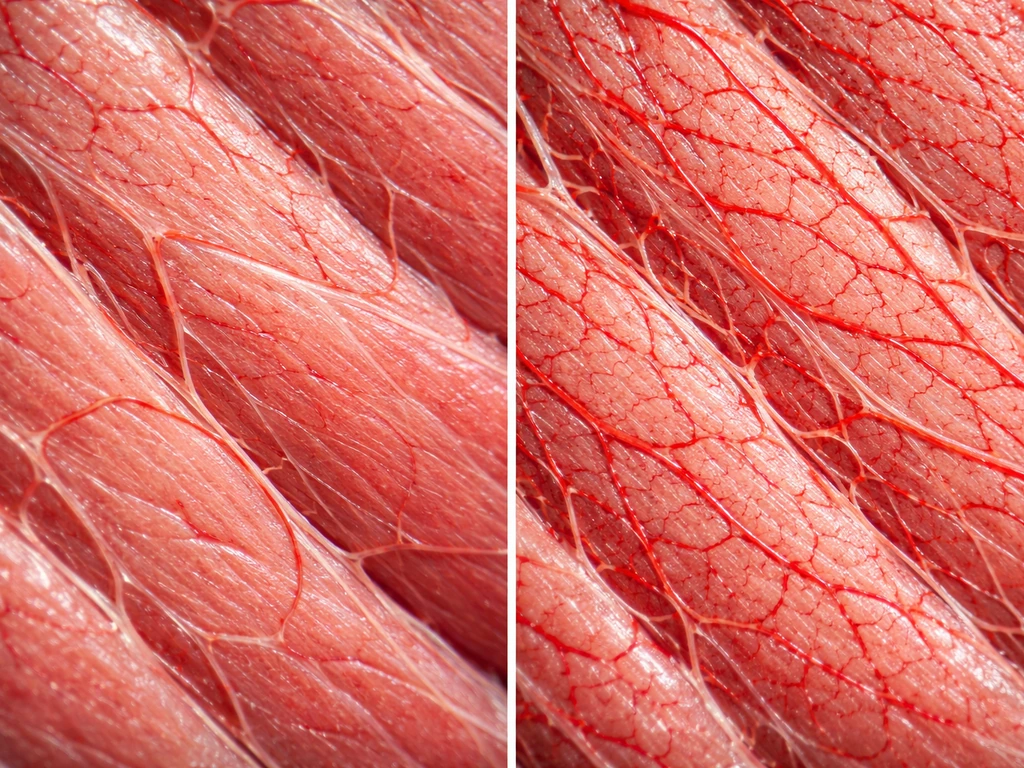
Here's where real structural change does occur, just not in your large superficial veins. Inside your muscles, the tiny capillaries (single-cell-layer vessels responsible for oxygen and nutrient exchange) actually multiply and remodel in response to consistent training. Studies measuring CD31-positive capillaries and capillary-to-fiber ratios in human muscle show measurable increases after as little as four weeks of high-intensity training. Better capillarization means better perfusion, more efficient oxygen delivery, and improved local blood distribution, which contributes to your muscles looking fuller and your vascularity improving over months.
Endothelial function improves too
The inner lining of your blood vessels, the endothelium, becomes more responsive with training. Flow-mediated dilation (FMD), which is how researchers measure how well arteries dilate in response to increased blood flow, improves even after 10 days of aerobic exercise in previously sedentary older adults. Better endothelial function means your blood vessels open up more efficiently when demand rises, contributing to that vascular look during and after training even if no new vein walls have been built.
Veins, arteries, and capillaries: what 'bigger veins' really means
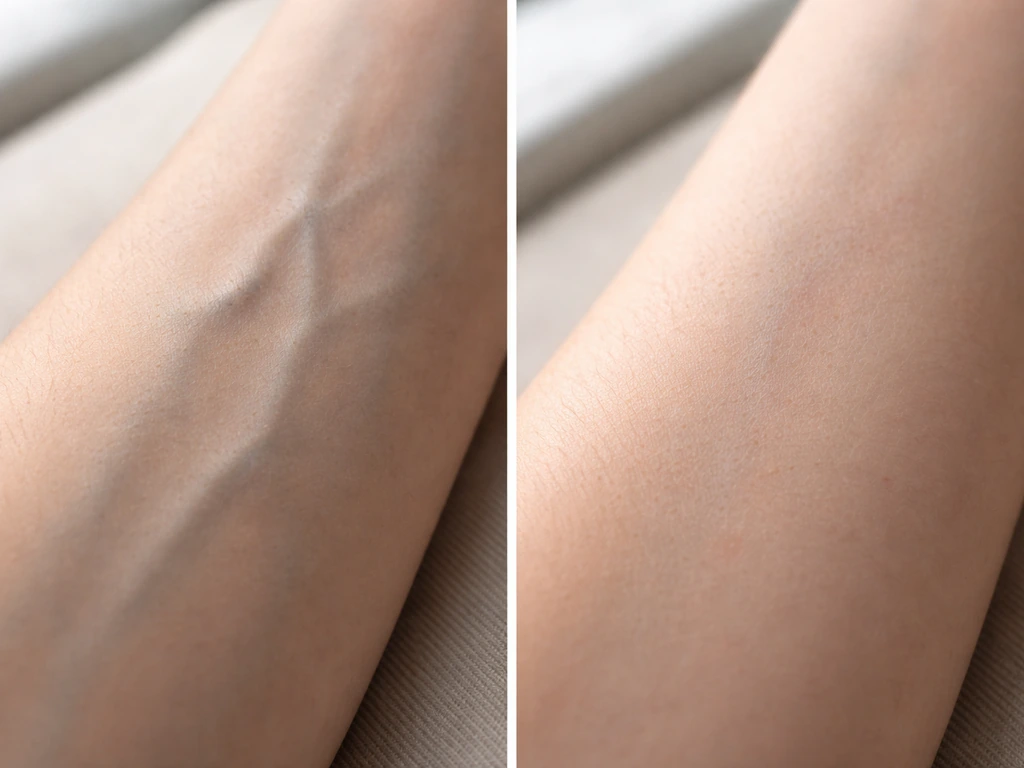
To understand what's happening visually, it helps to know what you're actually looking at. Most people point to the ropey lines under their skin on their forearms or biceps and call them veins. They're right, those are veins. But veins, arteries, and capillaries are fundamentally different structures with different jobs.
| Vessel Type | Pressure | Wall Thickness | Primary Role | What Changes with Training |
|---|---|---|---|---|
| Arteries | High | Thick, muscular | Deliver oxygenated blood from heart | Better dilation (FMD), reduced stiffness |
| Veins | Low | Thin, with valves | Return blood to the heart | Functional diameter/tone, blood volume changes |
| Capillaries | Very low | Single-cell layer | Exchange oxygen, nutrients, waste | Density increases (angiogenesis) with training |
Veins are a low-pressure system with thinner walls and larger lumens than arteries. Their visible size is determined by how much blood they're holding at any moment and the tone of the smooth muscle in their walls, not by wall thickness. So when a vein looks 'bigger,' it's almost always because it's more dilated and fuller of blood, not because it has grown new tissue. Capillaries are too small to see, but their proliferation inside muscle is where the real long-term structural story is.
What you'll notice visually vs what's actually measurable
It's worth separating what you see in the mirror from what's happening physiologically, because the timelines are very different.
| Timeframe | What Changes | How You Experience It |
|---|---|---|
| During a workout (minutes) | Muscle pump, venous dilation, blood redistribution | Veins look engorged, muscles feel 'pumped' |
| Within 24–48 hours | Plasma volume expansion begins | Slight persistent fullness, veins marginally more visible |
| 2–4 weeks | Early capillarization, plasma volume adaptation | Veins may look more prominent at rest in trained areas |
| 8–16+ weeks | Capillary density increases, endothelial function improves, muscle mass grows | More sustained vascularity, especially with lower body fat |
| Months to years | Significant capillary remodeling, vascular efficiency | Noticeably improved vascularity, especially visible in lean individuals |
The biggest driver of resting vein visibility over the long term is actually body composition, not vein size itself. If you meant the idea of strained muscles repairing and rebuilding faster, that depends on the muscle damage response, not how veins change from training <a data-article-id="64224F02-6343-486B-AF4C-C0888617B408">do strained muscles grow back stronger</a>. As you build muscle and reduce subcutaneous fat, the same veins that were always there become much easier to see because there's less tissue between them and your skin. This is why lean, muscular people look more vascular even when they're not training.
Training factors that most affect vascular appearance

Resistance training and the pump
Heavy resistance training, especially with moderate to high reps and short rest periods, is the fastest way to produce noticeable vein prominence. The mechanism is the muscle pump plus local blood pooling and metabolite accumulation (which drives localized vasodilation). Higher-rep pump-style training maximizes this effect acutely. If you've ever done a set of 15 to 20 curls with a short rest and seen your forearm veins pop, that's exactly what's happening.
Cardio and endurance work
Aerobic training contributes to longer-term vascular adaptations more than it drives acute vein visibility. Endurance work is the primary driver of plasma volume expansion and capillary density increases in muscle. It also improves endothelial function and reduces arterial stiffness over time. Research comparing aerobic, resistance, and combined training on vascular outcomes suggests combined training may offer the broadest benefits for both functional vascular health and appearance.
Intensity matters
Higher exercise intensity generally drives greater acute vascular responses. Studies varying cycling intensity at 50%, 70%, and 85% of max heart rate show measurable differences in endothelial function and flow response afterward. For capillary adaptations specifically, high-intensity interval training (HIIT) produces meaningful increases in capillary-to-fiber ratios within four weeks. That doesn't mean you need to push maximum intensity every session, but training hard enough to challenge your cardiovascular system is what drives adaptation.
Other factors: hydration, heat, body fat
Hydration status directly affects plasma volume and therefore vein fullness. Being well-hydrated before training makes veins more visible and the pump more pronounced. Heat causes peripheral vasodilation, which is why warm environments make veins look larger. And as noted above, body fat is one of the biggest modulators of resting vein visibility: the leaner you are, the more prominent your veins will look regardless of how 'big' they actually are.
When vein changes are a warning sign, not a training win

Most vein changes from exercise are completely normal and expected. But some vein-related symptoms shouldn't be attributed to training and need prompt medical attention. Knowing the difference matters.
Normal training-related vein changes are bilateral (both limbs affected roughly equally), temporary (improve with rest), and painless. They're associated with exercise and resolve predictably.
Seek medical evaluation promptly if you notice any of the following, particularly in one limb:
- Swelling in one leg (or arm) that doesn't resolve with rest
- Pain, tenderness, or cramping in one limb, especially the calf
- Warmth or redness concentrated in one area
- Skin discoloration: bluish, purplish, or pale patches over a vein
- Unexplained shortness of breath, chest pain, or rapid heart rate alongside leg symptoms (these may indicate a pulmonary embolism, which is a medical emergency)
These are classic deep vein thrombosis (DVT) and pulmonary embolism (PE) warning signs. They are not the result of working out hard. DVT can occur in active people, particularly after long periods of immobility, dehydration, or with underlying risk factors. If any of these symptoms appear, don't train through them. Contact a clinician the same day or go to an emergency room if you have chest pain or difficulty breathing.
It's also worth knowing that exercise alone cannot fix varicose veins or venous insufficiency. Training improves circulation and venous return, which can help symptoms, but if you have persistently enlarged, twisted, or painful superficial veins at rest, a vascular specialist is the right next step, not more sets.
Practical steps to build muscle and support vascular health together
If your goal is to build muscle while improving circulation and vascular appearance, the good news is the training approaches that drive muscle growth also drive most of the vascular adaptations described above. If you’re wondering whether muscles grow during recovery, it’s the muscle remodeling response, not vein wall growth, that drives actual size changes. You don't need a separate 'vascularity program.' You need a well-structured program and a few supporting habits.
- Train with progressive overload using a mix of rep ranges. Heavier compound work (3 to 6 reps) builds the muscle mass that makes vascularity visible long-term. Moderate rep ranges (8 to 15 reps) with shorter rest periods maximize the pump and acute vascular response. Both have a place.
- Include consistent aerobic work. Even two to three sessions per week of moderate-to-vigorous cardio (cycling, rowing, running) meaningfully supports plasma volume expansion, capillary density, and endothelial function. Combined resistance and aerobic training produces better vascular outcomes than either alone.
- Stay well-hydrated. Plasma volume and vein fullness are directly tied to hydration status. Aim for consistent fluid intake throughout the day, not just during training. Electrolytes matter if you sweat heavily.
- Support muscle growth with adequate protein. Muscle mass itself contributes to vein visibility by expanding the underlying tissue. Most people building muscle need somewhere around 0.7 to 1 gram of protein per pound of bodyweight daily. This is consistent with broader muscle-building evidence regardless of age or training level.
- Manage body composition over time. You can't spot-reduce subcutaneous fat, but a modest caloric deficit sustained over months while maintaining training intensity will gradually reveal vascularity. Don't slash calories aggressively: that compromises recovery, muscle growth, and the vascular adaptations you're working toward.
- Prioritize recovery. Capillary remodeling, plasma volume expansion, and muscle protein synthesis all happen between sessions, not during them. Sleep, adequate calories around training, and managing training volume all matter here. The relationship between muscles growing and the vascular system adapting is closely tied to recovery quality.
- Give it time. Acute vein changes show up within a single workout. Meaningful capillary adaptations take four to eight weeks minimum. Full vascular remodeling in the context of significant muscle growth plays out over months to years. Be consistent, track your training, and don't expect the mirror to change week to week.
The bottom line is that <a data-article-id="95B09523-D64A-44E8-85EB-E73C3D66CB59">veins don't grow the way <a data-article-id="64224F02-6343-486B-AF4C-C0888617B408">muscles do</a></a>, but training absolutely changes how your vascular system looks and functions. The visible changes come from plasma volume, blood redistribution, the muscle pump, capillary density in muscle, and body composition. Chase those through smart, consistent training and the vascularity follows naturally. Even though tendons can adapt to loading, they do tendons grow like muscles is a different question than whether veins get bigger from blood flow. Even though tendons adapt to loading, whether tendons vs muscles grow faster is a separate question and you can compare timelines in do muscles grow faster than tendons. do tattoos grow with muscle.
FAQ
If I stop training, will my veins shrink back to normal?
Not usually. Veins can look fuller quickly from plasma volume, the muscle pump, heat, and hydration, but the vein wall typically does not add new tissue like muscle does. If a “new” vein becomes clearly visible over weeks, it is more often due to reduced subcutaneous fat, improved vascular tone, and increased total blood/plasma volume rather than true vein growth.
Why do my veins look much bigger right after a workout, but not the next day?
Within a short window, yes. The acute fullness from the pump and local pooling fades over minutes to hours after your workout. Over longer periods (weeks), changes related to plasma volume, capillary density, and endothelial responsiveness diminish if training stops, especially aerobic work, but you will still have the baseline veins you had before.
What vein changes are not normal even if I’m exercising?
A temporary visible “popping” vein mid-session is common and usually bilateral and painless. If you see a one-sided, worsening change at rest, pain, warmth, or swelling, that is not “normal training.” In that case, get same-day medical evaluation to rule out problems like DVT rather than pushing through more sessions.
Why did my veins get more visible even though my workouts didn’t change much?
If your goal is vascular appearance, training that increases blood flow and challenges the cardiovascular system helps, but the biggest long-term modifier is still body composition. Being slightly leaner reduces the distance between skin and vessels, making the same functional vein dilation look more dramatic. So you may get better visuals even with similar training if fat loss happens.
Do veins show more in some muscles than others?
In most people, yes, but expect differences by body part. Forearms and calves often show clearer vein prominence because superficial vessels are easily influenced by the muscle pump and posture, while deeper veins are less visible. Genetics also affects where superficial veins are most apparent, even with identical training.
Do heat and weather change how visible my veins are?
Warm conditions can make veins look larger because peripheral vasodilation increases blood flow and dilates vessels. That can exaggerate vein visibility during training, so if you’re comparing photos, try to control for temperature and workout timing (same time of day and similar hydration).
Can dehydration make my veins look smaller?
Hydration and electrolytes can shift how “full” veins look, mostly via plasma volume. If you notice consistent vein dulling when you are under-hydrated, focus on starting sessions well-hydrated rather than forcing extremely high water intake right before training, which can cause discomfort. Persistently very low fluid intake can also make you feel worse and reduce training quality.
Will light activity between workouts improve vein comfort and appearance?
Walking, mobility work, and light cardio can help maintain venous return and reduce pooling between harder workouts. If you sit for long periods, taking short movement breaks (for example, a few minutes every hour) can make a noticeable difference in how “tight” or swollen your legs feel, even though it will not “fix” underlying venous insufficiency.
Is harder and more intense training always better for vein visibility?
It can. Very intense or overly frequent training can raise soreness and swelling, which might make vessels look temporarily different, but “more intensity” is not automatically better for long-term vascular health or appearance. Use a mix of resistance training, aerobic base, and recovery days, and periodize intensity so you challenge your cardiovascular system without excessive fatigue.
Can vein visibility plateau even while my fitness improves?
If your veins are already prominent, further improvements are often limited by structure visibility constraints like skin thickness and body fat. You might still gain function (capillarization, endothelial responsiveness), but the mirror change can plateau. At that point, tracking performance (work capacity, pump tolerance, endurance markers) is a better indicator than chasing maximum vein popping.