Yes, you can absolutely build muscle with calisthenics. This isn't a "it depends" situation with a bunch of asterisks. Bodyweight training can drive real, measurable hypertrophy when you apply the same principles that make any resistance training work: progressive overload, sufficient volume, and working close enough to muscular failure. The guys with impressive physiques built from pull-ups, dips, and push-ups aren't outliers, they're just applying good training science with their bodyweight as the tool.
Can You Grow Muscle With Calisthenics? How To Guide
Marcus Kellerman
26 Apr 2026
Why calisthenics works for building muscle
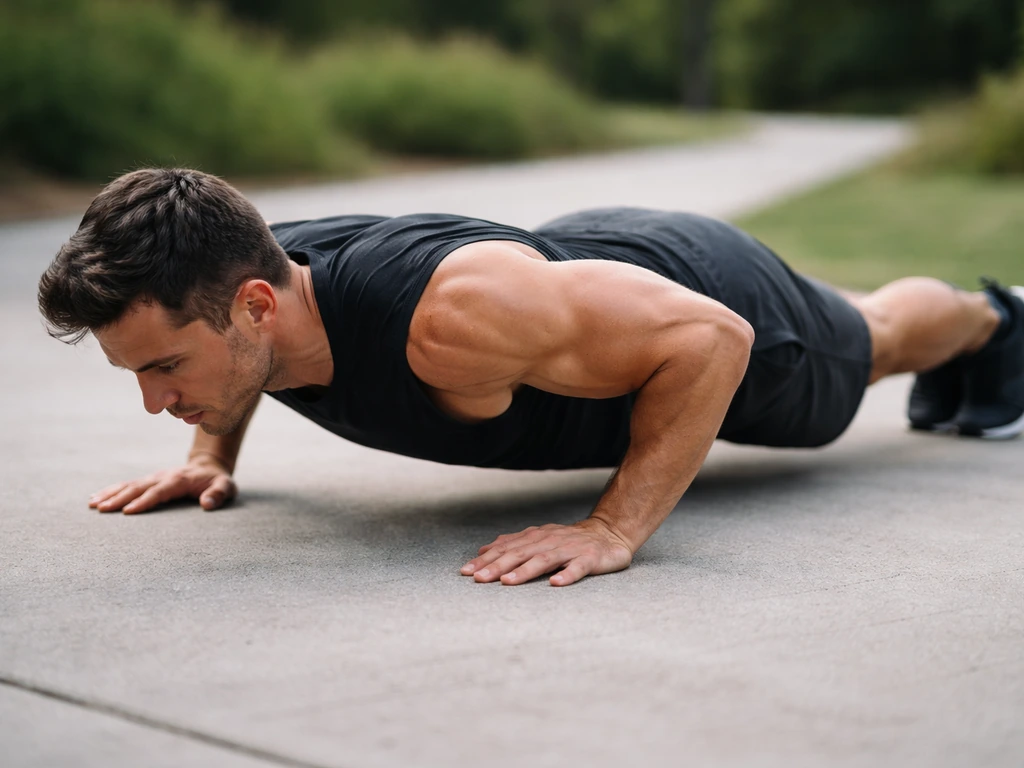
Your muscles don't know whether a barbell or your own bodyweight is loading them. What they respond to is mechanical tension, the pulling force placed on muscle fibers during a contraction. When that tension is high enough and sustained long enough (through volume), your muscle fibers experience micro-damage and metabolic stress that trigger the repair and growth process known as hypertrophy. Research consistently shows that when training effort is matched, lower loads can produce similar hypertrophy to heavier loads. That's the core justification for calisthenics: the load doesn't have to be a barbell as long as the stimulus is genuine.
Where calisthenics sometimes falls short is not in the method itself but in how people apply it. Doing 3 easy sets of push-ups with 10 reps of room to spare every morning isn't going to build much muscle, not because it's bodyweight, but because the intensity and volume are too low. You can also apply the same progressive-overload and near-failure approach with light weights to build muscle. You can use dumbbells in much the same way as light weights, adding load gradually and working close to failure to build muscle. Even if you are mostly doing calisthenics, you can still grow by working out when you progressively increase the difficulty and work close to failure light weights. The same rule applies to barbell training. The tool doesn't grow you; the training quality does.
The three things muscle growth actually needs
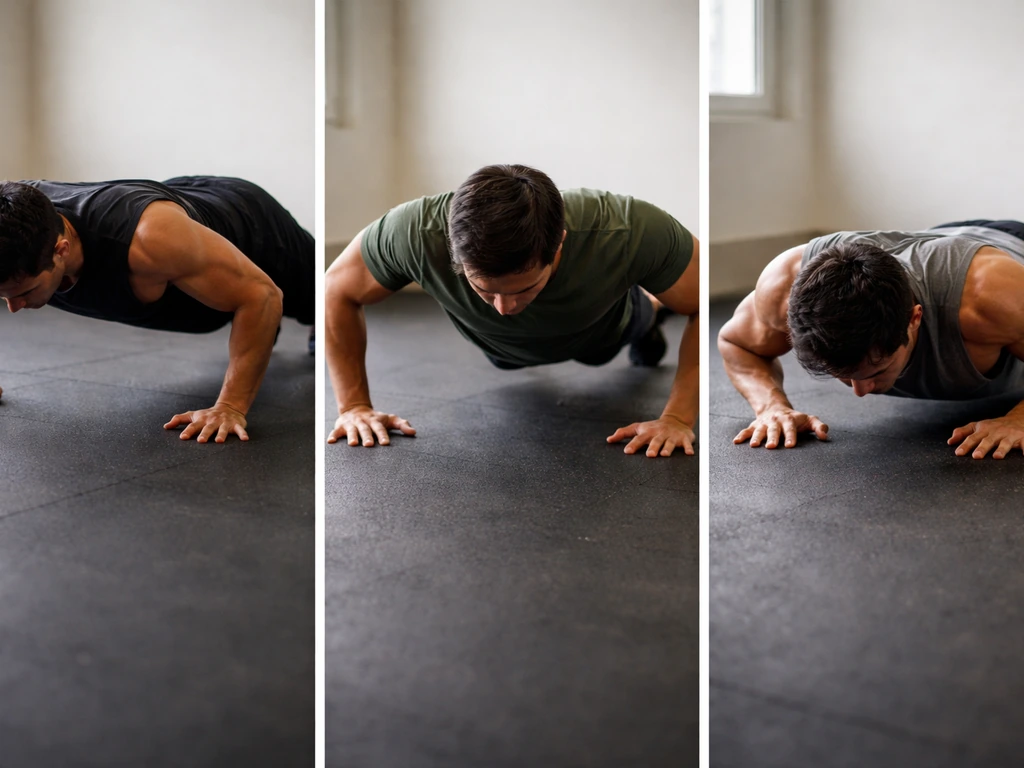
Before we get into exercise selection and workout design, it's worth being clear on what drives hypertrophy. Every effective program, calisthenics or otherwise, has to deliver these three things.
Progressive overload
Your muscles need a reason to grow. That reason is a training stimulus that exceeds what they're already adapted to. In barbell training, you add weight. In calisthenics, you progress to harder exercise variations, increase reps, add sets, reduce rest, or alter leverage to increase demand. If you're doing the same push-up variation with the same reps every week, you've stopped overloading your muscles and growth stalls. Progression is non-negotiable.
Sufficient training volume
Volume, the total number of hard sets you do per muscle group per week, has a clear dose-response relationship with muscle growth. Research by Schoenfeld and colleagues found that groups doing 10 or more sets per muscle group per week saw roughly 9.8% muscle size increases, compared to about 6.6% for 5 to 9 sets and 5.4% for fewer than 5 sets. That's a meaningful difference. Most people underestimate how many quality sets they need and overestimate how hard their sets actually are. For hypertrophy, aim for at least 10 working sets per muscle group per week once you're past the beginner stage.
Working close enough to failure

You don't have to grind every set to absolute failure, but you need to be working hard enough that the muscle is genuinely challenged. A systematic review and meta-analysis found similar hypertrophy when resistance training is performed close to muscle failure versus not taken to failure, supporting the practical idea that you do not necessarily need to train to absolute failure every set blank" rel="noopener noreferrer">working hard enough that the muscle is genuinely challenged. Leaving 1 to 4 reps in reserve (RIR) on most sets is enough to stimulate hypertrophy effectively. A systematic review and meta-analysis on proximity-to-failure and hypertrophy also highlights that estimating or achieving proximity-to-failure can vary across loads, which supports using effort close to failure as a practical programming target blank" rel="noopener noreferrer">Leaving 1 to 4 reps in reserve (RIR) on most sets is enough. What you want to avoid is stopping at 10 reps when you had 10 more left, that's not a productive working set, it's a warm-up. In calisthenics especially, where progressions can be tricky, many people pick an exercise that's too easy and never push close enough to the edge to drive growth. Choose a variation hard enough that you reach near-failure within a reasonable rep range.
How to design your calisthenics workouts for hypertrophy
Structure matters as much as exercise choice. Here's how to set up your training week so the volume and frequency actually deliver results.
Training frequency
Training each muscle group twice per week consistently outperforms once per week in hypertrophy research when total volume is equated. A push/pull/legs split trained twice a week (6 sessions) works well for intermediate trainees. Beginners do fine with 3 full-body sessions per week. Older adults can start with 2 to 3 sessions per week using moderate volume and progress from there, age is context, not a ceiling.
Sets, reps, and rest
For hypertrophy, the ACSM recommends working in an 8 to 20 rep range with multiple sets per exercise, resting about 2 to 3 minutes between sets. In calisthenics, you'll often use rep ranges from 6 to 15, but the specific number matters less than effort. If you can do a movement for 30 easy reps, you need a harder variation. Aim for 3 to 4 working sets per exercise and 10 to 20 total sets per muscle group per week as your baseline once you're established. Beginners can start with 2 to 3 sets and 6 to 10 total weekly sets and still make excellent early progress.
Range of motion
Use full range of motion wherever you can. Research suggests full ROM training can produce better hypertrophy outcomes, particularly for lower-body exercises. On push-ups this means chest to the floor. On squats it means hitting depth. Partial reps have their place in advanced work but shouldn't be your default.
Sample weekly structure
| Day | Focus | Example Session Length |
|---|---|---|
| Monday | Push (chest, shoulders, triceps) | 45–60 min |
| Tuesday | Pull (back, biceps) | 45–60 min |
| Wednesday | Legs + core | 45–60 min |
| Thursday | Rest or light activity | — |
| Friday | Push | 45–60 min |
| Saturday | Pull | 45–60 min |
| Sunday | Legs + core | 45–60 min |
Beginners should compress this into 3 full-body sessions on non-consecutive days (Monday, Wednesday, Friday) and build up from there. The push/pull/legs split becomes more useful once you're handling higher volumes and need the extra recovery between sessions.
The best calisthenics exercises and progressions for each muscle group
Progressive overload in calisthenics means moving through exercise progressions as you get stronger. Here are the key movements and how to make them harder over time.
Push (chest, shoulders, triceps)
- Incline push-up (hands elevated on a bench or wall) — good starting point for beginners
- Standard push-up — full range, chest to floor
- Close-grip push-up — shifts load to triceps
- Archer push-up — loads one side more heavily
- Decline push-up (feet elevated) — emphasizes upper chest and shoulders
- Pike push-up — more shoulder dominant
- Dips (parallel bars or rings) — excellent for chest and triceps once you're strong enough
- Ring push-up — adds instability and increases pec stretch
- Pseudo-planche push-up — advanced, high chest and shoulder demand
When standard push-ups become easy (you can do 20+ with 5+ reps in reserve), move to a harder variation rather than just adding more reps indefinitely. Dips are one of the most underrated calisthenics tools for upper body hypertrophy, if you have access to parallel bars, use them.
Pull (back, biceps)
- Dead hang — builds grip and shoulder stability before pulling
- Scapular pulls — teaches the starting position of a pull-up
- Inverted row (feet on floor, body at an angle) — great beginner pull
- Chin-up — supinated grip, more biceps involvement
- Pull-up — pronated grip, more lat emphasis
- Wide-grip pull-up — increases lat stretch
- Archer pull-up — unilateral loading for intermediate trainees
- Weighted pull-up (backpack with weight) — the most direct way to add load
- L-sit pull-up — adds core demand and changes the pulling angle
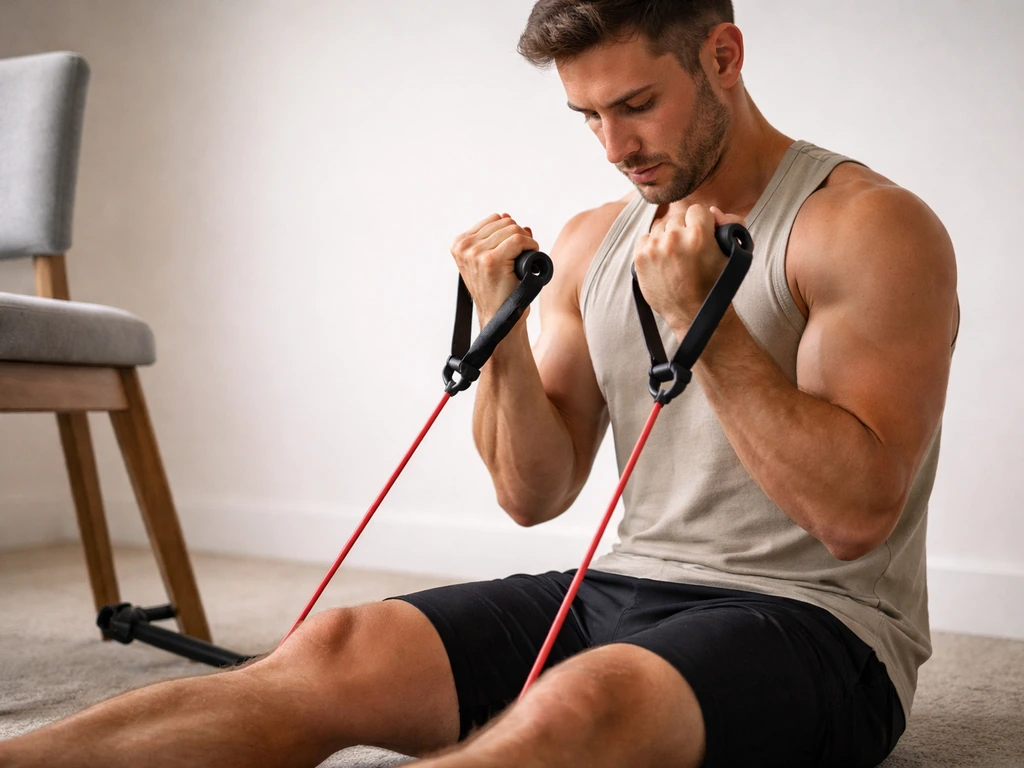
Pull-ups and chin-ups are the single best calisthenics movements for back and bicep development. If you can't do one yet, inverted rows are a legitimate training tool, not just a consolation exercise. Work your inverted rows until you can do 3 sets of 12 at a steep angle, then start working on assisted pull-ups (using a resistance band or a chair for partial assistance). If you want to grow muscle without access to bars or machines, you can also use resistance bands for progressive overload as you increase tension and reps.
Legs (quads, hamstrings, glutes, calves)
- Bodyweight squat — full depth, good starting point
- Bulgarian split squat — one of the best unilateral leg exercises anywhere
- Reverse lunge — knee-friendly, good for hamstrings and glutes
- Step-up (onto a bench or box) — adjustable difficulty
- Single-leg deadlift (bodyweight) — hinge pattern for hamstrings and glutes
- Glute bridge and hip thrust — posterior chain focused
- Pistol squat progression (assisted to full) — advanced single-leg quad work
- Nordic curl (feet anchored) — one of the most effective hamstring exercises in existence
- Calf raise (single-leg, from a step) — full range for better hypertrophy stimulus
Legs are where calisthenics requires the most creativity because your lower body can handle a lot of load. The pistol squat and Nordic curl are legitimately hard exercises that will challenge even strong people. The Bulgarian split squat, done with a slow eccentric (3 to 4 seconds down), can produce serious quad and glute hypertrophy without any added weight.
Core
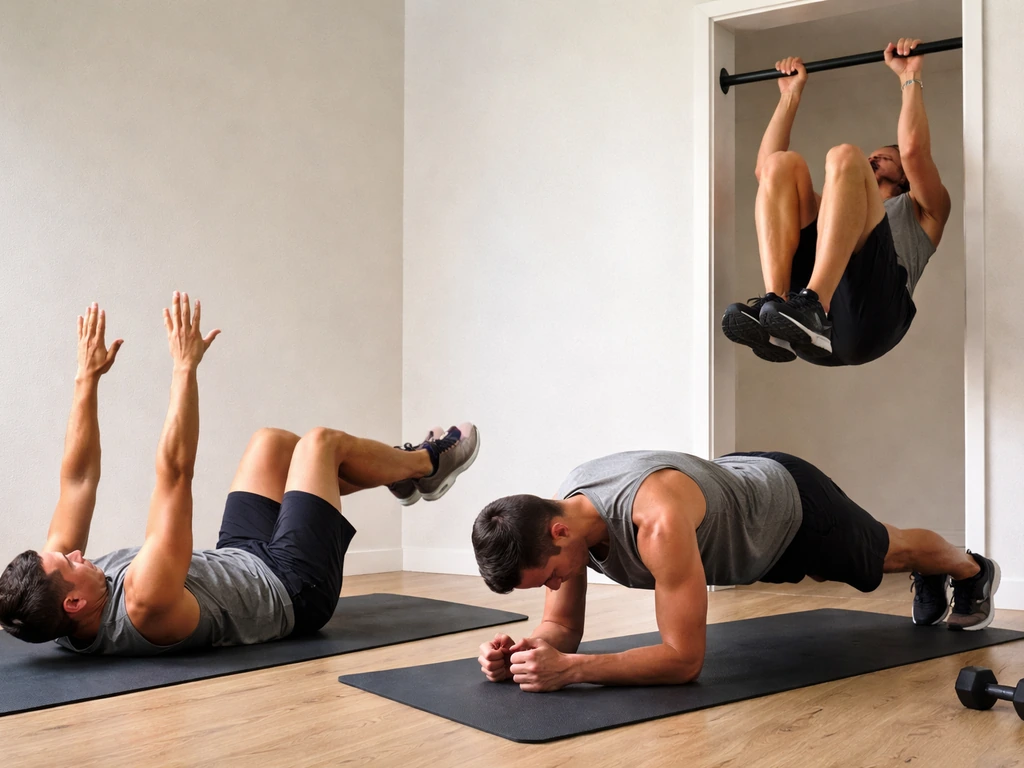
- Dead bug — anti-extension, safe for beginners and older adults
- Plank (and plank progressions) — core stability
- Hanging knee raise progressing to hanging leg raise — hip flexors and lower abs
- L-sit (on parallettes or dip bars) — demanding isometric core hold
- Ab wheel rollout — one of the best anti-extension exercises available
Nutrition: what you eat makes or breaks calisthenics muscle gains
Training creates the signal for muscle growth. Nutrition provides the raw materials. You can have a perfect calisthenics program and still spin your wheels if you're not eating enough protein and total calories.
Protein targets
The International Society of Sports Nutrition (ISSN) recommends 1.4 to 2.0 grams of protein per kilogram of bodyweight per day for exercising individuals focused on building or maintaining muscle. For most people, aiming for the higher end of that range (around 1.8 to 2.0 g/kg) is a practical target. For a 80 kg (175 lb) person, that's roughly 145 to 160 grams of protein daily. If you're in a calorie deficit and trying to hold muscle, evidence supports going higher, up to 2.3 to 3.1 g/kg, to protect lean mass.
Distribute protein across the day
Hitting your daily protein target matters more than obsessing over timing, but spreading intake across meals helps. The ISSN recommends aiming for 20 to 40 grams of protein per meal (roughly 0.25 to 0.40 g/kg per dose) every 3 to 4 hours to support muscle protein synthesis throughout the day. Three to four protein-rich meals or snacks spread out is a reasonable approach for most people.
Calories: bulk, maintain, or cut?
To grow muscle, you generally need to be eating at or slightly above your maintenance calories. A modest surplus of 200 to 300 calories above maintenance is enough to support muscle gain without excessive fat accumulation. If you're a complete beginner, you can gain muscle even in a small calorie deficit, but this window closes quickly as you become more trained. If fat loss is also a goal, focus on hitting your protein target first, keep calories at a slight deficit, and accept a slower rate of muscle gain.
Supplementation basics
Most of your results come from training and food, but a few supplements have legitimate evidence behind them. Creatine monohydrate is the most well-supported option: 3 to 5 grams daily builds your stores gradually and supports strength and power output across your calisthenics sessions. ISSN considers it safe and effective across a wide range of populations. You can also load faster with 20 grams per day for 5 to 7 days if you want quicker saturation, then drop to a 3 to 5 gram maintenance dose. Caffeine (about 3 to 6 mg/kg body weight before training) can improve performance. Beta-alanine may help with high-intensity endurance efforts. Beyond these, a quality whey or plant protein powder is just a convenient way to hit your daily protein target, it's food, not magic.
Recovery, tracking progress, and fixing plateaus
Sleep is your most important recovery tool
Muscle is built during recovery, not during training. Sleep is where protein synthesis peaks, hormones reset, and tissue repairs. If low testosterone is part of your situation, the training basics still matter, but you may need to adjust expectations and recovery to keep muscle gains moving hormones reset. Research shows that chronic sleep restriction can interfere with recovery from resistance training, even if it doesn't completely eliminate adaptation. Aim for 7 to 9 hours. If you're training hard and sleeping 5 to 6 hours, you're leaving results on the table. Training to failure also increases your recovery demand, so if you're regularly grinding to the last rep, factor in extra rest and keep an eye on soreness and performance from session to session.
How to track your progress
Track what matters: reps, sets, variations, and how difficult each set felt (using RIR as a guide). A simple training log, even a notes app on your phone, tells you whether you're actually progressing over weeks and months. Also take monthly photos and measurements (arms, chest, legs, waist). The scale alone is a poor indicator of muscle gain because you may be gaining muscle and losing fat simultaneously, especially as a beginner. If your numbers in the gym are going up over 6 to 12 weeks and your measurements are changing, you're on the right track.
Why you've stopped growing (and how to fix it)
Plateaus in calisthenics usually come down to one of a few issues. First, the exercises you're doing have become too easy and you haven't progressed to harder variations, fix this by honestly auditing how difficult your sets actually are. If you're wondering can you grow muscle from bodyweight, this is the same hypertrophy framework used in effective calisthenics programs: progressive overload, enough volume, and working close to failure. Second, your weekly volume may be too low, add a set or two per muscle group per week and see if progress resumes. Third, nutrition has slipped: protein intake has dropped or you've drifted into a significant calorie deficit without realizing it. Finally, accumulated fatigue can stall progress even if everything else is right. A planned deload every 4 to 8 weeks (cutting volume by about 40 to 50% for one week while keeping frequency similar) allows your nervous system and connective tissue to recover and often results in better performance when you return to full training.
For beginners and older adults
If you're new to training or returning after a long break, start conservatively. Two to three full-body sessions per week, 1 to 3 sets per exercise, targeting 8 to 15 reps with manageable difficulty, is a proven formula for early adaptation. Research on older adults (a population well-served by this approach) supports similar parameters: 2 to 3 days per week, 1 to 3 sets, 8 to 15 reps, emphasizing technique and control over maximum effort initially. Older adults should be especially attentive to joint comfort and recovery between sessions, calisthenics is actually well-suited here because you're not adding external load on top of potentially arthritic joints, and exercise selection can be easily modified. Start with regression versions of movements (incline push-ups instead of floor push-ups, inverted rows instead of pull-ups), earn the standard variations, and then work up the progression ladder.
Managing injury and training around pain
Calisthenics is generally lower-risk than barbell training because you can't load beyond your own bodyweight and your body naturally finds positions it can manage. That said, shoulder impingement from bad push-up or dip form and elbow issues from pull-up volume are real risks. If something hurts (not just burns or feels hard, actually hurts), back off that movement and find a regression or variation that's pain-free. Training through sharp joint pain is never productive. With calisthenics, there's almost always a scaled version of every exercise that lets you continue training the same pattern while the irritation settles down.
The bottom line on building muscle with calisthenics
Calisthenics is a legitimate, effective tool for building muscle, not a consolation prize for people without gym access. The same principles that apply to barbell training (progressive overload, adequate weekly volume, sufficient protein, enough recovery) apply here. The difference is that progression happens through exercise variations and leverage rather than adding plates to a bar. If you're tracking your workouts, pushing close enough to your limit on each set, hitting 10 or more sets per muscle group per week, eating 1.6 to 2.0 g/kg of protein daily, and sleeping 7 to 9 hours, you have everything you need to make serious gains. The physique is built in the consistency and the progression, not in the equipment.
FAQ
If I can only do basic push-ups and squats, can I still grow muscle with calisthenics?
Yes, but only if you can progress your difficulty, not just repeat the same easy reps. A practical benchmark is that most sets should end with about 1 to 4 reps in reserve, and your push-ups, pull-ups, dips, and leg movements should become harder over weeks (harder variations, added reps, slower tempo, or less assistance). If you cannot reach near-failure even with the hardest version you know, muscle growth will stall.
Do I need to increase reps forever to grow, or should I switch variations?
If you can do 20+ push-ups with several reps left in reserve, adding reps alone usually leads to slower growth than switching to a harder variation. A better progression is to use tempo (for example, 3 to 5 seconds down), elevate your feet, add a slight pause at the bottom, or move to diamond, decline, or weighted-equivalent body positions. The goal is to keep the working sets near the same effort level.
How close to failure should I go with calisthenics to maximize muscle growth?
You do not need to train to absolute failure. Stopping with 1 to 4 reps in reserve on most hard sets is enough for hypertrophy, and it usually improves recovery, especially for elbows, shoulders, and lower back (which can be stressed more with calisthenics volume). If performance drops sharply week to week or joints get cranky, reduce effort or take a deload.
Are partial reps okay for calisthenics muscle growth?
Partial reps can help in specific advanced situations, but they should not be your default for the main lifts. If a movement like a push-up or dip causes you to stop early because of strength limits, use a regression that restores full range (for example, higher hands, assisted reps, or different leverage) so the hard sets still include the full stretch and shortening range.
How many weekly sets do I need for each muscle with calisthenics?
Most people will grow fastest with at least 10 hard sets per muscle group per week once they are no longer brand new. However, the “right” total depends on how hard each set is and how many different exercises you use. For example, 6 to 8 sets close to failure can beat 10 sets that are too easy, so measure effort using RIR and adjust set count accordingly.
What counts as progressive overload in calisthenics, exactly?
Yes, but make the progression measurable. Options include adding assistance gradually for pull-ups (less band tension), slowing the eccentric on squats or split squats, increasing time under tension, reducing rest between sets, or shifting to a more demanding leverage position. If you cannot define what changes next week, you are likely repeating the same training stimulus.
Can I grow muscle with calisthenics while cutting calories?
A slight calorie deficit can still support some muscle gain for beginners or those returning after a long break, but the ceiling gets lower as you become more trained. If you are consistently losing strength or your reps are stuck for 2 to 3 weeks while protein is met, that is a sign the deficit is likely too aggressive. For better odds of gaining, aim for maintenance to a small surplus and keep protein high.
What’s the biggest nutrition mistake people make when trying to gain muscle with calisthenics?
Nutrition still matters, but the most common mistake is underestimating protein consistency. If you hit your total daily protein but it is split into only one or two large meals, you may not get the same muscle-building effect as spreading intake. A useful target is 20 to 40 grams per meal across 3 to 4 eating periods.
How do I avoid overuse injuries while doing lots of calisthenics for muscle gain?
Be careful if your calories are too low and you are pushing near-failure every session. Calisthenics can create extra joint and tendon fatigue because you often repeat high-skill positions (like dips and pull-up holds). If you notice persistent joint pain, declining reps despite good sleep, or constant soreness that does not improve, reduce training effort, cut volume, or take an extra deload week.
Does creatine help if I’m only training with bodyweight?
Creatine works with calisthenics because it supports high-intensity performance and repeated efforts, which helps you generate more hard sets over time. A practical approach is 3 to 5 grams daily, and you do not need to time it around workouts. If you experience stomach discomfort, split the dose or take it with a meal.
Can I still grow muscle with calisthenics if my workout time or equipment is limited?
Yes, but you must keep the training stimulus consistent. For example, if you increase rest times and use longer sets due to equipment limitations, your volume and effort can unintentionally drop. If you travel or train at home with limited space, prioritize movements that let you work close to failure and keep weekly hard sets near your baseline.
How can I tell whether I’m sore from progress or sore from too much training?
If you have full-body soreness but your performance is rising in reps or difficulty, that is usually normal adaptation. If performance is flat, technique degrades, or pain increases (sharp or localized pain is a warning), adjust immediately by removing the painful variation, replacing it with a regression, and consider reducing weekly volume by 30 to 50% for a week.