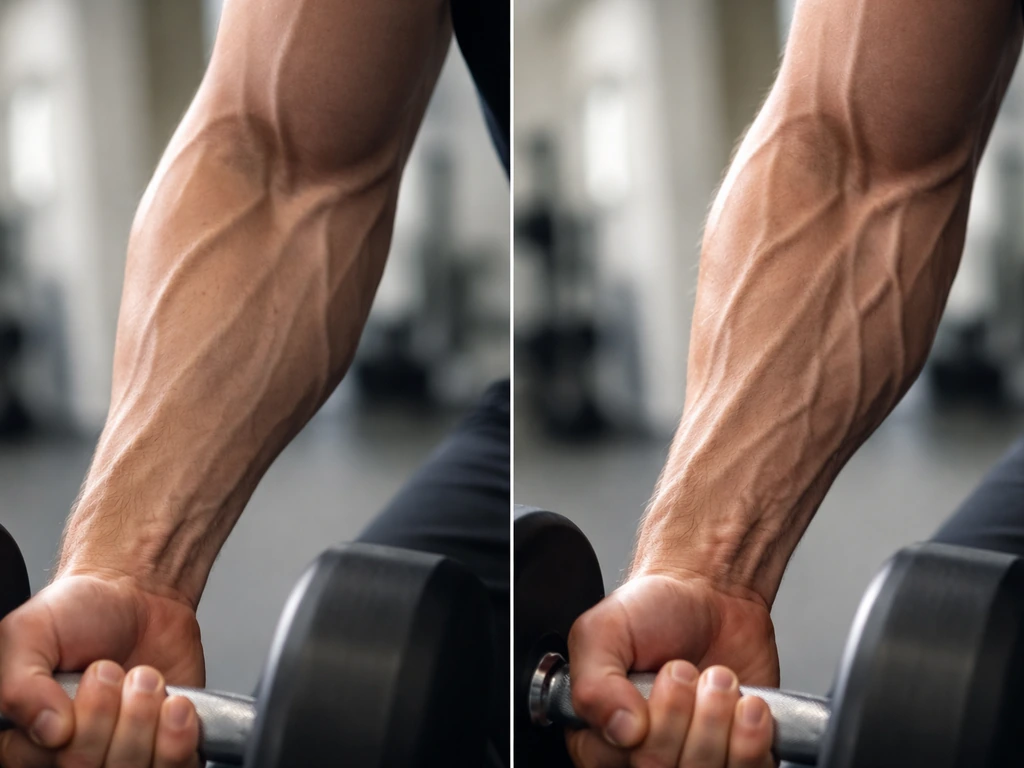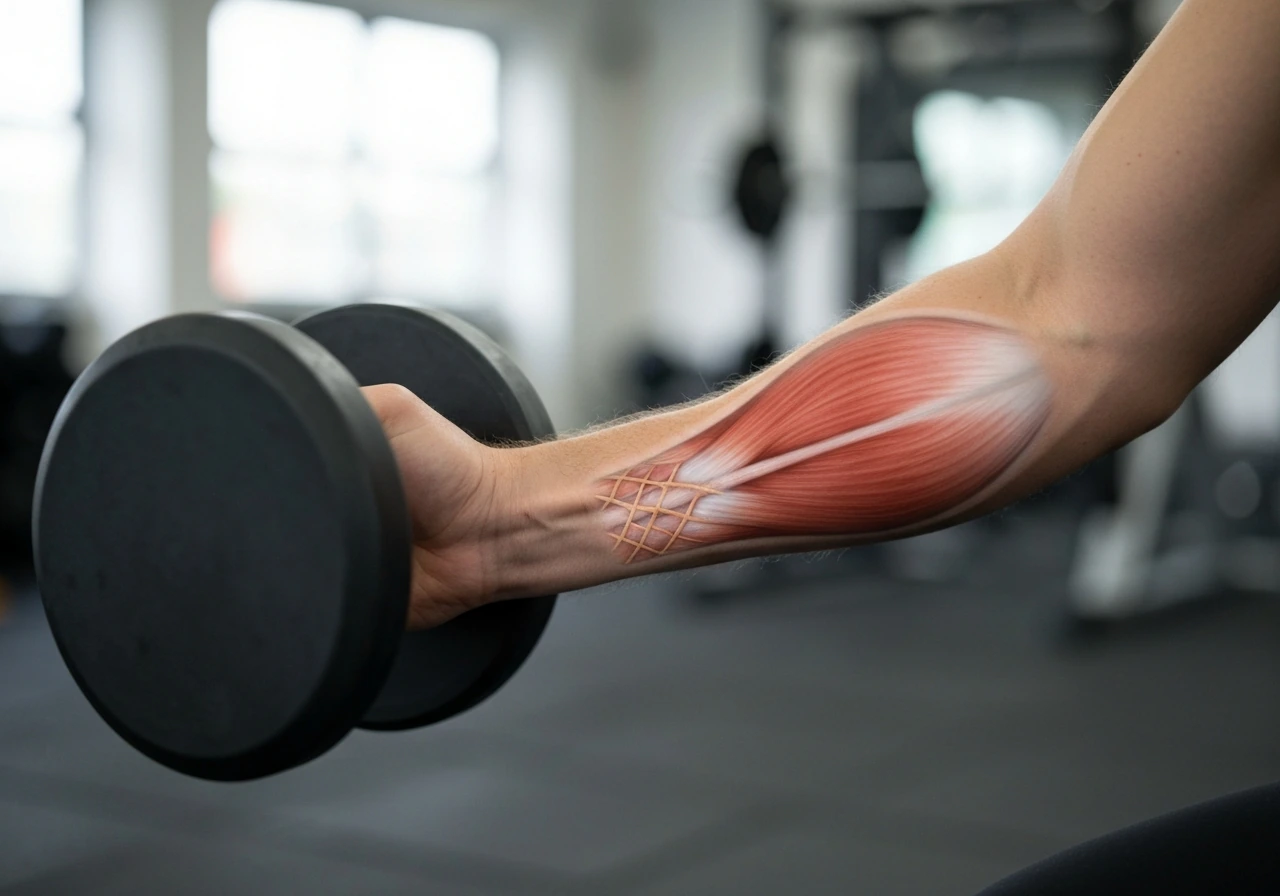
Yes, you can absolutely build muscle with resistance bands, including your biceps. This isn't a consolation prize for people without a gym membership. Bands create real mechanical tension on your muscles, and if you push sets close to failure, hit enough weekly volume, and eat enough protein to support growth, your body has no reason not to respond the same way it would to dumbbells or a barbell. The key conditions are the same as any other training tool: progressive overload, sufficient effort, and consistent nutrition. Meet those, and bands work.
Can You Grow Muscles with Resistance Bands? Beginner Plan
Marcus Kellerman
25 Apr 2026
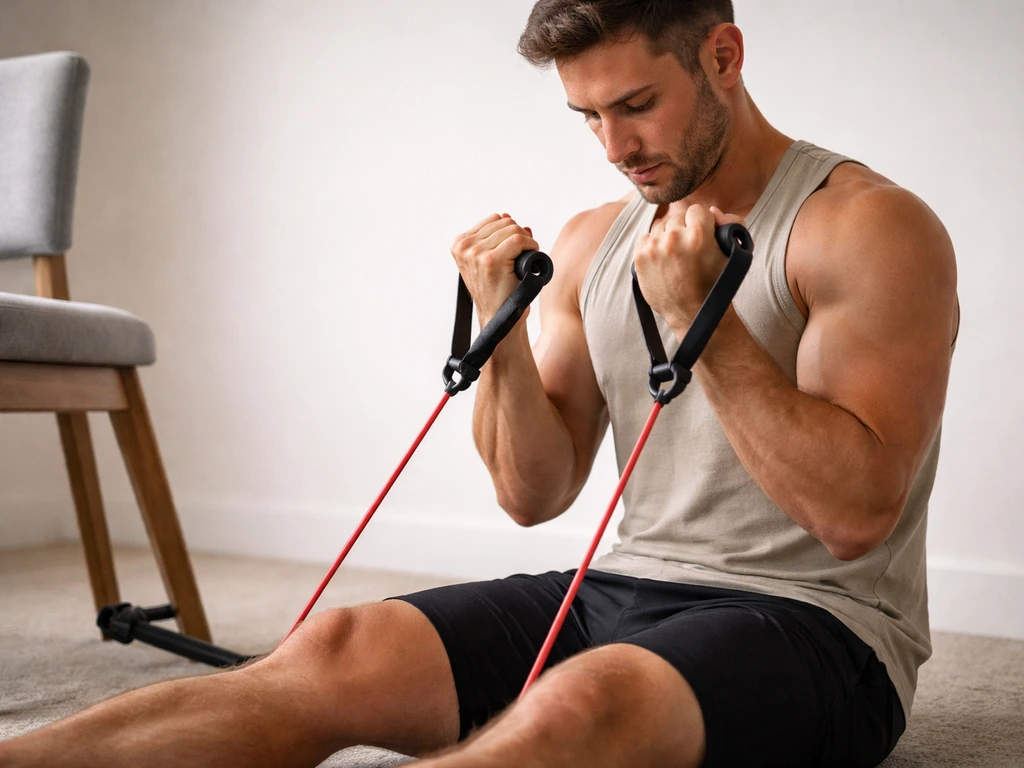
How your muscles actually grow when using bands
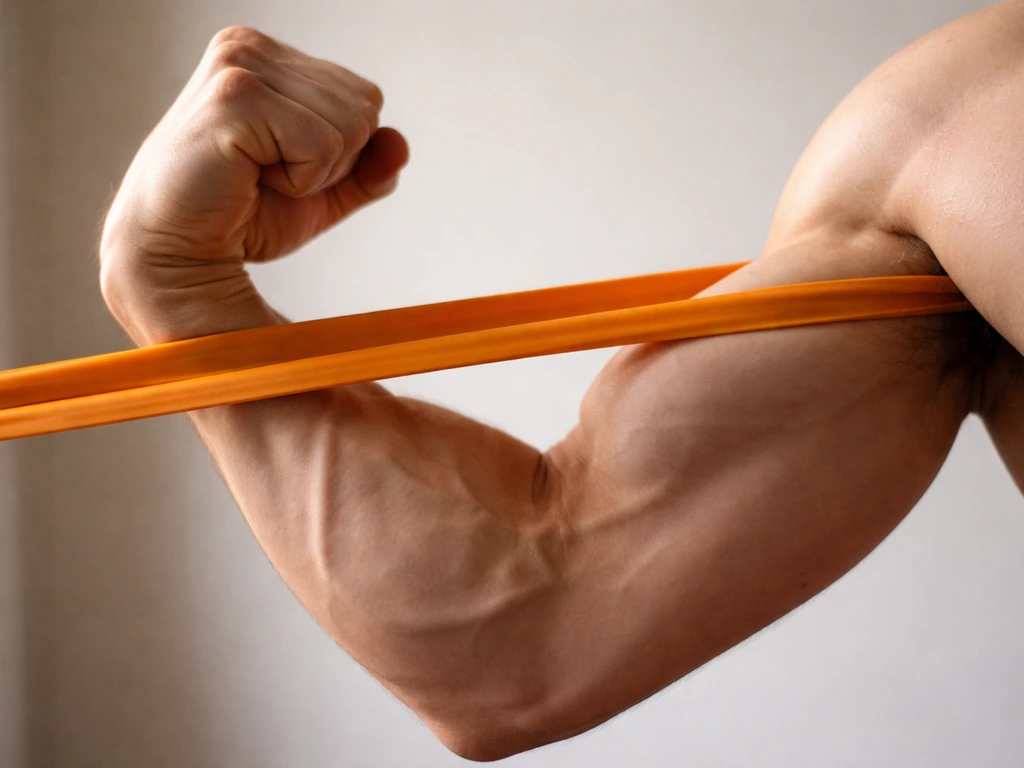
Muscle growth, technically called hypertrophy, happens when mechanical tension signals your muscle fibers to repair and grow thicker. That signal comes from the force your muscles have to produce against a load, combined with how close you push toward the point where you can't complete another rep. Resistance bands create that tension just fine. The load isn't a fixed number like a 30 lb dumbbell, but the tension still rises as you stretch the band further, and your muscles still have to work hard to control and complete the movement.
Three variables drive hypertrophy no matter what equipment you use: mechanical tension, training volume, and proximity to failure. A 2024 meta-regression confirmed that proximity to failure has a dose-response relationship with both strength and hypertrophy outcomes. A 2022 systematic review backed this up, finding that training closer to failure is consistently associated with greater muscle growth. And a separate study comparing 2, 8, and 16 sets per week showed that higher weekly set volume produced meaningfully more hypertrophy. Bands can deliver all three if you program them intelligently.
One real difference with bands is that the resistance curve changes throughout the movement. At the start of a curl, the band is less stretched and tension is lower. At the peak contraction, tension is highest. This is actually the opposite of free weights, where tension drops at the top of many movements. For some exercises like bicep curls and rows, this ascending resistance profile is genuinely useful because it challenges the muscle hardest where it's strongest. For others, it means you need to be creative about anchoring and angles to keep tension meaningful throughout the full range of motion.
What bands do well and where they fall short by muscle group
Bands are excellent tools for arms, back, shoulders, and glutes. Bicep curls, face pulls, rows, pull-aparts, lateral raises, and hip thrusts all translate very well to band training. The exercises are easy to anchor, the resistance profile is forgiving, and you can get meaningful tension without needing heavy external load. For biceps specifically, bands are surprisingly effective: you can do standing curls with the band anchored underfoot, incline curls lying on a bench, preacher-style curls with the band anchored low, or concentration curls. Different anchor heights and grip positions change the feel of the exercise just like they would with a dumbbell.
Chest and legs are the areas where bands struggle most. Pressing movements like push-ups augmented with bands work reasonably well, but you can't replicate the loading range of a heavy bench press without stacking multiple bands in awkward positions. Squats and deadlifts with bands can be effective, especially for glutes and hamstrings, but loading the quads and posterior chain heavily enough to drive significant growth in well-trained legs is genuinely difficult without adding substantial load. If your primary goal is lower body mass and you're past the beginner stage, you'll eventually need more than bands alone.
| Muscle Group | Band Effectiveness | Best Exercises | Limitation |
|---|---|---|---|
| Biceps | High | Standing curl, incline curl, concentration curl | Hard to load very heavy for advanced lifters |
| Back / Rear Delts | High | Rows, face pulls, pull-aparts, pull-downs | Limited max load for large muscle groups |
| Shoulders | High | Lateral raise, front raise, overhead press | Overhead press hard to stabilize with bands |
| Triceps | Moderate | Overhead extension, pushdown, push-up | Push-up load ceiling |
| Glutes | Moderate–High | Hip thrust, clamshell, kickback, lateral walk | Works best combined with bodyweight |
| Quads / Hamstrings | Moderate | Squat, Romanian deadlift, leg curl | Hard to achieve sufficient load for growth beyond beginner stage |
| Chest | Moderate | Band push-up, chest fly, press | Low load ceiling without many bands stacked |
A practical resistance band training plan for muscle growth
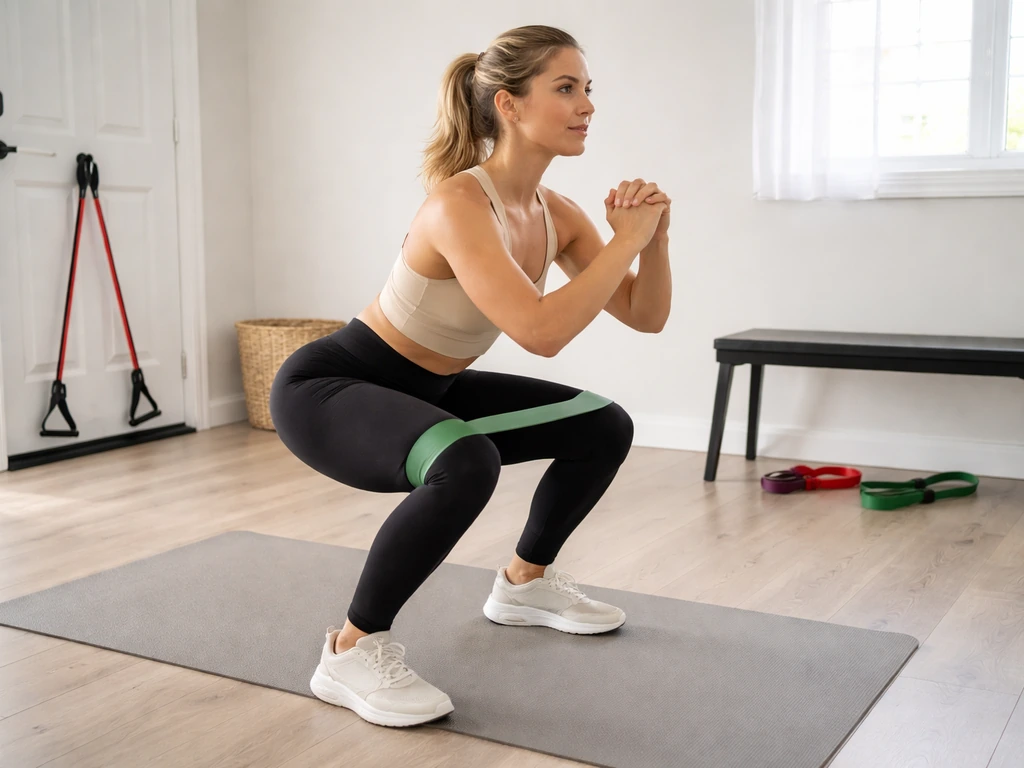
Here's a straightforward 3-day full-body program you can run with a set of loop bands or tube bands. If you're a beginner, this is plenty of stimulus. If you've been lifting for a while, use heavier bands, shorten rest periods, and push sets very close to failure. Run this Monday, Wednesday, and Friday, or any three non-consecutive days.
The workout
| Exercise | Sets | Reps | Rest |
|---|---|---|---|
| Band squat or Romanian deadlift | 3–4 | 10–15 | 60–90 sec |
| Band row (anchored to door or post) | 3–4 | 10–15 | 60–90 sec |
| Band push-up or chest press | 3–4 | 10–15 | 60–90 sec |
| Band bicep curl | 3–4 | 12–15 | 60 sec |
| Band overhead press or lateral raise | 3 | 12–15 | 60 sec |
| Band face pull | 3 | 15–20 | 45 sec |
| Band hip thrust or glute kickback | 3 | 15–20 | 45 sec |
Every working set should end with 1 to 3 reps left in the tank at minimum. If you're finishing a set and feel like you could do 10 more reps, the band is too light or the exercise isn't challenging enough. Effort is everything. A warm-up of 5 minutes of light movement (arm circles, leg swings, a few easy band pull-aparts) is enough to prep your joints and get blood moving.
How to keep progressing when you hit a ceiling
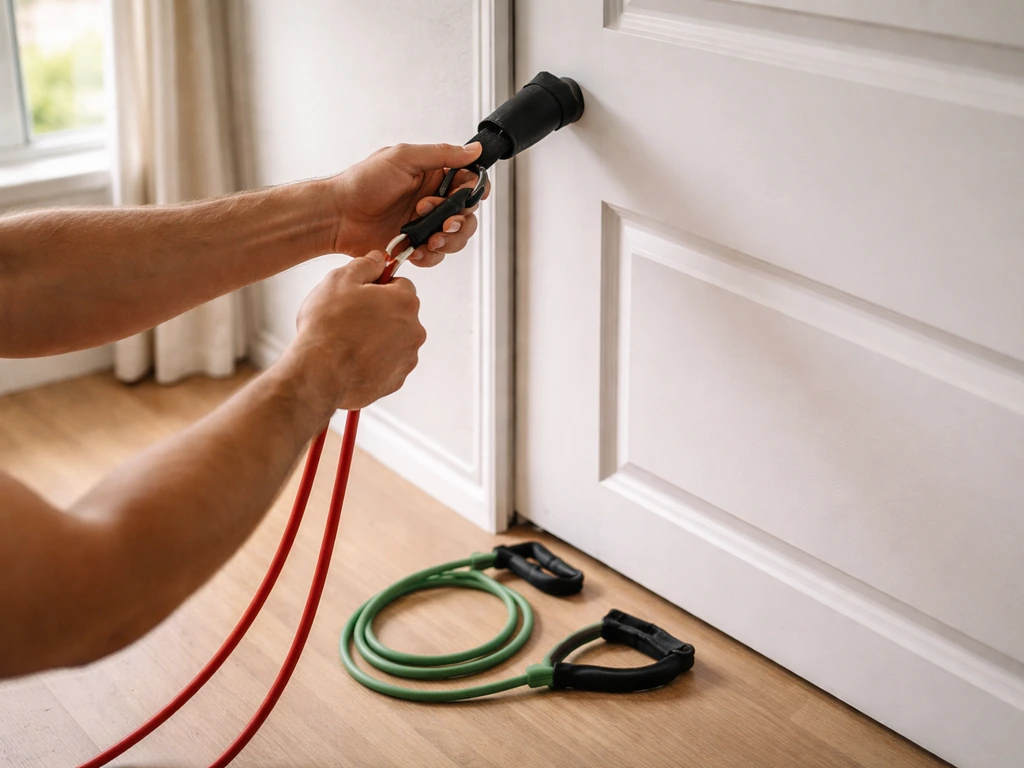
Progressive overload is the engine of muscle growth, and it's the trickiest part of band training because you can't just add 2.5 lb plates. Here's how to progress without a weight rack:
- Move to a heavier band: most band sets come in light, medium, heavy, and extra-heavy options. When 15 reps feels easy, step up.
- Stack bands: hold or loop two bands together to increase resistance. This is the simplest immediate solution.
- Choke up on the band: grip the band shorter (wrap it around your hand or shorten the loop) to increase tension at the start of the movement.
- Slow the tempo: try a 3-second eccentric (lowering) phase. This increases time under tension and makes lighter bands significantly harder.
- Add pauses and partials: a 2-second hold at peak contraction on a bicep curl dramatically increases the stimulus without needing more load.
- Add sets or reps before upgrading resistance: if you're doing 3 sets of 12, push to 3 sets of 15 before moving to a heavier band.
- Reduce rest periods: shorter rest raises metabolic stress and makes the same number of sets harder.
Training biceps with bands: getting it right
The bicep curl with a band is more effective than many people give it credit for. Stand on the middle of the band with feet hip-width apart, hold the ends with a supinated (palms-up) grip, and curl. Keep your elbows pinned at your sides throughout. At the top of the movement, squeeze hard and hold for a beat before lowering slowly. That squeeze is where the ascending resistance profile of a band pays off: the tension is highest right where your biceps are most contracted. To hit the biceps from different angles, try an incline curl by anchoring the band low behind you while lying back on a bench, or a concentration curl seated on a chair with the band underfoot. Changing the anchor point and your body position shifts which part of the strength curve gets challenged most.
Nutrition and recovery: the part most people underestimate
Bands create the training stimulus. Protein and calories do the actual building. You can run the best band program in the world and see almost nothing if your nutrition doesn't support repair and growth. Aim for 0.7 to 1 gram of protein per pound of bodyweight daily, distributed across at least 3 to 4 meals. For a 170 lb person, that's roughly 120 to 170 grams of protein per day. Sources like chicken, eggs, Greek yogurt, fish, beef, and protein powder all work. The specific source matters less than hitting the total consistently.
Calories matter too. To build muscle, most people need to be at or slightly above their maintenance calorie intake, a modest surplus of 200 to 400 calories per day is enough for most beginners and intermediate lifters. If you're in a meaningful calorie deficit, muscle growth becomes very difficult regardless of how well you train, though beginners and people returning from a break can sometimes gain muscle while eating at maintenance or slightly below. If your testosterone is genuinely low, you can still make progress with the right band training and nutrition, but addressing the hormone issue may help your results low testosterone.
Sleep is your main recovery tool. Muscle protein synthesis is elevated for up to 48 hours after a session, but growth hormone release and cellular repair peak during deep sleep. Aim for 7 to 9 hours. If you're skimping on sleep consistently, you're leaving muscle on the table. On the supplement side, creatine monohydrate (3 to 5 grams daily) has strong evidence for supporting both strength and lean mass gains and is worth considering regardless of whether you're using bands or barbells.
Common mistakes that kill your progress with bands
- Not training hard enough: this is the biggest one. Coasting through sets at 50% effort produces minimal stimulus. You need to approach failure on working sets.
- Using bands that are too light and not progressing: if you've been using the same green band for three months without adding difficulty, you've stalled your own progress.
- Poor anchoring causing inconsistent tension: if the band slips or moves during a set, tension becomes uneven and your form breaks down. Use a stable anchor point every time.
- Skipping the eccentric: many people let the band snap back at the end of a curl or row. The slow lowering phase (eccentric) is where a significant portion of the muscle-building stimulus comes from. Control it.
- Expecting soreness to equal growth: you won't always be sore after a band session, especially once your body adapts. That doesn't mean you didn't grow. Soreness is a poor proxy for stimulus.
- Inconsistent frequency: missing two sessions per week consistently adds up fast. Three sessions a week of honest effort beats six sessions of half-hearted work.
- Neglecting nutrition: training optimally and eating 80 grams of protein a day is a recipe for spinning your wheels.
What results actually look like and when to adjust your strategy
If you're new to resistance training, you can expect to feel stronger within 2 to 3 weeks and start seeing visible changes in muscle size and definition within 6 to 12 weeks of consistent training with proper nutrition. That timeline holds whether you're using bands, dumbbells, or a barbell. The mechanism is the same. Beginners tend to respond faster, and older adults can absolutely make meaningful gains too, though recovery may take slightly longer and protein needs sit toward the higher end of the range.
If you've been training consistently for 3 months and aren't seeing any changes, run through this checklist: Are you training sets close to failure? Are you hitting 10 or more sets per muscle group per week? If your weights feel too light, you can still grow muscle by training close to failure and progressing the difficulty over time can you grow muscle with light weights. can you grow muscle can you grow muscle with light weights. Yes, you can grow by working out as long as you train close to failure and progressively increase the difficulty over time can you grow by working out. Are you hitting your protein target most days? Are you sleeping 7 or more hours? If any of those answers are no, fix that before changing anything else. If all the boxes are checked and you're genuinely plateaued, it's likely time to add heavier bands, start stacking multiple bands, or consider incorporating some dumbbell work. Bands are a powerful tool but they do have a practical load ceiling, and at some point, heavier external load produces more stimulus than clever band techniques alone.
If you're comparing approaches, calisthenics training shares a lot of the same principles as band training in that it relies on bodyweight and creative progression rather than added load. If you want to use calisthenics specifically, you can grow muscle as long as you progress your difficulty over time and train close to failure calisthenics training. The advantage bands have over pure calisthenics is the ability to adjust resistance level and better isolate specific muscles like biceps and rear delts. Both can drive real muscle growth, and many people combine them. Similarly, light dumbbell training follows many of the same rules as band training: effort and volume matter more than the weight on the label. You can apply the same progressive overload, effort, and volume principles when learning how to grow muscle with dumbbells. The core principle across all of these methods is that your muscles grow when you challenge them consistently and give them what they need to repair.
Start today with what you have. If you own a basic band set, you have enough to build real muscle. Pick three or four exercises from the plan above, push them hard, eat your protein, and do it again in two days. Adjust from there.
FAQ
How heavy should my resistance bands be to build muscle (and how do I tell if the band is too light)?
Pick a band that lets you complete the target reps with good form and still have 1 to 3 reps left in the tank on your last set. If you hit failure early (you cannot reach the low end of the rep range), use a stronger band. If you finish every set feeling you could do many more reps, the band is too light or the anchoring angle is reducing tension.
Can you grow muscle with resistance bands if you can’t train close to failure?
You can still make some progress, but hypertrophy slows when you consistently stay far from failure. If fatigue is the limiting factor, shorten the range slightly to keep tension in the working muscles, improve leverage and anchoring, and prioritize controlled reps. Aim to reach near-failure most sets most workouts, not on every single set every time.
Is it better to use higher reps or lower reps with bands for muscle growth?
Use a rep range that you can push close to failure with steady tension, commonly about 8 to 20 reps for most upper-body exercises. Bands often feel easiest at the peak contraction, so higher reps can be useful, but if you can do 30+ reps without burning, your band is likely too light or you are not stretching it enough during the movement.
How do I progress with bands over time if I can’t add weight plates?
Progress by increasing band difficulty (stronger bands), increasing total sets per week, improving leverage (changing anchor height or body angle), lengthening the tempo (for example 2 to 3 seconds down), or extending the tension range (start in the slack position and fully control the stretch). Track which band setup and reps you can do, then aim to add reps per set before switching to a harder band.
Do I need multiple bands, or is a single loop band enough?
A single band can work for biceps and many upper-body exercises, especially if you can find a band that is challenging. For full-body training, especially legs, multiple bands or adjustable tube bands help you match resistance to different exercises and keep tension meaningful at the top and bottom of the range.
Why do some band exercises feel awkward or ineffective, especially for rows or presses?
Common causes are a poor anchor point, incorrect posture, and moving through a range where the band becomes too slack. Set up so the band is stretched at the start of the rep, keep the same joint angles throughout the set, and adjust foot position or anchor height until the working muscle stays under tension for the entire rep.
Can you build bigger biceps with bands, or do they only work for small muscle groups?
Bands can build biceps effectively because tension is highest where the muscle is most contracted. Use an exercise variation that keeps elbows pinned and controls the lowering phase, then adjust anchor height (for example incline or concentration curls) to change which portion of the strength curve is emphasized.
Will band training work for back and rear delts as well as for chest?
Back and rear delts generally translate well because you can anchor bands and maintain consistent pulling tension across the range. Chest is trickier because matching the heavy loading range of pressing movements is harder. If chest growth is a priority, supplement bands with push-up variations that get harder (for example band-resisted push-ups or deficit push-ups) and ensure you reach near-failure.
How many days per week should I train with resistance bands to see muscle growth?
Three days per week is a solid starting point for beginners, as long as you hit enough weekly volume per muscle group and work close to failure. If you are recovering slowly or your sessions are very fatiguing, use fewer sets per workout and add an extra day later rather than forcing 5 to 6 high-intensity sessions immediately.
How much weekly volume should I target using bands?
A practical target is about 10 to 20 working sets per muscle group per week for most people once technique is consistent. If you’re new, start closer to the low end and build gradually. If you are doing near-failure sets, adding volume too fast can stall you due to recovery limits.
What should I do if my band only gives strong tension at the end range?
That is common depending on anchoring and exercise mechanics. Reduce slack by starting with the band already stretched, adjust anchor position so the band is loaded at the beginning of the rep, and use tempo control to keep the muscle under tension during the parts where the band would otherwise feel easy.
Are resistance bands good for legs, or will quads always lag behind?
Glutes and hamstrings are usually easier to train effectively with bands. Quads can be harder because creating enough knee-dominant loading through the full range is difficult without more external resistance. If quads are a priority and you are past beginner stage, consider adding heavier resistance (more band tension, band stacking, or occasional dumbbell/barbell work).
Do bands affect people differently based on experience level or age?
Beginners often respond quickly to any structured training that is close to failure and consistently progressive. Older adults can gain muscle as well, but recovery may require slightly more rest and a focus on controlled reps and stable technique. If joint discomfort appears, reduce range temporarily and prioritize perfect form and gradual progression.
Should I use creatine and protein if I’m training with bands only?
Yes. Creatine can support strength and lean mass gains regardless of equipment, commonly 3 to 5 grams daily. Protein still determines how well you recover, aim for about 0.7 to 1.0 grams per pound of bodyweight per day, spread across at least 3 meals, and increase calories slightly if you are not maintaining at least energy balance.
How do I know whether I’m actually doing enough for growth if the scale weight doesn’t change?
Muscle gain can be small at first and body weight can stay stable even if training is working. Track waist or measurements, progress in reps and control of the movement, and how performance improves over weeks. If strength, rep targets, and effort are improving but no definition changes after several months, review protein, sleep, and weekly set volume first.
Is there a safety concern or common injury risk when training with resistance bands?
The main risks come from snapping bands, poor anchoring, and using momentum. Always anchor to stable, rated points, inspect bands for wear, keep tension controlled, and avoid jerking at the bottom of reps. If you feel sharp pain (not muscle burn), stop and adjust range or exercise variation.