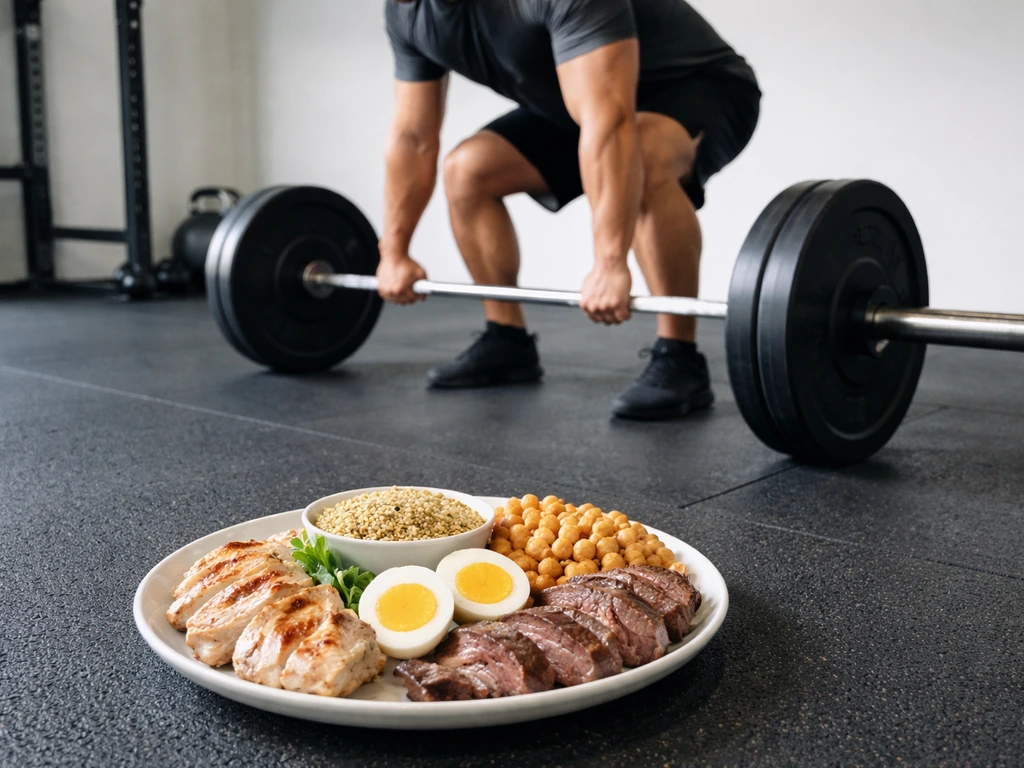
Yes, you can absolutely build measurable muscle without weights. The research is clear on this: what drives muscle growth is mechanical tension applied to muscle fibers at sufficient intensity, not the specific tool used to create that tension. A barbell is one way to do it. It's not the only way.
Can You Grow Muscle Without Weights? A Practical Guide
Marcus Kellerman
14 Apr 2026
What actually makes muscle grow
Muscle hypertrophy happens when your muscles are exposed to enough mechanical load to trigger a cascade of cellular signals, primarily through a process called mechanosensing. Your muscle fibers contain proteins (titin is a major one) that act like load sensors. When you stress a muscle hard enough, those sensors activate pathways that increase muscle protein synthesis and, over time, lay down new contractile tissue. The tool creating that tension is largely irrelevant. What matters is that the muscle is being asked to produce significant force against resistance it finds challenging.
This is why 'do I need weights' is the wrong question. The right question is: 'Am I creating enough tension, at enough effort, often enough?' If the answer is yes, your muscles will adapt regardless of whether the resistance comes from a barbell, a resistance band, your own bodyweight, or a combination of all three.
Can you grow muscle without actually working out?
This is where people want a loophole, and I'll be straight with you: there isn't one. Casual daily movement (walking to your car, carrying groceries occasionally, standing at a desk) doesn't come close to the mechanical stimulus required for hypertrophy. Research comparing aerobic-only training to resistance training consistently shows that single-mode aerobic exercise does not produce the same skeletal muscle hypertrophy as resistance training. You need a genuine training stimulus.
That said, 'working out' doesn't have to look like a traditional gym session. The stimulus can be delivered in many forms. What counts as a real stimulus is any activity that forces your muscles to work near their capacity for multiple sets and that you can progress over time. Structured bodyweight training qualifies. Resistance band training qualifies. Certain forms of isometric training qualify. What doesn't qualify is light incidental activity or easy walks, no matter how consistent.
There's also a nuance worth knowing around intensity: you don't need to train to complete failure to grow, but you do need to get reasonably close. Recent evidence suggests that training within a few reps of failure produces similar hypertrophy to grinding out every last rep, and there's a real argument that stopping a couple of reps short preserves your ability to do more total volume, which is ultimately what drives long-term gains. The key takeaway is effort matters, but you have flexibility in how you apply it.
Your real training options without a gym
If you want a deeper dive into programming specifics, <a data-article-id="6AE88368-849D-492E-BA6A-C552D3430">how to grow muscles without weights</a> covers the full progression model. But here's the practical overview of what actually works:
Bodyweight training

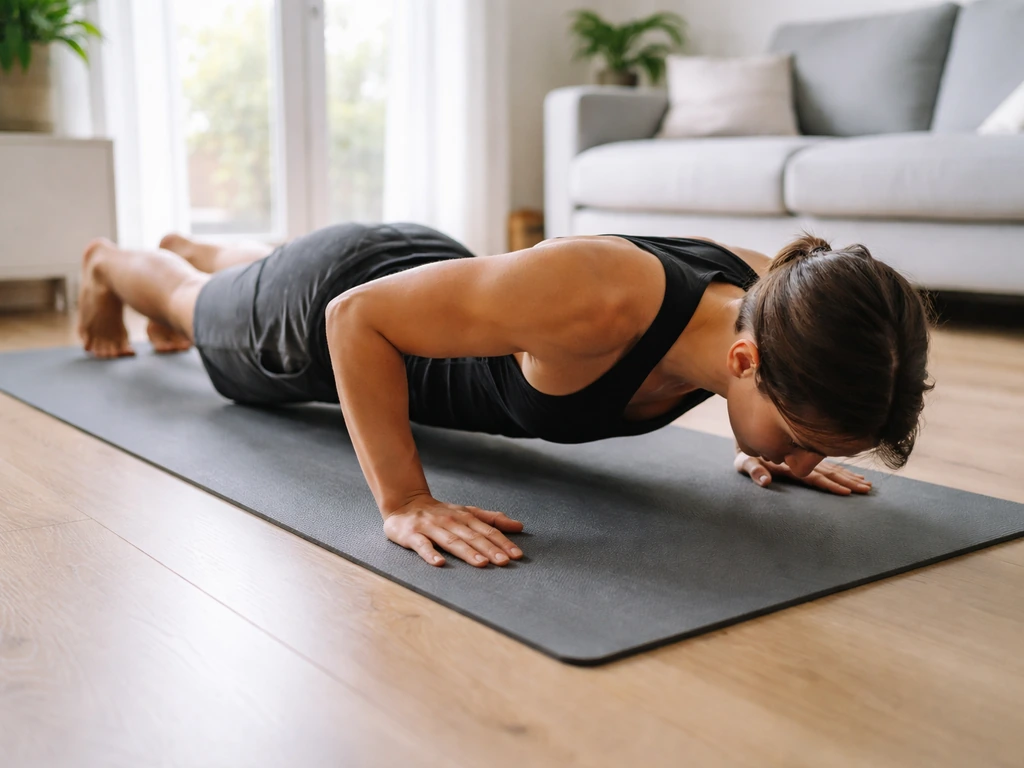
Bodyweight training is the most accessible option and, when done with progressive overload in mind, genuinely effective. A recent controlled trial found that bodyweight-based resistance training produced meaningful physiological improvements comparable to kettlebell training in untrained adults. The principle is the same as with weights: make the exercise progressively harder over time. For push-ups, that means going from incline push-ups to standard to decline to archer push-ups. For lower body, it means progressing from two-leg squats to Bulgarian split squats to pistol squats. Progression is everything. If you're doing the same 20 push-ups every week and they feel easy, you're maintaining at best.
A functional starting framework: 3 to 4 sessions per week, 3 to 4 sets per major muscle group, with reps in the 8 to 20 range and stopping 2 to 3 reps before you genuinely can't continue. Each week or two, make the exercise harder or add a set. That's it. The dose-response research on hypertrophy suggests that something in the range of 10 to 20 working sets per muscle group per week is a solid target once you're past the beginner stage.
Resistance bands
Bands are genuinely underrated. A 2019 systematic review and meta-analysis comparing elastic resistance to conventional weight-based resistance training found comparable strength gains across most movements. They're not a second-tier option; they're a legitimate training tool. They're also practical: a full set of bands costs less than a month at most gyms, packs into a bag, and can replicate most upper-body pulling patterns (rows, pull-aparts, face pulls) that are hardest to do with pure bodyweight. One limitation is that bands are harder to progress in small increments, so tracking which band you're using and when to upgrade is important.
Isometric training
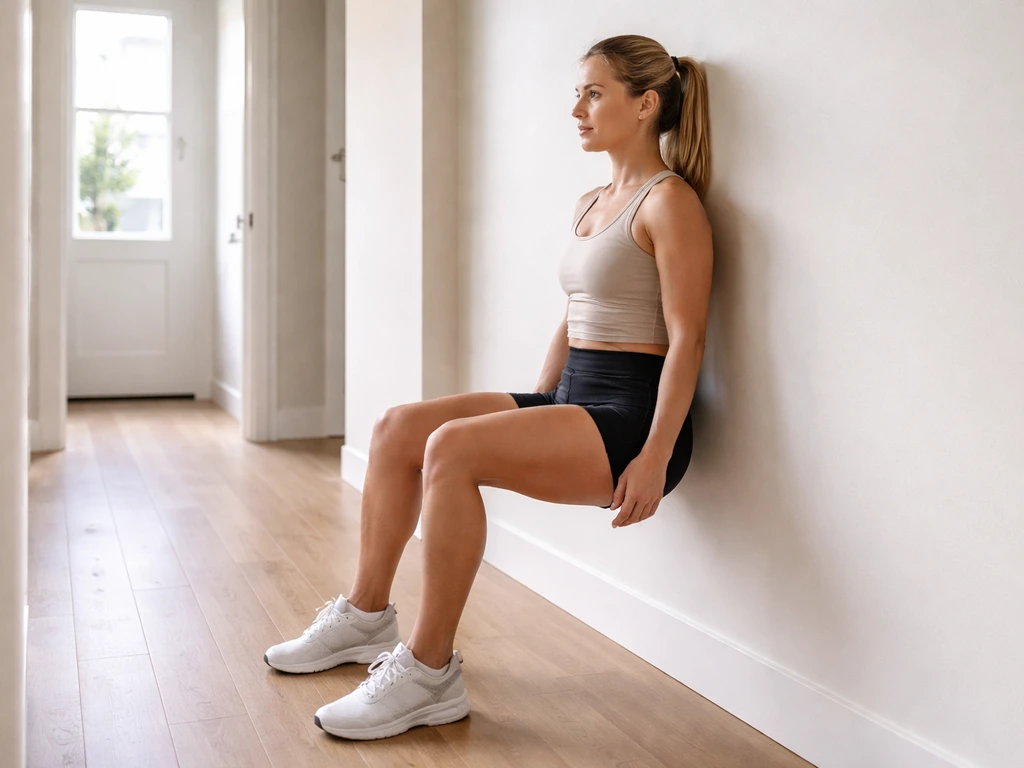
Isometrics involve contracting a muscle against immovable resistance, like pushing against a wall or holding a squat position at a fixed angle. They produce real hypertrophy, especially at the joint angle trained, and can be useful when joints are sore or range of motion is limited. They're not as comprehensive as dynamic resistance for overall muscle development, but they're far better than nothing and can be a useful complement to bodyweight or band work. Holds of 20 to 45 seconds at high effort work well.
Everyday activities as resistance
Carrying heavy loads (groceries, kids, backpacks), climbing stairs with weight, and manual labor can contribute to maintaining muscle, especially in beginners or older adults. But to be clear: these are supplements to a real training program, not replacements. The intensity and structure aren't consistent enough to drive meaningful hypertrophy on their own. Use them as a bonus, not the plan.
Nutrition without bulking hard
The biggest nutrition myth around muscle building is that you need to eat a lot to grow. You don't need to bulk aggressively. What you do need is enough protein and enough total calories to support the process. These are two separate targets worth thinking about individually.
Protein: the non-negotiable

The research here is pretty consistent. Across multiple meta-analyses, approximately 1.6 grams of protein per kilogram of bodyweight per day appears to be the threshold where most people maximize muscle protein synthesis. Some individuals may benefit from going slightly higher (up to 2.2 g/kg), but the returns above 1.6 g/kg are modest. For a 75 kg (165 lb) person, that's about 120 grams of protein per day. Some people wonder whether they can skip protein entirely and still build, but the answer is no: growing muscles without protein simply isn't possible in any meaningful sense, since amino acids are the literal building blocks of new muscle tissue.
Protein timing matters less than total daily intake. Getting protein reasonably spread across meals (three to four times a day) is sensible, but obsessing over the exact post-workout window is not necessary. Hit your daily total and distribute it reasonably. That's the 95% answer.
Calories: maintenance vs. a small surplus
If your goal is to build muscle without gaining much fat (or without traditional bulking), eating at maintenance calories or in a modest surplus of 100 to 300 calories per day is a reasonable approach. Beginners can often build meaningful muscle even in a slight calorie deficit, especially if protein is high, because their bodies are so responsive to the training stimulus. Trained individuals generally need at least maintenance, and a small surplus helps. You don't need to eat 500 or 1,000 calories over maintenance to grow. That approach mostly accelerates fat gain, not muscle gain, beyond a certain point.
If your appetite is low or you struggle to hit your protein target, prioritize protein-dense foods first at each meal: eggs, Greek yogurt, cottage cheese, chicken, fish, or legumes. Protein shakes can help fill the gap, though the question of whether you need supplements at all is worth considering: growing muscle without supplements is entirely possible when whole food protein targets are met. Supplements are a convenience, not a requirement.
What about creatine?
You might be wondering whether you need creatine specifically. The short answer is no, it's optional. Building muscle without creatine is completely achievable, though creatine is one of the most well-researched performance supplements and it does provide a modest but real benefit for strength and lean mass. If you're on a budget or prefer to keep things simple, it's not something you have to worry about.
| Nutrition Factor | Target | Notes |
|---|---|---|
| Daily protein | 1.6 g/kg bodyweight (min) | Up to 2.2 g/kg for some; spread across 3-4 meals |
| Total calories | Maintenance to +300 kcal/day | Beginners can grow in slight deficit if protein is high |
| Protein timing | Reasonably spread through day | Total daily intake matters more than exact timing |
| Supplements | Optional | Creatine and protein powder are convenient, not required |
| Hydration | Adequate daily intake | Muscle function and performance depend on it |
Recovery: the part most people underinvest in

Muscle doesn't grow during training. It grows during recovery. This isn't a cliche: the training session is the stimulus, and everything that happens afterward determines whether your body actually capitalizes on it.
Sleep
Sleep is probably the most underrated muscle-building tool there is. Research on resistance training and sleep has shown that people engaged in muscle-building exercise tend to sleep longer, and that insufficient sleep measurably reduces training performance and, by extension, the stimulus you're able to generate. Seven to nine hours per night is the standard recommendation, and it's worth taking seriously. If your sleep is consistently poor, no training program or nutrition plan will fully compensate.
Soreness and fatigue management
Soreness is not a reliable indicator of a good workout, and chasing soreness is a bad strategy. What you want to manage is accumulated fatigue. As training volume builds up over weeks, fatigue can start to mask your fitness and suppress your ability to produce force, which ironically limits the mechanical tension your muscles experience. This is why planned deload weeks (typically one week of reduced volume and intensity every four to eight weeks) are worthwhile. Recent research on deload periods shows they help mitigate accumulated fatigue and may even support re-sensitization of muscle-building pathways, meaning you can come back and respond better to training after a short break.
Realistic timeframes
Beginners doing structured bodyweight or band training with adequate protein can expect to see noticeable muscle changes within six to twelve weeks. 'Noticeable' here means visible shape changes and measurably improved strength on your exercises. This isn't rapid transformation territory, but it's real and meaningful progress. Trained individuals will see slower changes, which is normal. The research suggests that muscle hypertrophy continues to accumulate over months and years, not days and weeks, so consistency is the actual variable that matters most.
Putting it together: what to actually do starting today
Before worrying about things like pre-workout supplements (which, to be clear, pre-workout products don't grow muscle on their own anyway), get the basics locked in first. Here's a practical starting structure:
- Train three to four days per week using bodyweight progressions, resistance bands, or a mix. Hit each major muscle group (push, pull, legs, core) at least twice per week.
- Do three to four sets per exercise, reps in the 8 to 20 range, stopping two to three reps before you can't complete another rep with good form.
- Progress every one to two weeks: harder exercise variation, more sets, or shorter rest.
- Eat at least 1.6 g of protein per kilogram of bodyweight daily, spread across three to four meals.
- Eat at or slightly above maintenance calories unless you're a true beginner, in which case maintenance is fine.
- Sleep seven to nine hours per night. This is not optional.
- Take a deload week every four to eight weeks: cut volume by about half and keep intensity moderate.
- Be consistent for at least eight to twelve weeks before evaluating whether the plan is working.
One thing worth exploring once you're a few weeks in: creatine. Mayo Clinic describes creatine as a commonly used supplement and provides safety and quality guidance, including the value of third-party testing blank" rel="noopener noreferrer">creatine.. While you absolutely don't need it, creatine's effect on muscle growth is one of the more well-supported findings in sports nutrition, and for people training without a gym, any small performance advantage is worth considering. But again, get the fundamentals right first. The training stimulus, protein intake, and sleep will do far more for you than any supplement.
The bottom line: weights are a tool, not a requirement. What your muscles respond to is tension, effort, and consistency. Give them that, feed them adequately, and let them recover, and they will grow. Full stop.
FAQ
Can I grow muscle with only push-ups, pull-ups, squats, and lunges, or do I need more variety?
Yes, but you need to make the resistance hard enough and progressively harder. A common mistake is doing “easy push-ups” or “regular bodyweight squats” that never get close to your limit. Aim for sets where the last few reps are challenging (roughly 2 to 3 reps left in reserve) and then progress over time by changing leverage, tempo, adding reps, adding difficult variations, or using a weighted backpack.
What if my bodyweight exercises stop getting harder, will muscle growth still happen?
If you cannot progress, you cannot expect steady growth. Progression can be built using variation (incline to standard to decline push-ups), leverage (pistol progressions), tempo (slower eccentrics), pause reps, unilateral work, and added external load via backpack or belts. If your bodyweight training stalls for 3 to 4 weeks, you usually need a tougher variation, more sets, or slightly more total weekly volume.
Do I need full range of motion, or can I build muscle with partial reps and holds?
Partial range reps can work, especially if they’re near failure, but they tend to produce more growth at the angles you train. For better overall development, include at least some full-range work (for example, full-depth squats or push-ups to chest near the floor) and use paused reps selectively if your goal is to strengthen specific joint angles.
Should I train to failure when I’m not using weights?
Doing every set to failure is not required, but “never hard enough” is the bigger problem. A practical check is whether you are able to match the effort level session to session while still improving reps, sets, or difficulty over time. Many people do well stopping 1 to 3 reps before failure and using failure only occasionally when you’re confident you can recover.
Will running, biking, or lots of cardio prevent muscle growth if I’m training without weights?
There are two different goals: building muscle and increasing conditioning. If you add lots of long, easy cardio, you might recover worse or reduce training quality, which can slow hypertrophy. Keep cardio as a supplement and prioritize your strength sessions, especially by limiting hard cardio days right before your most intense lower-body training.
Can daily activities like walking, carrying groceries, or climbing stairs replace a workout?
Light incidental carrying, walking, or house chores can help overall fitness, but they usually do not provide enough consistent mechanical tension to drive hypertrophy. If you want muscle gains, treat heavy carrying and stair climbing as bonus exposures and still run a structured program that hits hard sets for each major muscle group weekly.
How do I progress with resistance bands if I can’t add weight easily?
Bands can absolutely build muscle, but progression is the main edge you must manage. Because bands can feel “too easy” at certain points of the range, choose exercises that keep tension through most of the motion and track which band strength you use. If you cannot go to a clearly harder band, progress by increasing reps, adding sets, slowing tempo, or using longer band resistance or doubles.
Are isometric workouts enough to build muscle, or should I combine them with dynamic exercises?
Isometrics can grow muscle, especially where you train the joint angle, but they are usually less efficient for overall size than dynamic training. For best results, use isometrics either as a supplement (example, 2 to 3 hard holds after your main set) or as a temporary option during joint soreness, while still doing some dynamic work when possible.
Can I build muscle without weights if I only have time for 20 to 30 minute workouts?
Yes, you can still gain if you only have room for short sessions, but volume and effort still matter. A useful approach is 2 to 4 exercises per workout that cover push, pull, squat or hinge, and a core pattern, then do multiple sets in the 8 to 20 rep zone (or an appropriate equivalent for your difficulty). Short workouts fail only when effort is low or progression is absent.
Does weight-free training work for older adults or beginners with limited recovery capacity?
If you’re older, returning from injury, or new to training, you can still build muscle, but you may need more time to recover and a slower progression. Start with fewer sets per week (for example, 6 to 10 working sets per muscle group) and prioritize technique and full range within comfort. Deloads can come sooner if you feel persistent joint or tendon irritation.