No, you cannot build muscle without protein. That's the short answer, and it's not really up for debate. Muscle tissue is made of protein. When you train, you break down muscle fibers, and your body uses amino acids from dietary protein to repair and build them back bigger and stronger. Without protein, there's nothing to build with. Carbs and fats are critical for energy and hormonal health, but neither can substitute for protein as the structural raw material of muscle. That said, "without protein" almost never means you need protein powder or shakes. Most people can hit the targets they need entirely through whole food, and this article walks you through exactly how to do that.
Can You Grow Muscles Without Protein? What to Do

Marcus Kellerman
5 Apr 2026
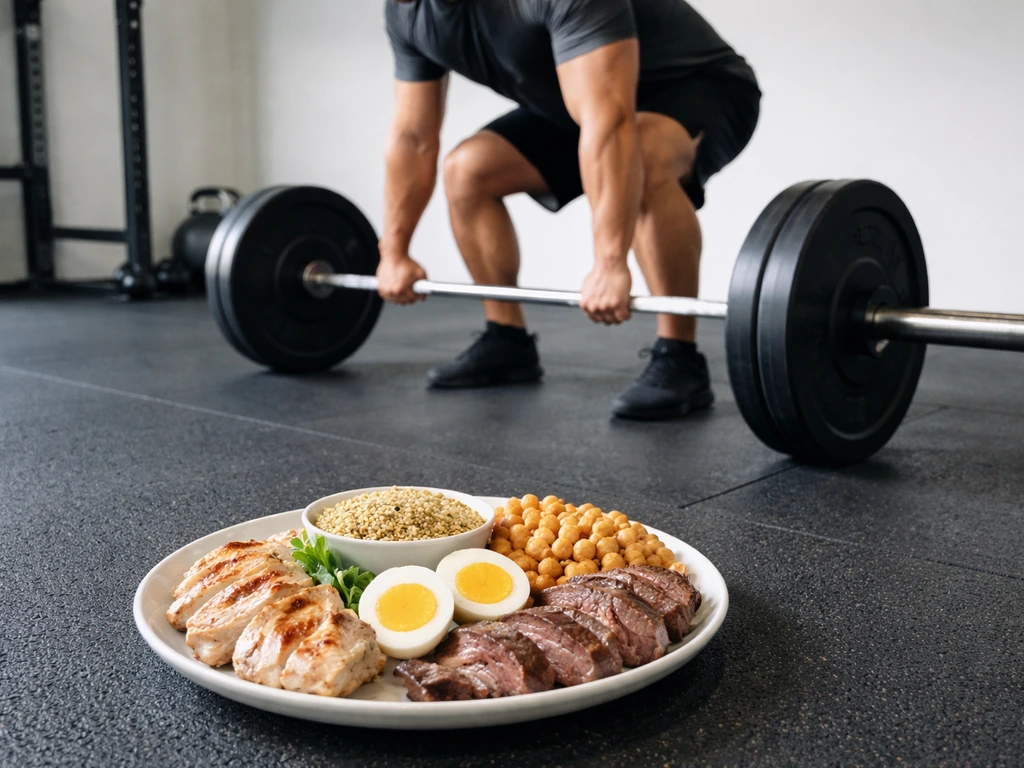
Why protein is non-negotiable for muscle growth
The mechanism here is straightforward. When you lift weights or do any form of progressive resistance training, you stimulate muscle protein synthesis (MPS), the process your body uses to build new muscle tissue. But resistance exercise alone only shifts the equation partway. To actually end up with more muscle, you need a positive net muscle protein balance, meaning synthesis has to outpace muscle protein breakdown. Dietary protein, specifically the essential amino acids (EAAs) it supplies, is what tips that balance in your favor.
Think of it in terms of nitrogen balance. Your body is constantly losing nitrogen through urine, sweat, and other routes. If your protein intake just matches those losses, you're at zero nitrogen balance, maintaining what you have but not growing. If you're consistently below that, you're in negative balance, which means you're losing tissue over time, not building it. To grow muscle, you need to be in positive nitrogen balance, and that requires eating enough protein. Research suggests that something around 0.6 g/kg/day of high-quality protein can achieve zero nitrogen balance at rest, but once you add training stress into the picture, your needs rise substantially.
The International Society of Sports Nutrition (ISSN) puts the practical target at 1.4 to 2.0 g of protein per kilogram of bodyweight per day for most exercising individuals, with resistance training and protein intake working synergistically to drive MPS. A large meta-analysis published in the British Journal of Sports Medicine found a dose-response relationship between protein intake and fat-free mass gains from resistance training, with the benefits plateauing around 1.62 g/kg/day. So you don't necessarily need to go extremely high, but you do need to get enough.
What actually happens when protein is too low
If you're training hard but under-eating protein, you'll still get some adaptation, especially early on when neural improvements account for a big chunk of strength gains. But the hypertrophy side of the equation suffers. Research in resistance-trained men showed that even an acute reduction from a higher habitual protein intake reduced net anabolic balance by roughly 25% on the first day of the lower-protein condition, and about 15% by day three. That's meaningful. Your training stimulus is there, but the building material isn't, so you're leaving gains on the table.
Recovery also takes a hit. Protein supports the repair of muscle damage from training. When intake is too low, recovery slows, soreness tends to linger longer, and the risk of overreaching creeps up. You might find yourself feeling beat up between sessions, which makes consistent progressive training harder to maintain. Slower recovery, fewer quality sessions per week, and blunted MPS adds up to significantly less muscle over months and years compared to someone training the same way with adequate protein.
It's also worth noting that it takes a few days for your body to adapt to a change in protein intake. If you drop protein intake suddenly, the anabolic response to training is blunted almost immediately. The body can partially adjust over about 3 to 5 days, but it doesn't fully compensate. Chronic low protein intake keeps you in a state where muscle building is perpetually slow.
You don't need powder: whole-food protein strategies that work
Protein shakes and powders are convenient, but they're not magic. A scoop of whey isolate gives you roughly 25 grams of protein, and you can match that easily with real food. If you prefer eating actual meals rather than drinking your nutrition, building muscle without supplements is absolutely achievable, and in many ways it's the more sustainable long-term approach anyway.
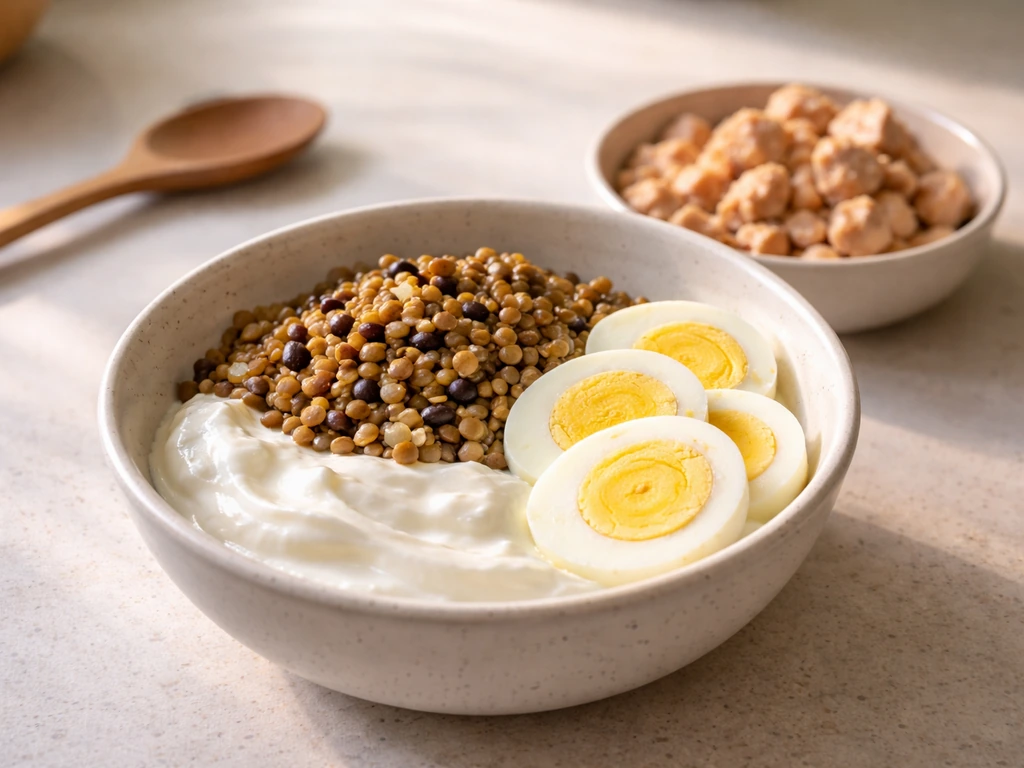
Here's what a practical whole-food protein toolkit looks like. A 3-ounce serving of chicken breast gives you around 27 grams of protein. One large egg contributes about 6 to 7 grams. A cup of cooked lentils lands around 15 to 18 grams. A cup of milk adds roughly 8 grams. Greek yogurt, cottage cheese, canned tuna, salmon, lean beef, tofu, tempeh, and edamame are all excellent, protein-dense options. None of these require a blender or a protein tub.
The ISSN recommends aiming for roughly 20 to 40 grams of high-quality protein per meal, ideally spread across three to four meals per day. That's a manageable target with whole food. Three meals containing a solid protein source, plus a protein-rich snack like cottage cheese or hard-boiled eggs, can get most people to the 1.4 to 2.0 g/kg/day range without any supplements at all.
For those following plant-based diets, the math is slightly different. Plant proteins tend to have lower digestibility scores than animal proteins, so vegetarian and vegan eaters generally need to target the higher end of the protein range, closer to 1.6 g/kg/day or above. A 2025 Academy of Nutrition and Dietetics position paper found no detriment to muscle gain in vegetarians and vegans who reached at least 1.5 g/kg/day of plant protein, which is very doable through combinations of legumes, soy products (tofu, edamame, tempeh), seitan, lentils, and whole grains.
Training and eating smart when protein is limited
If your protein intake is genuinely constrained, whether by budget, dietary restrictions, digestive issues, or personal preference, your best move is to maximize the efficiency of every gram you do eat. Timing matters here. blank" rel="noopener noreferrer">Spreading protein intake across multiple meals rather than loading it all at dinner improves MPS throughout the day. Spreading protein intake across multiple meals also aligns with the ISSN nutrient-timing position stand, which describes protein pacing using intermediate-sized doses (about 20, 40 g or ~0.25, 0.40 g/kg) spaced every ~3, 4 hours to support increased muscle protein synthesis across the day blank" rel="noopener noreferrer">protein pacing using intermediate-sized protein doses. Post-training is a key window: getting a protein-containing meal within a couple of hours of your session helps capitalize on the exercise-stimulated anabolic signal.
Leucine is worth paying attention to specifically. It's the amino acid that most powerfully triggers MPS, and it's found in highest concentrations in animal proteins like dairy, eggs, and meat. If you're eating mostly plant proteins, prioritize leucine-rich plant sources like soy and legumes, and consider eating slightly larger protein portions at each meal to ensure you're hitting the leucine threshold needed to kick off synthesis effectively.
On the training side, growing muscles without weights through bodyweight resistance training is a legitimate option when gym access is limited, but whatever equipment you have, progressive overload is the non-negotiable. That means gradually increasing the challenge over time, whether through more reps, more sets, more resistance, or shorter rest periods. Without progressive overload, there's no training stimulus to respond to, and protein or not, muscle growth stalls.
Sleep and recovery deserve a mention here too. This is where a lot of protein utilization actually happens. Growth hormone peaks during deep sleep, and that's when a significant portion of muscle repair and protein synthesis occurs. If you're running on five hours a night and low protein, you're doubling down on a deficit. Aim for seven to nine hours. It's free, and it makes every gram of protein you do eat work harder.
One thing people overlook: some ergogenic supplements can complement a whole-food protein strategy without replacing it. For example, creatine's role in muscle growth is well established and operates through a different mechanism than protein, by increasing phosphocreatine availability for short-burst energy production. It won't replace protein, but stacking it with adequate protein and training can meaningfully improve strength and lean mass outcomes.
Practical meal ideas and protein targets by diet and age
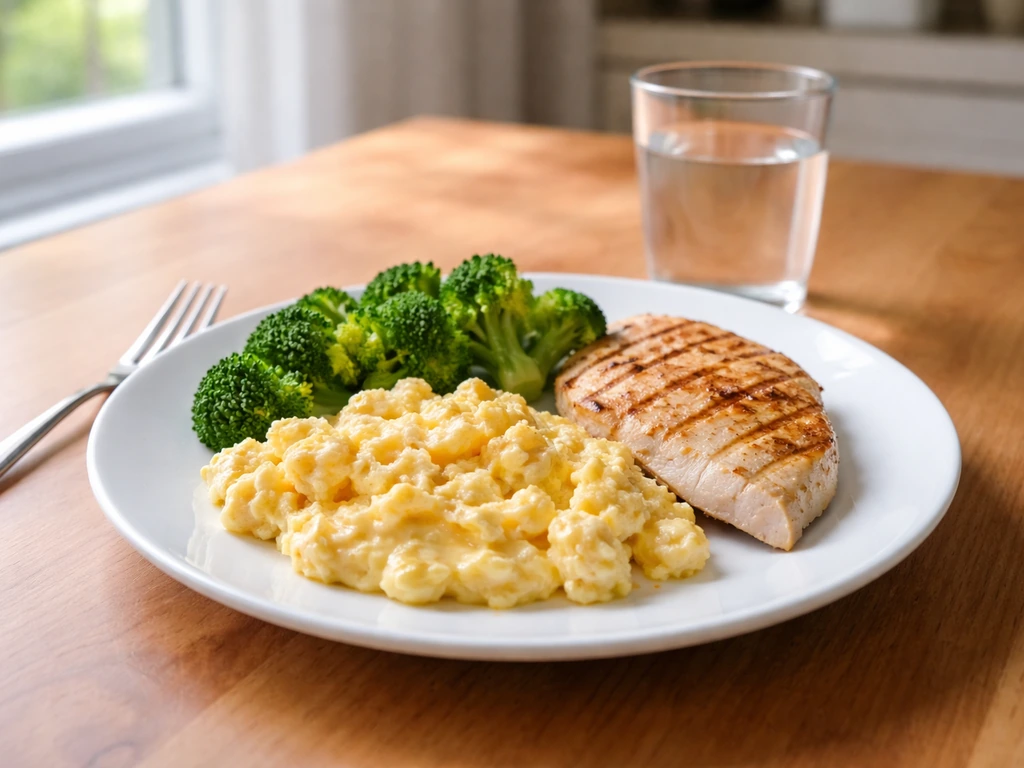
Here's a real-world look at how to hit protein targets through food alone. These examples assume a 75 kg (165 lb) person targeting roughly 1.6 g/kg/day, which works out to about 120 grams of protein per day.
| Meal | Food | Approximate Protein |
|---|---|---|
| Breakfast | 3 large eggs + 1 cup Greek yogurt | ~36 g |
| Lunch | 4 oz chicken breast + 1/2 cup lentils | ~43 g |
| Snack | 1 cup cottage cheese | ~25 g |
| Dinner | 4 oz salmon + 1 cup edamame | ~43 g |
| Daily Total | ~147 g |
For plant-based eaters, swapping chicken for extra-firm tofu (about 20 g per cup), replacing salmon with tempeh (about 31 g per cup), and using lentils generously gets you close to the same totals. It takes more planning but it's doable. If you want a full strategy, building muscle without weights and a plant-based diet can work together, especially for beginners whose lower training age means they respond strongly to even moderate stimulus.
Age matters here too. Older adults tend to experience a blunted MPS response to the same protein dose compared to younger adults, a phenomenon called anabolic resistance. This means that hitting the higher end of the protein range (closer to 1.6 to 2.0 g/kg/day) matters more as you get older. A randomized trial in older adults with habitually low protein intake found that increasing protein alongside a walking exercise program over 12 weeks produced meaningful improvements in lean mass and physical performance. Another trial in older untrained men found that 1.6 g/kg/day with resistance training outperformed 0.8 g/kg/day for gains in skeletal muscle mass and strength. The takeaway: older adults need more protein per meal (aiming for 35 to 40 grams rather than 20) to trigger the same anabolic response.
Comparing your options: protein sources at a glance
| Protein Source | Serving Size | Approx. Protein | Best For |
|---|---|---|---|
| Chicken breast | 4 oz (113 g) | ~31 g | High protein, low fat, versatile |
| Eggs | 2 large | ~12–14 g | Budget-friendly, complete amino profile |
| Greek yogurt | 1 cup | ~17–20 g | Quick snack, includes calcium |
| Cottage cheese | 1 cup | ~25 g | High in casein, great before bed |
| Lentils (cooked) | 1 cup | ~15–18 g | Plant-based, high fiber |
| Tofu (firm) | 1 cup | ~20 g | Plant-based, complete protein |
| Tempeh | 1 cup | ~31 g | Plant-based, highest plant protein density |
| Canned tuna | 3 oz | ~22 g | Cheap, shelf-stable, lean |
| Salmon | 4 oz | ~25 g | Omega-3s as a bonus |
For people asking whether pre-workout or other training supplements fill the gap when protein is low, the answer is no. Understanding what pre-workout actually does for muscle growth makes this clear: those products primarily support energy, focus, and performance during the session itself. They don't provide meaningful amino acids or substitute for protein's role in recovery and synthesis. Similarly, wondering whether you can grow muscle without creatine is a fair question, and the answer is yes, you can, because creatine is optional. Protein is not.
Realistic timeline: when will you actually see results
The first two to four weeks of a new training program will feel like rapid progress, but most of that is neural adaptation, your nervous system getting better at recruiting and coordinating muscle fibers. Actual hypertrophy, the structural growth of muscle tissue itself, takes longer to show up visually and on a tape measure.
With consistent resistance training and protein intake in the 1.4 to 2.0 g/kg/day range, most beginners will see meaningful muscle size changes by weeks six to twelve. Intermediate and advanced trainees accumulate muscle more slowly because they're already closer to their genetic ceiling. Expect something in the range of 1 to 2 pounds of lean mass per month for beginners under good conditions, and half that or less for more experienced lifters.
If protein intake is consistently below the minimum needed to maintain positive nitrogen balance, expect the timeline to stretch out significantly. You'll still make some neural and strength gains early, but hypertrophy will be slow and frustrating. The gap between what you could achieve and what you're achieving grows larger the longer protein stays inadequate.
The practical upshot: if you sort out protein first, from whole food rather than supplements if that's your preference, and pair it with progressive resistance training and adequate sleep, you are giving yourself the best possible conditions for muscle growth. Everything else, including which exercises you choose, whether you use creatine, or whether you train with weights or bodyweight, is secondary to those three fundamentals. Start with the protein, get it from real food, and be patient with the timeline.
FAQ
Can I build muscle with only carbs and fats, like a very low-protein diet?
No. If your diet consistently provides too little protein to reach a positive net muscle protein balance, hypertrophy slows or stops. Carbs and fats can support training energy and hormones, but they do not provide the amino acids needed to repair and build new muscle tissue.
If I can’t reach my protein target every day, will I still grow muscle?
You can still make progress if you mostly hit your target over the week, not necessarily every single day. Aim for a realistic weekly average, then use the “most protein-dense meals first” approach, so missing one day doesn’t turn into several consecutive low-protein days.
How soon will I notice changes if I raise protein intake?
Strength improvements can appear within the first weeks even without perfect nutrition, but visible muscle growth usually lags. If you were under-eating protein, raising it can improve net anabolic balance within a few days, while measurable hypertrophy typically takes several weeks to show up.
Is protein timing still important if I already hit my daily total?
Total daily protein matters most, but distributing it helps muscle protein synthesis stay elevated across the day. A practical approach is 3 to 4 protein-containing meals, including one meal within a couple of hours after training.
Do I need protein shakes, or can I get enough from food only?
Food-only works well for most people. The main challenge is convenience and consistency, so prioritize high-protein staples you can repeat (lean meats, fish, dairy, legumes, tofu, tempeh) and pre-plan portions rather than relying on “protein guesswork” at dinner.
What if I’m vegetarian or vegan, can I still grow muscle without protein powder?
Yes. You generally need higher total protein to account for lower average digestibility and to reliably hit the amino acid requirements. Use combinations like soy, lentils, beans, seitan, and other legumes, and spread protein across meals rather than relying on one large serving.
How much protein should I aim for if I’m cutting calories for fat loss?
When cutting, you should not reduce protein just to “fit macros.” Higher protein helps preserve lean mass and supports recovery. A common practical adjustment is to stay toward the higher end of the 1.4 to 2.0 g/kg/day range while maintaining progressive training and adequate sleep.
Is it possible to grow muscle if I’m very lean or underweight?
It’s possible, but if you are also under-eating overall, you may have trouble achieving a positive nitrogen balance. Focus on reaching both enough calories and enough protein, since training plus low energy can blunt adaptation and make recovery harder even with adequate protein.
Does eating “more protein” than recommended keep adding muscle gains forever?
Not usually. Benefits tend to plateau, and excess beyond the point you need may not translate into more lean mass. Use the higher end of the range as your target, then focus on training quality, recovery, and consistency before chasing extreme protein numbers.
What if my stomach doesn’t tolerate high-protein foods?
Consider splitting intake into smaller meals, choosing more digestible sources (for example, dairy if tolerated, lean fish, eggs, or well-prepared legumes), and increasing gradually over a week. If symptoms persist, consult a clinician or dietitian to rule out intolerance and prevent unintentional under-eating.
Can I substitute essential amino acids or collagen for protein?
Collagen is not a full substitute because it lacks sufficient essential amino acids, especially the amino acids needed to reliably trigger muscle protein synthesis. Essential amino acid supplements can help cover the amino acid gap, but they do not replace the practical value of whole-protein meals for most people. If you use them, ensure the total amino acid and total protein needs are met.
Will pre-workout help if I’m currently low on protein?
Pre-workout can improve energy, focus, and session performance, but it does not provide the amino acids needed for muscle repair and growth. If protein is low, you may feel better during training but still recover and hypertrophy poorly over time.
Is creatine helpful if I’m not getting enough protein?
Creatine can improve strength and training output, which can indirectly support hypertrophy, but it cannot replace the structural and recovery role of protein. If protein intake is the limiting factor, creatine may provide smaller returns than fixing protein first.
If I want to grow muscle with bodyweight only, do I still need protein?
Yes. Bodyweight training can provide enough progressive resistance, but without adequate protein you still lack the amino acids needed to build muscle tissue. Your plan should include progressive overload plus protein targets, even if you never lift in a gym.