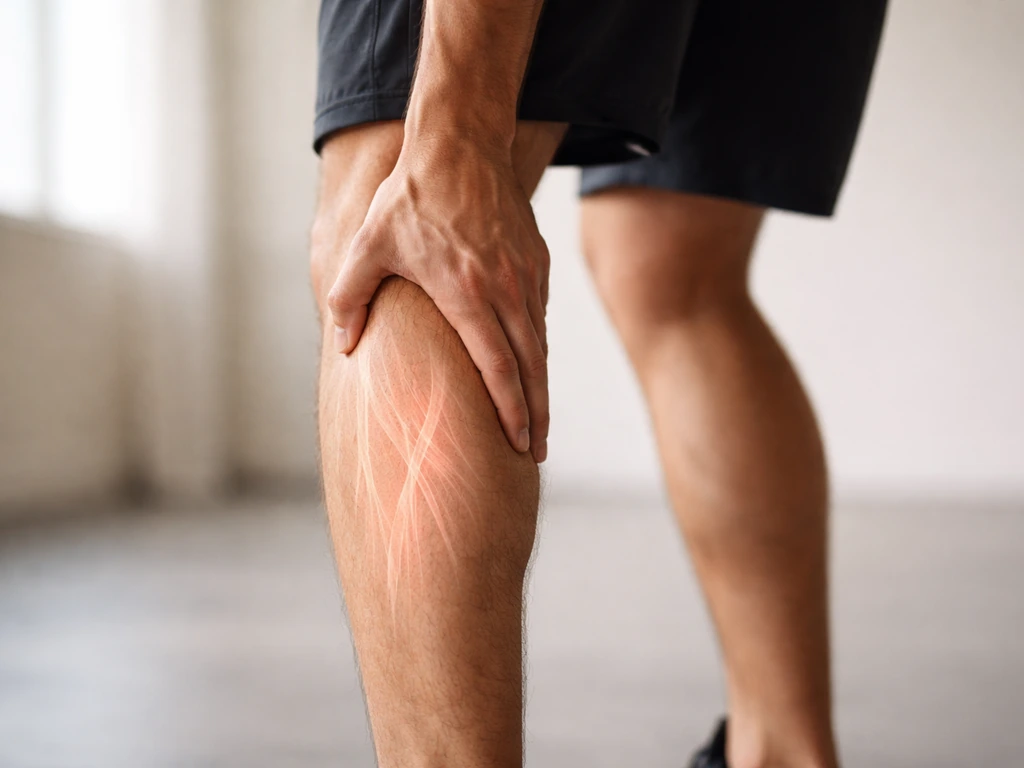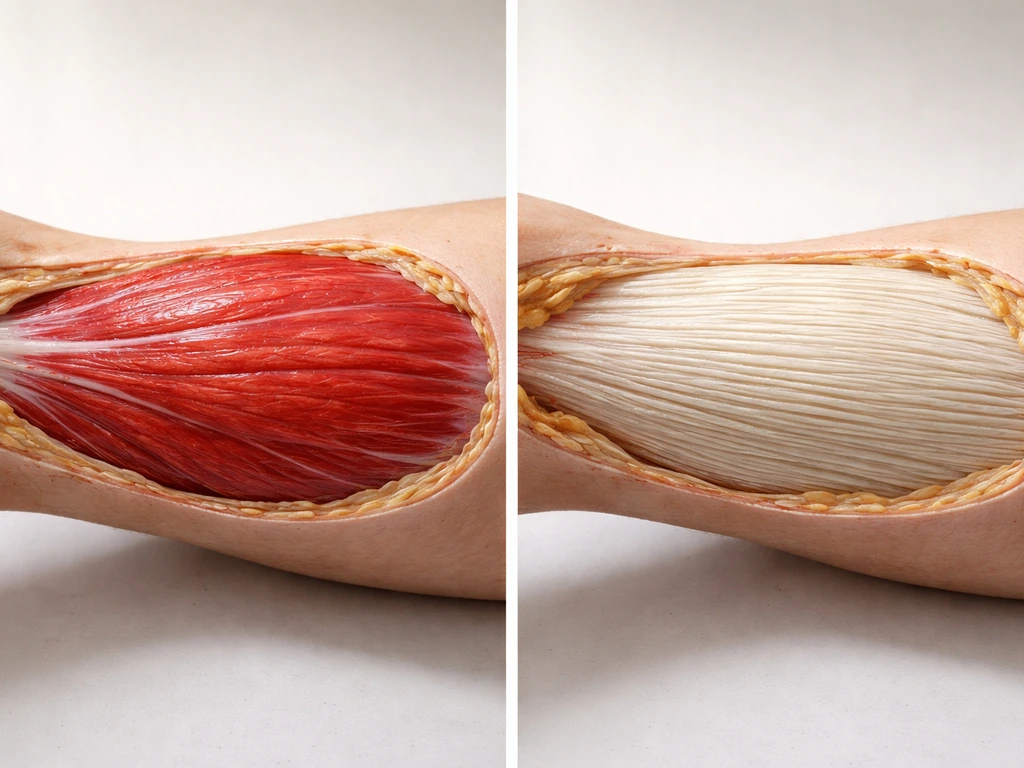
To grow muscle, you need three things working together consistently: a progressive resistance training program, enough protein and total calories to support growth, and enough recovery to let adaptation happen. That's it. Reddit makes it feel more complicated than it is, but the people seeing results are almost always doing those three things well. Everything else, supplements, exercise variation, training splits, is just optimization on top of that foundation.
How to Grow Muscle: Reddit-Style Plan That Works

Marcus Kellerman
2 May 2026

What Reddit usually gets wrong
The most common mistake I see in Reddit muscle-building threads is chasing complexity before nailing the basics. Someone's three months in, not growing, and they're asking whether they should switch to a Bulgarian split or add blood flow restriction training. Meanwhile, they're eating 2,000 calories, sleeping six hours, and training the same weights they were using eight weeks ago. That's the actual problem.
A few specific myths come up constantly. First, the idea that you have to train to failure on every set to grow. Research doesn't back this up. A systematic review and meta-analysis on proximity-to-failure found no clear superiority of failure training over non-failure training for hypertrophy. The relationship is non-linear and inconsistent. Training hard matters, but grinding every set to failure is not the magic lever people think it is, and it often tanks recovery.
Second, spot reduction. You cannot burn belly fat by doing more abs, or arm fat by doing more curls. Fat loss is systemic, not localized to the muscle you're training. This confuses a lot of beginners who train a specific area expecting to see it lean out first.
Third, the protein ceiling myth cuts both ways. Some people think they need 300 grams of protein a day. Others think protein timing is irrelevant entirely. Both are off. The evidence puts the effective range at roughly 1.6 grams per kilogram of bodyweight per day for most people, distributed across meals, with diminishing returns above that level.
And fourth, the idea that older adults can't build meaningful muscle. They can. The mechanism is the same, the timeline might be slightly longer, and the recovery needs more attention, but resistance training works at 50, 60, and beyond.
Your training plan: how to actually structure this
The core of any effective muscle-building program is progressive overload: consistently doing a little more over time, whether that's more weight, more reps, or more total sets. If you're lifting the same weights for the same reps week after week, you're maintaining, not growing. That's the single most important concept in resistance training, and it's worth repeating until it's boring.
Exercise selection
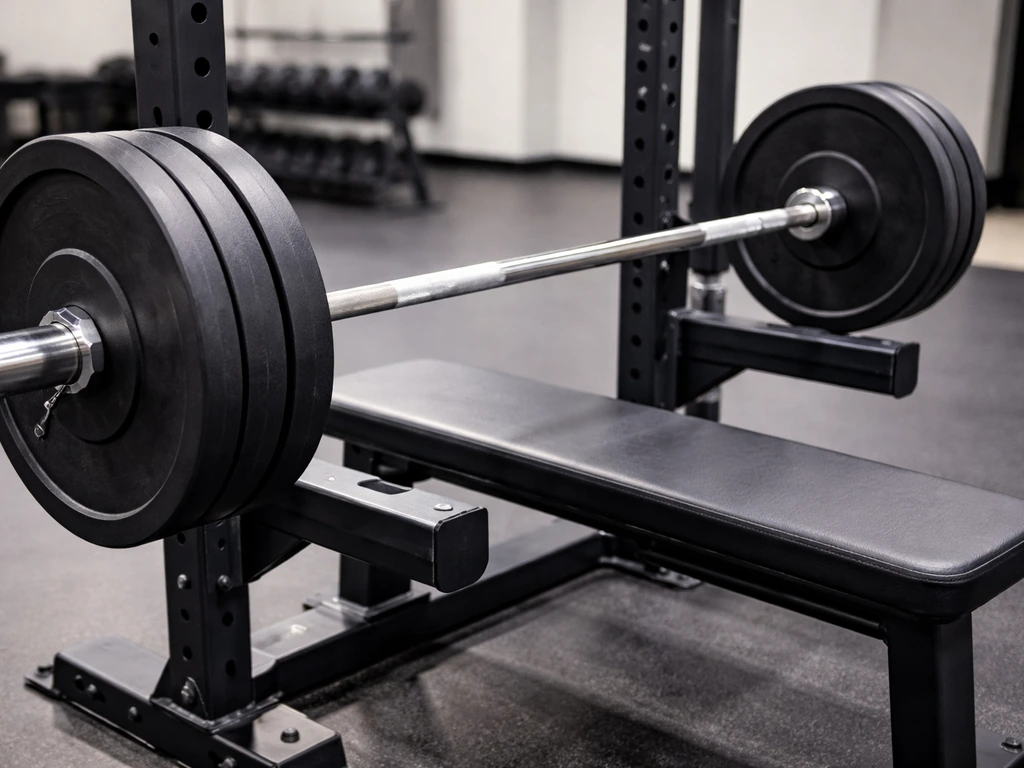
Build your program around compound movements. Squats, deadlifts, bench press, overhead press, rows, and pull-ups or lat pulldowns cover the vast majority of what your muscles need. These movements train multiple muscle groups at once, allow you to load progressively over a long period, and produce the mechanical tension that drives hypertrophy. Add isolation work (curls, tricep pushdowns, lateral raises) as accessories, not as the main event.
Sets, reps, and intensity
For hypertrophy, a rep range of 6 to 20 reps per set works well, and the research shows muscle growth can happen across a broad range as long as the effort is sufficient. A practical target is 3 to 5 sets per exercise, with most sets ending 1 to 3 reps shy of failure rather than grinding to complete muscular failure every time. For weekly volume, the commonly cited evidence-based target is roughly 10 to 20 sets per muscle group per week, with beginners starting at the lower end and adding volume as they adapt.
Training frequency
Training each muscle group at least twice per week outperforms once-per-week splits for hypertrophy in most research. A full-body program three days per week, an upper/lower split four days per week, or a push/pull/legs rotation hitting each muscle twice weekly all work well. For older adults, the Cochrane review on resistance training supports 2 to 3 sessions per week at moderate-to-high intensity with consistent progression as the right framework.
Progressive overload in practice

Add weight to the bar when you can complete the top of your rep range with good form across all sets. If you're doing 3 sets of 8 to 12 and you hit 12 clean reps on all three sets, add a small amount of weight next session (2.5 to 5 lbs on upper body, 5 to 10 lbs on lower body). If you can't add weight, try adding a rep. If you can't add a rep, keep the same load and focus on quality. Logging your sessions is non-negotiable here. You can't manage what you don't track.
Eating for muscle: calories, protein, carbs, and fats
Calories: surplus vs. maintenance
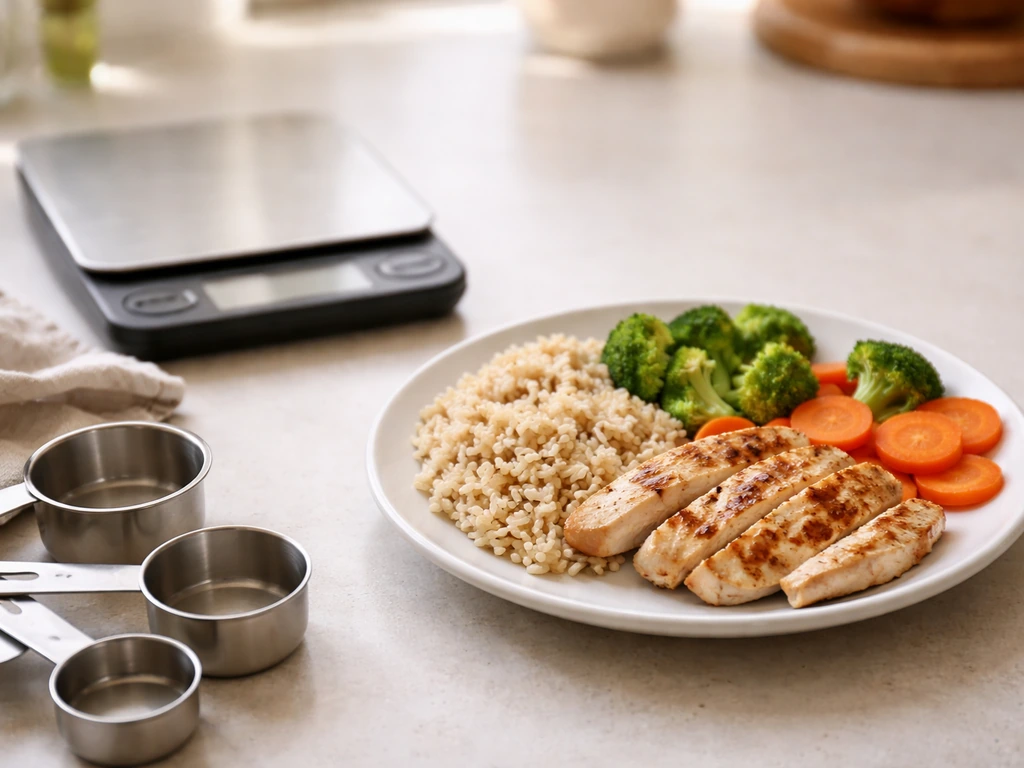
You can build muscle in a modest calorie surplus, at maintenance, or in a slight deficit if you're a beginner or returning after a break. That said, muscle gain is faster in a surplus. A reasonable approach for most people is a modest surplus of 200 to 400 calories above maintenance. More than that tends to add more fat than muscle, especially past the beginner stage. If you're already carrying significant body fat, building at maintenance or a very small surplus is a smarter approach.
Protein targets
The ISSN position stand supports a range of 1.4 to 2.0 grams of protein per kilogram of bodyweight per day for exercising individuals. For practical muscle-building purposes, aiming for 1.6 to 2.0 g/kg/day is a solid target. A meta-analysis published in the British Journal of Sports Medicine found that going above roughly 1.6 g/kg/day didn't produce additional gains in lean mass or strength, so more isn't necessarily better. For a 180-pound (82 kg) person, that's roughly 130 to 165 grams of protein per day.
Distribute that protein across at least four meals, targeting around 0.4 g/kg per meal. This isn't about a precise post-workout window, it's about keeping protein synthesis elevated throughout the day. As long as your daily total is adequate, the exact timing matters less than Reddit debates suggest.
Carbohydrates and fats
Carbohydrates fuel your training. The ISSN recommends around 5 to 12 grams of carbohydrate per kilogram of bodyweight daily depending on training volume and intensity. For most recreational lifters training 3 to 5 days a week, the moderate range (4 to 6 g/kg) is sufficient and practical. Don't make the mistake of cutting carbs to get lean while also trying to maximize muscle growth. You'll undercut training performance and slow progress. Prioritize getting most of your carbs around your training sessions.
Dietary fat should make up the remainder of your calories, typically 20 to 35% of total intake. Don't drop fat too low. It supports hormonal function, including testosterone, which matters for muscle growth. Roughly 0.8 to 1.0 g/kg/day of fat is a practical floor.
Supplements: what actually helps and what doesn't

Most supplements are noise. A few are genuinely useful. Here's the honest breakdown.
| Supplement | Evidence | Practical Use |
|---|---|---|
| Creatine monohydrate | Strong: improves training capacity, supports lean mass gains | 5 g/day ongoing; optional loading phase of 20 g/day for 5–7 days to saturate stores faster |
| Whey protein | Useful for convenience, not uniquely superior to food protein | Use it to hit daily protein targets when whole food is inconvenient |
| Caffeine | Well-supported: 3–6 mg/kg body mass improves performance | Pre-workout 30–60 min before training; avoid late-day use to protect sleep |
| BCAAs | Redundant if protein intake is adequate | Not worth paying for separately |
| Pre-workout blends | Often overhyped; active ingredients are usually just caffeine and creatine | Buy those separately instead |
| Testosterone boosters | No meaningful evidence for natural products | Skip entirely |
Creatine monohydrate is the one supplement with consistent, robust evidence behind it. The ISSN position stand supports it clearly for high-intensity exercise performance. It works by increasing your muscles' phosphocreatine stores, which helps you do more work per session over time. That extra training capacity compounds into more muscle growth. It's cheap, safe, and it works. Take 5 grams a day, any time that's convenient, and don't overthink it.
Caffeine is a legitimate performance enhancer at doses of 3 to 6 mg per kilogram of bodyweight. If you weigh 80 kg (176 lbs), that's roughly 240 to 480 mg. A standard cup of coffee has about 80 to 100 mg, so a strong pre-workout coffee often does the job. The main caution is timing: caffeine taken within 6 hours of bed can wreck sleep quality, which directly hurts your gains.
Whey protein is just food in powder form. It's convenient and useful if you struggle to hit your daily protein goals. It isn't magic, and plant-based protein sources work just as well when you hit the same total amounts.
Recovery and lifestyle: the underrated side of muscle growth
Sleep

Sleep is probably the most under-optimized variable in most people's programs. Growth hormone is released primarily during deep sleep, and most muscle protein synthesis happens outside the gym, not in it. Aim for 7 to 9 hours per night. Chronic short sleep (under 6 hours) impairs hormonal recovery, increases cortisol, and reduces the anabolic signaling your training is supposed to trigger. No supplement compensates for poor sleep.
Soreness vs. fatigue
Soreness is not a reliable indicator of a good workout, and it's definitely not required for growth. Delayed onset muscle soreness (DOMS) tends to be highest when you try new movements or dramatically increase volume. DOMS is also linked to eccentric or unaccustomed strenuous exercise, and reviews of the literature discuss mechanisms and how common DOMS is after lengthening (eccentric) contractions [Delayed onset muscle soreness (DOMS) tends to be highest when you try new movements or dramatically increase volume. ](https://pmc.
ncbi. nlm. nih. gov/articles/PMC10716961/).
Over time it decreases as your body adapts, but that adaptation is a feature, not a sign that you've stopped growing. Fatigue, on the other hand, accumulates silently. If your strength numbers are declining week over week, sleep is fine, and calories are on point, you're probably accumulating too much training fatigue.
Stress
Chronic psychological stress elevates cortisol, which competes with the anabolic hormonal environment you're trying to build. This isn't a reason to avoid stress entirely, that's not realistic, but it does mean that during genuinely high-stress periods (new job, relationship issues, major life changes), your training may need to be scaled back rather than ramped up. More training on top of high systemic stress doesn't produce more muscle; it produces more overreaching.
Deloads
A deload is a planned week of reduced training volume and intensity, typically every 4 to 8 weeks depending on how hard you've been training. Research supports deloads as a practical tool: studies have specifically tested one-week deload periods and their role in managing accumulated fatigue during resistance training programs. A simple deload approach is to cut your weekly sets by 40 to 50% and reduce load by about 10 to 20% while keeping movement patterns intact. You come back the following week refreshed, and your strength numbers usually rebound or improve.
Troubleshooting common roadblocks
Beginners: where to start

If you're new, any well-structured program works. Seriously. The barrier isn't finding the perfect routine; it's starting consistently and adding weight regularly. Pick a beginner full-body program (StrongLifts 5x5, GZCLP, and Starting Strength are all commonly recommended on Reddit for good reason), run it for 12 weeks without skipping, eat enough protein, and you will see results. Don't program hop at week 3 because you saw something more interesting. Consistency beats optimization at this stage.
Skinny guys struggling to gain
If you're lean and not gaining muscle, you're almost certainly not eating enough. This is the answer 95% of the time. For skinny guys, the quickest way to gain muscle fast is to eat in a real surplus and pair it with progressive resistance training gain muscle fast for skinny guys.
People with fast metabolisms genuinely need more food than they think, and tracking calories for even two weeks usually reveals a significant gap between what someone thinks they're eating and what they're actually eating. Aim for a real surplus, not a guessed one. This is covered in more detail in the guide on how to grow muscle with a fast metabolism, which is worth reading if this is your situation.
This same framework applies if you're specifically wondering how to grow pitbull muscle, so focus on progressive overload, adequate protein, and recovery how to grow muscle.
Overweight and trying to build muscle
If you're carrying significant body fat, you can absolutely build muscle, and you don't necessarily need to bulk to do it. Eating at maintenance with high protein (closer to 2.0 g/kg), training hard, and being patient will allow body recomposition, especially in the first year of training. The spot reduction myth is irrelevant here: training a muscle won't burn the fat covering it, but a consistent training and nutrition program will reduce body fat across your whole body over time while building muscle underneath. Even if some of your body fat changes slowly, muscle can still grow underneath it as long as training and nutrition support hypertrophy build muscle underneath.
Plateaus
When progress stalls, the checklist is straightforward. First, are you actually applying progressive overload? Check your training log. Second, is sleep and stress managed? Third, are calories and protein on target? Fourth, have you been training without a deload for more than 6 to 8 weeks? If all of those are fine, consider adding a little weekly volume (one or two more sets per muscle group), changing exercise variation, or, counterintuitively, taking a deload week to see if accumulated fatigue is the issue. What rarely fixes a plateau: switching to failure every set, adding more supplements, or jumping to a completely new program.
Training around injuries
Injuries don't have to derail everything. Work around them, not through them. A shoulder issue doesn't stop you from training legs and back. A knee problem doesn't stop upper body work. Maintain what you can and let the injured area recover properly. Pushing through sharp or acute pain to avoid losing gains is how minor injuries become chronic ones. When in doubt, see a physiotherapist before continuing to load a painful joint.
Limited equipment
You can build muscle with dumbbells, resistance bands, or just bodyweight if you apply progressive overload to whatever you're doing. Add reps, add sets, add difficulty (harder variations, slower tempos, smaller rest periods). A gym with a full barbell and rack is ideal, but it's not a prerequisite for making progress, especially in the first year.
Realistic timelines and how to measure progress
Here's what you can actually expect in the first year of consistent, well-programmed training. In the first 4 to 8 weeks, most of your strength gains come from neurological adaptation, your nervous system learning to coordinate the movements. Visible muscle change is starting but subtle. By 8 to 12 weeks, you should see clear strength increases on your main lifts and noticeable visual changes, especially if you were lean to start. Research on structured 8-week programs confirms this timeframe as sufficient for measurable adaptation when volume and progression are appropriate.
Over a full year of training, a beginner male might gain 8 to 15 pounds of lean mass. A beginner female might gain 4 to 8 pounds. These numbers vary significantly based on genetics, starting point, and how dialed-in the training and nutrition are. Older adults can absolutely build meaningful muscle: a meta-analysis on resistance training in aging adults showed an average gain of roughly 1 kg of lean body mass across training durations ranging from 10 to 52 weeks. The mechanism works at any age, though recovery demands more attention.
How to actually track your progress
- Training log: record every set, rep, and weight used. This is your primary feedback tool for whether progressive overload is happening.
- Scale weight: weigh yourself 3 to 5 mornings per week and track the weekly average, not individual daily readings. Expect slow upward trend during a bulk (0.25 to 0.5 lbs/week is reasonable).
- Progress photos: take front, side, and back photos every 4 weeks in consistent lighting. The scale doesn't capture body composition changes as clearly as photos do.
- Tape measurements: waist, hips, chest, arms, and thighs measured monthly give you a more objective read on where you're gaining and where you might be losing fat.
- Strength benchmarks: track your working weights on key lifts. Consistent strength increases over months are the most reliable proxy for muscle growth.
The most important thing to internalize is that muscle growth is measured in months, not weeks. A two-week stretch where the scale doesn't move or a workout that felt off tells you almost nothing. Zoom out to 8 to 12 week windows and look at the trend across all your metrics together. That's when the picture becomes clear, and that's when most people realize that the boring, consistent approach was working all along.
FAQ
How long should I rest between sets to actually grow muscle (instead of just getting a workout)?
If your goal is hypertrophy, the “resting in the gym” part matters. Use a rest period long enough to keep effort high, typically 2 to 3 minutes for big compound lifts and 1 to 2 minutes for most accessories. If you constantly can only do half your reps in week to week because you cut rest too aggressively, you are not getting enough quality practice to progress.
Can I change my rep ranges weekly, or do I need a fixed target?
You can, but you need consistent progression. A good rule is to keep one or two rep ranges for each lift and progress within them (for example, target 8 to 12 reps on one exercise, then add load when you hit the top end on all sets). If you alternate rep schemes every week with no “promotion” plan, tracking becomes harder and progress often stalls.
Is it really possible to grow muscle if I only train 2 days per week?
No single “best split” guarantees growth, but frequency does influence total weekly stimulus and fatigue. If you are training 1 to 2 days per week, you can still grow but you usually need more total sets per session and better recovery, and you may not be able to progress as smoothly. If growth is your main goal, aim for at least twice-weekly training per muscle when schedule allows.
How close to failure should I train, and how often is “near failure” okay?
Failure is optional, and the practical difference is how close you get on the last set. A useful target is most sets stopping 1 to 3 reps shy of failure, then occasionally taking one set per exercise to very near failure (about 0 to 1 reps shy) if recovery is good. If you are failing multiple sets every exercise, fatigue accumulates and progression usually gets worse within a few weeks.
What should I do if my weight and strength are both flat after a month?
If you are truly not gaining, update your numbers rather than guessing. Weigh yourself under similar conditions (morning, after bathroom, before food) 3 to 7 times per week and use the average, then compare it to your weekly trend. If weight and strength both flatline for 2 to 4 weeks, add 150 to 250 calories per day and recheck.
When is a deload actually necessary, and how do I know it is time?
A deload is not only for when you feel terrible. If your performance drops for 2 to 3 weeks, or your perceived exertion is rising for the same loads, that can be an early fatigue signal. Many people do best with a deload every 4 to 8 weeks when volume is moderate to high, but if you are a high-stress beginner who sleeps poorly, err earlier.
Can I cut calories and still gain muscle, or do I need a surplus?
Train hard and eat enough carbs, but keep protein steady. For most people, you can lower calories slightly for fat loss while still building muscle if protein is near the upper end of the recommended range and training volume is maintained. The catch is that very aggressive deficits often reduce strength progression, which indirectly limits hypertrophy.
What do I do if I cannot do the “main lifts” in the article due to equipment or pain?
If you have poor grip, limited machine access, or joint discomfort, you can still progress using alternatives that match the movement pattern. For example, rows can be done with chest-supported machines, cable rows, or supported dumbbell rows, and pressing can be substituted with incline presses or machine presses. The key is that you can track load and reps and progress over time.
Is switching exercises every few weeks helpful, or does it interfere with growth?
Pick one compound lift as your long-term “anchor” for that movement pattern and keep it in your program long enough to progress. Switching every week often breaks the overload loop. Exercise variation is best used when you need a joint-friendly alternative or you are swapping accessories, not when you are still learning progression on an anchor movement.
Which supplements are worth it if I already eat well and track my food?
Supplements can fill gaps, but they should not replace basics like adequate calories and protein. If you already hit protein, creatine is the main “always useful” option for most lifters, caffeine helps performance if sleep is protected, and whey is only for convenience. If your sleep is inconsistent or you are under-eating, your supplement stack will not fix the real bottleneck.
How do I hit a calorie surplus and protein if I do not have much appetite?
If you are missing meals or struggling with appetite, a simple way to stay consistent is to add one calorie-dense protein source at each meal (or an extra shake) so you can reach your protein and surplus without massive portions. For recovery and performance, prioritize carbs around training and keep fats from dropping too low, since extremely low fat can make adherence harder and reduce overall energy.
How do I know I am gaining muscle if the scale is going up?
Muscle growth can be hard to see while you are gaining fat too, so use multiple signals. Track strength progression on your main lifts, measure waist and body fat trend occasionally (not daily), and take photos every 4 weeks under consistent lighting. If strength is rising and measurements are not moving in the wrong direction, you are likely building.