Building 'pitbull muscle' means developing thick, powerful, athletic-looking muscle mass that performs as good as it looks. You get there through progressive overload resistance training, eating enough protein and calories to fuel growth, and recovering consistently. There's no secret formula, but there is a clear blueprint, and if you follow it, you'll see real changes within 4 to 8 weeks and meaningful transformation within 3 to 6 months.
How to Grow Pitbull Muscle: Training, Nutrition, and Plan

Marcus Kellerman
5 May 2026

What 'pitbull muscle' means for your training goal

The phrase 'pitbull muscle' is a motivation term, not a training methodology. It describes a specific look and attitude: dense, functional muscle that sits on a thick frame, looks hard rather than puffy, and backs up the aesthetics with real strength. Think broad shoulders, a wide upper back, thick legs, and arms that fill a sleeve. It's not the ultra-lean, paper-thin bodybuilder aesthetic, and it's not the bloated powerlifter look either. It sits right in the middle: muscular, proportional, and capable.
What that means practically is that your training goal is hypertrophy (muscle size) combined with strength. You're not chasing a pump for its own sake, and you're not maxing out on the bar every session. You're building muscle tissue over time while also getting stronger, so the muscle you build is dense and functional. That combination requires specific programming choices in the gym, at the dinner table, and in your recovery habits.
One myth worth knocking down right at the start: this kind of physique isn't built in the supplement aisle. Creatine and protein powder help, but they're supporting actors. The lead roles are consistent training and consistent nutrition. If you've been spinning your wheels trying to add size, the answer is almost always in one of those two areas, not in a new pre-workout.
The training blueprint: hypertrophy and strength through progressive overload
The single most important concept in building more muscle is progressive overload: doing more over time. That means adding weight to the bar, completing more reps with the same weight, adding a set, or shortening rest periods as you get fitter. Your muscles grow because they are forced to adapt to demands they haven't handled before. If the demand stays the same, the adaptation stops.
The mechanism behind this is mechanical tension on muscle fibers, which triggers protein synthesis, the process of your body building new contractile tissue. You need enough tension (load) and enough volume (total work done) to drive meaningful adaptation. A single set of curls three times a week won't cut it. But neither will grinding through 30 sets per session with no structure. The research points clearly toward a middle ground.
For beginners, the American College of Sports Medicine recommends starting with loads around your 8 to 12 repetition maximum, meaning a weight you can lift for 8 to 12 reps with good form before reaching failure. This rep range targets hypertrophy effectively and is safe enough for new lifters to build the movement patterns they need. As you advance, expanding your rep range to include some heavier work (3 to 6 reps) adds the strength dimension that makes pitbull muscle feel as solid as it looks.
Progressive overload doesn't always mean adding weight every single session. When you're a beginner, that's often possible for the first few months. Once you're past the novice stage, progress slows, and you'll need to think in terms of weeks and mesocycles rather than sessions. That's normal and expected. The key is that the trend over time goes up.
Exercise selection and weekly structure
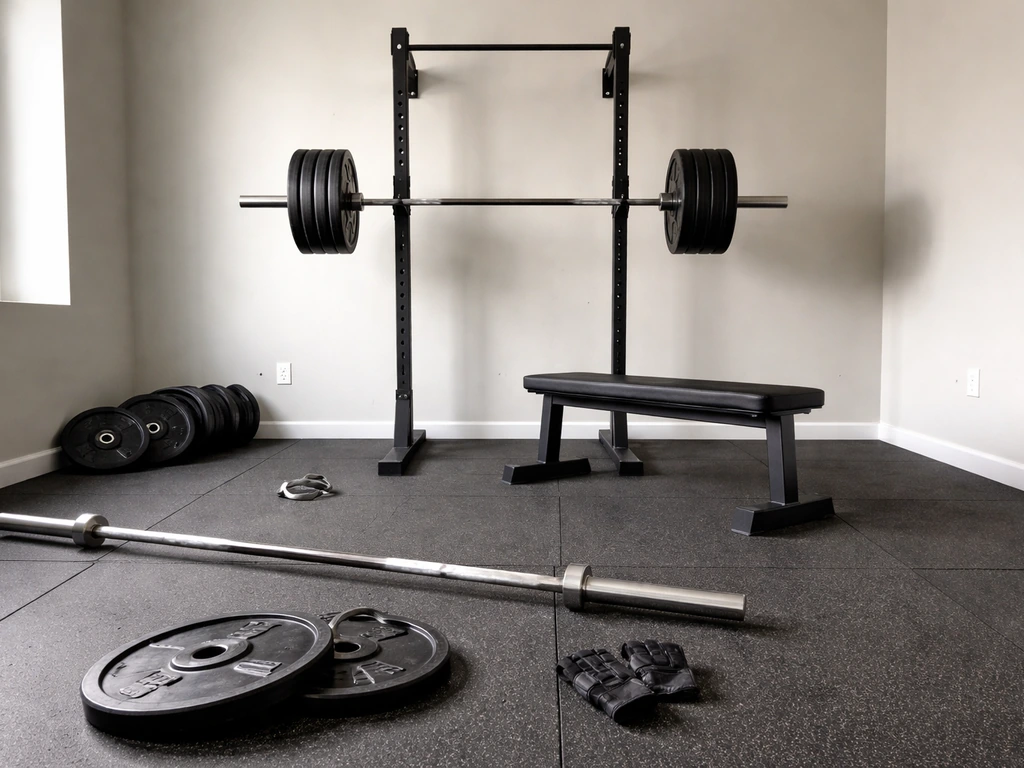
The 'pitbull' aesthetic comes from compound lifts done consistently. Squats, deadlifts, bench press, overhead press, barbell rows, and pull-ups are the foundation. These movements recruit the most muscle mass, allow for the heaviest loads, and build the kind of full-body thickness that you can't fake with isolation work alone. Accessory exercises fill in the gaps, targeting specific muscles that don't get enough stimulus from the big lifts.
How many sets per muscle group per week
Volume matters more than most people realize. Research consistently shows that performing 10 or more sets per muscle group per week produces significantly greater hypertrophy than fewer than 5 sets per week. For most people chasing pitbull muscle, aiming for 10 to 16 working sets per major muscle group per week is a solid target. Beginners can start at the lower end and build up. More advanced lifters may go higher, but there's a point of diminishing returns, and more is not always better.
A sample weekly structure
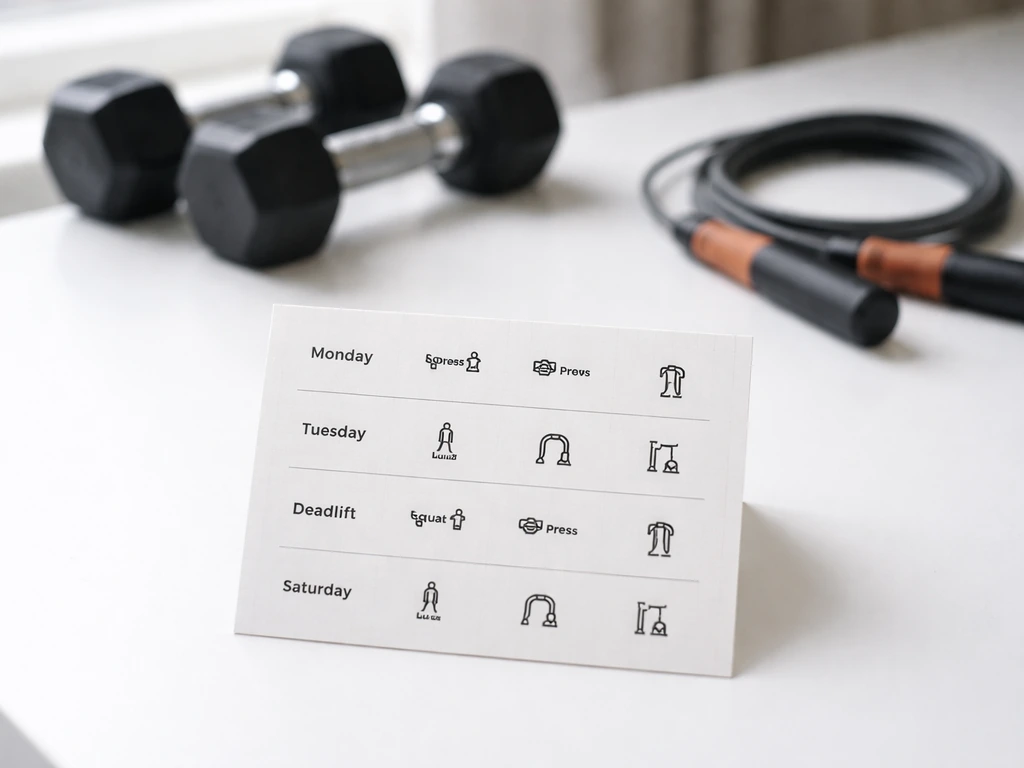
A 4-day upper/lower split works extremely well for this goal. You train each muscle group twice per week, which hits the volume target without requiring daily gym sessions. Here's how that looks in practice:
| Day | Focus | Key Lifts |
|---|---|---|
| Monday | Upper (Strength bias) | Bench Press, Barbell Row, Overhead Press, Pull-Ups |
| Tuesday | Lower (Strength bias) | Squat, Romanian Deadlift, Leg Press, Calf Raise |
| Thursday | Upper (Hypertrophy bias) | Incline DB Press, Cable Row, Lateral Raises, Tricep/Bicep work |
| Friday | Lower (Hypertrophy bias) | Deadlift, Leg Curl, Hack Squat, Hip Thrust |
| Wed/Sat/Sun | Rest or light activity | Walking, stretching, mobility work |
On strength-biased days, work in the 3 to 6 rep range for your main lifts with heavier loads and longer rest periods (2 to 3 minutes). On hypertrophy-biased days, stay in the 8 to 15 rep range with moderate loads and slightly shorter rest (60 to 90 seconds). This combination builds both the size and the density you're after.
If you can only train 3 days per week, a full-body program hitting all major muscle groups each session works just as well. The key is hitting that weekly volume target across however many sessions you have. Three quality sessions per week beats five rushed, sloppy ones every time.
Nutrition for muscle growth: calories and protein targets
You cannot build meaningful muscle in a significant calorie deficit. Muscle tissue is metabolically expensive to create, and your body won't prioritize building it if it's running on empty. That doesn't mean you need to eat everything in sight. A modest caloric surplus of 200 to 500 calories above your maintenance level is enough to support solid muscle gain without burying yourself in unnecessary fat. If you're unsure of your maintenance, track your food intake for one week and observe your weight. If it's stable, that's your baseline.
Protein is the single most important dietary variable for building muscle. The research is clear here. According to the International Society of Sports Nutrition, a daily protein intake of 1.4 to 2.0 grams per kilogram of body weight is sufficient for most people who exercise regularly. For a 180-pound (82 kg) person, that works out to roughly 115 to 165 grams of protein per day. If you're newer to training or returning from a break, aiming toward the higher end of that range (closer to 1.6 to 2.0 g/kg) will give you the best results, especially in the first few months when your body is most responsive to the training stimulus.
Spread that protein across 3 to 5 meals throughout the day. Each meal should contain roughly 20 to 40 grams of protein to maximally stimulate muscle protein synthesis. Spacing doses out like this keeps your body in a more anabolic state throughout the day, rather than spiking protein intake once and under-fueling the rest of the time.
Carbohydrates are not the enemy here. They fuel your training and spare protein from being burned for energy, meaning more of what you eat can go toward building muscle. Prioritize complex carbs like rice, oats, potatoes, and fruit around your workouts. Fats support hormone production, including testosterone, which plays a direct role in muscle building. Don't drop fat intake below 0.5 to 0.7 grams per pound of body weight. And drink enough water. Even mild dehydration impairs strength and training performance, which indirectly limits muscle growth.
Supplements that actually help (and how to use them)
Most supplements are noise. A small handful are genuinely worth your money and time. Here's what the evidence actually supports for building pitbull muscle:
- Creatine monohydrate: This is the most researched and most effective supplement for strength and muscle growth. It increases your capacity for high-intensity work by replenishing phosphocreatine in muscle cells, which means more reps, more weight, and more training stimulus over time. Take 3 to 5 grams per day, every day, with or without food. There's no need to 'load' it. Results become noticeable within 2 to 4 weeks.
- Protein powder: Not magic, just convenient. If you're struggling to hit your daily protein target from whole foods, a protein shake fills the gap. Whey is fast-digesting and works well post-workout or between meals. Casein is slower-digesting and useful before bed. Use it as a tool, not a replacement for real food.
- Caffeine: A well-timed cup of coffee 30 to 45 minutes before training improves strength output, endurance, and focus during your session. If you're sensitive to caffeine or train in the evenings, be careful about how it affects your sleep.
- Vitamin D and omega-3 fatty acids: These aren't muscle-building supplements per se, but deficiencies in vitamin D are common and linked to reduced muscle function, and omega-3s support inflammation management and recovery. Worth including if your diet or sun exposure is limited.
Skip the fat burners, proprietary blends, and anything promising results 'without changing your diet.' That's marketing. The supplements above work because they support processes that are already happening when you train and eat right.
Recovery, sleep, and stall-proofing your plan
Muscle doesn't grow in the gym. It grows when you rest. Training is the stimulus; recovery is where adaptation actually happens. If your recovery is poor, your training is largely wasted effort. This is the part most people underestimate, especially when motivation is high and the temptation to train every day is strong.
Sleep is your most powerful recovery tool. During deep sleep, your body releases growth hormone and repairs damaged muscle tissue. Most adults need 7 to 9 hours per night for optimal recovery. Most adults need 7+ hours of sleep regularly, and the exact recommended range can vary with age and individual circumstances, according to a joint consensus statement from the American Academy of Sleep Medicine and Sleep Research Society. If you're consistently getting 5 to 6 hours, your gains will be significantly blunted, no matter how perfect your training and nutrition are. Prioritize sleep as seriously as you prioritize your workout.
Stress management matters too, because chronic stress elevates cortisol, which is catabolic and works against muscle building. You don't need to eliminate stress, but if your life is consistently overwhelming, that will show up in your physique progress. Short walks, breathing work, time in nature, and even just protecting your sleep are all practical stress-management tools.
Plan a deload every 4 to 8 weeks, especially if training intensity is high. A deload is a week of reduced volume or intensity (roughly 50 to 60 percent of your normal workload) that lets your joints, connective tissue, and nervous system recover without losing fitness. Many people find their strength actually jumps after a well-timed deload. Don't see it as a week off; see it as maintenance of the system that makes gains possible.
What to do when progress stalls
Progress stalls for predictable reasons. Before assuming you've hit a genetic ceiling, check these in order: Are you eating enough? Are you sleeping enough? Is your weekly training volume still appropriate for your current fitness level, or have you adapted to it? Is there a weak point in your program (skipped leg days, no back work, too much cardio, not enough cardio)? In most cases, one of these is the culprit. Add calories if weight has been stable for more than two weeks. Add volume to lagging muscle groups. Vary your rep ranges or swap in a new exercise pattern for a few weeks.
How fast you can expect results and what to adjust next
Realistic timelines matter because unrealistic expectations cause people to quit programs that are actually working. Here's what you can genuinely expect if you follow this blueprint consistently: If you want faster muscle gains as a skinny guy, focus on increasing your calorie surplus slightly, hitting your weekly volume targets, and following progressive overload without rushing recovery how to grow muscle fast for skinny guys.
| Timeline | What You'll Notice |
|---|---|
| 2 to 4 weeks | Strength increases noticeably (mostly neurological adaptation), better pump, improved energy in sessions |
| 6 to 8 weeks | Visible muscle fullness, clothes fitting differently, body weight beginning to trend upward |
| 3 to 6 months | Meaningful changes in muscle size and definition, significant strength gains across all major lifts |
| 6 to 12 months | Clear physique transformation, thick and dense muscle development, pitbull aesthetic becoming visible |
Natural muscle gain rates average roughly 1 to 2 pounds of muscle per month for beginner to intermediate lifters eating in a slight surplus. Advanced lifters build much more slowly. This is why consistency over months matters far more than optimizing every variable. The person who trains moderately but consistently for a year will almost always look better than the person who trains intensely for 6 weeks and then stops.
After your first 2 to 4 weeks, take stock: Is your bodyweight creeping up by roughly 0.25 to 0.5 pounds per week? That's a good sign of muscle gain with minimal fat. That said, you will still gain some fat if you stay in a surplus, so the goal is to gain more muscle than fat minimal fat. Are your lifts going up over time? If both answers are yes, keep going. If weight is not moving, add 200 calories to your daily intake. If strength is stalling, check recovery first, then consider adding a set or two to your lagging movements.
This goal is not uniquely different from building muscle in general, but the emphasis on that dense, powerful look means you should lean into compound lifts and enough volume to build real thickness. If you've looked into how to grow muscle fast for skinny guys or wondered how metabolism affects your ability to gain, those are adjacent questions that can sharpen your individual approach. The fundamentals here apply broadly, but individual context, your starting point, age, metabolism, and training history always shape how fast and how you specifically respond. If you have a fast metabolism, you may need a slightly larger calorie surplus and more careful timing around training to keep gains moving how to grow muscle with a fast metabolism.
If you've been at it for more than 6 months with no meaningful progress and you've genuinely dialed in your training, nutrition, and sleep, that's a good time to consult a registered dietitian who works with athletes or a certified strength and conditioning coach. Sometimes a second set of eyes finds what self-assessment misses. But for the vast majority of people reading this, the plan above, executed with consistency, is more than enough to build exactly the kind of muscle they're after.
FAQ
Should I train “to failure” for pitbull-style muscle, or leave some reps in reserve?
For most people, use a repeatable rule instead of going to absolute failure every set. Stay about 0 to 2 reps short of failure on most working sets, then occasionally take a set closer to failure (for example, the last set of an isolation move) if form stays consistent. This preserves intensity across the week, especially since your goal includes both hypertrophy volume and strength progression.
How do I know if my surplus is working, without gaining too much fat?
Track your bodyweight trend, not daily fluctuations. If your weekly average is rising about 0.25 to 0.5 lb (0.1 to 0.25 kg) you are on track. If it climbs faster for two weeks, reduce calories by about 100 to 200 per day; if it doesn’t rise at all, add about 200 calories. Keep protein fixed while you adjust calories.
What if my weight is up and my lifts are not increasing?
That combination often points to recovery being too low or training volume being misdirected. First, check sleep and whether you are actually completing the planned sets in the target rep ranges. If you’re doing that, try increasing weekly volume for the lagging lifts by 2 to 4 sets total per week, while keeping the rest of the program unchanged for 2 to 3 weeks.
Is cardio allowed if I want dense, functional muscle?
Yes, but keep it from stealing recovery. Use low to moderate intensity cardio (for example, 2 to 3 sessions of 20 to 40 minutes) and avoid long high-intensity sessions during a building phase. If your strength is dropping or your weight gain stalls, reduce cardio by 20 to 30 percent before changing anything else.
How should I progress if adding weight every week stops working?
Switch to rep-based progression or double progression. Example: keep the same load for a few weeks, add reps each session until you hit the top of your rep range, then increase weight by the smallest jump you can. When progress slows, use smaller long-term changes like adding a set or slightly reducing rest, rather than forcing bigger jumps in load.
Do I need to follow the 4-day split exactly to build the pitbull look?
No. The key is weekly volume and covering major muscle groups, not the exact days. If you can only train 3 days, use a full-body setup that totals roughly 10 to 16 working sets per major muscle group per week. Spread the sets across sessions so a muscle is not entirely trained on only one day.
How do I balance strength-biased and hypertrophy-biased work in the same week?
Use heavier loads for the main compound lifts with lower rep targets, then do higher-rep work for the same muscle group later in the week or on the hypertrophy days. Keep technique strict on the heavy days, and avoid turning every set into a grinder. If your joints feel beat up, reduce heavy-day intensity first (for example, stop using the top end of your rep range).
What should I do if one muscle group is lagging (like shoulders or upper back)?
Add volume surgically. Increase that muscle by 2 to 4 extra sets per week using exercises you can progress (for example, lateral raises and chest-supported rows for shoulders and upper back). Keep total weekly sets for other muscles the same for the next 3 to 4 weeks, then reassess. Don’t add cardio and extra sets at the same time, or you won’t know what’s driving the change.
How much rest between sets should I use, especially for compounds?
Use longer rests for your strength-biased sets (about 2 to 3 minutes) so you can keep reps and load. For hypertrophy-biased sets, shorter rests (about 60 to 90 seconds) are fine if performance is holding. If your reps are collapsing across sets, extend rest or reduce load slightly rather than forcing volume that turns into low-quality reps.
Can I build pitbull muscle without meal tracking?
You can, but it’s easier to overshoot or undershoot calories. If you don’t track, use a 7 to 14 day “calorie estimate check” by weighing food for a week or using consistent portions, then compare to the bodyweight trend. After that, adjust portions based on whether your weekly average weight moves in the expected range.
Are supplements like creatine necessary, or can I skip them?
Creatine is the most consistently useful option for most lifters, primarily because it can help you add reps and load over time. Protein powder is optional if you can hit your daily protein target with food. Skip everything else until training, sleep, and calorie/protein targets are consistently met.
When should I deload, and how do I know I actually need one?
Follow a schedule (every 4 to 8 weeks) if intensity is high, but also use performance signals. If your bar speed feels slower, your reps drop despite similar loads, or soreness and fatigue linger beyond normal, take a deload early. During a deload, keep some movement practice but cut volume roughly in half and reduce heavy work.
How long before I should expect visible changes?
You can often see early changes in 4 to 8 weeks, mainly from muscle fullness and improved training performance. More obvious “pitbull” density and noticeable size usually takes 3 to 6 months of consistent surplus training. If you see no strength gains and no bodyweight trend over that first 4 to 6 week window, adjust calories or volume before waiting longer.
What’s the best way to approach a training plateau in month 2 or 3?
Use a checklist in order. First confirm you are still in a modest surplus or at least not trending down. Then confirm weekly sets per muscle are in range. If those are correct, adjust the weak point: increase volume for the lagging area, vary rep targets for 2 to 3 weeks, or reduce cardio if recovery is poor. Avoid major program rewrites more often than necessary.
Is there an ideal protein timing strategy for maximizing muscle gain?
Aim for 3 to 5 meals with roughly 20 to 40 grams protein each, spread across the day. The most important part is daily total protein, but spacing helps you avoid long gaps. If you train late, include a solid protein dose within a couple hours after your workout to support recovery.