Yes, vegetarians can absolutely grow muscle, and grow a significant amount of it. The research is clear on this: when you hit adequate protein, eat enough calories, and train with progressive resistance, your muscles respond the same way regardless of whether your protein came from a chicken breast or a bowl of lentils. A systematic review of randomized controlled trials found that blank" rel="noopener noreferrer">high-protein plant-based diets, when paired with resistance training, produce comparable hypertrophy and strength outcomes to omnivorous diets. The catch is not your diet philosophy, it is execution. Vegetarians who struggle to build muscle are almost always under-eating protein, under-eating calories overall, or training inconsistently. If you stop engaging in behaviors that interfere with recovery and training, such as inconsistent gym work and poor nutrition, your muscle growth will still follow the same biology muscle growth follows the same biology. Fix those three things and the results follow.
Can Vegetarians Grow Muscle? Protein, Training, and Plan

What actually makes muscle grow (and why diet type is secondary)
Muscle growth comes down to a straightforward combination: mechanical tension from resistance training stimulates muscle protein synthesis, and the protein and calories you eat give your body the raw materials to rebuild bigger. That is the core loop, and it applies universally. Being vegetarian does not override human physiology. What it does do is change the logistics of hitting your targets, specifically protein quantity and quality. Those logistics are very manageable once you understand what you are working with.
The muscle protein synthesis signal you trigger by lifting weights is time-limited. It rises sharply after training and stays elevated for roughly 24 to 48 hours. Protein intake during that window, especially within a few hours before or after training, works synergistically with the training stimulus to drive adaptation. Calories provide the energy context: trying to build muscle in a consistent caloric deficit is fighting an uphill battle. You do not need a massive surplus, but you need to eat enough to support training performance and recovery.
How much protein you actually need
The International Society of Sports Nutrition recommends 1.4 to 2.0 grams of protein per kilogram of bodyweight per day for most exercising individuals trying to build or maintain muscle. Dose-response research suggests muscle gains increase meaningfully up to around 1.6 g/kg/day, with diminishing returns beyond that for most people in a caloric surplus. So a practical starting target is 1.6 to 2.0 g/kg/day. For a 75 kg (165 lb) person, that is roughly 120 to 150 grams of protein daily. If you are in a caloric deficit (trying to build muscle while losing fat), push toward the higher end, around 2.3 to 3.1 g/kg/day, because protein also helps preserve lean mass when calories are low.
Per-meal targets matter too. Research supports consuming roughly 20 to 40 grams of high-quality protein per meal, with about 1 to 3 grams of leucine per dose to reliably trigger muscle protein synthesis. Leucine is the key amino acid that activates the muscle-building machinery. Younger adults generally need around 2.5 grams of leucine per meal; older adults may need closer to 3 grams to get the same response. This is where vegetarians need to pay extra attention, because plant proteins vary widely in their leucine content and digestibility.
Plant protein quality: what DIAAS actually means for you
Not all protein is equivalent on a gram-for-gram basis. Scientists now use a scoring system called DIAAS (Digestible Indispensable Amino Acid Score) to rank protein quality based on how well a protein's essential amino acids are actually absorbed. Most animal proteins score at or near 1.0 (high quality). Many individual plant proteins score lower because they are limited in one or more essential amino acids and are slightly less digestible. This does not mean plant protein is useless, it means you need to account for it strategically. Two practical solutions: eat a higher total daily protein amount than the bare minimum, and combine plant proteins across meals to cover each other's amino acid gaps. Rice and peas, lentils and dairy (if lacto-vegetarian), or soy on its own all work well. Soy protein in particular is one of the most complete plant proteins available and scores competitively against animal proteins on DIAAS.
The best vegetarian protein sources and how to structure your meals
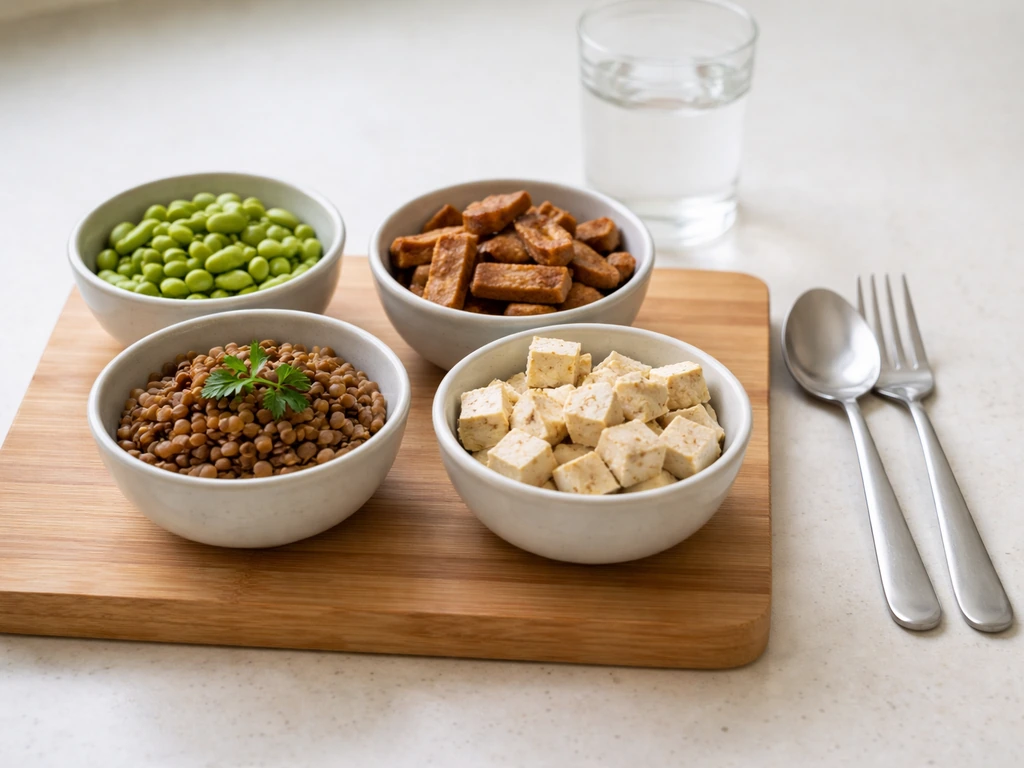
Here are the protein sources you should be building your meals around, with realistic serving sizes so you can actually plan your day:
| Food | Serving | Protein |
|---|---|---|
| Soybeans (cooked) | 1 cup | 31 g |
| Seitan | 3 oz (85 g) | 21 g |
| Seitan | 100 g | ~25 g |
| Greek yogurt (plain, full-fat) | 1 cup (~227 g) | ~17–20 g |
| Cottage cheese (low-fat) | 1 cup (~226 g) | ~25 g |
| Firm tofu | 100 g | ~17 g |
| Extra firm tofu | 4 oz (113 g) | 12 g |
| Textured vegetable protein (TVP, cooked) | 1/2 cup | 12 g |
| Black beans (cooked) | 1 cup | 15 g |
| Lentils (cooked) | 1/2 cup | 9 g |
| Eggs | 2 large | ~12 g |
| Quinoa (cooked) | 1 cup | 8 g |
| Pea protein powder | 1 scoop (~30 g) | ~20–25 g |
| Soy protein powder | 1 scoop (~30 g) | ~22–25 g |
The meal structure that works best is three to four meals per day, each containing 30 to 50 grams of protein from vegetarian sources. Research supports that evenly distributing protein across three meals produces better hypertrophy results than front- or back-loading your intake. Spreading it out keeps muscle protein synthesis elevated more consistently across the day. A protein shake using pea or soy protein is a perfectly legitimate tool here, not a shortcut, just a convenient protein source when whole food is impractical.
A sample day of eating for a 75 kg vegetarian trying to build muscle
- Breakfast: 3 eggs scrambled with 1/2 cup cottage cheese, topped on 2 slices whole grain toast. Add a piece of fruit. (~35–40 g protein)
- Lunch: Tofu stir-fry with 200 g firm tofu over 1 cup cooked quinoa with vegetables and soy sauce. (~40 g protein)
- Pre- or post-workout snack: 1 scoop pea or soy protein powder blended with milk or soy milk. (~25–30 g protein)
- Dinner: 3 oz seitan with 1 cup black beans, roasted vegetables, and brown rice. (~40 g protein)
- Total: ~140–150 g protein, which hits the 1.6–2.0 g/kg target for a 75 kg person
If you are lacto-ovo vegetarian (eating dairy and eggs), hitting protein targets is genuinely straightforward. If you avoid dairy and eggs too, lean heavily on soy foods, seitan, lentils, and a protein powder. Modeling studies confirm that fully plant-based diets can supply enough protein and leucine to maximize hypertrophy when total energy needs are met.
Training requirements: what you need to actually do in the gym
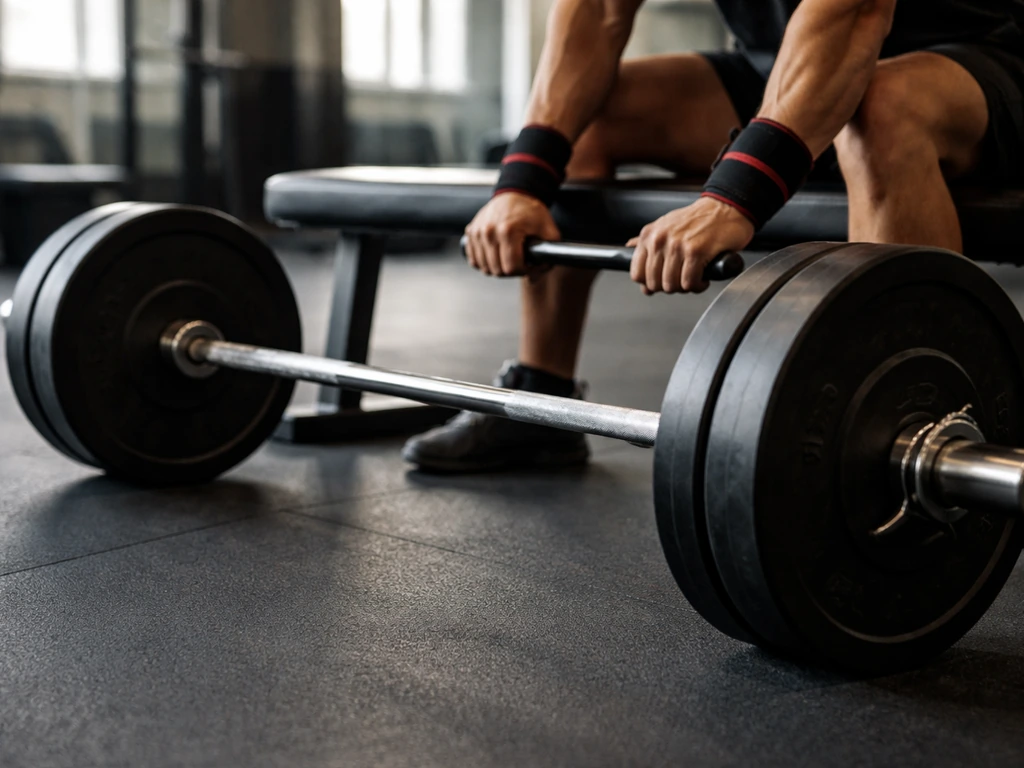
No amount of dietary optimization replaces the training stimulus. Muscle grows because it is repeatedly challenged with loads that exceed what it is currently accustomed to. Progressive overload is the principle: you need to gradually increase the stress on a muscle over time, whether that means more weight, more reps, or more sets. Your diet does not change this requirement at all.
Volume matters. A well-cited meta-analysis found a dose-response relationship between weekly training volume and muscle growth, with roughly 10 or more hard working sets per muscle group per week producing near-maximal hypertrophy for most people. Beginners can grow on lower volumes because the training stimulus is novel, but as you adapt, volume needs to increase. A practical starting point for beginners is 3 to 4 sets per exercise, 2 to 3 exercises per muscle group, 2 to 3 times per week. Track your weights and reps so you know when you are progressing.
- Train each muscle group at least twice per week for optimal frequency
- Aim for 10 to 20 hard working sets per muscle group per week (start at the lower end)
- Work in the 6 to 20 rep range per set, taking sets close to failure (1 to 3 reps from failure is the sweet spot)
- Add weight or reps over time, every week or every other week, this is non-negotiable for long-term progress
- Compound movements (squats, deadlifts, rows, presses) deliver the most muscle stimulus per unit of time
Calories, timing, and recovery on a vegetarian diet
Calories are the foundation everything else sits on. You can eat perfectly timed protein all day, but if you are chronically under-eating total calories, your body will not have the energy surplus needed to build new tissue efficiently. For muscle gain, aim for a modest surplus of roughly 200 to 400 calories above your maintenance level. Vegetarians sometimes fall into a trap here: plant foods are often high in fiber and water, which creates satiety without high calorie density. You may need to be more deliberate about adding calorie-dense foods like nut butters, olive oil, avocado, and whole grains.
On training days, prioritize getting protein within a couple of hours before or after your session. The ISSN notes that protein ingestion before or after resistance exercise is synergistic with the training stimulus for muscle protein synthesis. You do not need to stress about an exact 30-minute anabolic window, but you do want protein relatively close to training, not eight hours away. Carbohydrates around training matter too: they fuel the session and help replenish glycogen for recovery. A meal with 40 to 80 grams of carbs and 30 to 40 grams of protein within a few hours post-training is a solid default.
Recovery is where gains are actually made. Sleep 7 to 9 hours per night. Muscle protein synthesis stays elevated for up to 48 hours after a session, so back-to-back days training the same muscle can actually cut into that recovery window. Program rest days between sessions for the same muscle group. Stress management and sleep quality are often the most underrated levers for muscle growth, and they cost nothing.
Supplements worth considering (and what to skip)
Supplements are genuinely secondary to food, training, and sleep. But a few are worth taking seriously as a vegetarian because they fill gaps that plant-based diets commonly create. For bone health, the NIH ODS Calcium Health Professional Fact Sheet discusses how calcium and vitamin D needs may be relevant for people whose diets rely more on food choices like fortification a few are worth taking seriously as a vegetarian because they fill gaps that plant-based diets commonly create.
| Supplement | Priority | Why it matters for vegetarians | Dose guidance |
|---|---|---|---|
| Creatine monohydrate | High | Vegetarians typically have lower baseline muscle creatine stores, so the performance and strength boost from creatine is often larger than in omnivores | 3–5 g/day; no loading phase needed at 3–6 g/day for 3–4 weeks |
| Vitamin B12 | Essential | B12 is found almost exclusively in animal foods; deficiency causes fatigue and nerve damage, which kills training quality | At least 2.4 mcg/day; most vegetarians need a supplement or fortified foods |
| Vitamin D | Important | Many people are deficient regardless of diet; supports muscle function and testosterone | 600–800 IU/day as a minimum; 1,000–2,000 IU/day common in supplementation |
| Algae-based omega-3 (DHA/EPA) | Worth considering | Plant foods provide ALA but conversion to DHA/EPA is poor; algae oil delivers DHA/EPA directly | 250–500 mg DHA/EPA from algae oil daily |
| Iron | Context-dependent | Non-heme iron from plants is less bioavailable; athletes have higher iron needs, especially menstruating women | Test first; supplement only if deficient |
| Pea or soy protein powder | Practical tool | Convenient way to hit daily protein targets when food volume is limiting | As needed to hit daily protein goal |
| Calcium | Monitor | Vegetarians who avoid dairy may not hit calcium needs; important for bone health and muscle contraction | Aim for 1,000–1,200 mg total from food + supplement if needed |
Creatine deserves special mention. It is one of the most well-researched ergogenic supplements in existence, and vegetarians respond to it particularly well because their baseline muscle creatine stores are lower. Supplementing with around 3 to 5 grams per day will increase strength, improve training performance, and over time contribute to greater muscle gains. It is cheap, safe, and evidence-backed. If you are going to spend money on anything, creatine is the first call.
Common mistakes and how to fix them
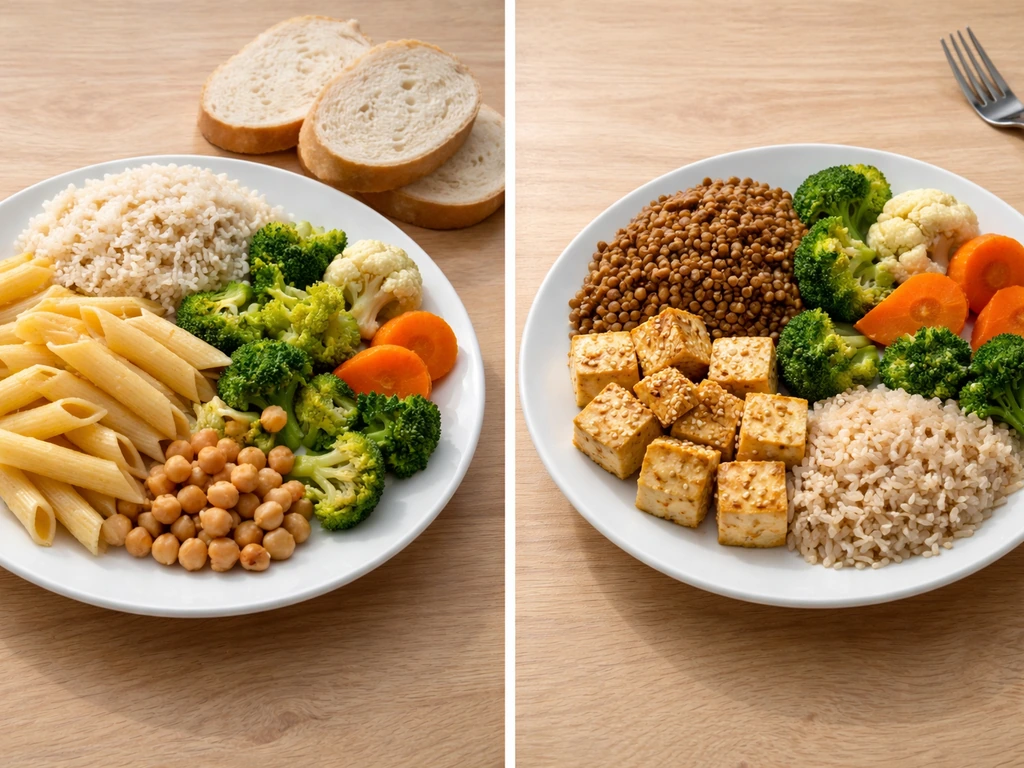
Most vegetarians who are not building muscle are making one or more of these fixable errors:
- Under-eating total protein: Relying on foods like bread, pasta, rice, or vegetables as your main protein sources does not work. These foods are not protein sources, they are carbohydrate sources. Anchor every meal around an actual protein source (tofu, tempeh, seitan, legumes, eggs, dairy, or a protein shake).
- Under-eating calories: Plant foods are filling but not always calorie-dense. Track your calories for at least two weeks to confirm you are actually in a surplus or at maintenance, not a deficit. Many people are shocked to find they are eating 400 to 600 calories less than they thought.
- Poor protein distribution: Eating most of your protein in one meal and grazing on carbs the rest of the day blunts muscle protein synthesis. Spread protein across 3 to 4 meals, each with 30 to 40+ grams.
- Ignoring leucine content: Not all plant proteins are leucine-rich. Soy and pea protein are your best plant-based leucine sources. If a meal has only lentils and rice, you may not hit the ~2.5 g leucine threshold needed to fully activate MPS. Bump the portion size or add a leucine-rich source.
- Inconsistent training: Nutrition optimized for muscle growth does nothing if the training stimulus is absent or erratic. You need to train progressively and consistently, minimum 2 sessions per muscle group per week, for months.
- Not tracking progress: If you are not tracking weights lifted, reps completed, and your bodyweight or measurements over time, you have no signal about whether what you are doing is working. You need data to adjust.
Troubleshooting checklist
- Am I eating at least 1.6 g of protein per kg of bodyweight daily? (Calculate it, do not estimate)
- Is protein spread across at least 3 meals with 30+ grams per meal?
- Am I eating enough total calories to support muscle gain (roughly 200–400 above maintenance)?
- Am I training each muscle group at least twice per week with progressive overload?
- Am I taking B12 and creatine at minimum?
- Am I sleeping 7 to 9 hours consistently?
- Have I tracked my bodyweight and key lifts for at least 4 weeks to assess progress?
What to expect and when
Muscle growth is slow. That is true for everyone, not just vegetarians. Beginners typically see the fastest gains, often 1 to 2 pounds of muscle per month in the first several months when everything is dialed in. More experienced lifters gain more slowly, closer to 0.5 to 1 pound per month. You will likely notice strength improvements within 2 to 4 weeks (largely from neural adaptation), but visible muscle changes take 6 to 12 weeks of consistent effort. Do not judge the program after 3 weeks. Give it 8 to 12 weeks before making major changes, and only change one variable at a time so you know what worked. Weigh yourself weekly (same time, same conditions), track your main lifts, and take monthly photos or measurements. If bodyweight is not moving up and lifts are stalling, calories need to go up. If weight is going up fast and you feel soft, pull calories back slightly. The feedback loop is simple once you are collecting data.
The bottom line: vegetarians grow muscle by following the same principles as everyone else, with a bit more attention paid to protein quality, leucine content, and total caloric intake. That brings up a common question: does spinach grow muscles, or is it mainly useful as part of an overall protein and calorie plan? Eating enough protein from soy, seitan, legumes, dairy, and eggs, training hard and progressively, sleeping well, and supplementing creatine and B12 covers almost everything you need. The question was never really whether vegetarians can build muscle. The question is whether you are willing to set up the conditions that make it happen. If you want to grow meat without animals, you will still need to set up the right biological conditions, just in a different way willing to set up the conditions.
FAQ
Can vegetarians still grow muscle if I do intermittent fasting?
Yes, as long as total daily protein, per-meal protein, and training volume are met. For example, you can hit 20 to 40 g protein per meal across your feeding window, then prioritize a pre- or post-workout meal within a few hours of training. The main adjustment is making sure you do not “save” protein for later and miss the time window when recovery protein needs are highest.
If I am vegetarian, how do I make sure my protein has enough leucine?
Vegetarians can use plant proteins, but you need to be deliberate about leucine and digestibility. A common mistake is relying on low-leucine staples like some grains and vegetables as the bulk of protein, which can leave you short on the amount needed to maximally trigger muscle protein synthesis per meal. Using soy foods and other higher-protein options (tofu, tempeh, seitan, lentils) generally makes leucine coverage easier.
What should I do if my strength is not improving, even though I hit my protein goal?
If your weight is not increasing and lifts are stalling for 3 to 4 weeks, that often means calories are too low, even if protein is on target. A practical check is to track intake for 7 days and compare average daily calories to your maintenance estimate. Then add 200 to 300 calories per day using more calorie-dense vegetarian foods (olive oil, nut butters, avocado, whole grains) and reassess in another couple of weeks.
Is it harder to grow muscle as a vegan than as a lacto-ovo vegetarian?
If you are lacto-ovo vegetarian, eggs and dairy make it easier to reach high-quality protein and higher leucine doses per meal. If you are vegan, you often need a tighter plan because plant protein sources vary more. A simple decision aid is: if you cannot reach roughly 30 to 40 g high-quality protein per meal from whole foods, add soy-based foods or a pea/soy protein powder to close the gap consistently.
Do older vegetarians need different protein targets to build muscle?
Yes, but it is not as simple as “eat protein.” You may need higher total daily protein and more careful per-meal distribution because recovery and muscle protein synthesis can be less responsive with age. Consider targeting the higher end of the protein range (and getting closer to 3 g leucine per meal) and keeping training sessions frequent enough to accumulate enough weekly hard sets.
Why do I feel full on a vegetarian diet, but I am not gaining muscle?
Commonly, yes. If you are under-eating calories, digestion issues from high-fiber meals, or you are not taking in enough protein at the right frequency, you can end up feeling full but still not building. A practical fix is to reduce volume of low-calorie foods around training, shift some protein to easier-to-digest options (tofu, tempeh, dairy if you use it, or a shake), and ensure you still distribute protein across 3 to 4 meals.
Do vegetarians need to combine proteins at every single meal?
If you do not eat eggs or dairy, you can still cover essential amino acid gaps by combining complementary plant sources across the day, not necessarily within a single meal. That said, you still need enough total daily protein, and you should avoid “random plant protein” grazing where each meal is too low in protein. Plan meals to reliably reach the per-meal protein target, then use combinations like rice and beans, lentils with grains, or soy as an anchor.
What supplements matter most for vegetarians who want to grow muscle, and what are just health basics?
Creatine helps, but B12 and vitamin D are different categories. For muscle gain you can prioritize creatine for performance and gains, and for health you should address B12 if you do not regularly consume animal foods (or if lab results show deficiency). If you are vegan, you should also consider iron status and possibly omega-3 intake, since low levels can indirectly limit training performance.
How much training volume do vegetarian lifters actually need to gain muscle?
If the goal is hypertrophy, the safest default is to keep weekly hard sets around the effective range and progress them over time. A typical error is doing lots of easy, high-rep work but not enough challenging sets per muscle group. Track at least one performance metric per lift, such as a rep range with a weight progression, and adjust volume only after you confirm you are eating enough calories.
Does spinach actually help me grow muscle, or is it mainly just a healthy add-on?
Yes, spinach can contribute protein, but it is not a dependable muscle-building protein source because most of what you get is low in grams of protein and low leucine per serving. For practical purposes, use spinach as a fiber and micronutrient add-on, then build your protein with soy, seitan, legumes, tofu, tempeh, and dairy or eggs if you eat them.