Spinach won't build your muscles on its own, but it can genuinely support the process when you pair it with resistance training and enough protein. The iron-fisted sailor from the cartoons was a fun myth, but the real story is more nuanced and actually still pretty useful. Spinach is packed with magnesium, folate, nitrates, and a modest amount of protein, and those nutrients do play roles in muscle function and performance. They just don't replace the two things that actually drive muscle growth: a training stimulus and enough total protein and calories.
Does Spinach Grow Muscles? What It Actually Does

Marcus Kellerman
4 Jun 2026
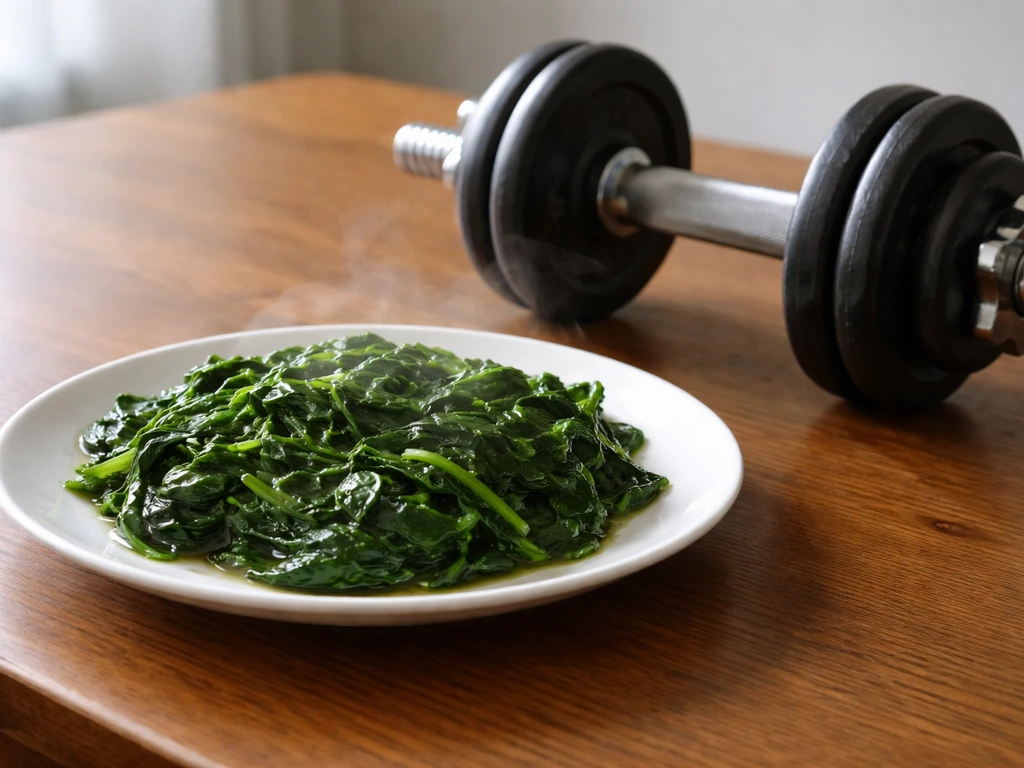
Does spinach directly build muscle or just support health
Spinach does not directly build muscle. Muscle tissue is built from amino acids, and spinach simply doesn't deliver enough protein to make a meaningful dent in your daily requirements. Per 100 grams of raw spinach you get about 23 calories and 2.9 grams of protein. A cooked cup gives you roughly 5.35 grams of protein, which is better, but still not a substitute for actual protein sources like meat, eggs, dairy, or legumes.
What spinach does do is support the conditions under which muscle growth can happen. Its nitrates have been shown in research to improve nitric oxide status and endothelial function, which means better blood flow to working muscles. One cohort analysis even found that people with higher dietary nitrate intake from green leafy vegetables had greater leg muscle strength and faster walking speeds. That's a meaningful real-world signal. But better blood flow is a support mechanism, not an anabolic driver. Think of it as helping your engine run cleaner, not adding more horsepower.
How muscle growth actually happens

Muscle grows when you apply a mechanical tension stimulus through progressive resistance training, give your body enough protein to synthesize new tissue, and eat enough total calories to fuel the whole operation. The ACSM educational resource on protein intake for optimal muscle maintenance similarly emphasizes that adequate protein intake supports muscle maintenance when paired with appropriate training give your body enough protein to synthesize new tissue. All three legs of that stool need to be in place. Missing any one of them slows everything down.
The protein target most commonly supported by sports nutrition research for people actively trying to build muscle is around 1.4 to 2.0 grams per kilogram of body weight per day. For a 75 kg (165 lb) person that's roughly 105 to 150 grams of protein daily. The baseline WHO recommendation of 0.83 g/kg is enough to maintain health, but it's not enough to drive hypertrophy when you're in the gym regularly. Calories matter too because if you're chronically under-eating, your body has no surplus to invest in new tissue.
Progressive resistance training is the non-negotiable trigger. Without the mechanical stress signal, extra protein and spinach just get metabolized or stored. The training tells your body there's a reason to rebuild bigger. Nutrition then provides the raw materials and environment to make that happen.
What nutrients in spinach actually contribute
Even though spinach won't anchor your protein intake, its micronutrient profile is legitimately useful for someone trying to build muscle. Here's what matters and what doesn't:
| Nutrient | Amount per 100g raw | Relevance to muscle building |
|---|---|---|
| Protein | 2.9 g | Too low to be a primary source; contributes marginally |
| Magnesium | 79 mg | Supports muscle contraction and relaxation; meta-analyses show magnesium supplementation can affect muscle fitness |
| Folate | 194 mcg | Important for cell division and protein synthesis pathways |
| Nitrates | High (naturally occurring) | Convert to nitric oxide; improve blood flow and may support strength and sprint performance |
| Potassium | 558 mg | Electrolyte balance; supports nerve-muscle signaling |
| Fiber | 2.2 g | Supports gut health and satiety; not directly anabolic |
| Calories | 23 kcal | Negligible energy contribution |
Magnesium is worth highlighting because a lot of people are mildly deficient, and that can blunt muscle function. Spinach is one of the better whole-food sources. Folate supports the cellular machinery involved in building new tissue. And the nitrate-to-nitric-oxide pathway has real evidence behind it for performance, even if it's not going to pack on pounds of muscle by itself.
What spinach doesn't contribute is the complete amino acid profile your muscles need to actually grow. It has no leucine spike, no meaningful branched-chain amino acids, and not nearly enough total protein to drive muscle protein synthesis in a sustained way. That's the job of your other food choices.
How to include spinach in a muscle-building diet
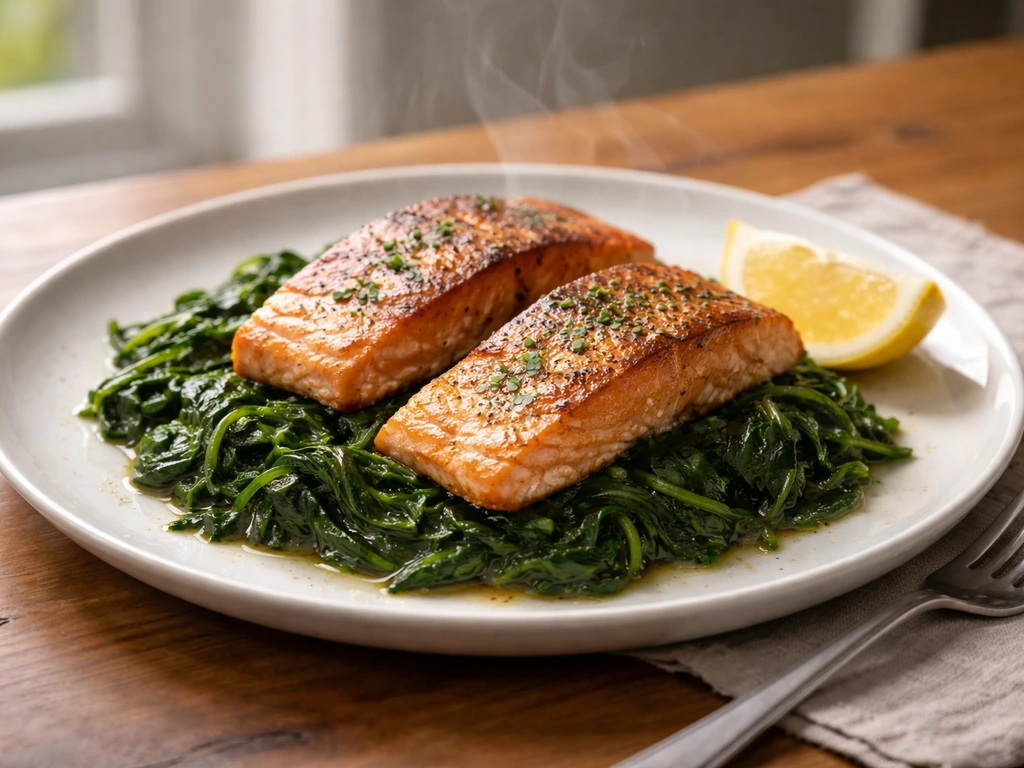
The key mental shift is to treat spinach as a nutritional backdrop for your protein sources, not a standalone solution. Every meal should have a clear protein anchor (chicken, fish, eggs, Greek yogurt, tofu, legumes) and spinach can fill in the micronutrient gaps without adding many calories. That's actually a great deal: you get magnesium, folate, and nitrates for almost no caloric cost.
Here are some practical, protein-forward ways to work spinach in daily:
- Morning eggs: Add 1 to 2 cups of raw spinach to scrambled eggs or an omelette. The spinach wilts down to almost nothing and you barely notice it, but you've added magnesium and folate to a protein-rich meal.
- Post-workout smoothie: Blend a handful of spinach with a scoop of protein powder, a banana, and some milk or a milk alternative. The protein powder does the heavy lifting; the spinach adds the micronutrients.
- High-protein salad base: Use 2 to 3 cups of raw spinach as the base, then load it with canned tuna, grilled chicken, hard-boiled eggs, chickpeas, or cottage cheese.
- Pasta or grain bowls: Stir a few handfuls of fresh spinach into cooked pasta, rice, or quinoa with a high-protein topping like ground turkey or salmon.
- Soup and stir-fry add-in: Spinach wilts quickly, so you can throw it into almost any soup or stir-fry in the last minute of cooking.
If you're vegetarian or eating a mostly plant-based diet, spinach pairs well with legumes, tofu, tempeh, and edamame to build a more complete amino acid profile across meals. The question of whether vegetarians can build the same amount of muscle as meat-eaters is a whole topic on its own, but the short answer is yes with careful planning around total protein intake. The question can you grow meat is different from whether you can build muscle on a mostly plant-based diet, but the nutrition principles like hitting total protein still matter.
How much spinach to eat, and raw vs cooked
For general health benefits and consistent micronutrient intake, aim for roughly 1 to 2 cups of cooked spinach or 2 to 3 cups of raw spinach daily. That aligns with the Dietary Guidelines for Americans recommendation of about 4.5 cup equivalents of fruit and vegetables total per day on a 2,000-calorie diet, with leafy greens being a priority vegetable category.
Raw versus cooked comes down to what you're optimizing for. Cooking concentrates spinach significantly so a cup of cooked spinach delivers more total nutrients per serving volume, including about 5.35 grams of protein compared to roughly 2.9 grams per 100 grams raw. However, boiling spinach causes about 49% loss of folate compared to raw, because folate is water-soluble and leaches out. If you're specifically trying to protect the folate content, steaming or sautéing is better than boiling in lots of water, and raw is fine if you're eating it in salads. The magnesium and nitrates hold up reasonably well with light cooking. In practice, rotating between raw and lightly cooked spinach gives you the best of both.
One practical note: raw spinach contains oxalates that can bind to minerals like calcium and reduce their absorption. This isn't a crisis, but it's a reason not to rely on spinach as your sole source of any one micronutrient. Variety across vegetables matters.
Realistic expectations: what spinach changes and what it doesn't

If you start adding spinach consistently to a diet that's already hitting protein and calorie targets and you're training regularly, you might notice slightly better workout performance over a few weeks, better recovery between sessions, and less muscular cramping if you were previously low on magnesium. Those are real and useful outcomes.
What you won't notice is visible muscle growth from spinach itself. So if you see claims like “if you stop beating your meat will it grow,” it helps to remember that muscle growth is driven by training, protein, and calories, not those myths. Actual hypertrophy (measurable increases in muscle size) takes weeks to months of consistent training and eating. Most beginners see their first clear strength gains within 4 to 6 weeks and start to see visual changes in 8 to 12 weeks when diet and training are both dialed in. Older adults can absolutely build muscle too, it just tends to happen a little more slowly and with a slightly higher protein intake supporting the process.
The bottom line on timelines: spinach contributes to the environment for muscle growth, but it doesn't compress or accelerate that timeline meaningfully on its own. Total protein, progressive overload, sleep, and consistency are the timeline drivers.
Your action plan starting today
Here's how to put this into practice right now without overcomplicating it:
- Calculate your protein target. Take your body weight in kilograms and multiply by 1.6 as a solid starting point for muscle building. That's a reasonable midpoint in the 1.4 to 2.0 g/kg range. For a 75 kg person, that's 120 grams of protein per day.
- Track your current intake for three days. Most people discover they're eating less protein than they think. Use any free food tracking app to get a realistic baseline before making changes.
- Add spinach to two meals per day. Use the meal ideas above. This takes about 60 seconds of effort and covers your magnesium and folate needs without displacing protein.
- Start or continue resistance training at least 3 days per week. Progressive overload (gradually adding weight, reps, or difficulty over time) is what actually tells your body to grow. Without this, none of the nutrition work pays off in muscle.
- Check total calories. You need at least a slight caloric surplus (roughly 200 to 300 extra calories per day) to build muscle efficiently. Spinach adds almost nothing calorically, so make sure you're not under-eating overall.
- Consider supplementation only if needed. If you consistently struggle to hit protein targets, a protein powder is a practical, evidence-backed tool. If you suspect low magnesium (cramping, poor sleep, fatigue), a basic magnesium supplement is reasonable, but food-first is always the better starting point.
- If you have any medical conditions, kidney issues, or are on medications, check with your doctor before dramatically increasing protein intake or adding high-nitrate foods regularly, as both can have interactions in specific health contexts.
Spinach is genuinely one of the best things you can add to a muscle-building diet, just not for the reason most people think. It's not about the protein. It's about building a micronutrient-rich food environment where your muscles can function, recover, and respond to training at their best. Pair it with real protein sources, lift consistently, and you'll get the results you're after. Meat helps because it provides complete protein, which supplies the amino acids your muscles need to grow.
FAQ
How much spinach would I need for it to grow muscle?
Not by itself. If your daily protein and calories are already on target and you train progressively, spinach can support workout function through nutrients like magnesium and nitrates, but it will not replace the mechanical stimulus and amino acids required to build new muscle tissue.
Can I build muscle on spinach if I am vegetarian or mostly plant-based?
It can help as long as it fits your full meal plan. If spinach boosts your overall micronutrients while your legumes, tofu, tempeh, edamame, or other protein sources carry your total protein target, you can still build muscle with a plant-forward diet, even though spinach is not a complete protein anchor.
Should spinach replace other protein sources or just complement them?
Since spinach is low in protein per calorie, it is usually best used as a side or mix-in, not your primary protein. Treat it like a micronutrient add-on, and make sure your plate has a clear protein anchor such as eggs, Greek yogurt, chicken, fish, tofu, or beans.
Does spinach have the amino acids needed for muscle protein synthesis?
If you are trying to build muscle, consider viewing spinach as optional for protein quality rather than a key driver. It lacks the amino acid pattern and leucine level that strongly triggers muscle protein synthesis, so you typically need additional protein foods to get consistent muscle-building signals.
When is the best time to eat spinach for workouts?
Yes, but timing is less important than total intake and training consistency. Spinach calories are small, so it will not replace a real pre- or post-workout protein dose, but having it in the meal around training can contribute magnesium for comfort and nitrates for blood-flow support.
Is raw or cooked spinach better for muscle support?
Boiling can reduce folate because it leaches into the cooking water, so if folate protection matters, steaming or sautéing is usually a better choice than boiling lots of water. Light cooking is fine for magnesium and nitrates, and you can rotate raw salads with lightly cooked portions.
Can spinach hurt muscle gains if I am prone to kidney stones?
If you are prone to kidney stones, especially calcium oxalate stones, you may need to moderate spinach because it contains oxalates that can increase oxalate load. This is a reason to avoid relying on spinach as the sole or dominant vegetable in your diet.
What if I eat a lot of spinach and get digestive issues?
Yes. Spinach is a good magnesium source, but if you have a digestive condition, very high fiber intake, or you suddenly add large amounts, you might experience bloating or stomach discomfort that makes it harder to stick with your diet and calories. Start with smaller servings and adjust.
How will I know if spinach is actually helping me build muscle?
Track measurable outcomes like weekly strength increases, body-weight trends, and how you recover, not the number of times you ate spinach. If protein and training are consistent, you should see gains over weeks to months, while spinach mainly supports performance and recovery conditions rather than directly changing your muscle size.
What are the most common mistakes people make when trying to use spinach for muscle growth?
Be cautious with “spinach-only” strategies or extreme claims. Visible muscle growth requires progressive resistance training plus sufficient protein and calories. If those are missing, spinach will not compensate, and if those are present, spinach will be a helpful support but not a shortcut.