Some peptides can support muscle growth and body composition in humans, but the honest answer is that the evidence is narrow, context-specific, and nowhere near as clean as the marketing suggests. Ashwagandha is sometimes marketed for muscle gain, but strong evidence that it specifically grows muscle is limited compared with proven basics like progressive resistance training, enough protein, and consistent sleep. The most studied ones work through growth hormone pathways, and their effects in healthy people doing resistance training are modest at best. If you're already training hard, eating enough protein, and sleeping well, peptides are unlikely to move the needle the way those basics do. If you're not doing those things yet, peptides definitely won't save you.
Do Peptides Grow Muscle? Evidence, Safety, and What Works

What people actually mean when they say 'peptides' for muscle
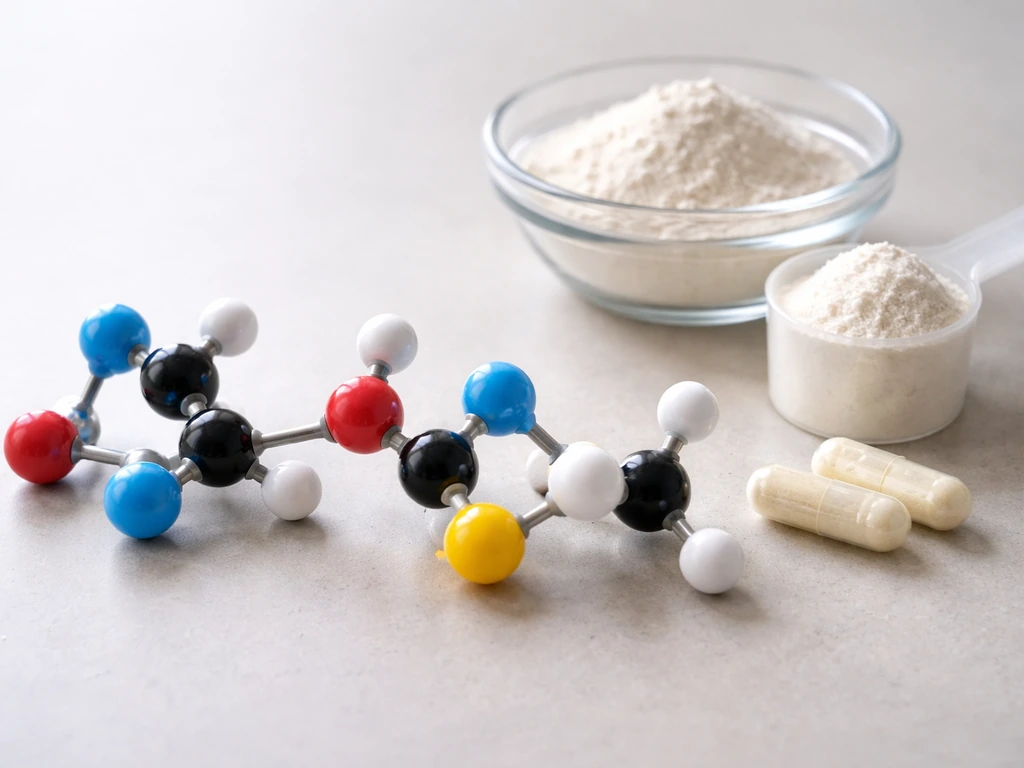
The word 'peptide' just means a short chain of amino acids, which technically includes things like creatine analogs and even fragments of whey protein. But in fitness circles, 'peptides' almost always refers to a specific category: injectable or oral compounds that stimulate growth hormone (GH) release or mimic GH activity. These are called growth hormone secretagogues (GHSs), and the ones that come up most often in bodybuilding conversations fall into two groups.
- GH-releasing peptides (GHRPs): synthetic peptides like GHRP-2, GHRP-6, ipamorelin, and hexarelin that trigger the pituitary to release GH by mimicking ghrelin, a hunger/signaling hormone.
- GH-releasing hormone analogs (GHRH analogs): compounds like CJC-1295 and tesamorelin that mimic the natural hormone that tells your pituitary to produce GH in the first place.
- Oral ghrelin mimetics: MK-677 (ibutamoren), which works through the same ghrelin receptor as the GHRPs but can be taken orally rather than injected.
- BPC-157 and TB-500: tissue-repair peptides that show up in injury-recovery claims, though their mechanism is different and their human evidence is even thinner.
The core logic behind all the GH-focused ones is the same: more GH leads to more IGF-1 (insulin-like growth factor 1), which promotes protein synthesis and lean tissue growth. That chain of events is real in physiology. The question is whether triggering it artificially in a healthy, well-nourished person produces meaningful muscle gains on top of good training and nutrition. That's where things get complicated.
Does the evidence actually support muscle growth in humans?
Honestly, the human evidence for peptides as muscle-builders is thin compared to what the fitness industry implies. No does bcaa grow muscle. Most of the robust clinical work is in specific medical populations, not healthy people trying to add muscle mass. That matters a lot, because someone with a GH deficiency, age-related GH decline, or a disease causing body composition changes will respond very differently to GH pathway stimulation than a healthy 28-year-old who eats well and lifts four times a week.
Tesamorelin, for example, is FDA-approved, but specifically for reducing abdominal fat in people with HIV-associated lipodystrophy. Studies in that population do show changes in body composition, including some exploratory data suggesting increases in trunk muscle area and density over 26 weeks. But those effects haven't been established as meaningful for strength or function, and the population is not the typical gym-goer.
MK-677 has been studied in a randomized controlled trial in healthy older adults and does increase IGF-1 and produce body composition changes, but again, the subjects were older adults, not trained athletes. In a randomized, controlled trial in healthy older adults, the oral ghrelin mimetic MK-677 increased fat-free mass versus placebo, with DXA outcomes reported [MK-677 has been studied in a randomized controlled trial in healthy older adults](https://pmc. ncbi. nlm.
nih. gov/articles/PMC2757071/). Ipamorelin's most rigorous human trial was in postoperative bowel surgery patients. None of this is the evidence base you'd want before deciding to inject something yourself.
The specific peptides people search for, and how strong the proof actually is
| Peptide | Mechanism | Human Evidence Quality | Evidence Context | Muscle/Strength Claim Support |
|---|---|---|---|---|
| Tesamorelin | GHRH analog, boosts GH/IGF-1 | Moderate (RCTs exist) | HIV lipodystrophy patients | Exploratory body composition data; strength effects not established |
| MK-677 (Ibutamoren) | Oral ghrelin mimetic, boosts GH/IGF-1 | Low-moderate (RCTs in older adults) | Healthy older adults, not trained athletes | IGF-1 and lean mass changes seen; functional/strength benefit unclear |
| GHRP-2 / GHRP-6 | GH secretagogue (ghrelin receptor) | Very low (mostly animal/in vitro) | No robust human muscle RCTs | Theoretical; not supported by quality human trials |
| Ipamorelin | Selective GH secretagogue | Very low for bodybuilding | Best human RCT is in post-surgical patients | No credible muscle/strength evidence in healthy adults |
| CJC-1295 | GHRH analog | Very low | Mostly animal studies and small pharmacokinetic work | No quality human muscle outcome data |
| BPC-157 | Tissue repair (angiogenesis/healing) | Very low | Animal studies only for muscle/tendon repair | No human clinical trial evidence for muscle growth |
| TB-500 (Thymosin β-4) | Tissue repair/regeneration | Very low | Animal studies; no human muscle RCTs | No credible human muscle growth evidence |
The pattern is consistent: the further a peptide gets from FDA-approved status and rigorous RCTs in humans, the thinner the evidence gets. GHRPs, CJC-1295, BPC-157, and TB-500 are essentially riding on animal study data and theoretical mechanisms. GHRPs, including examples like GHRP-2 and GHRP-6, are listed on the WADA Prohibited List as prohibited substances in sport GHRPs, CJC-1295, BPC-157, and TB-500. That doesn't mean they do nothing, but it does mean you're experimenting on yourself without a solid evidence base.
What realistic results actually look like, and what the timeline is
If you look at the most favorable human data, things like MK-677 in older adults, what you see are modest changes in lean body mass over months of use, paired with increases in IGF-1 levels. You're not looking at dramatic strength gains or the kind of transformation people sometimes associate with the word 'peptides' online. If your goal is to know whether whey protein can grow muscle, the best place to start is the evidence on protein intake and training. Even in the more favorable tesamorelin body composition data, the effects showed up over 26 weeks, in a population that had significant room to improve from a diseased baseline.
In a healthy trained person, the realistic expectation is: potentially a modest boost in recovery or lean mass, taking months to see, at an uncertain dose (because dosing for non-approved compounds is genuinely not standardized), layered on top of what your training and diet are already producing. If your goal is to build muscle, you may also be wondering whether Pilates can help, and the answer depends on how progressive and strength-focused your routine is.
Whether your waist grows when you gain muscle depends more on overall fat gain and body fat distribution than on peptides. You won't feel something in two weeks. You won't look noticeably different in six weeks. And without a DEXA scan or similar body composition measurement at baseline and after, you genuinely won't know if anything changed that wouldn't have changed anyway from your training.
FAQ
If peptides increase IGF-1, why don’t I see dramatic muscle gains like the ads promise?
Not reliably. Even if GH or IGF-1 goes up, that does not guarantee strength gains, especially in healthy, well-trained people. The practical marker to watch is trend-level changes in lean mass and performance (reps, load, and recovery), not quick scale weight shifts.
How long does it typically take for peptides to show muscle or body composition changes?
Timeframes are usually measured in months, not weeks. In the better-studied human examples, body composition changes (when they occur) tend to show up after roughly 12 to 26 weeks, and they may be modest. If you are judging after 4 to 6 weeks, you are likely seeing water or normal training variation.
Will my weight go up even if I am not gaining muscle on peptides?
Yes, and it can mislead you. Compounds that shift GH/IGF-1 signaling can raise appetite, cause water retention, and alter glucose handling, so the scale can move without true muscle gain. Using DEXA or similar body composition tracking helps separate tissue changes from fluid and glycogen effects.
Can I use peptides if I compete, and what’s the anti-doping risk?
If you are a competitive athlete, peptides are particularly risky because many GH-pathway products are WADA-banned and tests can detect prohibited substances. Even accidental contamination can create an anti-doping violation, so “legal gray market” is not an anti-ban strategy.
What bloodwork should be monitored if someone is considering GH-pathway peptides under medical care?
Baseline medical data matter. At minimum, a clinician may want labs related to glucose control (fasting glucose and often A1c), IGF-1, and other hormone axes, plus regular monitoring during use. Without bloodwork, you cannot judge whether you are getting physiological effects or accumulating adverse ones.
Why do peptide results vary so much between users?
In many cases, dosing is not standardized for bodybuilding use, and under- or over-shooting can change the side-effect profile as much as the intended benefit. This is one reason effects are inconsistent between people and why “everyone should follow my dose” is a common mistake.
What happens if I stop peptides suddenly, can I rebound or crash?
Yes. After stopping, some users experience rebound symptoms (for instance, changes in appetite, mood, or hormone-related effects), and stopping certain injected agents abruptly can be risky. This is another reason that self-directed use without a supervised taper plan is a bad idea.
Can peptides help if I am not yet following a solid training, protein, and sleep routine?
You cannot treat peptides like they replace training basics. If progressive overload, adequate protein, and sleep are missing, any potential modest peptide effect is unlikely to show up. For many people, the biggest “performance gain” comes from improving the fundamentals rather than adding experimental agents.
What should I track to know whether peptides are actually increasing lean mass?
If you are trying to estimate muscle gain, strength metrics alone can miss changes in water and glycogen. Combining weekly strength tracking with a body composition check at 12 weeks minimum, and preferably DEXA at baseline and follow-up, gives a much clearer answer.
What are the biggest long-term health concerns with GH-pathway peptides?
Often, yes. At higher dose or prolonged use, chronic GH/IGF-1 elevation is associated with risks like insulin resistance and joint discomfort, and in extreme cases can resemble acromegaly-like features. This shifts the risk-benefit question, especially for long-term use.
Are there any harm-reduction steps if someone is determined to try peptides anyway?
Yes, but it is not a substitute for medical oversight. You can reduce harm by not injecting yourself without training, avoiding known counterfeit sources, and asking for sterile handling and lab verification, but the key point is that contamination and dosing uncertainty remain possible. The article’s core message is that gray-market availability is not a safety guarantee.
What is the evidence-based alternative if I want the fastest, most reliable muscle gains?
If your goal is muscle, evidence-based options like creatine monohydrate, meeting protein targets, and consistent progressive resistance training usually give more predictable gains without the same regulatory and contamination problems. Peptides should generally be viewed as an experimental add-on only for specific medical indications with monitoring.