What muscle growth actually requires
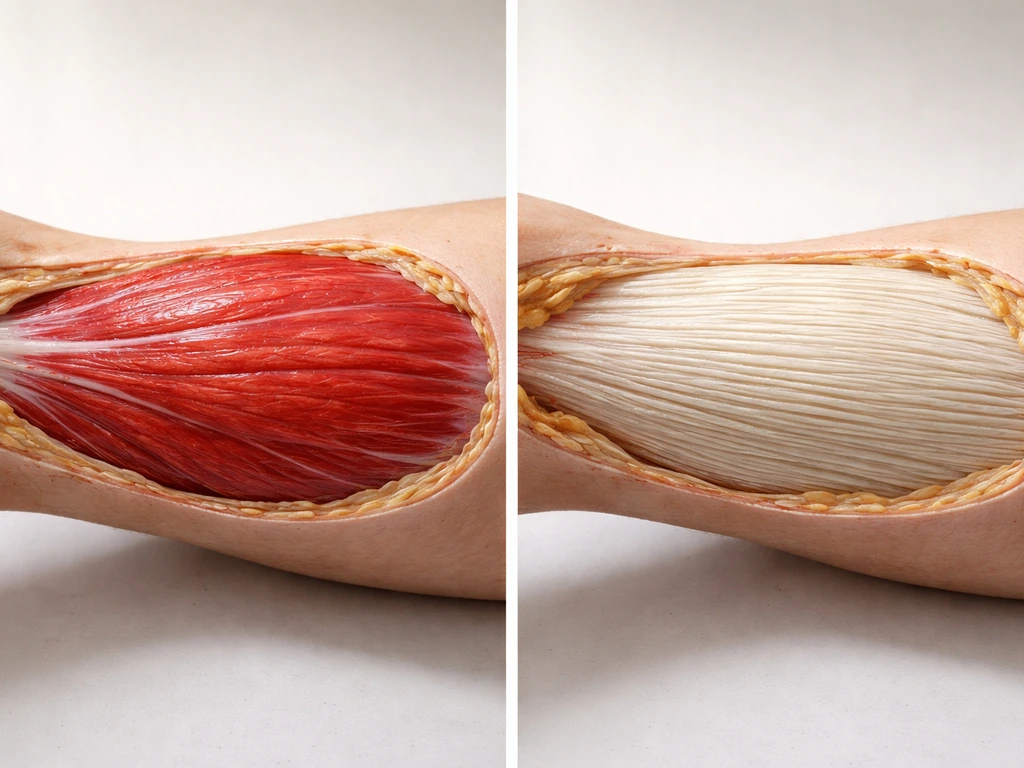
Before judging whether Pilates delivers, it helps to get clear on what muscle growth actually needs. Hypertrophy, meaning an increase in muscle fiber cross-sectional area and volume, is driven by mechanical tension, metabolic stress, and muscle damage. Of these, mechanical tension is the most important. That means your muscles need to be loaded heavily enough, and taken close enough to failure, that the fibers experience the kind of stress that triggers protein synthesis to rebuild bigger and stronger.
In practical terms, three things matter most: progressive overload (you need to keep making the challenge harder over time), sufficient volume (enough sets and reps to accumulate that stress), and adequate intensity (working close enough to failure that the muscle is genuinely recruited). If any of those are missing, you may get fitter, more coordinated, or more flexible, but you won't reliably grow. This is exactly why a lot of Pilates programs fall short for hypertrophy: the resistance stays the same, the reps are moderate, and the effort level rarely approaches the point where the muscle is truly challenged.
How Pilates compares to traditional hypertrophy training
Standard hypertrophy training, think weighted squats, rows, and presses programmed at 60 to 85 percent of your max effort across multiple sets, is specifically designed to meet those three criteria. Pilates was designed around control, alignment, breath, and core stability. Those are genuinely valuable qualities, but they're different goals. Here's how the two approaches compare across the factors that drive muscle growth:
| Factor | Traditional Hypertrophy Training | Standard Mat Pilates | Reformer Pilates (Progressive) |
|---|
| Progressive overload | Built-in via added load or reps | Rarely structured in | Possible via spring resistance changes |
| Mechanical tension | High, with free weights or machines | Low to moderate | Moderate to high with heavy springs |
| Proximity to failure | Typically 0–3 reps from failure | Usually far from failure | Can be programmed close to failure |
| Volume control | Precisely tracked (sets x reps) | Often untracked | Can be tracked and progressed |
| Muscle specificity | High (exercises target specific muscles) | Moderate, core-focused | Moderate to high with exercise selection |
| Neuromotor benefits | Moderate | High | High |
The gap between Pilates and hypertrophy training isn't about the equipment, it's about whether the programming demands enough of your muscles. A reformer can deliver resistance, but if the spring setting is light and you never push to the point of real muscular fatigue, you're essentially doing controlled movement therapy, not hypertrophy training. That's fine if that's what you want, but it won't add meaningful muscle size.
What results you can realistically expect, and how fast
Here's what the research actually shows. A 36-week randomized study of inactive women doing supervised Pilates twice a week found no significant increase in the volume of lumbopelvic muscles including the gluteals, iliopsoas, and quadratus lumborum, measured by MRI. Thirty-six weeks is a long time, and if there were enough stimulus to grow those muscles, you'd expect to see it by then. The researchers flagged that intensity was likely too low and exercises not specific enough to trigger hypertrophy. That's the honest picture for low-to-moderate intensity mat Pilates.
On the other hand, a 6-week Pilates program in patients with Parkinson's disease did produce measurable increases in ultrasound-measured thickness of the internal oblique and transversus abdominis. And structured reformer Pilates studies in overweight and obese women have shown improvements in body composition and strength when spring resistance was progressively increased. So the pattern is consistent: intensity and progression matter. When those are present, real changes in muscle can happen, especially in populations with lower baseline fitness.
In terms of timelines, strength gains come first. You'll often notice improved performance and neuromuscular control within 4 to 8 weeks, because your nervous system gets better at using the muscle you already have. Visible size increases take longer, typically 8 to 16 weeks of consistent, adequately loaded training before you'd see changes in the mirror. If you're a beginner or deconditioned, Pilates may get you those early gains. If you're already training regularly, you'll likely need more load and more volume than most Pilates programs offer to keep growing. If your current Pilates sessions feel too light, you may want to compare it with whether ashwagandha can do more than just support recovery, including the question does ashwagandha grow muscle.
Strength vs. size: what you're actually getting
Most people who do Pilates and feel they look "more toned" aren't necessarily adding significant muscle mass. If you are worried about your waist growing when you gain muscle, the answer depends on how your training and calories affect both muscle gain and fat gain does your waist grow when you gain muscle. What they're often experiencing is a combination of improved posture and muscle activation patterns (which changes how your body looks), reduced body fat from increased movement, and early neuromuscular strength gains. These are real benefits, but they're different from hypertrophy. If your goal is actual muscle size, you need to be honest about whether your Pilates program is delivering enough mechanical tension and volume to produce it.
How to modify Pilates to actually build muscle
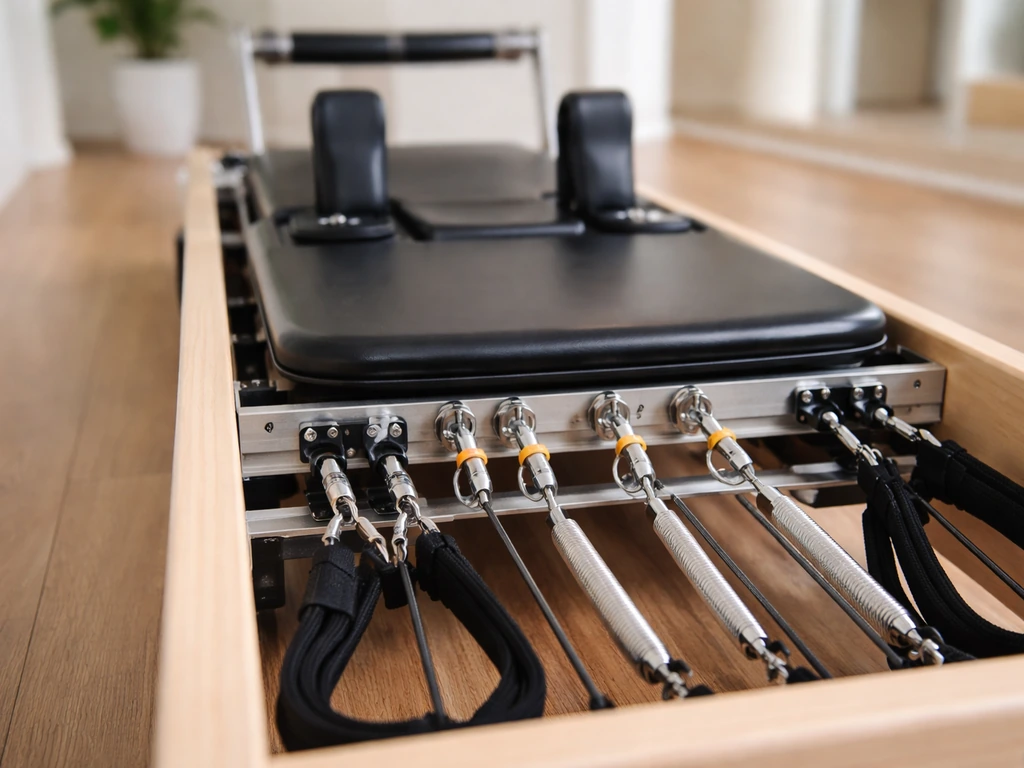
If you want Pilates to drive muscle growth, you need to treat it like a resistance training program, because that's what it needs to become. Here's how to do that practically.
Choose the right equipment
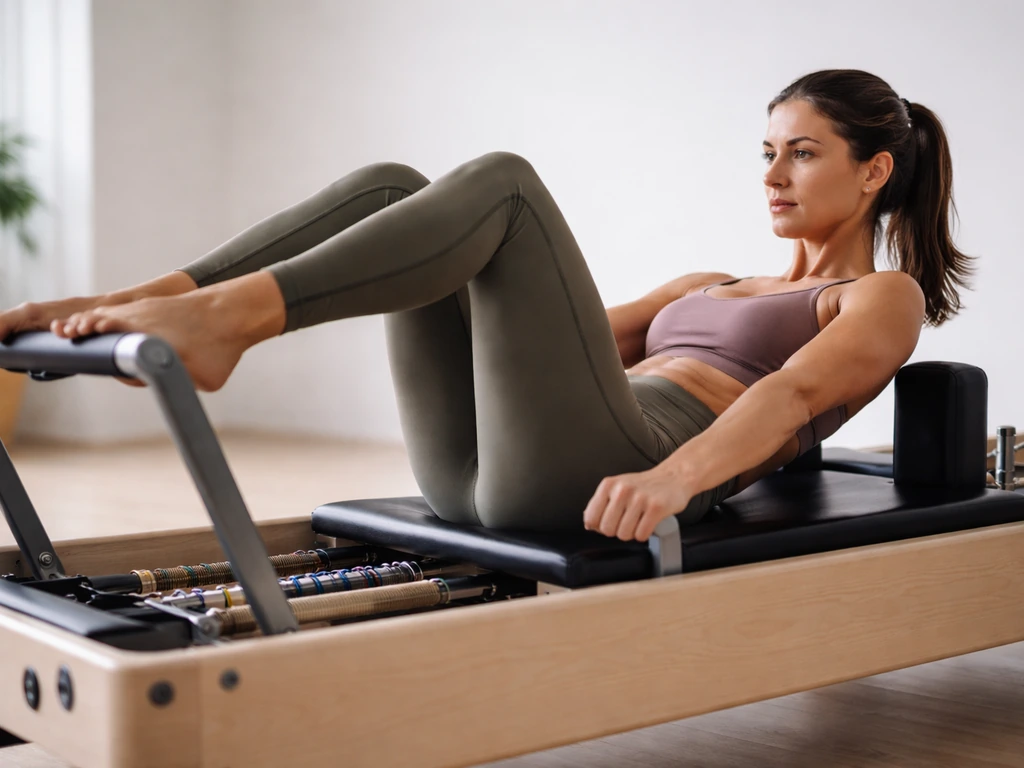
The reformer is your best tool. Spring-based resistance is adjustable and can be progressed over time. Dumbbells, cables, and resistance bands added to mat work can also raise the intensity meaningfully. If you're only doing mat Pilates with bodyweight, you're working at a significant disadvantage for building size in most muscle groups.
Apply progressive overload deliberately
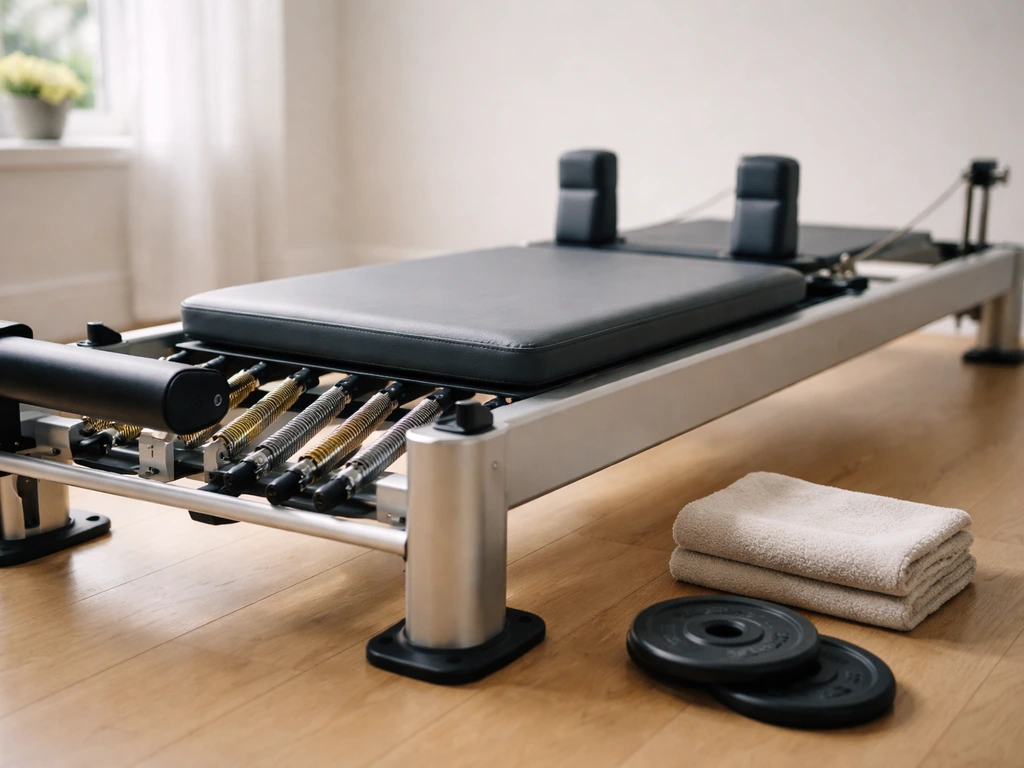
Every few weeks, increase either the resistance (heavier spring, more weight), the reps, or the number of sets. Keep a simple log. If you're doing the same exercises at the same resistance you were doing 3 months ago, don't be surprised when nothing changes. A basic weekly progression framework could look like this:
- Weeks 1 to 3: Learn the movements, build control, moderate spring/load, 10 to 12 reps per exercise, 2 sets
- Weeks 4 to 6: Increase to 3 sets, same rep range, add one increment of spring resistance or light dumbbells
- Weeks 7 to 10: Aim for 8 to 10 reps with heavier resistance, working to within 2 to 3 reps of failure on each set
- Weeks 11 and beyond: Continue adding load or reps whenever the current level feels manageable for 2 consecutive sessions
Train closer to failure
This is the one most Pilates practitioners avoid, because the culture emphasizes controlled movement over struggle. But if you want hypertrophy, you need your muscles to actually fatigue. That means finishing a set and feeling like you could only do 1 or 2 more reps, not 10. If every set feels smooth and controlled all the way through, the load is probably too light for growth.
Frequency and session structure
For muscle growth, aim for 3 sessions per week targeting the same major muscle groups, or split upper and lower across 4 sessions. Two sessions per week can work for beginners, but 3 tends to produce better hypertrophy outcomes. Each session should include compound movements (footwork on the reformer, lunges, rows, press work) before isolation exercises (single-leg work, rotator work, smaller stabilizers). Keep total volume at 10 to 20 working sets per muscle group per week across all sessions.
Nutrition and recovery for Pilates-driven muscle growth
Training is only half the equation. If you're not eating enough protein and total calories, muscle growth won't happen no matter how hard you train. Protein is the raw material for building new muscle tissue. The current evidence supports a target of 1.6 to 2.2 grams of protein per kilogram of body weight per day for people actively trying to grow muscle. The ISSN position stand on protein and exercise notes that an overall daily protein intake in the range of about 1.4 to 2.0 g protein per kilogram per day is sufficient to optimize exercise-induced adaptations for most exercising individuals 1.�2 to 2.. A 70 kg person should be aiming for roughly 112 to 154 grams of protein daily, spread across meals.
On top of protein, you need to be eating at or slightly above your caloric maintenance, because building tissue requires energy. You can't efficiently build muscle in a meaningful caloric deficit. Even a modest surplus of 150 to 300 calories per day gives your body the resources it needs. If you're pairing Pilates with a very low-calorie diet and wondering why you're not growing, that's your answer.
Recovery also matters. Muscle protein synthesis peaks in the 24 to 48 hours after a session, which is when most of the growth work actually happens. That means sleep quality (7 to 9 hours per night), managing chronic stress, and not training the same muscles to fatigue every single day all support the process. Two or three days between sessions targeting the same muscle group gives adequate recovery time without losing the frequency needed for good results. Protein-rich meals within a few hours of training sessions also help maximize the muscle-building signal.
It's also worth noting that protein source matters less than total intake, but complete proteins (animal sources, soy, or combinations that cover all essential amino acids) are more efficient. If you're interested in whether specific supplements like whey protein, BCAAs, or others contribute to muscle growth alongside your Pilates program, those are worth understanding separately, since the evidence for each varies. BCAAs are often marketed for muscle, but the evidence for whether they actually grow muscle is mixed. Whey protein can help you hit your protein targets, but it isn't magic on its own.
Who Pilates works best for, and who needs more
Pilates is genuinely excellent for some groups and genuinely limited for others when the goal is muscle growth. Here's a practical breakdown.
Who gets the most out of Pilates for muscle
- Beginners and deconditioned adults: Any structured resistance training produces muscle gains when you start from a low baseline. Pilates gives enough stimulus to generate real early progress.
- Older adults (55 and up): The controlled, low-impact nature of Pilates is joint-friendly while still providing enough challenge to build functional strength and slow muscle loss. Age is context, not a barrier.
- People recovering from injury: Pilates emphasis on core stability, movement quality, and neuromuscular control makes it excellent for reactivating underused muscles after injury.
- People with limited gym access: A reformer or even well-loaded mat work can deliver enough resistance for meaningful progress when a gym isn't an option.
- Athletes using Pilates as a supplement: For trained athletes, Pilates adds postural balance, core strength, and movement quality that supports their primary training without competing with it.
Who probably needs more than Pilates alone
- Intermediate and advanced lifters: If you're already training regularly with weights, standard Pilates is unlikely to provide enough mechanical tension to drive further hypertrophy. You'll need heavier external load.
- People with significant muscle-building goals: If you want substantial size gains, you need a dedicated hypertrophy program with barbells, dumbbells, or heavy cable machines as the foundation.
- Anyone doing only mat Pilates twice a week: The 36-week MRI study found no significant muscle volume changes under exactly these conditions. The evidence is pretty clear that this isn't enough.
- People in a significant caloric deficit: No training method overcomes inadequate nutrition for muscle growth.
The practical takeaway
Pilates can grow muscle, but it has to be set up to do it. Low-intensity mat classes twice a week are not going to move the needle on muscle size, and the research confirms this. Reformer Pilates with progressive resistance, trained close to failure, done 3 times a week alongside adequate protein intake, can produce real hypertrophy, especially for beginners, older adults, and anyone who's been inactive. If you're more advanced, Pilates works best as a complement to heavier resistance training rather than a replacement for it. The question was never really whether Pilates can grow muscle. It can. This same principle applies to peptides and muscle growth: peptides only help when training provides enough stimulus. The question is whether your Pilates program is actually programmed to do that, and for most people doing a typical class, the honest answer is not yet.