
Fast-twitch muscle fibers (Type II) do tend to show greater hypertrophy in many resistance training studies, but that doesn't mean they grow faster in any automatic or inherent way. The real story is more useful: Type II fibers are larger to begin with and respond robustly to high-effort training, but both fiber types grow with the right stimulus, and the biggest driver of your results isn't which fiber type you're targeting. It's progressive overload, training volume, effort close to failure, and consistent nutrition. Fiber type is context, not destiny.
Do Fast Twitch Muscles Grow Faster? Evidence-Based Guide

Marcus Kellerman
23 Apr 2026
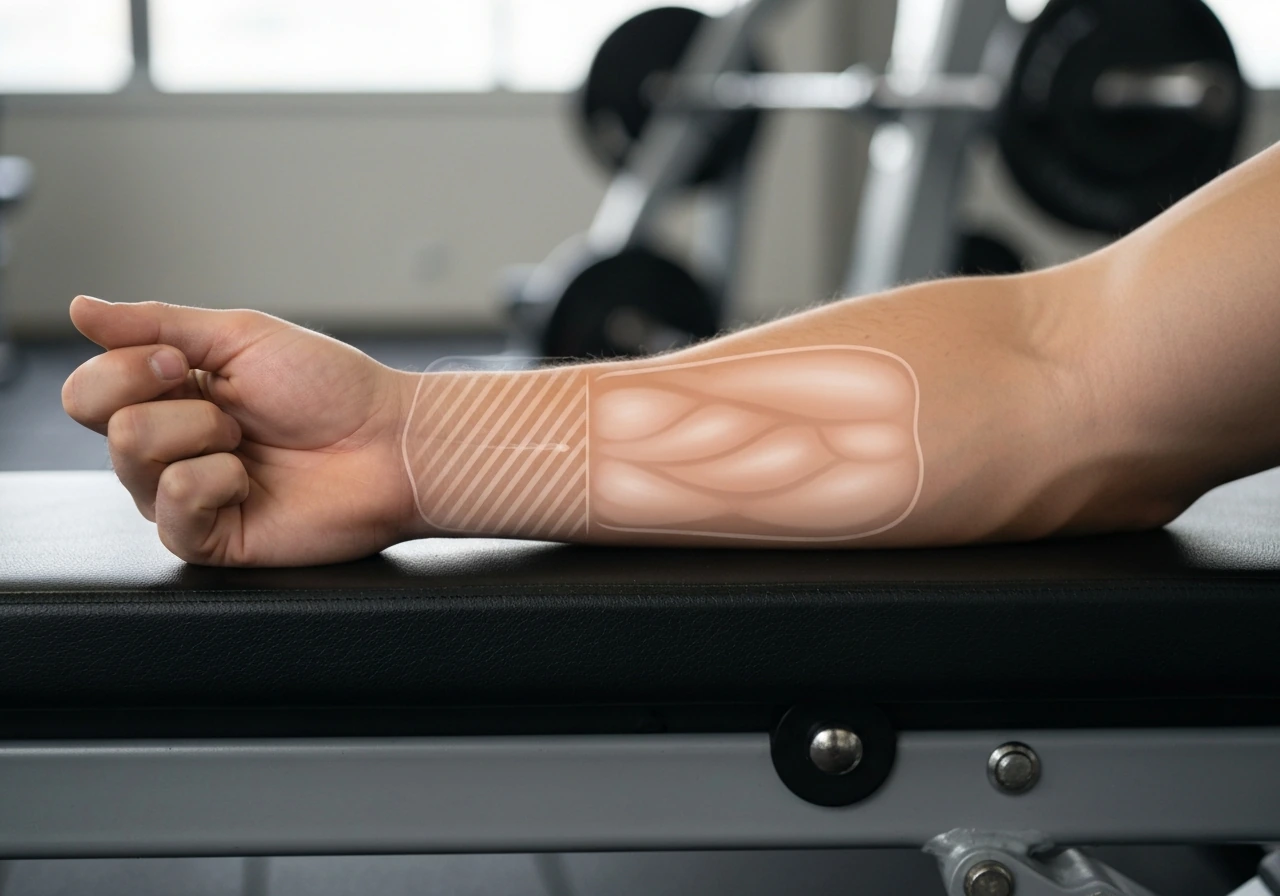
What fast-twitch vs slow-twitch actually means for muscle growth
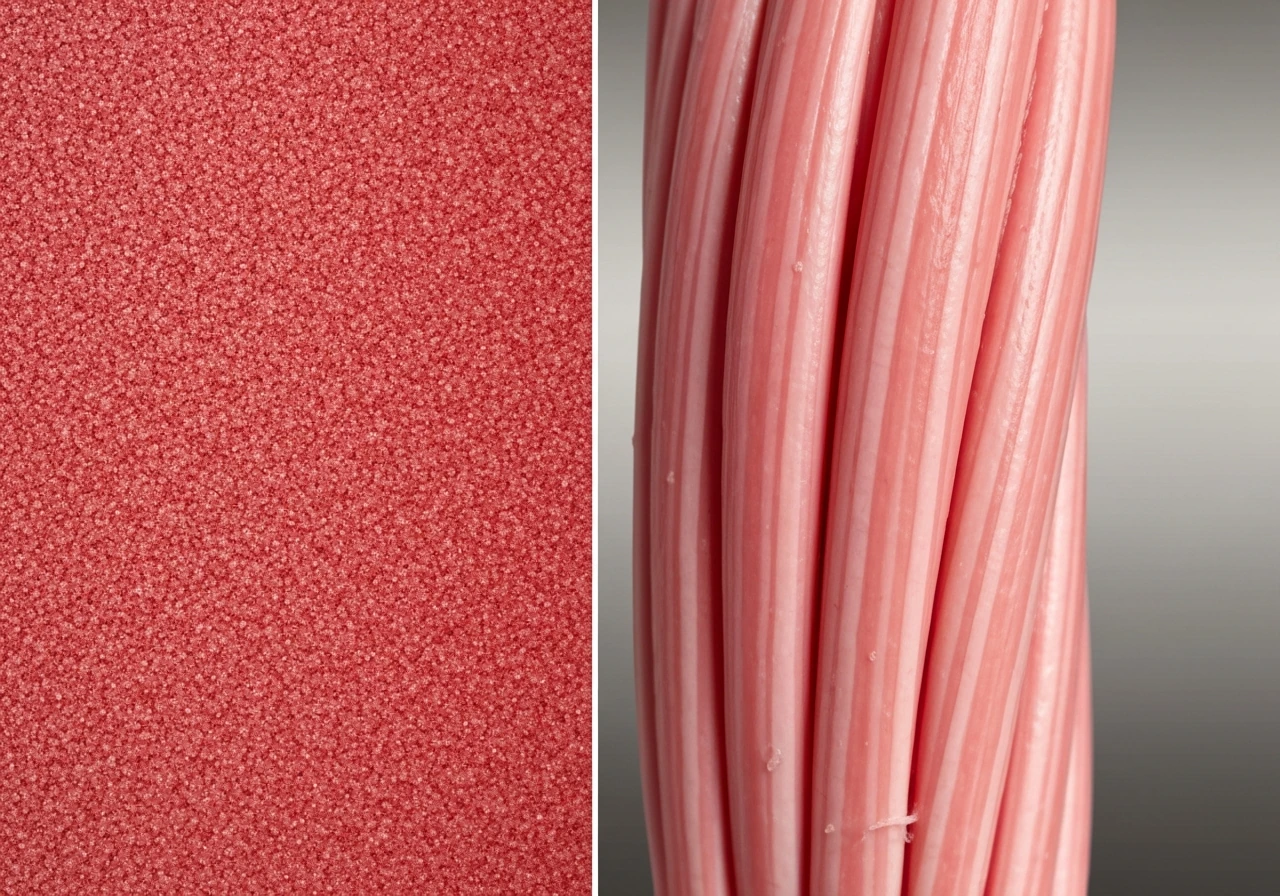
Your muscles contain a mix of fiber types, broadly split into Type I (slow-twitch, oxidative, fatigue-resistant) and Type II (fast-twitch, glycolytic, higher force output). Type II fibers are further divided into Type IIa and Type IIx, with IIx being the most powerful and least fatigue-resistant. Scientists identify these using myosin heavy chain (MyHC) isoforms, which determine how quickly a fiber contracts and how it generates energy.
For hypertrophy, here's what actually matters: Type II fibers tend to be physically larger in cross-sectional area (CSA) and have a higher ceiling for size gains. But 'higher ceiling' isn't the same as 'grows faster.' Slow-twitch Type I fibers also hypertrophy with resistance training. Multiple studies measuring fiber CSA before and after training programs confirm both types respond, and the degree of response depends heavily on how you train, not just which fiber type you happen to have more of.
One thing worth understanding: resistance training doesn't cleanly convert fiber types. What it can do is shift the profile within Type II fibers, pushing IIx fibers toward a IIa expression. That's an adaptation, but it's not the same as 'turning slow fibers into fast ones.' The proportion of fiber types you have is largely genetic, though training and aging both influence how those fibers express themselves over time.
Do fast-twitch fibers actually grow faster? What the evidence says
The short version: Type II fibers often show larger absolute increases in fiber size across many resistance training studies, but this doesn't mean they grow faster in a cause-and-effect sense. They start larger, they respond to mechanical tension well, and heavy compound training preferentially recruits them. When studies look at both fiber types under the same training conditions, both types show measurable hypertrophy. A systematic review on fiber-type-specific hypertrophy found that even low-load training taken close to failure can produce meaningful Type II recruitment and growth, which directly challenges the idea that you need heavy loads specifically to target fast-twitch fibers.
Research in elderly men doing 12 weeks of resistance training found fiber-type-specific increases in satellite cell content alongside hypertrophy, but Type I fibers still grew too. A separate analysis of older adults found that Type II fiber hypertrophy can occur even without classic myonuclear accretion, which throws cold water on the simplistic model that fast-twitch fibers have some special hypertrophy fast lane. Meanwhile, an umbrella review of resistance training variables concluded there's no decisive evidence that fast-twitch fibers inherently hypertrophy faster across typical training conditions. The fiber type you have matters less than what you do with it.
How training recruits fiber types (and why that doesn't automatically mean faster growth)

Your nervous system follows something called Henneman's size principle: it recruits smaller, low-threshold motor units (mostly slow-twitch) first, and only brings in the big high-threshold units (mostly fast-twitch) when the task demands more force. Heavy lifting, explosive movements, and sprinting get you into that high-threshold territory quickly. But here's the catch: this pattern of recruitment doesn't automatically translate to faster or greater hypertrophy. Recruiting a fiber and growing a fiber are two different events.
When you lift lighter loads to close proximity to failure, your slow-twitch fibers fatigue out and your nervous system compensates by recruiting fast-twitch fibers anyway. This is why low-load training taken to near-failure can still produce Type II fiber growth. The key variable is effort, not just load. So the idea that you need to always train heavy to grow fast-twitch muscle is an oversimplification. What you actually need is sufficient mechanical tension and metabolic stress applied to fibers that are being recruited, which you can achieve across a fairly wide range of loads.
The practical training mix that maximizes muscle growth
If both fiber types grow with resistance training and effort matters more than load alone, what should your actual training look like? The research points toward a combination approach, and the good news is you don't need to obsess over fiber type targeting to build muscle effectively.
Heavy compound work in the 3 to 6 rep range recruits high-threshold motor units early, builds strength, and creates mechanical tension across the whole muscle. Moderate loads in the 6 to 15 rep range are the hypertrophy sweet spot and work well for both fiber types. Higher rep sets (15 to 30) taken close to failure contribute real hypertrophic stimulus, particularly for Type I fibers and as a volume accumulation tool. Explosive work like jumps, medicine ball throws, or Olympic lift variations does recruit fast-twitch motor units rapidly, but the volume is usually too low to drive much hypertrophy on its own. Use it as a supplement to your main lifting, not a replacement.
| Training Style | Rep Range | Primary Fiber Recruited | Hypertrophy Contribution | Best Used For |
|---|---|---|---|---|
| Heavy strength work | 1-6 reps | Type II (IIa, IIx) | Moderate (via tension and strength gains) | Foundation, progressive overload anchor |
| Moderate hypertrophy work | 6-15 reps | Type I and II | High | Primary volume driver for size |
| High-rep work to failure | 15-30 reps | Type I primarily, Type II later | Moderate to high | Volume accumulation, metabolic stress |
| Explosive/power work | 3-6 reps (fast) | Type II (high threshold) | Low on its own | Athletic performance, not primary hypertrophy tool |
In terms of volume, a blank" rel="noopener noreferrer">meta-analysis dose-response relationship supports that more weekly hard sets generally increases muscle mass up to a threshold. For most people, 10 to 20 working sets per muscle group per week is a productive range. Reddit users discuss minimum effective weekly set volume for hypertrophy, linking it to gains but noting practical caveats like fatigue and junk volume blank" rel="noopener noreferrer">10 to 20 working sets per muscle group per week. Frequency matters too: training each muscle twice per week produces better hypertrophy than once per week when weekly volume is equated. That's not a huge logistical ask, and it's one of the most consistently supported recommendations in the literature.
Proximity to failure matters, but you don't have to train to all-out failure every set. A meta-analysis comparing failure vs non-failure training found a real but small hypertrophy advantage for training to failure (effect size of 0.19). That means stopping 1 to 3 reps short of failure on most sets still gets you most of the benefit with less accumulated fatigue. Save true failure sets for isolation work at the end of a session, not your heavy compound sets.
How to build a simple program and progress it week to week

You don't need a complicated split to apply all of this. A 3 or 4 day per week full-body or upper/lower program hits each muscle group twice weekly, allows adequate recovery, and gives you room to include both heavy strength work and higher-rep hypertrophy volume. Here's a simple structure that works:
- Pick 3 to 5 compound movements per session (squat, hinge, press, row, pull) and 1 to 2 isolation exercises.
- Do 2 to 4 sets per exercise, aiming for 10 to 20 hard sets per muscle group per week total.
- Use a heavy compound set first (5 to 8 reps), then move into moderate rep ranges (8 to 15) for your remaining sets.
- Track your weights and reps every session. Progressive overload means adding reps or load over time, even in small increments.
- When you can hit the top of your rep range on all sets with good form, add 2.5 to 5 lbs (or 1 to 2 kg) next session.
- Every 4 to 6 weeks, take a deload week (reduce volume by about 40 to 50%) to let cumulative fatigue clear before pushing hard again.
Progress week to week is simple in principle: more weight or more reps on the same movements over time. This is what actually drives muscle growth, regardless of fiber type. If you've been stuck at the same weights for 4 or more weeks, something needs to change, whether that's sleep, calories, training volume, or exercise selection. The program itself rarely needs to be overhauled. Usually the basics just need to be applied more consistently.
Nutrition, recovery, and realistic timelines
Fiber type has essentially zero influence on your nutrition needs. What drives muscle growth at the nutrition level is total protein intake, caloric sufficiency, and training performance. Aim for 1.6 grams of protein per kilogram of bodyweight per day as your baseline target. A large meta-analysis found that protein supplementation enhances resistance training-induced gains in muscle mass and strength, with diminishing returns above 1.6 g/kg/day. Getting more than that doesn't hurt, but it won't dramatically speed things up either.
Carbohydrates matter more than many people realize. Glycogen availability influences training performance, and if your performance drops because you're chronically under-fueled, your total training stimulus suffers. This slows everything down, regardless of what fiber type you're trying to grow. Eat enough carbohydrates to support your training sessions, and don't fall into the trap of cutting calories so aggressively that your strength stalls.
On supplementation: creatine monohydrate is worth including. Trials show strength improvements can appear in as little as 2 weeks with creatine plus resistance training. It works by increasing phosphocreatine availability, which supports high-intensity effort and total training volume, both of which matter for hypertrophy. The dose is simple: 3 to 5 grams per day consistently.
For recovery, sleep is underrated and non-negotiable. Research links shorter sleep duration to increased sarcopenia risk, meaning inadequate sleep actively undermines your muscle-building effort. Aim for 7 to 9 hours. If you're training hard, sleeping 5 hours a night, and wondering why you're not growing, the answer isn't your fiber type. If you’re still asking why my muscle won’t grow, review your training effort, weekly hard sets, and whether you’re giving your body enough calories and sleep to recover.
On timelines: strength improvements often begin within 2 to 4 weeks, largely from neural adaptations rather than actual fiber growth. Visible muscle size changes typically take 6 to 12 weeks of consistent training with adequate nutrition to become noticeable. Measurable fiber cross-sectional area changes have been documented in 12-week resistance training studies. Don't use the scale or the mirror as your only progress metric in the first month. Track your training numbers instead.
Common myths, and how older adults should apply these principles safely
Myths worth dropping now
- "Fast-twitch fibers always grow faster." They often show larger absolute gains, but both fiber types grow, and effort and volume matter far more than fiber type targeting.
- "Just do sprints to build muscle." Explosive work recruits fast-twitch fibers but rarely generates enough volume or mechanical tension to drive meaningful hypertrophy on its own.
- "You can convert your fiber types." Training shifts the expression of Type II subtypes (IIx toward IIa) but doesn't meaningfully convert slow fibers to fast ones or vice versa.
- "High reps don't grow fast-twitch muscle." High-rep sets taken close to failure recruit fast-twitch fibers as slow-twitch ones fatigue. Load alone doesn't determine fiber recruitment.
- "Older adults can't grow muscle." They can, though the biology is different. Research confirms resistance training drives fiber hypertrophy in elderly men and women, including those in their 70s.
What older adults need to know specifically
Age does change the picture somewhat. Anabolic resistance is real: older adults show a blunted muscle protein synthesis response to both protein intake and exercise compared to younger people. This doesn't mean growth stops, but it means the stimulus needs to be sufficient. A moderate training session that barely challenges a 25-year-old may not be enough for a 65-year-old to drive adaptation. Higher protein intake (closer to 1.8 to 2.2 g/kg/day is often recommended for older adults) and consistent progressive overload become even more important.
A meta-analysis found that age is negatively associated with resistance training-induced hypertrophy in both Type I and Type II fibers, meaning the rate of growth tends to be slower with age. But slower isn't zero. Fiber-type-specific satellite cell responses have been documented in studies of men in their early 70s doing 12 weeks of resistance training, confirming the biology of adaptation is still active. Creatine supplementation has also shown muscle-relevant benefits in older adults in meta-analytic evidence, making it a reasonable addition to their protocol.
For safety and sustainability in older adults: prioritize compound movements with controlled tempo, allow slightly longer rest periods (2 to 3 minutes between heavy sets), and lean toward the twice-weekly frequency model rather than higher frequency if recovery is an issue. Joint health and connective tissue adaptation matter more as a limiting factor at older ages, so progress load more gradually and don't rush the early months. The principles are the same as for anyone else. The application just requires more patience and attention to recovery signals.
If you're also curious about which specific muscles respond fastest to training, or how to build a program specifically targeting fast-twitch fiber development, those are related questions worth digging into. The core answer, though, remains consistent: consistent progressive overload, adequate protein, enough sleep, and training with real effort close to failure will grow your muscles, regardless of the fiber type breakdown you started with.
FAQ
If Type II fibers hypertrophy more in studies, does that mean they always grow faster than Type I?
Not necessarily. If you compare two people doing the same program with equal weekly hard sets and similar effort, Type I fibers can hypertrophy just as much as Type II over 6 to 12 weeks. The practical difference is that Type II fibers often start larger and are recruited heavily during hard, forceful work, so they may show bigger absolute size changes, but that does not mean they are growing at a faster rate by default.
Do I need heavy weights to grow fast-twitch (Type II) fibers?
You can grow fast-twitch fibers with lighter loads as long as you take sets close enough to failure and create enough total stimulus. A useful decision rule is to aim for a consistent effort level (for example, stopping 0 to 3 reps short of failure on most working sets), then progress volume or load week to week. If your effort stays low, lower loads will not reliably “reach” Type II recruitment.
Should I take every set to failure to grow fast-twitch fibers faster?
Train-to-failure is not required for growth and it is often counterproductive on heavy compound lifts. A better approach is most sets at moderate-high intensity with effort close to failure, and you reserve true failure for low-risk isolation work at the end of a session. This reduces the chances that fatigue forces you to miss reps, reduce range of motion, or stop progressing.
Will sprinting or jump training make my fast-twitch muscles grow faster?
“Explosive” work recruits high-threshold motor units quickly, but it usually provides too little total volume to drive much hypertrophy on its own. Use explosive movements as a supplement (for power and coordination) while still doing sufficient strength and hypertrophy volume in your main lifts (for example, 10 to 20 working sets per muscle per week).
Can I change my muscle fiber types so fast-twitch grows faster over time?
No. Resistance training does not simply convert slow fibers into fast fibers. What can change is the expression profile within Type II fibers (for example, shifting toward more IIa characteristics), and fiber behavior can change with training and aging. Even if your “fast-twitch percentage” shifts a bit, the dominant driver of size gain remains mechanical tension and metabolic stress plus nutrition and recovery.
Why am I not growing if I mostly do heavy, compound lifts?
If your weekly hard sets are low, or your effort is inconsistent (for example, many sets far from failure), you can easily stall even if you do exercises that tend to recruit Type II. A common mistake is doing mostly low-intensity, easy-rep work and assuming the movement type will “target fast twitch.” Fix the stimulus first, by increasing working sets, improving proximity to failure, and adding progressive overload.
How long does it take for fast-twitch growth to show up, and how should I track progress?
A practical way to “see it” is to track strength and training quality, not just appearance. Strength gains often show up within 2 to 4 weeks, while visible size changes usually take 6 to 12 weeks. For fiber-type discussion, the key is consistency over time, because fiber CSA changes are measured in study designs that run about 12 weeks.
Does age affect whether fast-twitch muscles grow faster than slow-twitch? What should I change?
Age can slow the rate of hypertrophy for both fiber types, but it does not eliminate the ability to gain muscle. For older adults, the common adjustment is ensuring the training is hard enough to stimulate growth, often by using a little more protein and maintaining progressive overload carefully. If the stimulus is too light, Type I and Type II growth can both be blunted.
How much rest should I take between sets if my goal is hypertrophy and recruiting fast-twitch?
Rest periods can affect effort quality, which indirectly affects Type II recruitment and hypertrophy. For heavy sets, longer rest (often 2 to 3 minutes) helps you maintain performance, reps, and proximity to failure. If you cut rest too much, you might end up with lots of fatigue but less effective tension on the muscle, slowing growth.
Do I need different nutrition to grow fast-twitch compared to slow-twitch muscles?
Protein targets do not need to be different based on fiber type. A solid baseline is about 1.6 g/kg/day total protein, with higher intake often recommended for older adults (for example, around 1.8 to 2.2 g/kg/day). What matters most is reaching protein consistently and having enough calories so your training performance does not decline.