The fastest muscle to grow is not a single universal answer. In general, large muscles with high proportions of fast-twitch fibers and easy-to-overload movement patterns tend to show the quickest measurable growth. That puts the quadriceps, glutes, hamstrings, and lats near the top of most people's lists. But here's what matters more: the fastest muscle to grow for you is whichever one you're training with the right volume, enough effort, and consistent progressive overload while eating enough protein. That's not a dodge. It's the actual answer. Let's break down why, and what to do about it.
What Is the Fastest Muscle to Grow and How to Train It

Marcus Kellerman
21 Apr 2026

What 'fastest muscle to grow' really means (and why it varies by person)
When people ask this question, they usually want to know: where will I see results first? That's a fair thing to want to know, but 'fastest to grow' has a few different meanings depending on what you're measuring. Absolute size gains are different from percentage increases. A beginner adding 2 cm of quad thickness looks different from an advanced lifter adding the same. Visible change depends on body composition, limb length, and where you carry fat. And your personal training history shapes what's already developed versus what's undertrained and primed to respond.
Individual variability here is genuinely large. Research using MRI and ultrasound to measure hypertrophy after standardized training programs consistently shows that some people gain three to four times as much muscle as others doing identical programs. That's not an outlier. A 2005 unilateral training study confirmed that even in controlled conditions, muscle size and strength gains vary substantially between individuals. So while we can talk about which muscles tend to respond quickly on average, your own response is something you can only discover by training and tracking.
Muscle fiber composition also plays a role. Muscles with a higher proportion of fast-twitch (Type II) fibers tend to have greater hypertrophic potential because fast-twitch fibers are larger and grow more in response to mechanical loading. If you're trying to prioritize performance gains from fast-twitch recruitment specifically, this guide on how to grow fast twitch muscles is a useful next step fast-twitch (Type II) fibers. The quads, glutes, and hamstrings all lean fast-twitch compared to something like the soleus, which is more slow-twitch and notoriously stubborn. That said, fiber type is not destiny. All fiber types respond to resistance training, and the differences between muscles matter less than whether you're training them effectively in the first place.
Muscle groups that tend to grow fastest: what to choose and why

Based on the combination of fiber composition, ease of overloading, muscle cross-sectional area, and general training research, a few muscle groups consistently come up as fast responders for most people.
- Quadriceps: Large, multi-joint muscle group easily overloaded through squats, leg presses, and hack squats. High fast-twitch fiber content and a long length-tension curve make these very responsive to volume.
- Glutes: One of the body's largest muscles. Responds well to both heavy compound loading (squats, deadlifts) and isolation work (hip thrusts, glute bridges). Often undertrained by beginners, which means there's lots of 'room' for early growth.
- Lats (latissimus dorsi): A wide, thick muscle that responds well to rows and pull-down variations. Because most people underutilize their back, the lats often respond quickly once you learn to actually feel them working.
- Triceps: Makes up about two-thirds of upper arm mass. Because it's larger than the bicep, it has more absolute growth potential and responds well to both compound pressing and isolation exercises.
- Hamstrings: Often undertrained relative to quads, which means they're frequently in a 'ready to grow' state for beginners and intermediate lifters. Romanian deadlifts and leg curls hit them well.
- Calves: Highly variable. Sprinters and people with a history of explosive activity tend to have more developed calves with greater muscle volume. For others, calves can be slow to respond, especially the slow-twitch soleus. The gastrocnemius, being more fast-twitch, responds a bit better to heavier loading.
A word on small muscles like biceps, rear delts, and forearms: they can absolutely grow, but they're limited by their small absolute size. You can maximize their development and still see less total mass added than from training your legs. If your goal is to look more muscular overall, the fastest path runs through the large lower-body muscles and the back, not just the muscles that are easiest to see in the mirror.
It's also worth noting that 'fast-twitch muscles' and 'fast-growing muscles' are related but separate concepts. Whether fast-twitch fibers inherently grow faster than slow-twitch is a nuanced question, and training both fiber types effectively matters across the board. Fast-twitch fibers can hypertrophy well, and the key is training the muscles that contain more of them with enough volume and progressive overload. The muscles that tend to grow fastest in practice are simply the ones that combine favorable fiber composition with exercises that allow you to progressively overload them the most.
The training recipe for fast growth
There's no mysterious protocol here. The research is pretty clear on what the training side of hypertrophy requires. The ACSM's 2026 resistance training position stand boils it down to: target all major muscle groups with sufficient weekly practice, use a broad load range (moderate to heavy), and progressively challenge yourself over time. Here's what that looks like in practical terms.
Volume: how many sets per week

Volume is one of the most important variables for hypertrophy. The evidence shows a dose-response relationship: more weekly sets tend to produce more muscle growth, at least up to a recoverable ceiling. Research comparing less than 5, 5 to 9, and 10 or more weekly sets per muscle group suggests that higher set totals generally produce larger hypertrophy effects. Studies comparing roughly 9 versus 14 sets per muscle group per week have found advantages for the higher-volume group. A practical starting target for most people is 10 to 20 sets per muscle group per week, with beginners starting at the lower end and adding sets gradually.
Intensity and rep ranges
The ACSM recommends 8 to 20 reps at 40 to 70% of your 1-rep max for hypertrophy. That's a wide range on purpose. What matters more than a specific rep count is getting close enough to failure that the set is genuinely challenging. A 2022 meta-analysis on proximity to failure found that hypertrophy is achievable across a range of effort levels, but sets need to be taken sufficiently close to failure to count as effective.
A 2024 study found similar quad thickness increases whether sets went to full failure or stopped with a few reps in reserve, as long as total effective volume was matched. The takeaway: train hard, get within 1 to 3 reps of failure on most working sets, and don't obsess over always going to absolute failure.
Progressive overload: the non-negotiable
If you do the same weight for the same reps every week, you will stop growing. Progressive overload means consistently giving your muscles a reason to adapt. This can mean adding weight, adding reps, adding sets, reducing rest periods, or improving technique that lets you apply more effective tension. Log your training. Even a simple note on your phone works. If you're not beating your numbers from three weeks ago in at least one way, adjust something.
Best exercises for the fastest-growing muscles
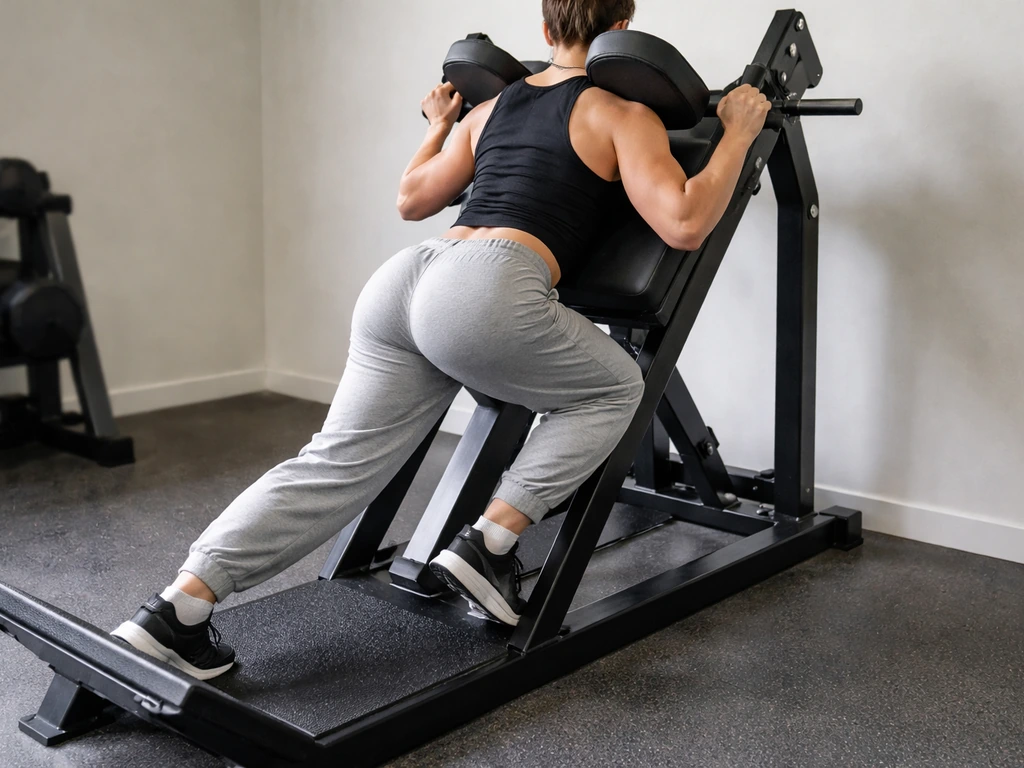
Exercise selection matters because you need movements that let you load the target muscle effectively through a full range of motion and that you can safely progress over time. Here are the top picks for each of the fast-responding muscle groups.
| Muscle Group | Primary Exercises | Key Setup Tips |
|---|---|---|
| Quadriceps | Squat, hack squat, leg press, leg extension | Full depth where possible; control the eccentric; leg press foot placement affects quad emphasis |
| Glutes | Hip thrust, Romanian deadlift, Bulgarian split squat, sumo squat | Posterior pelvic tilt at top of hip thrust; full hip extension is key |
| Lats | Pull-up/chin-up, cable pulldown, chest-supported row, single-arm dumbbell row | Focus on shoulder blade retraction and depression; avoid using momentum |
| Triceps | Close-grip bench press, overhead tricep extension, cable pushdown | Overhead extension places the long head in a stretched position, adding growth stimulus |
| Hamstrings | Romanian deadlift, lying/seated leg curl, Nordic hamstring curl | RDL should feel a stretch in the hamstrings at the bottom; control the eccentric on curls |
| Calves (gastrocnemius) | Standing calf raise, donkey calf raise | Full range of motion with a pause at the stretch; gastrocnemius responds best to heavier loads with a straighter knee |
For beginners, two to three sessions per week hitting each of these groups is plenty to see rapid progress. You don't need to train every muscle every day. In fact, the ACSM standard guidance of 2 to 3 sessions per week with one to four sets per exercise is an entirely solid foundation for early hypertrophy. As you progress, you can add frequency and volume incrementally.
Nutrition and supplementation: the basics that actually move the needle
You can train perfectly and still leave gains on the table if your nutrition isn't supporting growth. Two things matter most: total protein intake and total calorie intake.
Protein: the non-negotiable nutrient
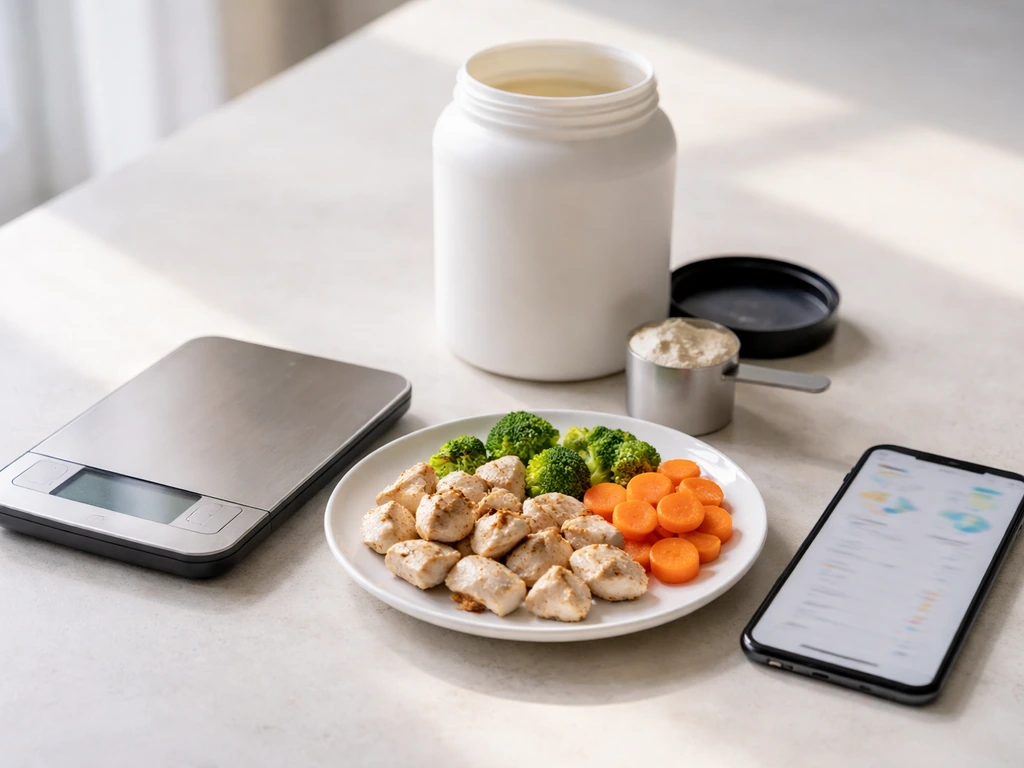
The ISSN recommends 1.4 to 2.0 grams of protein per kilogram of body weight per day for exercising individuals looking to build or maintain muscle. A separate meta-analysis found that protein supplementation beyond roughly 1.62 g/kg/day didn't produce additional fat-free mass gains from resistance training. So the target range is clear: aim for about 1.6 to 2.0 g/kg/day, which for a 75 kg (165 lb) person works out to roughly 120 to 150 grams of protein daily. Spread that across 3 to 5 meals or feeding windows for practical purposes. Getting enough protein from whole foods is completely achievable, and protein shakes are just a convenient way to close the gap when you're short.
Calories: you need a surplus to grow
Muscle growth requires energy. You don't need a massive surplus, but consistently eating at or slightly above your maintenance calories (roughly 200 to 300 calories above maintenance) gives your body the resources it needs. Beginners can sometimes gain muscle even in a slight deficit, but that window closes quickly. If you're not gaining any weight or muscle over several months, eating more is usually the lever to pull.
Creatine: the one supplement with real evidence
If you're going to use any supplement for hypertrophy, make it creatine monohydrate. A 2024 meta-analysis found that creatine supplementation, when combined with resistance training, increases lean body mass by about 1 kg more than training alone and reduces fat mass by roughly 0. 7 kg. The ISSN creatine position stand recommends a [loading approach of approximately 20 grams per day (split into four 5 g doses) for 5 to 7 days](https://jissn.
biomedcentral. com/articles/10. 1186/1550-2783-4-6) to saturate muscle creatine stores, followed by a maintenance dose of 3 to 5 grams per day. If loading sounds like too much, you can skip it and just take 3 to 5 g daily and reach saturation in 3 to 4 weeks instead.
It's safe, well-researched, and works for most people.
Recovery, soreness, and sleep: turning training into actual muscle
Training is the stimulus. Growth happens between sessions. That means recovery is not optional. Three things dominate here: sleep, managing fatigue, and not confusing soreness with progress.
Sleep is where growth actually happens
Most hormonal processes that drive muscle protein synthesis are tied to sleep, including growth hormone release. A randomized controlled trial found that resistance training improved sleep quality and anti-inflammatory markers in older adults, suggesting the relationship runs both ways: good training supports better sleep, and better sleep supports better training adaptations. Aim for 7 to 9 hours per night. If you're consistently under 6 hours, you're leaving meaningful gains on the table regardless of how perfect your training and nutrition are. Research also suggests that exercise timing relative to sleep matters: evening resistance training can affect sleep onset latency, so if you train late and notice poor sleep, shifting workouts to morning or afternoon is worth trying.
Soreness is not the goal
Delayed onset muscle soreness (DOMS) is a sign of muscle damage, not muscle growth. You can have productive, growth-stimulating sessions with little to no soreness, especially once you've been training for a few months. Chasing soreness by constantly switching exercises or overloading volume is a common mistake that actually impairs recovery without adding any hypertrophy benefit. Focus on progressive overload, not on how wrecked you feel the next day.
Deloads: a practical fatigue management tool

After 6 to 12 weeks of hard training, a planned deload (reducing volume or intensity for 1 to 2 weeks) can help clear accumulated fatigue and let growth that's been building express itself. A 2026 study on deloading in untrained young men examined 3-week deload protocols and their effects on muscle size and strength endurance, reinforcing that strategic rest periods are a legitimate training tool, not a sign of weakness. You don't need to stop training entirely. Cutting your sets roughly in half for a week while maintaining intensity is usually enough.
Realistic timelines and how to track your progress
Here's what to actually expect. In the first 4 to 8 weeks, most of the strength gains you see come from neuromuscular adaptation, not new muscle tissue. Your muscles are learning to fire more efficiently. Visible hypertrophy typically starts becoming noticeable around 8 to 12 weeks of consistent training, though this varies by muscle group, body fat level, and training quality. The muscles that tend to show first are often the ones with less fat covering them and the ones you're training most frequently and progressively.
After 3 to 6 months of consistent, well-structured training with adequate protein and sleep, you should have a clearer picture of which muscles are responding fastest for your body. If you are also wondering whether do neck muscles grow fast, the same rules apply: provide enough weekly training volume and progressive overload while you recover well. Some people find their legs blow up easily but their upper body lags. Others are the opposite. That individual variation is real and it's why tracking matters so much.
How to track and adjust
- Take circumference measurements of your target muscles (quads, arms, chest, waist) every 4 weeks with a flexible tape measure. Do it first thing in the morning, unflexed, at the same landmark each time.
- Photograph yourself in the same lighting, same pose, every 4 weeks. Progress photos catch changes that the mirror misses because you see yourself daily.
- Log every workout: exercise, weight, sets, reps. If a muscle isn't growing, look at whether you're actually progressing the load or volume on the exercises that target it.
- Track body weight weekly (average over 7 days) to monitor whether you're in a slight surplus. If weight hasn't moved in 3 to 4 weeks and muscle measurements are flat, eat slightly more.
- After 8 to 12 weeks, review which muscles have responded and which haven't. For lagging muscles, consider adding one to two sets per session, improving exercise technique, or switching to a variation that creates more stretch under load.
If you're consistently training, eating enough protein, sleeping well, and still not seeing growth in a specific muscle after 12 weeks, there's almost always a fixable reason: insufficient volume, not getting close enough to failure, poor mind-muscle connection on that exercise, or not being in enough of a calorie surplus. Regional hypertrophy is genuinely hard to predict from things like EMG readings or swelling patterns, so the only reliable way to know what's working for you is to measure and adjust.
The bottom line is this: the fastest muscle to grow is the one you're training intelligently, eating to support, and recovering from properly. For most people starting out, that tends to be the quads, glutes, or lats simply because they're large, easy to overload, and often undertrained. Start there, track your results, and let your own data tell you where you grow fastest. That's more useful than any generalization. If you feel like nothing is working, this troubleshooting guide on why my muscle won't grow can help you pinpoint the bottleneck.
FAQ
How can I tell whether I’m choosing the fastest muscle for visible results, not just the easiest to train?
If your goal is “fastest visible growth,” the limiting factor is usually not fiber type, it is how much effective volume you can recover from in the muscles you train. Prioritize 10 to 20 hard sets per week for the candidate muscle, keep rest 2 to 3 minutes on heavier compounds, and watch for strength or rep progress on the same movements. If strength stalls and soreness never improves, you are probably not recovering enough, not “undertraining that muscle.”
Should I train the muscle I want to grow fastest more often than everything else?
For most people, there is no need to train a “fastest muscle” more than 2 to 3 times per week at first. If you want to speed up growth, the cleaner lever is adding weekly sets while keeping each session high quality, for example go from 2 sessions at 5 sets each (10 total) to 3 sessions with the same total (still 10) before increasing to 12 to 16 total. Too much frequency too soon often just increases fatigue and reduces how close you get to failure.
What’s the best way to know I’m training close enough to failure to grow faster?
Use proximity to failure, not to failure on every warm-up set. A good rule is, on your working sets you should typically stop with 1 to 3 reps in reserve, and if the last set is far from failure for 2 sessions in a row, add load or an extra set. If you regularly reach absolute failure with heavy fatigue, you may lose technique and progressive overload, which can slow hypertrophy even though it feels hard.
What should I do if I’m logging my workouts but nothing is progressing for the “fastest” muscle?
Progressive overload should be measurable within a reasonable time window. If you are stuck for 3 to 4 weeks, try one change at a time: increase reps within the same load, then add weight; or keep reps the same and increase weight slightly; or reduce the hardest variation and rebuild with a slightly easier version (for example, machine press before dumbbells). The goal is to raise effective tension while preserving recovery.
Why do I seem to have the right program, but the muscle still isn’t growing fast enough?
A faster-growing muscle for you can still look slow if your body fat hides the changes. If your scale weight is stable or decreasing while training hard, you may be under-fueling, which reduces hypertrophy even at correct training effort. For a simple check, aim for 200 to 300 calories above maintenance and confirm you are gaining about 0.25 to 0.5% of body weight per week.
What are the most common reasons a specific muscle stops responding after 12 weeks?
If a muscle does not grow after about 12 weeks, the usual causes are insufficient hard sets, not getting close enough to failure, and exercise technique that shifts stress away from the target. Mind-muscle cues help, but the bigger fix is exercise selection that lets you load through a full usable range, like leg press or hack squat for quads if squats are not transferring. Also check your weekly balance of agonists and antagonists, because undertraining the opposing muscle can limit safe progression.
How should I measure whether my chosen muscle is truly growing faster?
You can overestimate “muscle growth” from swelling or from soreness. Swelling can be temporary, and DOMS often reflects damage more than hypertrophy. The better indicators are increasing working-set reps or load over weeks, and a gradual rise in measurements under consistent conditions. If you are not seeing strength progression, you are unlikely to be accumulating enough effective hypertrophy.
Do supplements change which muscle grows fastest, and how should I use creatine properly?
Creatine is generally the only supplement that reliably helps many lifters, but it does not replace sleep and calories. If you already take creatine, avoid switching supplements frequently. For timing, take it any time of day, but consistency matters more than timing. If you experience stomach upset from loading, reduce the dose or skip loading and use 3 to 5 g daily.
When should I deload to keep the fastest-growing muscle progressing instead of stalling?
A deload is most useful when performance indicators drop, for example your last few sets are noticeably farther from failure at the same load, or your weekly volume target is becoming unachievable. Many people deload after 6 to 12 weeks, but you can earlier if fatigue is clearly compounding. Cutting volume roughly in half for 1 to 2 weeks while keeping intensity similar is usually enough to reset recovery.