Slow muscle growth almost always comes down to one of three things: you're not training hard enough (or smartly enough), you're not eating enough to actually build tissue, or you're not recovering well enough for the adaptations to stick. Most people have at least two of these working against them at once. The good news is that all three are fixable, and you can usually diagnose which one is the main culprit within a week or two of honest tracking.
Why My Muscle Grow Slow: Fix Your Training, Diet, Recovery

Marcus Kellerman
5 Jun 2026

The most common reasons muscle growth feels slow
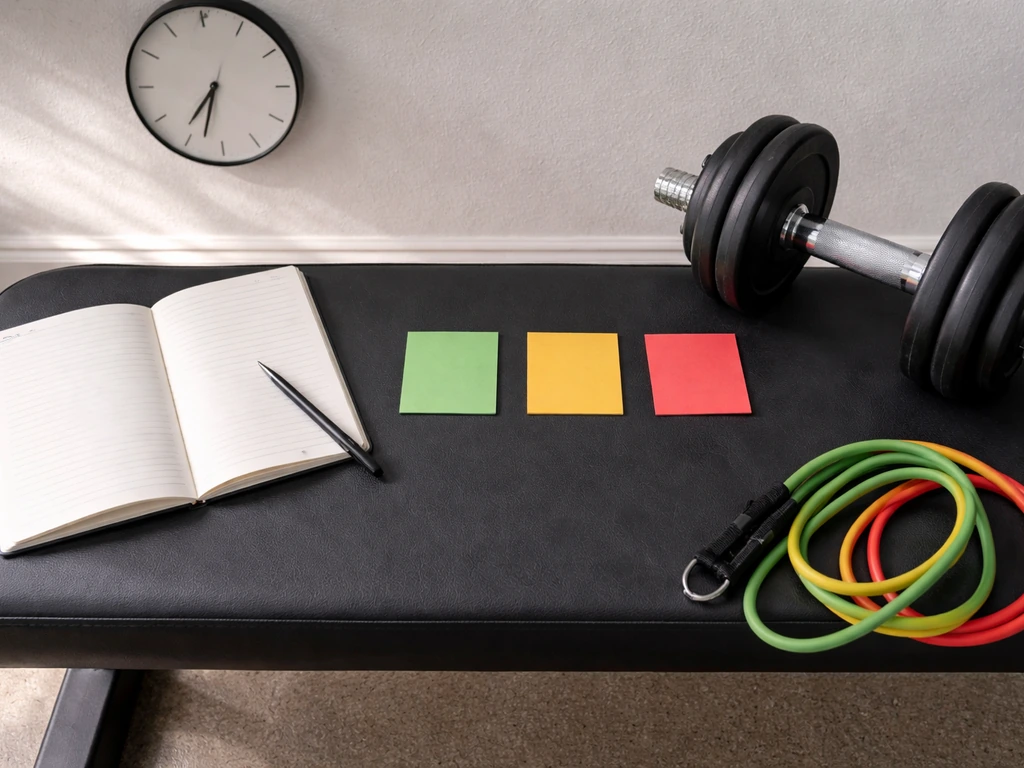
Before getting into the mechanics, it's worth naming the most frequent offenders so you can see whether any immediately sound familiar. In my experience working through these questions with people, the answer is almost never a mystery once you actually look at the numbers.
- Not training close enough to failure (too many reps left in the tank on most sets)
- Not accumulating enough quality hard sets per week per muscle group
- No consistent progressive overload (same weights, same reps, week after week)
- Eating at or near maintenance calories when you need a slight surplus to grow
- Protein intake too low or too unevenly spread across the day
- Sleeping less than 7 hours consistently, which tanks recovery and hormones
- High chronic stress that elevates cortisol and blunts muscle protein synthesis
- Being in a cutting phase and expecting maximal hypertrophy at the same time
- Expecting beginner-level gains after the first year of training
If two or more of those landed, you've got your answer. The sections below break each one down with specific numbers and fixes you can start today.
Training stimulus problems: volume, intensity, and progression
The two training variables with the most consistent evidence behind muscle growth are volume (how many hard sets you do per muscle per week) and proximity to failure (how close your sets come to the point where you physically can't do another rep).
A systematic review and meta-analysis also reported a favorable trend for higher weekly resistance-training volume for muscle hypertrophy, although moderate versus high volumes may not always differ across specific muscles in limited datasets [volume (how many hard sets you do per muscle per week)](https://pmc. ncbi. nlm. nih.
gov/articles/8884877/). Research, including a 2024 umbrella review across multiple meta-analyses, consistently points to these as the levers that matter most. Frequency, load range, and exercise selection matter too, but if your volume is low and your sets are comfortable, those finer details won't save you.
ACSM’s 2026 position-stand overview also emphasizes that variables like frequency and load are not consistently decisive in meta-analytic comparisons, and that total effective training stimulus such as volume near failure is often what matters most [Frequency, load range, and exercise selection matter too](https://pmc. ncbi. nlm. nih.
gov/articles/PMC12965823/).
Are you actually training hard enough?
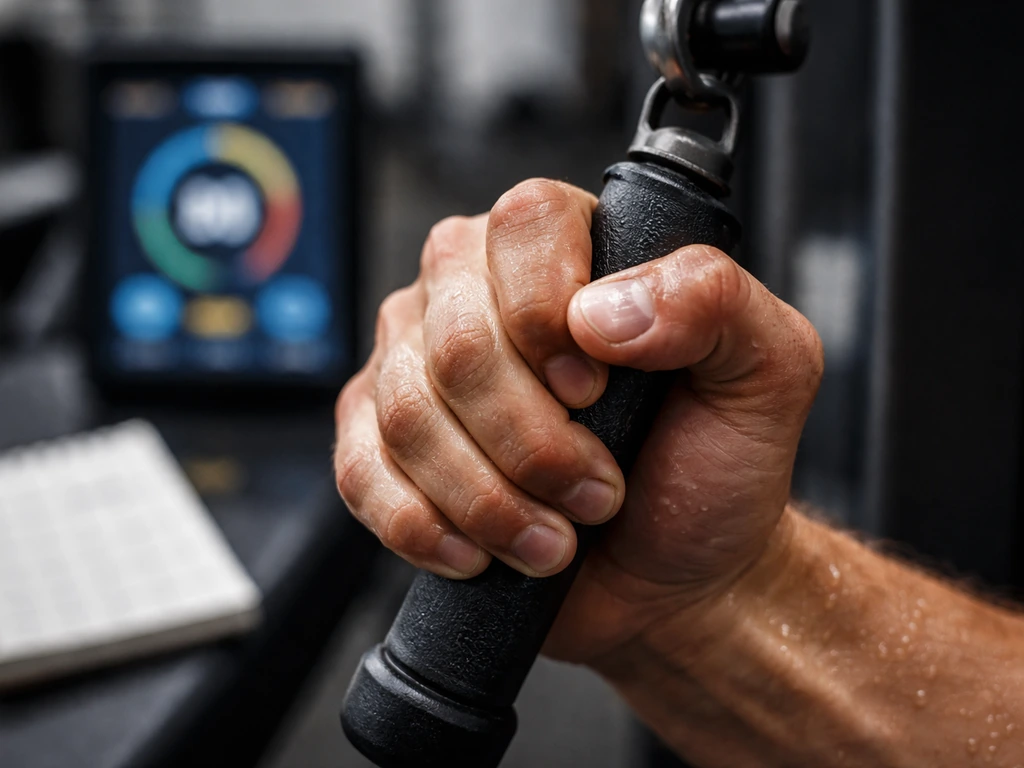
Most people end their sets with 4 to 6 reps still in the tank without realizing it. Research comparing sets taken close to failure versus those stopped well short consistently finds better hypertrophy when you're working near your limit. 'Close to failure' means finishing a set with roughly 0 to 3 reps in reserve (RIR), not 6. You don't need to go to absolute failure on every set, but if you're always stopping when the weight still feels easy, you're leaving growth on the table. A simple self-check: could you have done 5 more reps on your last set? If yes, you went too light or stopped too early.
Volume: how many hard sets are you actually doing?
A 'hard set' means a set performed close to failure, not just any set you do at the gym. Ten sets of 12 reps at a weight you could do for 20 is not 10 hard sets. Once you're counting real hard sets, most people find they're doing 4 to 6 per muscle group per week when they need closer to 10 to 20 for consistent growth, depending on training age and recovery capacity. Start by identifying whether you're even reaching minimum effective volume before worrying about advanced programming.
Progressive overload: the non-negotiable
Your muscles only grow because they have to adapt to a demand that exceeds what they're used to. If you're lifting the same weights for the same reps as you were three months ago, there is no new stimulus, and there will be no new growth. Progressive overload doesn't mean adding weight every single session, but you should be able to point to consistent improvement over any 4 to 6 week stretch: more reps at the same weight, more weight at the same reps, or an additional working set. If you can't, that's the problem.
Exercise selection and training frequency
Compound movements (squats, deadlifts, rows, presses, chin-ups) give you the most mechanical tension across the most muscle tissue. They should anchor your training. Isolation work has a place, especially for lagging muscles, but if your program is mostly machines and cables doing sets of 20 at light weight, you're not getting enough mechanical tension to drive hypertrophy efficiently. Training each muscle group at least twice per week tends to produce better results than once-weekly splits, mostly because it lets you accumulate more quality volume without frying one session.
Nutrition gaps that quietly kill your progress
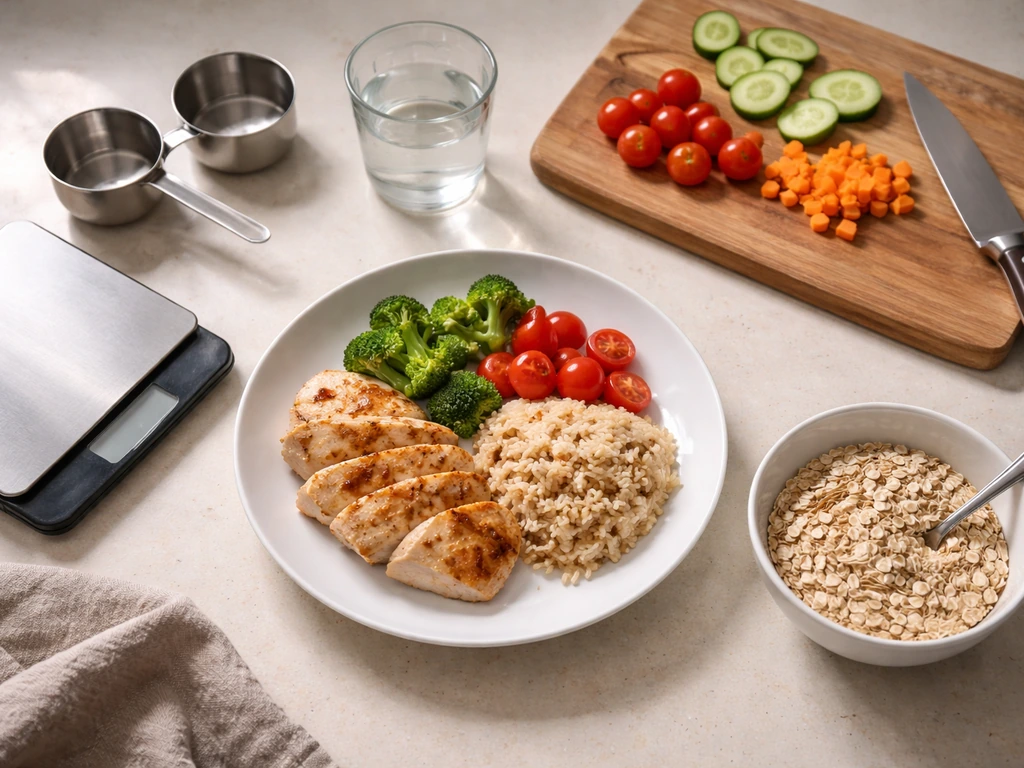
You cannot build muscle tissue out of nothing. Muscle is metabolically expensive to build and maintain, and your body will only invest in it if there are enough calories and raw materials available. This is one of the most underappreciated reasons for slow growth, especially among people who eat 'pretty healthy' but are unknowingly at maintenance or in a slight deficit.
Calories: are you actually in a surplus?
For muscle growth, you generally need to eat slightly above your total daily energy expenditure. A modest surplus of around 200 to 500 calories per day above maintenance is enough for most people to support meaningful hypertrophy without gaining excessive fat. The problem is that most people significantly underestimate how much they eat and overestimate their surplus. If your body weight has been flat or slowly dropping over the past 4 weeks, you are not in a surplus, and your muscle growth will reflect that. Track your food for at least one week before concluding your diet is on point.
Protein: amount and distribution
The target most supported by evidence is around 1.6 to 2.2 grams of protein per kilogram of bodyweight per day (roughly 0.7 to 1 gram per pound). So a 180-pound (82 kg) person needs somewhere between 131 and 180 grams daily. That's not easy to hit without planning. But the amount isn't the only thing that matters: distribution does too. Spreading your intake across 3 to 5 meals or snacks, each containing 30 to 50 grams of protein, maximizes muscle protein synthesis throughout the day. One high-protein meal and two small ones will not do the same job.
Carbs, fats, and training performance
Carbohydrates are your muscles' primary fuel during resistance training. Going very low-carb while training hard for hypertrophy is a recipe for low-intensity sessions, slower recovery, and blunted performance gains. You don't need to carb-load, but if your pre- and post-workout meals are mostly fat and protein with minimal carbs, your training quality will suffer and growth will be slower. Dietary fat is important for hormonal health (including testosterone), so don't cut it extremely low either. A reasonable starting framework is to hit your protein target first, then fill remaining calories with a mix of carbs and fats weighted toward carbs on training days.
Recovery bottlenecks holding back your gains
Here's the thing most people miss: the training session is just the signal. The actual muscle growth happens during recovery. If your recovery is compromised, you're sending signals that never get acted on.
Sleep is not optional

Sleep is when the bulk of muscle repair and growth hormone release happens. Adults need 7 to 9 hours per night, and consistently getting 6 or less will measurably impair both protein synthesis and hormonal output. If you're training hard, eating well, and still not growing, look at your sleep first. Even one week of poor sleep noticeably reduces recovery quality, mood, and training performance. No supplement stack offsets chronic sleep debt.
Stress, cortisol, and muscle growth
Chronic psychological stress chronically elevates cortisol, which is catabolic. It opposes the anabolic processes you're trying to drive through training. If you're under significant work, relationship, or financial stress and sleeping poorly on top of it, your physiological environment is actively working against muscle growth. This doesn't mean you can't build muscle during stressful periods, but it does mean you may need to dial back training volume, prioritize sleep and nutrition more carefully, and set realistic expectations.
Being 'always sore' is not a good sign
Soreness is not a reliable indicator of a good workout, and persistent soreness across multiple muscle groups usually signals insufficient recovery. If you're perpetually sore, you're likely accumulating fatigue faster than you're recovering from it. This often happens when people add too much volume too quickly or train too frequently without building up gradually. Contrary to the popular myth, muscle soreness and muscle growth are not the same thing. You can have excellent sessions with minimal soreness, and terrible progress from sessions that leave you wrecked for 5 days.
Signs of overreaching or overtraining
- Performance is declining week over week despite effort
- You feel tired before workouts most of the time
- Motivation to train is very low for weeks at a time
- Sleep quality is poor despite feeling physically exhausted
- Resting heart rate is elevated above your normal baseline
- You're getting sick more often than usual
If several of those apply, your problem isn't that you're not working hard enough. It's the opposite. A 5 to 10 day deload (reduced volume and intensity) will likely do more for your next month of growth than any training hack.
Age, sex, genetics, and where you're starting from
These factors are real, but they're almost never the primary explanation for slow growth in someone who hasn't nailed training, nutrition, and recovery yet. Let's be direct about what actually matters here.
Age-related changes are real but often overstated
After around age 40, and more significantly after 50 to 60, anabolic hormone levels (testosterone, IGF-1, growth hormone) decline and anabolic resistance increases. This means older adults need somewhat more training stimulus and, importantly, more protein per meal (closer to 40 to 50 grams rather than 25 to 30) to trigger the same muscle protein synthesis response. Recovery between sessions also takes longer. None of this means you can't build meaningful muscle at 50, 60, or beyond. You absolutely can. You may just need to adjust your protein targets upward, allow slightly more recovery time between sessions, and set realistic timelines.
Hormonal differences between sexes
Women build muscle through the same fundamental mechanisms as men but typically at a slower absolute rate due to lower testosterone levels. However, women are often closer to their natural ceiling relative to men when you account for body size, and the training and nutrition principles that drive hypertrophy are the same. The main practical difference is that women may need to be especially mindful of eating enough, since undereating is extremely common in female athletes and recreational lifters.
Genetics and muscle fiber composition
Genetics influence muscle fiber type distribution, limb length (which affects leverage and exercise feel), and the upper ceiling of your natural muscle mass. Some people respond faster than others to the same training, and there's a real biological basis for that variation. But genetics rarely explain plateaus in people who haven't optimized the modifiable variables. Worth noting: certain muscle groups are genuinely harder to grow than others for most people (calves and forearms being the classic examples), and some people will always find certain muscles lag. That's normal, not a sign something is broken.
Body composition starting point matters
If you're currently in a calorie deficit trying to lose fat, you should not expect rapid muscle growth. You may be able to build some muscle while losing fat (especially if you're a beginner, returning after a break, or have higher body fat), but this is not the optimal environment for hypertrophy. If your primary goal is muscle growth right now, you need to be eating at or slightly above maintenance. Trying to do both simultaneously at an advanced training level is the main reason people feel stuck.
How long muscle growth actually takes, and how to tell if something's wrong
Realistic muscle gain rates in a consistent surplus with good training and recovery are roughly 0.5 to 2 pounds of actual muscle per month for men, and 0.25 to 1 pound per month for women, depending heavily on training age. Beginners gain faster; advanced lifters gain much slower. These are not scale weight numbers. These are lean tissue numbers, which means scale changes will be smaller (if you're lean) or mixed with fat changes (if you're in a bigger surplus).
| Training Experience | Realistic Monthly Muscle Gain (Men) | Realistic Monthly Muscle Gain (Women) |
|---|---|---|
| Beginner (0-1 year) | 1.5 to 2 lbs | 0.75 to 1 lb |
| Intermediate (1-3 years) | 0.75 to 1.5 lbs | 0.4 to 0.75 lbs |
| Advanced (3+ years) | 0.25 to 0.75 lbs | 0.15 to 0.4 lbs |
| Older adults (50+) | Slightly lower than above; still meaningful with proper protein and stimulus | Same principle applies |
To actually diagnose your progress, you need to track the right things. Scale weight alone is nearly useless for assessing muscle growth. Here's what to measure instead:
- Body weight trend over 4 weeks (weekly average, not daily), to confirm you're in a surplus
- Training log: weights and reps on key lifts, to confirm progressive overload is happening
- Tape measurements of target muscle groups (upper arm, thigh, chest, waist) every 4 weeks
- Progress photos under consistent lighting every 4 to 6 weeks
- Training performance feeling: energy, strength output, session quality
If your body weight is flat or dropping, your lifts aren't improving, and your measurements aren't changing after 8 to 12 weeks of consistent effort, something in the training/nutrition/recovery triad needs adjusting. That's when you troubleshoot systematically, not after 2 weeks of inconsistent effort.
What to fix today, plus a 2 to 4 week action plan
Most people don't need a complete program overhaul. They need 2 to 3 targeted fixes applied consistently. Here's how to approach the next 4 weeks.
Quick wins you can implement today
- Log your food for 3 days and calculate your actual protein and calorie intake against your targets
- Review last week's training log: if you don't have one, start one today with weights, reps, and a subjective RIR estimate
- Set a sleep alarm (not just a wake alarm) that gives you 7.5 to 8 hours of sleep opportunity tonight
- Add 30 to 40 grams of protein to whichever meal is currently your lowest-protein meal of the day
- Pick one compound lift and commit to adding reps or weight in your very next session compared to last week
Week 1 to 2: diagnose and establish baselines
- Track calories and protein every day for 2 weeks using any food logging app. Target: bodyweight in lbs x 16 to 18 for total daily calories (adjust based on body weight trend), and 0.7 to 1 gram of protein per pound of bodyweight.
- Audit your training: count actual hard sets per muscle group per week. If you're below 8 to 10 per muscle, add sets starting with 1 to 2 extra sets on your two biggest priority muscles.
- Start a training log if you don't have one. Record every set: weight, reps, RIR. You need data to know if you're progressing.
- Establish your sleep schedule: pick a consistent bedtime and wake time you can hold 7 days a week, including weekends.
Week 3 to 4: tighten and push
- Check your 2-week body weight average. If it hasn't moved up by at least 0.5 to 1 lb, add 200 to 300 calories per day, primarily from carbs.
- On your next session, deliberately take your last set of each exercise 1 to 2 reps closer to failure than your previous sessions. Notice how different that feels. That's the stimulus your body has been missing.
- Review your training log for progressive overload: have you added reps or weight on at least 2 to 3 lifts since Week 1? If not, focus your energy on that before adding more volume.
- Take progress photos and tape measurements on Day 28. Compare to Day 1 photos and note which lifts improved. This is your baseline for the next 4-week cycle.
One more thing worth keeping in mind: some muscles are just slower to respond than others, and some people will always be faster gainers than others due to genetics and hormonal profiles. If you're curious about why certain muscle groups (like back muscles) grow differently or why some people seem to pack on size effortlessly while others grind for every pound, those are real phenomena worth understanding as you build out your approach. The fundamentals above apply across the board, but your individual response will vary. Give it 8 to 12 consistent weeks before drawing conclusions, track the right variables, and adjust based on actual data rather than how you feel on any given day.
FAQ
How long should I train and track before concluding my muscle growth is actually “slow”?
Use at least 8 to 12 weeks of consistent effort before judging. Within that window, look for trend improvements in performance (reps, load, working sets) and measurements, not daily body weight changes or temporary pump/soreness.
If my scale weight isn’t going up, does that automatically mean I’m not eating enough for muscle growth?
Not always. Water balance, more training volume, and different carb intake can mask scale trends. The best check is a 7 to 14 day food log plus body measurements (waist, limb girth) and strength progression to confirm whether you are truly in a surplus.
What if I am gaining strength but my muscles still look bigger slowly?
Strength gains can happen before visible hypertrophy, especially when you are improving technique or motor patterns. Make sure you are also hitting enough hard sets per week near failure, and verify that you are eating at least maintenance to slightly above (not below), since visible growth will stall in a deficit.
Is going to true failure every set the best way to grow faster?
Usually no. The article recommends proximity to failure (about 0 to 3 reps in reserve) rather than absolute failure. You can use occasional near-failure sets, but if every set is maxed you may accumulate fatigue, reduce weekly volume, and slow progress.
How do I know whether my volume is too low if I’m not sure what counts as a “hard set”?
Count only sets where you end close to failure with good form. A quick audit is to check your last few sets per exercise, ask whether you could do 3 to 5 more reps, and then estimate hard sets per muscle group per week. If most sets feel “easy,” your effective volume is much lower than you think.
What should I do if I can hit protein grams but my appetite is low?
Prioritize calorie-dense protein sources and smaller, more frequent feedings. If you struggle to reach 30 to 50 grams per meal, use liquid meals or high-protein snacks to close gaps without feeling overly full, and track for at least a week to confirm totals.
Do I need carbs every day for muscle growth, or just around workouts?
You do not need carbs every hour, but you should avoid cutting carbs so low that training quality suffers. If your workouts start to feel weaker or your sessions take longer to recover, increase carbs especially in your pre- and post-workout meals while keeping fats at a reasonable level.
If I’m sleeping 7 to 9 hours but still not growing, what sleep-related factor could be the issue?
Consistency matters, and sleep quality matters too. Irregular bedtimes, frequent awakenings, or very late sleep can blunt recovery even if total hours look fine. Track bedtime and wake time for a week, and consider adjusting schedule before changing everything else.
How can I tell if stress is affecting my muscle growth rather than just my mood?
Look for a pattern of reduced training performance (fewer reps at the same weight, longer rest needed), poorer sleep, and flat measurements despite good diet. In those cases, temporarily reduce weekly volume or use a deload, then reassess in 2 to 4 weeks.
Should I use soreness as my main metric for whether a workout “worked”?
No. Soreness is not a reliable indicator. If you are always extremely sore across multiple muscle groups, that suggests you might be under-recovering or doing too much too soon, which can actually slow hypertrophy.
I keep stalling, but I’m not sure whether to deload or just change exercises.
If performance and measurements have been flat for 8 to 12 weeks or fatigue keeps building (sleep worsens, soreness persists, reps decline), a 5 to 10 day deload is often the fastest reset. After the deload, reintroduce volume gradually and keep proximity to failure controlled.
Why do some muscle groups grow slower, and can I fix it with extra work?
Some muscles respond more slowly due to mechanics, fiber composition, and leverage, and the article notes this is normal. Extra work can help, but only if hard sets and recovery are managed. Start by increasing hard sets for that muscle by a small amount (for example, +2 per week) and monitor progress for 8 to 12 weeks.
I’m in a calorie deficit to lose fat, can I still build muscle at all?
Yes, but slower. Expect the best chance when you are a beginner, returning after a break, or have higher body fat. If your main goal is hypertrophy right now, prioritize being at maintenance or slightly above, because advanced lifters often get “stuck” trying to do both simultaneously.
What’s the most common mistake when people calculate calories for muscle gain?
Underestimating intake and overestimating the surplus. The practical fix is to track food for at least a week, then compare scale and measurements trends. If scale weight is flat or dropping for 4 weeks, your surplus is likely not real.
How should I adjust if I’m older than 50 and progress is slower?
Increase consistency and protein timing. The article suggests older adults may need more protein per meal (closer to 40 to 50 grams) and longer recovery between sessions. Also consider slightly more recovery time by reducing weekly hard sets if you are not bouncing back.
Are there any reasons my measurements might not change even if I’m training well?
Yes, body composition changes can be subtle, especially with small surpluses or high daily movement variation. Use multiple measures (waist and targeted muscle girths) and check them after 8 to 12 weeks, while also tracking strength and hard set volume.