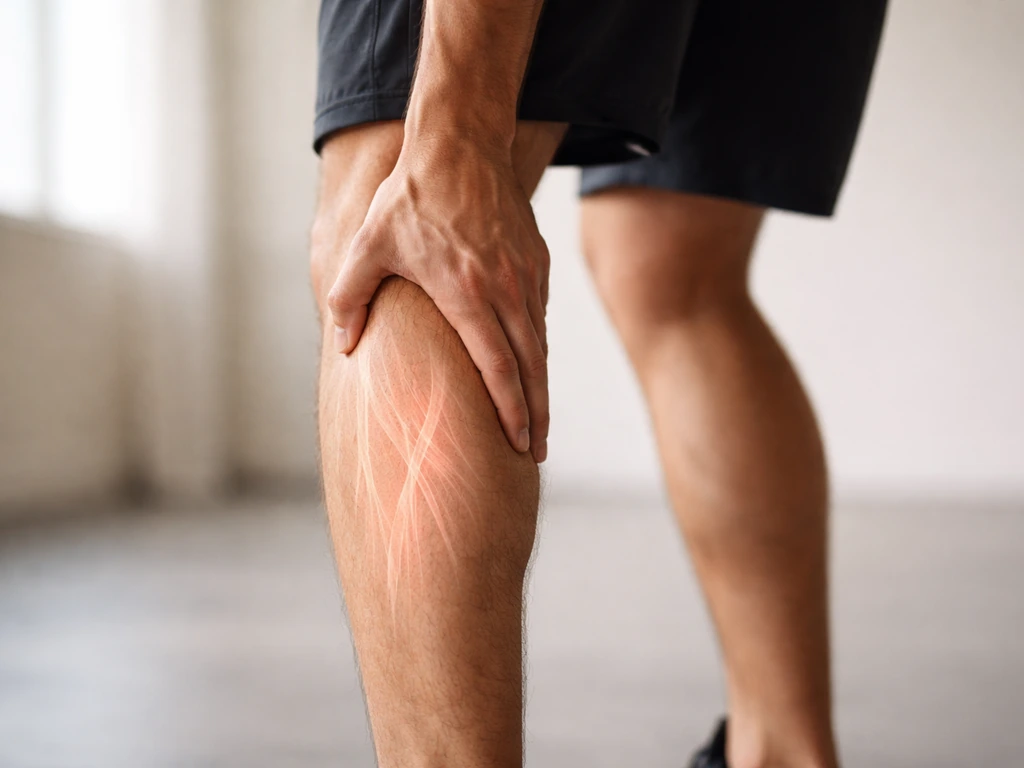
Yes, slow-twitch muscle fibers can grow. They respond to hypertrophy training, they increase in cross-sectional area, and with the right stimulus they can even take on more slow-twitch molecular characteristics over time. They just need a different kind of push than fast-twitch fibers do, and most people either skip that training entirely or do so much pure endurance work that they never give the fibers a reason to get bigger.
How to Grow Slow Twitch Muscles: Training and Nutrition Plan

Marcus Kellerman
13 May 2026

Do slow-twitch muscles and fibers actually grow?
Slow-twitch fibers, officially called type I fibers, are smaller by default than type II fibers and are built for endurance rather than power. That has led a lot of people to assume they just don't grow much. That assumption is wrong. Type I fibers absolutely increase in cross-sectional area in response to appropriate resistance training. Research tracking fiber cross-sectional area at multiple time points during resistance training programs consistently shows both type I and type II fibers enlarging, with satellite cell activity supporting that growth in both populations.
Where things get nuanced is that pure endurance training, say, 6 weeks of aerobic intervals or steady-state cycling, tends to remodel muscle without meaningfully increasing fiber size. One aerobic interval training study found no skeletal muscle hypertrophy even though muscle was clearly being reshaped at a molecular level. So the fibers can grow, but low-intensity cardio alone is not the trigger. You need progressive overload and enough mechanical tension or metabolic stress to stimulate protein synthesis, which is the same rule that applies to any muscle fiber.
What 'slow-twitch growth' really means
When people search for how to grow slow-twitch muscles, they are usually chasing one of two things: either they want bigger, more fatigue-resistant muscles that perform well at endurance tasks, or they have heard that their particular muscles are slow-twitch dominant (like the soleus or postural muscles) and want to know how to make them grow. Both are valid, and the answer involves three overlapping concepts: fiber hypertrophy, recruitment patterns, and fiber-type plasticity.
Fiber hypertrophy
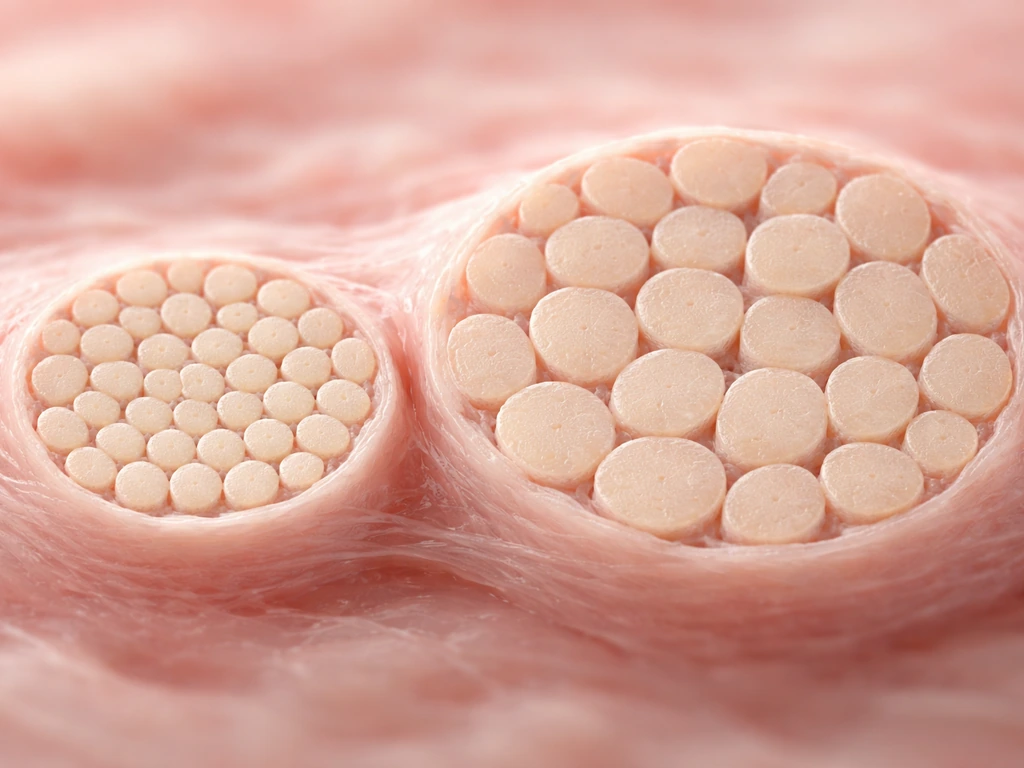
Hypertrophy just means the fibers get bigger in diameter. Type I fibers can do this when exposed to sufficient mechanical load and volume, even though they require more sustained tension to get there. They are recruited first under any load, so even heavy lifting uses them, but they tend to respond especially well to higher rep ranges and longer time under tension because that keeps them under continuous stress long enough to trigger protein synthesis.
Recruitment
Your nervous system recruits type I fibers first (Henneman's size principle), then brings in type II fibers as the load increases or fatigue accumulates. This means that training at moderate loads to near-failure is a reliable way to ensure type I fibers are stressed to their limit, because they stay in the game from the first rep to the last.
Fiber-type plasticity
Fibers are not permanently locked into their type. Human studies using endurance training have shown measurable shifts: after bicycle ergometer training five days a week for six weeks, the percentage of type I fibers increased by 12% and type IIB fibers dropped by 24%. A PubMed study using biopsied previously sedentary adults tested an blank" rel="noopener noreferrer">endurance-related fast-to-slow isoform shift with 16 weeks of bicycle training and assessed myosin heavy-chain mRNA and protein before versus after training. Human studies using 31P-MRS have reported that endurance training can shift fiber-type proportions in ways that covary with metabolic adaptation blank" rel="noopener noreferrer">measurable shifts. Molecular studies have found that endurance training can introduce slow contractile protein isoforms (like slow myosin heavy-chain and troponin variants) even into fibers that were previously fast-dominant. This is not a complete conversion, but it is a genuine shift in fiber character. Detraining reverses these changes, which confirms the adaptations are real and training-dependent. For practical muscle building, this means sustained training programs do nudge your fiber profile in the direction you train, even if you never fully flip a type II fiber into a type I.
How to train for slow-twitch-dominant adaptations and still build muscle

The key insight is that you do not have to choose between building muscle and training slow-twitch fibers. You do have to stop thinking that long, easy cardio sessions count as muscle-building stimulus. They do not. What works is resistance training with specific rep ranges, rest periods, and exercise choices that maximize time under tension and metabolic stress while still applying progressive overload.
Time under tension is the biggest lever here. Type I fibers fatigue slowly and are kept under load throughout a set. If you do a 5-rep max with 80% of your max and rest 3 minutes, the type I fibers barely break a sweat. But if you do 15 to 25 reps with moderate weight and controlled tempo, or do slow eccentrics (3 to 5 seconds lowering), the type I fibers stay engaged and accumulate the kind of metabolic stress that drives hypertrophy in them specifically.
Metabolic stress also plays a role. The burning, pump-producing discomfort of higher-rep sets is partly driven by lactate, hydrogen ions, and byproducts that accumulate in slow-twitch-dominant muscle. Shorter rest periods (60 to 90 seconds) amplify this. That is not just about feeling the burn for its own sake: the physiological environment created by metabolic stress appears to contribute to hypertrophic signaling, particularly in slow-twitch fibers.
Progressive overload still applies. You need to make training harder over time, either by adding weight, adding reps, adding sets, or reducing rest. If you do the same workout at the same intensity for months, the fibers have no reason to keep adapting. This is one of the most common mistakes people make when training slow-twitch muscles: they think because the goal is endurance-type fitness, they should not push hard. You still need to push near your limit, just in the higher-rep zone.
Exercise selection
Compound movements like squats, Romanian deadlifts, rows, and presses should be your base. For muscles that are heavily slow-twitch dominant (calves, soleus, postural spinal erectors), isolation work with high reps and slow tempos is especially useful. Standing calf raises done for 20 to 30 reps with a 3-second hold at the stretch are a classic example of effective slow-twitch targeting. Leg press, goblet squat, and split squat variations also work well in higher-rep ranges because they create sustained tension through a full range of motion.
Weekly plan: sets, reps, intensity, rest, and progression

Below is a practical starting framework. This is not a rigid prescription but a structure you can adapt. It is organized around 3 to 4 training days per week, which is enough stimulus for most people while allowing recovery. Beginners should start at the lower end of volume and build up over weeks.
| Variable | Slow-twitch hypertrophy target | Notes |
|---|---|---|
| Rep range | 12 to 25 reps | Higher end for calves, soleus, postural muscles |
| Sets per muscle per session | 3 to 5 | Start at 3 if new to training |
| Intensity (% 1RM) | 50 to 70% | Should reach near-failure by last few reps |
| Tempo | 2 seconds up, 3 to 4 seconds down | Slow eccentric increases time under tension |
| Rest between sets | 60 to 90 seconds | Shorter rest amplifies metabolic stress |
| Training frequency per muscle | 2 to 3 times per week | Allow 48 hours between sessions for the same muscle |
| Weekly volume per muscle group | 10 to 20 sets | Build gradually over 4 to 8 weeks |
Sample 3-day week
- Day 1 (Lower body): Goblet squat 4x15, Romanian deadlift 3x12 with slow eccentric, leg press 3x20, standing calf raise 4x25 with 3-second pause at bottom
- Day 2 (Upper body): Dumbbell row 4x15, incline dumbbell press 3x15, face pull 3x20, lateral raise 3x20
- Day 3 (Full body or weak-point focus): Split squat 3x15 per side, hip thrust 3x20, seated calf raise 4x20, pull-down or row variation 3x15, core work
How to progress week to week
- Weeks 1 to 2: Establish your baseline weights at the rep targets, focusing on tempo and form
- Weeks 3 to 4: Add 1 to 2 reps per set, or add one set to your biggest compound movements
- Weeks 5 to 8: Increase load by 5% when you can complete the top of the rep range with good form for two consecutive sessions
- Every 8 to 10 weeks: Take a deload week (reduce volume by 40%) before starting the next progression block
Nutrition for hypertrophy: protein, calories, and fueling your training
Training is the signal, but nutrition is what actually allows the fibers to grow. You can do everything right in the gym and still make little progress if you are under-eating protein or running a large calorie deficit. This is especially true for type I fiber hypertrophy because those fibers are in a constant state of metabolic activity and need consistent substrate to repair and rebuild.
Protein
Aim for 1.6 to 2.2 grams of protein per kilogram of body weight per day. For a 75 kg (165 lb) person, that is 120 to 165 grams daily. Spread it across 3 to 4 meals rather than front-loading or back-loading it, because muscle protein synthesis responds best to repeated moderate doses (around 30 to 40 grams per meal) rather than one massive serving. If you are over 60, lean toward the higher end of that range, since older muscle tissue is somewhat less sensitive to protein signals and benefits from a slightly larger dose per meal.
Calories
You do not need to bulk aggressively to grow slow-twitch fibers, but you do need to be close to calorie maintenance or slightly above it. A deficit of 300 to 500 calories per day will blunt hypertrophy significantly. If you want to minimize fat gain while building muscle, eating at maintenance or a small surplus of around 200 to 300 calories works well for most people, especially beginners and those returning from a break.
Carbohydrates and training fuel
Because slow-twitch-focused training involves higher rep sets and shorter rest periods, your glycolytic demand is real. Carbohydrates fuel that kind of work. Do not go low-carb while trying to do high-volume hypertrophy training, especially if you are training 3 or more days per week. A practical approach is to eat a carbohydrate-containing meal 2 to 3 hours before training (oats, rice, or potatoes work well) and include carbs with protein in your post-workout meal.
Recovery and troubleshooting: sleep, soreness, plateaus, and adjustments
Muscle grows during recovery, not during training. If you are consistently sleeping 5 to 6 hours per night, you are leaving a significant amount of muscle adaptation on the table. Aim for 7 to 9 hours. Growth hormone and IGF-1 secretion peak during deep sleep, and protein synthesis rates are elevated during overnight fasting if you have eaten enough protein during the day. A small high-protein snack before bed (cottage cheese, Greek yogurt, or casein protein) can further support overnight muscle protein synthesis.
Soreness is not a reliable marker of a good workout or muscle growth. Type I fibers can adapt and grow with less delayed-onset muscle soreness than type II fibers because they are more metabolically durable. If you are training consistently and progressing but not getting very sore, that does not mean the training is not working. Progress in the form of more reps or heavier weights is a far better indicator.
When progress stalls
If you have been training for 6 to 8 weeks without seeing strength or size changes, run through this checklist before changing everything at once.
- Are you actually reaching near-failure on your sets? The last 2 to 3 reps should feel genuinely hard.
- Is your protein intake hitting 1.6 g/kg or above consistently, not just on good days?
- Are you sleeping at least 7 hours most nights?
- Have you been progressing load or volume every 2 to 3 weeks, or doing the same workout for months?
- Are you eating enough total calories? Track for 3 to 5 days to check, even roughly.
- Are you managing stress? Chronically elevated cortisol blunts muscle protein synthesis and impairs recovery.
For older adults specifically, recovery between sessions may take slightly longer. If you are over 50 and feeling beat up on a 4-day program, dropping to 3 days with slightly more volume per session often works better. The total weekly stimulus matters more than how many days you split it across.
Expectations and timelines: what changes first and how long it takes

The first 4 to 6 weeks of a new training program produce mostly neural adaptations. You will get stronger without much visible size change, because your nervous system is learning to recruit more fibers efficiently. This is completely normal and is not a sign that the training is not working. Actual fiber hypertrophy becomes measurable around weeks 6 to 12 for most people, with visible changes often appearing closer to the 8 to 12 week mark depending on body fat, muscle group, and training history.
Fiber-type shifts, the molecular changes where type II fibers start expressing more slow contractile proteins, are detectable in research settings after 6 to 16 weeks of consistent endurance or mixed training. In practical terms, this means your muscles become better at sustaining effort, you recover faster between sets, and the muscle feels harder and more defined even before it grows dramatically in size.
For people wondering why their muscles grow slowly in general, this is worth noting: slow-twitch fiber hypertrophy is inherently more gradual than fast-twitch fiber hypertrophy. Type I fibers are smaller to begin with and do not grow as fast in absolute terms. That is not a failure of the training; it is just the biology. The payoff is muscle that is dense, fatigue-resistant, and holds up over decades of activity.
| Timeframe | What's happening | What you might notice |
|---|---|---|
| Weeks 1 to 4 | Neural recruitment improvements, metabolic enzyme upregulation | Getting stronger, less fatigue during sets |
| Weeks 4 to 8 | Early type I fiber hypertrophy, increased mitochondrial density | Slight increase in muscle firmness, better pump |
| Weeks 8 to 16 | Measurable fiber CSA increases, possible slow isoform shifts | Visible size increase in trained muscles, better endurance capacity |
| Months 4 to 12 | Sustained hypertrophy, more pronounced fiber-type profile changes | Significant size and performance gains with consistent effort |
The single biggest mistake people make when training slow-twitch muscles is doing nothing but low-effort steady-state cardio and calling it muscle training. Jogging for 45 minutes is not a slow-twitch hypertrophy stimulus. It might slightly shift fiber characteristics over months, but it will not make the fibers meaningfully bigger. If you want your slow-twitch muscles to grow, you need to load them, push near failure, eat enough protein, sleep well, and progress consistently. The biology is on your side; you just have to give it the right instructions. Genetics and training background also explain why some people grow muscle faster than others, even with similar workouts give it the right instructions.
FAQ
Can I grow slow-twitch muscles with heavy weights, or do I need only high reps?
Yes, lifting heavy can still stress type I fibers, but the key is how much time they spend under tension. Use heavier loads if you can control the reps, take sets close to failure, and add slow eccentrics or shorter rests to keep type I fibers actively engaged.
How much endurance cardio can I do while still growing slow-twitch fibers?
You can, but you need resistance work in the mix. If your goal is slow-twitch hypertrophy, limit pure endurance sessions (especially low-intensity) to recovery or conditioning purposes, then prioritize progressive overload in the gym to create the mechanical and metabolic signals for growth.
If I am not sore after workouts, does that mean I am not growing my slow-twitch muscles?
No. Track performance using reps at a given load, total working sets, and how close you get to failure. Feeling little soreness is common with type I-focused training, so progression should be measured by workload and set-to-set difficulty, not by aches.
How close to failure should I train to grow slow-twitch muscles, especially for 15 to 25 rep work?
Yes, for slow-twitch-focused growth, sets should often be taken to a similar “effort” level even if loads differ. A practical target is 0 to 3 reps left in reserve on most working sets for the higher-rep lifts, while keeping technique consistent to avoid replacing fiber stimulus with form breakdown.
What is a good weekly volume target for slow-twitch muscle growth?
For type I emphasis, volume matters more per session than people expect, but there is a ceiling. Start with roughly 10 to 20 hard sets per muscle per week, then add sets only if performance is rising and you are recovering, not just accumulating fatigue.
What is the biggest mistake with high-rep training for type I fibers?
Do not count time spent “burning” if the set is so easy that failure is never approached. If your high-rep work feels easy, raise intensity by adding load, increasing reps within good form, or reducing rest to maintain enough mechanical tension and metabolic stress.
Do I need carbs to grow slow-twitch muscles, or can I go low-carb?
Diets that remove carbs can hurt training quality even if protein is perfect. If you are doing short-rest, high-volume work, keep carbs around workouts, aiming for a carb-containing meal 2 to 3 hours before and a protein-carb meal after, so you can sustain near-failure effort.
Will cutting calories stop slow-twitch hypertrophy entirely?
A calorie deficit blunts growth mainly by reducing the resources for repair, but the bigger issue for slow-twitch emphasis is that you may also underperform in the gym. If you cut, reduce the deficit to a small range (around maintenance to a small surplus if possible) and watch whether reps and pump-like effort drop.
Are the protein and training guidelines different for older adults trying to grow slow-twitch muscles?
For older adults, protein dose per meal and total calories become more important because responsiveness is lower. If you are over 60, leaning toward the higher protein end and keeping 3 to 4 spaced meals can help you reach the same muscle-building signal with less total surplus.
How do I apply this slow-twitch approach to calves or the soleus specifically?
Yes, especially for muscles like calves and the soleus, because they handle frequent loading and respond to repeated long-duration tension. Use longer sets, add a stretch hold at the bottom when safe, and prioritize full range of motion with controlled lowering rather than rushing reps.
What should I check if my slow-twitch training is not working after 6 to 8 weeks?
Watch for performance plateaus plus recovery markers, not soreness. If strength and reps stall for 6 to 8 weeks, reduce total volume slightly, ensure sleep is at target, and confirm you are actually progressing loads or reps rather than repeating the same session.
How quickly do slow-twitch adaptations reverse if I stop training hard?
Yes. If you train the same muscle hard and then do a full week of only easy cardio, the molecular shifts and hypertrophy signals will fade. To maintain gains, keep at least 1 to 2 resistance sessions per week for the target muscle, even if total training frequency drops.