Muscles don't actually itch as they grow. And squeezing your muscles does not directly make them grow; progressive training is what drives hypertrophy muscles grow. In other words, muscles do not shrink before they grow just because you feel that itch during or after training muscle growth. There's no physiological mechanism where hypertrophy, the process of muscle fibers repairing and thickening after training, triggers an itch signal in your skin.
Do Muscles Itch When They Grow? Causes and Fixes

Marcus Kellerman
26 Apr 2026
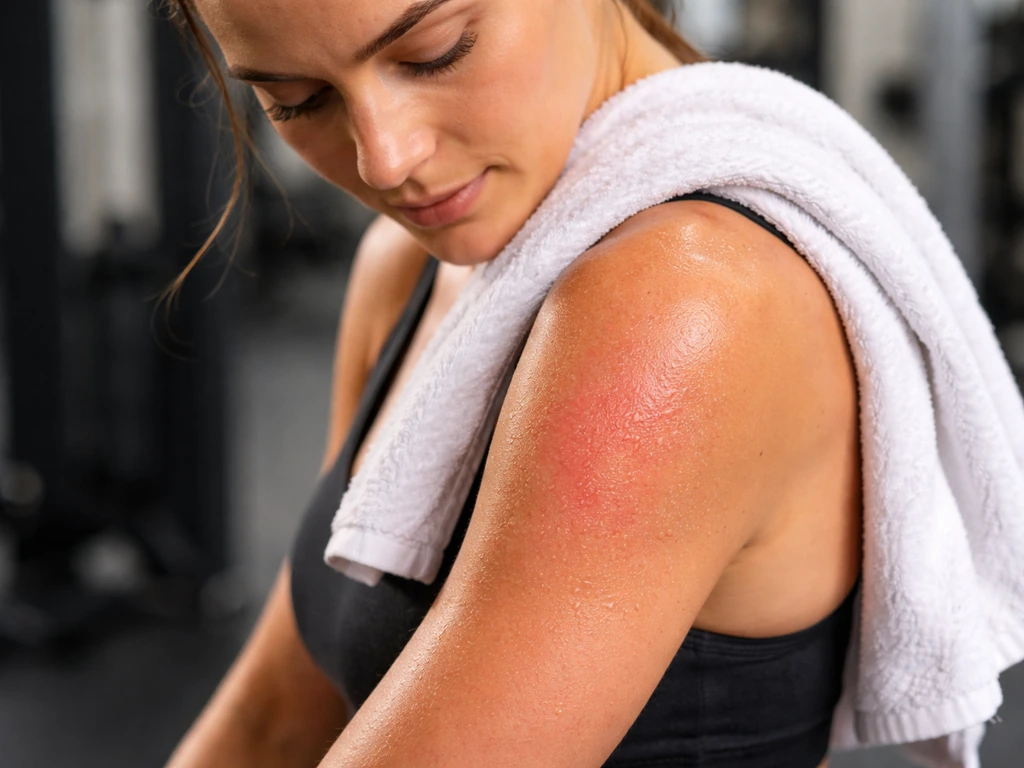
What people experience as a "growth itch" is almost always one of several other things: increased blood flow to the skin, sweat-related reactions, skin stretching over a newly pumped muscle, friction from clothing or equipment, or an immune response to heat and exertion. These are real sensations worth understanding, but they're not a readout of whether your muscles are growing.
Why you're itching during or after training
The most common culprits behind workout-related itching have nothing to do with muscle tissue itself, they're all happening at the skin level or in your immune system. Here's what's actually going on.
Blood flow rushing to the surface
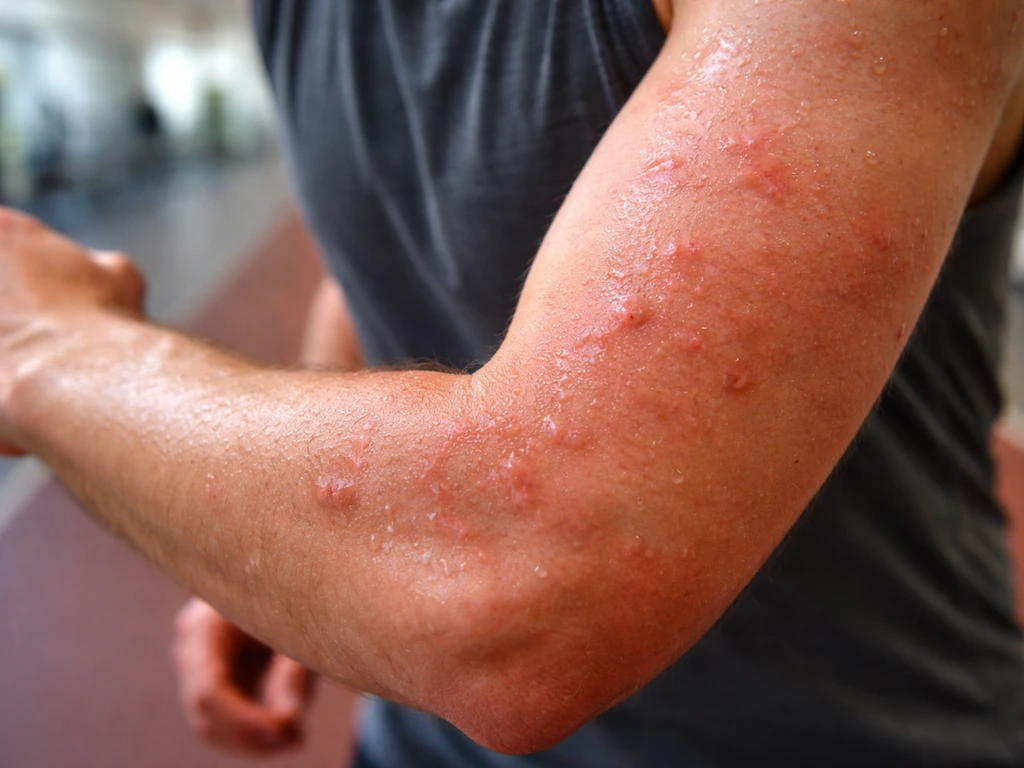
When you exercise, blood vessels near the skin dilate to help regulate temperature. If you've taken time off or you're new to training, your capillary network isn't used to this sudden increase in circulation, and the nerve endings near the skin can interpret that rush as an itch or prickle. This is especially common in the legs and arms early in a workout. It tends to diminish the more consistently you train, because your body adapts to the circulatory demands.
Cholinergic urticaria (heat-triggered hives)
This is probably the most misunderstood cause. Cholinergic urticaria is a skin reaction triggered by a rise in core body temperature and sweating, exactly what happens during a workout. It produces small raised wheals, typically 1 to 4 mm in size, along with intense itching or a burning sensation. They usually appear within minutes of sweating or heating up and fade within 15 to 30 minutes of cooling down. It's not dangerous on its own, but it's also not a muscle-growth signal. It's your immune system reacting to heat.
Exercise-induced urticaria
A broader category than cholinergic urticaria, exercise-induced urticaria involves itchy raised welts that appear during physical activity, often within the first 30 minutes of starting exercise. They can last up to about two hours. Unlike cholinergic urticaria, the trigger here is the exertion itself rather than just heat or sweat. Some people only get this reaction during specific types of exercise or when they've eaten certain foods beforehand.
Heat rash (miliaria / prickly heat)
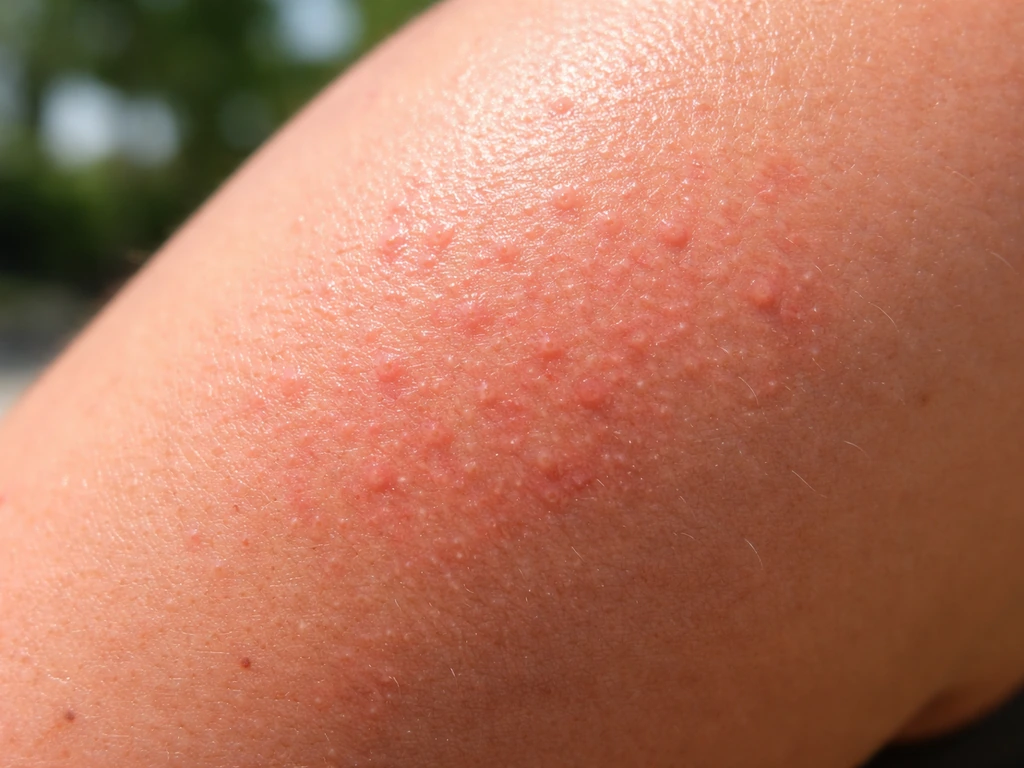
When sweat ducts get blocked during intense exercise, especially in hot or humid conditions or under tight clothing, sweat gets trapped under the skin and causes irritated bumps and a prickly itch. This is heat rash, and it's very common in areas where clothing traps moisture: the chest under a shirt, the waistband area, behind the knees. Most cases clear up within one to two days once you cool down and let the skin breathe.
Friction and contact irritation
Repetitive rubbing from clothing seams, waistbands, straps, or gym equipment is a very underrated cause of post-workout itch. Synthetic fabrics that trap sweat can also cause irritant contact dermatitis, a localized rash that follows the exact pattern of the contact zone rather than the muscle underneath. If your itch is concentrated along a seam line, a strap, or a spot where gear rubs, friction is almost certainly the cause.
DOMS-related sensations
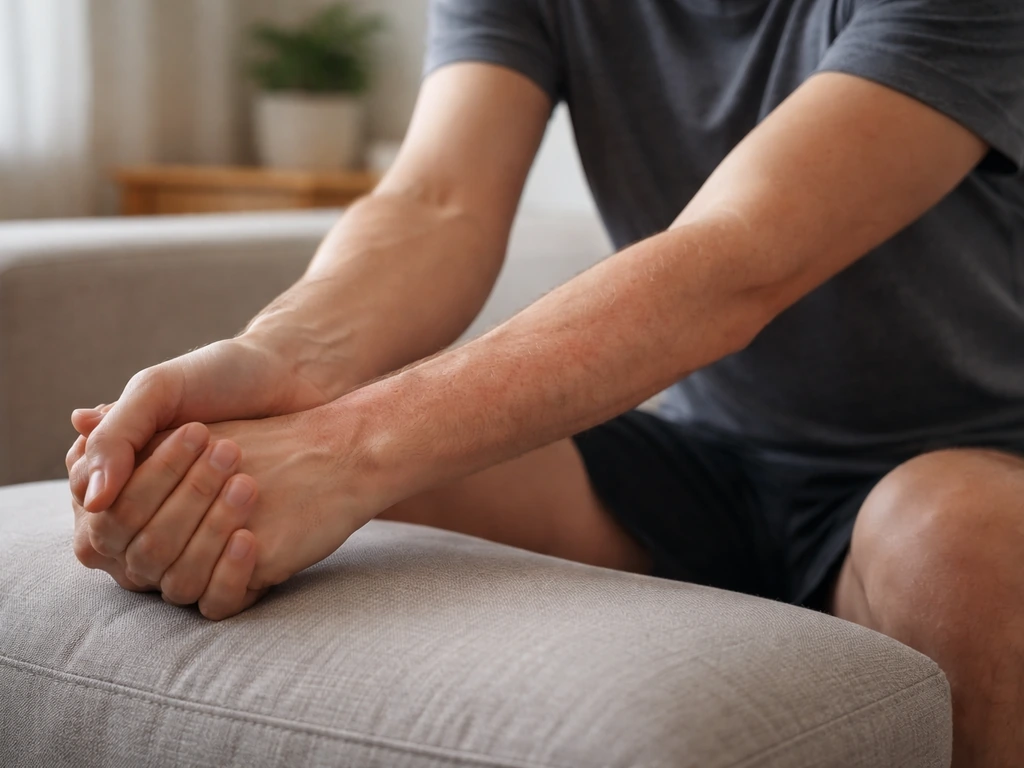
Delayed-onset muscle soreness peaks around 24 to 72 hours after unaccustomed or intense training. It's driven by localized inflammation and micro-disruption of muscle tissue. During puberty, the body is still developing, and muscle growth depends mainly on training plus adequate nutrition, not on itching sensations. While DOMS is primarily described as soreness and tenderness, some people interpret the weird, deep discomfort as an itch-adjacent sensation, especially when the skin over sore muscles feels hypersensitive to touch. This isn't muscle growth causing an itch; it's inflammation making sensory nerves more reactive.
Dry skin and sweat-drying effects
Sweat dries and leaves salt on the skin, which is dehydrating and irritating over time. If you already have dry skin or a condition like atopic dermatitis (eczema), exercise can directly trigger a flare because sweat and temperature changes are known irritants. This is a skin-barrier problem, not a muscle problem.
How to tell if it's a normal training itch or something else
The honest answer is that most workout-related itching is benign and self-limiting. But the pattern of your symptoms matters. Here's a quick way to think about it:
| Feature | Likely benign | Worth investigating |
|---|---|---|
| Timing | During exercise or within 30–60 min after, fades quickly | Persists hours or days after training stops |
| Appearance | No visible skin change, or small fading wheals | Spreading rash, blistering, crusting, or infected-looking skin |
| Location | Diffuse or follows friction/sweat zones | Concentrated around a specific area that doesn't match activity patterns |
| Associated symptoms | None beyond the itch/tingle | Hives plus shortness of breath, throat tightness, dizziness, or nausea |
| Response to cooling | Fades when you cool down and dry off | Persists or worsens after cooling |
| Frequency | Happens occasionally with harder sessions or heat | Happens every single session and is getting more severe |
If your itch shows up during a tough session, fades after a cool shower, and leaves no marks, you're almost certainly dealing with one of the benign skin-response mechanisms described above. If it doesn't follow that pattern, it warrants a closer look.
What you can do right now to reduce workout-related itch
Adjust how you train
If you're new to training or coming back after a break, your body's circulatory and immune responses are more reactive than they'll be once you've built consistency. Gradually ramping up intensity and volume over two to four weeks lets your system adapt without triggering as strong a reaction. This isn't a reason to go easy forever, progressive overload is still how you build muscle, but a slower ramp-up reduces the initial itch response significantly.
Warm up properly and cool down after
A 5 to 10 minute warm-up raises your body temperature gradually, which can reduce the sharpness of heat-triggered skin reactions. A proper cool-down lets your core temperature drop slowly and gives your blood vessels time to constrict back to normal, which reduces the post-workout skin flush and itch that some people get when they stop abruptly.
Sort out your clothing and hygiene
- Switch to moisture-wicking, breathable fabrics (look for merino or technical synthetics with flat seams) to reduce friction and sweat accumulation.
- Apply an anti-chafe balm or petroleum jelly on high-friction zones like the inner thighs, underarms, and anywhere straps sit before you train.
- Shower promptly after training and use a gentle, fragrance-free cleanser — soap residue and dried sweat are both skin irritants.
- Moisturize after showering while your skin is still slightly damp, especially in dry climates or winter conditions. Dry skin is more reactive skin.
Hydration and temperature management
Staying well-hydrated helps your body regulate temperature more efficiently, which directly reduces the heat-triggered reactions behind cholinergic urticaria and heat rash. Sweat losses vary a lot between individuals, and heavier sweaters also lose significant sodium, so replacing electrolytes, not just plain water, matters if you're training hard in the heat. Training in a cooler environment or using a fan when possible is also a simple way to reduce the intensity of heat-driven skin reactions.
Manage DOMS sensations actively
If the sensation feels like it's coming from deeper in the muscle during the 24 to 72 hour post-workout window, foam rolling is a reasonable tool. Randomized research shows it can reduce muscle tenderness associated with DOMS. It won't eliminate it, but it can take the edge off that hypersensitive, almost-itchy feeling over sore tissue. Gentle movement, light cardio, and massage also help. If you’re wondering about muscle growth specifically, the key is progressive training and adequate recovery, not massage for making muscles grow faster.
For known skin conditions
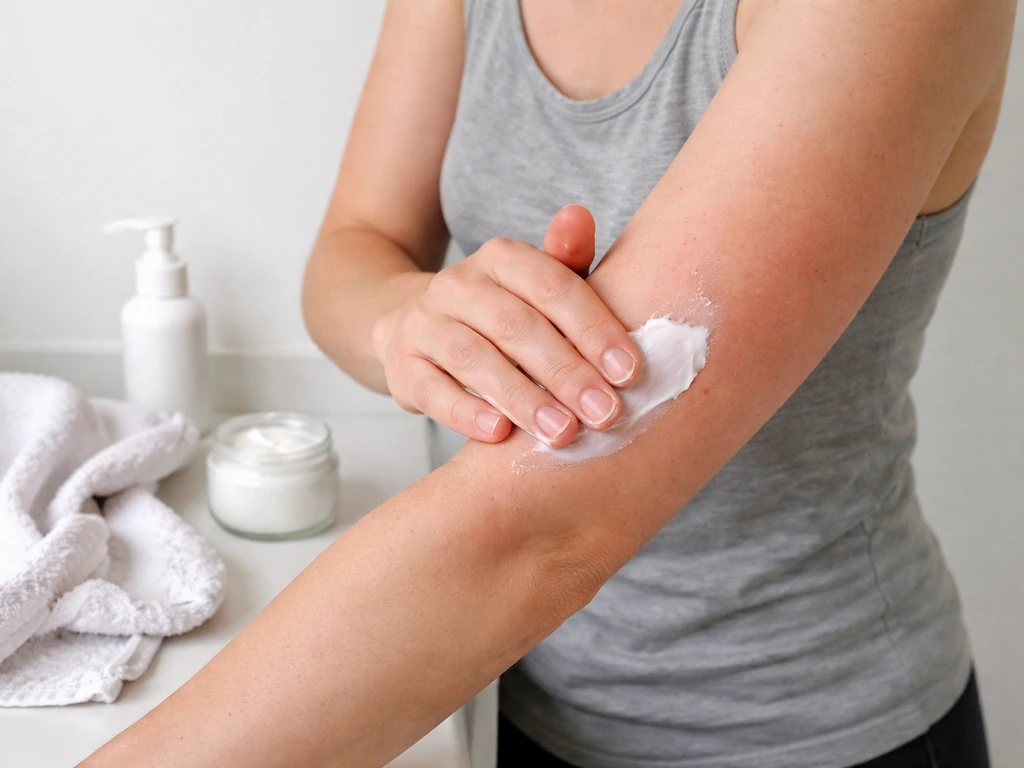
If you have eczema or a history of skin sensitivity, exercise triggers are well-documented. Rinse off sweat quickly, keep skin moisturized, wear non-irritating fabrics, and work with a dermatologist on a management plan. You don't need to stop training, you just need to be more deliberate about your pre- and post-session skin routine.
When to actually worry: red flags you shouldn't ignore
Most workout itch is nothing. But there's a set of symptoms that take it out of the "benign nuisance" category and into "stop exercising and get help" territory.
- Difficulty breathing, wheezing, or a choking sensation during or after exercise — this is a potential sign of exercise-induced anaphylaxis, a serious emergency.
- Dizziness, lightheadedness, or feeling like you might faint alongside itching and hives.
- Widespread hives or itching that doesn't fade within a couple of hours of cooling down.
- Swelling of the face, lips, tongue, or throat — seek emergency care immediately.
- Nausea, vomiting, or stomach cramping accompanying a skin reaction.
- A rash that persists for days, is warm to the touch, is spreading, looks infected (pus, crusting, significant redness), or doesn't match any obvious friction or sweat pattern.
- Itching that worsens consistently with each training session and is escalating in severity over weeks.
Exercise-induced anaphylaxis is rare but real. The American Academy of Family Physicians notes that symptoms can include generalized itching, a choking sensation, gastrointestinal symptoms, wheezing, and low blood pressure, and the guidance is clear: stop exercising at the first sign of systemic symptoms and seek medical care if things progress. If you've had any of these more severe reactions, talk to an allergist before your next training session.
Cholinergic urticaria and exercise-induced anaphylaxis can look similar at first, both involve hives and itching from exercise, but the key difference is systemic involvement. Hives that fade quickly after cooling with no other symptoms? Probably cholinergic urticaria. Hives plus breathing trouble or throat symptoms? That's a different situation entirely.
Nutrition and recovery basics that support growth and may reduce irritation
None of the itching mechanisms described above are caused by protein deficiency or poor nutrition, but inadequate recovery nutrition does affect how your body handles the stress of training, and that shows up in how irritated and inflamed you feel overall.
Protein intake
For muscle growth, the International Society of Sports Nutrition recommends roughly 1.6 to 2.2 grams of protein per kilogram of bodyweight per day for resistance-trained individuals. Under-eating protein doesn't just blunt muscle gains, it compromises the repair processes that follow training, which can extend the duration and intensity of post-workout inflammatory sensations. Getting enough protein across the day, prioritizing complete sources like eggs, meat, fish, dairy, or soy, supports both growth and recovery.
Omega-3s and inflammation
Omega-3 fatty acids have reasonable evidence behind them for reducing muscle soreness after eccentric exercise, though the effect size is modest and results vary by person. If you're experiencing significant post-workout discomfort and DOMS-adjacent sensations that aren't resolving quickly, adding a daily fish oil supplement (typically 2 to 3 grams of combined EPA and DHA) is a low-risk option worth trying for a few weeks.
Sleep and overall recovery
Sleep is when the majority of muscle repair and protein synthesis happens. Consistently short-changing sleep doesn't just slow your progress, it keeps systemic inflammation elevated, which makes your skin and nervous system more reactive to training stimuli. Seven to nine hours for most adults isn't optional if you want to train hard and feel good doing it.
Track your triggers
A simple training log that notes when itching happens, the type of exercise, the heat/humidity, what you ate beforehand, what you were wearing, can reveal patterns quickly. Some people with exercise-induced urticaria find that specific foods eaten before training make reactions worse. Others find that certain environments (hot gyms, outdoor summer training) consistently trigger reactions while others don't. That information is genuinely useful for managing it.
The bottom line on itching and muscle growth
Itching is not a muscle-growth signal. Itching during or after training is not proof that you can speed up hypertrophy by forcefully squeezing your muscles instead of focusing on proven muscle-building factors like mechanical tension muscle growth. It's not something you need to experience to know your training is working. If you want the details on what actually drives hypertrophy, including what makes muscles grow, see what makes muscles grow jeffrey siegel as a related next step.
Actual muscle hypertrophy is driven by mechanical tension and progressive overload, your muscles responding to load over time, not by any sensation happening at the skin. If you're noticing itching during or after workouts, it's almost always a skin, sweat, or circulatory response. Manage it with the practical steps above, keep training consistently with good nutrition and recovery, and your muscles will grow just fine whether you itch or not.
If you’re wondering whether you can flexing your muscles grow them, remember that the itch is usually not the growth signal, and progressive training is what drives hypertrophy. If you're thinking about whether your body and muscles respond differently during puberty, read more about puberty-related muscle growth as a related consideration.
FAQ
If I itch during a workout, should I stop immediately?
Stop and cool down if the itching is accompanied by any systemic symptoms (wheezing, throat tightness, dizziness, vomiting, widespread hives, or a feeling of faintness). If it is localized and quickly improves after you cool down, it is usually a benign skin or temperature-sweat reaction, and you can finish only if symptoms stay mild and non-progressive.
What if I get hives as well as itching, is that always cholinergic urticaria?
Not always. Cholinergic urticaria commonly appears soon after you heat up and fades within about half an hour of cooling. Exercise-induced urticaria can last longer. If hives are paired with breathing or circulation symptoms, treat it as potentially more serious and get medical help.
Does washing off sweat right after training reliably prevent workout itching?
It helps a lot for heat rash, sweat irritation, and contact dermatitis, especially if salt and sweat sit on the skin. Rinse promptly, then pat dry and apply a bland moisturizer. If you have eczema or frequent flares, using a gentle, fragrance-free cleanser matters more than switching to harsh “sports” body washes.
Could pre-workout supplements or caffeine be causing the itch?
They can indirectly, mainly by raising heart rate, body temperature, or sweat volume. Some people also react to specific ingredients, for example certain dyes or additives. If symptoms correlate with a particular product or timing, pause it for a week and compare against a baseline without it.
Is there a simple way to tell skin friction versus heat-related reactions?
Yes, look at the pattern. Friction or contact issues usually track where fabric rubs, such as along seams, straps, waistband edges, or specific equipment contact points. Heat and sweat-related reactions are more often generalized or appear where heat builds and can show up on larger areas even without direct rubbing.
How should I adjust clothing to reduce itching without making training harder?
Choose breathable, sweat-wicking fabrics and avoid tight seams in the itchy zones. Consider using a thin base layer under equipment contact areas (like behind knees or around the waistband) and avoid switching to heavily scented detergents. If heat is the trigger, lighter layers that can be removed during warm-up can reduce the temperature spike.
If the itch happens 1 to 3 days later, is that still “growth itch”?
Usually no. A 24 to 72 hour itch-adjacent feeling that comes with tenderness or hypersensitivity is more consistent with delayed inflammation from training (DOMS-like) than any signal from muscle hypertrophy. Managing discomfort with gentle movement and recovery steps is more appropriate than trying to treat it as a growth marker.
Can dehydration cause workout itching even if I am not in hot weather?
Yes, dehydration and skin dryness can make irritation worse, and dry, sensitive skin tends to react more strongly to sweat and temperature changes. Even in moderate climates, aim for regular fluid intake and consider electrolytes during longer or heavy-sweat sessions, not just plain water.
Should I take antihistamines for workout-related itching?
Sometimes, but it depends on the diagnosis and your medical history. Over-the-counter options may help with some urticaria-type reactions, but they can mask symptoms and do not address the root cause. If you have recurrent hives or need them often, talk with a clinician or allergist to confirm the trigger and plan safe use.
Why does itching sometimes happen only after certain meals?
Some people with exercise-related urticaria can be sensitive to specific foods taken before training, which may shift immune reactivity during exertion. A practical approach is to keep the meal timing and composition consistent for a few sessions, then change one variable at a time (for example, avoid large fatty meals or common triggers 2 to 4 hours pre-workout).
If my itching stops, does that mean my training should become more intense right away?
Not necessarily. It can mean your body adapted, your clothing or routine improved, or you avoided a trigger, which is good. But intensity changes still should follow a gradual ramp-up, especially in the first few weeks back, since overreaching can reintroduce symptoms for heat and immune-related reactions.
When should I see a dermatologist versus an allergist?
See a dermatologist for recurrent localized rashes linked to sweat, friction, eczema flares, or contact patterns. See an allergist if you have hives triggered by exertion, reactions that recur with multiple workouts, or any suggestion of systemic symptoms. If you ever have breathing or circulation involvement, treat it as urgent.
Does getting more protein or taking omega-3 reduce workout itching?
They may help your overall recovery and inflammatory tone, which can make you feel less “over-activated,” but they are not a targeted fix for heat, sweat duct irritation, or urticaria triggers. If your itching is frequent or patterned, focus first on clothing, hydration, warm-up and cool-down, and trigger tracking, then adjust nutrition and supplements as supportive care.