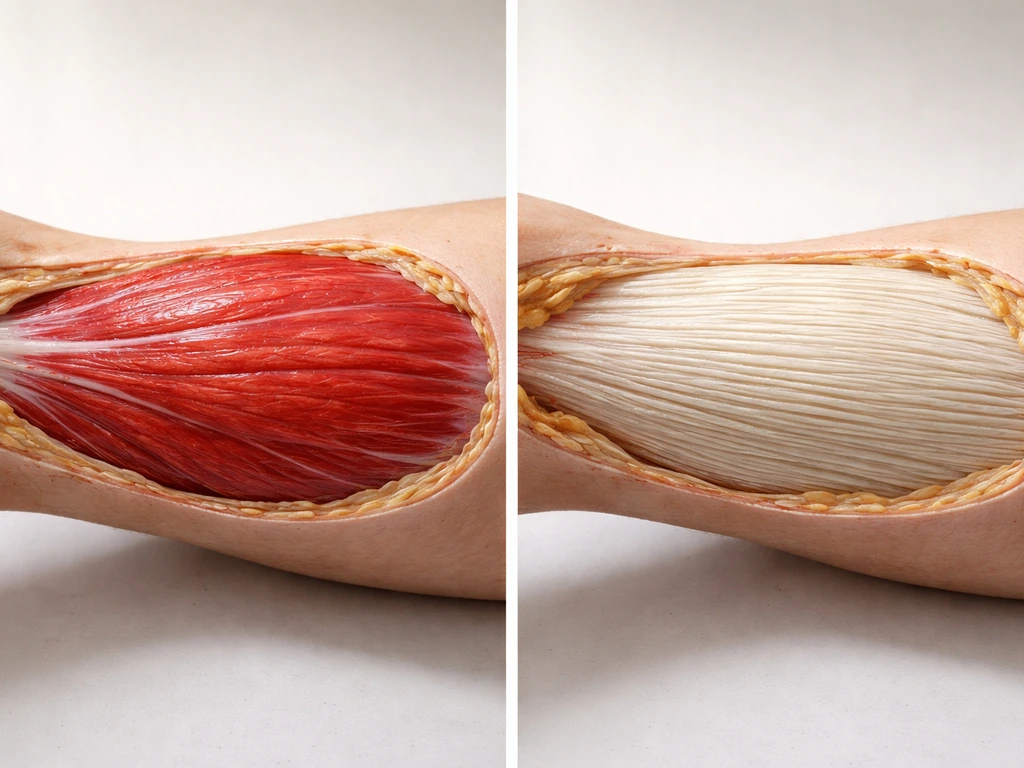
That said, flexing is not completely useless. Used the right way, it's a surprisingly good tool inside a real training plan. The key is knowing the difference between flexing as a shortcut (it isn't one) and flexing as a training aid (genuinely helpful). This article breaks both down clearly.
Why flexing feels effective but doesn't drive growth

When you flex a muscle, you're creating a voluntary isometric contraction. Your nervous system fires, the muscle tenses, and you feel a pump or tightness. That feedback loop feels productive, and it's not imaginary. Your muscles are doing something. The problem is that the stimulus is too brief, too low in mechanical load, and too inconsistent to push the biological processes that cause a muscle to add new protein and get physically larger.
Hypertrophy happens when mechanical tension on muscle fibers triggers a cascade of cellular events: protein synthesis increases, satellite cells activate, and muscle fibers repair slightly larger than before. A review of molecular regulation of exercise-induced hypertrophy describes that mechanical overload-induced hypertrophy involves early myofiber enlargement primarily via protein accretion, with satellite cell, mediated myonuclear addition becoming more important for continued hypertrophy with longer loading exposure satellite cells activate. Research comparing isometric, lengthening (eccentric), and shortening (concentric) training modes shows that even structured isometric training, done with real load and proper programming, can produce hypertrophy. But structured isometric training is very different from casually flexing. The duration of contraction, the load applied, and the progressive challenge are all higher in structured training than in anything you'd do spontaneously in front of a mirror.
There's also the question of how close you push each effort to its limit. A systematic review on proximity to failure found that effort level is a meaningful variable in hypertrophy outcomes. A systematic review with meta-analysis found that resistance training proximity-to-failure influences skeletal muscle hypertrophy, and that the effects depend on how “set failure” is defined rather than just whether sets reach momentary failure blank" rel="noopener noreferrer">A systematic review on proximity to failure found that effort level is a meaningful variable in hypertrophy outcomes.. Casual flexing never approaches that threshold. You tense, you feel it, you release. There's no real challenge to the muscle's capacity, no metabolic stress, and no meaningful damage to repair. The muscle has no reason to adapt and grow. Even if you include flexing and squeezing, massaging muscles help them grow? is still best answered by focusing on mechanical tension and progressive overload instead.
What muscles actually need to grow
Three things drive muscle growth more than anything else: mechanical tension, sufficient training volume, and progressive overload. Everything else, including nutrition, sleep, and supplementation, either supports or undermines these three. Understanding them is worth a few minutes of your time because they explain why some training approaches work and others don't.
Mechanical tension

Mechanical tension is the force placed on a muscle fiber as it contracts against resistance. The more tension, the more the fiber is challenged, and the stronger the growth signal. This is why lifting heavier weights (within safe form) tends to produce more growth than lifting light weights for the same number of reps, and why the full range of motion matters: muscles under tension through a longer range accumulate more of that signal. A brief flex applies almost no meaningful tension compared to a loaded squat, row, or press.
Training volume and effort
Volume means the total amount of challenging work you do for a muscle over time, typically counted as sets per week. Most research points to somewhere between 10 and 20 working sets per muscle group per week as a useful range for hypertrophy, depending on your training age and recovery capacity. Equally important is how hard those sets are. Sets that feel easy throughout don't drive much growth. Pushing sets close enough to failure that the last few reps are genuinely difficult is where much of the hypertrophy stimulus comes from. This doesn't mean grinding to complete failure every set, but it does mean you have to challenge yourself consistently.
Progressive overload
Progressive overload simply means making the training harder over time. Your muscles adapt to a given stimulus and stop responding to it, so you have to keep nudging the challenge upward. That might mean adding weight, doing more reps with the same weight, adding a set, or reducing rest time. Without some form of progression, you'll plateau relatively quickly, even if you're training consistently. This is the mechanism that separates beginners who make fast early gains from intermediate lifters who need to plan their progression more deliberately.

Even though flexing won't build muscle on its own, it does have a legitimate role inside a training plan. If you're wondering what makes muscles grow, Jeffrey Siegel’s approach focuses on the key training variables that actually drive hypertrophy How to use flexing as a real training tool. Here are the specific ways it actually helps.
Building the mind-muscle connection
The mind-muscle connection is your ability to consciously feel and contract a target muscle during an exercise. Research suggests that deliberately focusing on a muscle during training can increase its activation, which matters for hypertrophy. Practicing a flex before you train that muscle is one of the best ways to tune in. For example, before a set of bicep curls, squeeze your bicep hard for 5 to 10 seconds. This helps your nervous system locate and recruit that muscle when you start the actual exercise. Beginners especially benefit from this because it's genuinely hard to feel certain muscles (lats, glutes, hamstrings) without deliberate practice.
Muscle activation and warm-ups
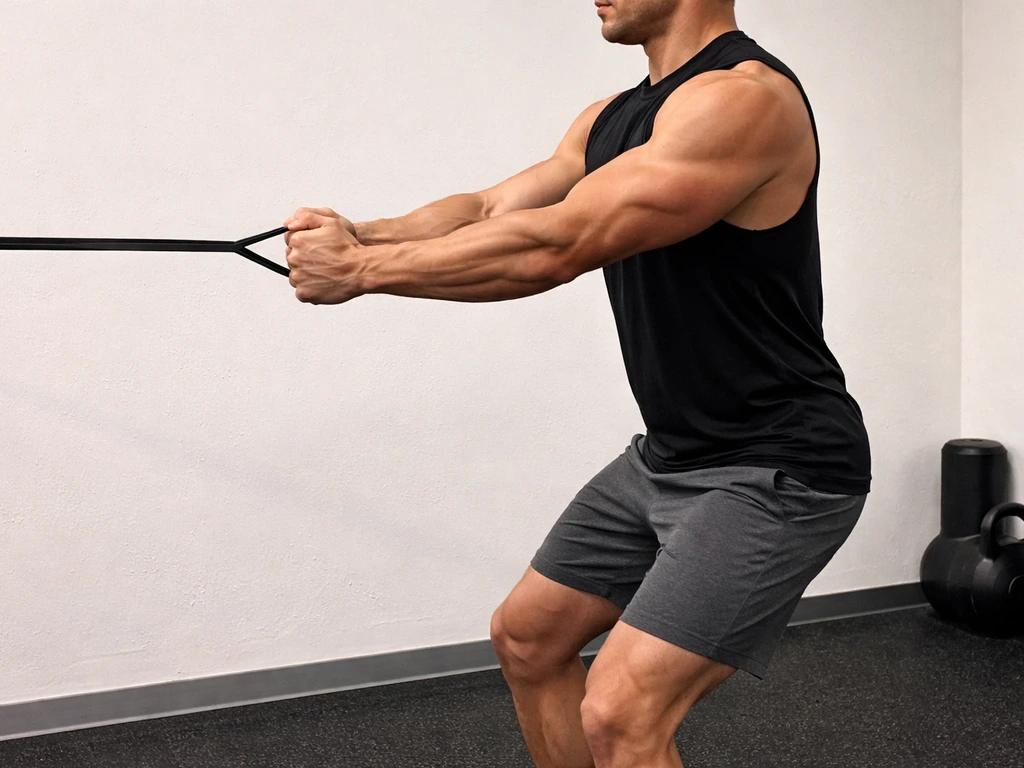
Isometric holds and brief flexes work well as activation drills before a training session. Squeezing your glutes before squats, tensing your lats before rows, or holding a gentle quad flex before leg press all help prime the neuromuscular pathway without fatiguing the muscle. This is particularly useful for older adults or anyone coming back from an injury, where reestablishing clean muscle recruitment patterns matters before loading. Think of it as a rehearsal for the real workout, not a replacement for it.
Checking your own activation during a set
At the top or peak contraction of an exercise, briefly squeezing and holding the target muscle for a moment, one or two seconds, can reinforce the contraction quality and help you assess whether the right muscle is actually working. If you can't feel your glutes squeeze hard at the top of a hip thrust, something is off with your form or positioning. Using the flex as a check-in during reps is a practical coaching tool you can apply yourself.
The training plan that actually grows muscle
Here's what a practical, evidence-supported hypertrophy plan looks like. This applies whether you're a beginner or an older adult getting started. The fundamentals don't change much with age, though older adults benefit from slightly more recovery time between sessions targeting the same muscle.
Frequency and structure
Training each major muscle group two times per week hits the sweet spot for most people. You can do this with a full-body routine three days a week, or an upper/lower split four days a week. Either works. The goal is roughly 10 to 20 sets per muscle per week, spread across those sessions rather than crammed into one.
Exercises to prioritize
Compound movements, exercises that load multiple joints and large muscle groups at once, should make up the bulk of your training. These give you more return per set than isolation exercises.
- Lower body: squats, Romanian deadlifts, leg press, Bulgarian split squats
- Upper body push: bench press, overhead press, dumbbell incline press
- Upper body pull: rows (barbell, dumbbell, cable), pull-ups or lat pulldowns
- Core and stability: deadlifts, planks, carries
- Isolation add-ons: bicep curls, tricep pushdowns, lateral raises (keep these supplementary, not the focus)
Sets, reps, and how hard to push
For hypertrophy, a rep range of 6 to 20 reps per set works well. The exact number matters less than the effort level. Most of your working sets should end with 1 to 3 reps left in the tank, meaning you could have done a couple more but chose to stop. Beginners can start with 3 working sets per exercise. More advanced lifters can push to 4 to 5 sets. Rest 90 seconds to 3 minutes between sets, longer for heavier compound lifts.
Progressing over time
Beginners: add weight or reps every session or every week. The nervous system adapts quickly at first, and strength gains will come faster than visible muscle. That's normal. Intermediate lifters: aim for progression every 2 to 4 weeks, and consider periodization (cycling between slightly different rep ranges or intensities). Older adults: the same progression rules apply, just give yourself an extra rest day if soreness or joint fatigue lingers. Slower progression is still progression.
Nutrition and recovery basics that make your training work
Training is the trigger. Nutrition and recovery are what allow the adaptation to actually happen. You can follow a perfect program and undermine it entirely by not eating enough protein or sleeping poorly. These aren't optional extras.
Protein
Aim for 0.7 to 1 gram of protein per pound of bodyweight per day (roughly 1.6 to 2.2 grams per kilogram). That's the range most research supports for maximizing muscle protein synthesis in people training for hypertrophy. Spread it across at least 3 to 4 meals or eating occasions so you're hitting roughly 30 to 50 grams per meal. Chicken, fish, eggs, Greek yogurt, cottage cheese, and legumes all count. If you struggle to hit the target through food, a protein shake is a perfectly reasonable supplement.
Total calories
You can build muscle at maintenance calories, especially as a beginner or after a long break from training. But if growth stalls, being in a modest calorie surplus of 200 to 300 calories per day above maintenance accelerates the process. More than that and you'll accumulate more fat than muscle. Less than maintenance for an extended period makes muscle growth much harder, though not impossible if protein is high and training is consistent.
Sleep and recovery
Most muscle protein synthesis happens during sleep, which makes 7 to 9 hours a non-negotiable part of the plan for most people. Older adults often find that 8 to 9 hours noticeably improves recovery between sessions. Chronic poor sleep raises cortisol and suppresses anabolic hormones, which is about as counterproductive to muscle growth as you can get. Treat sleep like a training variable, not an afterthought.
What results to expect and how to troubleshoot if growth stalls
Realistic timelines matter because unrealistic expectations cause people to quit. Here's what the evidence and real-world experience suggest:
| Experience Level | Visible Change Timeline | What to Track |
|---|
| Beginner (0-6 months) | Strength gains in 2-4 weeks; noticeable muscle size in 8-16 weeks | Weights lifted, rep counts, monthly body measurements |
| Intermediate (6 months - 2 years) | Slower size gains; meaningful changes every 3-6 months | Training log progression, photos every 4-6 weeks |
| Older adult (any level) | Same trajectory as beginners if new to training; slightly slower recovery between sessions | Performance in key lifts, energy levels, body measurements |
Don't use soreness as your gauge for whether a session was productive. Soreness tends to decrease as your body adapts, even when you're still making great progress. Track your strength numbers and body measurements instead. If your weights are going up and your measurements are changing, you're growing, sore or not.
If growth stalls, check these first
- Protein intake: most people who stall are undereating protein, often without realizing it. Log your food for a week and check.
- Progressive overload: are you actually adding challenge over time, or have you been doing the same weights and reps for months?
- Training effort: are your sets genuinely hard, or are you leaving too many reps in the tank and not pushing close enough to your limit?
- Sleep: if you're regularly getting under 6 hours, that alone can explain a plateau.
- Volume: you might need more sets per week, or you might be doing too many and underrecovering. Both happen.
The question of whether squeezing your muscles during a set helps growth is worth a quick note here: peak contractions and deliberate squeezes during reps likely enhance activation, which is a good thing inside a real training session. That's different from flexing between sets or away from the gym and expecting size gains from it. The stimulus still has to be challenging and progressive to matter.
If you want to go deeper on the underlying biology, understanding what actually drives mechanical tension in muscle fibers and how muscles respond at the cellular level makes the whole system click. The core point is simple: flexing is a tool, not a shortcut. Build your training plan around progressive resistance, eat enough protein, sleep enough, and use flexing to sharpen your connection to the muscles you're working. That combination gets results. Flexing alone, unfortunately, doesn't. Do muscles grow during puberty the way they do with progressive training, or does age and hormones change the picture? Do muscles itch when they grow? You might also wonder whether muscles shrink before they start growing, and the short answer is that it depends on what kind of contraction and training stimulus you are using Do muscles shrink before they grow. Some people do notice mild itching or tingling during growth because skin and connective tissue stretch and the area becomes more inflamed from training, but it is not a reliable sign that you are building muscle. Mechanical tension is the main driver of hypertrophy, so the type of stimulus matters more than how you feel it in the moment.