Muscle cells grow by getting bigger, not by multiplying. That's the short answer, and it matters because once you understand it, everything about training, nutrition, and recovery starts to make more sense. The process is called hypertrophy, and it's the primary driver of every muscle gain you'll ever make in a gym. Let's break down exactly how it works and what you can do today to make it happen faster.
How Do Muscle Cells Grow? Hypertrophy, Training, Nutrition

Marcus Kellerman
17 Apr 2026

Do muscle cells grow or multiply?
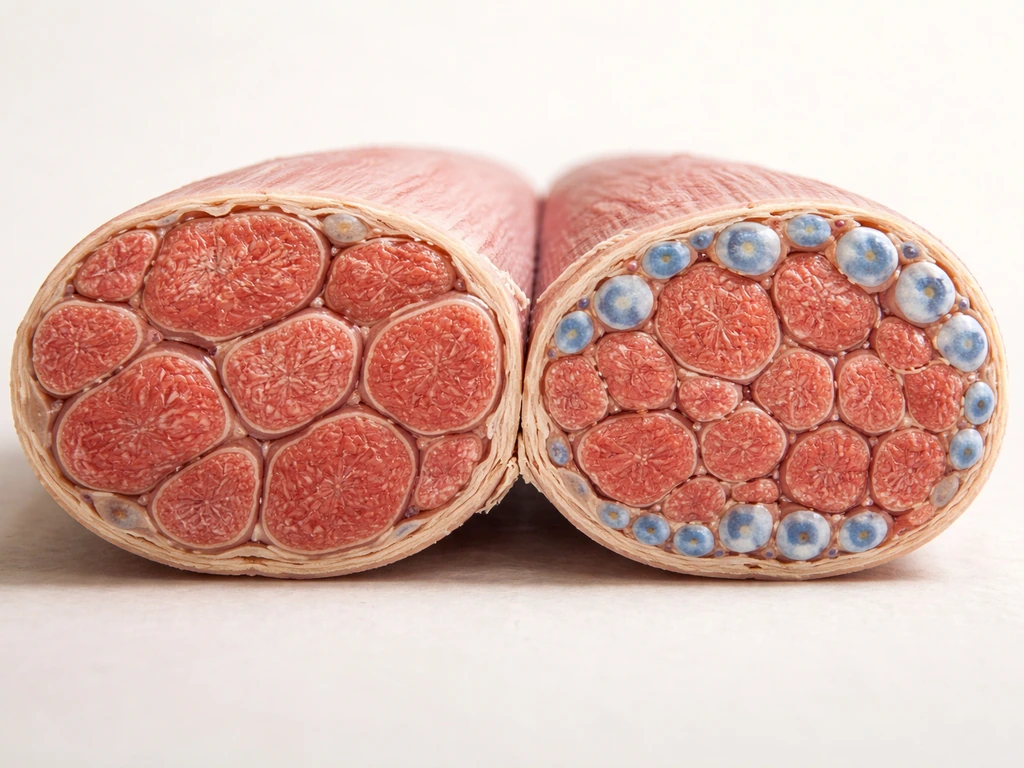
This is genuinely one of the most common points of confusion in fitness, so let's clear it up. Adult muscle fibers are what scientists call post-mitotic, meaning they've stopped dividing. When you gain muscle, you're not producing new muscle cells. Instead, the existing fibers enlarge. That enlargement process is hypertrophy, and it's the dominant mechanism behind muscle growth in humans.
There's a competing theory called hyperplasia, which is the idea that muscle fibers might split or that new ones might form. Some animal studies have shown this is possible under extreme loading conditions, but when it comes to humans, the debate between hypertrophy and hyperplasia is essentially settled. A 2025 systematic review and meta-analysis found that meaningful changes in fiber number are unlikely in humans following resistance training interventions lasting up to six months. For practical purposes, you can set hyperplasia aside.
Now, there's one important supporting character in this story: satellite cells. These are muscle stem cells that live on the surface of muscle fibers. They don't create new fibers in meaningful numbers, but they do donate nuclei to existing fibers as those fibers enlarge. More nuclei means more genetic machinery to support protein synthesis in a bigger cell. Research in elite weightlifters has confirmed that resistance training activates satellite cells and triggers anabolic signaling through the mTOR pathway. And interestingly, one study found that creatine supplementation combined with strength training amplified the increase in satellite cell number and myonuclei concentration beyond training alone, which hints at why creatine is more than just an energy booster. The bottom line: your muscle fibers grow bigger, satellite cells help support that growth, and new fiber formation is not a meaningful contributor in healthy adults doing typical training.
One important caveat for older adults: research in men and women aged 83 to 94 found a lack of fiber hypertrophy, limited myonuclear addition, and minimal satellite cell pool expansion in response to resistance training. This doesn't mean older adults can't build muscle (they can, at 60, 70, even 80), but it does suggest that very advanced age can blunt some of these cellular mechanisms. If you're wondering whether it's actually possible to grow more muscle fibers, the answer for most people is: not meaningfully, but growing the fibers you have is more than enough.
What's actually happening inside your muscle when it grows
Here's the sequence that matters. You apply a training stimulus, specifically mechanical tension and metabolic stress on muscle fibers. That stress causes microscopic damage to the contractile proteins inside those fibers. Your body detects this disruption and launches a repair response. Satellite cells activate, mTOR signaling ramps up, and muscle protein synthesis (MPS) is elevated above baseline. If you've supplied enough protein and calories, the repair process doesn't just restore the fiber to its previous state. It builds it slightly larger and stronger. Repeat that cycle over weeks and months, and you accumulate visible, measurable muscle.
The key molecular driver is the mTOR pathway, sometimes called the master switch for muscle protein synthesis. Resistance exercise activates it. Dietary protein, particularly leucine from high-quality protein sources, activates it further. Without the training stimulus, extra protein doesn't flip this switch adequately. Without adequate protein, the training stimulus creates a repair demand your body can't fully meet. Both inputs are necessary, which is why you can't out-train a poor diet or out-eat a lazy training program. For a deeper look at the cellular mechanics, how muscle fibers grow at the cellular level is worth understanding in more detail.
One thing that trips people up: muscle protein synthesis is elevated for roughly 24 to 48 hours after a training session, then returns to baseline. That's your window. If you're not eating enough protein consistently across those days, you leave adaptation on the table. This is also why training frequency matters, which we'll get to shortly.
Training that actually drives muscle growth

Progressive overload is non-negotiable
Your muscles adapt to the demands placed on them. If those demands don't increase over time, adaptation stops. Progressive overload means systematically increasing the challenge: more weight, more reps, more sets, or less rest. It doesn't have to happen every session, but there needs to be a clear upward trend over weeks. Without it, you're maintaining, not growing. Most people who plateau aren't sleeping poorly or under-eating protein; they've just stopped making their training harder.
Volume and frequency: how much is enough

Volume (total sets per muscle group per week) has a dose-response relationship with strength and hypertrophy gains. A meta-analysis examining weekly set volume found a graded relationship between sets and strength outcomes, meaning more volume generally produces more adaptation up to a point. For most people, 10 to 20 working sets per muscle group per week is a solid target range, with beginners on the lower end and more advanced lifters pushing higher.
Frequency matters too, but mainly because it's an easy way to accumulate volume. Training a muscle twice per week tends to outperform once per week when total volume is equated, partly because it spaces out the MPS stimulus across the week rather than cramming it all into one session. A meta-analysis on training frequency found benefits from higher frequency, though volume remains the primary driver. If you can only train each muscle once a week and get your sets in, that works. Twice per week is generally more practical for volume management and recovery.
Rep ranges and intensity
The traditional 8 to 12 rep range is still solid for hypertrophy, but research has clarified that heavier sets (5 to 7 reps) and lighter sets (15 to 30 reps) can also drive hypertrophy when taken close to failure. The common thread is proximity to failure, not a specific rep number. Training with 2 to 3 reps in reserve on most working sets hits the sweet spot between adequate stimulus and manageable fatigue. The goal is not to destroy yourself; it's to provide a signal that's just outside your current capacity.
Nutrition that supports the growth signal
Protein: the most important number
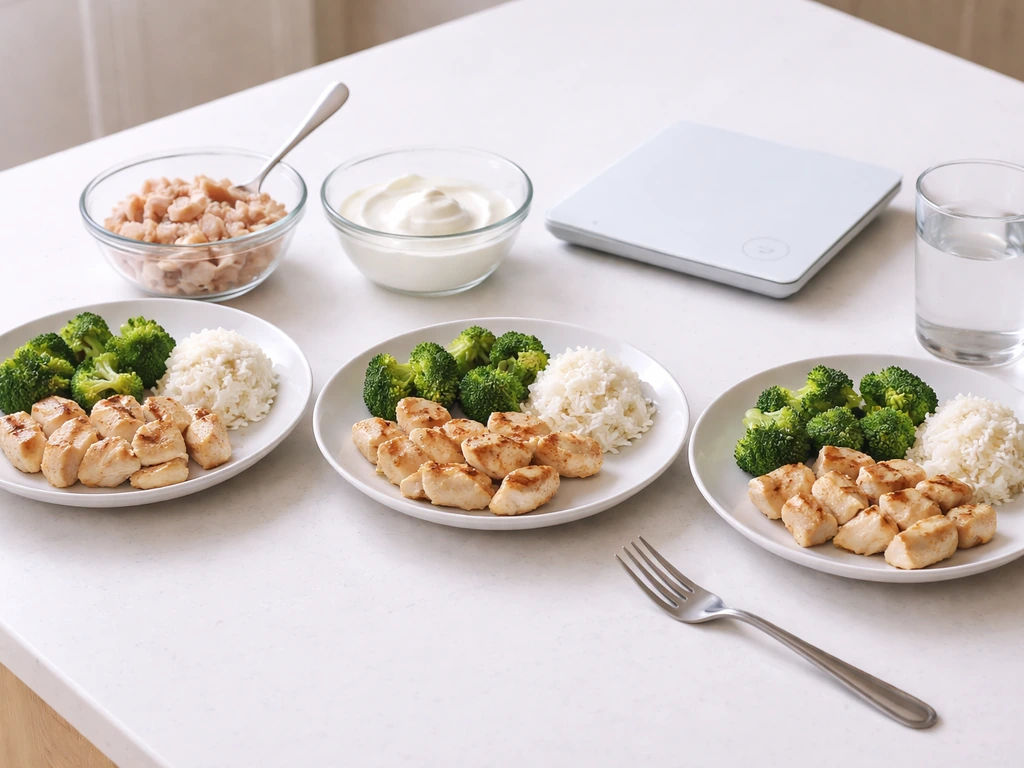
Protein is the structural raw material for muscle repair and growth. The evidence-based target for maximizing muscle protein accretion with resistance training is around 1.6 g per kg of body weight per day, with some reviews suggesting benefits up to 2.2 g/kg/day. A landmark meta-analysis and meta-regression found that protein supplementation benefits plateau at approximately 1.6 g/kg/day, with higher intakes showing diminishing returns for fat-free mass gains. For a 180-pound (82 kg) person, that's roughly 130 to 145 grams of protein per day. That's achievable through food alone, though supplements can make it more convenient.
Spreading your protein across three to four meals tends to maximize MPS stimulation throughout the day, since each meal with adequate leucine (roughly 2.5 to 3 grams) can independently trigger a protein synthesis response. Think of it as hitting the mTOR switch multiple times daily rather than once with a massive protein load.
Protein timing: helpful but not magic
You've probably heard you need to chug a protein shake within 30 minutes of finishing your workout. The reality is more relaxed. A meta-analysis on protein timing concluded that meeting your total daily protein requirement is far more important than the specific timing of pre- or post-workout protein. If you're eating enough protein across your day, the 'anabolic window' is less critical than the fitness industry suggests. That said, having protein within a few hours on either side of training is sensible and easy to manage.
Calories and the energy equation
Muscle growth requires energy. If you're in a significant caloric deficit, your body prioritizes survival over building new tissue. A modest surplus (200 to 400 calories above maintenance) is the sweet spot for most people trying to gain muscle while limiting fat accumulation. If you're a beginner, you can often build muscle in a deficit or at maintenance because your body is highly responsive to the training stimulus. More advanced lifters generally need a surplus to continue progressing. Carbohydrates are your primary fuel for resistance training sessions and for replenishing muscle glycogen afterward. Fats support hormone production, including testosterone. Neither should be cut to extreme lows.
Supplements: what's worth your money
Most supplements are not necessary, and some are genuinely useless for muscle growth. But a few have enough evidence behind them to warrant a practical mention. Here's a clear breakdown:
| Supplement | Evidence Level | Practical Use | Realistic Expectation |
|---|---|---|---|
| Creatine monohydrate | Strong | 3 to 5 g/day consistently | Greater strength gains, ~1.4 kg more lean mass vs placebo in older adults; may support satellite cell activity |
| Whey protein | Strong (as protein delivery) | Post-workout or between meals | Improves body composition when total protein intake is otherwise insufficient |
| Caffeine | Moderate (performance) | Pre-workout, 3 to 6 mg/kg body weight | Improves strength and endurance during sessions; not a direct muscle-building agent |
| Beta-alanine | Moderate (endurance buffer) | 3.2 to 6.4 g/day for several weeks | Builds muscle carnosine over 4+ weeks; most useful for high-rep or high-volume training |
| Protein powders beyond targets | Weak | Not needed above ~1.6 g/kg/day | Diminishing returns; extra protein beyond target adds little to fat-free mass |
Creatine is the standout. A meta-analysis found that creatine plus resistance training produces greater strength gains than training with a placebo in adults under 50, and a separate analysis reported approximately 1.4 kg greater lean tissue mass gains in older adults compared to placebo groups. For beta-alanine, results build slowly: muscle carnosine levels rise over multi-week supplementation periods, typically requiring up to 28 days at 3.2 to 6.4 grams per day to meaningfully affect performance. If you want to understand how muscles grow and repair after training, it helps to see supplements as tools that support the underlying biology rather than replacing the hard work of training and eating well.
Caffeine is worth mentioning as a performance aid: it can help you train harder, lift more, and push through more volume in a session. The meta-analysis on caffeine in strength training confirms effects on muscular endurance and maximum strength performance. But caffeine itself doesn't build muscle. It helps you create a better stimulus. That distinction matters.
Recovery, timelines, and why rest is part of the program

Sleep is when the actual growth happens
You don't grow in the gym. You grow while you sleep and recover. A study on total sleep deprivation found that even one night without sleep can create a more catabolic hormonal environment and impair muscle protein synthesis-related processes. Another study showed that acute sleep restriction following heavy training impaired next-morning performance and skeletal muscle function. In older adults with obesity, poor sleep quality was associated with lower muscle mass and weaker grip strength compared to good sleepers. Seven to nine hours per night isn't a luxury; it's where your gains are made. If sleep is consistently poor, no amount of protein or volume will fully compensate.
Stress, deloads, and managing soreness
Chronic psychological stress elevates cortisol, which is catabolic and suppresses the anabolic environment you're working to create. This doesn't mean stress is an excuse to skip training; in fact, exercise is one of the best tools for managing stress. But if you're in a prolonged high-stress period and also training hard, expect slower progress and prioritize recovery.
Soreness does not equal growth. This is a myth worth killing outright. Delayed onset muscle soreness (DOMS) is a sign of novel stress, not a reliable indicator of productive training. You can have incredibly productive sessions with minimal soreness once your body adapts to a movement pattern. Chasing soreness is a fast path to overreaching.
Deload weeks, where you reduce volume and intensity by 30 to 50% every 4 to 8 weeks, are a real part of smart programming. They allow connective tissue and the nervous system to recover fully. Many people find their strength actually improves the week after a deload, which is the body catching up with the adaptation stimulus.
Realistic timelines
Beginners can expect noticeable strength gains within 2 to 4 weeks (mostly neural adaptation) and visible muscle changes within 6 to 12 weeks of consistent training and eating. Intermediate lifters might gain 1 to 2 pounds of muscle per month under good conditions, slowing to 0.5 pounds or less as they advance. Older adults, particularly those over 60, can absolutely build meaningful muscle with consistent resistance training, though the timeline may be slower and protein needs may be at the higher end of the target range (closer to 2 g/kg/day). Understanding how muscle grows over time helps set realistic expectations so you don't quit too early when progress feels invisible.
Common mistakes and what to do differently starting today
Most people who aren't seeing muscle growth are making one of a small number of predictable errors. Here are the most common ones and a direct fix for each:
- Not training with progressive overload: If you're doing the same weight for the same reps week after week, adaptation has stopped. Add 2.5 to 5 pounds to the bar when you can hit the top of your target rep range with good form.
- Eating too little protein: Most people significantly underestimate how much protein they're getting. Track your intake for one week and aim for 1.6 g/kg of body weight daily as a minimum.
- Ignoring total calories: Protein alone won't build muscle if you're in a significant deficit. Estimate your maintenance calories and add a modest surplus if muscle gain is the primary goal.
- Expecting too much too soon: Social media shows transformations compressed into highlight reels. Real muscle growth takes months of consistent effort to become visually obvious. Trust the process.
- Relying on supplements to fix a poor training or nutrition foundation: Creatine helps, but it won't rescue an inconsistent program. Get the basics right first.
- Skimping on sleep: If you're averaging six hours or less, you're working against your own progress. Sleep is a training variable, not optional recovery.
- Avoiding resistance training due to age: Research is clear that resistance training drives muscle adaptation in adults of all ages. Starting at 50, 60, or 70 is not too late. The biology still works.
Next steps by experience level
If you're a beginner, the most important thing is to start a structured resistance training program (three days per week, full body, focusing on compound movements) and hit your protein target daily. Don't overthink the rest. The early gains will come relatively easily. If you're an intermediate lifter who has stalled, audit your volume and progressive overload first, then look at sleep and calories. If you're an older adult, prioritize protein at the higher end of the target range, train with resistance at least twice per week, and don't let soreness or joint sensitivity become excuses to stop, since a closer look at how muscles grow visually can reinforce why the process is worth the consistency.
The mechanism of muscle growth is not complicated once you strip it back: apply a progressive mechanical stimulus, supply adequate protein and energy, give your body time to repair and adapt. That's the loop. Understanding why muscle cells don't divide yet muscles still grow is actually empowering because it means every action you take in the gym and kitchen is supporting the enlargement of fibers you already have. You're not waiting for something new to appear. You're building what's already there.
FAQ
If muscle cells do not multiply, what actually makes muscles bigger over time?
Because adult muscle fibers do not divide meaningfully, your “growth” comes from enlarging existing fibers (hypertrophy) supported by added myonuclei from satellite cells. Practically, that means your results depend on progressive training stimulus plus enough protein and total calories, not on anything that “creates new fibers” directly.
Can muscles grow if I use light weights instead of heavy ones?
Yes, but it depends on whether the load is high enough to create enough mechanical tension and proximity to failure. If you use very light resistance and stop far from failure, you may not reach the cellular signals that raise mTOR-driven muscle protein synthesis.
How close to failure do I need to go for muscle growth?
Train hard enough that most working sets end with about 0 to 3 reps in reserve for at least some sets, and ensure the set is long enough to create metabolic stress (often achieved with higher reps or controlled tempo). If you never approach that threshold, you can stay sore or tired without sufficient hypertrophy signaling.
Do I need to train different rep ranges or exercises to grow all muscle fibers?
Mixing fiber “types” is not your lever, but exercise selection still matters for stimulus. Different angles and grips challenge the same muscle with different mechanical stress patterns, which can help you hit your weekly set targets without overusing a single movement.
How many days per week do I need to train for growth, and why can’t it be only one workout?
A single session is not enough, since protein synthesis elevation is temporary. If you want to maximize the daily adaptation environment, aim to distribute your sets across the week (often 10 to 20 working sets per muscle group) and keep protein consistent across the day.
What happens if I stop training for a few weeks, do muscle growth cells disappear?
You can lose growth momentum during long breaks, mainly because the stimulus drops, not because satellite cells “go away.” After returning, ramp volume gradually (for example, 50 to 70% of your usual sets for 1 to 2 weeks) to avoid an aggressive fatigue spike and to reestablish progressive overload.
How do I know if I’m progressing enough to grow, not just training?
If you are not progressing (weights, reps, or total hard sets) you are likely maintaining rather than building. Use a simple check: pick 2 to 4 compound lifts or key variations per week, log performance, and when you complete the top end of your rep range for all sets, add small weight next session.
Can I grow muscle in a calorie deficit without completely ruining my results?
It is possible to build muscle while using a calorie deficit, but the tradeoff is slower gains and higher risk of stalling when recovery is not ideal. If you see strength and performance stop improving for 2 to 3 weeks, increase calories slightly or reduce training volume to reestablish adaptation.
Is it okay to rely on protein shakes if I struggle to eat enough food?
Yes, especially if total daily protein is met and spread across meals. If appetite is low during a diet, protein shakes can be a practical tool to hit targets, but they still should support the training stimulus and daily calorie plan.
If I am very sore, does that guarantee I will grow?
Not necessarily. The key is total weekly volume near failure with adequate recovery. If your routine has many sets but low effort (far from failure) or too much fatigue (poor sleep, excessive intensity), soreness can increase while hypertrophy signaling does not.
What is the most practical approach to protein timing around workouts?
Timing matters less than consistency, but there are practical edges. Since training drives elevated protein synthesis for about 24 to 48 hours, aim to get most of your daily protein target across that window, not all at once, and prioritize an easy-to-meet meal within a few hours after training.
Is creatine worth it for older adults or beginners who lift less total volume?
Creatine supports training performance and has a specific advantage for increasing lean mass in some age groups. If you are older or have reduced training volume, creatine can still help you train with more consistency and total work, which indirectly supports hypertrophy.
How much does sleep affect muscle growth compared with protein and lifting?
Since sleep loss impairs muscle protein synthesis-related processes, poor sleep can blunt your “molecular switch” even when training and protein are on point. If you cannot reach 7 to 9 hours reliably, reduce training intensity or volume slightly on low-sleep days rather than pushing harder.
Do I need a deload even if I still want to train hard every week?
A deload is most useful when performance is trending down, loads are stuck, or fatigue markers feel high. If you feel fresh and progressing, you can delay it, but if you repeatedly fail reps or your joints feel worse, a structured 30 to 50% reduction in volume and some intensity for 1 week can reset recovery.