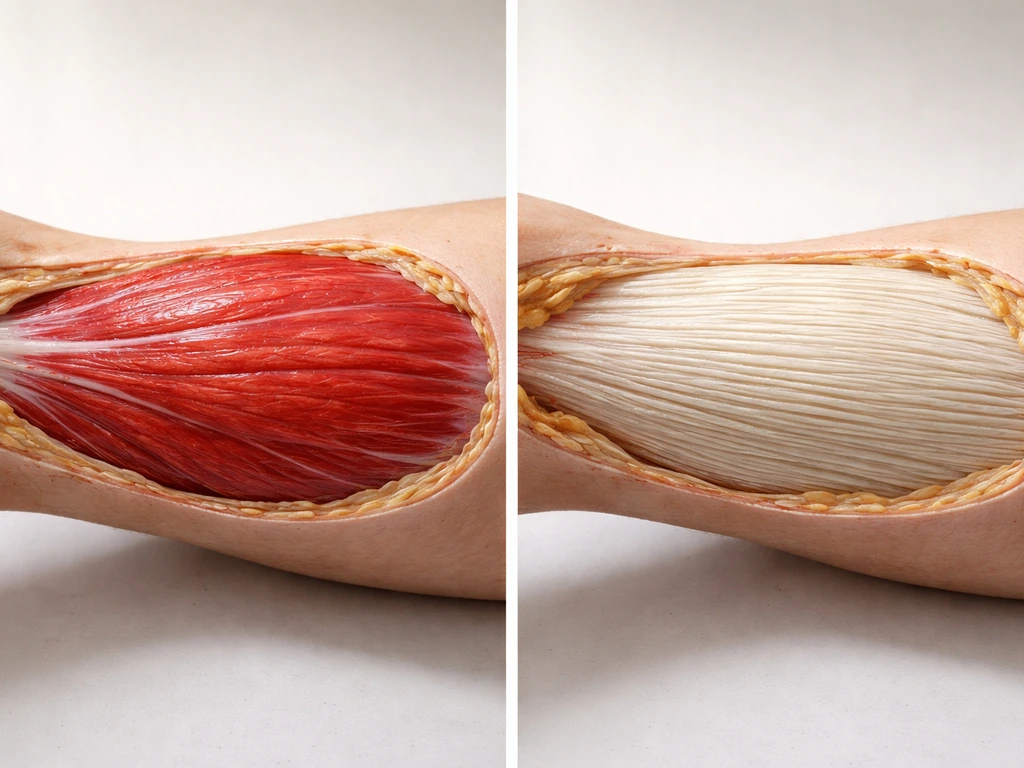
Muscles grow by getting physically larger at the fiber level, a process called hypertrophy. When you put a muscle under enough stress, your body responds by rebuilding the fibers slightly thicker and stronger than before. Do that repeatedly over weeks and months, and you accumulate real, visible size and strength. That's the short version. But understanding the details, specifically what triggers growth, when it actually starts, why it sometimes stalls, and exactly what to do today, makes the difference between spinning your wheels and making consistent progress.
How Muscle Grow: Science, Timeline, and Practical Plan

Marcus Kellerman
3 Apr 2026

What muscle growth actually is (and why your body does it)
Skeletal muscle is made up of fibers, and those fibers are packed with protein filaments called myofibrils. Hypertrophy means those fibers increase in cross-sectional area: more myofibrils, more contractile protein, bigger fiber. Your body doesn't do this for fun. It's an adaptation to demand. When training stress exceeds what your muscle can comfortably handle, the body interprets that as a signal to build something more capable of handling that stress next time. If you want to understand how muscles grow and repair at the tissue level, it comes down to breaking down damaged protein and synthesizing new, more abundant protein in its place.
The question of whether you can also grow entirely new muscle fibers (hyperplasia) comes up a lot. The honest answer is: probably not, at least not meaningfully. Research examining exercise-induced skeletal muscle growth concludes that hyperplasia in humans is not yet substantiated, and any small increase in fiber number, if it happens at all, is most likely related to satellite cell activity rather than true fiber splitting. So for practical purposes, growth means bigger fibers, not more fibers.
If you want to go deeper into the cell biology, the question of how muscles grow, hyperplasia or hypertrophy, is worth exploring. But in terms of what you're actually training for, hypertrophy is the mechanism that matters.
What triggers muscles to grow

Three main mechanisms drive hypertrophy: mechanical tension, metabolic stress, and muscle damage. Mechanical tension, the force your fibers generate when they contract under load, is considered the primary driver. When you lift a weight that's genuinely challenging, that tension activates a signaling cascade inside the muscle cell. The key molecular player here is mTORC1, a protein complex that controls the machinery responsible for building new muscle protein. mTORC1 ramps up protein translation and synthesis, which is the actual process of growing bigger fibers. Without this signal being activated repeatedly and adequately, growth simply doesn't happen.
Satellite cells are also part of the story. These are stem-cell-like cells that sit along muscle fibers and activate when the fiber is stressed. They fuse to existing fibers and donate their nuclei, helping the fiber support more protein synthesis over time. Research on how muscle cells grow shows that this satellite cell contribution becomes especially important during sustained training phases, not just the first few weeks.
Proximity to failure matters too. You don't need to grind every set to absolute failure, but you need to get close enough that the muscle fibers you're trying to grow are actually being recruited and challenged. Research on training proximity to failure consistently shows that stopping 1 to 3 reps short of failure produces similar hypertrophy to training to complete failure, with less accumulated fatigue. The key word is challenging, not destroyed.
When do muscles actually start growing
This is where a lot of people get confused, because strength and size don't follow the same timeline. In the first one to two weeks of a new training program, your strength will improve, sometimes noticeably, but your muscles haven't actually gotten bigger yet. Those early gains are almost entirely neural: your nervous system is getting better at recruiting motor units and coordinating firing patterns. Your muscles are the same size; you're just using them more efficiently.
Actual structural hypertrophy begins around weeks three to five. Some research suggests measurable increases in cross-sectional area can appear within three to four weeks, though early changes are partly confounded by muscle edema (swelling from training stress) rather than pure myofibrillar growth. By the time you hit eight to twelve weeks of consistent training, real, measurable fiber growth is well established. Understanding the nuances here, including what's happening at the fiber level, is covered well in resources explaining how muscle fibers grow over time.
A practical rule of thumb: expect neural strength improvements in weeks one to three, visible and measurable size changes starting around weeks four to eight, and meaningful aesthetic transformation in three to six months of consistent, well-structured training. Beginners tend to progress faster initially because they have more untapped neural and hypertrophic adaptation headroom.
How muscle actually gets bigger: the mechanics inside the fiber
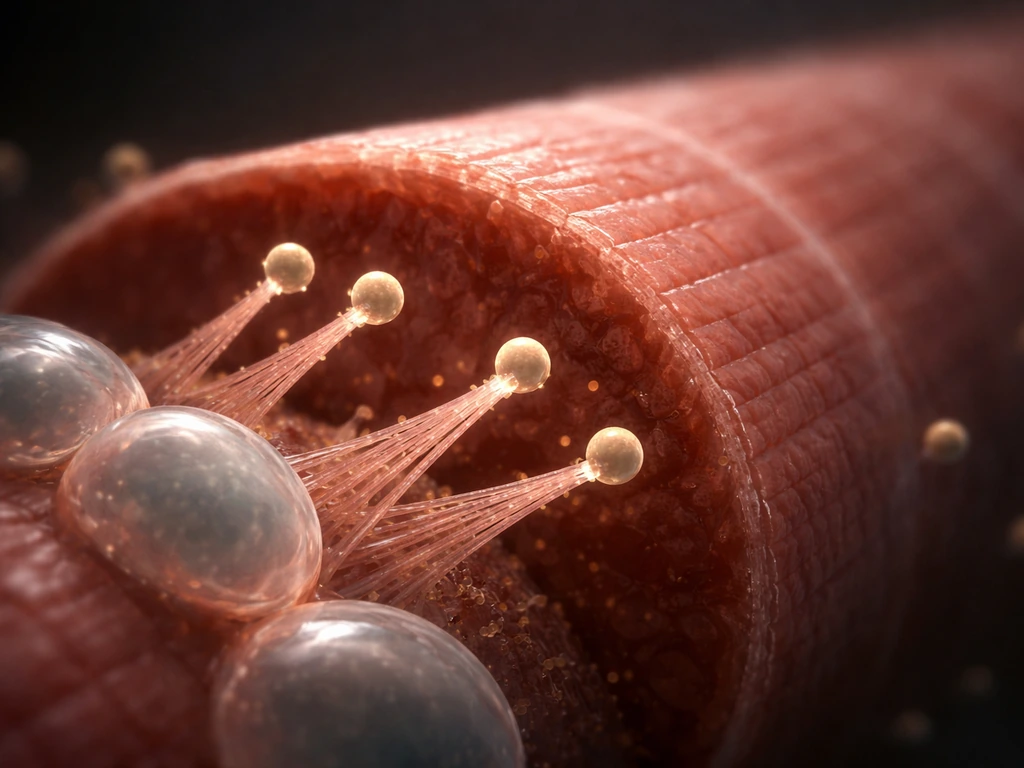
When training stimulus and nutrition are right, mTORC1 activation drives increased protein synthesis inside the fiber. Ribosomes build more contractile proteins, specifically actin and myosin, which pack into new myofibrils. Those myofibrils stack alongside existing ones, literally widening the fiber's diameter. The muscle doesn't inflate like a balloon; it restructures at the protein level, which is why the process takes weeks, not days.
Satellite cells contribute by fusing to the fiber and adding myonuclei. More nuclei mean more capacity to produce protein and sustain a larger fiber volume, a concept called the myonuclear domain. In older adults specifically, research shows that resistance training increases fiber cross-sectional area with complex myonuclear dynamics, and that satellite cell activity is very much part of the remodeling process. One study in older men showed retraining over 12 weeks produced roughly 29% type II fiber hypertrophy alongside 72% increases in satellite cell number, illustrating just how active that repair and rebuilding machinery can be.
If you're curious about the cell-level mechanisms and want to understand how muscles grow when muscle cells don't divide the way most cells do, the satellite cell story is the answer. It's a genuinely elegant system.
Why muscles get stronger before they get bigger
Size and strength are related but not the same thing. You can get meaningfully stronger in the first month of training with no appreciable increase in fiber size, purely because your motor unit recruitment improves. Conversely, a muscle can grow larger without your one-rep max going up proportionally if the volume-focused training you're doing isn't optimizing for maximal force production. This is why powerlifters and bodybuilders, training the same muscles, look and perform somewhat differently.
The scientific model here is well established: early strength gains are neural, later strength gains are structural. Once the nervous system has adapted, which happens faster in beginners and takes longer after you've been training a while, continued strength improvement depends heavily on having more contractile tissue to generate force. That's where size and strength converge. To dig deeper into the distinction between these two outcomes, the discussion on whether it's possible to grow more muscle fibers puts the size-strength relationship in useful context.
Why your muscles might not be growing

If you've been training consistently and not seeing progress, the problem almost always falls into one of four categories: insufficient training volume, inadequate protein intake, poor sleep and recovery, or being stuck in a comfortable but unchallenging routine.
Volume is one of the clearest dose-response relationships in hypertrophy research. A systematic review and meta-analysis quantifying weekly resistance training volume found that low volume (fewer than 5 sets per muscle per week) produced around 5.4% increases in muscle size, moderate volume (5 to 9 sets) around 6.6%, and high volume (more than 10 sets) around 9.8%. If you're doing one or two sets per muscle group per week and wondering why nothing is happening, volume is almost certainly the issue.
Protein is the other major lever. If you're not eating enough protein, your body doesn't have the raw material to build new muscle tissue regardless of how hard you train. The ISSN recommends 1.4 to 2.0 grams of protein per kilogram of bodyweight per day for most people doing resistance training. Research using meta-regression finds that gains in fat-free mass plateau around 1.6 g/kg/day for most people, meaning eating well above that threshold doesn't add much. But eating below it definitely costs you growth.
Sleep is underestimated. One night of sleep deprivation has been shown to reduce post-exercise muscle protein synthesis rates by around 18%. Chronic sleep restriction alters the protein degradation and synthesis pathways that regulate muscle maintenance and growth. If you're training hard but sleeping five to six hours, you're actively working against the adaptation you're trying to create.
Finally, progressive overload: if you're doing the same weights and reps you did three months ago, the muscle has already adapted to that stimulus and has no reason to grow further. You need to keep adding challenge, whether through more weight, more volume, shorter rest, or better technique that increases effective tension.
For a visual walkthrough of the whole growth process, a good muscle growth explainer video can help connect the mechanisms to the practical habits covered here.
Your practical plan to start growing muscle today
Here's what actually moves the needle, organized by the four pillars that the research consistently supports: training, nutrition, recovery, and supplementation.
Training: volume, intensity, and progressive overload

Aim for 10 or more working sets per muscle group per week as a starting target for meaningful hypertrophy. Beginners can start lower, around 6 to 8 sets, and build up. Each set should be taken to within 1 to 3 reps of failure, which gives you a strong hypertrophic stimulus without the excessive fatigue that comes from grinding every set to complete failure. Rep ranges of 6 to 30 can all produce hypertrophy as long as the effort is high enough, so use whatever range lets you maintain good form and actually challenge the muscle.
Train each muscle group at least twice per week. Frequency helps distribute volume across sessions, which is easier to recover from than cramming everything into one weekly session. Add progressive overload every one to two weeks: more weight, an extra rep, or an extra set. If nothing changes in your training, nothing changes in your muscle.
Nutrition: protein, calories, and timing
Hit 1.6 to 2.0 grams of protein per kilogram of bodyweight daily. A 180-pound (82 kg) person needs roughly 130 to 165 grams of protein per day. Spread this across three to four meals rather than trying to consume it all in one sitting. Research supports targeting around 0.4 g/kg per meal as a practical threshold to maximize muscle protein synthesis at each eating opportunity. Protein timing around training is a real but modest benefit: having protein in the hours surrounding your workout supports the anabolic response to exercise.
Total calories matter too. You can't build muscle aggressively in a significant calorie deficit. If you're trying to add size, a modest caloric surplus of 200 to 400 calories above maintenance is enough to support growth without excessive fat gain. If you're in a hypocaloric phase for fat loss, the ISSN notes you may need to push toward the higher end of the protein range (closer to 2.0 g/kg or above) to preserve muscle.
Recovery: sleep and stress management
Seven to nine hours of sleep per night is not a luxury; it's a prerequisite for muscle growth. Protein synthesis peaks during sleep, and even one night of deprivation measurably blunts that response. Stress management matters for the same reason: chronically elevated cortisol accelerates protein breakdown and suppresses anabolic signaling. You don't need to eliminate stress, but training hard while consistently under-sleeping and over-stressed is a losing equation.
Supplements: what's actually worth it
Creatine monohydrate is the most evidence-backed muscle-building supplement available. The ISSN recommends loading with 0.3 g/kg/day for five to seven days, then maintaining at 3 to 5 grams per day. It works by increasing the muscle's phosphocreatine stores, allowing more work per session. Human studies also show creatine supplementation paired with resistance training increases satellite cell number and myonuclei concentration, which directly supports the cellular machinery of hypertrophy. It's cheap, safe, and effective for most people.
Beta-alanine is worth considering if you do a lot of high-intensity work (think sets in the 10 to 30 rep range or high-intensity interval work). Doses of 3.2 to 6.4 grams per day over at least four weeks can raise muscle carnosine stores by 30 to 60%, which buffers acid buildup during intense effort and may let you do more quality volume. It won't directly grow your muscle, but it can extend the work you can do before fatigue cuts your sets short.
Protein powder is just food in convenient form. If you're hitting your daily protein target through whole foods, you don't need it. If you're not, a protein supplement is a practical fix, not a magic ingredient.
Rebuilding after time off
If you've lost muscle from detraining, injury, or a long break, the good news is that regrowth tends to happen faster than the original build. This is partly because the myonuclear content in your fibers (the nuclei added during your original training) persists longer than the fiber size itself. When you return to training, those nuclei are still there to support rapid protein synthesis, so the fibers can grow back to their previous size more quickly. The research on retraining in older men supports this: meaningful hypertrophy and satellite cell reactivation occur within 12 weeks of returning to structured resistance training. The practical takeaway is that returning to your previous training with appropriate volume and protein intake is enough to stimulate regrowth. You don't need a special protocol, just consistency.
Quick-reference training and nutrition targets
| Variable | Beginner target | Intermediate/Advanced target |
|---|---|---|
| Weekly sets per muscle group | 6–8 sets | 10–20 sets |
| Training frequency per muscle | 2x per week | 2–3x per week |
| Proximity to failure | 2–4 reps short | 1–3 reps short |
| Daily protein intake | 1.6 g/kg/day | 1.6–2.0 g/kg/day |
| Protein per meal | ~0.4 g/kg | ~0.4 g/kg |
| Daily calories | Slight surplus (200–300 kcal) | Surplus or maintenance |
| Sleep per night | 7–9 hours | 7–9 hours |
| Creatine (maintenance) | 3–5 g/day | 3–5 g/day |
The bottom line
Muscle grows because you give it a reason to, specifically enough mechanical tension and training volume, enough protein to build new tissue, and enough rest for the rebuilding to actually happen. Strength comes first (usually within two to four weeks), visible size follows (typically weeks four to twelve and beyond), and both keep improving as long as you keep adding challenge and supporting recovery. If you're not growing, check your weekly volume, check your protein intake, check your sleep, and check whether your training is still genuinely hard or just familiar. Fix those four things and the biology will follow.
FAQ
How close do I need to failure for hypertrophy, and what if I’m a beginner and can’t tell?
Use a simple effort scale: stop when you still have about 1 to 3 reps in reserve (RIR). If you cannot estimate reps reliably, pick a weight that lets you finish the set with controlled form and no technique collapse, then keep that same effort standard for 2 to 3 sessions before making small adjustments.
Does muscle growth happen if I use lighter weights but do lots of reps?
Yes, as long as the sets create enough effective tension, meaning the target muscle is still doing hard work near your chosen effort level. Very high-rep training can work, but if your form turns sloppy or the load is so light that you are far from failure, you are likely underdosing mechanical tension and stimulus.
Should I train each muscle every day to maximize how muscle grow?
Not automatically. For hypertrophy, consistency and weekly volume matter more than daily frequency. A practical approach is spreading volume across 2 or more sessions per week per muscle, leaving enough recovery so sets stay challenging (near 1 to 3 RIR) with good technique.
What’s the quickest way to fix stalled progress, volume, protein, or sleep?
Start with the two most common bottlenecks you can verify fast: weekly training volume and protein intake. If those are on target, then audit sleep and recovery for at least a full week, because even one or two short nights can reduce anabolic signaling enough to blunt progress. Progressive overload should be checked last, since stale routines usually show up as unchanged weights and reps.
How much protein timing matters around workouts, and do I need supplements?
Timing has a modest effect compared with daily total protein. Aim to hit your total grams per day, then distribute across 3 to 4 meals. If you struggle to meet targets, a protein shake can help, but it is not required if whole foods cover your number.
Do calories need to be in a surplus for muscle gain, or can I grow in a deficit?
You can gain some muscle in a deficit, especially if you are newer to training, but it is slower and depends heavily on maintaining training intensity and adequate protein. If your goal is noticeable size gain, a modest surplus (about 200 to 400 calories) is usually the most reliable setup.
Can I grow muscle if I’m doing cardio, and will it interfere?
Cardio is not automatically a problem, but heavy endurance training plus poor recovery can reduce your ability to add or maintain resistance-training volume. Keep cardio moderate, avoid stacking very hard sessions right before key leg or back days, and ensure sleep and calories are sufficient.
Is it normal that my strength improves before my muscles look bigger?
Yes, that pattern is common. Early progress often comes from improved nervous system recruitment and coordination, not immediate fiber thickening. If you are not seeing any size changes for several months despite consistent effort, that typically signals underdosed weekly volume, inadequate protein, or insufficient progressive overload.
How long should it take before I can see meaningful hypertrophy?
A reasonable expectation is visible changes around 4 to 8 weeks, more noticeable aesthetic shifts by about 3 to 6 months, assuming training remains challenging, volume is adequate, and recovery and nutrition are consistent. Individual results vary with starting experience and how well your technique keeps effective tension on target muscles.
Should I train to absolute failure to maximize how muscle grow?
Usually no. Training to complete failure more often increases fatigue and can reduce quality volume over the week. Using 1 to 3 reps in reserve lets you accumulate enough high-quality sets while keeping performance stable across sessions.
What supplements actually help for hypertrophy, and who should skip them?
Creatine monohydrate is the most consistently helpful for most people. Beta-alanine may be useful mainly if you do a lot of high-rep or high-intensity work, but it does not directly build muscle. If you already hit protein targets and your diet is solid, other supplements are optional, not foundational.
If I take a long break from lifting, do I lose all my muscle gains?
Not completely. Detraining reduces fiber size and performance, but satellite cell and myonuclear-related capacity can persist longer, so regrowth often happens faster than the first time. When you return, focus on rebuilding volume gradually with adequate protein, rather than doing an extreme “make up for lost time” plan.
How do I know my training volume is actually high enough for growth?
Track working sets per muscle per week (not total sets in the gym). If you are consistently below 5 sets per muscle per week, growth is often limited. If you are around 6 to 9 sets, you are in a moderate range, and going above 10 sets can help some people, but only if recovery is adequate and sets remain challenging.