Yes, it is possible to grow more muscle fibers in a very limited sense, but for most people the honest answer is: not reliably, not in large numbers, and not in a way that explains most of the muscle you'll ever build. The good news is that what you can reliably change through training and nutrition is enormous, and it's far more impactful than chasing extra fiber counts. Let's get into exactly what the science says and what you should actually do about it.
Can You Grow More Muscle Fibers? Evidence and How to Train

Marcus Kellerman
16 Apr 2026

What 'more muscle fibers' actually means

When people ask whether they can grow more muscle fibers, they're touching on a specific distinction in muscle biology: fiber number versus fiber size. These are two completely different things, and mixing them up leads to a lot of confusion and some genuinely bad training advice.
Fiber size refers to how big each individual muscle fiber gets, measured as its cross-sectional area (CSA). This is hypertrophy, and it's the main driver of the muscle growth you see in the mirror. Fiber number refers to how many individual muscle fibers you have in a given muscle. Adding new fibers would be hyperplasia, a fundamentally different biological process. Understanding whether muscles grow through hyperplasia or hypertrophy is the starting point for making sense of any muscle-building program.
Most of your muscle fibers were formed before you were born and in the first few years of life. The number you have as an adult is largely genetically set. Training doesn't add fibers the way bricklaying adds bricks. It does something more interesting, and more trainable, than that.
Can humans actually create new muscle fibers?
The short answer is: maybe a little, under specific conditions, but not in a way you can count on or engineer in a normal training program. Here's where the science stands.
Animal studies, particularly in cats and rodents subjected to extreme mechanical overload, have shown measurable increases in fiber number. But human data is far murkier. Directly counting total fiber numbers in a whole human muscle is methodologically brutal, so most research instead tracks fiber cross-sectional area, myonuclei counts, and satellite cell activity rather than true fiber counts. That distinction matters when you're trying to interpret headlines claiming that training grows new fibers.
What human studies do show clearly is that resistance training triggers satellite cells (the muscle stem cells that sit alongside your fibers) to activate, proliferate, and contribute new myonuclei to existing fibers. Some research has also identified increases in hybrid fiber types with centrally located nuclei after training, which is consistent with ongoing fiber remodeling. This is real, meaningful change, but it's not the same as creating a new, fully independent fiber from scratch. The reason muscle cells don't simply divide the way other cells do explains a lot about why adding fiber numbers is so constrained in adults.
The honest takeaway: true fiber hyperplasia may occur in humans in small, hard-to-measure amounts, especially with very high training volumes over years. But it's not the mechanism responsible for the muscle you build in the gym. Waiting or training specifically to get more fibers is like waiting for the bus that might never come when there's a perfectly good one already at the stop.
What actually makes muscles bigger
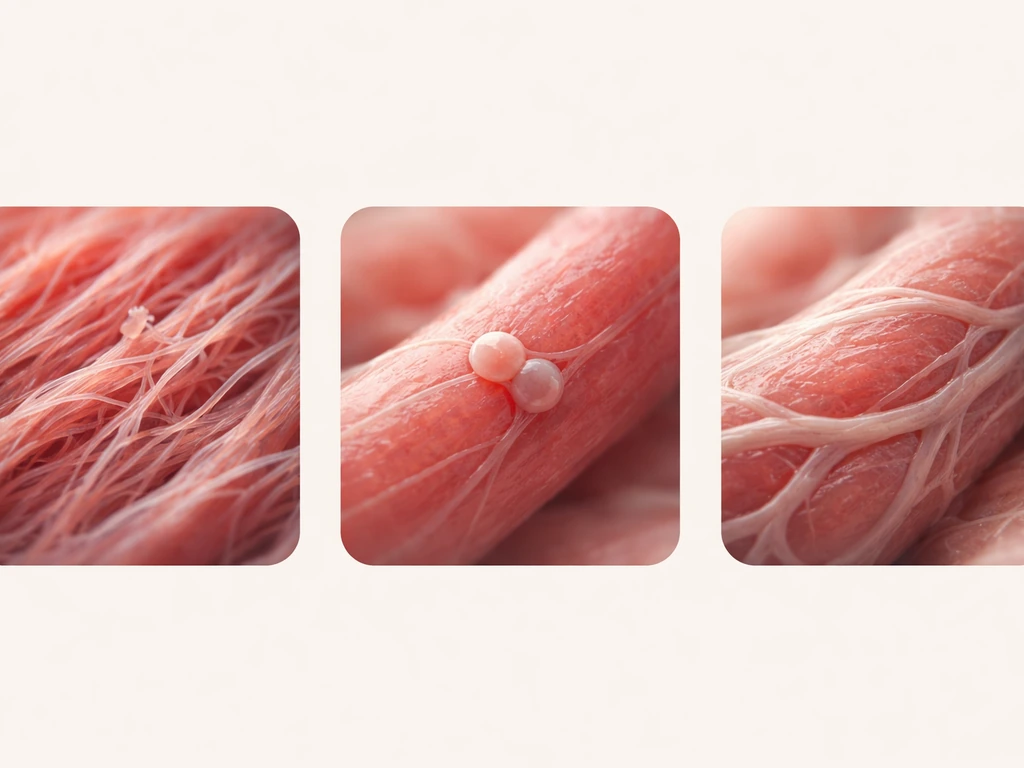
If fiber number barely budges, why do muscles grow so dramatically with training? The answer comes down to three main mechanisms operating at the cellular level, and all three are responsive to how you train and eat.
First, myofibrillar hypertrophy adds more contractile protein (actin and myosin) inside each fiber, making the fiber physically thicker. This is the structural growth that makes muscles look and feel denser. Second, the myonuclear domain expands: satellite cells donate new myonuclei to existing fibers, giving each fiber more 'control centers' to regulate protein synthesis, which allows the fiber to grow larger without becoming metabolically overwhelmed. Third, sarcoplasmic adaptations (including glycogen storage and fluid content) add volume to the fiber and the surrounding tissue. A closer look at how muscle cells grow gets into these mechanisms in more detail if you want the full cellular picture.
The practical implication is powerful: you have enormous control over fiber size, myonuclear content, and overall muscle volume. Fiber count is mostly fixed, but everything that determines how big and strong those fibers become is highly trainable. That's actually the better deal.
Training to maximize hypertrophy
The way muscles grow in response to training is driven primarily by mechanical tension, metabolic stress, and muscle damage, with mechanical tension being the most important lever. Your job is to structure training so that these signals are consistently applied and progressively increased over time.
Progressive overload is non-negotiable

Your muscles adapt to a given stimulus and then stop growing in response to it. Progressive overload, meaning gradually increasing the demand on the muscle over time, is how you keep the growth signal active. This usually means adding weight to the bar, but it can also mean more reps with the same weight, shorter rest periods, more sets, or improved range of motion. Any of these can constitute meaningful progression.
Volume, intensity, and rep ranges
For hypertrophy specifically, a wide rep range works. Sets of 6 to 30 reps, taken close to muscular failure, produce similar muscle growth as long as volume is equated. Most people do best with something in the 8 to 15 rep range simply because it balances load management with metabolic stress and is practical to progress. Aim for 10 to 20 hard sets per muscle group per week as a working range, with beginners starting at the lower end and more experienced lifters creeping toward the higher end as they recover well.
Frequency and program structure
Training each muscle group at least twice per week consistently outperforms once-per-week approaches for hypertrophy. A simple upper/lower split or push/pull/legs structure works well for most intermediate lifters. Beginners can make excellent progress on full-body training three days per week, which also maximizes the frequency each muscle gets stimulated. The best program structure is the one you'll follow consistently, so pick something sustainable.
| Experience Level | Frequency per Muscle | Weekly Sets per Muscle | Rep Range | Key Focus |
|---|---|---|---|---|
| Beginner (0-6 months) | 3x/week | 9-12 | 8-15 | Learning movement patterns, building base |
| Intermediate (6-24 months) | 2x/week | 12-18 | 6-20 | Progressive overload, volume increases |
| Advanced (2+ years) | 2-3x/week | 16-22+ | 6-30 | Variation, intensity techniques, specialization |
Nutrition that actually supports growth
You can train perfectly and still leave most of your muscle-building potential on the table if your nutrition doesn't support the process. How muscles grow and repair is a process that requires raw materials, and nutrition is where those materials come from.
Protein: the foundation
For most people pursuing muscle growth, 0.7 to 1 gram of protein per pound of body weight per day (roughly 1.6 to 2.2 grams per kilogram) is the target range supported by the research. Older adults benefit from sitting at the higher end of that range because muscle protein synthesis becomes less efficient with age, a concept called anabolic resistance. Spreading protein across 3 to 5 meals rather than loading it all into one or two sittings makes better use of each dose for muscle protein synthesis.
Calories: you need enough to grow
Building muscle requires a caloric surplus, or at minimum, maintenance calories. A modest surplus of 200 to 300 calories above your daily maintenance is a reasonable starting point. This minimizes fat gain while giving your body the energy it needs to synthesize new tissue. Very aggressive surpluses rarely result in proportionally more muscle and tend to just add more fat. Track your weight weekly and adjust calories if you're not seeing gradual upward movement.
Carbohydrates and meal timing
Carbohydrates fuel your training sessions and replenish muscle glycogen after them. Eating carbs around your workouts, in the 1 to 2 hours before and within a few hours after, supports training quality and recovery. Post-workout nutrition doesn't need to be immediate, but getting in a protein-and-carb meal within a few hours of training is a reasonable habit to build. Hydration also matters more than most people acknowledge: even mild dehydration reduces strength and training quality.
Recovery and lifestyle: the growth actually happens here
Training is the stimulus. Recovery is where the adaptation occurs. How muscle fibers grow at the cellular level depends on satellite cell activity, protein synthesis rates, and hormonal signaling, all of which are heavily influenced by sleep, stress, and recovery quality.
Sleep is your most underrated tool

Most muscle protein synthesis and growth hormone release happens during sleep. Getting less than 7 hours per night consistently blunts anabolic signaling, elevates cortisol, and impairs the satellite cell activity that drives myonuclear accretion. If you're sleeping 5 to 6 hours and wondering why your progress has stalled, there's your answer. Prioritize 7 to 9 hours like you prioritize your workouts.
Soreness, stress, and the myths around both
Muscle soreness (DOMS) is not a reliable indicator of a good workout or meaningful growth stimulus. You can have a highly productive training session and feel little soreness, particularly as you become more experienced. Chasing soreness by constantly switching exercises or programs is counterproductive because it prevents the progressive overload needed for long-term growth. Manage life stress alongside training stress: chronic psychological stress elevates cortisol, which competes directly with anabolic hormones and slows muscle repair.
Consistency beats everything
The single biggest variable in long-term muscle growth is showing up consistently over months and years. No supplement, advanced technique, or perfect program can substitute for training regularly, eating enough protein, and sleeping well. This sounds obvious, but it's genuinely the thing most people overlook when they're searching for the next edge.
What to expect and how to know it's working
Timelines matter because unrealistic expectations are one of the main reasons people quit. Watching how muscles grow in action can make the process feel more tangible, but here's what real-world progress actually looks like across different timeframes.
- Weeks 1 to 4: Most strength gains come from neural adaptation, meaning your nervous system learns to recruit existing fibers more efficiently. Muscle size changes are minimal at this stage, but strength improvements are real and often significant for beginners.
- Months 1 to 3: Measurable changes in muscle size begin to appear, particularly in trained muscles. Body composition shifts become visible to you if you're consistent with training and nutrition.
- Months 3 to 6: This is where beginners often see the most dramatic visible changes. A realistic rate of muscle gain for a beginner eating and training well is 1 to 2 pounds of muscle per month.
- Beyond 6 months: Progress slows and becomes more incremental. Intermediate lifters might gain 0.5 to 1 pound of muscle per month. Advanced lifters might add meaningful muscle over the course of a year rather than a month.
- Years 1 to 3+: Fiber remodeling, myonuclear accretion, and structural changes in connective tissue accumulate. This is when training history genuinely builds the 'base' that makes muscles respond faster to training after breaks.
Track progress with body weight (weekly average), circumference measurements of target muscles (monthly), training log numbers (weight and reps per session), and photos every 4 to 8 weeks. Strength going up plus weight staying stable or rising slightly is almost always muscle growth happening. If all three metrics are flat for more than 3 to 4 weeks, something in your training, nutrition, or recovery needs to change.
The bottom line on fiber number vs what you can actually control
True fiber hyperplasia in humans is real in a limited, hard-to-confirm sense, but it's not the basis of any practical muscle-building strategy. What you can absolutely and reliably change is fiber size, myonuclear content, motor unit recruitment, and the overall structural quality of your muscle tissue. The cellular growth process inside muscle is where the real action is, and every variable discussed here, training volume, protein intake, sleep, consistency, directly feeds into it.
Don't get caught up waiting for biology that may not cooperate. The mechanisms you can control are already sufficient to produce dramatic, lifelong improvements in muscle size, strength, and function. Train progressively, eat enough protein, sleep well, and stay consistent. That's the entire plan, and it works.
FAQ
If fiber number changes are uncertain, how should I measure progress in a way that actually reflects muscle growth?
In typical gym training, you should not plan programs around the goal of increasing fiber count. Instead, track signs of growth that align with hypertrophy and remodeling, like increasing total weekly sets taken close to failure, gradual strength gains, and small monthly increases in muscle circumference, because those reflect changes in fiber size and myonuclear support rather than new fiber formation.
Do I need fiber hyperplasia to build muscle, or can I grow well without it?
You can still build muscle effectively even if you suspect your fiber number is not changing. The limiter is usually whether you can apply enough effective volume and progressive overload while recovering, not whether hyperplasia is happening. A practical checkpoint is whether your main lifts or working-set reps are trending upward over 6 to 12 weeks.
Does training with extremely high volume increase the chance of gaining new muscle fibers in humans?
Some people interpret “more fibers” as needing extreme training. The limited human evidence points toward very high, long-term overload being required, and even then it is hard to confirm. Rather than chase that, aim for your sustainable hypertrophy targets, typically 10 to 20 hard sets per muscle per week, using progression that you can maintain for months.
If I want bigger fibers, what training detail matters more, load, reps, or exercise choice?
The best way to increase fiber size is to ensure each set is close enough to failure and performed with sufficient mechanical tension. For most people, that means controlling load and technique and progressing reps or load over time, not constantly changing exercises in pursuit of a “new stimulus.”
Are there supplements or techniques that can reliably increase muscle fiber number?
No. You cannot safely “force” hyperplasia by taking a specific supplement, using a particular split, or doing a single special workout style. Supplements can support protein intake and training performance, but they do not replace the core inputs, progressive overload, adequate calories and protein, and consistent sleep and recovery.
What should I do if my strength and measurements stall, but I’m not sure whether it’s fiber number or something else?
If your weight and strength are flat for more than 3 to 4 weeks, the issue is often one of three things: insufficient effective volume or intensity, calories not at maintenance or surplus, or recovery breakdown (sleep, stress, total weekly training fatigue). Adjust one variable at a time, for example add 2 to 4 weekly sets per muscle or increase calories by about 200, then reassess after 2 to 3 weeks.
Does age change the likelihood of gaining more muscle fibers or the best way to train for muscle growth?
Yes, especially with aging. You may still not gain new fibers reliably, but you can improve how existing fibers respond through better training quality, higher protein targets (often closer to the upper end of 0.7 to 1 g per pound), and more emphasis on recovery. Older adults also tend to need more deliberate progression and less variance week to week.
Should I train until I’m very sore to maximize muscle growth?
If you are trying to maximize the remodeling process you can influence, avoid using soreness as your main metric. Some of the most productive sessions feel controlled and repeatable, not painful. Use objective markers like reaching your rep targets near failure with good form and seeing gradual progression in load or reps.