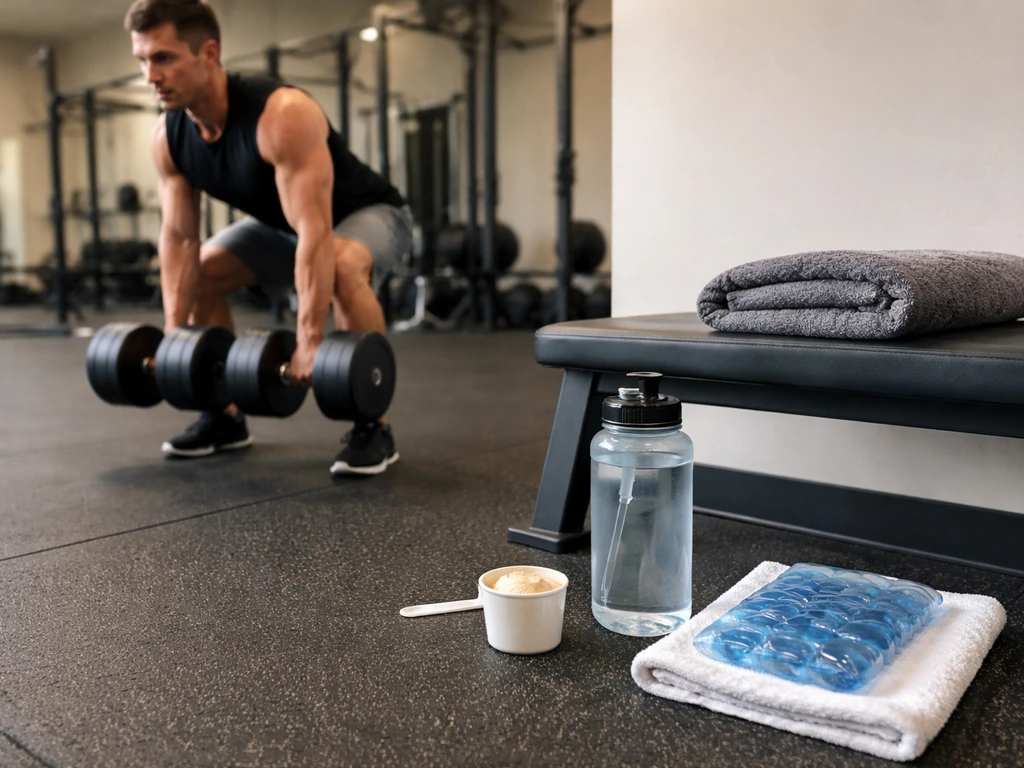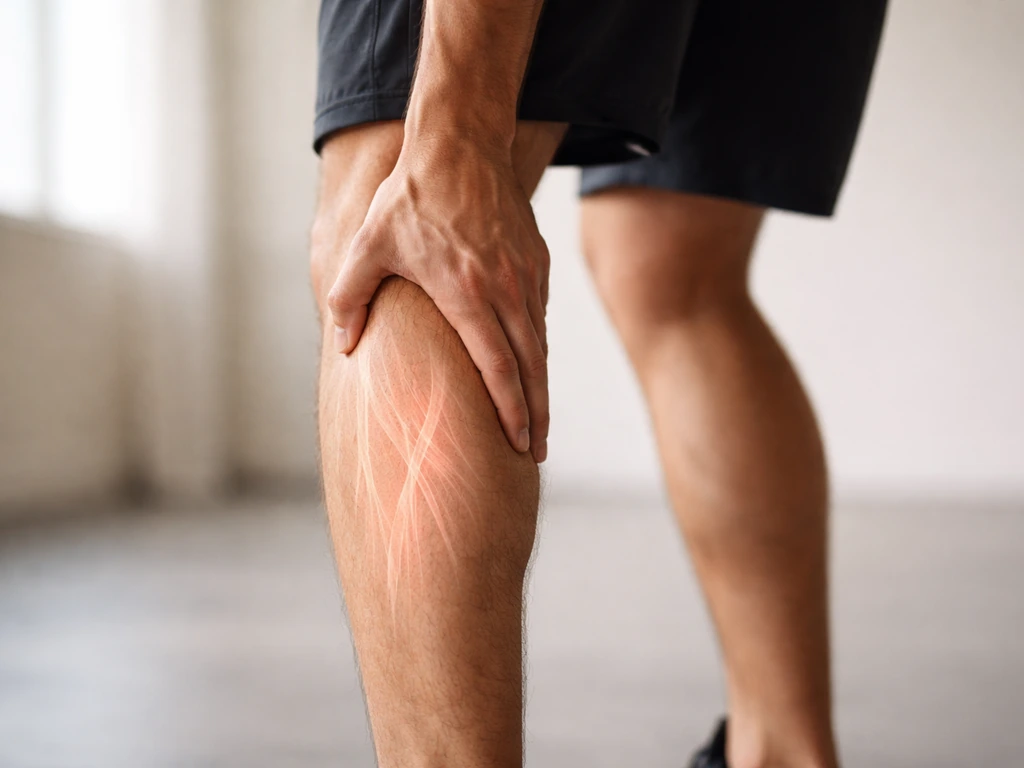
Yes, abs absolutely need protein to grow. They are skeletal muscle, the same tissue as your biceps or quads, and muscle protein synthesis is how all skeletal muscle repairs and grows after training. Without enough protein in your diet, your abs can't meaningfully increase in size or strength no matter how many crunches you do. That said, growing your abs and making them visible are two different goals, and protein alone won't get you a six-pack if you still have a layer of fat sitting on top of them.
Do Abs Need Protein to Grow? Nutrition and Training Guide

Marcus Kellerman
4 May 2026

Abs are just muscles, full stop
The rectus abdominis, obliques, and transverse abdominis are all skeletal muscle. They contract under load, experience mechanical stress, get damaged at the micro level during hard training, and rebuild through the same muscle protein synthesis process that governs every other muscle in your body. There is no special abdominal nutrition science. Nutrition guidance from the International Society of Sports Nutrition doesn't list a separate protein requirement for abs because none is needed: they follow the same rules as your chest or back.
Ultrasonography research has confirmed that rectus abdominis thickness varies meaningfully between individuals, which means abs can and do respond to training stimuli. They get bigger with sufficient training volume and protein, and they shrink without it. The distinction that matters is this: growing your abs is a nutrition and training problem, while revealing them is primarily a fat-loss problem. You need both if the goal is a visible six-pack.
How much protein do abs actually need
The practical target for anyone training for hypertrophy sits between 1.4 and 2.0 grams of protein per kilogram of bodyweight per day. That's the range the ISSN identifies as sufficient to optimize training-induced muscle adaptations. In pounds, that works out to roughly 0.64 to 0.9 grams per pound of bodyweight. For a 75 kg (165 lb) person, that's 105 to 150 grams of protein daily. The standard RDA of 0.8 g/kg is the minimum to prevent deficiency, not the target for building muscle. If you're training your abs hard and eating at RDA levels, you're likely leaving gains on the table.
How to spread that protein across the day

Per-meal dosing matters more than most people realize. Research shows muscle protein synthesis is maximally stimulated at around 0.25 to 0.3 grams of protein per kilogram of bodyweight per meal in younger adults, and closer to 0.4 g/kg in older adults. Beyond that threshold, you get diminishing anabolic returns from a single sitting. Maximizing single-meal anabolic response is reported in a JISSN evidence review as achievable at about 0.4 g/kg/meal across at least four meals per day, aligning with an overall target near 1.6 g/kg/day diminishing anabolic returns from a single sitting. For a 75 kg person, that's roughly 20 to 22 grams per meal for younger lifters. This is why spreading your protein across three to five meals tends to outperform cramming it all into one or two feedings. Schoenfeld and Aragon's work on per-meal protein limits supports distributing intake rather than relying on a single large bolus, while also noting the differences are modest when total daily protein is matched. Hit your daily total first, then think about distribution.
Protein timing around training is less critical than the fitness world often suggests. Getting protein within a few hours on either side of your workout is sensible, but obsessing over a 30-minute anabolic window is not necessary. What matters far more is consistently hitting your daily target spread across multiple meals.
| Bodyweight | Daily Protein (lower end, 1.4 g/kg) | Daily Protein (higher end, 2.0 g/kg) | Per Meal Target (3-4 meals) |
|---|---|---|---|
| 60 kg / 132 lb | 84 g | 120 g | 21–30 g |
| 75 kg / 165 lb | 105 g | 150 g | 26–38 g |
| 90 kg / 198 lb | 126 g | 180 g | 32–45 g |
| 100 kg / 220 lb | 140 g | 200 g | 35–50 g |
Best food sources to hit your target
Food first is always the right starting point. Eggs, chicken breast, Greek yogurt, cottage cheese, lean beef, canned tuna, salmon, and legumes are all solid everyday options. If you're consistently falling short on whole foods alone, a whey protein shake is a practical, cost-effective tool. Whey is fast-digesting and well-researched, but it's not magic: it's just a convenient way to hit a number you'd otherwise miss.
What else drives visible abs besides protein
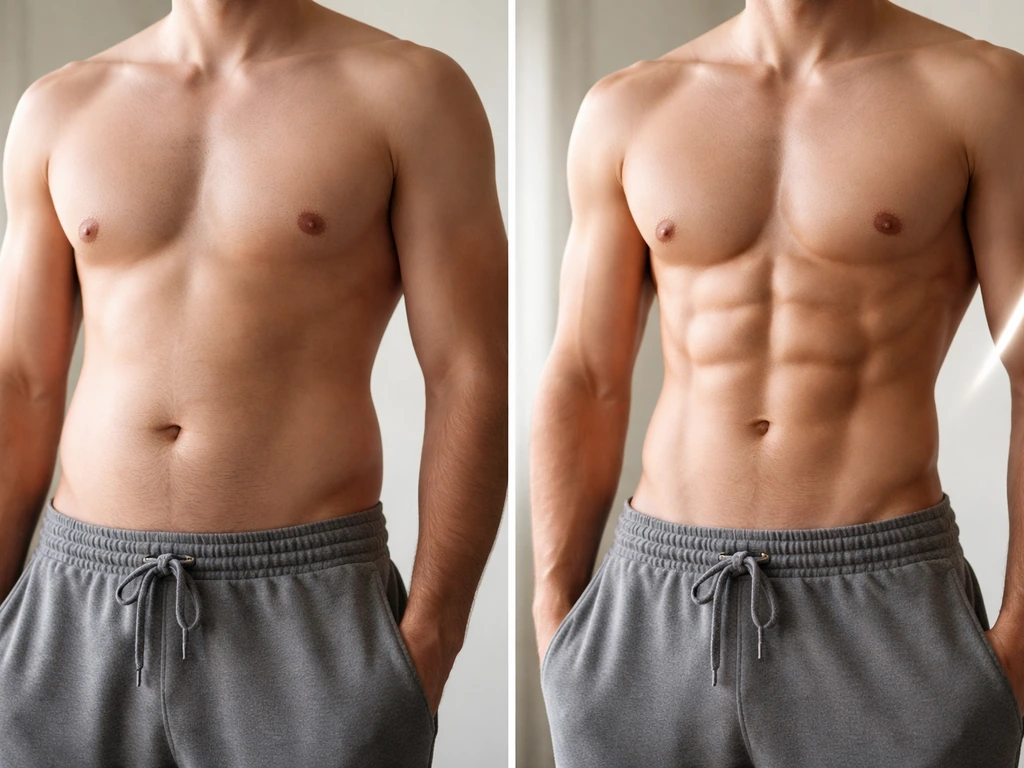
Protein builds the muscle. But visible abs require low enough body fat that the muscle shows through the overlying subcutaneous fat layer. Research measuring rectus abdominis thickness against subcutaneous fat thickness at the same site makes this relationship painfully clear: you can have well-developed ab muscles and still not see them if the fat layer is thick enough. Genetics determine exactly where your personal visibility threshold is, but the principle holds for everyone.
- Calorie balance: You need a modest calorie deficit (or at minimum maintenance calories) to reduce abdominal fat. Protein won't burn fat for you.
- Training progression: Progressive overload on ab exercises builds the muscle that becomes visible once fat comes off.
- Total training volume: Compound lifts like squats, deadlifts, and overhead presses recruit the core heavily and contribute to overall body composition.
- Consistency over time: Visible abs for most people take months to years of combined fat loss and muscle building, not weeks.
- Genetics: Fat distribution and the exact body-fat percentage at which abs become visible varies significantly between individuals.
Carbs and fats also matter in the broader picture. Carbohydrates fuel training performance, which directly affects how hard you can work your abs. Fats support hormone production including testosterone, which influences muscle-building capacity. None of these macronutrients replace protein's structural role in building muscle tissue, but cutting them too aggressively will undermine your training and recovery. Protein is the priority, but the other pieces still count.
Training abs for actual growth, not just burning them out
Most people train abs like they're doing cardio: high reps, no added resistance, no progression. That won't build much muscle. If you want your abs to grow, treat them like any other muscle group: progressive overload, adequate volume, and enough intensity to create mechanical tension.
Exercise selection
EMG research comparing different abdominal exercises shows meaningful differences in rectus abdominis activation across variations. One randomized ultrasound study reported that rectus abdominis shortening or thickening was most pronounced in the abdominal crunch compared with other exercises meaningful differences in rectus abdominis activation across variations. No single exercise hits everything perfectly, and different exercises load different regions and portions of the muscle. A smart approach uses a few well-chosen movements rather than doing every ab exercise you've ever seen.
- Cable crunches or machine crunches: Allow progressive overload with added weight, making them the best direct hypertrophy tool for rectus abdominis.
- Hanging leg raises or lying leg raises: Load the lower portion of the rectus abdominis and hip flexors; progress by adding ankle weights.
- Ab wheel rollouts: High activation of the full rectus abdominis and obliques; progress from knees to toes.
- Weighted decline crunches: Another solid loaded option with a clear overload path.
- Pallof press and anti-rotation work: Targets obliques and transverse abdominis with a stability demand.
Volume, intensity, and frequency targets
For hypertrophy, aim for 10 to 20 direct working sets per week for abs, split across two to three sessions. Sets of 8 to 15 reps with added resistance work well for loaded exercises; higher reps (15 to 25) are reasonable for bodyweight moves where load is harder to manipulate. The key variable most people ignore is progressive overload: if you're doing the same 20 bodyweight crunches you did six months ago, your abs have no reason to grow. Add weight, reps, or difficulty over time. Abs recover faster than larger muscle groups, so training them two to three times per week is sustainable and productive.
Recovery, sleep, and what "sore abs" actually means
Muscle growth happens during recovery, not during the workout. This applies to abs exactly as it does to any other muscle. Sleep is when the bulk of muscle protein synthesis and hormonal recovery occurs, so if you're training hard and sleeping five hours a night, you're working against yourself. Aiming for seven to nine hours is genuinely part of the abs program.
Soreness is not a reliable indicator of muscle growth. Abs often stop getting sore after a few weeks of training even when they're still adapting and growing. Don't chase soreness, chase progressive overload. If you're adding weight or reps over time and eating enough protein, you're likely growing even if you wake up feeling fine the next day.
One thing worth separating clearly: growing abs versus revealing abs happen on different timelines and through different mechanisms. You might be building ab muscle for months before fat loss uncovers it. This is frustrating but normal. Rest days, adequate sleep, and consistent protein intake all support the muscle side of that equation. Calorie management handles the fat side. Both need to be running simultaneously if you want the full result. If you're curious about how rest days fit into the muscle-building picture more broadly, that's worth understanding in its own right. Rest days can support recovery and muscle growth, as long as you keep your protein intake and training progression on track.
Common myths and mistakes worth clearing up
"You only need carbs, not protein, to grow abs"
No. Carbohydrates fuel training and replenish glycogen, but they don't provide the amino acids required to repair and build muscle tissue. If you do want to know whether carbs are needed to grow abs, it comes down to having enough training energy to support progressive overload Carbohydrates fuel training. Protein is structurally irreplaceable for muscle growth. Carbs and protein do different jobs. You need both, but they cannot substitute for each other when it comes to muscle protein synthesis.
"Abs are different from other muscles and don't need much protein"
They're not different. The ISSN doesn't list a special lower protein requirement for abdominal muscles because there isn't one. Rectus abdominis, obliques, and the muscles of the abdominal wall are skeletal muscle and follow the same muscle protein synthesis rules as everything else.
"More protein per meal means more muscle"
Not exactly. Muscle protein synthesis saturates at around 0.25 to 0.3 g/kg per meal in younger adults. Eating 150 grams of protein in one sitting won't produce three times the anabolic response of eating 50 grams. Spreading your intake across three to five meals is more efficient than piling it all into one or two.
What about creatine?
Creatine monohydrate is legitimately useful for resistance training performance and lean mass. Meta-analyses show it can enhance lean body mass changes during resistance training, with doses around 3 to 5 grams per day being the standard maintenance dose. It won't directly "grow your abs" or burn abdominal fat, but it can support higher-quality training sessions and modestly improve body composition outcomes over time when combined with structured training. It's worth considering once your protein and training are dialed in, not instead of them.
"Low protein diets still work for abs"
You can lose fat and reveal abs on a lower-protein diet, but you'll likely lose more muscle in the process and have less developed abs to show when the fat is gone. Adequate protein during a calorie deficit is particularly important because it protects muscle tissue from being broken down for energy. If protein is low during fat loss, you're essentially dieting toward a smaller, flatter midsection rather than a defined one.
Hydration matters too
Muscle tissue is roughly 75 percent water, and even mild dehydration can impair training performance and recovery. Yes, water helps support your workouts and recovery by keeping you hydrated, which can indirectly support muscle growth water help you grow muscle. Because hydration affects training performance and recovery, muscles may not grow as well if you are chronically under-hydrated. This isn't often discussed in the context of abs specifically, but it applies: hitting your protein targets while being chronically dehydrated will blunt the results you'd otherwise get from both training and nutrition.
Your next steps starting today
Here's the practical sequence to put this into action:
- Calculate your daily protein target: multiply your bodyweight in kg by 1.6 to 2.0, or your bodyweight in pounds by 0.73 to 0.9. That's your daily gram target.
- Split that total across three to four meals throughout the day, each hitting 20 to 40 grams of protein depending on your size.
- Add two to three direct ab sessions per week using loaded exercises (cable crunches, weighted leg raises, ab wheel), and track your progress so you're adding resistance over time.
- Put yourself in a modest calorie deficit (200 to 400 calories below maintenance) if fat loss is the priority, while keeping protein high to protect muscle.
- Sleep seven to nine hours. This is not optional if you want recovery and growth.
- Be patient: the timeline for visible abs combines months of fat loss with months of muscle building. Protein and training are what you control day to day.
FAQ
If I eat a lot of protein, will my abs grow even without changing my workouts?
Not automatically. If you eat more protein than you need to hit your target, your abs still only grow with sufficient training stimulus, and visibility still depends on body fat. Use extra protein to reach (not exceed) your daily goal, then focus on progressive overload and calorie management if you want definition.
How much protein do I need to grow abs while cutting calories?
You can still make progress, but the limit is your overall calories and training quality. In a calorie deficit, keep protein at the high end of the range, preserve resistance training volume, and expect slower muscle gain (or maintenance) while you prioritize fat loss to reveal the abs you build over time.
Can I grow my abs with bodyweight only if I increase protein?
Yes, but it is unlikely to be “enough” on its own. If you are doing mostly cardio-style ab work (high reps, no progression), you may not create enough mechanical tension for hypertrophy. Protein supports repair, but you still need progressive overload, direct sets per week, and added load or difficulty over time.
How do I tell if my protein is actually helping my abs grow?
Weight gain is not proof you are gaining ab muscle. Use waist measurement, photos, and whether your abdominal lifts (or loaded variations) are progressing. If your waist is shrinking or staying stable while strength and/or circumference of the midsection trends upward slightly, that suggests training plus nutrition are working.
Will my scale weight change when I’m building abs?
No, not in a direct way. Abs muscle thickness can increase without dramatic changes in the scale, and fat loss can reveal them even before strength gains are obvious. Track both training performance and body fat related markers (waist, photos) since the two processes can have different timelines.
Do abs need protein throughout the day, or is a few big meals enough?
For most people, yes, provided you stay near the daily total and distribute it across multiple meals. If you prefer fewer meals, you can still hit gains, but try to keep per-meal protein from becoming extremely low, especially at your lowest-protein meal.
Should my protein target change when I am training abs hard and feeling run down?
Not usually. During a deficit or hard training, you might need more protein closer to the upper end of the hypertrophy range to better support muscle preservation. The bigger lever is whether you are consistently training with progressive overload while staying within a deficit you can recover from.
Is it bad to train abs in a fasted state if I’m trying to gain muscle?
If you do not reach the daily protein target, per-meal timing becomes less important. Also, “fasted training” is fine if your total intake for the day still lands in range, but you may benefit from a protein-containing meal soon after training to make the daily total easier to hit.
Does creatine mean I need less protein to grow abs?
Take it as a performance and lean-mass helper, not an abs-specific tool. Creatine can let you train with slightly more quality (better reps or load), which indirectly supports hypertrophy, but it will not replace meeting protein needs or doing the right ab training.
I’m hitting my protein goal, but I still cannot see my abs. What should I change?
Higher protein helps, but it will not guarantee visible abs if body fat is too high. If definition is your goal, use a calorie deficit and keep training abs for muscle retention. If your waist is not moving after 2 to 4 weeks, adjust calories and keep protein steady.
Can I keep my abs from shrinking while I diet?
Yes, protein helps protect muscle, but the risk of losing more muscle increases when protein is low and the deficit is aggressive. Aim for the upper end of the range, keep resistance training sets consistent, and avoid extreme deficits that reduce your ability to progress.