Grow Young Fitness sells two different protein products: a collagen-based supplement (Premium Collagen Protein, ~12g collagen per serving, 50 calories) and a plant-based option (Easy Protein, 20g protein per serving, 96 calories). Both are marketed toward older adults and positioned as muscle-support supplements. The collagen product is decent for joint and skin support, but it has a real limitation for muscle growth: collagen is not a complete protein and is very low in leucine, the amino acid that actually triggers muscle protein synthesis. The plant-based Easy Protein is the stronger choice for building or preserving muscle. Whether either is worth your money depends entirely on what you're trying to accomplish.
Grow Young Fitness Protein Powder Reviews: Buying Guide

Marcus Kellerman
3 May 2026
What Grow Young Fitness protein actually is
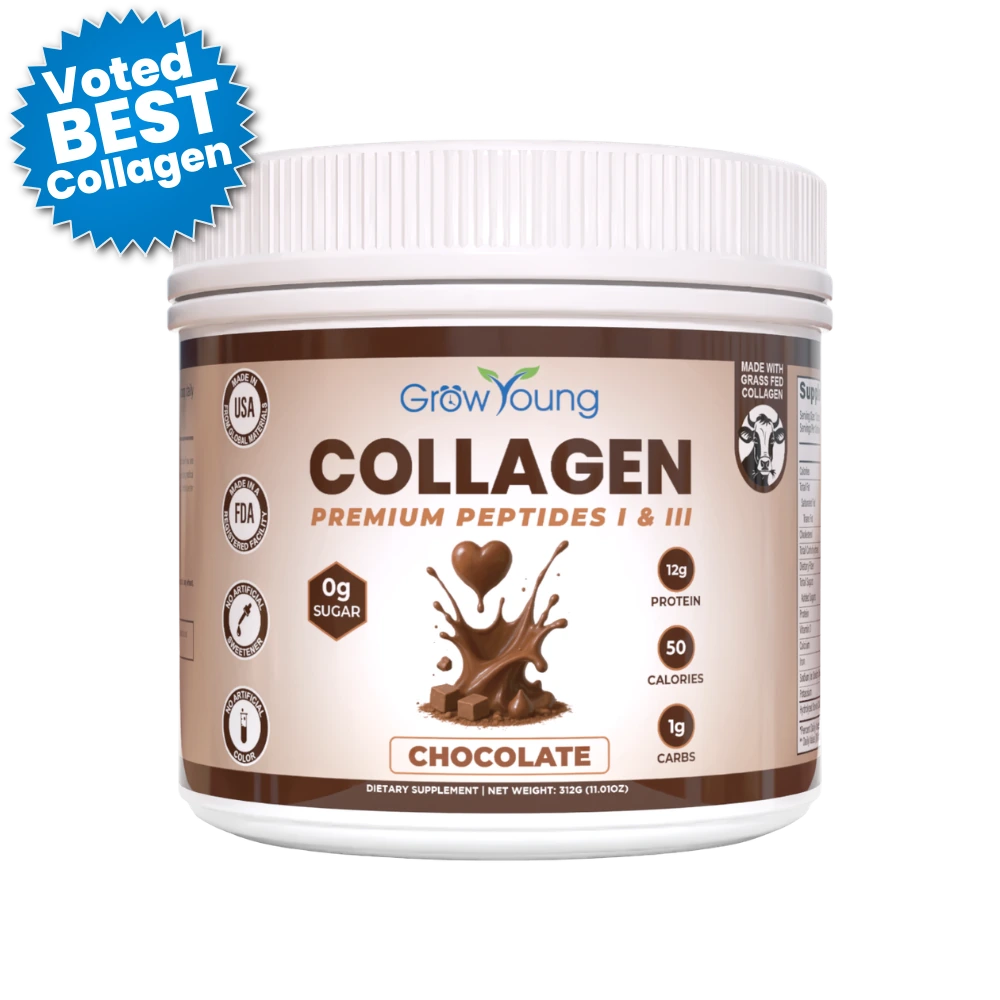
Grow Young Fitness is a brand specifically built around seniors and older active adults. Their supplement line reflects that positioning. The flagship protein product most people find when they search is the Premium Collagen Protein, available in chocolate and vanilla, made from Type I and III hydrolyzed bovine collagen sourced from grass-fed US cattle. It's dairy-free, has no artificial ingredients per the brand's claims, and mixes into water, coffee, smoothies, or yogurt. The Easy Protein Plant Based Chocolate is a separate product in their lineup with a very different nutritional profile.
People buy these products primarily because the brand speaks directly to an underserved audience: older adults who feel left out of the typical bro-science supplement world. The messaging around joint support, muscle soreness reduction, skin and hair health, and digestive comfort resonates with that crowd. And honestly, that positioning isn't dishonest. Collagen does support connective tissue. The issue is when either the brand or the buyer conflates collagen supplementation with the kind of protein support that actually drives muscle growth and recovery.
Breaking down the ingredients and nutrition
Premium Collagen Protein
Each scoop delivers 12 grams of hydrolyzed bovine collagen protein and 50 calories. Carbs and fat are minimal. The formula is dairy-free and claims no artificial ingredients. What the label does not show, and what the brand's product page doesn't disclose, is a leucine or BCAA breakdown.
That omission is telling. Collagen is naturally very low in leucine, the branched-chain amino acid that acts as the primary signal for muscle protein synthesis (MPS). A 12g dose of collagen protein likely delivers somewhere around 0. 3 to 0.
6g of leucine, well below the approximately 2. 5 to 3g threshold research associates with a robust MPS response in older adults. Compare that to whey protein, where a 20 to 25g serving typically delivers around 2 to 2. 8g of leucine.
Easy Protein Plant Based Chocolate
This one is a much stronger option for muscle goals. Each scoop provides 20g of protein, 4g of total carbs (3g sugars), 1g of fat, and 96 calories. Sodium comes in at 90mg, potassium at 150mg. The plant-based source isn't fully detailed in publicly accessible label data, but 20g per serving puts it in a competitive range with most mid-tier protein powders. You'd still want to check whether the amino acid profile is leucine-fortified, as plant proteins like pea and rice can be lower in leucine than whey, though many modern blends are engineered to compensate.
| Product | Protein per Serving | Calories | Leucine Info | Dairy-Free | Complete Protein |
|---|---|---|---|---|---|
| Premium Collagen Protein | 12g collagen | 50 | Not disclosed; naturally very low | Yes | No |
| Easy Protein Plant Based | 20g | 96 | Not disclosed; depends on blend | Yes | Partial (blend-dependent) |
| Typical Whey Isolate (comparison) | 25g | ~110–120 | ~2.5–3g per serving | No | Yes |
Taste, mixability, and how your gut handles it

On taste and texture, the feedback is genuinely mixed. One February 2026 review calls it 'such good flavor and mixes well hot or cold,' while a December 2025 review simply says 'didn't care for taste, sorry.' That split is pretty typical for any protein powder. Chocolate and vanilla collagen products tend to be lighter and less filling than whey-based shakes, which some people love and others find unsatisfying.
Mixability for hydrolyzed collagen is generally good. The hydrolysis process breaks collagen into shorter peptide chains that dissolve easily in cold or hot liquid. The brand claims it's ready in under a minute, and that tracks with how hydrolyzed collagen behaves in practice. It won't clump the way some plant-based powders do. GI tolerance is another plus: collagen is easy on the digestive system and is actually marketed for gut health support. If you're lactose-intolerant or sensitive to dairy-based proteins, collagen is a non-issue. The Easy Protein plant-based option is also dairy-free, though some plant protein blends can cause bloating depending on the fiber and legume content.
How it stacks up against other protein options for muscle growth
If your primary goal is building or maintaining muscle, you need to compare Grow Young's products honestly against the standard options. Fast grow aminos benefits are tied to supporting muscle protein synthesis when they include adequate leucine and total protein. If your goal is to grow forte benefits from nutrition, prioritize getting enough complete protein and leucine per meal.
Whey protein concentrate or isolate remains the benchmark for muscle protein synthesis because of its complete amino acid profile and high leucine content. A 25g whey serving can deliver close to 2. 5 to 3g of leucine, which is right at or above the threshold older adults need for a meaningful MPS response. Collagen at 12g per serving doesn't come close.
The Easy Protein plant-based option is more competitive at 20g per serving. A well-formulated pea-rice blend can approximate whey's MPS stimulation if leucine levels are adequate, though the evidence still slightly favors animal-derived complete proteins for peak muscle building in older adults. If you're comparing Grow Young to other protein powders purely on muscle-building value, the collagen product sits in a different category entirely. Think of it as a connective tissue supplement that also contributes a modest protein dose, not as your primary muscle-building protein source.
For those exploring other growth-oriented supplement options, products marketed specifically for anabolic muscle support (like mass gainers or amino-fortified blends) take a different approach to hitting caloric and protein targets. If you're specifically chasing fast grow anabolic benefits, prioritize proteins and amino blends with enough leucine and total protein per meal. Grow Young's collagen product isn't trying to be that, and it shouldn't be judged as if it were.
Who should use it and who should pass
Good fit
- Older adults who already hit adequate daily protein targets from food and want to add collagen for joint, skin, and connective tissue support
- Anyone with dairy sensitivity or lactose intolerance looking for a light, easy-to-digest protein addition to coffee or oatmeal
- People recovering from joint issues or tendon discomfort where collagen's role in connective tissue repair is the actual goal
- Older adults using Easy Protein as a convenient 20g-per-serving plant-based option to help reach the 1.0 to 1.2g per kilogram daily protein target that research supports for this age group
- Those who want a low-calorie, low-sugar protein boost without the heavy texture of whey shakes
Not a great fit
- Anyone relying solely on collagen protein to build muscle: it won't deliver the leucine needed to reliably trigger muscle protein synthesis
- Younger adults or competitive athletes who need higher protein doses per meal (25–40g with complete amino acid profiles) and want the best cost-per-gram of quality protein
- People on tight budgets: 20 servings per container is a two-to-three week supply at best, and value depends heavily on the price relative to comparable products
- Anyone with unrealistic expectations about collagen 'reversing aging' in the muscle-building sense; the anti-aging branding is more about skin and joints than MPS
How to actually use it to hit your protein targets
Start with your daily protein target. Start by tracking your daily calories and protein so you know whether your plan is supporting healthy weight gain or just maintaining daily protein target. For older adults, research consistently lands at 1. [ESPEN’s expert group recommends daily protein intake of at least 1.
0 to 1. 2 g/kg/day](https://pmc. ncbi. nlm.
nih. gov/articles/PMC4208946/) for healthy older adults, with higher intakes (1. 2 to 1. 5 g/kg/day) for those who are malnourished or at risk due to illness.
0 to 1. A review article in Nutritional Interventions reports that observational and acute feeding evidence supports older adults consuming approximately 1. 0, 1. 6 g/kg/day protein, typically distributed across more meals to promote muscle protein synthesis and strength or function outcomes [approximately 1.
0–1. 6 g/kg/day protein](https://pmc. ncbi. nlm.
nih. gov/articles/PMC10272976/). 2g of protein per kilogram of body weight per day, and some evidence pushes toward 1. 2 to 1.
6g per kg if you're actively training. A 70kg (154 lb) person needs roughly 84 to 112g of protein per day. To stimulate muscle protein synthesis effectively across the day, you want to spread that into three to five meals each delivering around 25 to 30g of high-quality protein, ideally with at least 2. 5 to 3g of leucine per meal.
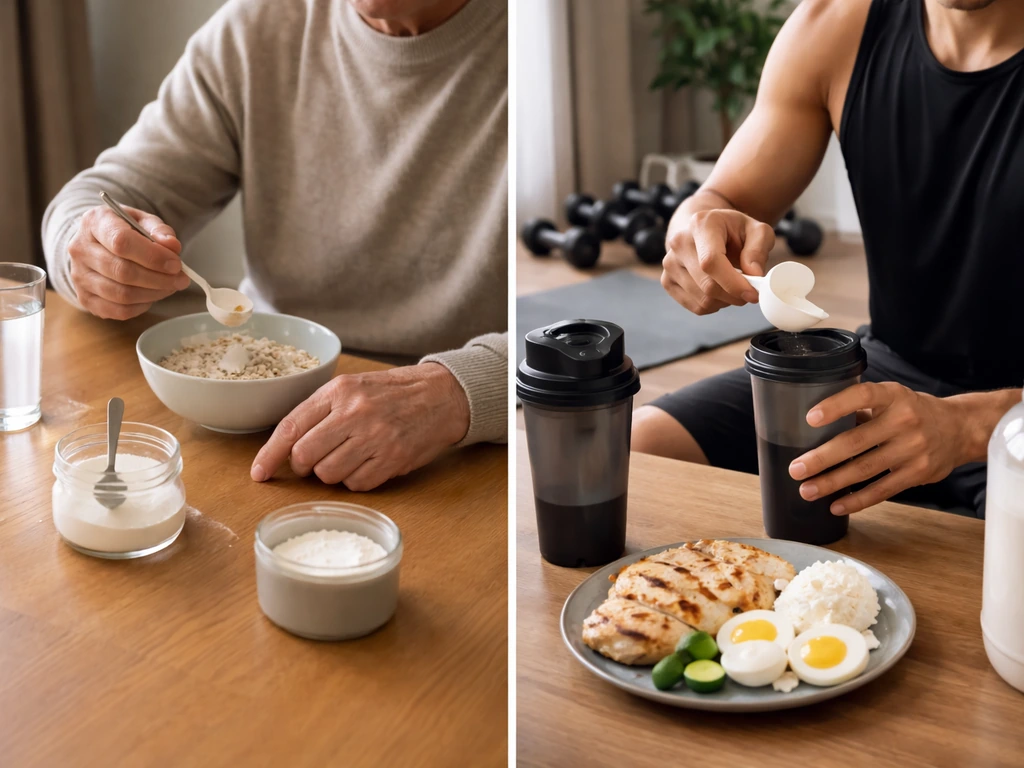
If you're using the collagen product, treat it as a supplement to meals rather than a protein meal in itself. Mix a scoop into your morning coffee or oatmeal to add 12g of collagen protein on top of eggs, Greek yogurt, or whatever complete protein anchors that meal. Don't count it as your primary protein source for that meal when calculating MPS potential.
If you're using Easy Protein, a single 20g scoop is a solid muscle-supporting dose. Use it within an hour or two after training as a convenient recovery shake, or as a between-meal option when whole-food protein is unavailable. You can mix with water (12 to 16 oz per the brand's recommendation) or blend into a smoothie with fruit and a nut butter to push the total protein higher. Two scoops would get you to 40g protein and under 200 calories, which is a reasonable post-workout option if your daily targets require it.
- Calculate your daily protein target: body weight in kg multiplied by 1.0 to 1.2 (or up to 1.6 if training hard)
- Divide into 3 to 5 meals, aiming for 25 to 30g of complete protein per meal from primary food sources
- Add collagen protein as a daily connective tissue supplement on top of complete protein meals, not as a replacement
- Use Easy Protein as a post-workout shake or protein gap-filler when meals fall short
- Check the label: if the amino acid profile isn't listed, look up the specific source (pea, rice, whey) and confirm leucine content is at or above 2.5g per serving
- Give any protein supplement at least 8 to 12 weeks of consistent use alongside resistance training before evaluating results
The bottom line: is it worth buying?
Grow Young Fitness Premium Collagen Protein is a legitimate, clean product for what it actually does: providing a digestible, dairy-free collagen source that supports joints, connective tissue, and skin. If those are your goals, or if you want to add it on top of an already solid protein diet, it's a reasonable buy. But if you're searching for a protein powder primarily to build or preserve muscle, collagen shouldn't be your anchor supplement. It doesn't have the leucine profile or complete amino acid makeup to reliably drive muscle protein synthesis, especially in older adults who need more leucine per meal than younger people to overcome anabolic resistance.
The Easy Protein plant-based option is the more muscle-relevant choice from this brand: 20g per serving, low calorie, and dairy-free. It's worth evaluating if you're dairy-intolerant or committed to plant-based eating, though you should verify its leucine content before committing. At 20 servings per container, you're looking at a roughly two-to-three week supply, so price-per-serving matters for long-term use.
Your next steps: if you want the collagen product, buy it as a joint-support supplement and keep your main protein coming from whey, eggs, meat, fish, or a complete plant blend. If you want Easy Protein, run the math on cost per serving and compare it against other plant-based powders in your price range. And regardless of which product you use, no supplement replaces consistent resistance training and hitting your daily protein targets from a variety of sources. That's the actual engine of muscle growth at any age.
FAQ
If I buy Grow Young Fitness, will it actually help me build muscle?
Look at your meal protein, not just the powder label. For muscle, aim for roughly 25 to 30g of high-quality protein per meal with about 2.5 to 3g leucine. Premium Collagen Protein will not reliably get you there because leucine/BCAA data is not provided, so count it as an add-on to a complete-protein meal (eggs, whey, Greek yogurt, meat, fish).
Can I use Premium Collagen Protein as my main protein powder for resistance training days?
Not usually. Collagen is a protein source, but it is not a complete amino acid profile and it is naturally low in leucine. A practical approach is to use collagen at a separate time or mix it into a meal that already includes a complete protein, then let whey or another complete protein handle your leucine per-meal target.
What should I verify on Easy Protein if my goal is muscle preservation in older adults?
Check whether the plant-based formula is leucine-fortified or provides an amino acid breakdown. Many pea or pea-rice blends can be lower in leucine unless formulated to compensate, so if the label does not show leucine (or at least BCAA totals with enough leucine), consider pairing it with a complete protein source.
How do I improve taste and texture with Grow Young collagen if reviews are mixed?
Mixability is generally good with hydrolyzed collagen, but taste can be hit-or-miss. If you dislike it plain, try blending it into yogurt or a smoothie (cold mixing) or into oatmeal (hot mixing), and consider using a smaller starter amount (half scoop) for a few days to adjust texture and sweetness expectations.
What if I get bloating or stomach upset from Easy Protein or collagen?
For GI tolerance, start with one scoop and assess bloating or cramping over 24 to 48 hours. Collagen tends to be easier for many people, but plant blends can trigger issues depending on fiber, legume content, and individual sensitivity. If you are sensitive, avoid taking a full serving on an empty stomach.
Can I combine the two Grow Young products, and how should I time them?
Yes, but do it strategically. Collagen is best used to top up protein while your complete proteins cover the leucine signal. For example, use Easy Protein post-workout if you tolerate it well, and keep Premium Collagen Protein for joint support on rest days or as a morning add-in to meals that already include a complete protein.
What is Premium Collagen Protein best for if I am not only chasing muscle gains?
It can help joint and connective tissue goals, but it is not a reliable substitute for a high-leucine protein source. If your training is focused on strength, prioritize total daily protein and leucine from complete proteins, then use Premium Collagen as an extra to support skin or connective tissue as a secondary benefit.
How do I figure out whether Grow Young is good value compared to other protein powders?
For many people, the biggest variable is cost per gram of useful protein for your goal. Compute cost per serving and compare against other options using complete protein benchmarks (especially leucine delivery). If you need muscle building, collagen’s “protein-per-dollar” usually underperforms compared with whey, and plant options only win if leucine levels and total protein are competitive.
Is Grow Young suitable if I am lactose intolerant?
If you are dairy-intolerant, Premium Collagen Protein is dairy-free per the brand’s claims, and Easy Protein is also dairy-free. Still, if you have severe sensitivities, double-check for any cross-contamination statements and pay attention to sweeteners or flavor ingredients that can cause issues even when the protein is dairy-free.
Should I avoid Grow Young protein powders if I have kidney disease or dietary restrictions?
If you are on a kidney disease diet or have been advised to limit protein, do not self-prescribe. Protein targets and product choice can differ based on labs and clinician guidance, and hydrolyzed proteins still count toward your daily protein intake.