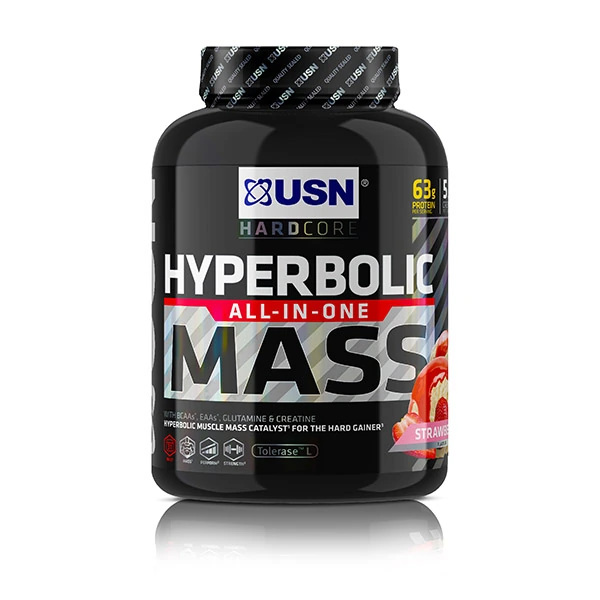
Both Fast Grow Anabolic and Hyperbolic Mass are powder supplements made by USN, not training programs. If you're lean and struggling to eat enough, Hyperbolic Mass is the bigger calorie and ingredient stack (around 1,200 kcal and 63 g protein per 3-scoop serving) and makes sense for hard gainers who need serious calorie support. Fast Grow Anabolic is a lighter option (roughly 380 kcal and 35 g protein per serving) that suits people who want a mass gainer without the full calorie load. The honest truth is that neither product builds muscle on its own. What separates results is whether you're training hard enough, eating enough protein across the whole day, and sleeping well. Pick the one that fits your calorie gap, then execute on the fundamentals.
Anabolic Fast Grow vs Hyperbolic Mass: Which Works?

What these two products actually are
USN Fast Grow Anabolic gH is a mass-gainer powder sold in 4 kg bags. One serving is 3 scoops and delivers a multi-stage protein matrix (whey concentrate, whey isolate, calcium caseinate, soy protein isolate), a 2-stage glyco-matrix carbohydrate system, creatine monohydrate, and Tribul40, which is a standardized Tribulus terrestris extract at 40% saponins. It's positioned by USN as a muscle growth, recovery, and strength product, meaning it sits in the gainer category rather than being a pure protein powder or a structured training plan.
USN Hyperbolic Mass is also a powder supplement, sold in bags up to 6 kg. It's branded as an 'all-in-one hardcore lean mass gainer,' and its ingredient list is noticeably longer. Beyond the multi-stage protein and carb matrix (similar protein sources to Fast Grow), it includes creatine monohydrate, BCAAs (leucine, isoleucine, valine), HMB (calcium HMB), beta-alanine, L-glutamine, glycine, taurine, omega-3 fish oil powder, Avena sativa (oat) extract (10:1), the digestive enzyme blend DigeZyme, chromium picolinate, and a full vitamin and mineral premix. Per 3-scoop serving you're looking at roughly 1,200 kcal and 63 g of protein, plus about 5.4 g of creatine.
Neither of these is a steroid, a prohormone, or a training program. If you still wonder whether USN Fast Grow Anabolic could be an anabolic steroid, this “not a steroid” framing is the key starting point neither of these is a steroid. The word 'anabolic' in Fast Grow Anabolic just means 'muscle-building supporting' in a marketing sense. USN is a mainstream sports nutrition brand, and these are commercially available powder supplements. That said, if you've seen questions floating around about whether Fast Grow Anabolic is a steroid, the answer is no, but Tribulus terrestris does carry a 'testosterone booster' label that's worth understanding clearly.
What each product claims vs what the evidence actually supports
Fast Grow Anabolic: the claims and the reality
USN markets Fast Grow Anabolic as supporting muscle growth, recovery, and strength. The legitimate parts of that claim rest almost entirely on the protein matrix and creatine. Getting enough high-quality protein across the day is the single most important nutritional variable for muscle protein synthesis, and creatine monohydrate is one of the most thoroughly studied performance supplements in existence. Multiple systematic reviews and meta-analyses confirm that creatine combined with resistance training improves strength outcomes and likely supports hypertrophy, though responses vary. A standard maintenance dose is around 3 to 5 grams per day, and you don't need a loading phase. The creatine in Fast Grow ticks that box.
The weaker ingredient is Tribul40, the Tribulus terrestris extract. Tribulus is commonly marketed as a testosterone booster, but the clinical evidence doesn't support meaningful testosterone elevation in healthy men at typical supplement doses. It isn't dangerous in normal amounts, but it isn't driving your muscle gains either. Treat it as a filler in this context. The 'anabolic' in the name refers to marketing positioning, not a pharmacological effect, and the product contains nothing on the Schedule III controlled substances list.
Hyperbolic Mass: more ingredients, more complexity
Hyperbolic Mass makes a broader 'all-in-one' claim, and its ingredient list is genuinely more comprehensive. The core drivers (protein, carbs, creatine) are solid and well-supported. Beta-alanine has reasonable evidence for buffering muscular fatigue during high-rep training. BCAAs, particularly leucine, have a role in triggering muscle protein synthesis, though if you're already hitting adequate total protein, the additional BCAA impact is marginal. HMB (beta-hydroxy beta-methylbutyrate) has mixed evidence; it may help with muscle protein breakdown in beginners or during caloric deficits but its effect on trained individuals is less consistent. Omega-3s have useful anti-inflammatory properties that support recovery. DigeZyme (a digestive enzyme blend) may help with tolerating a very large serving. Avena sativa extract is included at marketing-level doses with limited direct hypertrophy evidence.
The honest assessment: the bulk of the real-world benefit from Hyperbolic Mass comes from calories and protein, plus creatine. The extra actives are mostly supporting cast. That doesn't mean they're useless, but if you're trying to decide whether this product is 'working,' the answer depends far more on your training and total daily nutrition than on beta-alanine or HMB doses.
Choosing between them based on your actual goal
| Factor | Fast Grow Anabolic | Hyperbolic Mass |
|---|---|---|
| Calories per 3-scoop serving | ~380 kcal | ~1,200 kcal |
| Protein per serving | ~35 g | ~63 g |
| Creatine included | Yes (monohydrate) | Yes (~5.4 g/serving) |
| Extra actives | Tribulus terrestris (Tribul40) | BCAAs, HMB, beta-alanine, omega-3, Avena sativa, DigeZyme, vitamins/minerals |
| Best fit | Moderate calorie gap, lean gains focus | Hard gainers, very high calorie needs, all-in-one convenience |
| Bag size available | 4 kg | Up to 6 kg |
| Evidence strength (core ingredients) | Good (protein + creatine) | Good (protein + creatine), mixed for extras |
| Budget consideration | Generally cheaper per kg | Higher price, more ingredients included |
If you're a hard gainer who genuinely struggles to eat enough, Hyperbolic Mass wins on raw calorie and nutrient density. One shake at roughly 1,200 kcal is a meaningful contribution to a 3,000 to 4,000 kcal daily target. If you're someone who can eat reasonably well but wants a protein and creatine boost without pounding your gut with 1,200 extra calories, Fast Grow Anabolic is the leaner and cheaper option. Older adults and people managing body composition carefully will often do better with Fast Grow's lower calorie load and monitoring total intake more tightly. Beginners can go either way, but starting with Fast Grow lets you gauge how your gut handles a gainer before committing to a massive daily serving.
If your goal is lean mass with minimal fat gain, neither product is a magic solution, but Fast Grow Anabolic's lower calorie density is easier to control. If your goal is maximum mass gain as fast as possible and you're not particularly worried about fat accumulation, Hyperbolic Mass with its full calorie stack is the more aggressive tool.
The nutrition fundamentals that actually decide your results
No gainer powder works without the right nutritional foundation. The ISSN's position on protein is clear: for people doing resistance training aiming to build lean mass, a target in the range of 1.6 to 2.2 grams of protein per kilogram of body weight per day covers the vast majority of people. Spread across 3 to 5 meals or shakes, with at least 20 to 40 grams of high-quality protein per sitting, you're maximizing the muscle protein synthesis signal throughout the day. A gainer shake counts toward that total, but only as a contribution, not a replacement for real food meals.
Calories matter just as much. To build muscle you need to be in a modest caloric surplus, typically 200 to 500 kcal above your maintenance level. More than that and you're accumulating unnecessary fat. This is where the calorie difference between the two products becomes strategically relevant. Hyperbolic Mass at 1,200 kcal per serving can easily push you over your surplus if you're not accounting for everything else you eat. Use it wisely, not mindlessly. Track your intake for at least the first two weeks of using either product to understand what your actual daily total looks like.
Meal timing matters less than people think, but it's not irrelevant. Having protein around your training window (within a couple of hours before or after) is sensible. Creatine timing is flexible and not critical as long as you're taking it consistently every day.
Training and recovery: the non-negotiables
Here's the part that actually separates people who get results from people who buy a tub and wonder why nothing happened after six weeks. Progressive overload is the mechanical trigger for muscle growth. That means you need to be consistently adding weight, reps, or difficulty to your lifts over time. No supplement compensates for a training program that isn't challenging you. Research on hypertrophy training volume consistently points to around 10 to 20 working sets per muscle group per week as the productive range for most people, with diminishing returns above that threshold and inadequate stimulus below it.
Recovery is where the muscle actually builds. Aiming for 7 to 9 hours of sleep per night isn't optional if you're serious about this. Growth hormone pulses predominantly during deep sleep, and muscle protein synthesis continues well after training ends. The BCAAs and omega-3s in Hyperbolic Mass may support recovery markers and reduce soreness, but they're not replacing sleep. If you're training hard and not recovering adequately, you're stalling your own progress regardless of what you're drinking.
Older adults should pay extra attention here. Recovery takes longer as you age, which means you may benefit from slightly longer rest between sessions for the same muscle group, and making sure protein intake stays at the higher end of the recommended range (closer to 2 g per kg) helps counteract the reduced anabolic sensitivity that comes with age. Neither product is off-limits for older trainees; the fundamentals just require a bit more attention.
How to actually run your chosen product: setup, timeline, and tracking
Starting setup
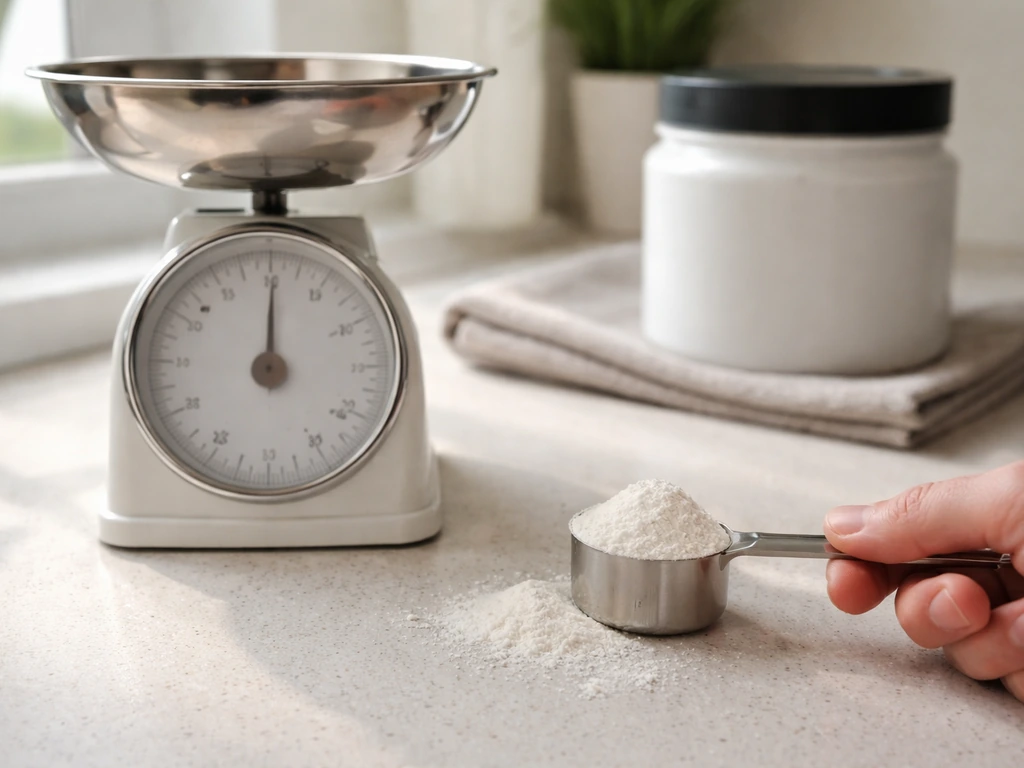
- Calculate your daily maintenance calories (bodyweight in kg x 33 to 38 is a rough starting range depending on activity level), then add 300 to 400 kcal for your surplus.
- Set your daily protein target at 1.8 to 2.2 g per kg of bodyweight. Plan how many meals and shakes you need to hit that, and where the gainer fits in.
- For Hyperbolic Mass: start with 1 scoop (not 3) to assess gut tolerance, then build to the full 3-scoop serving over 7 to 10 days. A 3-scoop serving at 1,200 kcal is a lot for your digestive system to process initially.
- For Fast Grow Anabolic: 3 scoops gives you roughly 35 g protein and 380 kcal. You may want 2 servings per day if your calorie gap is large, but track total intake before adding a second one.
- Take creatine every day, including non-training days. Consistency over weeks matters more than timing around workouts.
- Log your starting weight, a few key lifts (squat, bench, row, or whatever your main movements are), and ideally a girth measurement (chest, upper arm, waist) as a baseline.
Realistic timeline
In the first 1 to 2 weeks, any weight gain you see is mostly water retention from creatine loading and increased carbohydrate storage. Don't read that as fat or as muscle. By weeks 4 to 8, if your training and nutrition are dialed in, you should start to see measurable strength increases and some early muscle fullness. If you’re wondering how long does Fast Grow Anabolic take to work, the most noticeable early changes are usually strength and fullness by weeks 4 to 8 when your training and nutrition are consistent. Actual contractile muscle tissue takes longer, and a realistic rate is around 0.5 to 1 kg of lean mass per month for a beginner, dropping closer to 0.25 to 0.5 kg per month once you have a year or more of training behind you. Anyone promising faster results than that is selling you something, whether it's a marketing claim or unrealistic expectations.
Give either product a proper 8-week trial before making judgments. That's long enough for creatine to saturate and for you to accumulate meaningful training stimulus. If you're not seeing any strength progression after 8 weeks of consistent training, the problem isn't the supplement. Look at sleep, total calories, and training program quality first.
Tracking progress
- Weigh yourself 2 to 3 times per week at the same time of day (morning, after bathroom, before eating) and track the weekly average to smooth out daily fluctuations.
- Log your training lifts every session. Progressive overload is the primary driver and also your clearest signal that the plan is working.
- Re-measure key body girths every 4 weeks. Scale weight alone doesn't distinguish muscle from fat.
- Adjust calories every 2 to 3 weeks based on results: if weight isn't moving up at all after 2 weeks, add 200 kcal per day; if it's moving up faster than 0.5 kg per week consistently, reduce slightly.
- Track sleep quality and training energy as subjective markers. Feeling flat and weak in workouts consistently means something is off with recovery or calories.
Common mistakes and realistic expectations
The biggest mistake is treating either product as the primary driver of results. Both products are supplements, meaning they supplement a functioning training and nutrition plan. If your training isn't producing progressive overload week to week, and if you're not in a calorie surplus with adequate protein, you can take both products simultaneously and still see minimal muscle gain. The product isn't broken. The foundation is missing.
The second common pitfall is ignoring total calorie intake when using Hyperbolic Mass. Three scoops at 1,200 kcal is roughly half the daily intake for many people. Add that on top of three regular meals and you may be at 4,500 to 5,000 kcal without realizing it. For someone with a genuine hard-gainer metabolism, that's fine. For most people, it means fat gain is outpacing muscle gain significantly. Use it as part of your total, not in addition to an already complete diet.
The 'anabolic' label in Fast Grow Anabolic causes some confusion, and there are real questions floating around about whether it contains steroid-like compounds. blank" rel="noopener noreferrer">OPSS also advises extreme caution with “dietary supplement” products labeled as containing steroid-like ingredients, because contents can be difficult to confirm and mislabeled or illegal-adjacent ingredients may trigger positive steroid-like signals. It doesn't. But it's worth knowing that any supplement with testosterone-adjacent marketing language (like Tribulus) should make you a bit skeptical, not because Fast Grow is dangerous, but because the supplement industry broadly has a track record of overclaiming. If you are concerned about usn fast grow anabolic side effects, it's mainly about tolerance to higher protein and ingredient-specific reactions rather than steroid effects. The ingredients in Fast Grow Anabolic are commercially common and not controlled substances. The side effects of Fast Grow Anabolic most commonly reported relate to digestive discomfort from large serving sizes, not hormonal interference, and the same applies to Hyperbolic Mass.
If you've been wondering how long Fast Grow Anabolic takes to work, the honest answer follows the same timeline as any creatine and protein-based gainer: you'll feel fuller and slightly stronger within 2 to 4 weeks, and you'll see meaningful muscle and strength changes with consistent use plus training across 8 to 12 weeks. There's no shortcut inside either tub. What you get is a convenient way to hit your macros and a well-evidenced creatine dose. That's genuinely useful, just not magic.
FAQ
Can I use both Fast Grow Anabolic and Hyperbolic Mass in the same day?
Yes, but only if you are actively managing your total calories and protein. Combining them can unintentionally add 2,000+ kcal per day for many people, which often turns a lean bulk into fat gain. A practical approach is to pick one as your main gainer and use the other only if you are clearly short on protein for the day or you have a training day where you need extra calories.
Which one is better if I get bloated or have digestive issues from large shakes?
Fast Grow is the easier starting point because its serving is much lower in calories, which usually means fewer total carbs and less volume. Also consider splitting into two smaller servings across the day, using more water than the label suggests for lighter texture, and taking it away from very high-fat meals. If you still get symptoms, reduce scoops and reassess whether you tolerate milk-derived proteins.
How should I calculate how many scoops to take to avoid overshooting my surplus?
Start by estimating your maintenance calories, then target a 200 to 500 kcal surplus. From there, count only the calories from each powder toward your daily total, not just the “gainer” number. If Hyperbolic Mass is 1,200 kcal per 3 scoops, a single scoop is roughly 400 kcal, so you can often use 1 to 2 scoops to stay in range.
Do I need to cycle these gainers, or can I take them year-round?
They do not require cycling for ingredient reasons. If you can hit your calories and protein consistently without digestive problems, you can use either product year-round. The only time to “cycle” is when your goals change (cutting vs bulking), or when tolerance issues or body-fat creep tell you the calorie level is too high.
Is creatine the same benefit in both products, even though the ingredient lists are different?
Mostly yes, as long as the scoop count gives you a consistent daily creatine amount. Hyperbolic Mass is stated around 5.4 g creatine per 3 scoops, while Fast Grow is at a lower serving size, so you may need different scoop counts to land in the 3 to 5 g per day range. If you do not take it daily, you lose the main advantage of creatine consistency.
What if I am already eating enough protein, should I still use a gainer?
If protein and calories are already in range, a gainer may be unnecessary. You might get better results by using creatine and increasing solid food calories instead. In that situation, the extra actives in Hyperbolic Mass (like HMB or beta-alanine) are unlikely to compensate for a lack of calorie need or subpar training stimulus.
How do I know whether the powder is actually helping, not just making me gain scale weight?
Track at least two metrics for 4 to 8 weeks: strength progression (working set reps or load) and body measurements (waist plus weekly weight trends). Early weight gain can be glycogen and water, especially if creatine is consistent. If your strength and waist are not moving in a direction that matches your goal, your calorie level or training plan is probably off.
If the “anabolic” label is confusing, does Tribul40 do anything meaningful?
At typical supplement doses, Tribulus is not reliably shown to raise testosterone in healthy men in a way that improves training outcomes. In practice, treat Tribul40 as a marketing add-on rather than the reason you should choose Fast Grow. Your decision should be based on whether you need the calorie and protein amount for your surplus and whether you can tolerate the serving.
Which product is safer for women or teens, and should they take the same doses?
The same products are sold for general sports nutrition, but dosing and safety expectations differ by age and medical context. Teen users and people with medical conditions should not self-prescribe stimulatory or hormone-adjacent supplements, and they should follow stricter dose guidance from a qualified clinician. For women specifically, many of these “test booster” ingredients are still not a dependable performance lever, so calorie and protein tolerance matter more than the marketing label.
How long should I try one before switching, and what should I check first if results are slow?
Give it 8 weeks with consistent training before switching. If strength is flat after that, verify three fundamentals first: progressive overload, total daily calories (surplus size), and total daily protein across the day. Only after those are correct should you consider changing the powder, because most “it doesn’t work” cases are foundation issues, not ingredient mismatches.
What is a realistic lean mass gain rate to expect from either product?
Even with a correct training plan and surplus, gains are gradual. A reasonable expectation is about 0.25 to 1 kg of lean mass per month depending on experience level, with beginners at the higher end and advanced lifters lower. If you are seeing weight increase but zero strength improvements over the same period, much of the gain may be fat or water rather than new muscle.