If you're using USN Fast Grow Anabolic consistently and eating enough, you should notice the first signs it's working within 1 to 2 weeks: a slight increase in scale weight (mostly water and glycogen from the creatine), a fuller look to your muscles, and a modest bump in strength or training endurance. Visible muscle size changes take longer, typically 4 to 8 weeks of consistent training and nutrition. If nothing has shifted after 4 weeks, something in your fundamentals needs adjusting before you blame the product.
How Long Does Fast Grow Anabolic Take to Work? Timeline

Marcus Kellerman
23 May 2026
What Fast Grow Anabolic actually is (and isn't)
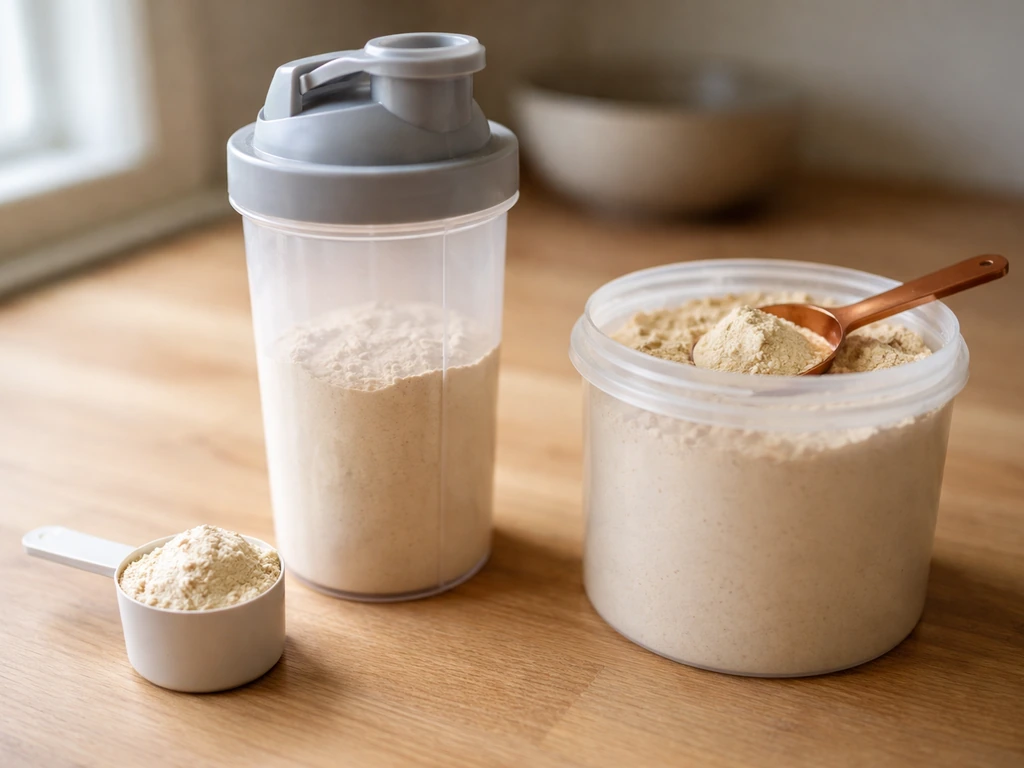
USN Fast Grow Anabol gH is a lean mass gainer, not an anabolic steroid. It's a food supplement built around a multi-stage protein blend (whey concentrate, whey isolate, calcium caseinate, and soy protein isolate) and a blank" rel="noopener noreferrer">two-stage carbohydrate matrix (maltodextrin and Carb10 pea starch). Each 3-scoop serving delivers 55 g of protein and 80 g of carbohydrates, which makes it a calorie-dense snack designed to help you hit your daily nutrition targets more easily.
Beyond the protein and carbs, it contains 7,500 mg of creatine monohydrate per serving, which is the ingredient most responsible for the early performance and weight changes you'll feel. It also includes blank" rel="noopener noreferrer">L-glycine (5,000 mg), taurine (2,500 mg), Tribulus terrestris extract (300 mg), chromium picolinate (24.4 mcg), and an MCT powder. The name sounds intense, but this is a legal sports nutrition product, not a drug. If you've been wondering whether it contains steroids, the short answer is that it's not formulated or marketed as one. That said, the FDA does warn that some bodybuilding supplements from unverified sources can contain hidden steroid-like substances, so sticking to reputable retailers and batch-tested products is always worth it.
A realistic timeline: what to expect and when
The timeline breaks into three phases. Understanding each one saves you from quitting too early or expecting too much too soon.
Week 1 to 2: creatine kicks in, the scale moves

The most immediate effect comes from creatine. With 7,500 mg per serving and the higher loading protocol USN recommends for the first five days (2 to 3 servings daily regardless of bodyweight), your muscles saturate with phosphocreatine relatively quickly. This pulls water into muscle cells and tops up glycogen stores, so you'll notice a 1 to 3 kg increase on the scale and a fuller, slightly more pumped appearance in the mirror.
Your strength and training capacity should also tick up: one or two extra reps, slightly faster recovery between sets. One user in Supplement World reviews reported going from 77 kg to 80 kg in four weeks, noting that some of the early gain was creatine-related water weight. That's normal and expected.
Week 3 to 4: training performance and early body changes
By weeks three and four, if your training and nutrition are consistent, you should be lifting more weight or doing more volume than when you started. That progressive overload is what drives actual muscle protein synthesis. Some people notice their arms, shoulders, or chest looking noticeably fuller around this point, partly from the creatine effect and partly from early hypertrophy. Multiple reviewers mention that people around them started noticing changes around the three-week mark. This is also when you can start trusting the data: if the scale is up, strength is up, and you're recovering well, the product and your program are working together.
Week 4 to 8 and beyond: measurable muscle growth
True hypertrophy, the kind you can see in photos and measure with a tape, takes at least four to eight weeks of consistent effort. One reviewer reported going from 54 kg to 62 kg in a month, which is an outlier and almost certainly includes significant water, glycogen, and food weight alongside any lean tissue. More typical for a beginner in a genuine calorie surplus is 0.5 to 1 kg of lean mass per month. For intermediate or advanced lifters, it's slower. If you're four weeks in with zero change in performance, measurements, or scale weight, that's a signal to troubleshoot, not to keep waiting.
| Timeframe | What you should notice | What's driving it |
|---|---|---|
| Days 1 to 7 | Scale weight up 1 to 2 kg, fuller muscles, slight strength boost | Creatine saturation, glycogen loading |
| Weeks 2 to 4 | Strength and endurance improving, people noticing a fuller physique | Creatine working, early protein synthesis from training stimulus |
| Weeks 4 to 8 | Measurable size increases, consistent performance gains | Muscle hypertrophy from progressive overload and adequate nutrition |
| Week 8 and beyond | Clear before/after differences in photos and tape measurements | Cumulative lean mass accrual |
What 'working' actually looks like in practice

People make the mistake of watching only the mirror or only the scale. Neither one tells the full story. Here's what to actually track week to week so you know whether things are moving in the right direction.
- Scale weight: weigh yourself at the same time each morning, and look at the weekly average, not daily swings. You want a gradual upward trend of roughly 0.5 to 1 kg per week in a mass-gaining phase.
- Strength in 2 to 3 key lifts: log your main compound movements (squat, bench, row, overhead press). If the weight on the bar or the reps completed is increasing every week or two, muscle is being built.
- Tape measurements: measure your upper arm, chest, and thighs every two to four weeks. The scale can lie; your tape measure won't.
- Training photos: take a front and side photo every two weeks in the same lighting. Progress is often invisible day to day but obvious across six weeks.
- Recovery quality: are you recovering between sessions? If you're chronically sore, sleeping poorly, and your performance is stalling, you may be under-recovering rather than under-supplementing.
How to make it actually work: dosing, training, and nutrition
The supplement is a tool. The fundamentals determine whether that tool does anything useful.
Dosing and timing
USN's recommended use is straightforward: mix 3 scoops (150 g) in 600 to 650 ml of cold water and drink 1 to 2 servings daily as snacks between meals. For the first five days, USN suggests a slightly higher intake: 2 to 3 servings per day regardless of bodyweight, then dropping back to 1 to 2 servings. This front-loaded approach helps saturate creatine stores faster. The label also notes that beneficial effects from creatine require a daily intake of at least 3 g, and a single serving already gives you 7,500 mg, so you're well covered there. If you're under 80 kg and watching total calories, halving servings is a legitimate option.
Calories and protein: the non-negotiables
Fast Grow Anabolic is designed to help you reach a calorie surplus, but it can't do that if the rest of your diet is too low. If you are comparing an anabolic fast-grow approach versus hyperbolic-style mass claims, focus on the same fundamentals: consistent calories, protein, progressive overload, and recovery. To build muscle, most people need to eat roughly 200 to 400 calories above their maintenance level each day.
One serving of this product contributes around 550 to 600 calories depending on the flavour, which is a meaningful chunk of that target. On total protein, aim for 1. 6 to 2. 2 g per kilogram of bodyweight per day from all sources combined.
A 75 kg person needs roughly 120 to 165 g of protein daily. One serving of Fast Grow gives you 55 g, so the rest needs to come from whole food meals.
Training: you still need progressive overload
No supplement bypasses this. Muscle grows when it's progressively challenged. You need to be adding weight, reps, or sets over time. Train each muscle group at least twice per week with enough volume (roughly 10 to 20 sets per muscle per week for most people). Compound movements, squats, presses, rows, deadlifts, give you the most return per session. If your training program hasn't changed in months, neither will your body, regardless of what you're taking.
Sleep and recovery
Muscle protein synthesis peaks during sleep. Seven to nine hours per night isn't optional if you want results. Consistently sleeping under six hours will blunt hormonal responses, slow recovery, and make any supplement less effective. This is especially relevant for older adults, whose anabolic hormone levels are already somewhat lower and who rely even more heavily on sleep quality for recovery.
Why results might be slow or disappointing
If you're a few weeks in and nothing seems to be happening, run through this checklist before drawing any conclusions about the product.
- You're not in a calorie surplus. If your total daily intake doesn't exceed your maintenance calories, you won't gain mass no matter how much protein you're consuming. Track your food for three to five days to see where you actually stand.
- Your protein from whole food is too low. Fifty-five grams per serving is helpful but not sufficient on its own. If your meals are small and protein-light, the math won't add up.
- You're not training progressively. If the same weights and reps feel easy, your muscles have no reason to grow. Add load or volume every one to two weeks.
- You're using it inconsistently. Creatine effects require daily intake to maintain muscle saturation. Skipping days resets your progress on that front.
- You're not tracking anything. If you haven't written down your starting weight, measurements, and lifts, you can't tell whether anything has changed. Perceived progress is unreliable.
- Your sleep and recovery are poor. Training breaks down muscle; sleep is when it rebuilds. Chronic poor sleep directly limits hypertrophy.
- Expectations are misaligned with the ingredients. The Tribulus terrestris dose in this product (300 mg) is low, and research on Tribulus in trained men shows no significant effect on body composition or testosterone even at higher doses (770 mg for six weeks in one trial). The chromium picolinate dose is also modest and the evidence for its effects in healthy, non-diabetic lifters is weak. The real workhorses here are the protein, carbs, and creatine.
- Product sourcing or quality issues. If you bought from an unverified third-party seller, there's a small but real risk of product adulteration. The FDA has flagged that some bodybuilding supplements on the market contain undisclosed substances. Stick to authorised retailers.
Safety, side effects, and when to stop
For most healthy adults, USN Fast Grow Anabolic is well tolerated. The ingredients are standard sports nutrition compounds. Creatine monohydrate has decades of safety data behind it. The most common complaints in user reviews relate to digestive discomfort, bloating, or gas, particularly at higher serving sizes.
Like many anabolic-style mass gainers, USN Fast Grow Anabolic can cause side effects, especially digestive issues, if you take too much or your stomach is sensitive digestive discomfort, bloating, or gas. The product contains Tolerase L (a lactase enzyme) to help with dairy protein digestion, but some people are still sensitive to the volume of protein and carbs, especially early on. Starting with half servings for the first week is a sensible approach if you have a sensitive stomach.
If you want to minimize anabolic fast grow side effects, follow the recommended serving size and consider starting with half portions if you have a sensitive stomach.
More serious concerns: the FDA has issued clear warnings that some bodybuilding products sold through unofficial channels may contain hidden steroids or steroid-like substances, which carry risks of liver injury, heart attack, stroke, kidney damage, and other serious events. These risks don't apply to a legitimately sourced, properly labelled product like Fast Grow Anabolic, but they're a reason to always buy from authorised retailers and to be cautious about stacking multiple products from unknown sources.
Stop using the product and speak to a doctor if you experience: unusual fatigue, nausea or vomiting, yellowing of the skin or eyes (jaundice), chest pain or palpitations, significant unexplained weight changes, or any symptom that feels outside your normal range. These are not expected side effects of a legitimate mass gainer, and they warrant medical attention. It's also worth reading up on the broader side effects profile associated with this product line before committing to longer-term use.
Your practical plan for the next 4 weeks
Here's how to run a clean evaluation period so you actually know whether this is working for you. Start by recording your baseline today: body weight (morning, fasted), upper arm circumference, chest measurement, and your best effort on two or three key lifts. Take a photo. Then follow USN's loading protocol for the first five days, then drop to one or two servings daily as snacks between meals. Make sure your total daily calories are 200 to 400 above maintenance, your protein intake from all sources hits 1.6 to 2.2 g per kg of bodyweight, and you're training each muscle group at least twice per week with progressive overload.
At the end of week two, check your scale weight and log your training numbers. You should see the scale up by at least 1 kg and your lifts improving slightly. If neither has moved, audit your calories first, then your training volume. At the end of week four, re-measure everything. If your strength is up, your tape measurements have increased, and the scale is trending upward, the program is working. If nothing has changed across four full weeks of consistent use, proper calories, and progressive training, the issue is almost certainly in the fundamentals rather than the supplement itself, and that's worth addressing directly rather than switching products.
The honest reality is that Fast Grow Anabolic is a decent calorie and protein delivery vehicle with a solid creatine dose. It won't replace hard training or a well-structured diet, but it can meaningfully help people who struggle to hit their daily nutrition targets. Give it four to eight weeks with everything else dialled in before making a final call.
FAQ
If I take it for only a week, will I know whether Fast Grow Anabolic is working?
It can start showing effects in as little as a few days due to creatine-driven water retention, but you should expect clearer, repeatable signals by week 2 (scale trend up plus a modest strength or pump change). If your scale is flat after week 2, the most common causes are not enough total calories, not taking enough servings during the loading period, or training volume that did not progress.
Why does the scale go up so fast, and does that mean I’m gaining muscle right away?
Creatine effects often make the scale jump even if lean mass has not changed yet. To tell whether it is working for muscle, track training performance (reps, load, or work sets) and take measurements, especially at week 4. A temporary 1 to 3 kg increase in the first 1 to 2 weeks is common and does not automatically mean new muscle.
Can I increase the dosage if I’m not seeing results after a week or two?
Yes, you can. If you are not seeing progress at week 2, do not jump from full dosing to double servings. Instead, confirm calories are 200 to 400 above maintenance and that you are hitting protein targets from all sources. If digestion is an issue, use half servings for the first week and then return to the recommended range once your stomach tolerates it.
What happens if I miss days of taking Fast Grow Anabolic?
If you miss doses, creatine saturation and your total daily calories and protein will be lower, which can slow the timeline. For best results, take it consistently through the first five days loading window, then keep 1 to 2 servings daily. If you accidentally skip several days, restart consistency rather than trying to “make up” all missed servings at once.
What if my strength is not improving, but my weight is increasing?
Not necessarily. Some people gain scale weight from glycogen and food volume without looking fuller if total training stimulus is too low. If you are not progressing in lifts or training volume, you likely will not see real hypertrophy by week 4 even if the supplement is being taken correctly.
I can look a little “pumped” in the mirror, but I don’t see size changes. Is that normal?
You should be able to detect movement in some metric by week 2, but visible size changes usually take longer because hypertrophy builds gradually. If you see only a mirror change without performance or measurement changes by week 4, it may be mostly water and pump rather than true muscle gain.
Does age or being an advanced lifter change how long it takes to work?
Age, training age, and body weight change how quickly results show up. Beginners often notice strength and visible changes earlier, while intermediate or advanced lifters typically need more time and more consistent progressive overload. Sleep becomes even more critical for older adults, since recovery drives how quickly the training response turns into muscle.
How can I tell whether I’m in a calorie surplus, and why does that affect the timeline?
Yes. If your diet is not actually in a calorie surplus, the supplement can still provide protein and carbs, but it will not reliably produce the early strength or scale trend. Use a simple check: for 7 to 10 days, log calories and confirm you are consistently 200 to 400 above maintenance.
What should I track to avoid being misled by water weight?
Creatine can cause scale increases even when workouts are unchanged, so judging only by weight can be misleading. Prefer weekly comparisons of training numbers (reps, sets, total tonnage on compounds) plus at least one tape measure (like arms or chest) at baseline and week 4.
If nothing changes by week 4, should I switch supplements or change my program?
If you do not have any change in performance, measurements, or even scale trend after four full weeks of consistent use, the issue is usually fundamentals. The most common fix is adjusting calories and training progression first, then reassessing serving size and digestion. Switching products usually does not solve the core problem if the program was not producing a training and nutrition stimulus.
How do digestive side effects affect results, and what should I do if I feel bloated?
Digestive symptoms can delay your progress indirectly, because discomfort may reduce how much you eat, how consistently you train, or how much of the dose you can tolerate. If you get bloating or gas, try half servings for the first week, take it with meals or as directed between meals, and avoid pushing to higher servings before your stomach adapts.
Does the first-five-days loading protocol matter for timing?
Some people are more likely to notice early changes if they follow the recommended loading approach for the first five days. If you skip the loading step or take too few servings early on, creatine saturation may be slower, so the early week 1 to 2 effects could be muted.