You can't build a meaningful amount of new muscle tissue in one week. That's just the biology. But you absolutely can look noticeably more muscular, feel significantly stronger, and set the exact conditions your body needs to grow rapidly in the weeks ahead. Muscle growth can be accelerated with the right week-long combination of training, nutrition, and recovery. In 7 days, the real wins come from training-induced muscle swelling, better neuromuscular coordination (your nervous system getting sharper), and glycogen loading that makes muscles look fuller and harder. Those changes are real, visible, and worth pursuing with a smart plan.
How to Grow Muscles in 1 Week: Realistic Plan and Tips

Marcus Kellerman
20 May 2026
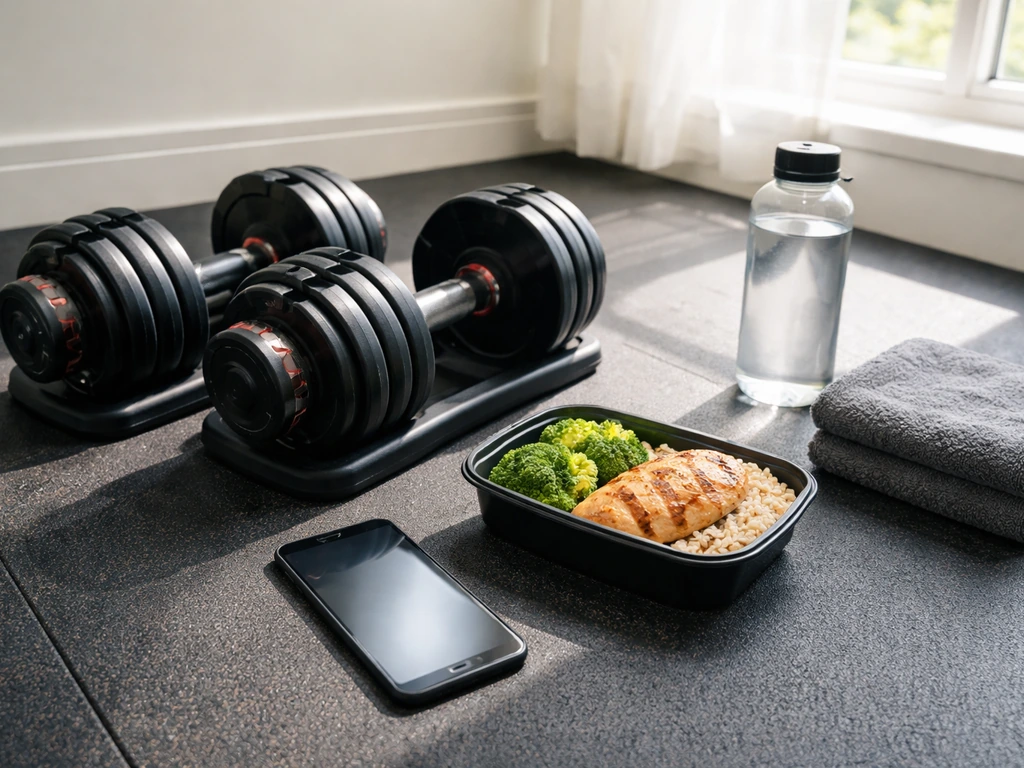
What's actually possible in 1 week (be honest with yourself)

True hypertrophy, meaning actual new contractile tissue added to your muscle fibers, requires repeated training sessions over several weeks minimum. Can women grow muscles like men? The answer is yes, because muscle growth depends on training, nutrition, and recovery rather than sex. Research on untrained individuals doing resistance training twice per week found small but detectable hypertrophy only after roughly seven training sessions, which already spans multiple weeks. The neuromuscular side of the story is different though: blank" rel="noopener noreferrer">strength improvements at the 2-to-4 week mark come mostly from your nervous system getting better at recruiting muscle fibers, not from new tissue. In your first week, that neurological adaptation is the dominant force.
Here's what you can realistically expect in 7 days: a noticeable pump and muscle fullness from increased glycogen storage and blood flow, improved strength performance as your motor patterns sharpen, some acute inflammation-related swelling that makes muscles look larger, and a solid foundation of stimulus that feeds real hypertrophy in weeks two, three, and four. If you want to understand how a full month of consistent effort compounds these results, the one-month muscle growth timeline is worth reading alongside this guide.
- Visible fullness and pump: glycogen and fluid shifts can make muscles look noticeably bigger within days
- Strength gains: nervous system efficiency improves rapidly, especially in beginners
- Performance improvements: coordination, motor patterns, and mind-muscle connection all sharpen fast
- Primed anabolic environment: the stimulus you lay down this week accelerates actual tissue growth over the following weeks
- Scale weight will likely go up from water and glycogen, not fat, so don't panic
How muscle actually grows: the three things that have to happen
Muscle grows when three things stack correctly: training stimulus, adequate nutrition, and recovery. Miss any one of them and the other two don't matter much. The training stimulus works through mechanical tension (the force your fibers experience under load) and metabolic stress (the cellular environment created by hard sets). Your muscle fibers respond by signaling satellite cells to repair and reinforce the tissue. Protein synthesis then rebuilds those fibers slightly thicker than before. But that rebuilding happens during rest, not during the workout itself.
Proximity to failure matters more than most people realize. A large systematic review confirmed that training close to failure produces greater hypertrophy than stopping well short of it when overall volume is matched. That doesn't mean you need to grind out every set to complete muscular failure, but leaving 1-3 reps in the tank on your working sets keeps the stimulus high enough to drive adaptation. Volume also has a dose-response relationship: each additional weekly set contributes measurably to hypertrophy outcomes, which is why cramming smart, high-quality volume into your 7-day plan actually matters.
Your 7-day training plan

The goal this week is to hit every major muscle group at least twice with enough intensity and volume to create a strong stimulus, while leaving enough recovery time to avoid digging yourself into a hole. A full-body approach works best for a single week because it distributes frequency efficiently and keeps each session manageable.
Weekly structure
| Day | Focus | Notes |
|---|---|---|
| Day 1 (Monday) | Full body A | Heavy compound focus, 3-4 sets per exercise |
| Day 2 (Tuesday) | Rest or light walk | Active recovery, no resistance training |
| Day 3 (Wednesday) | Full body B | Moderate weight, slightly higher rep ranges |
| Day 4 (Thursday) | Rest | Prioritize sleep and nutrition |
| Day 5 (Friday) | Full body A (repeat) | Aim to add small weight or 1-2 reps vs Day 1 |
| Day 6 (Saturday) | Full body B (repeat) | Match or slightly exceed Wednesday's performance |
| Day 7 (Sunday) | Rest | Full recovery, prep mentally for week 2 |
Full Body A: exercise selection and sets

- Barbell or goblet squat: 4 sets x 6-8 reps (heavy, 2-3 reps from failure)
- Bench press or dumbbell press: 3 sets x 6-8 reps
- Barbell or dumbbell row: 3 sets x 8-10 reps
- Overhead press: 3 sets x 8-10 reps
- Romanian deadlift: 3 sets x 8-10 reps
- Rest 90-120 seconds between sets for compound lifts
Full Body B: exercise selection and sets
- Romanian deadlift or trap bar deadlift: 4 sets x 8-10 reps
- Incline dumbbell press: 3 sets x 10-12 reps
- Pull-ups or lat pulldown: 3 sets x 8-12 reps
- Dumbbell lateral raises: 3 sets x 12-15 reps
- Dumbbell curl: 3 sets x 10-12 reps
- Triceps pushdown or dips: 3 sets x 10-12 reps
- Rest 60-90 seconds between sets for isolation exercises
Always warm up before your working sets. Research shows that a proper warm-up reduces delayed onset muscle soreness compared to going cold, and it lets you perform better on your first heavy set. Spend 5-10 minutes doing progressively heavier warm-up sets before your main working weight. Don't skip this, especially early in the week when your body is fresh and at higher injury risk from enthusiasm.
On intensity: you want to finish each working set feeling like you had 1-3 reps left in you. That's the sweet spot. Complete failure on every set isn't necessary, and doing it consistently across a week-long plan will fry your recovery capacity. Save the true all-out sets for the final set of each exercise if you want to push the edge.
Nutrition: how to eat for the fastest possible results this week
Training is the trigger, but nutrition is what your body actually builds with. For teenagers, the same fundamentals apply: lift consistently, eat enough protein and calories, and prioritize recovery build muscle as a teenager. Get this wrong and you can do everything else right and still stall. The core priorities for this week are hitting a calorie surplus, getting enough protein distributed across your meals, and timing your carbohydrates smartly around workouts.
Calories: surplus vs maintenance
If your goal is maximum muscle stimulus and you're okay with a small amount of fat alongside it, aim for a modest calorie surplus of 200-400 calories above your maintenance level. If you're already carrying excess body fat and want to recomp (lose fat while building muscle simultaneously), eating at maintenance or even a small deficit is still effective, especially for beginners. The muscle-building process doesn't completely shut off in a deficit if protein is high and training is solid, though growth will be slower. For this week specifically, a small surplus is the more aggressive choice.
Protein: your non-negotiable
The International Society of Sports Nutrition puts the effective daily protein range at 1.4 to 2.0 grams per kilogram of body weight for people doing resistance training. For a 75 kg (165 lb) person, that's roughly 105-150 grams per day. Go toward the higher end of that range this week to ensure muscle protein synthesis is fully supported. More important than the total though is distribution: research by Schoenfeld and Aragon recommends roughly 0.4 g/kg per meal across at least 4 meals, spaced no more than 3-4 hours apart. Each meal basically needs to trigger a fresh wave of muscle protein synthesis, and you can't make up for skipped meals later in the day.
For the same 75 kg person, that means about 30 grams of protein per meal, four times a day. Chicken breast, eggs, Greek yogurt, cottage cheese, tuna, and lean beef are your workhorses. Protein powder is a convenience tool, not a magic ingredient. It helps you hit your targets when whole food isn't practical, particularly in that post-workout window.
Carbohydrates and meal timing
Carbohydrates fill muscle glycogen stores, and full glycogen means harder, fuller-looking muscles and better training performance. After exercise, your muscles are especially receptive to glycogen replenishment. Consuming roughly 1.0-1.2 grams of carbohydrate per kilogram of body weight in the first two hours after training drives the fastest glycogen resynthesis. For a 75 kg person that's 75-90 grams of carbs post-workout, from sources like rice, oats, fruit, or potatoes. Don't obsess over this window to the point of anxiety, but using it is a real, measurable advantage this week.
Pre-workout carbohydrates matter too. A meal with 40-60 grams of carbs 60-90 minutes before training keeps performance high and prevents early fatigue. If you train fasted, at minimum have a small protein-carb snack 30-45 minutes before.
Sleep and recovery: this is where growth actually happens
Sleep is not optional. The American Academy of Sleep Medicine recommends 7-9 hours per night for adults, and the evidence is clear that falling short impairs strength performance and blunts recovery. One review found that even a habitual restriction of just 1-2 hours below your normal baseline can interfere with the hormonal and performance benefits of resistance training. This week, your sleep is a training variable, not a lifestyle choice.
Aim for 8 hours as your target. Keep your sleep and wake times consistent across the week, even on rest days. Poor sleep elevates cortisol, suppresses anabolic hormones, and slows the protein synthesis process that your training sessions are designed to trigger. If stress is high, add 10 minutes of deep breathing or a short walk after dinner. Psychological stress raises cortisol too, which directly competes with the muscle-building process.
Managing soreness without sabotaging progress
Some soreness in days 1-3 of this week is normal, especially if you're returning from a break or starting fresh. Delayed onset muscle soreness (DOMS) typically peaks 24-72 hours after a session. It's uncomfortable but not a signal to stop. Light movement, staying hydrated, and eating enough carbohydrates and protein will help it resolve. What you want to avoid is confusing productive soreness with actual injury. If pain is sharp, joint-based, or hasn't resolved within 5-7 days, that's a different conversation.
Don't chase soreness as a sign the workout worked. Soreness is a side effect of muscle damage, and muscle damage is just one of several growth mechanisms. You can have a phenomenal, growth-stimulating workout and feel almost nothing the next day. Lack of soreness is not lack of progress.
Supplements: what's worth it and what isn't
Most supplements won't move the needle in a single week. A few, however, have solid enough evidence to mention honestly.
Creatine monohydrate
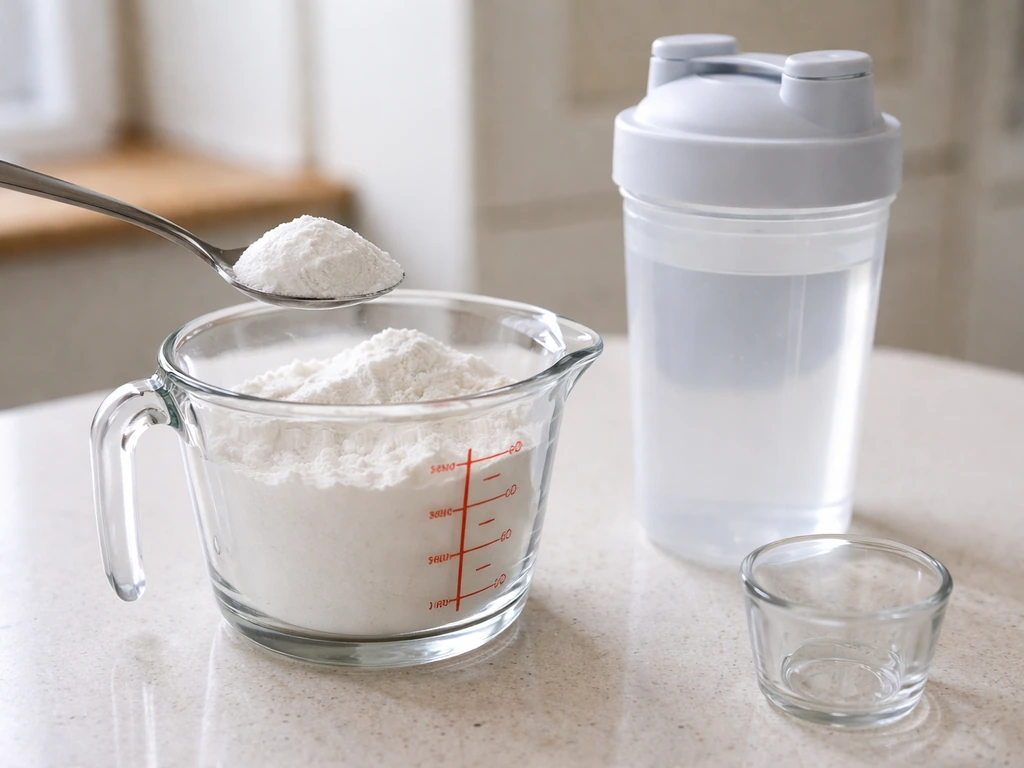
Creatine is the most well-researched performance supplement in existence. The ISSN position stand describes a loading protocol of 20-25 grams per day split across 4-5 doses for 5-7 days, followed by a maintenance dose of 3-5 grams per day. This loading approach saturates your muscle creatine stores quickly, typically within the first week, and can improve high-intensity, repeated-effort performance by 10-20%. If you want creatine's benefits in a single week, the loading protocol is the way to get there fast. If you'd rather skip loading, 3-5 grams per day will work but takes 3-4 weeks to fully saturate.
Caffeine
Caffeine is a legitimate performance enhancer for training. Research shows doses of around 4-6 mg per kilogram of body weight enhance upper-body strength, though effects on lower-body strength are less consistent. For a 75 kg person, that's roughly 300-450 mg, which is more than most people take casually. A strong coffee or a pre-workout with a measured dose 30-45 minutes before training is a practical approach. Don't rely on it if you're caffeine-sensitive or prone to anxiety; the stress response isn't worth it.
Protein powder
Not a magic supplement, just a convenient protein source. Whey is fast-digesting and well-suited for post-workout use. Casein is slower and works well before bed. If you're hitting your daily protein target from whole foods, powder is unnecessary. If you're struggling to hit 150 grams a day from meals alone, a shake or two makes it practical. That's the whole story.
What to skip
- Testosterone boosters: no reliable evidence for the marketing claims
- BCAAs: if you're already eating enough total protein, they add nothing
- Fat burners: not relevant to muscle building and often overstimulating
- Most 'muscle-building' proprietary blends: usually underdosed and overpriced
How to track progress across 7 days
The scale is going to lie to you this week. When you start eating more carbohydrates and creatine (if you load), your body stores extra water and glycogen, which adds weight quickly. A jump of 1-3 kg on the scale in your first week is almost certainly water and muscle glycogen, not fat. This is actually a good sign because it means your muscles are fuller and your performance is better. Don't panic and don't cut calories in response to it.
Instead, track these things:
- Strength markers: record the weight and reps for your main lifts each session. Even adding one rep to a set or 2.5 kg to the bar within a week is meaningful neurological progress
- Muscle measurements: use a soft tape measure on your chest, upper arms (flexed), thighs, and waist at the start and end of the week. Increases in limb measurements with a stable or decreasing waist is the direction you want
- Photos: front, side, and back in the same lighting at the same time of day. Subjective but useful for spotting fullness and muscle definition changes
- Performance feel: are your reps feeling stronger and more controlled on Day 5 vs Day 1? That's your nervous system adapting
- Soreness trajectory: soreness should decrease across the week as your body adapts, not stay constant or worsen
One week is too short to see dramatic changes in muscle size on its own, but it's absolutely enough time to see improvements in strength, muscle fullness, and how you perform in the gym. The readers who get the most out of this week are the ones who then keep going. The stimulus you created this week doesn't pay out fully for another 2-4 weeks as actual tissue remodeling catches up. If this plan has you thinking about what consistent effort looks like over a full month, that longer timeline is where the real transformation happens.
FAQ
If I follow this perfectly, will I see visible muscle growth by day 7?
You might look a bit bigger from glycogen, water, and pump effects, and you should feel stronger from better nervous-system coordination. Actual new muscle tissue takes longer, so expect the biggest day-7 changes to be “fullness” rather than structural size. Use gym performance markers (reps, load, session quality) to judge progress, not the mirror alone.
How should I structure workouts in this one week, full-body or upper/lower?
For a single week, full-body or upper/lower both work if you hit each major muscle group at least twice and keep total sets reasonable. The key edge is recovery and consistency, so choose the split that lets you keep 1 to 3 reps in reserve on most working sets without turning sessions into all-out fatigue. If you get sore enough to miss the next session, your split is too aggressive for a one-week sprint.
How many total sets per muscle should I do in 7 days?
Aim for enough quality volume that you can recover and repeat it next week. A practical target for beginners is about 8 to 12 hard sets per muscle over the week, distributed across at least two sessions. If you go much higher in a single week, you’ll often lose training quality due to fatigue, which reduces the stimulus more than it increases it.
What does “1 to 3 reps in the tank” look like when I’m using different rep ranges?
It means your last reps should feel challenging but not like you’re grinding to a failed repetition. In low reps (like 3 to 6), leaving reps in reserve often feels like stopping before the bar speed collapses. In higher reps (like 10 to 20), it feels like you could complete a couple more with good form. If form breaks on the final reps, you’re likely too close to failure or using too heavy a load.
Should I do cardio this week to support muscle growth?
Light cardio is fine if it doesn’t reduce your lifting performance or recovery. Keep it modest (for example, 1 to 2 easy sessions) and avoid high-intensity intervals that make your legs heavy for lower-body training. If you notice reduced strength or you start failing to hit your reps, cut cardio first.
Can I gain muscle if I’m not eating a calorie surplus?
Yes, especially if you’re a beginner, but the rate will be slower. At maintenance or a small deficit, focus on hitting the protein target and keeping training quality high. For a one-week goal of looking fuller and improving strength fast, a small surplus usually gives the most noticeable performance and muscle-glycogen payoff.
What if I can’t eat enough protein four meals a day?
Use a shake to fill the gaps rather than spreading protein too thin across many small meals. Even distribution helps, so if you miss one meal, consolidate protein into the next meal to keep the dose closer to the per-meal target. A simple workaround is one whey-based serving after training and one casein or slower protein serving before bed.
Do I need to carb-load after every workout for the best results in one week?
It helps, but you don’t need perfect timing. The advantage is faster glycogen replenishment, which supports harder training in the next session. If you can, prioritize carbs in the first 2 hours after training and ensure you also get carbs before the next workout so performance doesn’t drop.
Is fasted training going to ruin my muscle goal for the week?
Not necessarily, but it removes an easy route to performance and glycogen support. If you train fasted, include a small protein-carb snack before or shortly before lifting, and then eat normally after. If your workouts get weaker or reps drop, switching away from fasted training for the week is the quickest fix.
How much sleep do I truly need if I only have 6 days to work with?
Try to reach 7 to 9 hours, with 8 as the target described earlier. If you only manage 6 to 7 hours, expect reduced recovery and weaker performance, especially for legs and compounds. Consistency matters too, so keep wake time stable even on rest days.
How do I tell the difference between normal soreness and an injury risk?
Normal DOMS is usually muscle-based, dull or sore, and improves gradually over 1 to 3 days. Injury pain is sharper, more localized to a joint or tendon, worsens with movement in a specific direction, or doesn’t improve within about a week. If pain is joint-based or persists, stop training that movement and consider getting evaluated.
Should I train to absolute failure on my last set every time?
No, you should push hard but not consistently grind to failure on every exercise across a week. Saving your closest-to-failure effort for the last set of an exercise is a better way to balance stimulus and recovery. If you find yourself needing extra days to recover or your next workout quality drops, dial back.
Will creatine loading cause stomach issues or water retention that looks like fat?
Some people get mild GI discomfort during loading, so split doses and take with meals or reduce the dose if your stomach is sensitive. The “extra weight” from loading is mostly water plus glycogen, not fat, and it typically settles as you continue. Monitor waist and performance rather than reacting to early scale jumps.
How much caffeine is safe if I’m using it to train harder this week?
Use measured dosing (the article’s dose range is a starting point) and test it on a day you can judge your tolerance. Avoid taking caffeine too late because it can reduce sleep quality, which is a big limiter for muscle growth. If you get anxiety, jitteriness, or elevated heart rate, reduce the dose or skip it.
Does muscle growth in one week depend on my genetics or age?
Genetics and age can influence how fast you respond, but the controlling levers for this week are still stimulus quality, adequate calories and protein, and sleep. Younger trainees and beginners often respond quickly, but the plan still applies, including leaving reps in reserve and recovering enough to repeat quality sessions. If you’re under 18, prioritize good form and avoid overreaching.
What should I track after this week to know it worked?
Track strength and performance: working-set reps at a given weight, total load lifted, and whether you can repeat sessions without excessive fatigue. Also note weekly body measurements like morning weight trend and photos under consistent lighting. If strength and fullness improved, the week’s training stimulus did its job even if tissue remodeling takes longer to show.