Weak muscles almost always come down to one or more of three things: not enough training stimulus, not enough protein and calories to support growth, or not enough recovery to let adaptations happen. Fix those three levers consistently over 4 to 12 weeks and most people see real, measurable strength gains regardless of age, starting point, or how long they've been inactive.
How to Grow Weak Muscles: A Step-by-Step Plan

Marcus Kellerman
5 Jun 2026
What 'weak muscles' usually means and why it happens
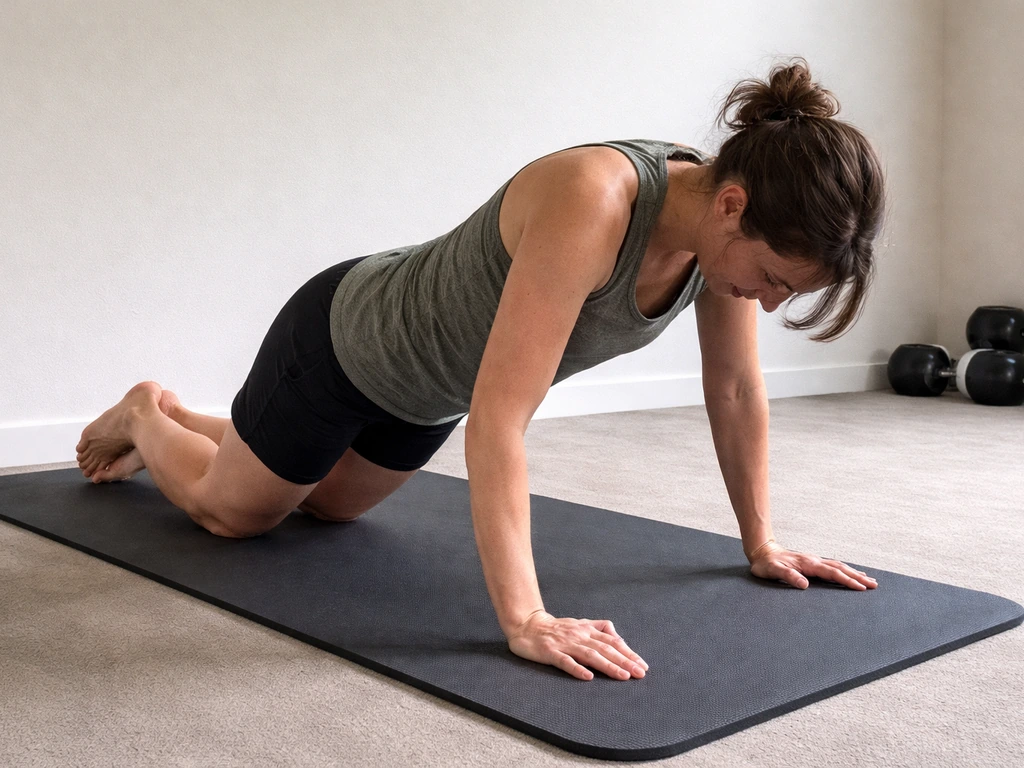
When people search for how to grow weak muscles, they're usually describing one of a few situations: they've never trained seriously, they trained before but took a long break, they're older and noticing strength and function declining, or they've been dealing with an injury that forced them to baby a limb. These all feel the same day to day but have slightly different roots.
Deconditioning is probably the most common culprit. Muscle atrophy sets in surprisingly fast during prolonged inactivity, and even a few weeks of doing very little can noticeably reduce strength. If you had a decent base and then stopped training for months, your muscles didn't forget how to grow but they shrank while you were away.
For older adults, there's a specific process called sarcopenia: the gradual, age-related loss of muscle mass, strength, and function. It's driven by a combination of factors including loss of type II muscle fibers (the powerful fast-twitch ones), reduced anabolic hormones, a blunted muscle protein synthesis response to both meals and exercise, and often plain inactivity on top of all that. This isn't inevitable doom, though. Resistance training produces sustained strength gains even in people with sarcopenia, and the research is clear that age is context, not a hard ceiling.
Then there's the training mismatch group: people who exercise regularly but never actually challenge their muscles enough to force adaptation. Walking, light yoga, or lifting the same light dumbbells for years builds some base fitness but doesn't give your muscles a reason to grow. Muscle responds to progressive overload, full stop. Without it, you maintain at best.
Finally, pain or injury can create real weakness by limiting range of motion, reducing motor unit recruitment, and causing you to protect a limb without realizing it. If you think pain is driving your weakness, get a proper assessment before following any general training plan. Everything below assumes you're cleared to train.
Building your training foundation: progressive resistance done right
The non-negotiable principle here is progressive overload: your muscles need to work harder over time to keep adapting. And yes, that same progressive-overload approach is how women can build muscle and gain strength too, including developing the size and definition that people associate with male physiques. That doesn't mean going all-out from day one. It means starting at a manageable level and systematically increasing the demand week by week.
How often should you train?
For most people starting or restarting, 2 to 3 days per week of full-body resistance training is enough to drive meaningful progress. If your goal is specifically how to grow muscle in a week, start by training 2 to 3 full-body days and apply progressive overload each session. ACSM's position stand supports this frequency for building strength and hypertrophy, especially for beginners and older adults. More isn't always better early on. Your job in the first 4 weeks is to learn movement patterns, build a tolerance for training stress, and stay consistent, not to be destroyed every session.
Sets, reps, and how heavy to go

Start with 1 to 3 sets per exercise at a weight where you can complete 8 to 12 reps with good form but feel genuine effort in the last 2 to 3 reps of each set. That translates to roughly 60 to 80 percent of your one-rep max, though most beginners don't need to test that. A simpler guide: pick a weight where the last rep of your set is hard but your form doesn't fall apart. Research on weekly training volume shows a dose-response relationship between sets per muscle group and muscle growth, with higher volumes (10 or more weekly sets per muscle) associated with greater hypertrophy. But you don't start there. Start at 5 to 9 sets per muscle group per week and build from that base.
A simple 4-week starter template
Three days per week, full body. Each session hits the major muscle groups with one to two exercises each. Rest 1 to 3 minutes between sets. Add a small amount of weight (2.5 to 5 pounds for upper body, 5 to 10 pounds for lower body) whenever you can complete all your target reps with room to spare. That's progression.
| Day | Exercise | Sets x Reps |
|---|---|---|
| Monday | Goblet squat or leg press | 3 x 10 |
| Monday | Dumbbell bench press or push-up | 3 x 10 |
| Monday | Seated cable row or dumbbell row | 3 x 10 |
| Monday | Dumbbell shoulder press | 2 x 10 |
| Monday | Plank hold | 2 x 20–30 sec |
| Wednesday | Romanian deadlift or hip hinge machine | 3 x 10 |
| Wednesday | Incline dumbbell press | 3 x 10 |
| Wednesday | Lat pulldown or assisted pull-up | 3 x 10 |
| Wednesday | Lateral raise | 2 x 12 |
| Wednesday | Dead bug or pallof press | 2 x 10/side |
| Friday | Repeat Monday or Wednesday session | Same structure |
After 4 weeks, move to a slightly higher volume and introduce some exercise variation. By weeks 5 to 8, you can be running 3 to 4 sets per exercise and adding targeted isolation work for lagging areas. Deload every 4 to 8 weeks by reducing volume (drop sets by about 40 to 50 percent) for one week before ramping back up. This is supported by consensus recommendations for planned deloading and helps you keep accumulating progress without running into the wall of accumulated fatigue.
Choosing exercises: compounds first, isolation second

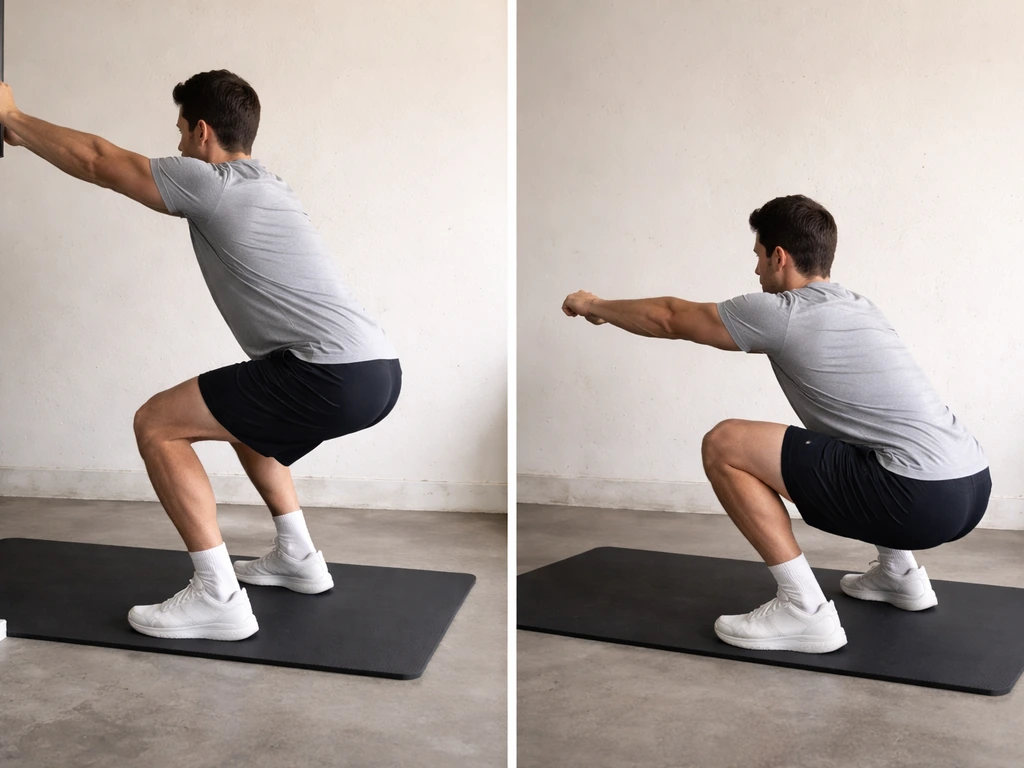
The backbone of any program for weak or underdeveloped muscles should be compound movements. These recruit the most muscle mass per exercise, produce the strongest hormonal and mechanical stimulus for growth, and build the kind of functional strength that transfers to everyday life. For lower body: squats (goblet, barbell, or leg press), hip hinges (Romanian deadlifts, trap bar deadlifts), and lunges. For upper body pushing: bench press, overhead press, push-ups (weighted or elevated as you progress). For upper body pulling: rows in any form, lat pulldowns, pull-ups or assisted pull-ups.
Isolation exercises, things like leg curls, bicep curls, tricep pushdowns, and lateral raises, are useful additions once you have the compound work in place. They let you bring up specific weak points and add volume to individual muscles without the total-body fatigue of another heavy compound session. Don't skip them entirely, but don't build your program around them either.
Exercise selection matters less than you might think once you have sensible compounds in place. Research consistently shows that programming variables like volume, intensity, and proximity to failure drive most of the variation in hypertrophy outcomes. A well-executed goblet squat beats a poorly executed barbell squat every time, especially early on. Choose exercises you can do safely and with good technique, then make those harder over time.
Protein, calories, and what to actually eat
You cannot build weak muscles into strong ones if you're chronically under-eating protein or total calories. This is probably the single most overlooked variable for people who train consistently but don't see results. Your body needs raw material to synthesize new muscle tissue, and if you're not providing it, the training stimulus goes partly to waste.
How much protein do you actually need?
The ISSN's position stand puts the target for exercising individuals at 1.4 to 2.0 grams of protein per kilogram of bodyweight per day. For practical purposes, most people building muscle do well aiming for the higher end, around 1.6 to 2.0 grams per kilogram. For a 75 kg (165 lb) person, that's roughly 120 to 150 grams of protein daily. Dose-response evidence suggests that gains in lean mass scale upward with protein intake up to around that range before returns diminish. You don't need to obsess over the exact gram, but you do need to actually hit the target most days.
Good practical sources: chicken breast, eggs, Greek yogurt, cottage cheese, canned tuna and salmon, lean beef, tofu, edamame, and legumes. If you consistently struggle to hit your target through food, a whey or plant protein supplement is a perfectly legitimate tool, nothing magical, just a convenient way to add protein.
Total calories matter too
You need adequate total energy intake to support training adaptations. If you're in a significant calorie deficit, your body has limited capacity to build new tissue even with high protein. If building muscle is the priority, aim to eat at maintenance calories or a modest surplus of 100 to 300 calories above maintenance. This isn't license to eat everything in sight, but it is permission to actually fuel yourself.
What about protein timing?
Timing matters less than total intake. Meta-analytic evidence finds no meaningful independent advantage for hitting protein in a narrow window immediately before or after training when total daily protein is adequate. That said, spreading protein across 3 to 4 meals of roughly 30 to 50 grams each is a practical approach that keeps muscle protein synthesis elevated across the day. Don't stress if your workout timing shifts your eating around. Just hit your daily target.
Recovery: sleep, soreness, and managing fatigue
Training creates the stimulus for muscle growth. Recovery is when the actual adaptation happens. If you chronically shortchange sleep and recovery, you're training in a hole you can never fully climb out of. A published Thieme journal article PDF notes that average sleep decline estimates and highlights how adequate recovery supports strength performance and adaptation chronically shortchange sleep and recovery.
Sleep is not optional

Systematic review evidence links sleep loss and restriction to measurable reductions in strength performance. The general recommendation of 7 to 9 hours per night isn't a wellness platitude, it's directly relevant to your ability to express and build strength. If you're regularly sleeping 5 to 6 hours, improving your sleep will probably do more for your muscle-building results than fine-tuning your split or your supplement stack.
Soreness is not your goal
Delayed onset muscle soreness (DOMS) is a normal response to novel or intense training stimulus, but it is not a reliable indicator of a productive session or muscle growth. You can build muscle without being sore. As your training becomes more consistent, soreness naturally decreases even as your results improve. When you are sore, gentle movement like a short walk tends to help with symptom relief. Stretching has minimal evidence for reducing DOMS, though it won't hurt if it makes you feel better. A Frontiers systematic review and meta-analysis concluded there wasn’t sufficient statistical evidence to reject equivalence between stretching and passive recovery for some DOMS, strength, and ROM outcomes Stretching has minimal evidence for reducing DOMS. Active recovery, contrast water therapy, and cold immersion have some evidence for reducing perceived soreness after intense training if you want to manage it more actively.
Managing accumulated fatigue
Fatigue is multifactorial: training volume and intensity, sleep quality, life stress, nutrition status, and more all feed into how recovered you actually are. The practical sign that you need to back off is when your performance is declining session over session despite trying hard, you feel flat or unusually unmotivated to train, or your resting heart rate is notably elevated. That's the time for a planned deload week or an unplanned easy week, not another hard session. Research on periodic vs continuous training suggests short planned breaks don't derail your progress; they protect it.
Tracking progress and knowing when to adjust
You can't manage what you don't measure, and most people who plateau are doing so partly because they stopped progressing without noticing. Keep a simple training log: date, exercise, sets, reps, and weight used. That's it. Review it weekly.
If you can do more reps than last time at the same weight, add weight next session. If you hit the top of your rep range (say, 12 reps) on all sets with good form and moderate effort, that's your cue to increase load by the smallest increment available. This is the most direct and reliable form of progressive overload for beginners and intermediates.
If you're not making progress after 2 to 3 weeks of consistent effort, look at these variables in order: Are you actually eating enough protein? Are you sleeping? Are you training close enough to your effort capacity, or are you stopping 5 reps short of where it gets hard? Are you being consistent enough, or is your 3-day week becoming a 1-day week in practice? Those four questions answer most plateaus before you need to think about restructuring your whole program.
Over weeks 8 to 12, you can start thinking about more structured periodization: slightly higher intensity blocks, technique refinement on your main compounds, and adding volume to specific muscles that are lagging. But that's phase two. Phase one is just being consistent enough to see what happens when you do the basics right.
Common mistakes that keep your muscles weak
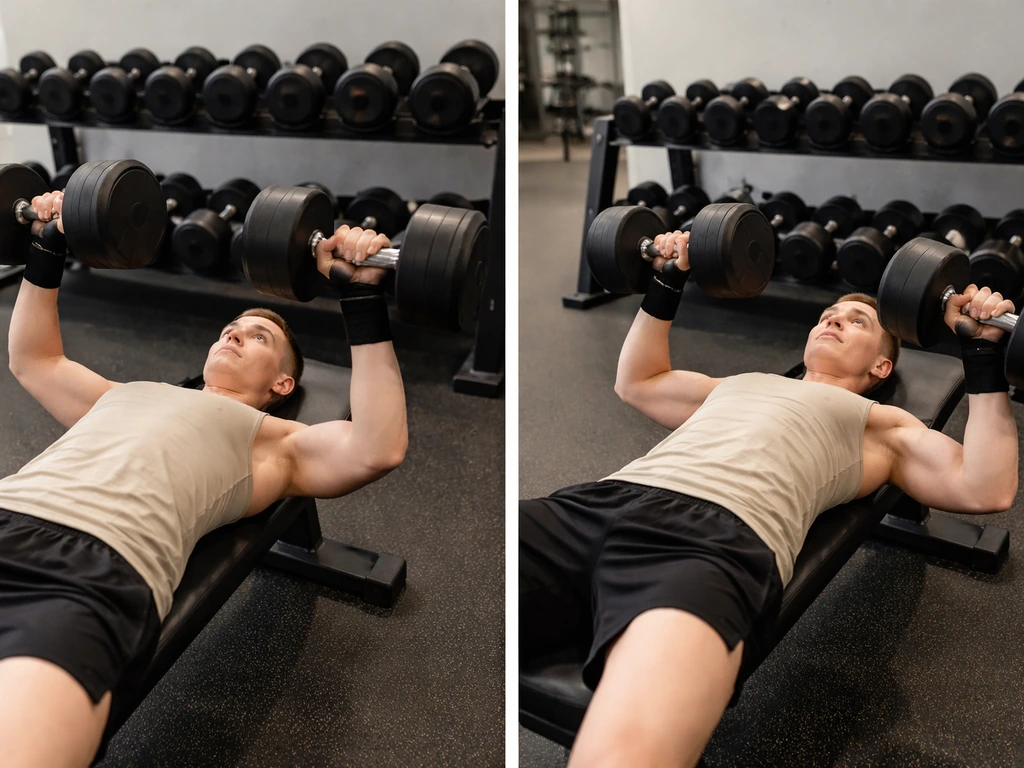
- Training with too little effort: leaving 6 or 7 reps in the tank every set gives your muscles no reason to adapt. You don't need to train to failure every session, but you need to work hard enough that the last 2 to 3 reps of a set are genuinely challenging.
- Going too heavy too soon: loading up beyond what your form allows forces compensations, increases injury risk, and usually results in less muscle stimulus, not more. Ego lifting slows progress.
- Under-eating protein consistently: this is quiet and invisible but extremely common. You can train perfectly and see almost no results if your daily protein is chronically low.
- Under-eating total calories: being in a large calorie deficit while trying to build muscle is fighting yourself. A modest surplus or maintenance intake is needed for meaningful muscle gain.
- Inconsistency: one great week followed by two absent ones doesn't build anything. Muscle adapts to repeated, consistent stimulus over weeks and months. Showing up 80 percent of the time beats one-week heroics.
- Skipping deloads and ignoring fatigue: grinding through accumulated fatigue reduces the quality of every session and increases injury risk. Planned easy weeks are part of the program, not a sign of weakness.
- Training through real pain: soreness is uncomfortable but safe. Sharp, joint-specific, or persistent pain is not. Training into injury will set you back further than taking a week off ever would.
- No tracking or logging: without a record, you have no way to know if you're actually progressing or just repeating the same session every week.
Your next steps starting today
If you're a complete beginner or returning after a long break, start with the 3-day full-body template above. Don't overcomplicate it. Pick weights that are challenging but manageable for 3 sets of 10, log what you do, and add a little weight when the sets feel too easy. That's weeks 1 to 4. If you want a fast start, focus on progressive overload, adequate protein and calories, and consistent training for at least a week so you can kick off muscle growth muscle growth in 1 week.
On the nutrition side, calculate your rough daily protein target (your bodyweight in kilograms multiplied by 1.6 to 2.0) and actually track your intake for a week using a free app to see where you stand. Most people discover they're eating significantly less protein than they thought. Adjust your meals to hit that number before worrying about anything else.
Set a non-negotiable sleep target of 7 hours minimum and treat it as part of the program. Then come back to your training log after 4 weeks. If your weights have gone up, your reps have increased, or both, the plan is working. If not, run through the checklist: protein, sleep, effort level, consistency. One of those is almost always the answer.
If you're dealing with a specific timeline or want to know what's realistic in a shorter window, the picture for one month versus a longer 8 to 12 week block is meaningfully different, and it's worth having realistic expectations for each phase before you start. If you're a teenager wondering how to grow muscle, start with these same basics but be patient and focus on consistent progressive resistance, enough protein, and solid sleep realistic expectations.
FAQ
How long will it take to stop “feeling weak” after I start training again?
If you were inactive, some strength can rebound quickly because you regain coordination and neural drive. Real muscle growth usually takes several weeks, so expect the biggest noticeable changes in strength and performance around 4 to 12 weeks, especially if you keep progressing, sleep well, and hit daily protein and calories consistently.
What if my workouts make me sore but I still feel no stronger after a few weeks?
Soreness alone is not a progress signal. Check whether your reps are rising at the same load, or the load is increasing while reps stay in range. If neither happens for 2 to 3 weeks, the issue is usually effort too low (not hard enough sets), too little volume, or under-eating, not that you “trained wrong.”
Is it possible to grow weak muscles without gaining size, or without getting bigger?
Yes. Some “weak” areas improve first through better technique and neural improvements, and size can lag if calories are tight or protein is inconsistent. If your goal is both strength and noticeable hypertrophy, use progressive overload and aim for maintenance or a small surplus, then reassess after 8 to 12 weeks.
How close should my sets be to failure?
Aim for challenging effort where you could do about 2 to 3 more reps with good form when you stop. Going to true failure every set can spike fatigue and slow progress, especially early. If performance stalls, reduce how close you train to failure or add a deload rather than forcing harder reps.
Do I need to train every muscle group directly, or will compounds be enough?
For most beginners restarting, compounds plus basic isolation later is sufficient. A common mistake is only doing big lifts like presses and squats but ignoring pulling patterns, which can lead to weak back and slower upper-body strength gains. If a muscle group is lagging, add 1 extra isolation movement for it 2 to 4 weeks and monitor whether performance improves.
How should I progress if I can’t increase weight week to week?
Use rep-based progression first. If you can hit the top of your rep target on all sets with the same weight, add the smallest increment available next session. If you stall at a rep number for several sessions, keep the weight and try to add reps gradually, then increase once you own the range.
What if I’m gaining strength but my bodyweight isn’t changing, am I doing it wrong?
Not necessarily. Strength can improve even without scale weight moving, especially at the start or after a break. That said, if weight stays flat for months and reps never progress much, you may be too far under maintenance. Track intake for a week and see if your calories are likely to be too low.
Can I fix weakness caused by injury-related movement limits with general training?
Sometimes, but pain-limited weakness needs care. If you have ongoing pain, numbness, instability, or a restricted range that changes your form, get a proper assessment before trying to force progressive overload. A common safe strategy is to progress within a pain-free range and use exercise substitutions rather than pushing through symptoms.
Should I take creatine or other supplements to grow weak muscles?
Supplements are optional if protein, calories, and progressive training are consistent. Creatine monohydrate is one of the more practical add-ons because it can improve training capacity and strength over time, but it will not compensate for low protein, insufficient total calories, or missed progression.
What’s the easiest way to tell if my program needs a deload?
Deload when performance trends downward despite consistent effort, you feel unusually flat or unmotivated, or your resting heart rate stays elevated. If that happens, reduce volume for about a week (keeping movement patterns and some sets) and then resume progression. A common mistake is to add more hard work instead of recovering.
How should I adjust if I can only work out 2 days per week?
You can still make progress with 2 days by doing a full-body approach and keeping volume reasonable per session. For example, split compounds so each session covers all major movement patterns (squat or leg press, hinge or deadlift pattern, press, row, and optional isolation). The key is consistent weekly sets per muscle and clear progression, not the number of days.
What if I’m eating protein but still not growing, could it be my food quality or timing?
Timing rarely matters if you hit your daily protein target, but consistency and distribution do. If you are under target on average, you can’t compensate with “good timing.” Aim to spread protein across 3 to 4 meals, and if you struggle with intake, use a practical supplement like whey or a plant blend to close the gap.