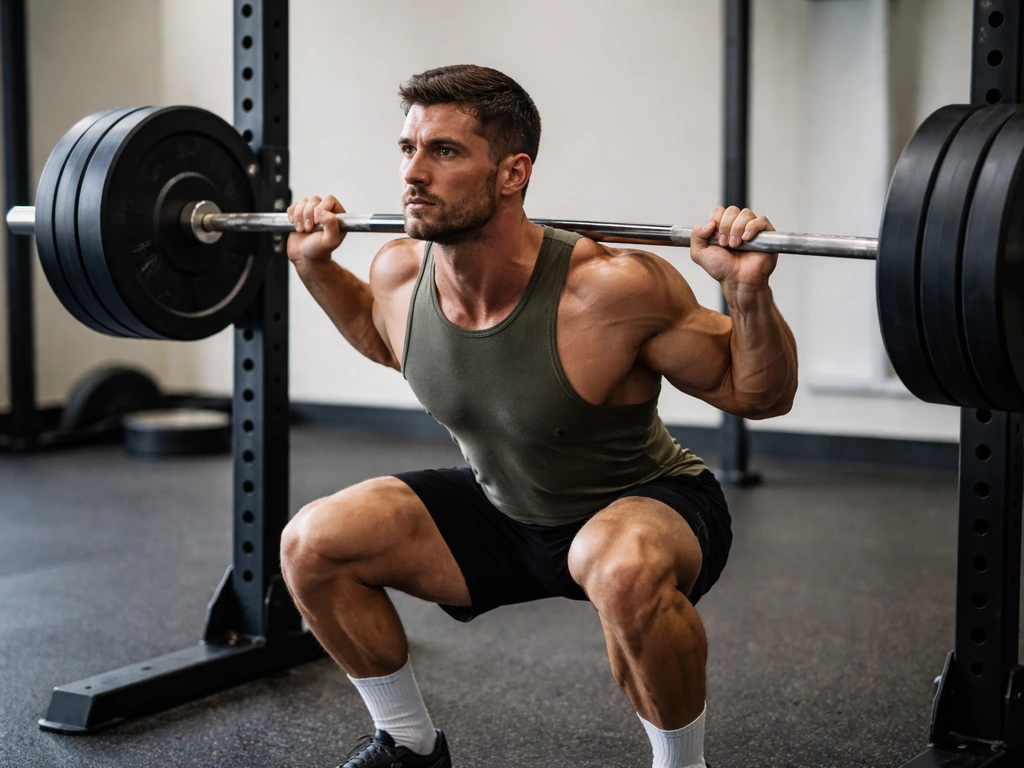
Exercise grows muscle by creating mechanical tension in muscle fibers, which triggers a cascade of molecular signals that tell your body to build more contractile protein. The core mechanism is this: you load a muscle hard enough and often enough, it adapts by getting bigger and stronger so the same load feels easier next time. That adaptation is called hypertrophy, and it is driven primarily by resistance training with progressive overload, backed up by enough protein and sleep to actually complete the rebuilding process.
How Does Exercise Help Grow Muscles: The Evidence Plan

Marcus Kellerman
21 May 2026

What exercise actually triggers inside your muscles

When you contract a muscle against meaningful resistance, the mechanical stress on individual muscle fibers activates a protein called mTORC1 (mechanistic target of rapamycin complex 1). Research using immunofluorescence has shown that mTORC1 physically relocates inside the cell after resistance exercise, moving toward lysosomes where it can initiate protein synthesis signaling. At the same time, MAPK pathways activate in parallel. Together, these signals tell the cell to manufacture more myofibrillar protein, which is the contractile machinery inside each fiber. Pairing that exercise stimulus with protein feeding amplifies and extends the duration of muscle protein synthesis well beyond what either signal does alone.
The downstream result is muscle protein synthesis (MPS) running well above baseline for an extended window after you train. One classic measurement study found MPS elevated by roughly 50% at 4 hours post-exercise and by about 109% at 24 hours, before returning close to baseline around 36 to 48 hours. That window is important practically, because it tells you both when to eat protein and how frequently you need to train a muscle to keep repeatedly hitting it while it is still primed.
Beyond MPS, satellite cells matter too. These are muscle stem cells that sit dormant until a muscle is stressed. After hard training, they activate, proliferate, and fuse with existing muscle fibers, donating new nuclei. More nuclei means more capacity for protein synthesis, which is part of why trained muscles can grow larger over time than an untrained person's upper limit.
p0s2 muscle growth over time than an untrained person's upper limit. The best exercise to grow is one that lets you apply progressive overload with enough total hard sets to drive hypertrophy muscle grows larger. There are also neural adaptations, especially in the first few months of training, where your nervous system gets better at recruiting and coordinating muscle fibers.
Neural adaptations from training also support the broader idea that exercise can help the nervous system respond and improve over time exercise can help neurons to grow. This is why beginners often see strength gains faster than size gains early on.
Progressive overload, intensity, and how hard you actually need to train
Progressive overload is the non-negotiable principle. It means consistently increasing the challenge your muscles face over time, whether that is adding weight to the bar, doing more reps with the same weight, adding sets, or reducing rest time. Without it, your muscles hit a stimulus they can already handle and stop adapting. With it, they keep getting the signal to grow.
Effort level within each set also matters a lot. Research on proximity to failure consistently shows that training with sets taken close to, or to, momentary muscular failure produces robust hypertrophy. The reason is mechanical: as you approach failure, more and higher-threshold motor units are recruited, meaning more total muscle fibers are under tension.
You do not have to grind every single set to absolute failure, and the evidence on training to failure versus stopping a few reps short is more nuanced than gym lore suggests. But coasting through sets with five or six easy reps left in the tank will significantly undercut your results. A practical rule: most of your sets should end within about 2 to 3 reps of failure.
One thing that gets conflated is load and effort. Heavy weights and light weights can produce comparable hypertrophy when effort is matched, meaning sets taken close to failure at both ends of the load range. A systematic review and meta-analysis on low-load versus high-load training confirmed similar hypertrophy outcomes across load ranges when sets were taken to muscular failure. This is practically freeing: you are not locked into lifting maximally heavy to grow. But it does mean effort is mandatory regardless of what weight is on the bar.
Sets, reps, frequency, and range of motion: the variables that actually move the needle
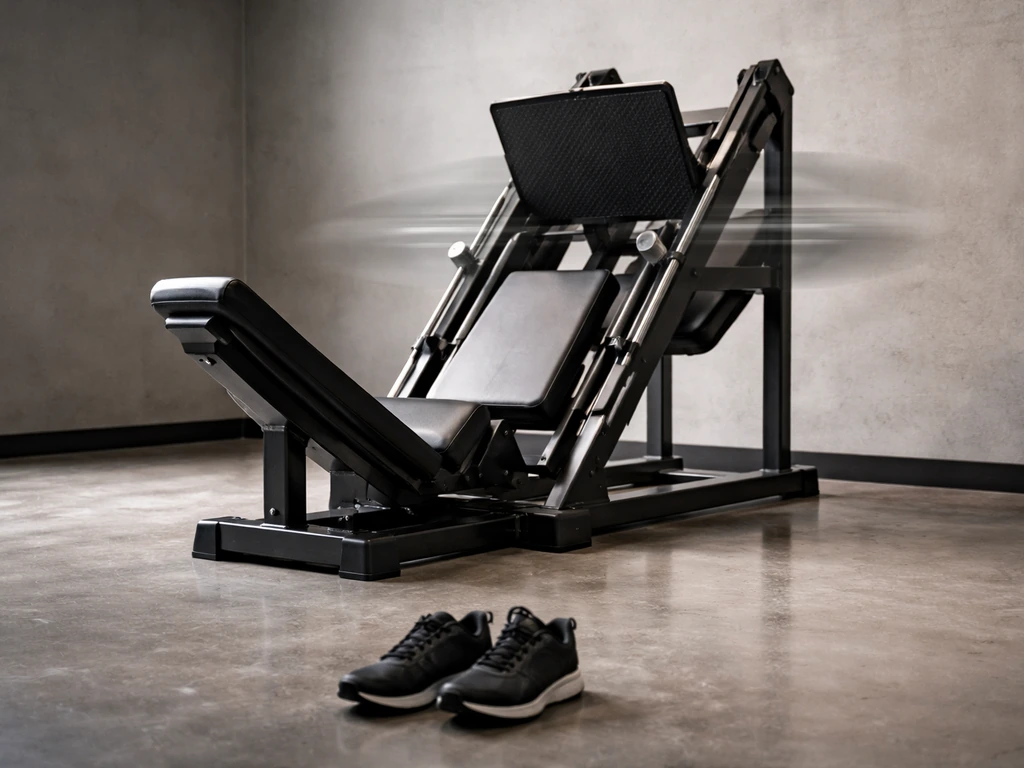
Volume, meaning the total number of hard sets per muscle per week, is one of the strongest predictors of hypertrophy. A dose-response meta-analysis categorized weekly sets per muscle group and found that higher weekly set counts (10 or more sets per muscle per week) were associated with greater muscle mass increases than lower volumes (under 5 sets per week). A practical starting target for most people is 10 to 20 hard sets per muscle per week, with beginners starting toward the lower end and advanced trainees potentially pushing higher.
Rep ranges are more flexible than most people think. Anywhere from roughly 5 to 30 reps per set can drive hypertrophy, provided effort is sufficient. Lower reps with heavier loads tend to build more absolute strength alongside size; higher reps with moderate loads are easier on joints and still grow muscle effectively. Mixing ranges across your training week is a sensible, evidence-aligned approach.
Frequency: training each muscle group 2 times per week tends to outperform once per week for hypertrophy, and for older adults specifically, 2 to 4 sessions per week are commonly recommended, typically on alternating days. Training a muscle 3 times a week can work well for advanced lifters managing their volume carefully. The key is distributing your weekly sets across multiple sessions rather than cramming all volume into one brutal workout.
Range of motion deserves more attention than it usually gets. A systematic review on ROM and muscle development found that full range of motion, particularly the stretched position of a muscle, tends to produce equal or greater hypertrophy than partial ROM training. This makes intuitive sense given that tension through a full range gives the muscle a more comprehensive mechanical stimulus. Exercises that load muscles at their longest length, like deep squats, Romanian deadlifts, or incline curls, are worth prioritizing for this reason.
Rest intervals between sets are less critical than people argue about. A Bayesian meta-analysis on inter-set rest duration found overlapping effect sizes across short, intermediate, and long rest categories when set effort was controlled. Rest long enough to actually perform the next set with adequate effort. In practice, 2 to 3 minutes between hard sets of compound movements and 90 seconds to 2 minutes for isolation work is a reasonable default.
| Variable | Practical Target | Notes |
|---|---|---|
| Weekly sets per muscle | 10–20 hard sets | Beginners start at 10, build gradually |
| Rep range | 5–30 reps per set | Mix ranges; effort matters more than exact number |
| Frequency | 2–3x per muscle per week | Older adults: 2–4 sessions/week on alternating days |
| Proximity to failure | Within 2–3 reps of failure | Not every set to absolute failure, but close |
| Range of motion | Full ROM, emphasize stretched position | Especially important for compound lifts |
| Rest between sets | 90 sec–3 min | Longer for heavy compound, shorter for isolation |
Muscle damage vs. muscle tension: clearing up a misunderstood distinction
Muscle damage and mechanical tension are often lumped together as if they are the same stimulus, but they are not. Mechanical tension is the primary driver of hypertrophy: the force generated in a muscle fiber under load activates the mTORC1 pathway and initiates protein synthesis. Muscle damage, the micro-trauma that causes soreness and elevates creatine kinase in your blood, can occur alongside tension but is not what is causing the growth.
Delayed onset muscle soreness (DOMS) is one of the most persistent myths in fitness. People assume that if they are not sore, they did not train hard enough to grow. That is wrong. DOMS reflects tissue disruption, inflammation, and fluid shifts, particularly after novel exercises or eccentric-heavy movements. It is an indirect, highly variable marker. Research on creatine kinase and exercise-related muscle damage notes that these biomarkers have limited interpretive value due to huge inter-individual variability. The soreness fades as your muscles adapt to a given exercise, even as you continue progressing and growing. Chasing soreness by constantly switching exercises or training beyond your recovery capacity is actually counterproductive.
What this means practically: do not judge your workout quality by how sore you are afterward. Judge it by whether you trained hard enough (close to failure), whether your volume targets were met, and whether you are progressing over time. If you are not sore after a good workout, that is fine. If you are extremely sore for days and your performance tanks, you have overdone the damage without any extra growth benefit.
How to pair your workouts with food: protein, calories, and timing
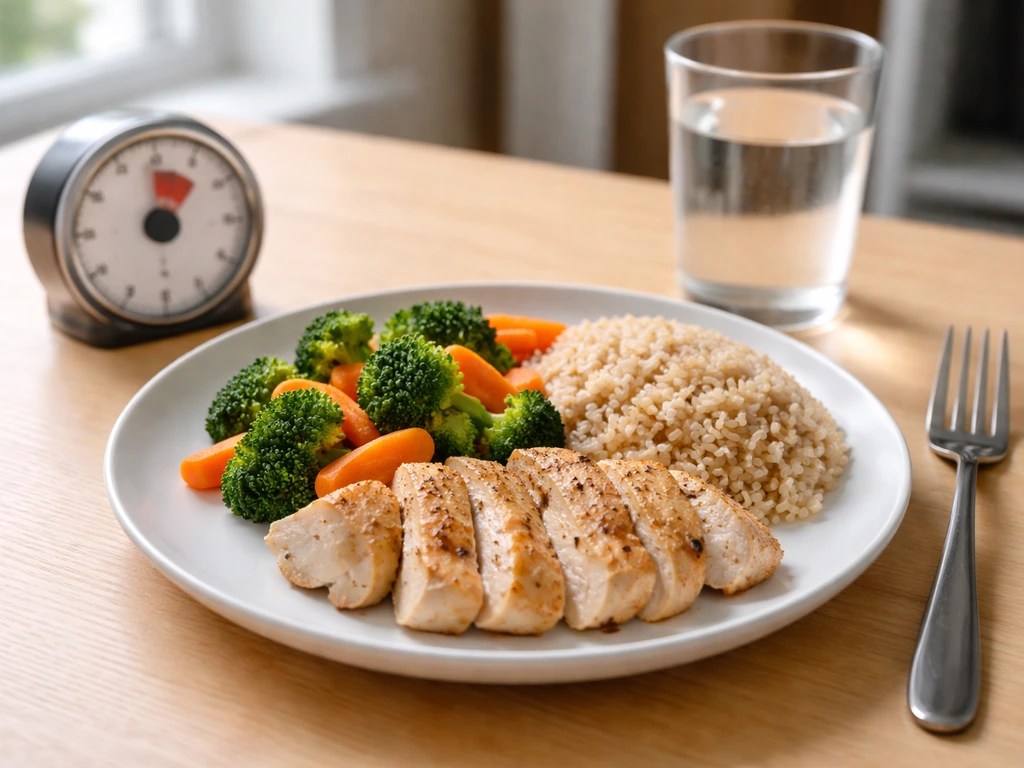
Training is the trigger, but food is the raw material. Without enough protein and total calories, your body cannot complete the muscle-building process no matter how well you train. The International Society of Sports Nutrition (ISSN) position stand on protein and exercise puts the effective range for most exercising individuals at 1.4 to 2.0 grams of protein per kilogram of bodyweight per day. For a 180-pound (82 kg) person, that is roughly 115 to 165 grams of protein daily. If you are in a caloric deficit trying to lose fat while building muscle, stay toward the higher end. If you are eating at a slight surplus to maximize muscle gain, the lower end of the range is usually adequate.
Meal distribution matters more than the exact post-workout timing window. The ISSN nutrient timing position stand recommends spreading protein into roughly 20 to 40 gram doses every 3 to 4 hours throughout the day, which works out to about 0.25 to 0.40 grams per kilogram per meal. This approach keeps muscle protein synthesis elevated across the day rather than spiking once and leaving protein delivery to chance the rest of the time. If you eat 3 to 4 meals with adequate protein in each, you have covered the timing question without obsessing over eating within a 30-minute post-workout window.
For older adults, the per-meal target shifts upward. Because of a phenomenon called anabolic resistance, where aging muscle responds less sensitively to protein and exercise signals, older adults benefit from targeting closer to 0.40 grams of protein per kilogram per meal rather than the lower 0.25 g/kg that suffices for younger people. Getting 35 to 45 grams of high-quality protein per meal rather than 20 to 25 grams is a meaningful adjustment for anyone over 60.
Total calories matter because muscle building is an energy-requiring process. A small caloric surplus of 200 to 350 calories above maintenance tends to support muscle gain with minimal fat gain. Being in a significant deficit limits how much muscle you can build, though beginners and those returning after a break can often gain muscle even while eating at maintenance or a slight deficit. Hydration also supports muscle function and recovery: aim for pale yellow urine and scale your intake with training intensity and heat.
Recovery, sleep, soreness, and realistic timelines
Sleep is the single most underrated muscle-building tool. The majority of growth hormone release, protein synthesis activity, and tissue repair happens during sleep. Seven to nine hours per night is not just general health advice; it is directly relevant to how well your muscles rebuild between sessions. Cutting sleep to train more is a net negative for muscle growth.
The MPS elevation window (roughly 24 to 48 hours post-exercise) gives you a practical recovery reference. Training a muscle group again before it has fully recovered is not automatically bad, and for well-trained people training 3 times per week per muscle group, some overlap in recovery is tolerable. But consistently training a muscle that is still heavily fatigued without adequate protein and sleep will blunt your adaptations over time. Managing accumulated fatigue is especially important in the 4 to 8 week range, when many people benefit from a planned deload week.
Timeline expectations deserve honesty. Beginners typically notice strength increases within 2 to 4 weeks as neural adaptations kick in. Visible muscle size changes generally start to appear around 6 to 12 weeks of consistent training, with meaningful changes obvious to others at around 3 to 6 months. These timelines assume consistent training, adequate protein, and sufficient sleep. Genetics influence the rate of growth, but virtually everyone responds to progressive resistance training if the fundamentals are in place. Older adults grow muscle more slowly due to anabolic resistance but absolutely do grow muscle with consistent resistance training, which the American College of Sports Medicine recognizes as a key intervention for offsetting age-related muscle loss.
Common myths, plateaus, and adjustments for different people
Myths worth killing off
- Soreness equals growth: False. DOMS reflects novelty and tissue damage, not the quality of your hypertrophy stimulus. Consistent training reduces soreness as your muscles adapt, and that is a good thing.
- You need to train to failure on every set: Overstated. Training close to failure is important, but grinding every set to absolute failure increases injury risk and recovery cost without a proportional growth benefit.
- Only heavy weights build muscle: Wrong. Low-load and high-load training produce comparable hypertrophy when effort is matched. Load range is less important than proximity to failure.
- Cardio kills muscle: Exaggerated. Moderate cardio does not meaningfully interfere with hypertrophy when protein and total calories are adequate. Excessive endurance volume alongside high resistance training volume is where interference effects become real.
- You cannot build muscle past 50 or 60: Definitively false. Older adults experience anabolic resistance, meaning the response is blunted, not absent. Resistance training with higher protein targets works. It just requires appropriate adjustments.
When progress stalls
Plateaus usually trace back to one of a few problems: insufficient progressive overload (you stopped adding challenge), volume that has not increased as you have adapted, undereating protein or total calories, or accumulated fatigue that needs a deload. Research on periodization shows that varying training stimuli systematically, changing rep ranges, load, or exercise selection in planned phases, produces greater long-term strength and size gains than doing the same program indefinitely. If you have been running the same routine for 12 or more weeks without changing anything, reorganizing your training into phases is a logical next step.
A practical starting framework
If you are starting out or restarting: train each major muscle group 2 times per week with 2 to 3 sets per exercise, building toward 10 or more weekly sets per muscle over the first month. Use a rep range of 8 to 15 reps per set, stopping 2 to 3 reps before failure. Add weight or reps every 1 to 2 weeks. Eat 1.
6 to 2. 0 grams of protein per kilogram of bodyweight spread across 3 to 4 meals. Sleep 7 to 9 hours. Track your lifts so you can see whether you are progressing.
After 8 to 12 weeks, reassess: if you have been consistently progressive and the basics are covered, muscle growth is happening whether you can see it yet or not.
For older adults specifically: start with 2 sessions per week on alternating days, use full range of motion with controlled tempo, prioritize compound movements (squats, rows, presses, hinges), and target roughly 0.40 grams of protein per kilogram per meal. Progress more gradually on load and volume than a 25-year-old would, but do progress. The stimulus requirements for muscle growth are the same at any age; the recovery timeline and protein dosing just need to account for the blunted anabolic response that comes with aging.
One broader note worth flagging: exercise's effects on the body extend well beyond muscle. There is active research on how physical training influences brain health, including neurogenesis and neurotrophic signaling, and on whether entirely new muscle cells can be generated rather than just existing ones growing larger. Those are distinct mechanisms from hypertrophy, but they point to the same conclusion: consistent exercise is doing far more inside your body than just making your arms bigger.
FAQ
Do I need to lift heavy for my muscles to grow, or can I use lighter weights?
Lighter weights can work if you match effort, meaning your sets should end around 2 to 3 reps from failure (or closer) so enough high-threshold fibers are recruited. If you use lighter loads, you often need more reps and careful progression, so track your reps and add load or reps over time.
How close to failure is “close enough” for hypertrophy without burning out?
A practical target is most sets stopping about 2 to 3 reps shy of momentary failure, then occasionally using 0 to 1 reps in the last set of an exercise if technique stays solid. If performance (reps, load) drops for multiple sessions in a row, you are likely going too hard on too many exercises at once.
Should I train the same muscle every week if I am still sore or fatigued?
Soreness alone is not a reliable guide, but persistent weakness, reduced range of motion, or declining performance is. If those signs show up, keep the total weekly sets but reduce intensity or number of hard sets for a week (a deload or mini-taper) rather than pushing through blindly.
Is it possible to build muscle if I am in a calorie deficit?
Yes, especially if you are newer to training or returning after a break, but your ceiling for muscle gain is lower. To improve odds, keep protein high, train close to failure, and use a modest deficit so you still recover well enough to increase or maintain training volume.
How much protein do I actually need if I am not sure of my body weight in kilograms?
Use a quick conversion: grams per day is roughly (your weight in pounds divided by 2.2) times 1.4 to 2.0. If you fall between targets, a good default for people trying to gain muscle is around 1.6 to 2.0 g/kg, and then spread it across 3 to 4 feedings.
Do I need to eat protein right after my workout to grow muscle?
Not necessarily within a 30-minute window. What matters more is you hit your daily protein total and distribute roughly 20 to 40 g per meal every 3 to 4 hours. If your next meal is far away, having a protein-containing snack sooner can help, but it is not mandatory for most people.
What if I cannot hit 10 to 20 hard sets per muscle per week yet?
Start where you can recover, then build gradually. Even 6 to 10 quality sets per week can produce growth for many beginners, as long as you are progressively overloading and sets are close to failure. The key is increasing hard sets and/or load over weeks, not jumping to high volume immediately.
Do longer rest times help more for muscle growth, or is 30 to 60 seconds fine?
For hard sets, rest should be long enough that you can keep effort high, meaning similar reps at similar loads across sets. Compounds often need about 2 to 3 minutes, isolations about 90 to 120 seconds. Very short rests can work if they still let you approach failure consistently, but they more often reduce performance and effort.
Do I have to do full range of motion to grow, or can I train partially?
Full range of motion generally provides at least equal hypertrophy, particularly because it loads the muscle in its stretched position. If full ROM hurts or is limited by injury, you can still grow with partial ranges, but choose a ROM that lets you keep stable technique and progressively overload within your safe limits.
Does muscle soreness mean I damaged enough muscle to grow?
No. Soreness (DOMS) varies a lot and is not the primary driver of hypertrophy. Focus on mechanical tension and effort, meaning you are training close to failure, accumulating enough hard sets, and progressing over time, not on how sore you feel afterward.
Why do I get stronger quickly but not bigger right away?
Early on, neural adaptations improve how efficiently you recruit and coordinate muscle fibers, so strength rises faster than visible size. Over weeks to months, hypertrophy catches up as you consistently train with enough volume and effort and continue to progress.
How do I know if my plateau is from volume, effort, or recovery?
Look at your training trends. If loads and reps stop improving, and sets are no longer challenging, it is likely insufficient progressive overload or effort. If performance is declining despite high effort, you may need fewer hard sets or a deload. If your weekly sets are low and stagnant, increase volume before changing everything else.
Is 3 times per week per muscle always better than 2 times per week?
Not automatically. Two sessions per week often balances recovery and weekly volume well for many people, while 3 sessions can work great for advanced lifters if volume is managed. A useful decision rule is to distribute your weekly hard sets across multiple days to keep each session productive rather than cramming them into one fatiguing workout.
What should an older adult change to keep growing muscle safely?
Prioritize controlled full range of motion, use compound moves, and adjust protein dosing toward the higher per-meal target (around 0.40 g/kg per meal). Progress more gradually on load and volume, and consider slightly longer recovery windows if you notice technique breakdown or lingering fatigue after sessions.
How long should I wait before judging whether my program works?
Strength changes can show up in 2 to 4 weeks, but noticeable size changes usually take longer, around 6 to 12 weeks for subtle visible changes and 3 to 6 months for changes others can clearly see. Judge progress by whether you are consistently progressing lifts, maintaining effort, and meeting your weekly set targets rather than only by appearance.