Yes, working out your muscles genuinely does help your brain adapt and grow stronger connections. The most honest scientific answer is this: exercise triggers a cascade of signaling molecules (most famously BDNF, brain-derived neurotrophic factor) that promote neuroplasticity, improved synaptic connectivity, and, in animal models at least, the birth of new neurons in the hippocampus. Whether humans grow brand-new neurons the same way mice do is still debated, but the cognitive and brain-structural benefits of exercise in people are well-documented and real. So even if the phrase 'muscles help neurons grow' is a slight oversimplification, it points at something true and practically useful.
When Muscles Work Out, Neurons Grow: What Science Says

Marcus Kellerman
12 May 2026

Does exercise actually help neurons grow? The science behind the claim
The short version: in rodents, it is remarkably clear. When mice are given access to running wheels, new neurons appear in the dentate gyrus of the hippocampus, a region critical for learning and memory. Researchers have gone further and experimentally blocked those newborn neurons, and when they do, the cognitive benefits of running disappear. That is a strong causal signal that neurogenesis, the literal creation of new neurons, is driving some of the brain benefits of exercise in mice.
Humans are more complicated. Multiple research groups have reported ongoing adult hippocampal neurogenesis in humans, identifying it as a continual process in the subgranular zone of the dentate gyrus. But a newer wave of studies has questioned how detectable and functionally relevant those newborn neurons actually are in adult human brains. The debate is real and unsettled. What IS settled is that exercise consistently improves memory, mood, executive function, and even hippocampal volume in humans. A 12-week moderate-intensity randomized trial in young adults found that improved cardiorespiratory fitness after exercise training was associated with increased dentate gyrus/CA3 volume (hippocampal head) and memory enhancement exercise consistently improves memory. Whether that happens partly through new neuron birth or entirely through other mechanisms, it happens. And that is enough to act on.
So when people say 'muscles help neurons grow,' they are most accurately describing a process where muscle contractions trigger molecular signals that travel to the brain and push it toward growth, repair, and better connectivity. That is not a myth. That is physiology.
How muscles actually talk to the brain (the mechanisms)

This is where it gets interesting. Your muscles are not passive machines. When they contract during exercise, they release signaling proteins called myokines, and some of these cross into the bloodstream and eventually reach the brain. Here are the main pathways worth knowing.
BDNF and neurotrophic factors
BDNF is the most studied. It acts like fertilizer for neurons, supporting their survival, growth, and the formation of new synaptic connections. Exercise, particularly aerobic exercise, reliably elevates circulating BDNF in humans. Resistance training also raises BDNF, though the acute spike tends to be somewhat smaller. BDNF is a key reason why exercise-trained individuals show better memory consolidation and why regular exercisers tend to have larger hippocampal volumes than sedentary peers.
Blood flow and vascular health

Every session of vigorous exercise pushes more blood through your cerebral vasculature. Over time, training induces angiogenesis (growth of new capillaries) in the brain, meaning neurons get better oxygen and nutrient delivery. Improved cerebral blood flow is strongly linked to sharper cognition, faster processing speed, and better memory in both younger and older adults. This mechanism does not require new neurons. It just requires a working cardiovascular system pushed hard enough to adapt.
Reduced neuroinflammation
Chronic low-grade inflammation is toxic to neurons. Regular exercise reduces systemic inflammatory markers like IL-6 (in its chronic resting state), TNF-alpha, and CRP. A systematic review and meta-analysis of adults also evaluates how exercise intensity affects peripheral markers of chronic inflammation, including CRP, IL-6, TNF-α, and others Regular exercise reduces systemic inflammatory markers like IL-6 (in its chronic resting state), TNF-alpha, and CRP.. Less inflammation means a more hospitable environment for neurons to survive and function. This is one reason why people who exercise regularly throughout life tend to have lower rates of neurodegenerative conditions.
Metabolic improvements
Better insulin sensitivity, lower blood glucose variability, and improved lipid profiles all reduce the wear and tear on your brain's microvasculature. The brain is a metabolically expensive organ, and keeping its fuel supply clean and consistent matters enormously for long-term cognitive health. Muscle tissue is a major glucose sink, so building and using more muscle directly improves the metabolic environment your neurons live in. Because muscle is a major glucose sink, training it also helps create a metabolic environment that supports healthier brain function build and use more muscle.
Which workouts are best for your brain (cardio vs. lifting vs. both)
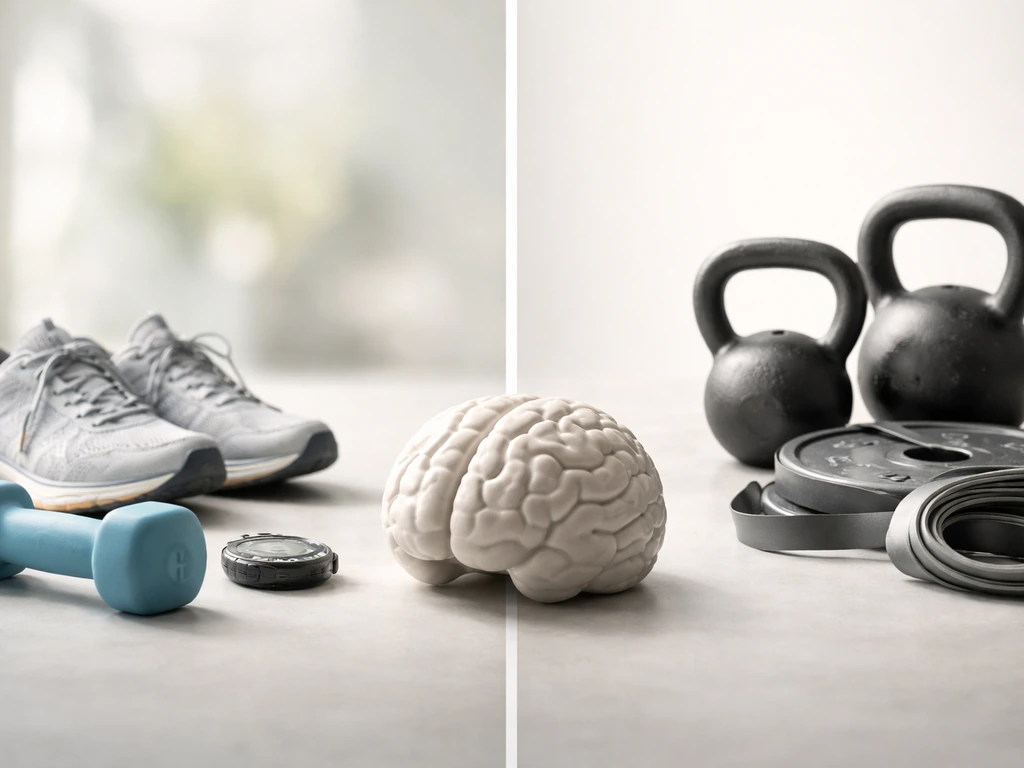
The research does not point cleanly to one winner. Different training modalities support brain health through overlapping but distinct pathways, and the strongest evidence is for combining them. Here is how they stack up.
| Training Type | Primary Brain Mechanism | Cognitive Benefit | Muscle Benefit |
|---|---|---|---|
| Aerobic (running, cycling, swimming) | BDNF spike, cerebral blood flow, neurogenesis support | Memory, processing speed, hippocampal volume | Cardiovascular efficiency, some muscle endurance |
| Resistance training (lifting, bodyweight) | BDNF (moderate), IGF-1, metabolic improvement, reduced inflammation | Executive function, attention, long-term neuroprotection | Hypertrophy, strength, metabolic health |
| Combined / concurrent training | Both pathways activated; may be synergistic | Broadest cognitive benefits across domains | Muscle growth plus cardiovascular adaptation |
| High-intensity interval training (HIIT) | Large acute BDNF spike, strong cardiovascular stimulus | Short-term cognitive boost, memory consolidation | Some hypertrophy stimulus, high caloric burn |
If you had to pick one, the aerobic side has the largest body of direct neuroplasticity evidence, particularly for hippocampal effects. But if you are also trying to build muscle (which is the whole point of this site), resistance training adds its own brain benefits and is non-negotiable for hypertrophy. A combined approach beats either alone. Think of it this way: cardio is like watering your brain, and lifting is like fertilizing the soil. You want both.
How much and how hard to train for brain benefits
Dose matters. Too little exercise and you get minimal brain adaptation. Too much without recovery and you get the opposite effect because excess cortisol and systemic fatigue are bad for neurons. Here is a practical target range backed by the evidence.
Aerobic training dose
The sweet spot for cognitive and neuroplastic benefits is 150 to 180 minutes of moderate-intensity aerobic activity per week, or around 75 minutes if you go vigorous. That works out to three to five sessions at 30 to 45 minutes each. Moderate intensity means you can hold a short conversation but feel genuinely challenged, roughly 60 to 75 percent of your maximum heart rate. Vigorous means you are working at 75 to 85 percent, where talking is hard. Both produce BDNF elevation and cerebral blood flow improvements. Vigorous training produces a larger acute BDNF spike per minute of effort.
Resistance training dose
Two to four resistance sessions per week covering all major muscle groups is the evidence-based range for both hypertrophy and brain health. Train each muscle group at least twice weekly. Work in the 6 to 20 rep range with loads that are genuinely challenging, leaving roughly 2 to 4 reps in reserve at the end of each set. Progressive overload, gradually increasing weight or reps over time, is what drives both muscle adaptation and sustained metabolic and neurological benefits. Sticking with the same weight for months means you stop growing in both the gym and the brain.
Progression and safety for older adults
Age is context, not a barrier. Adults over 60 respond to both resistance and aerobic training with measurable cognitive improvements and BDNF elevation. The main adjustment is starting conservative: lighter loads, lower impact cardio options like cycling or swimming, and slightly longer recovery between sessions (48 to 72 hours per muscle group rather than 24 to 48). Tendon and connective tissue take longer to adapt than muscle tissue does, so do not rush load progression in the first 8 to 12 weeks. Functional exercises like squats, step-ups, and rows have the advantage of doubling as balance and coordination work, which has its own brain benefits.
A practical training plan you can start today
This plan is designed for beginners and older adults but scales up for anyone with a reasonable base. It runs on a four-day weekly structure with two resistance sessions and two cardio sessions, hitting both the muscle-growth and brain-health targets.
- Day 1 (Resistance: Lower body): Goblet squat or leg press 3x10, Romanian deadlift 3x10, leg curl 2x12, calf raise 2x15. Rest 90 to 120 seconds between sets. Choose a weight where the last 2 to 3 reps feel genuinely hard.
- Day 2 (Aerobic): 30 to 40 minutes at moderate intensity. Walk briskly, cycle, swim, or use an elliptical. Target 60 to 70 percent of max heart rate (roughly: 220 minus your age, times 0.65). Keep conversation possible but not effortless.
- Day 3 (Rest or light movement): A 20-minute walk counts. This is not a true rest day, because light activity still supports blood flow and recovery without adding stress.
- Day 4 (Resistance: Upper body + core): Dumbbell bench press or push-ups 3x10, seated row or resistance band row 3x10, overhead press 3x10, plank 3x20-30 seconds. Same effort rule: last reps feel hard.
- Day 5 (Aerobic or HIIT): Option A: 35 minutes moderate cardio as Day 2. Option B: 20 minutes HIIT (30 seconds hard, 90 seconds easy, repeat 8 to 10 rounds). HIIT produces a larger BDNF spike per session for the time invested.
- Day 6 and 7 (Rest and recovery): At least one full rest day. The second can include a gentle 20 to 30 minute walk. Sleep is when most of the neuroplastic consolidation actually happens, so protect these days.
After 4 weeks, add one set to each resistance exercise or increase weight by 5 to 10 percent if the current load feels manageable. After 8 weeks, reassess: if you are sleeping better, thinking sharper, and getting stronger, you are on the right track. Track two simple metrics: your workout consistency (aim for 80 percent of planned sessions completed) and a functional marker like how long you can walk or cycle at moderate intensity before feeling winded.
Recovery, nutrition, and sleep: the missing half of the equation
You can do everything right in the gym and still undercut both muscle growth and brain adaptation if you ignore what happens outside of training. Recovery is not passive. It is when the actual adaptation occurs.
Protein and muscle synthesis
For muscle hypertrophy, target 1.6 to 2.2 grams of protein per kilogram of body weight per day. That works out to roughly 0.7 to 1 gram per pound. Spread it across 3 to 5 meals, with at least 30 to 40 grams per meal to reliably trigger muscle protein synthesis. Leucine-rich sources like eggs, meat, fish, dairy, and soy drive the strongest anabolic response. This protein target also matters for the brain: amino acids are precursors for neurotransmitters, and adequate dietary protein supports the synthesis of dopamine, serotonin, and GABA.
Overall calories and carbohydrate timing
You cannot grow muscle in a severe calorie deficit for long. A modest surplus of 200 to 300 calories per day above maintenance supports hypertrophy without excessive fat gain. Some of those same growth signals can support the health of your muscle cells as well, helping you add new muscle tissue over time grow new muscle cells. If fat loss is the goal, a small deficit is fine, but protein stays high and training intensity stays up to preserve muscle. Carbohydrates fuel your training sessions and replenish glycogen, which directly affects both exercise quality and the size of the BDNF response to aerobic work. Eating 30 to 60 grams of carbohydrate in the 1 to 2 hours before a workout and a similar amount within an hour after can noticeably improve your performance and recovery.
Hydration
Even mild dehydration (1 to 2 percent of body weight) impairs cognitive performance, exercise output, and recovery. Aim for pale yellow urine throughout the day. Add roughly 500 ml of water per hour of moderate exercise, more in heat. This is not complicated, but it is under-prioritized.
Sleep is non-negotiable
Sleep is where neuroplastic consolidation happens. During slow-wave and REM sleep, the brain replays and consolidates new information, prunes unnecessary synaptic connections, and clears metabolic waste through the glymphatic system. Getting less than 7 hours per night chronically blunts BDNF production, impairs muscle protein synthesis, elevates cortisol, and increases insulin resistance. If you are sleeping 5 hours and wondering why your training is not translating to brain or body improvements, that is likely your primary bottleneck. Protect 7 to 9 hours. Keep a consistent sleep and wake time, even on weekends.
Supplements worth considering
Creatine monohydrate (3 to 5 grams daily) has evidence for both muscle hypertrophy and cognitive function, particularly in older adults and vegetarians who tend to have lower baseline creatine stores. Omega-3 fatty acids (EPA and DHA, around 2 to 3 grams daily from fish oil) support neuronal membrane health and reduce neuroinflammation. Vitamin D deficiency is associated with impaired muscle function and cognitive decline, so getting tested and supplementing if you are deficient (aiming for serum 25-OH-D of 40 to 60 ng/mL) is worth the effort. None of these replace training and sleep, but they support both.
Myths, misconceptions, and when to see a doctor
Myths worth busting
- Myth: You need to feel the 'burn' or get sore for brain benefits. False. BDNF elevation happens with moderate-intensity aerobic and resistance work without any DOMS required. Soreness is a byproduct of novelty and mechanical stress, not a marker of adaptation.
- Myth: Cardio kills muscle gains. Not at the doses described here. Two to three cardio sessions per week at moderate intensity, especially if programmed away from your hardest lifting days, does not meaningfully impair hypertrophy and actively supports long-term health and brain function.
- Myth: Exercise grows entirely new neurons in adult human brains, just like mice. The evidence is more nuanced. Human adult neurogenesis is plausible and supported by some studies, but genuinely contested. The brain benefits you will feel from exercise, including better memory, mood, and focus, are real regardless of how that debate resolves.
- Myth: Older adults should not lift heavy. Research consistently shows that progressive resistance training is safe and effective in adults in their 60s, 70s, and beyond. Load should be appropriate and progressed gradually, but heavy (relative to the individual) is not dangerous. It is protective.
- Myth: More exercise is always better for the brain. Overtraining suppresses BDNF, raises chronic cortisol, and impairs sleep, all of which are harmful to neurons. More is not better beyond the recommended dose. Consistent moderate training beats sporadic extreme effort every time.
When to get medical clearance before starting
Most healthy adults can start a walking and bodyweight exercise program without a medical exam. But there are situations where checking with your doctor first is genuinely important, not just legal boilerplate.
- You have a diagnosed heart condition, uncontrolled hypertension, or have had a recent cardiac event. Exercise is usually still indicated but the prescription needs professional guidance.
- You have a neurological condition such as epilepsy, recent stroke, TBI, or are on medications that affect seizure threshold. Exercise can be beneficial but the type and intensity needs to be cleared with a neurologist.
- You experience new or worsening neurological symptoms during or after exercise, including sudden severe headache, vision changes, confusion, numbness, or difficulty speaking. These are red flags that require immediate medical evaluation, not a training modification.
- You are managing a musculoskeletal injury that limits safe loading. A physiotherapist can help you find a training mode that still delivers cardiovascular and neurological benefits while protecting the injury.
- You are postpartum, managing a chronic autoimmune condition, or have significant metabolic disease (uncontrolled diabetes, kidney disease). Exercise is almost always beneficial in these contexts, but starting under supervision is smarter than starting alone.
The takeaway here is straightforward. Exercise is one of the most powerful things you can do for both your muscles and your brain. The mechanisms connecting muscle activity to neuroplasticity are real, measurable, and clinically meaningful. You do not need to wait for the neuroscience debate about human neurogenesis to fully resolve before acting on what is already known. Start with two resistance sessions and two cardio sessions per week, eat enough protein, sleep at least 7 hours, and be consistent. That combination will do more for your cognitive longevity than any supplement, brain-training app, or waiting around for the perfect study.
FAQ
If I cannot do 150 minutes per week, will I still get brain benefits from exercise?
Yes, but the benefits tend to scale with intensity and consistency. If you are currently inactive, start with lower-volume sessions (for example, shorter brisk walks and lighter resistance) and ramp up over 2 to 6 weeks, because the brain and cardiovascular system adapt more reliably when you can repeat the stress without exhausting recovery.
How do I know my cardio intensity is in the right zone for brain effects?
A useful guideline is that you should feel challenged enough to raise your heart rate, but you should still be able to complete the session with stable form. If you cannot hold a brief conversation, intensity may be too high for your current fitness level, so scale duration first and use a “slightly hard” effort target before aiming for vigorous work.
Will training hard enough to cause soreness improve neuron growth more?
Do not interpret soreness as progress for the brain. Muscle protein synthesis and training adaptations are best supported by strength work that is challenging but not constantly destructive; ongoing severe DOMS often signals you are under-recovering, which can raise fatigue and blunt overall gains.
Is it better to focus on cardio or resistance training if my goal is both brain health and muscle gain?
Often, but prioritize one goal first in the short term. If you are trying to gain muscle and brain health together, keep protein high and keep at least some cardio steady, but avoid stacking very high-intensity cardio on top of a heavy lifting plan during the same days until you can recover.
What should I do if my training is “not working” and my sleep is inconsistent?
Sleep loss can reduce both cognitive consolidation and muscle recovery, so it can indirectly shrink the brain benefits of exercise. If you consistently get under 7 hours, consider delaying hard sessions or reducing volume for 1 to 2 weeks while you fix sleep, rather than pushing through and hoping results catch up.
Do I need medical clearance before starting an exercise plan for brain benefits?
Yes, and it is an important exception. If you have a history of seizures, uncontrolled high blood pressure, recent concussion, or a heart rhythm problem, talk with a clinician before doing vigorous cardio, because intensity thresholds and safety plans may need individual adjustment.
Can I compensate for poor training quality with nutrition timing and hydration?
You do not need a specific supplement schedule for this, but you should time carbs and fluids around training. The fastest practical lever is to eat a modest pre-workout carb portion (especially before harder aerobic sessions) and rehydrate, because performance and repeatability drive the strongest neuroplastic response.
How much exercise is too much for brain and muscle adaptation?
Yes, but be careful with “too much.” The article notes that excess stress without recovery can backfire, so if you add volume, increase gradually and watch for warning signs like persistent sleep disruption, rising resting heart rate, mood changes, or a drop in training output.
If I miss a cardio or lifting day, should I double up the next day?
Yes. Two sessions per week can work, but beginners often get better results when they keep total weekly volume consistent and distribute it, rather than cramming everything into one long day. A split also makes it easier to hit the rep range with good technique and adequate recovery.
Does being in a calorie deficit completely eliminate the brain benefits of exercise?
If you are under-eating, protein and training quality matter even more. A severe calorie deficit can undermine muscle growth and reduce recovery, which then reduces the downstream brain benefits that depend on improved fitness and metabolic health.
Do I need gym equipment, or can I train at home and still get these brain effects?
Yes. Some people get an aerobic “signal” only from brisk walking or cycling, and a resistance “signal” from bodyweight and simple machines. The key is progression that is measurable, such as gradually adding reps, weight, or range of motion over weeks.
Does doing the same workouts each week still help my brain, or does novelty matter?
Yes, and the practical takeaway is to treat learning and attention as part of training. After a new routine, choose a slightly more controlled, skill-focused version (slower reps, fewer distractions, consistent cues), because stable practice can improve executive function even if the workouts are physically similar.