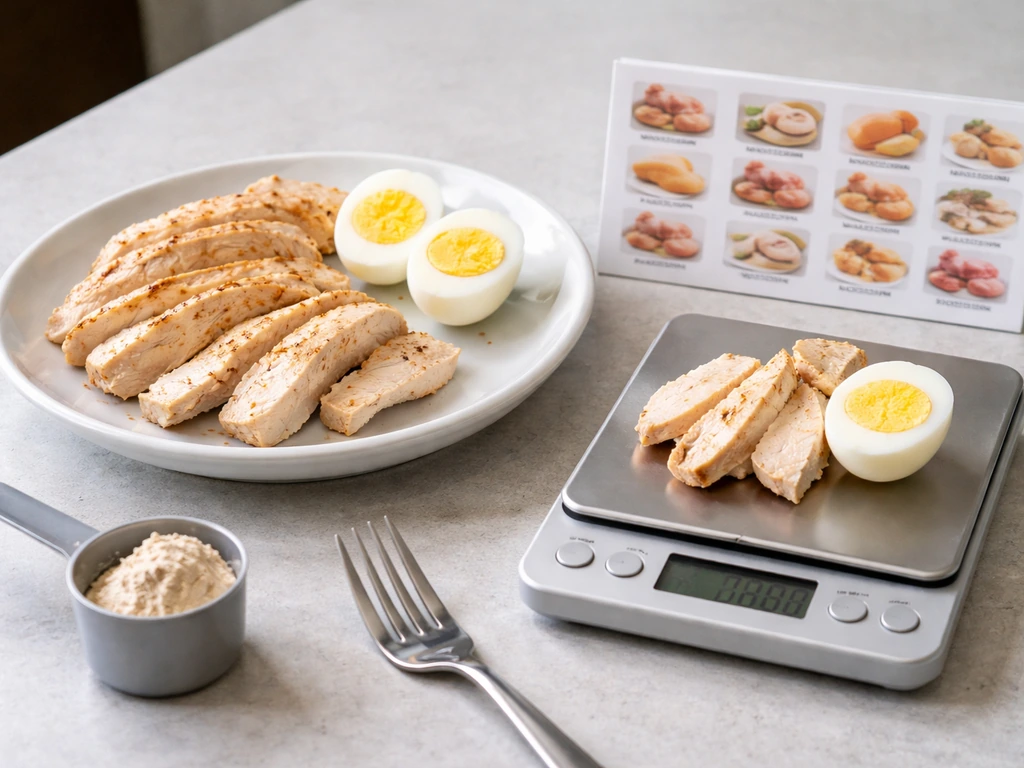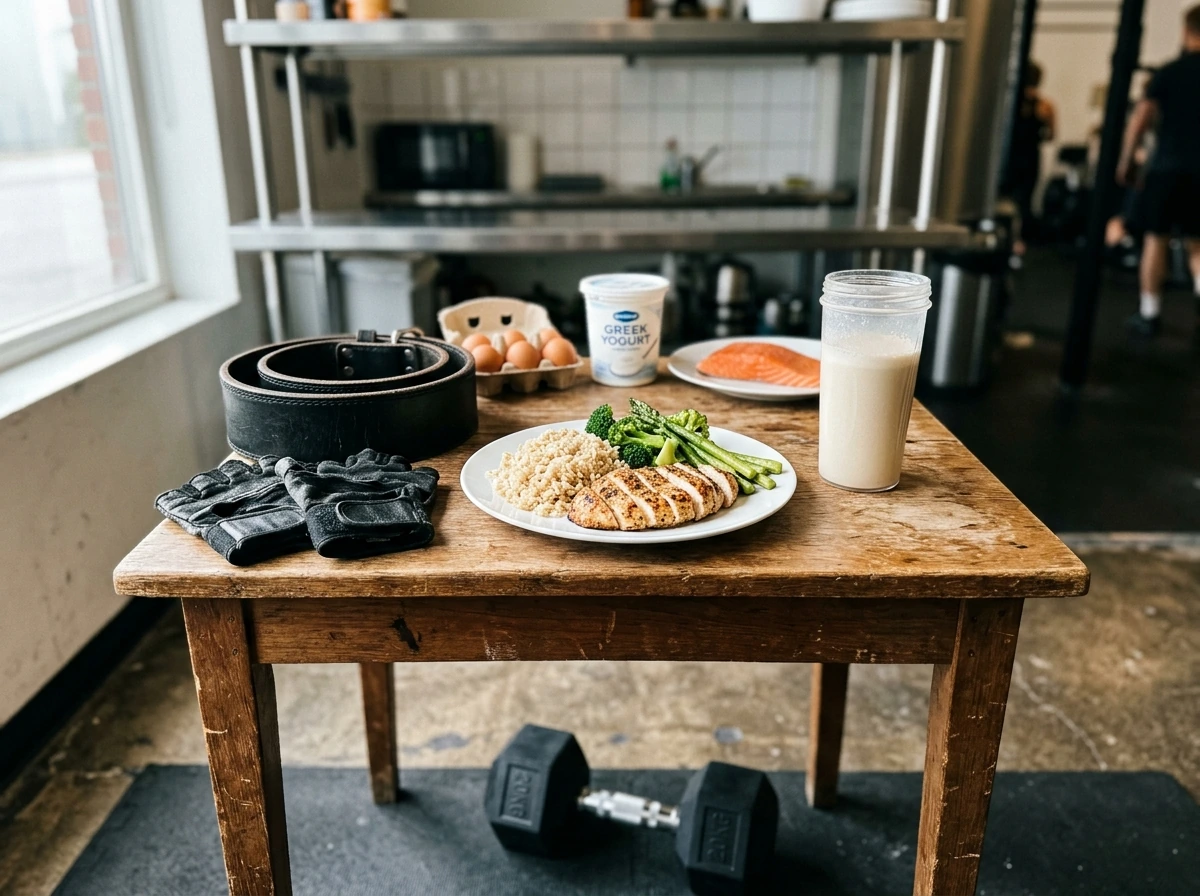
To build muscle, most people need to eat roughly 10% above their maintenance calories, which works out to about 250–500 extra calories per day depending on your size and how aggressively you want to gain. If you weigh 180 lbs and burn around 2,600 calories a day, you're targeting 2,850–3,100 calories. That's the starting point. From there, you adjust every one to two weeks based on what the scale and your mirror are actually showing you.
How Many Calories to Grow Muscle: Calculator and Targets

Marcus Kellerman
28 Apr 2026

Why calories matter for muscle gain
Your body needs raw energy to build new tissue. Muscle protein synthesis, the cellular process that actually lays down new muscle, costs energy on top of what it costs just to keep you alive and moving. Research has consistently shown that being in a significant calorie deficit can trigger what's called anabolic resistance, meaning your muscles respond less effectively to the training stimulus even when you're lifting hard and eating enough protein. Calories aren't the whole story, but they're a non-negotiable foundation.
That said, there are three different situations you might be in, and they each call for a different calorie strategy.
- Calorie surplus (lean bulk): You're eating above maintenance to actively drive muscle growth. Best for lean or average-bodyfat individuals who are ready to accept some minor fat gain alongside meaningful muscle gain.
- Maintenance or recomp: You're eating roughly at maintenance and relying on resistance training and adequate protein to slowly shift body composition over time. Slower, but fat gain is minimal. Works best for beginners, people returning after a break, or anyone carrying a bit of extra body fat.
- Deficit with muscle-sparing: You're eating below maintenance to lose fat while protecting as much muscle as possible. Net muscle gain is unlikely, but you can preserve or even gain a little lean mass if you're a true beginner. High protein and consistent training are non-negotiable here.
Knowing which camp you're in shapes every calorie decision that follows. If you're lean and training consistently, you probably want a surplus. If you're carrying significant body fat, recomp or a modest deficit may serve you better than aggressively eating up.
How to estimate your maintenance calories today

The most practical starting point is the Mifflin-St Jeor equation, which estimates your basal metabolic rate (the calories you'd burn doing nothing) and then multiplies it by an activity factor to get your total daily energy expenditure (TDEE). The formulas are:
- Men: BMR = (10 × weight in kg) + (6.25 × height in cm) – (5 × age in years) + 5
- Women: BMR = (10 × weight in kg) + (6.25 × height in cm) – (5 × age in years) – 161
Once you have your BMR, multiply it by an activity factor. Sedentary (desk job, little exercise): 1.2. Lightly active (1–3 workouts per week): 1.375. Moderately active (3–5 workouts): 1.55. Very active (hard training 6–7 days): 1.725. The activity multiplier is the most error-prone part of this whole calculation, so be honest. Most people overestimate how active they are, which leads them to set maintenance too high and wonder why the scale never moves.
If the math feels like a hassle, use a simpler shortcut: multiply your bodyweight in pounds by 14–16 to get a rough maintenance range. A 180-lb moderately active person lands around 2,520–2,880 calories, which is close enough to start. For older adults, note that the Mifflin-St Jeor equation tends to slightly overestimate energy needs, so erring toward the lower end of any estimate makes sense. Regardless of which method you use, treat your first number as a hypothesis, not a fact. The real test is what happens to your weight over two weeks of consistent tracking.
Choosing the right calorie surplus for your goal
Once you have a maintenance estimate, the size of your surplus should match how lean you are and how much fat gain you're willing to tolerate. A 10% surplus above maintenance (roughly 250–300 calories for most people) is a well-tested starting point in research with resistance-trained individuals. It's enough to support muscle growth without dumping fat on you fast. More aggressive surpluses in the range of 20–30% above maintenance can produce faster scale-weight gain, but a large portion of that extra weight is fat, not muscle.
| Body fat situation | Recommended approach | Calorie target vs maintenance | Expected weekly weight gain |
|---|---|---|---|
| Lean (men <12%, women <20%) | Lean bulk | +200 to +350 kcal/day (~10%) | 0.25–0.5 lb/week |
| Average (men 12–20%, women 20–28%) | Modest surplus or recomp | +0 to +250 kcal/day | 0 to 0.25 lb/week |
| Overweight (men >20%, women >28%) | Recomp or mild deficit | –250 to 0 kcal/day | –0.5 to 0 lb/week (fat loss + muscle preserved) |
| True beginner (any body fat) | Maintenance to modest surplus | +0 to +250 kcal/day | Variable; focus on strength gains |
The key insight from bodybuilding research is that bigger surpluses don't translate linearly into more muscle. Studies comparing moderate (~50 kcal/kg/day) versus high energy intakes (~67 kcal/kg/day) in resistance-trained bodybuilders showed that the extra energy went largely to fat, not muscle. You can't force-feed muscle growth beyond what your training and protein intake can support. More food above a reasonable threshold just means more fat storage.
If your goal is to minimize fat gain during a muscle-building phase, stick to the lower end of the surplus range and prioritize consistency in your training and protein intake. Slow, steady weight gain preserves the lean look while still driving real hypertrophy over months.
Protein and training: the two anchors that make your calories actually work
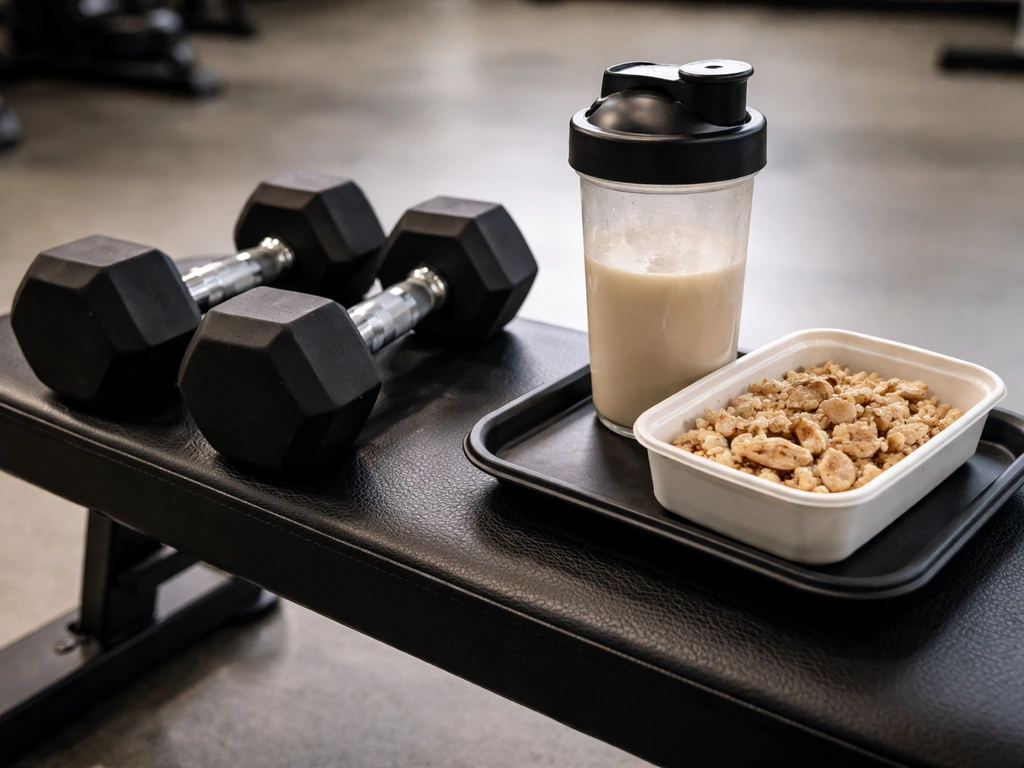
Calories are the environment, but protein and training are the actual triggers for muscle growth. Without both in place, adjusting calories up or down is mostly rearranging deck chairs. You need to get these right before you spend too much energy obsessing over a 50-calorie difference in your daily target.
Protein: the non-negotiable baseline
The evidence-backed target for muscle growth is at least 1. 6 grams of protein per kilogram of bodyweight per day. If you want the numbers in pounds and need a starting target for your body, use these guidelines for how much protein to grow muscle 6 grams of protein per kilogram of bodyweight per day. That's about 0.
73 grams per pound. For a 180-lb person, that's roughly 130 grams per day at minimum. Research shows the muscle-building response keeps climbing with protein intake up to about that 1. 6 g/kg mark, and most studies don't find significant additional benefit beyond 2.
2 g/kg unless you're in a calorie deficit (where higher protein helps protect lean mass). A Wiley meta-analysis and trial evidence review by Phillips (2018) found that higher protein during weight loss can help preserve lean mass outcomes [higher protein helps protect lean mass](https://onlinelibrary. wiley. com/doi/full/10.
1002/oby. 22186). A practical, easy-to-remember target for most people is 0. 7–1 gram per pound of bodyweight.
How you distribute your protein matters too: getting 30–50 grams per meal across 3–4 meals throughout the day supports protein synthesis better than front- or back-loading it all at once.
Training: calories need a reason to become muscle
Resistance training is the mechanical signal that tells your body to put those extra calories toward building muscle rather than storing fat. Training volume, meaning the number of hard sets you do per muscle group per week, is one of the strongest predictors of hypertrophy. Research suggests a useful working range of around 10–20 sets per muscle group per week, with beginners responding well even at the lower end. Progressive overload, adding weight, reps, or sets over time, keeps the growth signal strong. If your training is inconsistent or too low in volume, a calorie surplus mostly becomes extra body fat. Nail the training first, then dial in the calories around it.
How to adjust calories based on weekly progress

Set your starting calories, track consistently for two weeks, and then look at the data. Single-day weigh-ins are almost meaningless because water retention, glycogen, sodium intake, and digestion can shift your scale weight by 2–4 lbs overnight with no fat change at all. What you're looking for is the trend across 7–14 days.
- Weigh yourself every morning after using the bathroom, before eating. Log it daily.
- At the end of each week, average all seven daily weights. That weekly average is your signal.
- Compare week 1 average to week 2 average. If the trend matches your goal, stay the course.
- If weight is rising faster than 0.5–0.75 lb/week during a bulk, drop calories by 100–200 per day.
- If weight is flat or dropping during a surplus phase, add 100–200 calories and give it another two weeks.
- Take monthly measurements of your waist, hips, and arms to catch fat gain or muscle gain that the scale misses.
- Track strength trends: if your lifts are going up consistently, the program is working regardless of minor scale noise.
The goal during a lean bulk is a weight gain rate of about 0.25–0.5 lbs per week for most people, and even less (0.1–0.25 lbs) for women or lighter individuals. Faster than that usually means you're accumulating fat faster than muscle. The muscle-building ceiling is just physiologically low: even with optimal nutrition and training, natural muscle gain tops out at roughly 1–2 lbs per month for most people, and much less for those who've been training for years.
Troubleshooting: fat gain too fast, stalled weight, or inconsistent results
Gaining fat too fast

If your waistline is growing faster than your arms, you're almost certainly eating above what you need. Cut 200–300 calories from your daily total, primarily from added fats or refined carbs rather than protein. Check whether your activity estimate was too generous, whether you've been tracking accurately, or whether weekend eating is significantly higher than weekday eating (a very common hidden surplus driver). Also check training volume: if you're not doing enough resistance work to justify the surplus, the extra calories have nowhere productive to go.
Weight completely stalled
First, confirm your tracking is actually accurate. Untracked cooking oils, sauces, drinks, and snacks are responsible for a surprising number of 'mystery' stalls. If tracking checks out and two full weeks of averages show no upward trend, add 150–200 calories per day from carbohydrates or fats and reassess after another two weeks. Also consider whether your training has gotten stale: if you've been doing the same routine at the same weights for months, your stimulus has plateaued and adding calories won't restart growth on its own.
Inconsistent or confusing results
Stress, poor sleep, high sodium days, and hormonal fluctuations all create noise on the scale. If your weight jumps 3 lbs after a salty dinner, that's water, not fat. The weekly average method filters most of this out. If you feel like you're doing everything right but results are genuinely inconsistent over 6–8 weeks, the most common culprits are: inconsistent protein intake, training frequency that's too low, insufficient sleep (growth hormone release and muscle repair happen during sleep), or actual calorie tracking errors. Rule these out systematically before changing your calorie target again.
Older adults: a note on calorie estimates and muscle growth
If you're over 50, the fundamentals don't change, but a few things deserve attention. The Mifflin-St Jeor equation tends to slightly overestimate calorie needs in older adults, so lean toward the lower end of your maintenance estimate. You may also need to prioritize protein slightly higher (closer to 1.8–2.2 g/kg) to offset age-related anabolic resistance, and spreading protein across meals matters more than it does for younger lifters. Building muscle is absolutely achievable at any age: the timeline may be slower and the training needs to be smart, but the calorie principles are the same.
Practical example calculations and a simple tracking plan
Here's how this plays out for three different people starting today.
| Person | Stats | Estimated maintenance | Calorie target | Protein target |
|---|---|---|---|---|
| Lean beginner man | 175 lbs, 25 years old, 3x/week lifting, office job | ~2,600 kcal/day | 2,850–2,900 kcal/day (+10% surplus) | ~125–160 g/day |
| Average-bodyfat woman | 145 lbs, 34 years old, 3–4x/week lifting, moderately active | ~2,050 kcal/day | 2,050–2,250 kcal/day (maintenance to small surplus) | ~105–130 g/day |
| Overweight man returning to training | 220 lbs, 42 years old, 3x/week lifting, sedentary job | ~2,700 kcal/day | 2,400–2,700 kcal/day (mild deficit to maintenance) | ~160–200 g/day |
| Older trained woman | 155 lbs, 58 years old, 3x/week lifting, lightly active | ~1,950 kcal/day | 1,950–2,150 kcal/day (maintenance to very small surplus) | ~125–155 g/day |
Your tracking plan doesn't need to be complicated. Log your food for at least the first four to six weeks using an app like Cronometer or MyFitnessPal, which makes hitting protein targets much easier. Weigh yourself daily and average it weekly. Reassess calorie targets every two weeks based on the trend. Take a waist measurement every four weeks. Check your strength trajectory every four weeks too: if you're adding weight to the bar or adding reps at the same weight, your nutrition is supporting your training. If all three indicators (weight trend, measurements, strength) align with your goal, you've found your number.
The broader nutrition picture matters too: the quality of those calories, specifically how much protein you're getting and from what whole-food sources, shapes how well your body uses the surplus. If you're wondering what to eat to grow muscles, focus on calorie surplus foods plus high-quality protein, along with enough carbs and healthy fats to fuel training and recovery.
A grow muscle diet also emphasizes consistent protein intake, enough calories for progress, and balanced carbs and fats to support training and recovery. Getting enough carbohydrates to fuel your training sessions, and enough overall food volume to recover between sessions, are just as important as hitting a calorie number. Think of your daily calorie target as the ceiling you're building inside, and protein, food quality, training, and sleep as the walls that hold everything up.
FAQ
If I start a 10% surplus, what exact calories should I use on day one, and what if my weight changes immediately?
Use your estimated maintenance calories, then add 10% (or add 250–300 calories if you are using the shortcut ranges). Ignore single-day swings and use a weekly average for 7–14 days. If your average jumps up early, treat it as water or glycogen, then keep the calories the same until you have a clear trend.
How do I adjust calories if my scale weight is rising but my strength is not improving?
First confirm training quality and progressive overload, then check protein consistency. If strength is flat for 2–4 weeks, reduce the surplus by 150–250 calories (or even move to maintenance) because you may be storing extra fat without providing enough useful recovery and training stimulus.
What if I am gaining too fast, but my waist is not changing yet?
Early on, weight gain can be mostly water and glycogen. Still, use the trend: if weekly weight gain exceeds the suggested range for your size, lower calories by 200–300 per day anyway and reassess in two weeks. Waist changes lag, so do not wait for them if the scale trend is high.
Should I increase calories every time I hit a plateau, or keep them the same longer?
Give the adjustment time. Change only after two full weeks of accurate tracking and using weekly averages. If your training is also stale, fix the program first, then adjust calories. Small tweaks of 50 calories often create more noise than signal.
How do I calculate calories if my activity level is unknown, like on a remote or sedentary work schedule?
Start with the lowest realistic activity multiplier, usually 1.2 or 1.375, then back-calculate from your weight trend after 2 weeks. If your weekly average is flat, maintenance was likely overestimated, so reduce by 150–200 calories and rerun the check.
Do I need to eat carbs specifically to grow muscle, or can I make up calories with fats?
You can grow muscle with lower carb intake, but carbs help many people train harder and recover, especially around lifting sessions. If performance is dropping, add carbs from 1–2 meals around training rather than raising overall calories further. Keep protein stable while you adjust carbs for performance.
Is it okay to do a recomp instead of a surplus, and how do calories work in that case?
Yes, recomp can work especially if you have more body fat. Instead of a 10% surplus, use maintenance or a small deficit, then prioritize training volume and protein. Track waist and strength, and only increase calories if strength and measurements stall after 4–8 weeks.
How should I handle protein targets if I do not know my body composition, or I am obese/overweight?
Use your current body weight for the baseline protein target from the article (about 0.7–1.0 g per pound). If you are very high in body fat and calories are being set from maintenance estimates, consider keeping protein on the higher end of your range to support lean mass while the surplus is modest or neutral.
What is the best way to distribute protein if I have irregular meal times or only eat 2 meals per day?
Aim for total daily protein first, then make sure each meal is high enough to be anabolic. If you eat 2 meals, try to place about 50–60% of your protein in one meal and the rest in the other, and consider a protein-forward snack on training days if meals end up too small.
Should I use bodyweight gain rate as the only signal to adjust calories?
No. Pair weight trend with waist measurement and training progress. If weight is rising in range but your waist is expanding quickly, your surplus may be too high or you may be missing training volume. If weight is flat but strength is improving, your maintenance estimate may be close and you might not need a higher surplus.
How do I account for water retention from creatine, high-sodium days, or hard workouts when tracking calories?
Weekly averages reduce the effect of these changes, but also expect faster early jumps if you use creatine. Focus on the 7–14 day direction, not daily numbers. If your average weight is stable and strength is improving, do not lower calories just because a single day looks high.
If I am over 50 and need more calories or more protein, do I still use the same surplus percentage?
The surplus concept stays the same, but be more conservative. Use the lower end of maintenance estimates, start with a smaller surplus (often closer to the lower end of the 10% guideline), and prioritize protein toward the upper end mentioned for older adults. Adjust based on weekly trends rather than assuming you will need a larger surplus.