Here's the short answer: for most people, 10 to 20 working sets per muscle per week, spread across 2 to 4 sessions, with each set landing in the 6 to 20 rep range and taken close to failure, is enough to drive solid muscle growth. That range sounds wide, but the rest of this guide will help you find exactly where you sit within it and what to do with that information.
How Many Sets to Grow Muscle: Reps, Volume, and Weekly Targets

Marcus Kellerman
14 Apr 2026
Reps vs sets: what 'sets to grow muscle' really means
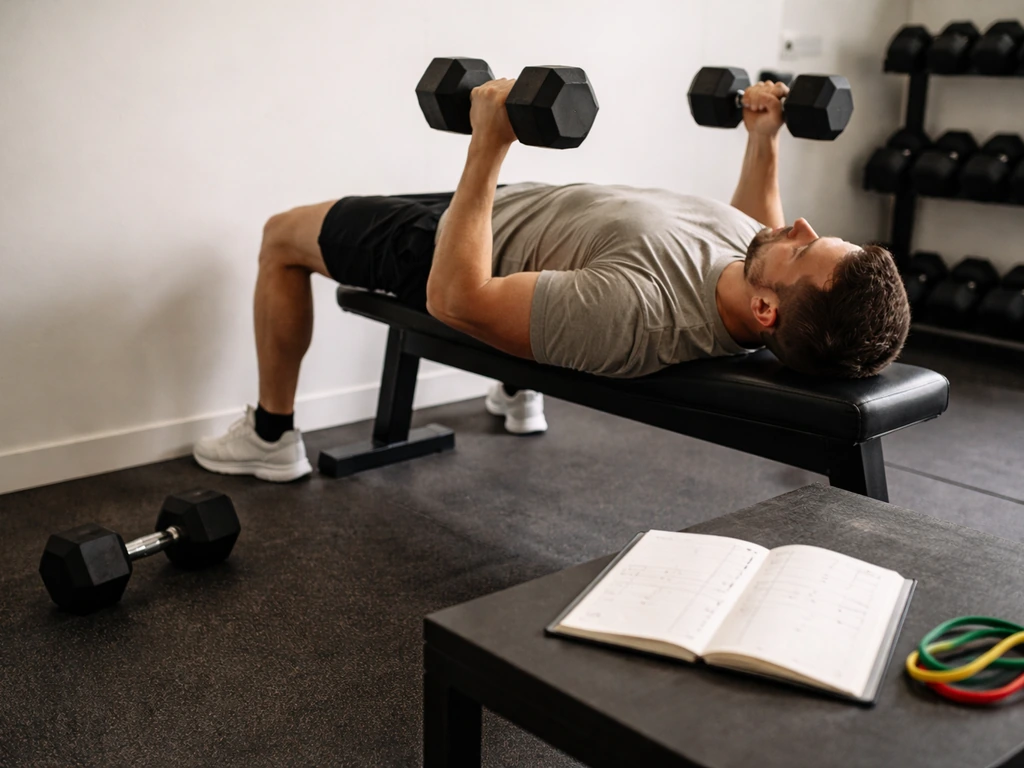
Before you count anything, you need to know what actually counts. A "set" in the context of muscle growth isn't just any cluster of reps. It's a working set, meaning a set performed with enough effort that your muscles are genuinely challenged. Warm-up sets, feeler sets done at 50% effort, and sets where you stop 8 reps short of failure don't contribute much to the growth stimulus. Researchers call these "junk sets" and they don't move the needle the way hard sets do.
Think of weekly set volume as your primary dose variable. It's the main dial you turn to adjust how much growth stimulus you're delivering to a muscle each week. Effort, however, determines whether your sets actually qualify as that dose. High total sets with low effort is like taking half a supplement dose and calling it a full serving. The number of sets matters, but only after you've established that those sets are genuinely hard.
The clearest way to gauge effort is through the concept of reps in reserve (RIR). If you finish a set and feel like you could have done 5 more reps easily, that set probably wasn't close enough to failure to count as a full working set. Aim to end most sets with 0 to 3 reps left in the tank. That range is often marked as 0-3 RIR or roughly an RPE (rate of perceived exertion) of 7 to 10 out of 10. Research shows that training to 0-3 RIR produces similar hypertrophy to grinding every set to absolute failure, especially when total volume is equated, and it tends to keep you fresher for subsequent sets and sessions.
How many reps per set for muscle growth
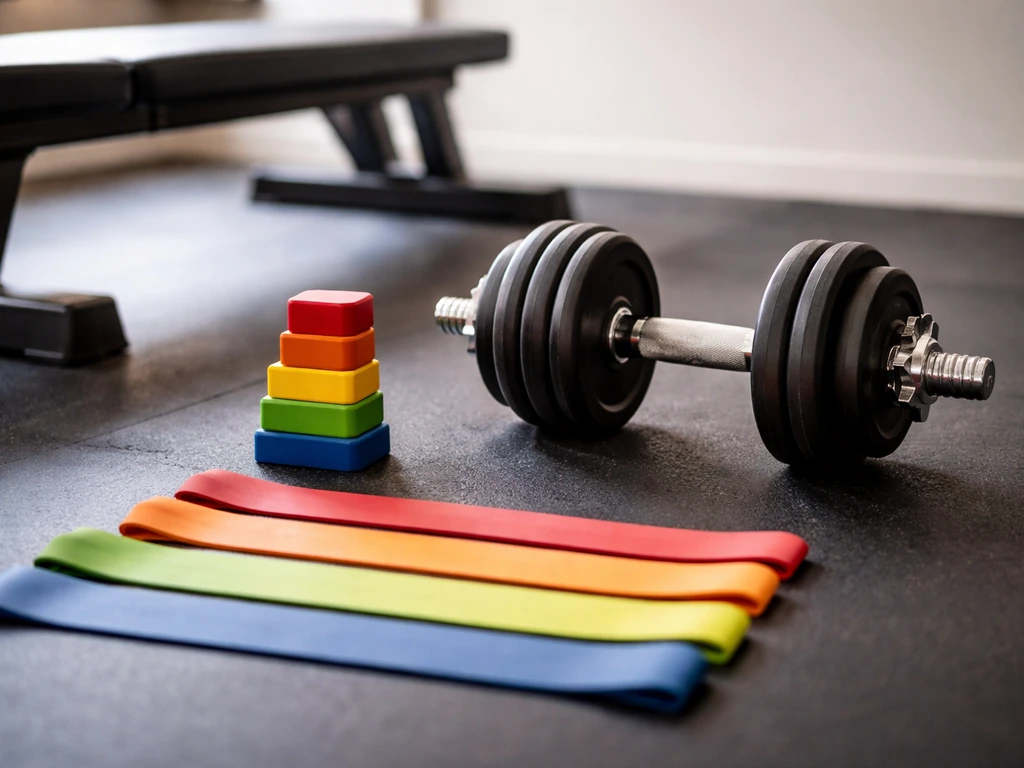
Here's the honest answer on reps: a wider range works than most people think. Hypertrophy research consistently shows that you can grow muscle anywhere from around 5 reps per set up to 30 reps per set, as long as effort is high enough. A set of 6 heavy reps taken close to failure and a set of 20 moderate-weight reps taken close to failure can both drive similar amounts of muscle growth when volume is equated.
That said, the 6 to 20 rep range is where most practical hypertrophy programming lives, and for good reason. Sets below 5 reps tend to be more neurally demanding and favor strength expression over pure hypertrophy. Sets above 20 reps can work but they're metabolically brutal and harder to sustain with good technique. The sweet spot for most people is somewhere between 8 and 15 reps per set, which balances mechanical tension, metabolic stress, and manageable fatigue well.
One practical note: you don't need to obsess over hitting one exact rep count. If you're doing sets of 10 on the bench press and you hit 12 one week, that's a good sign. Add a little weight the next session and work back into the 10-rep zone. This rep range flexibility is actually a feature, not a bug, because it gives you room to auto-regulate based on how you feel day to day.
How many sets per muscle per week (and per workout)
Dose-response analyses are pretty clear here: more weekly sets per muscle group tend to produce more hypertrophy, up to a point. The research generally shows graded improvements across categories: fewer than 5 sets per week produces some growth, 5 to 9 sets per week produces more, and 10 or more sets per week produces the most, at least in the ranges studied. A 2017 systematic review and meta-analysis by Schoenfeld, Ogborn, and Krieger reported a dose-response relationship between weekly resistance-training volume and hypertrophy, analyzing weekly sets per muscle in categories of <5, 5, 9, and 10+ sets per week dose-response relationship across categories of weekly sets per muscle per week. But more is not always better, and very high volumes (above 20 to 25 working sets per muscle per week) can outpace your ability to recover, especially if you're doing genuinely hard sets.
| Experience Level | Weekly Sets Per Muscle | Sets Per Session (if training 2x/week) |
|---|---|---|
| Beginner (0–12 months) | 8–12 | 4–6 |
| Intermediate (1–3 years) | 12–18 | 6–9 |
| Advanced (3+ years) | 16–22+ | 8–11+ |
Per-session volume matters too. Cramming 20 sets for your chest into one workout isn't ideal, because fatigue within a session degrades set quality as you go. Most research and practical experience suggests capping per-session volume at around 6 to 10 working sets per muscle group, then distributing the rest across additional training days. This is why training frequency is so tightly linked to volume programming.
Weekly training frequency: splitting sets across days

Two sessions per muscle group per week is the most well-supported frequency for hypertrophy in the research, and it's also the most practical for the majority of people. Hitting a muscle once a week can work, especially if you're piling in enough volume in that one session, but spreading sets across two or more sessions per week tends to allow higher total quality volume because you're not fatigued from doing everything at once.
If you're on a tight schedule, even one well-designed session per week per muscle can produce real results. A 2022 meta-analysis found that frequency differences matter less than total weekly volume when volume is equated. A 2021 narrative review in Sports Medicine similarly notes emerging evidence that when total weekly set volume is equated, lower training frequency can produce comparable hypertrophy effects, making weekly set volume the primary driver in time-constrained programming frequency differences matter less than total weekly volume when volume is equated. So if your week only allows you to hit legs once, make that session count: get your 10 to 15 working sets in, take them close to failure, and you're doing more than most people in the gym.
For most people, a 3 to 4 day per week training split works well. Full body routines (great for beginners and busy schedules), upper/lower splits (solid for intermediates), and push/pull/legs variations (good for intermediate to advanced lifters) all give you multiple touches per muscle group per week. Choose the structure that fits your actual life, not the one that looks most impressive on paper.
Program examples: set/rep ranges for beginners to advanced
Beginner (first 6 to 12 months)
If you're new to training, start conservative. Your nervous system is still learning the movement patterns, and you'll grow from almost any meaningful stimulus. A full body routine 3 days per week (Monday, Wednesday, Friday, for example) works perfectly. Aim for 2 to 3 working sets per exercise and 2 to 3 exercises per major muscle group per week, landing in the 8 to 12 rep range. That adds up to roughly 8 to 10 working sets per muscle per week, which is plenty for a beginner to make excellent progress.
Intermediate (1 to 3 years of consistent training)
By now your body needs more volume to keep progressing. An upper/lower split 4 days per week (upper Monday/Thursday, lower Tuesday/Friday) gives you solid frequency with manageable per-session loads. Target 3 to 4 working sets per exercise, with 3 to 5 exercises per muscle group per week, across the 8 to 15 rep range. That puts you in the 12 to 16 weekly sets territory, which is right in the productive middle of the dose-response curve.
Advanced (3+ years of serious training)
Advanced lifters need higher volume, more variation, and closer attention to recovery. A push/pull/legs split run 5 to 6 days per week, or an upper/lower with added specialization work, gives you enough frequency and volume to stay in the 16 to 22+ set range per muscle per week. At this level, periodizing volume (cycling between higher and lower volume phases) becomes important to avoid accumulated fatigue. You'll also need to be honest about recovery, because more sets only help if you can actually recover from them.
Home and minimal equipment training
The same set and rep principles apply whether you're in a gym or using resistance bands and bodyweight at home. The limiting factor is usually just finding ways to make sets hard enough. Higher rep ranges (12 to 25 reps) work well with lower loads, as long as you're genuinely pushing close to failure. A push/pull/legs split with bodyweight exercises, bands, or dumbbells can hit the same weekly volume targets as a gym-based program.
How to know your sets/reps are working (progression, volume checks)

Volume is your dose, but progressive overload is the mechanism that keeps the dose effective over time. If you're doing the same weight for the same reps week after week, you've stopped giving your muscles a reason to grow. The goal is to gradually increase the total load you're moving: more reps with the same weight, same reps with more weight, or more sets over time. Even small increments matter. Adding 2.5 kg to a lift every 2 to 3 weeks compounded over a year produces significant strength and size gains.
Track your workouts. It doesn't need to be complicated. A notes app or a basic training log where you record the exercise, weight, and reps for each working set is enough. This is how you catch stagnation early and know when to push the volume up or dial it back.
If you're not progressing, there are usually two culprits: not enough effort (sets aren't close enough to failure to count as working sets) or not enough recovery. Recovery includes sleep, stress management, and nutrition. If your training is dialed in but you're still stalling, look at what's happening outside the gym. Eating enough calories to support muscle growth is one of the most commonly overlooked variables, because undereating limits muscle protein synthesis regardless of how well your training is structured.
Here are the key signs your set and rep plan is working, and the warning signs it isn't:
- Working signs: you're adding reps or weight to lifts over weeks and months, you feel appropriately challenged but can finish sessions without complete exhaustion, muscle fullness and pump improve over time, and body composition shifts gradually
- Warning signs: persistent joint pain or excessive soreness lasting more than 48 to 72 hours, stalled performance for 3 or more consecutive weeks, dreading training sessions, and declining rep counts on exercises you previously progressed on
If you're seeing warning signs, the fix is usually reducing weekly sets by 30 to 40% for 1 to 2 weeks (a deload), sleeping more, and checking your nutrition. Getting enough protein to support muscle repair becomes especially critical during periods of high training volume, since your muscles need adequate amino acids to rebuild between sessions.
The most common set/rep mistakes to avoid
The biggest mistake by far is doing lots of sets at low effort and calling it high volume. Fifteen sets per week sounds great on paper, but if most of those sets are stopped 6 or 7 reps short of failure, you're not actually delivering the stimulus those numbers imply. Cut the set count in half and make every set genuinely hard, and you'll likely see better results.
The second most common mistake is chasing more sets without recovering from the current ones. This is especially tempting for motivated beginners and intermediates who think more is always better. If you're consistently sore for 4 or 5 days after a session, your recovery can't keep up with your volume. Dial sets back until soreness resolves in 24 to 48 hours, then rebuild gradually.
Third: neglecting nutrition while training hard. Training volume creates the demand; food supplies the raw materials. What you eat to support muscle growth matters as much as how many sets you do, and the two variables work together. You can't out-train a chronic calorie or protein deficit.
Your starting point this week
If you're a beginner, start with 3 full body sessions this week. Pick one compound exercise per major muscle group (squat, press, row, hinge), do 3 working sets of each in the 8 to 12 rep range, and take each set to 1 to 2 reps from failure. That's it. Track what you did and try to beat it slightly next week.
If you're intermediate, assess your current weekly sets per muscle group. If you're below 12 working sets for any lagging muscle, add one set per session for that muscle and monitor recovery. If you're above 20 sets and not progressing, consider reducing to 14 to 16 and focusing on set quality.
If you're advanced, periodize. Run 4 to 6 weeks at moderate volume (14 to 16 sets per muscle per week), followed by 2 to 3 weeks at higher volume (18 to 22 sets), then a 1-week deload at 8 to 10 sets. Repeat. This keeps the stimulus fresh and protects recovery. Pair this approach with a solid muscle-building diet and you'll have all the major variables covered.
The bottom line is this: 10 to 20 hard working sets per muscle per week, split across at least 2 sessions, with reps in the 6 to 20 range taken close to failure, and progressive overload week over week. That framework builds muscle at every level. The details matter, but they matter less than simply starting and staying consistent.
FAQ
When I’m told to do 10 to 20 sets per muscle per week, do warm-up sets and easy sets count?
Start by counting only working sets, meaning sets where you finish with about 0 to 3 reps in reserve (RIR). For example, if you do 3 sets per exercise but the first set is a warm-up and the last set is 6 reps short of failure, you would only count the truly hard sets toward your weekly total.
What should I do if I can’t fit more sets into my schedule but I still want to grow?
If you cannot add more hard sets, try adding a set quality upgrade first, like reducing RIR (getting closer to failure) or using a slightly larger range of motion on the same exercise. Once technique and effort are stable for 2 to 3 weeks, you can increase sets by 1 to 2 per muscle per week.
How do I know whether increasing sets will help or just create more fatigue?
Use the “effort first” rule. If your sets stay consistent and close to failure, increasing from 10 sets to about 12 to 14 sets often helps. If sets start creeping farther from failure or you lose performance, that’s a sign you’re past your recovery limit, so back off by roughly 30% and rebuild.
How should I handle a lagging muscle that isn’t responding?
A lagging muscle often needs targeted volume, but not endless volume. Add about 1 extra working set per session for that muscle (so +2 sets per week), keep the sets at 0 to 3 RIR, and reassess after 3 to 4 weeks using whether strength and reps are trending up.
Can I grow muscle if I only train each muscle once per week?
If you train 1 day per week for a muscle, you can still grow, but you should keep that day focused. Aim for about 10 to 15 hard working sets in that session, and stop the workout once performance quality drops, since the within-session fatigue can turn later sets into ineffective “junk” sets.
What if my soreness or performance shows I’m doing too many sets?
For most people, the easiest fix is to reduce the number of hard sets per session rather than removing effort. If soreness lasts longer than 48 hours or your next workouts tank, drop total weekly sets by 30 to 40% for 1 to 2 weeks (a deload), then resume with 2 to 4 fewer sets per muscle until progress returns.
Do weekly set targets change if I train with bodyweight or resistance bands?
Yes, but you should still count working sets the same way. For bodyweight and bands, you may need to use tempo, pauses, or harder progressions to keep sets close to failure, since it’s common to underestimate how “hard” a set feels when load is lower.
How should I structure sets across multiple exercises within one workout?
For shorter sessions, choose fewer exercises but keep them hard. For example, if you can only do 6 to 8 working sets total for a muscle, do 2 to 3 exercises with 2 to 3 hard sets each rather than spreading 8 to 10 sets across many exercises where some will inevitably become lower effort.
What’s the best way to tell if my set and rep plan is actually working?
Progress is easier to spot if you track two things: working set count and performance on those sets (weight or reps). If your weekly set count is stable and you are still not moving rep or load numbers over 3 to 4 weeks, either your sets are not reaching sufficient effort or recovery and nutrition are falling behind.
How many sets per muscle should beginners start with to avoid burning out?
If you’re starting out, you usually should not jump straight to 10 to 20 sets. A common approach is 8 to 10 working sets per muscle per week at first, using 2 to 3 exercises per muscle group and 2 to 3 sets per exercise, then scale up only after you can repeat that performance week to week with good form.
If I train mostly in the 3 to 5 rep range or mostly in very high reps, how does that affect set targets?
Hypertrophy can happen across a wide rep range, but your set count target assumes you can reliably take sets close to failure. If you choose very low reps (for example, 3 to 5), plan on fewer sets due to higher fatigue and emphasize recovery and technique, then gradually adjust toward a rep range you can train near failure consistently.