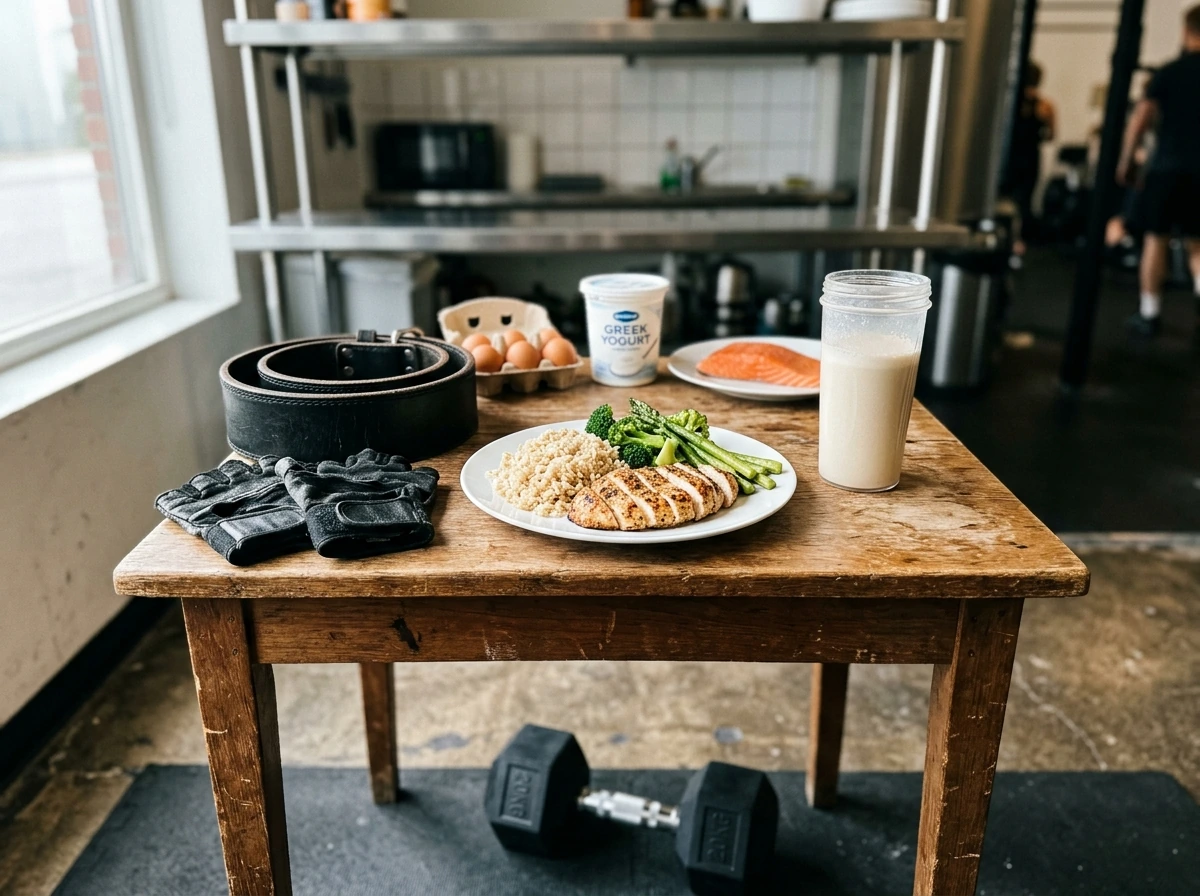
If you're eating too little protein, your body can't run muscle protein synthesis fast enough to outpace breakdown. If you're eating too few total calories, your body treats growth as a luxury it can't afford. Get both right, and you give your muscles a genuine chance to respond to your workouts.
The good news is that the core formula isn't complicated: hit a daily protein target of roughly 1.6 to 2.0 g per kilogram of bodyweight, eat enough total calories to support a small surplus above what you burn, and build those calories from foods that also fuel your training and support recovery. The rest of this guide breaks down exactly how to do that.
Best foods for muscle growth (ranked by impact)
Not all foods contribute equally. When we talk about what drives muscle gain, three qualities matter most: protein quality (does it supply all the essential amino acids your muscles need?), protein density (how much protein per calorie or per gram of food?), and overall nutritional value for training and recovery. Here's how the top foods stack up.
Tier 1: High-quality, high-density protein sources
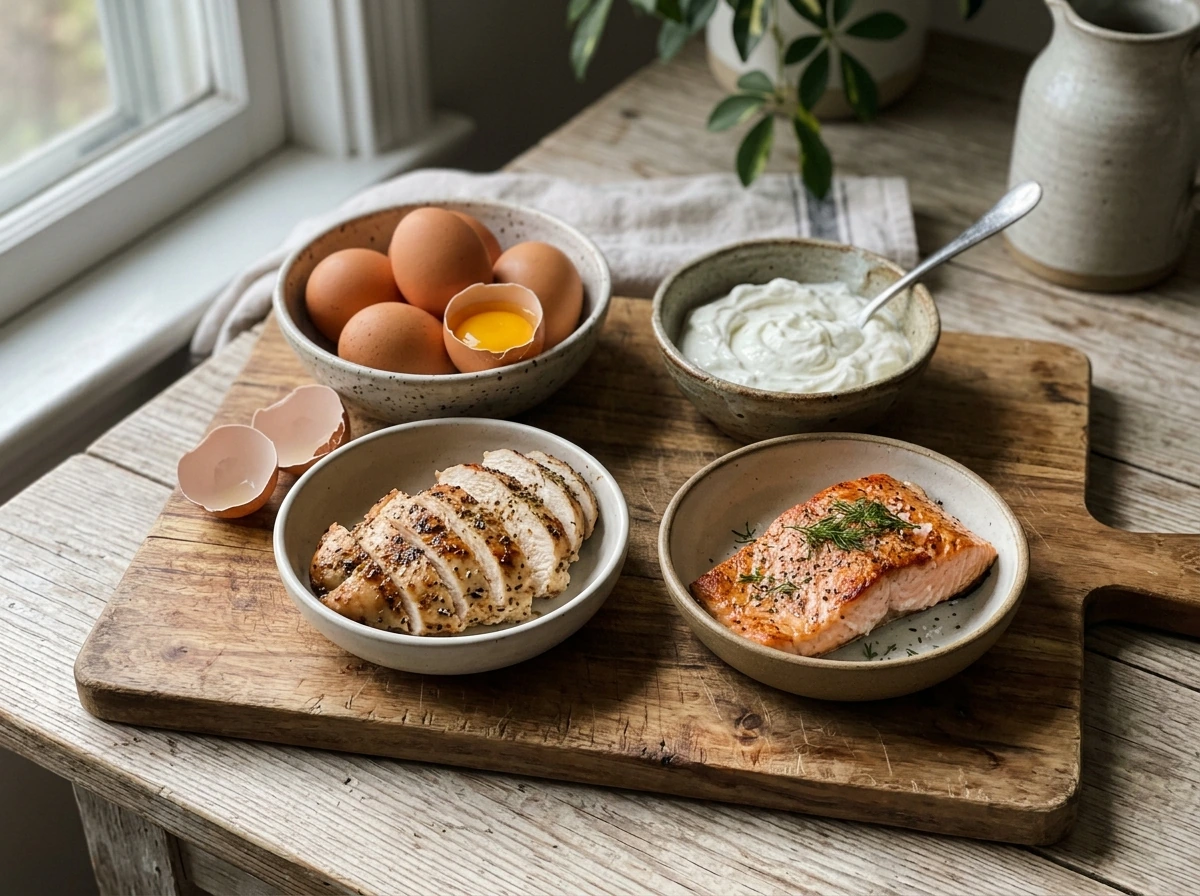
- Eggs: Whole eggs have a PDCAAS of 1.0, meaning they contain every essential amino acid in proportions your body can actually use. The yolk also carries fat-soluble vitamins and healthy fats. Hard to beat as a complete muscle food.
- Chicken breast: Lean, versatile, and high in leucine (the amino acid that most strongly triggers muscle protein synthesis). A 100g serving delivers around 31g of protein.
- Greek yogurt and cottage cheese: High in casein, a slower-digesting protein that keeps amino acids circulating for longer. Casein has a PDCAAS above 1.0 in some measures, making it one of the highest-quality protein sources you can eat.
- Whey protein (as a food ingredient in dairy): Found in milk and Greek yogurt, whey is fast-digesting, leucine-rich, and consistently shown to support muscle protein synthesis post-exercise. It's the basis of most protein powders, but it exists in whole food form too.
- Beef (lean cuts like sirloin or eye of round): Dense in protein, rich in creatine (yes, the supplement version is based on what's naturally in meat), and one of the better sources of zinc and iron for recovery.
- Salmon and fatty fish: Combine high-quality protein with omega-3 fats. While omega-3 supplementation evidence for hypertrophy is mixed, getting it from whole fish also brings protein, selenium, and vitamin D.
- Canned tuna: Cheap, convenient, and roughly 25g of protein per 100g serving with almost no fat. Underrated in most muscle-building conversations.
Tier 2: Solid protein sources that also add carbs and micronutrients
- Milk (whole or low-fat): Research consistently shows milk supports muscle gains, partly because of its natural whey-casein blend and partly because of its leucine content per serving.
- Legumes (lentils, black beans, chickpeas): These won't replace animal protein for quality, but they add meaningful protein alongside a lot of fiber and slow-digesting carbs. Great for volume and gut health.
- Tofu and tempeh: Soy protein is the highest-quality plant protein available, with PDCAAS values close to animal proteins. Tempeh is fermented, which improves digestibility.
- Edamame: Young soybeans pack around 11g of protein per 100g, with a full amino acid profile. A genuinely good snack option if you need to hit protein targets.
Tier 3: Supporting foods (carbs, fats, and micronutrients for training)
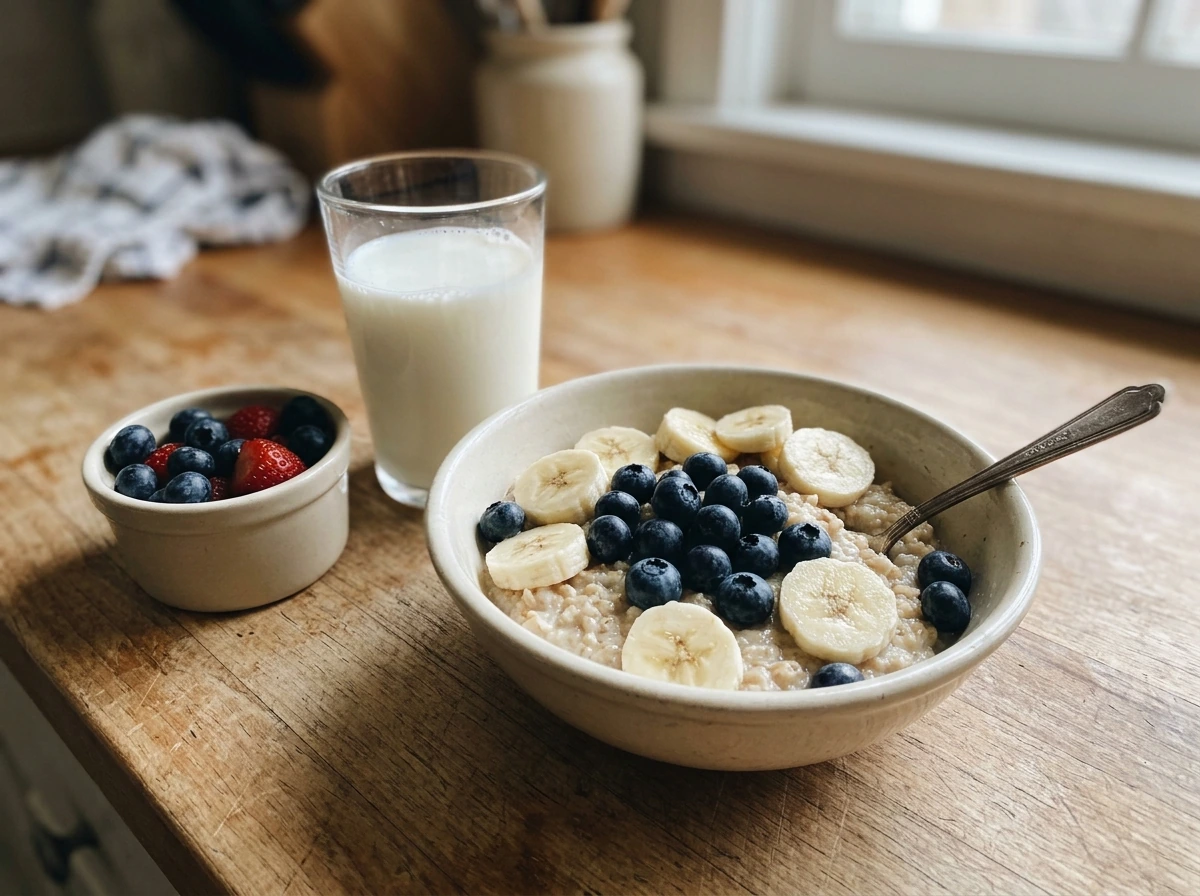
- Rice, oats, potatoes, and pasta: Your primary carbohydrate sources for fueling training sessions and restoring muscle glycogen afterward.
- Bananas, berries, and other fruit: Fast carbs pre-workout or alongside post-workout protein. Berries also bring antioxidants that support recovery.
- Avocados, nuts, and olive oil: Healthy fat sources that help keep total calories up during a lean bulk and support hormonal health without adding saturated fat beyond guideline levels.
- Leafy greens and vegetables: Not calorie-dense, but they carry magnesium, potassium, and micronutrients that support muscle contraction and recovery.
Protein essentials: how much, how often, and what counts
The International Society of Sports Nutrition (ISSN) puts the evidence-based range at 1.4 to 2.0 grams of protein per kilogram of bodyweight per day for people doing resistance training. A separate meta-analysis of resistance training studies found that at least 1.6 g/kg/day is needed to maximize muscle protein accretion. In practical terms, if you weigh 80 kg (about 176 lbs), you're looking at roughly 128 to 160 grams of protein daily, with the higher end being useful during a hard training block or a calorie deficit.
How often you eat protein matters almost as much as how much you eat. Research on protein distribution shows that spreading intake across several meals every 3 to 5 hours produces better muscle protein synthesis over the course of a day than cramming protein into one or two big meals. A useful per-meal target: roughly 0.3 to 0.4 grams of protein per kilogram of bodyweight. For that same 80 kg person, that's about 24 to 32 grams per meal, which is roughly three to five eggs, a chicken breast, or a cup of Greek yogurt with some added protein.
There's also a ceiling effect worth knowing about. A well-cited study found that muscle protein synthesis plateaued at around 20 grams of protein after a resistance training session, with 40 grams providing no statistically significant extra benefit in that context. This doesn't mean bigger meals are pointless (other factors are at play, including body size and training volume), but it does suggest that hitting 20 to 40g of quality protein per meal is a sweet spot and that eating 80g at dinner while skipping breakfast isn't a good trade.
What counts as quality protein? Primarily animal sources: eggs, dairy, meat, poultry, fish. These are complete proteins with high PDCAAS and DIAAS scores, meaning your body actually absorbs and uses a high proportion of what you eat. Plant proteins can absolutely contribute, but because most (except soy) are incomplete or lower in leucine, you'll need to eat more of them and ideally combine sources to cover all essential amino acids.
Carbs and fats: what to eat to support training and recovery
Protein gets most of the attention in muscle-building nutrition, but carbohydrates do real work. They're your primary fuel for resistance training because your muscles rely on glycogen (stored carbohydrate) during sets. Research shows that glycogen depletion during a session increases with more sets and longer session duration, which means if you train with meaningful volume, your carbohydrate intake directly affects how hard you can train and how well you recover. Carbs aren't magic for muscle growth themselves, but they let you do the work that drives growth.
For restoring glycogen after a demanding session, research suggests that roughly 10 grams of carbohydrate per kilogram of bodyweight (combined with adequate total energy) can maximize glycogen restoration over 24 hours. A 2025 study in well-trained cyclists found that 10 g/kg carbohydrate during 12 hours after exercise rapidly replenished liver glycogen, but did not fully restore muscle glycogen within that same 12-hour window roughly 10 grams of carbohydrate per kilogram of bodyweight (combined with adequate total energy) can maximize glycogen restoration over 24 hours. You don't need to chase that number every day, but on heavy training days, it's worth eating genuinely enough carbs rather than treating them as a nutritional afterthought.
Good carbohydrate choices for training support include oats, white or brown rice, sweet potatoes, regular potatoes, pasta, bread, and fruit. White rice and bananas aren't inferior to their whole-grain alternatives for athletes with high training volumes. The main difference is fiber content and digestion speed, which matters more around workouts than at other meals.
Dietary fat plays a supporting role: it's essential for hormone production (including testosterone), helps absorb fat-soluble vitamins, and adds calorie density that makes hitting a surplus easier. The WHO and US Dietary Guidelines suggest keeping total fat within about 20 to 35% of total calories, with saturated fat below 10% of calories. For practical muscle-building eating, this means including healthy fat sources like nuts, olive oil, avocado, and fatty fish without going overboard on butter, processed meat fat, or fried food. You don't need to fear fat, but you also don't need to load up on it beyond what supports your calorie target.
What to eat for faster gains (timing, pre/post-workout)
Meal timing gets oversimplified in both directions. Some people treat the post-workout window as sacred to the point of anxiety; others dismiss timing entirely. The truth is that timing matters, but probably less than total daily intake. If you're consistently hitting your protein and calorie targets across the day, you have some flexibility on exact timing. If you're not consistently hitting those targets, timing tricks won't save you.
That said, here's what the evidence actually supports. For pre-workout nutrition, eating a meal with both protein and carbohydrates 1 to 3 hours before training gives you available fuel for the session and amino acids already circulating. A good pre-workout meal might be chicken and rice, oats with milk, or eggs with toast. If you're training early morning with no time for a full meal, even a small protein and carb snack (yogurt and a banana, or a shake) is better than fasted training if muscle gain is the priority.
Post-workout, your goal is to deliver protein to muscles when they're most sensitized to it. Aim for roughly 20 to 40 grams of high-quality protein within a couple of hours of your session. Pairing that protein with carbohydrates (a 3:1 or 4:1 carb-to-protein ratio is commonly cited) accelerates glycogen replenishment and blunts the cortisol response after training. Practically, this looks like: a protein shake and banana, Greek yogurt with fruit, chicken and rice, or chocolate milk (which genuinely works as a recovery drink).
If you train in the evening, your post-workout meal can double as dinner. If you train late at night, consider a casein-heavy snack before bed (cottage cheese is ideal) since casein's slower digestion keeps amino acids available during the overnight fast when your body is in a prime muscle-repair state.
How to eat muscle-building meals (simple templates and swaps)
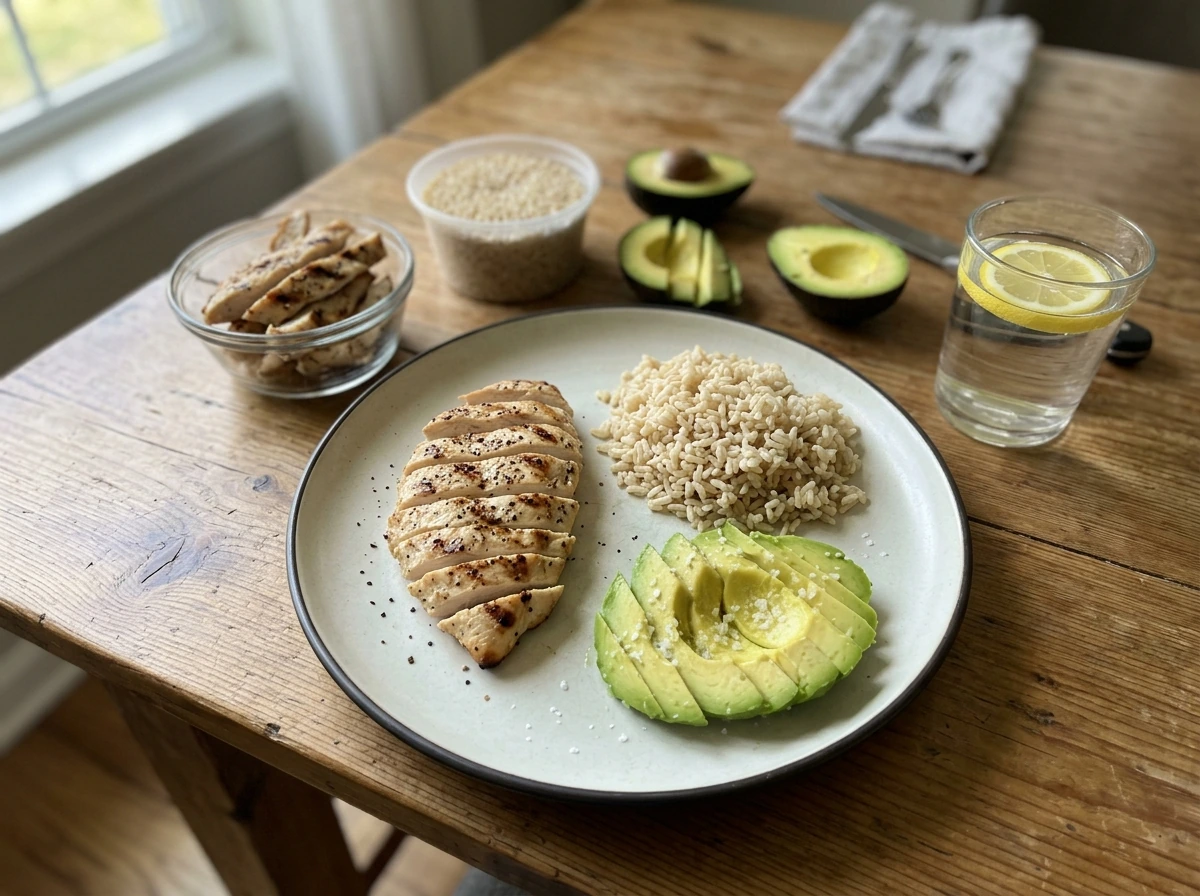
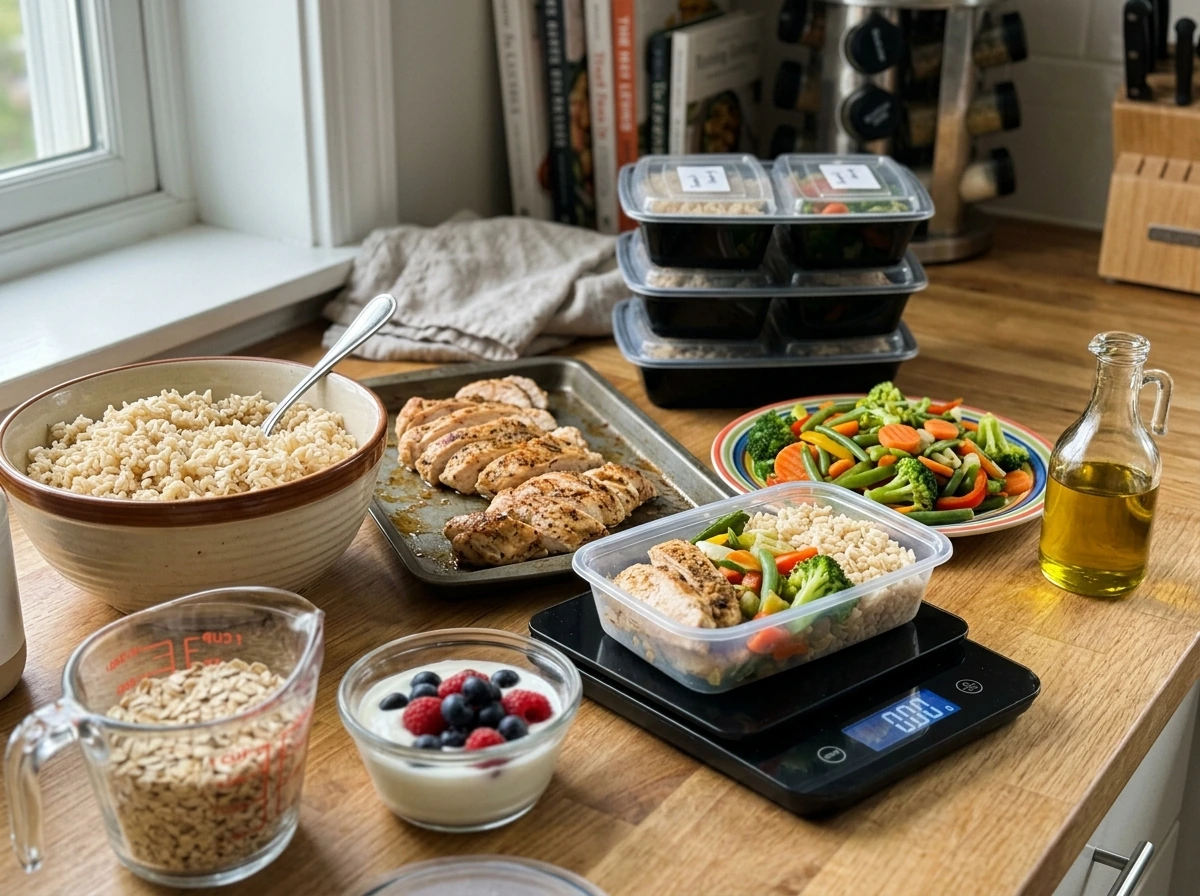
You don't need a complicated meal plan. You need a repeatable structure. The simplest framework: every meal has a protein anchor (the food that hits your ~0.3 g/kg protein target for that sitting), a carbohydrate source for energy, and a fat source for satiety and hormonal support. Vegetables are flexible and can go with almost anything.
| Meal | Protein anchor | Carb source | Fat source |
|---|
| Breakfast | 3–4 whole eggs or Greek yogurt (200g) | Oats or toast | Egg yolks or nut butter |
| Lunch | Chicken breast (150g) or canned tuna | Rice or potato | Olive oil dressing or avocado |
| Snack | Cottage cheese (200g) or protein shake | Banana or fruit | Minimal or none |
| Dinner | Beef, salmon, or chicken (150–200g) | Rice, pasta, or sweet potato | Cooking oil or fatty fish |
| Before bed (optional) | Cottage cheese or casein protein | Small serving of oats or fruit | Minimal |
If you're struggling to hit protein targets, here are direct swaps that add protein without overhauling your eating. Replace regular yogurt with Greek yogurt (almost double the protein). Replace white pasta sauce with a meat-based sauce. Add a can of tuna to your lunch salad. Swap your afternoon snack for cottage cheese with fruit. Drink milk instead of juice. These aren't dramatic changes, but they stack up.
On calories: for muscle growth, you need a small calorie surplus above your maintenance level. Research supports a conservative surplus of roughly 5 to 20% above maintenance, which translates to gaining around 0.25 to 0.5% of your bodyweight per week. Studies comparing small and large surpluses found similar strength and size gains, but the larger surplus group gained significantly more fat. Slow and controlled is more efficient in the long run. If you're unsure what your maintenance calories look like, we cover that in more depth in the related piece on how many calories to grow muscle.
Supplements vs whole foods: what's worth it (and what isn't)
Let's be direct: most supplements marketed for muscle building have weak or inconsistent evidence behind them, and the ISSN's 2022 review makes clear that no supplement replaces the fundamentals of adequate protein, total calories, and consistent training. That said, a few supplements have a genuine, well-supported role.
| Supplement | What it does | Evidence quality | Worth it? |
|---|
| Creatine monohydrate | Increases phosphocreatine stores, improves high-intensity performance and supports muscle growth over time | Very strong (ISSN position stand) | Yes, if budget allows |
| Protein powder (whey or casein) | Convenient way to hit daily protein targets when whole food isn't practical | Strong, but it's just food in powder form | Yes, as a convenience tool |
| Caffeine | Improves exercise performance at 3–6 mg/kg body mass | Strong (ISSN position stand) | Yes, for training performance |
| Beta-alanine | Increases muscle carnosine, may buffer fatigue in high-rep or endurance-style resistance training | Moderate (3.2–6.4 g/day for 4–12+ weeks) | Situational, not a priority |
| Omega-3 supplements (fish oil) | Does not consistently show hypertrophic benefit in young adults per ISSN review | Inconsistent/unconvincing for muscle growth | Get it from food instead |
| BCAAs | Redundant if you're already eating adequate complete protein throughout the day | Weak for muscle growth beyond protein adequacy | Generally not worth the cost |
| Mass gainers | High-calorie shakes, useful only if you genuinely can't eat enough whole food | It's just calories and protein; no magic | Only if you struggle with food volume |
Creatine is the one supplement that consistently earns its place. The ISSN recommends a loading protocol of about 0.3 g/kg/day for 5 to 7 days to saturate muscle stores quickly, followed by a maintenance dose of 3 to 5 grams per day. You can also skip the loading phase and just take 3 to 5 grams daily from the start; it takes a few extra weeks to saturate, but it works the same. Creatine monohydrate is the most studied form and the one with the best safety and efficacy record.
Protein powder is also genuinely useful, not because it's superior to whole food, but because it makes hitting protein targets easier when you're busy, traveling, or just don't feel like cooking. Whey is a good post-workout choice (fast-digesting); casein works well before bed (slow-digesting). But if you're already hitting 1.6 to 2.0 g/kg from whole food, you don't need it. For how much protein to eat in detail, the guide on how much protein to grow muscle goes deeper.
Next steps: tracking progress and adjusting calories and protein
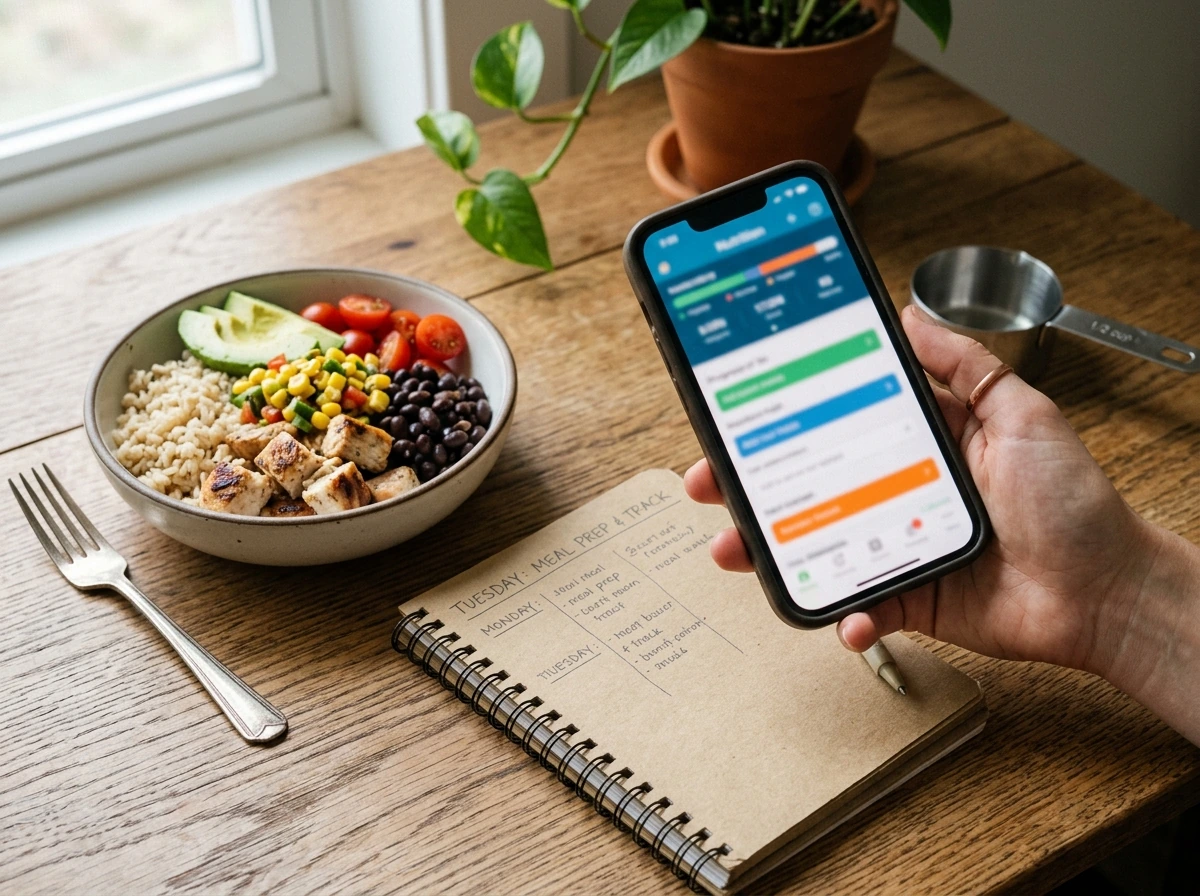
Starting today means figuring out where you actually are before trying to optimize. Spend one week tracking your food honestly (an app like Cronometer or MyFitnessPal works fine) to see whether you're anywhere near your protein target. Most people who think they eat a lot of protein are actually landing around 0.8 to 1.0 g/kg. Seeing the gap clearly makes the fix obvious.
For tracking muscle-building progress, scale weight alone isn't enough. Muscle gain is slow (typically 0.5 to 2 lbs per month under good conditions for most people) and the scale can shift day to day based on water, glycogen, and food volume. Instead, use a combination of weekly average bodyweight trends, body measurements taken every 2 to 4 weeks (arms, chest, waist, thighs), progress photos taken in consistent lighting and positions, and your strength logs in the gym. If your lifts are going up and your measurements are growing while your waist stays relatively stable, you're building muscle regardless of what the scale says on any given morning.
Adjust calories based on what the trend data shows over 3 to 4 weeks, not day to day. If your weight isn't moving up at all over a month and you're training consistently, you're probably not in a surplus. Add 200 to 300 calories, primarily from carbohydrates and protein. If your weight is climbing faster than 0.5% of bodyweight per week, you're likely gaining more fat than needed. Pull calories back slightly. The key is making evidence-based adjustments, not reacting to single-day fluctuations.
Finally, remember that nutrition and training are interdependent. Getting your diet right matters enormously, but if your training isn't structured around progressive overload, food alone won't build much muscle. If you want to make sure you're pairing this nutrition approach with the right training structure, Finally, remember that nutrition and training are interdependent. Getting your diet right matters enormously, but if your training isn't structured around progressive overload, food alone won't build much muscle. If you want to make sure you're pairing this nutrition approach with the right training structure, the pieces on how many sets to grow muscle and how many calories to grow muscle are worth reading alongside this one. Good nutrition without good training is a car with a full tank but no engine. Get both working together and you'll see results. Good nutrition without good training is a car with a full tank but no engine. Get both working together and you'll see results.