For most people trying to grow muscle, the sweet spot is 1.6 to 2.2 grams of protein per kilogram of body weight per day. If you prefer pounds, that works out to roughly 0.7 to 1.0 grams per pound. That range covers the vast majority of training scenarios, from someone just starting out in the gym to a seasoned lifter pushing for more size. The International Society of Sports Nutrition (ISSN) puts the effective range at 1.4 to 2.0 g/kg/day to optimize training adaptations, and a broad dose-response meta-analysis confirmed that higher protein intakes positively track with lean mass gains across a wide range of populations. So if you've been eating at the lower end of general nutrition recommendations, bumping your intake into this zone is one of the highest-leverage moves you can make for muscle growth.
How Much Protein to Grow Muscle: Daily Grams Guide

Protein target basics for muscle gain
The RDA for protein is 0.8 g/kg/day, but that number was designed to prevent deficiency in sedentary people, not to build muscle. When you're resistance training, your muscles are undergoing more breakdown, and your body needs more raw material (amino acids) to rebuild them bigger and stronger than before. Muscle protein synthesis, the actual process of your muscle fibers being repaired and grown, is directly driven by the amino acids you consume. Without enough protein coming in, synthesis can't outpace breakdown, and you stall.
Research involving resistance-trained males showed that 1.6 g/kg/day was sufficient to maximize lean mass gains, muscle strength, and performance over 16 weeks, and going up to 3.2 g/kg/day didn't add meaningfully more muscle. That's a useful signal: you don't need to go overboard. A ceiling around 2.2 g/kg/day is a practical upper target for most people in a muscle-building phase, with the lower end of 1.6 g/kg/day being the evidence-backed minimum to expect solid results.
How to calculate your grams of protein per day
This is simpler than it sounds. You just need your body weight in kilograms and a target multiplier. Here's the exact process:
- Find your weight in kilograms. If you know your weight in pounds, multiply by 0.454. So 180 lbs × 0.454 = 81.7 kg.
- Choose your target range. For general muscle building, use 1.6–2.0 g/kg. If you're cutting (eating in a calorie deficit), go higher: 2.0–2.4 g/kg. If you're a beginner just starting out, 1.6 g/kg is a solid starting point.
- Multiply your body weight in kg by both ends of the range to get your daily gram target. Example: 81.7 kg × 1.6 = 131 g/day; 81.7 kg × 2.0 = 163 g/day. Your daily target is 131–163 g of protein.
- Pick a number in that range and aim for it consistently. You don't need to hit it perfectly every day, but your weekly average should fall in the zone.
That's it. No complicated formulas. The body-weight-based approach is far more useful than a flat number like '150 grams' because protein needs scale with how much muscle mass you already have and how much you're training.
How many grams per meal and how to spread it out
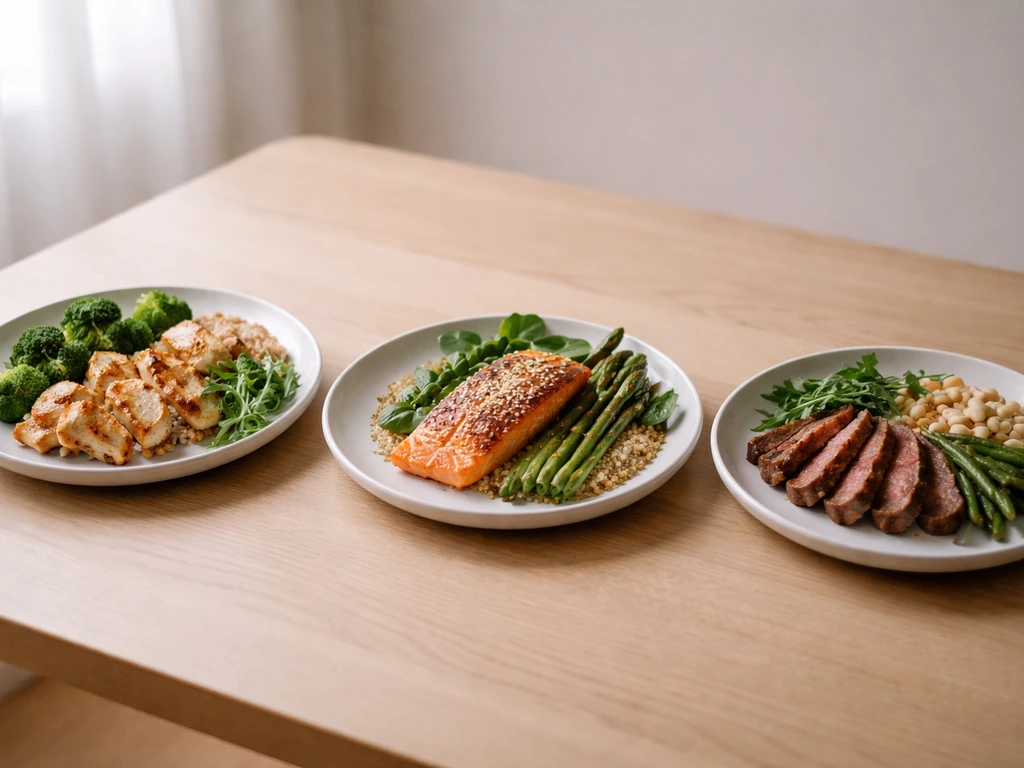
Total daily protein matters most, but how you distribute it across the day makes a real difference. A controlled study found that spreading protein evenly across three meals increased 24-hour muscle protein synthesis by about 25% compared to skewing the same total protein heavily toward one meal. That's a meaningful gain for no extra effort or food.
For per-meal dosing, research consistently points to 20–40 grams of high-quality protein per meal as the effective range for stimulating muscle protein synthesis. More specifically, studies suggest maximum stimulation of muscle protein fractional synthetic rate occurs at around 20–30 grams per bolus in young adults, with the practical recommendation being roughly 0.3 g/kg of body weight per meal. ACSM guidance also recommends aiming for 0.3 g/kg protein after key exercise sessions and then every 3–5 hours throughout the day.
In practice, this means aiming for 3 to 5 protein-anchored meals or snacks per day, spaced roughly 3–5 hours apart, each hitting at least 20–40 grams depending on your size and total daily target. Don't just eat one huge protein meal at dinner and skip breakfast. That's one of the easiest ways to leave muscle gains on the table.
Real-world examples by body weight and diet type
Here's how the math plays out at common body weights, using the 1.6–2.0 g/kg range for a general muscle-building goal:
| Body Weight | Weight in kg | Daily Protein (1.6 g/kg) | Daily Protein (2.0 g/kg) | Per Meal (4 meals) |
|---|---|---|---|---|
| 130 lbs | 59 kg | 94 g | 118 g | 24–30 g |
| 155 lbs | 70 kg | 112 g | 140 g | 28–35 g |
| 180 lbs | 82 kg | 131 g | 164 g | 33–41 g |
| 210 lbs | 95 kg | 152 g | 190 g | 38–48 g |
| 240 lbs | 109 kg | 174 g | 218 g | 44–55 g |
Animal-based vs plant-based protein
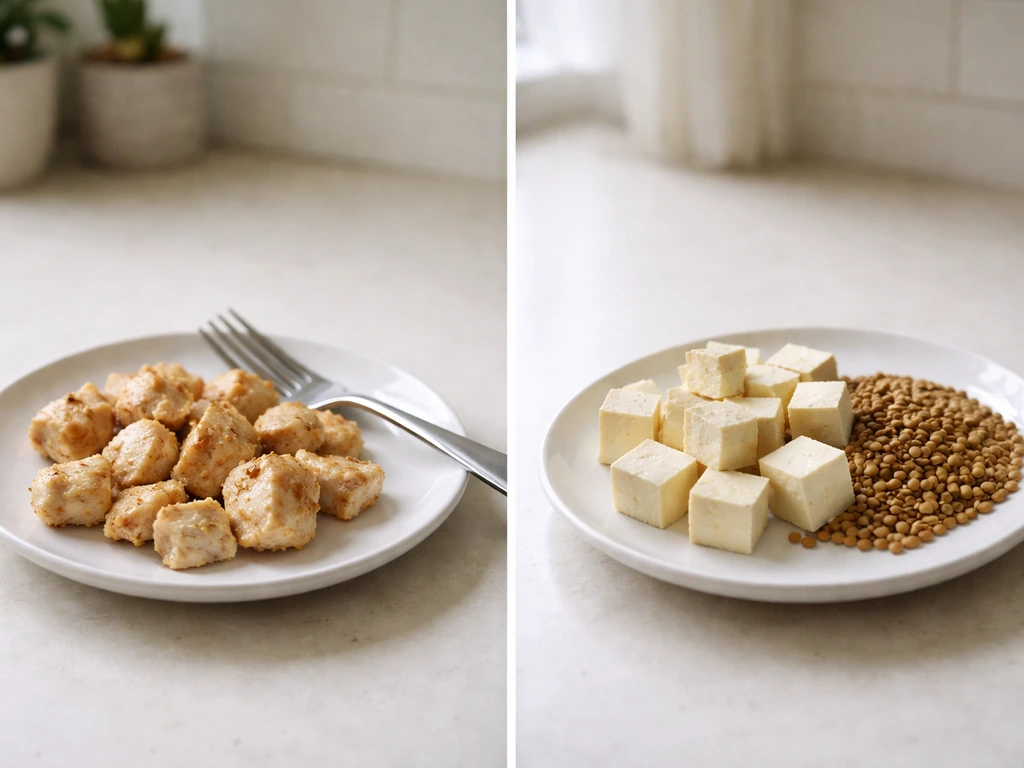
Animal proteins like chicken, eggs, dairy, and fish are considered high-quality because they're complete (containing all essential amino acids) and are highly digestible. Plant proteins like lentils, chickpeas, tofu, and tempeh are lower in one or more essential amino acids, particularly leucine, which is the key trigger for muscle protein synthesis. A crossover study comparing plant-based protein isolates to whey found that the leucine gap in plant proteins leads to a blunted muscle protein synthesis response unless you compensate.
If you eat mostly plant-based foods, you don't need to panic, but you do need to be strategic. Aim for the higher end of the protein range (closer to 2.0–2.2 g/kg), combine protein sources across meals to cover amino acid gaps (like rice and beans, or lentils and quinoa), and consider fortifying meals with leucine-rich sources like edamame or a plant protein supplement. what to eat to grow muscles goes deeper into specific food choices that work well for both animal and plant-based eaters.
Adjustments for training level, age, and recovery
Beginners
If you're new to resistance training, your muscles are highly responsive to both the training stimulus and protein intake. You don't need to max out at 2.2 g/kg right away. Starting at 1.6 g/kg and building good habits around consistent protein intake is the smart play. Gains will come quickly in the early months even at the lower end of the effective range.
Experienced lifters
The more training experience you have, the harder it is to add new muscle, and the more precisely your nutrition needs to be dialed in. Targeting 1.8–2.2 g/kg daily, ensuring even distribution across meals, and timing at least one protein-rich meal around your training session will help you keep squeezing out adaptations. how many sets to grow muscle is worth pairing with this if you want to match your training volume to your protein strategy.
Older adults
Older adults face a real challenge called anabolic resistance, where muscle protein synthesis responds less robustly to both protein and exercise compared to younger people. A 2024 review found that older adults benefit from protein intakes of 1.2–1.59 g/kg/day when combined with exercise, but need at least 1.6 g/kg/day or higher when doing resistance training specifically for lean mass gains. One clinical trial did find that 1.3 g/kg/day didn't improve lean mass in older men with limited physical function, suggesting that once resistance training is involved, you really do need to push closer to the 1.6 g/kg mark or above. Higher per-meal doses (closer to 35–40 g per sitting) may be needed to overcome blunted synthesis rates in older muscle tissue. Age is context, not a ceiling. Older adults absolutely can build muscle; they just need to be more deliberate about protein.
Cutting (calorie deficit)
When you're eating in an energy deficit, protein needs go up because your body is more likely to break down muscle for fuel. A randomized trial found that 2.4 g/kg/day outperformed 1.2 g/kg/day during a significant calorie deficit, producing better lean mass gains and greater fat loss simultaneously. So if you're trying to lose fat while holding onto (or building) muscle, push your intake toward the upper end: 2.0–2.4 g/kg/day. This ties directly into understanding how many calories to grow muscle, because protein targets don't exist in a vacuum from your total energy intake.
Youth athletes
Young athletes training for size and strength typically need around 1.5 g/kg/day, with smaller per-meal doses of 0.22–0.33 g/kg spread across 3–4 hour intervals to support positive protein balance throughout the day. The key for this group is making sure total energy intake is sufficient first, since growing bodies and high activity levels can create large calorie demands that, if unmet, will cannibalize protein for energy.
How to actually hit your protein target every day

Knowing your number is step one. Getting there consistently is where most people fall short. Here's a practical approach that works without turning every meal into a math problem.
Anchor each meal around a protein source
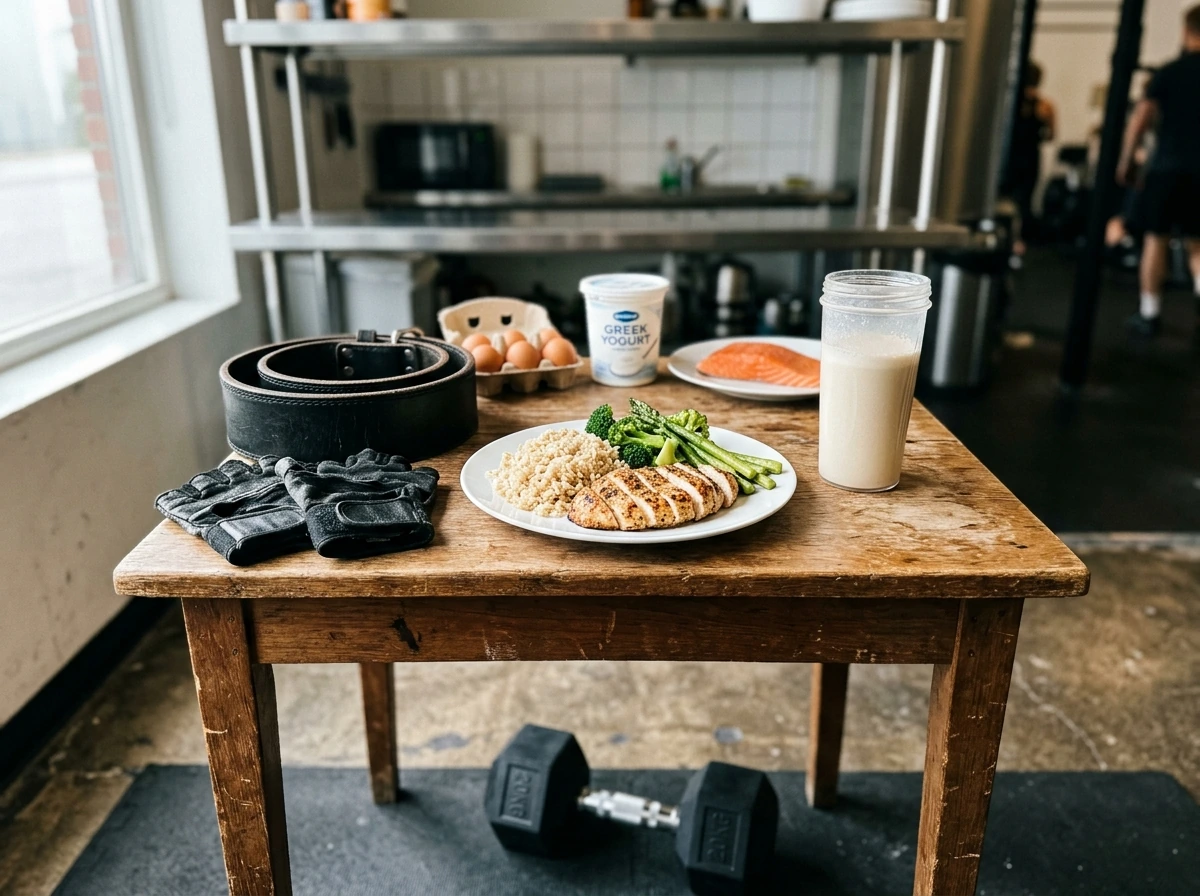
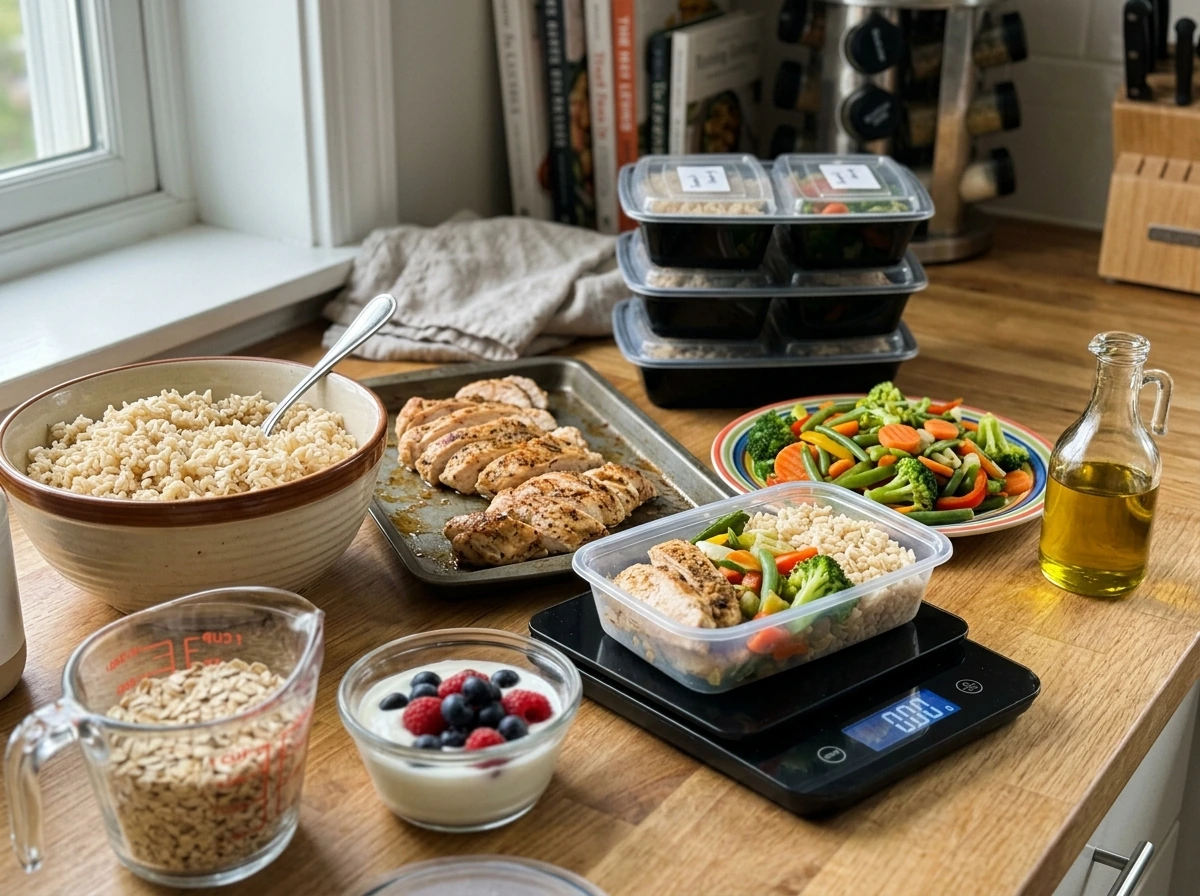
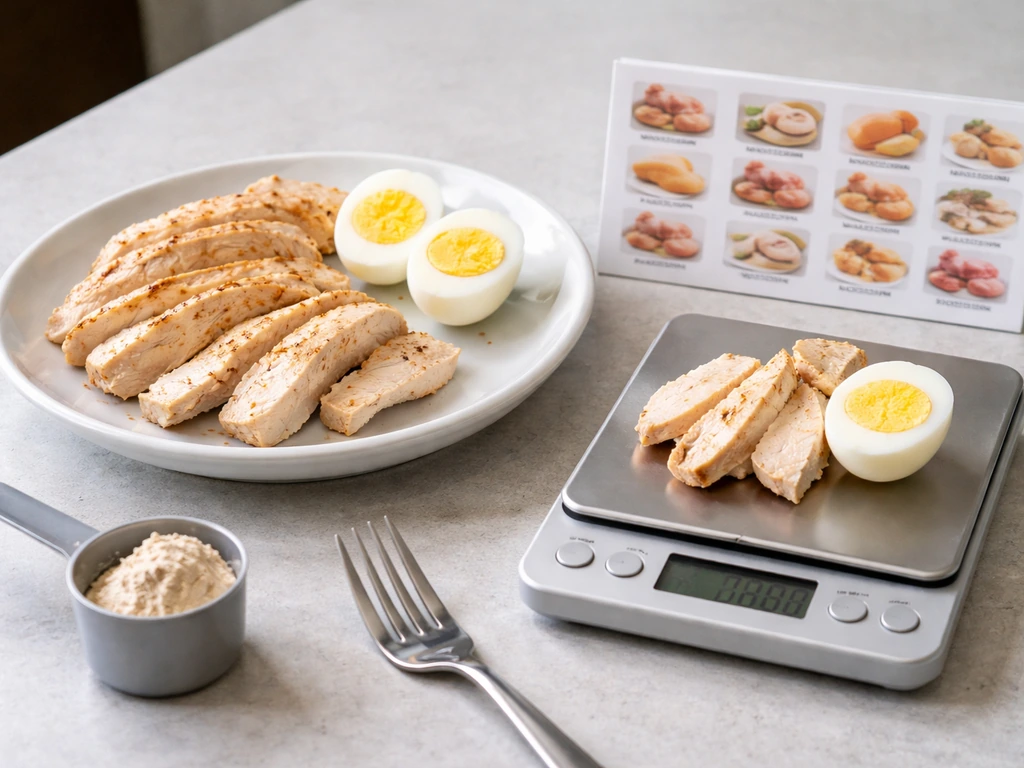
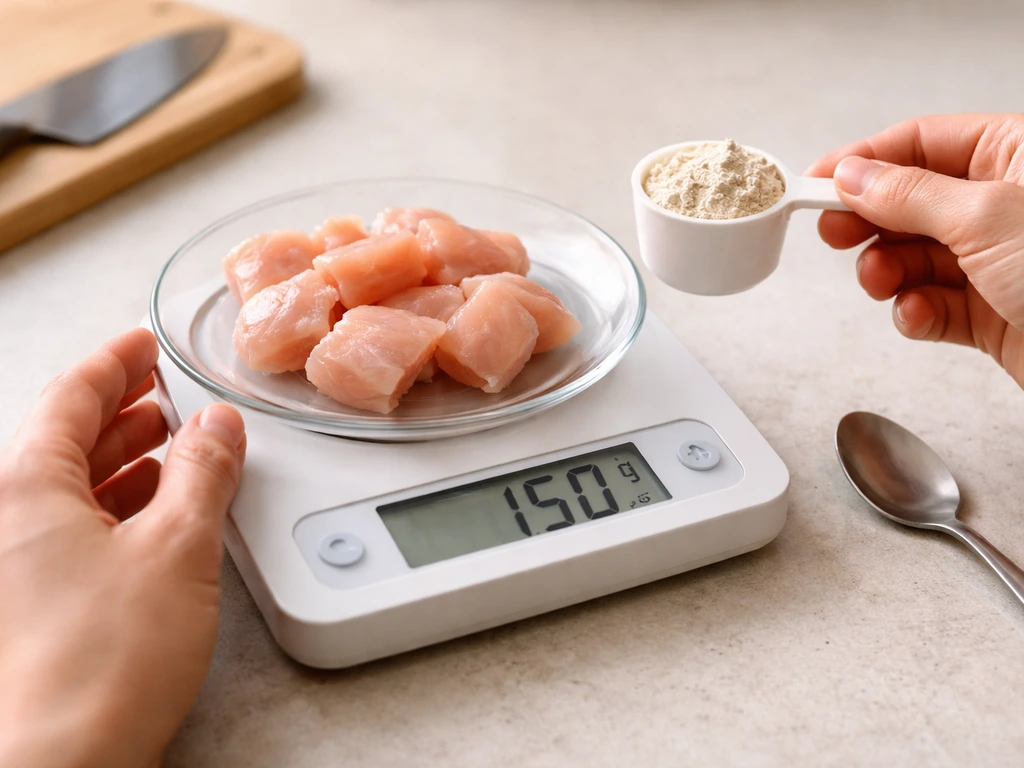
Think of protein as the non-negotiable centerpiece of every meal, not an afterthought. Chicken breast, eggs, Greek yogurt, cottage cheese, tuna, salmon, tofu, tempeh, and legumes are your workhorses. A 150g (5 oz) chicken breast gives you roughly 45 g of protein. Three whole eggs give you about 18 g. A cup of Greek yogurt delivers around 17–20 g. Two scoops of whey protein powder typically provides 40–50 g depending on the product. Building a grow muscle diet around these anchors makes it much easier to land near your daily target without obsessive tracking.
Track for a few weeks, then adjust by feel
Most people genuinely don't know how much protein they're actually eating until they track it for a couple of weeks. Use a free app like Cronometer or MyFitnessPal and log everything honestly for 14 days. You'll quickly identify your consistent gaps (usually breakfast is too low and dinner is too high) and can adjust your meal structure accordingly. Once you know your patterns, you can relax on daily tracking and just do periodic check-ins.
Supplements: when they actually help
Supplements aren't magic, but they're genuinely useful when whole food is inconvenient or when you're consistently falling short of your daily target. Whey protein is the most well-studied option: a randomized controlled trial found that whey supplementation during resistance training increased lean body mass more effectively than soy protein or a carbohydrate control, even with matched calorie intake. Whey is also particularly rich in leucine, which makes it efficient at triggering muscle protein synthesis. A study in older adults showed that 20 g of high-whey protein produced greater muscle protein synthesis over four hours compared to an iso-caloric dairy product. For plant-based eaters, a blend of rice and pea protein comes closest to matching whey's amino acid profile. The bottom line: if food alone is getting you there, you don't need supplements. If you're struggling to consistently hit 1.6 g/kg+ from whole foods, a daily protein shake closes the gap efficiently.
Common mistakes and myths about protein for muscle growth
There's a lot of noise around protein. Here are the ones worth correcting:
- Myth: More is always better. Research on resistance-trained males found that going from 1.6 g/kg to 3.2 g/kg daily added no extra muscle over 16 weeks. Beyond ~2.2 g/kg, you're mostly just paying for expensive calories that get oxidized for energy, not turned into muscle.
- Myth: You can only absorb 20–30 g of protein per meal. Your body can absorb and use far more than this; the 20–30 g figure refers to the threshold for maximally stimulating muscle protein synthesis in a single sitting, not absorption capacity. Larger meals still contribute to your daily total, just with diminishing returns for synthesis per gram.
- Myth: Protein timing is everything. Post-workout protein matters, but the total daily amount is the dominant variable. Getting 0.3 g/kg after your workout is a useful habit, but it doesn't rescue a day where you only ate 80 g of protein total.
- Myth: Plant protein can't build muscle. It can, but it requires a higher daily intake and more strategic food combining to compensate for lower leucine content and digestibility. It's a disadvantage, not a dealbreaker.
- Myth: The RDA (0.8 g/kg) is enough to build muscle. The RDA is a minimum to prevent deficiency in sedentary people. It is not a muscle-building target. For active people seeking muscle growth, it falls well short of what the evidence recommends.
- Mistake: Skewing all protein to one meal. Eating 150 g of protein at dinner and almost nothing at breakfast and lunch is a poor strategy. Spreading intake evenly across the day increases 24-hour muscle protein synthesis significantly compared to front- or back-loading.
- Mistake: Not adjusting protein when cutting. Dropping calories without raising protein is a fast way to lose muscle along with fat. During a deficit, bump protein up toward 2.0–2.4 g/kg to protect what you've built.
The practical takeaway is straightforward: aim for 1.6–2.2 g/kg per day, spread it across 3–5 meals, hit at least 20–40 g per sitting, push toward the upper end if you're cutting or older, and use supplements to fill gaps, not to replace real food. Get that number dialed in consistently over weeks and months, combine it with solid training, and you'll have the nutritional foundation for real, lasting muscle growth.
FAQ
Should I calculate protein using my current body weight or my target (lean) body weight?
Use your current body weight for the 1.6 to 2.2 g/kg calculation most of the time, because you are feeding the tissues you have and tracking day to day intake. If you are very overweight and calories are the priority, you can optionally cap protein at the high end (about 2.0 to 2.2 g/kg of current weight) rather than aggressively scaling up, then adjust based on whether your lean mass is preserved in the mirror, strength trend, and measurements.
Does protein timing matter if I hit my daily total?
Daily total is the foundation, but timing affects how much muscle protein synthesis you repeatedly stimulate. If you are only choosing one strategy, prioritize getting at least one 20 to 40 g protein dose within a few hours after training and avoid going long stretches with little protein (for example, skipping breakfast and then having only dinner).
How much protein is too much for building muscle?
Going far above 2.2 g/kg/day usually does not add meaningful extra lean mass for most trainees, but “too much” can be more about tolerance than results. If your intake causes digestive issues (bloating, diarrhea), pushes out fiber-rich carbs/vegetables, or makes it hard to hit calorie and micronutrient needs, dial back toward the practical 1.6 to 2.2 g/kg range.
Do I need to hit the 20 to 40 g per-meal target exactly?
No, think of 20 to 40 g as an effective range. If one meal lands a bit below, make it up with another meal or snack so your daily total stays on target. If you repeatedly eat very small doses (for example, 10 to 15 g) across many meals, you may stimulate muscle protein synthesis less reliably.
How should I adjust protein if I miss a day or can only eat one or two meals?
If you occasionally miss, prioritize returning to your usual pattern, do not try to “make up” by doubling protein at your next meal indefinitely. A practical approach is to spread the recovery protein across your next 24 hours (two solid doses instead of one huge one) and then resume 3 to 5 protein-anchored feedings.
Are animal proteins and plant proteins interchangeable for hitting the number?
You can hit the same grams with either, but plant-heavy diets often need more strategy because some plant proteins provide less of certain amino acids, especially leucine. If most of your protein is plant-based, aim closer to the upper protein target (around 2.0 to 2.2 g/kg), use combinations across the day (for example, legumes plus grains), and consider adding leucine-rich options (such as soy foods) to meals.
What if my protein comes from mostly shakes, is that okay?
Yes, protein shakes can work well, especially when they help you consistently reach your target. The main caveats are not replacing meals entirely with low-fiber, low-micronutrient options, and keeping total calories and carbs adequate for your training. A common approach is using shakes to cover gaps, while still eating at least some whole-food protein servings each day.
Do I need extra protein on rest days?
Usually you do not need a different protein target on rest days if your body weight and calorie intake are stable, because the goal is the daily grams that support overall adaptation. If your rest day includes much lower activity or you are dieting harder, ensure you still meet the same protein minimum to protect lean mass, then adjust only if total calorie intake changes significantly.
How do I handle protein targets if I’m dieting and lifting but my weight is dropping fast?
When you are cutting, lean mass retention becomes the priority, so using the upper end of the muscle-building range is sensible (often around 2.0 to 2.4 g/kg/day). If weight is dropping quickly, check whether you are also meeting total calories and carbs for training quality, because extremely low energy intake can reduce training performance and indirectly blunt results, even if protein is high.
Can I use protein targets if I have kidney disease?
If you have diagnosed kidney disease, you should not self-adjust protein to build muscle. Talk with your clinician or a renal dietitian before increasing intake, because protein recommendations can differ substantially depending on kidney function and lab results.
What’s the easiest way to estimate protein from common foods without tracking forever?
Use “anchor” portions you can repeat. For example, a typical 150 g serving of chicken breast is often around 40 to 45 g protein, Greek yogurt cups are often around 17 to 20 g, and two scoops of whey are commonly around 40 to 50 g. Build your daily plan around 3 to 5 anchors that naturally add up to your target, then only do periodic tracking check-ins.