Yes, you can grow muscle. Pretty much anyone can, regardless of age, starting fitness level, or whether you have access to a gym. Your body is built to adapt to physical stress by getting stronger and adding muscle tissue, and that biological reality doesn't change much based on genetics, gender, or how long it's been since you last exercised. What matters is applying the right stimulus consistently, eating enough protein and total calories to support growth, and recovering properly. Everything else is detail.
Can You Grow Muscle? A Beginner to Older Adult Guide

Marcus Kellerman
1 May 2026
Yes, you can grow muscle, here's who and how
Muscle growth, or hypertrophy, is driven by mechanical overload: when you subject a muscle to more tension than it's used to, it responds by increasing the rate of muscle protein synthesis. Over time, your muscle fibers accumulate more protein and grow larger. With sustained training, satellite cells also activate and contribute additional myonuclei to support continued fiber growth. This isn't a process reserved for 22-year-olds with great genetics. It happens across the lifespan.
Older adults in particular often assume they've missed the window. That's not accurate. A 2024 systematic review and meta-analysis specifically found that resistance training is likely effective for increasing muscle hypertrophy in older populations, and earlier research showed measurable increases in muscle cross-sectional area in elderly individuals after just 10 weeks of training. Age slows the process somewhat and may require a little more protein per meal to get the same anabolic response, but it doesn't block it. The Cochrane database reaches the same conclusion: progressive resistance training generally improves muscle strength and physical function in older adults, typically with two to three sessions per week at moderate to high intensity.
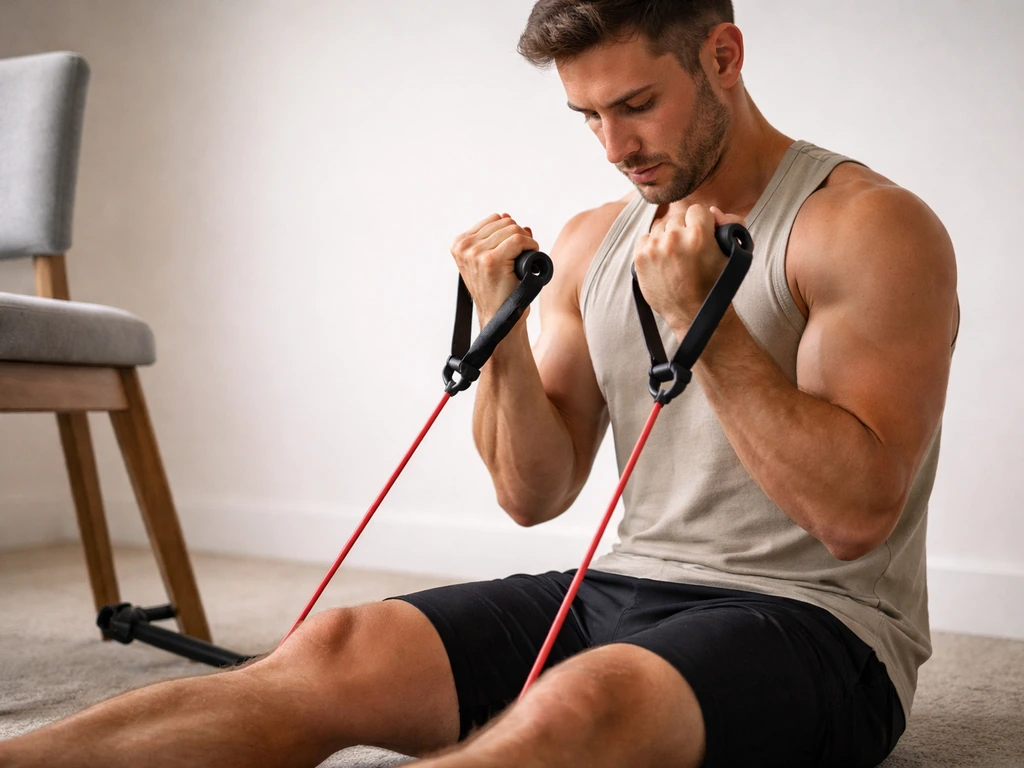
You also don't need a gym. Calisthenics, resistance bands, and dumbbells can all produce meaningful hypertrophy. Research confirms that low-load training performed with sufficient effort produces muscle growth comparable to high-load training, which means the equipment you're using matters less than the effort you're putting in. Whether you're a 25-year-old lifting barbells or a 65-year-old using resistance bands at home, the basic conditions for muscle growth are the same. If you prefer dumbbells, the same basics apply: use progressive overload and train close to failure to grow muscle using resistance bands at home. Resistance bands can be a practical way to provide progressive resistance at home, as long as you keep the effort high.
What your body actually needs to grow muscle
There are four things that really drive muscle growth, and if any one of them is missing, the others can't fully compensate. Think of them as the non-negotiables.
Training stimulus and progressive overload
Your muscles need to be challenged beyond what they're already adapted to. That means progressively increasing the demand over time, either by adding weight, doing more reps, adding sets, or reducing rest time. Research shows a clear dose-response relationship between weekly training volume (measured in sets per muscle group) and hypertrophy. Fewer than 5 sets per muscle per week produces some response; 10 or more sets per week consistently produces more. Effort matters too: working close to your limit on each set is more important than the specific load on the bar.
Protein
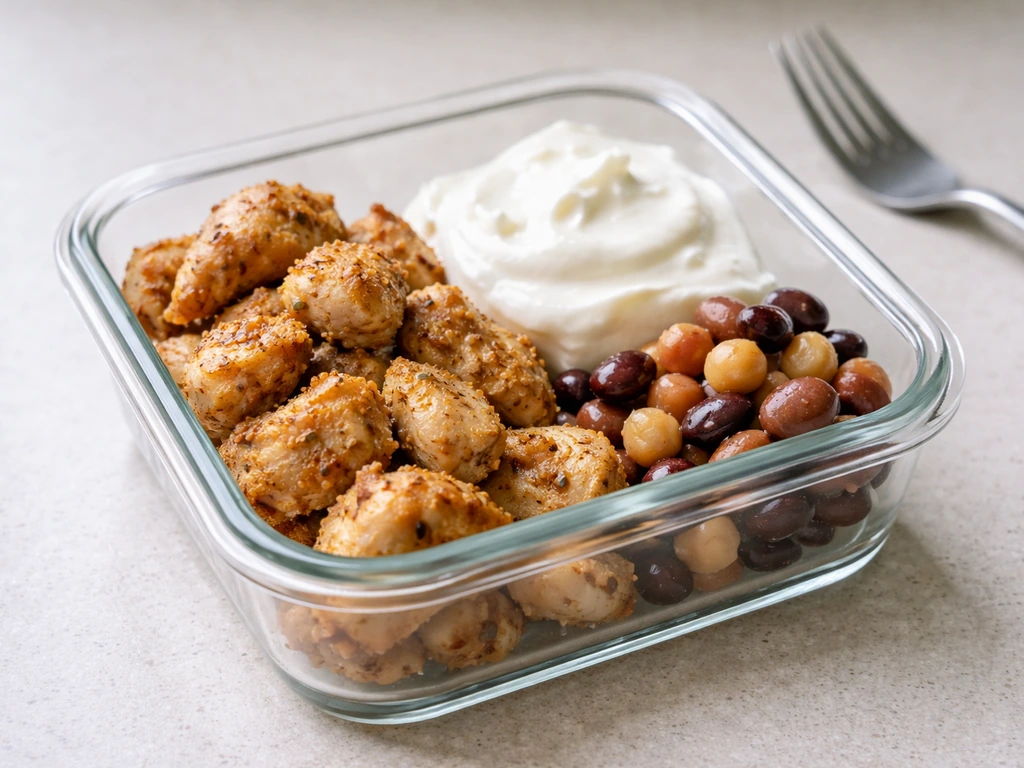
Protein is the raw material for muscle repair and growth. Without enough of it, your body can't build new tissue even if your training is perfect. The research points to around 1.6 g of protein per kilogram of bodyweight per day as the practical target for most people, with gains plateauing above roughly 1.62 g/kg/day according to a large 2018 BJSM meta-analysis. For a 75 kg (165 lb) person, that's about 120 g of protein per day, spread across at least three or four meals.
Total calories and energy availability

Being in a meaningful calorie deficit blunts muscle growth. A 2021 meta-analysis and meta-regression found that energy deficits impair resistance training gains in lean mass, even when protein intake is adequate and training is consistent. You don't need a large surplus to build muscle, but chronically undereating is one of the most common reasons people train hard and see little change in size. Rough maintenance or a modest surplus (200 to 300 calories above needs) is the practical sweet spot for most people who aren't elite athletes.
Recovery and sleep
Muscle isn't built during your workout; it's built between workouts. Sleep is where a huge proportion of that repair and growth happens. The American Academy of Sleep Medicine and Sleep Research Society consensus statement recommends at least 7 hours of sleep per night for healthy adults, and regularly sleeping less than that is associated with worse outcomes across multiple health markers, including body composition. Rest days, managing overall stress, and not hammering the same muscle group before it's recovered all fall under the recovery umbrella too.
How to actually build muscle: a starter setup
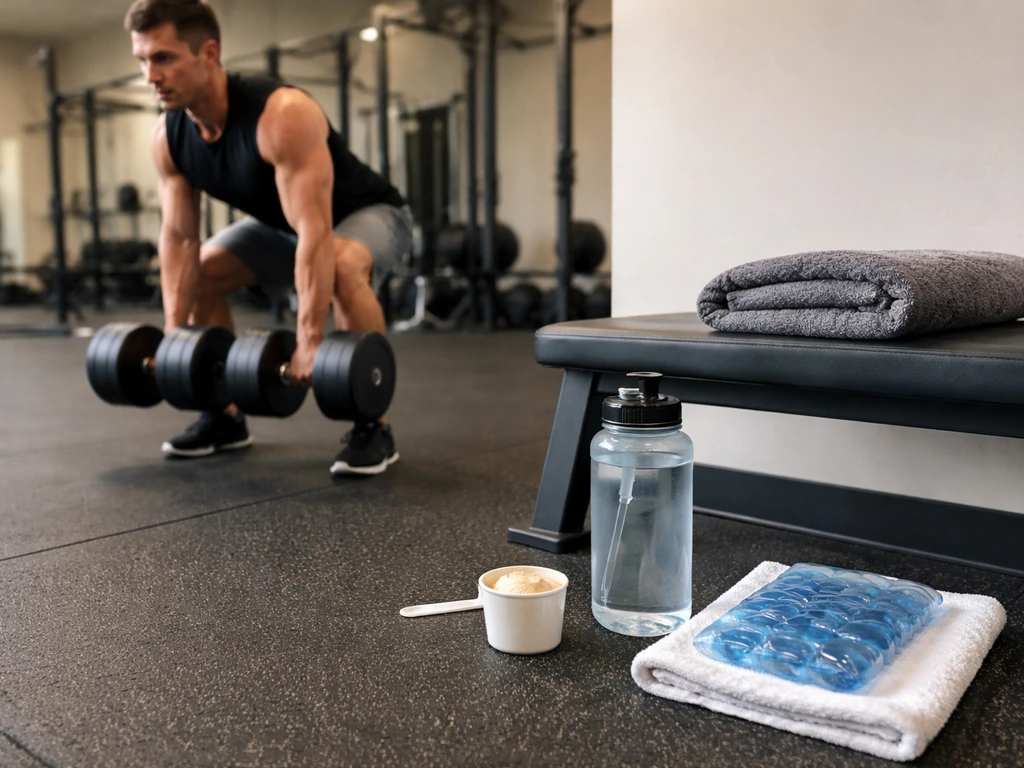
If you're new to resistance training or returning after a long break, you don't need a complicated program. The basics work exceptionally well, especially in the first few months when your neuromuscular system is adapting rapidly and almost any consistent stimulus produces results. If you're working out at home or want a simple plan, you can apply the same principles using dumbbells to grow muscle.
Frequency and structure

Start with two to three full-body resistance training sessions per week. This frequency is well-supported for beginners and older adults, gives each muscle group enough stimulus across the week, and leaves room for recovery. You don't need to train every day. Three solid sessions with adequate rest between them will outperform five sloppy, underfueled sessions every time.
Sets, reps, and effort
Aim for 2 to 4 sets per major muscle group per session, which gets you to roughly 6 to 12 sets per muscle per week across three sessions. Rep ranges between 6 and 15 work well for hypertrophy. What matters more than a specific rep count is that you're working close to your limit on each set: the last few reps should feel genuinely hard. Research on proximity to failure consistently shows that stopping too far from your limit reduces the hypertrophic stimulus, regardless of the load you're using.
Rest between sets
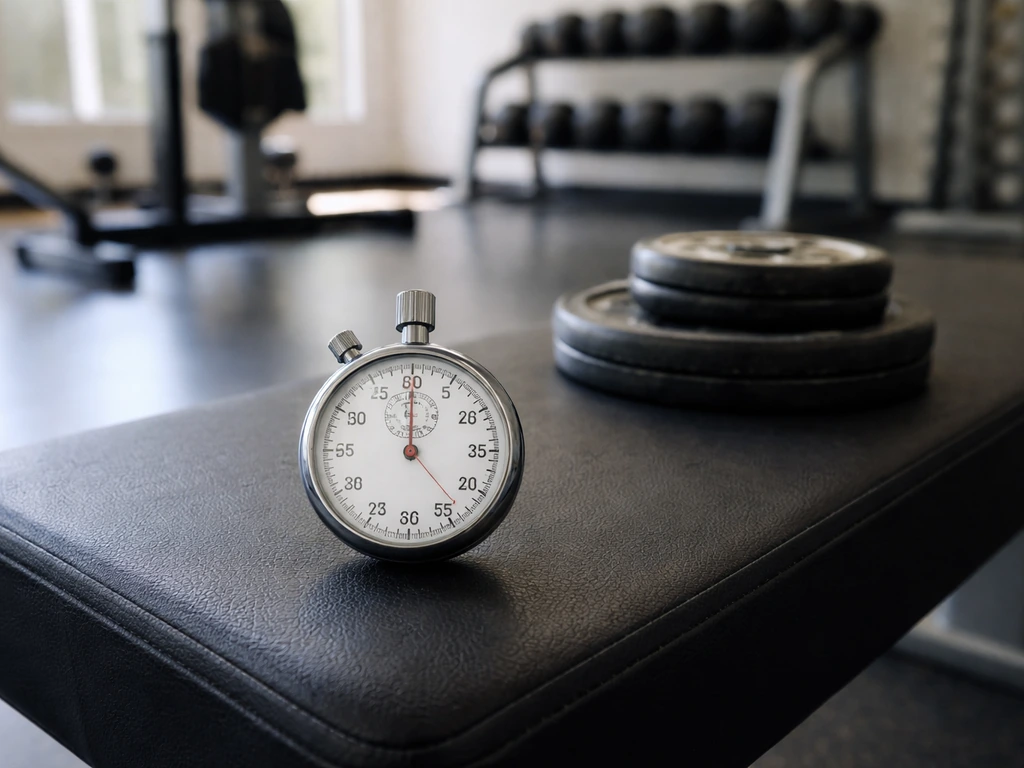
A 2024 systematic review with Bayesian meta-analysis found that rest interval duration does influence hypertrophy outcomes. Longer rests (around 2 to 3 minutes) tend to produce better results than very short rests (under 60 seconds), likely because they allow you to maintain quality and effort across sets. If you need a little longer, take it.
A simple beginner exercise selection
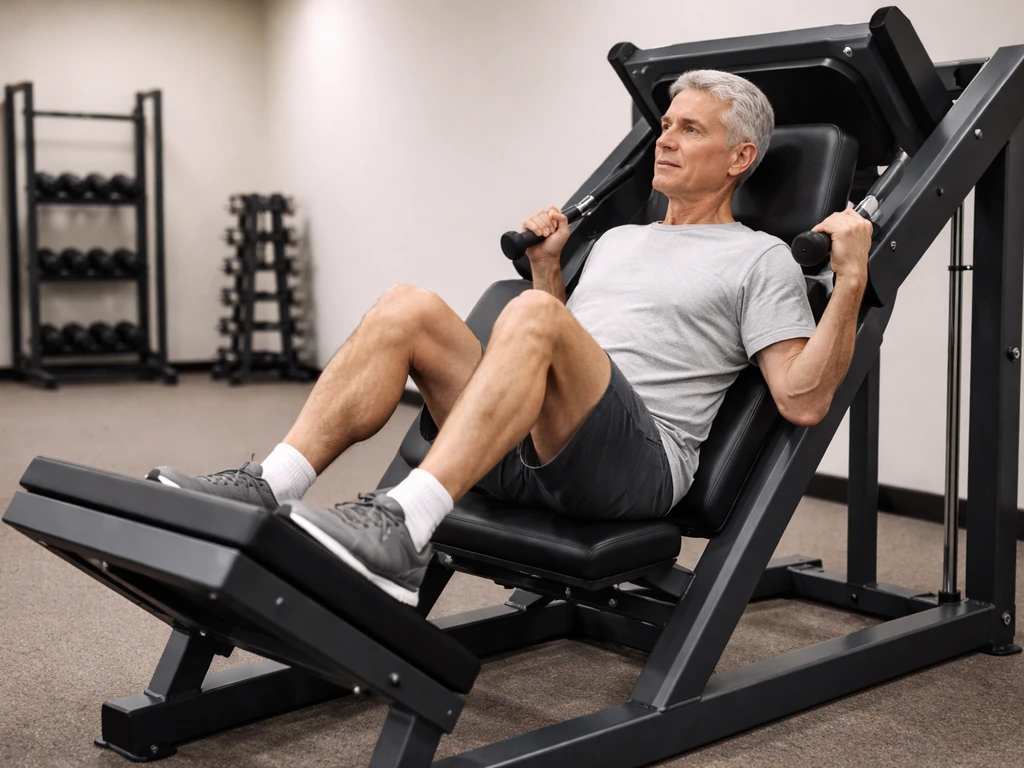
- Squat pattern (bodyweight squat, goblet squat, barbell squat, or leg press)
- Hip hinge pattern (Romanian deadlift, kettlebell deadlift, or hip thrust)
- Push pattern (push-up, dumbbell press, or barbell bench press)
- Pull pattern (row, lat pulldown, or pull-up variation)
- Overhead press (dumbbell or barbell)
- Optional: a direct bicep and tricep exercise if you want arm work
This covers all major muscle groups and can be done with barbells, dumbbells, resistance bands, or bodyweight variations depending on what you have available. The goal in the first few months is to add weight or reps to each exercise gradually, session by session. That progression is your muscle growth engine.
What to expect and when
Strength gains come faster than visible size changes. Most beginners notice meaningful strength improvements within 2 to 4 weeks, primarily from neural adaptations. Visible muscle growth typically becomes noticeable in the mirror or through measurements after 8 to 12 weeks of consistent training and eating. Don't use the scale alone as your progress marker: track how much weight you're lifting, how your clothes fit, and take circumference measurements of your arms, thighs, and chest every 4 to 6 weeks.
Eating for muscle: protein targets and practical guidance
Protein is the one non-negotiable in muscle-building nutrition, but total calories and food quality matter too. Here's how to put it together practically.
Daily protein targets
Shoot for 1.6 g of protein per kilogram of bodyweight per day as your starting target. If you're older, slightly higher intakes around 1.8 to 2.0 g/kg may be warranted because older muscle tissue is somewhat less sensitive to protein's anabolic signal, and research in older adults shows that larger per-meal doses (35 g or more) can still stimulate muscle protein synthesis meaningfully. Going significantly above 1.62 g/kg/day is unlikely to add extra muscle benefit based on current meta-analytic evidence, but it won't hurt you either.
| Bodyweight | Daily protein target (1.6 g/kg) | Daily protein target (2.0 g/kg) |
|---|---|---|
| 60 kg (132 lb) | ~96 g | ~120 g |
| 75 kg (165 lb) | ~120 g | ~150 g |
| 90 kg (198 lb) | ~144 g | ~180 g |
| 105 kg (231 lb) | ~168 g | ~210 g |
Spreading protein across meals
Research suggests targeting around 0.4 g of protein per kilogram of bodyweight per meal, spread across at least three to four meals. For a 75 kg person, that's roughly 30 g of protein per meal across four meals. This approach ensures you're repeatedly stimulating muscle protein synthesis throughout the day rather than hitting it once with a massive dose. That said, an 8-week RCT in older adults found that distribution patterns didn't dramatically change overall outcomes when total daily protein met targets, so don't stress about hitting precise timing windows. Just make sure each meal has a solid protein source.
Calories, carbs, and fats
Fill your remaining calories with carbohydrates and fats based on preference and what helps you adhere to your diet. Carbs fuel your training sessions and support recovery, so they're particularly useful around workouts. Fats are important for hormonal health, including testosterone production. There's no magic macro split for muscle building beyond hitting protein and overall calorie targets. A rough starting point is maintenance calories plus about 200 to 300 calories if you want to optimize for muscle gain, or maintenance if you're also trying to lose fat simultaneously (just know that going too deep into a deficit will limit muscle growth).
Supplements: what's worth it and what isn't
The supplement industry is enormous and largely built on products that don't do much. There are a few exceptions backed by solid evidence, and a much longer list of things that are either unproven or genuinely risky.
Creatine monohydrate
Creatine is the most researched performance supplement in existence and one of the few with consistently positive findings. A 2024 systematic review and meta-analysis found that creatine plus resistance training improved strength compared to placebo. Older meta-analyses show similar results for maximal strength outcomes in common lifts. A standard dose is 3 to 5 g per day of creatine monohydrate, taken consistently. There's no strong need for a loading phase. The safety profile at typical doses is well-established, though long-term data for substantially higher doses is more limited.
Protein supplements
Whey, casein, and plant-based protein powders are just convenient food. They're useful if you struggle to hit your daily protein target through whole foods alone, but they're not magic. If you can hit 1.6 g/kg/day from chicken, eggs, Greek yogurt, legumes, and fish, you don't need a powder. If you can't, a protein shake is a practical, cost-effective option.
What doesn't have strong support
- BCAAs: redundant if you're hitting total daily protein targets
- HMB: inconsistent evidence, not worth the cost for most people
- Pre-workout stimulants: caffeine works; most of the rest is padding
- Testosterone boosters: the FDA has warned consumers about bodybuilding products containing steroid-like substances, and many herbal testosterone boosters lack meaningful evidence
- Mass gainers: just expensive sugar and protein; use real food first
How to pick a safe supplement
If you do buy supplements, look for third-party testing certification. NSF Certified for Sport is one of the more rigorous programs, involving screening for banned substances and ongoing audits. This matters because the FDA doesn't pre-approve supplements before they hit shelves, and the agency has repeatedly warned about tainted products in the bodybuilding category. Stick to simple, well-researched compounds and buy from brands that test their products independently.
Recovery, soreness, plateaus, and when things stall

Training breaks your muscle down. Recovery is when it actually grows back stronger. If you shortchange recovery, you're essentially just accumulating damage without the adaptation you're training for.
Sleep is non-negotiable
Seven or more hours per night is the evidence-based minimum for adults. If you're regularly under that, your muscle protein synthesis is impaired, your hormonal environment for recovery is disrupted, and your performance in the gym suffers. No supplement stack compensates for chronic sleep deprivation. If you're doing everything else right but sleeping 5 to 6 hours, fixing that single variable can produce noticeable improvements in strength and body composition within a few weeks.
Soreness is not a progress marker
Delayed onset muscle soreness (DOMS) is caused by novelty and mechanical stress on the muscle, not by the stimulus that causes growth. You can have an extremely effective workout and feel minimal soreness, especially as you get more experienced. Chasing soreness is a bad strategy and can lead to overtraining. A good session is one where you worked hard, executed well, and can do it again in 48 to 72 hours.
Overtraining and when to back off
Overtraining syndrome is real but less common than overreaching, which is a shorter-term performance decrement from too much training without enough recovery. The signs: persistent fatigue, declining strength over multiple sessions, disrupted sleep, and loss of motivation to train. The cause is almost always a combination of too much training volume, insufficient sleep, and inadequate calorie or protein intake. The fix is to reduce volume temporarily, prioritize sleep, and make sure you're eating enough. Most people recover within one to two weeks of proper rest.
When progress stalls: how to troubleshoot
If you've been training consistently for 8 to 12 weeks and aren't seeing strength or size changes, run through this checklist before changing your program:
- Are you progressively adding load or reps each week? If not, your body has no reason to adapt further.
- Are you hitting 1.6 g/kg/day of protein consistently? Use a food tracking app for two weeks to check your actual intake, not your estimated intake.
- Are your total calories at or above maintenance? A hidden deficit is the most common silent killer of muscle gains.
- Are you sleeping at least 7 hours most nights?
- Are you training close to your limit on each set, or are you stopping well short of failure on most exercises?
- Is your weekly volume per muscle group at least 10 sets? If you're doing one or two sets per muscle group per session, you may be below the effective dose.
If all of those check out and you've been training consistently for 6 or more months without results, it may be worth a conversation with a doctor to rule out hormonal issues like low testosterone, which can meaningfully limit training adaptations in some individuals.
Your starting plan: what to do this week
Pick three days this week for resistance training. Do a full-body session each time using a squat, hinge, push, and pull pattern. Aim for 3 sets of 8 to 12 reps per exercise, working hard enough that the last 2 to 3 reps of each set are genuinely challenging. Eat at least 1.
6 g of protein per kilogram of your bodyweight, spread across three to four meals. Sleep 7 or more hours. Track your lifts so you know what weights to beat next session. That's it.
Muscle growth doesn't require a perfect plan; it requires a consistent, adequate plan executed week after week. Start there, and adjust based on what your body actually does over the next 8 to 12 weeks.
FAQ
How long do I have to train before I can tell I’m actually growing muscle?
Expect strength changes first (often 2 to 4 weeks). Visible size changes usually show up around 8 to 12 weeks if training and calories are consistent. If you want earlier signals, use progressive overload numbers, body measurements every 4 to 6 weeks, and note whether performance is improving at similar bodyweight.
If I’m gaining strength but my scale weight stays the same, am I still building muscle?
Yes, it can happen. Muscle gain plus fat loss can keep bodyweight stable. Track waist circumference and lift performance, and use slow body measurements over time. A “no change” on the scale alone is not a reliable indicator of lack of hypertrophy.
What if I’m not close to failure every set, can I still grow muscle?
You can, but the closer you work to your limit, the more consistently you’ll hit the growth stimulus. A common mistake is stopping with lots of easy reps. Aim for the last 2 to 3 reps of a set to feel challenging with good form, and keep effort high across weeks rather than always using maximum loads.
How many days per week should I train if I’m busy, but I want to can you grow muscle at the fastest rate?
Two to three full-body sessions per week is a strong starting point, even for beginners and older adults. More days can work if recovery, nutrition, and total weekly sets are still adequate, but “frequent” is not automatically “better.” The deciding factor is weekly set volume and effort, not the calendar.
Is it possible to grow muscle without tracking sets, reps, or calories?
It’s possible, but you risk missing one of the key variables. A practical compromise is to track only what prevents stagnation: pick 4 to 8 total exercises, keep the same rep ranges, and record loads so you progress session to session. For nutrition, at least track protein for 1 to 2 weeks to confirm you’re near target, then estimate afterwards.
Do I need a calorie surplus to can you grow muscle?
Not necessarily. A modest surplus (about 200 to 300 calories) can help, but you can still grow with maintenance calories. The bigger risk is being in a chronic deficit, which commonly blunts lean mass gains even if protein is adequate. If you are dieting, use performance and measurements to judge whether the deficit is too aggressive.
How much protein should I eat if I’m older, and do I need more than 1.6 g/kg?
Older adults often benefit from slightly higher daily protein, roughly 1.8 to 2.0 g/kg, because anabolic sensitivity is reduced. Also consider per-meal amounts, many people do well with about 35 g per meal (or enough to get close to that multiple times per day). If you already hit 1.6 g/kg but aren’t progressing after consistent training, increasing toward 1.8 g/kg is a reasonable next step.
Does protein timing matter, like eating all of it right after my workout?
Not as much as total daily protein. Research suggests that while distributing protein across multiple meals is helpful, the overall daily target is what drives results. A common mistake is skipping protein at other meals while trying to rely on a single post-workout shake.
What’s the best rep range for hypertrophy if I can only choose a few workouts patterns?
Rep ranges of about 6 to 15 tend to work well. The most important factor is working close to failure with controlled technique. If you can only do heavier low reps, keep effort high and progress the load or reps over time. If you can only do higher reps, you may need to slow down the reps or reduce rest to keep the effort challenging.
How long should I rest between sets?
For hypertrophy, longer rests often work better, roughly 2 to 3 minutes for most compound lifts. If you rest under about 60 seconds, a common issue is reduced performance on later sets. Use longer rests when form and effort start to drop, especially as sets get harder.
Can you grow muscle with resistance bands if the band keeps getting easier as I move?
You can, but band tension matters. A mistake is choosing a band that makes the exercise easy at the hardest part of the range. Use a setup where the most challenging portion is near peak tension, and consider exercises that maintain tension throughout the movement (tempo and technique become especially important). Progress by increasing resistance, adding reps, or using slower eccentrics.
What if my workouts feel hard but I’m not sore, am I doing it wrong?
Not necessarily. Soreness is not a requirement for growth. If you’re using good form and your sets are genuinely challenging, you can grow with minimal DOMS. If you chase soreness, you may overdo volume or recovery mistakes, which can slow progress.
I’m returning after a long break, should I keep my old weights right away?
No, reduce volume and intensity initially. A common mistake is going back to the exact loads used before the break, which can trigger excessive fatigue and limit progression. Start with manageable weights that let you hit the rep range with effort close to failure, then rebuild over 2 to 6 weeks.
How do I know if I’m overtraining versus just not progressing?
Overtraining syndrome is characterized by persistent fatigue, declining strength over multiple sessions, sleep disruption, and loss of motivation. If you feel run down but strength is still improving, it’s more likely you need better recovery or nutrition, not a full overtraining picture. A sensible move is to temporarily reduce weekly sets and prioritize sleep for 1 to 2 weeks.
If I still get no results after months, what are the most common fixes before seeing a doctor?
Before a medical conversation, check the basics you control: are you training 2 to 3 times weekly with enough total sets, working close to failure, progressively increasing reps or load, and eating enough calories with adequate protein? Also verify sleep is consistently around 7 hours or more. If all of that is solid for 6 months or more with no strength or size change, then it’s reasonable to discuss potential hormonal or other issues with a clinician.
Should I use creatine if I’m older or new to training?
Creatine monohydrate is typically a good option for beginners and older adults because it pairs with resistance training for strength gains. Use a consistent 3 to 5 g daily dose. There’s usually no need to load, and it’s a simple experiment, but if you have kidney disease or other medical constraints, discuss it with your clinician first.