Having a fast metabolism does not stop you from building muscle. It just means you have to eat more than you think, train with enough volume to force adaptation, and recover hard enough that your body actually has time to build. That's it. The people who struggle to gain lean mass almost always have a calories problem, not a metabolism problem, and once you fix the calories and pair it with a solid hypertrophy program, the muscle comes.
How to Grow Muscle With a Fast Metabolism: Step Plan

Marcus Kellerman
6 May 2026
What 'fast metabolism' actually means for muscle gain
The term 'fast metabolism' gets thrown around a lot, but what most people mean is: they stay lean, they burn through food quickly, and they struggle to gain weight. That's real. But the common myth that metabolism literally prevents muscle protein synthesis is not. Your muscles still respond to mechanical tension. Your anabolic signaling pathways still fire when you lift heavy. The mTOR pathway, satellite cell activation, and muscle protein synthesis all work the same way whether you're naturally lean or not.
What actually happens in a hard gainer is that total daily energy expenditure (TDEE) is higher than average, often due to more non-exercise activity (fidgeting, restlessness), a naturally higher lean body mass-to-fat ratio, or simply a more active lifestyle. That means the calorie target required to hit a surplus is higher, sometimes dramatically higher, than standard formulas predict. The physiology of muscle growth is the same. The logistics of feeding it are just more demanding.
Another myth worth killing early: being a hard gainer does not mean you build muscle slowly once you're eating enough. Some naturally lean people actually respond well to training precisely because they have favorable muscle fiber compositions or hormonal profiles. The sticking point is almost always nutrition consistency, not a broken anabolic system.
How to eat enough to actually gain lean mass

The goal is a consistent calorie surplus, not a massive one. For most people trying to gain lean mass without piling on fat, a surplus of roughly 250 to 500 calories above your true maintenance is the sweet spot. The problem for fast-metabolism folks is that their maintenance is already high, so figuring out that baseline matters. Start by tracking everything you eat for one week without changing anything, then average it out. If your weight didn't move, that average is your maintenance. Add 300 to 500 calories on top of that and start there.
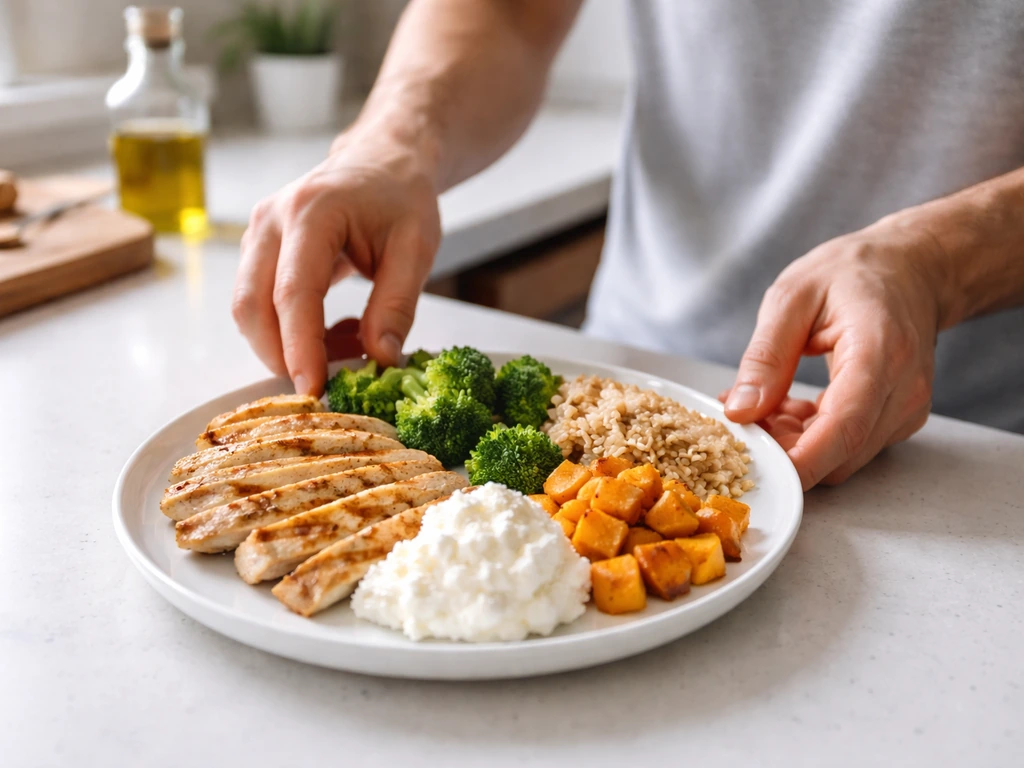
The bigger challenge is actually getting those calories in without feeling stuffed or miserable. High-volume, low-calorie foods like salads and broth-based soups will work against you here. You need calorie-dense foods that don't require enormous portions. Think whole milk, nut butters, oats, olive oil, avocado, eggs, fatty fish, rice, and whole grain bread. These aren't junk foods, they're efficient fuels.
Liquid calories are your friend when appetite is a barrier. Many people also worry that muscle can grow under fat, but it mostly comes down to whether you can sustain a small surplus and keep training does muscle grow under fat. A shake made with whole milk, a banana, oats, and peanut butter can deliver 700 to 900 calories in a form that clears your stomach faster than a full meal. Many hard gainers find they can hit their targets much more comfortably by adding one or two calorie-dense shakes around their solid meals rather than trying to force down a fifth large plate.
Carbohydrates deserve specific attention. Higher-volume resistance training, which is what you need to drive hypertrophy, relies heavily on glycogen. Research supports carbohydrate intake in the range of 3 to 5 grams per kilogram per day for most active people, and serious hard gainers doing high-frequency training may push that higher. The practical point: don't shortchange carbs trying to 'eat clean.' Rice, oats, potatoes, fruit, and pasta are not enemies. They fuel your sessions and help spare protein for muscle building.
Carb timing around your sessions
You don't need to obsess over pre-workout carb timing to the minute, but it does matter for performance. Research shows carbohydrate ingestion before and during resistance training sessions lasting more than 45 minutes, or involving 8 or more sets, can meaningfully increase total training volume completed. A meal containing 50 to 80 grams of carbs eaten 60 to 90 minutes before training is a practical target. What matters most is that your total daily carbohydrate intake is adequate rather than any elaborate nutrient timing scheme.
Protein: how much, how often, and what kind

The International Society of Sports Nutrition recommends 1.4 to 2.0 grams of protein per kilogram of bodyweight per day for people doing resistance training. For a 75 kg person that's roughly 105 to 150 grams daily. If you're more advanced or in a calorie deficit, push toward the higher end. If you're a beginner in a solid surplus, the lower end works fine. The key word in all of this is daily consistency, not perfection on any one day.
Spreading that protein across the day matters more than most people realize. ISSN guidance points to 20 to 40 grams of high-quality protein per serving, roughly every 3 to 4 hours, as the pattern that most reliably maximizes muscle protein synthesis throughout the day. That translates to about 4 to 5 protein-containing meals or snacks. Eating all your protein in one or two sittings leaves muscle protein synthesis depressed for long stretches of the day, which is especially costly when you're already fighting a high energy burn rate.
Protein source quality matters because leucine content drives MPS. Animal sources like chicken, beef, eggs, fish, dairy, and whey protein are leucine-dense and generally score highest on protein quality metrics. Plant-based hard gainers can still hit their targets but typically need higher total protein intake (closer to 2.0 g/kg or above) and should combine sources like rice and legumes to cover the full amino acid profile.
| Protein Source | Protein per Serving | Practical Notes |
|---|---|---|
| Chicken breast (150 g cooked) | ~45 g | Lean, affordable, versatile |
| Greek yogurt (200 g) | ~17–20 g | Easy snack, doubles as carb source |
| Whole eggs (3 large) | ~19 g | Also adds healthy fats and calories |
| Canned tuna (1 can, 170 g) | ~38 g | Fast, cheap, portable |
| Whey protein shake (1 scoop) | ~25 g | Convenient between meals |
| Cottage cheese (200 g) | ~24 g | Slow-digesting casein, good before bed |
| Tempeh (150 g) | ~23 g | Best plant-based option for leucine content |
Training that actually builds muscle when you burn through everything
A high metabolic rate doesn't change the fundamental stimulus for muscle growth: mechanical tension produced by resistance training, sustained over time through progressive overload. What it does mean is that you can probably handle reasonable training volume without accumulating fatigue as fast as someone who runs cold. That's actually an advantage if you use it right.
Volume and frequency
Research confirms a clear dose-response relationship between weekly training volume per muscle group and muscle growth. More sets, up to a point, produce more hypertrophy. Practically speaking, most people building muscle effectively are doing 10 to 20 working sets per muscle group per week. Start at the lower end if you're new (5 to 10 sets per week per muscle) and build from there. Training each muscle group at least twice per week tends to outperform once-per-week splits for hypertrophy when total weekly volume is equated, so a push/pull/legs structure done twice weekly or an upper/lower split 4 days a week works well for most people.
Intensity and proximity to failure
You don't need to train to absolute failure on every set, but you do need to get close. Meta-analytic evidence shows that training within 1 to 4 reps of failure reliably drives hypertrophy. Leaving 5 or more reps in reserve on every set is probably leaving gains on the table. A practical rep range for hypertrophy is 6 to 15 reps per set, with the last few reps feeling genuinely hard. The load can vary as long as you're near failure.
Progressive overload is non-negotiable

Your muscles adapt to a training stimulus within a few sessions. If you're lifting the same weight for the same reps week after week, you're maintaining, not growing. Progressive overload means consistently adding demand, either more weight, more reps, more sets, or reduced rest, over time. Track your lifts. If you're not pushing numbers forward, that's your first troubleshooting stop.
Deloads are part of the plan
Higher-volume training accumulates fatigue faster than you can always feel in the moment. Research using within-subject designs shows that planned deload periods (typically reducing volume and/or frequency for a week every 4 to 8 weeks) help manage accumulated fatigue and support continued gains over longer training blocks. Hard gainers who train hard and eat enough often think they need to push harder when progress stalls. Sometimes the answer is a strategic back-off week.
Supplements that genuinely help (and ones you can ignore)
Supplements don't fix a bad diet or a poor training program, but a handful of them have enough evidence behind them to be worth using once the basics are dialed in. Creatine supplementation literature commonly describes maintenance dosing in the 3 to 5 g/day range after loading to sustain intramuscular creatine.
- Creatine monohydrate: The most evidence-backed supplement for lean mass and strength. ISSN recommends a loading protocol of ~5 g taken four times daily for 5 to 7 days, then a maintenance dose of 3 to 5 g daily. For hard gainers specifically, creatine helps you push more volume per session, which is the primary growth driver. It also draws water into muscle, so expect 1 to 2 kg of rapid weight gain at the start, which is muscle hydration, not fat.
- Protein powder: Not magic, just a convenient way to hit your daily protein target. Whey is the gold standard for leucine content and absorption speed, making it a good post-workout option. Casein is slower-digesting and works well before bed.
- Caffeine: ISSN supports caffeine at 3 to 6 mg per kilogram of bodyweight for improving exercise performance. For a 75 kg person that's roughly 225 to 450 mg, which is 2 to 4 cups of coffee. Pre-workout caffeine helps you train harder and longer, indirectly supporting volume accumulation. Cycle off periodically to maintain sensitivity.
- Beta-alanine: Buffers acid buildup during high-rep, high-intensity sets, which can allow more total volume in those ranges. ISSN recommends 4 to 6 g daily for at least 2 to 4 weeks. Expect tingling (paraesthesia), which is harmless and reduced by splitting doses. More relevant if you do conditioning work alongside lifting; less critical for pure strength-focused training.
- Vitamin D and omega-3s: Not hypertrophy supplements per se, but deficiencies in either impair recovery and hormonal function. Worth checking vitamin D levels and supplementing if low. Omega-3s reduce systemic inflammation and may modestly support muscle protein synthesis in older adults.
Skip the fat burners, BCAAs if you're already hitting protein targets, and anything marketed as a 'natural testosterone booster.' The money is better spent on food. For hard gainers especially, a mass gainer powder can be a legitimate tool if you genuinely can't get enough calories from whole food, but check the label: many are just sugar and cheap protein. You can make a better version at home with oats, milk, and whey for a fraction of the cost.
Recovery, sleep, and stress: the part everyone underestimates

Muscle is not built in the gym. It's built in the hours and days after you train, when protein synthesis is elevated and your body is repairing and remodeling muscle fibers. If recovery is inadequate, training and nutrition do far less than they should. For hard gainers who often have high-energy, high-stress lifestyles, this is frequently the limiting factor.
Sleep is the most underrated anabolic tool
Research shows that even modest sleep restriction of one to two hours per night can meaningfully impair the recovery and adaptations normally produced by resistance training. The mechanisms include blunted growth hormone secretion (which peaks during slow-wave sleep), elevated cortisol, and reduced anabolic signaling. Seven to nine hours per night is the practical target. If you're consistently under seven hours, fixing sleep will likely produce faster muscle gain than adding another training day or switching supplements.
Stress, cortisol, and muscle growth
Chronic psychological stress elevates cortisol, which is catabolic at high sustained levels. It blunts muscle protein synthesis, impairs sleep quality, suppresses appetite (a real problem when you need to eat a lot), and can tank training motivation. You don't need to eliminate stress, that's not realistic, but managing it matters. Consistent sleep schedules, even light walks, breathing practices, and just protecting downtime between hard training blocks all help. Hard gainers who are also highly stressed people often find that lifestyle management unlocks more progress than any program adjustment.
Training frequency and rest days
Rest days are active recovery tools, not failures. Most people doing serious hypertrophy training benefit from 1 to 2 full rest days per week. On those days, light movement like walking improves blood flow and nutrient delivery without adding muscular stress. Avoid the trap of adding cardio 'to stay lean' on top of a hard lifting program if you're already struggling to eat enough. Excessive cardio creates a larger caloric deficit to overcome and can compromise recovery.
How to track progress and troubleshoot when you're not gaining
If you can't measure it, you can't fix it. Tracking progress with three inputs gives you the clearest picture: bodyweight trend, strength progression in the gym, and body measurements.
- Weigh yourself daily (morning, after bathroom, before eating) and take a weekly average. Day-to-day fluctuations of 1 to 2 kg are normal due to water, food, and glycogen. You want the weekly average to trend upward by roughly 0.25 to 0.5 kg per week. Faster than that and you're likely gaining more fat than necessary. No movement after two weeks means you need more calories.
- Log your lifts. Use any app or a notebook. If the numbers aren't going up over a 4 to 8 week period, you're not progressing. Progressive overload is the primary driver; if it's not happening, diagnose why.
- Measure chest, arms, waist, and thighs monthly with a tape measure. Scale weight can be misleading in either direction; measurements tell you where the mass is going.
- Take monthly progress photos in consistent lighting and the same poses. Subjective but surprisingly useful for noticing gradual changes you stop seeing day to day.
Common failure points and how to fix them
| Problem | Likely Cause | Fix |
|---|---|---|
| Weight not moving after 2+ weeks | Calorie intake still below true maintenance | Add 200–300 calories per day; use liquid calories if appetite is a barrier |
| Strength plateaued for months | Insufficient progressive overload or accumulated fatigue | Check that you're adding load/reps; consider a deload week |
| Eating enough but still not gaining | Underestimating actual calories burned or overestimating food intake | Track food with a scale for 2 weeks to get accurate numbers |
| Protein target hit but minimal muscle change | Too little training volume or poor proximity to failure | Audit weekly sets per muscle group; increase to 10–20 sets/week |
| Progress good, then sudden plateau | Accumulated fatigue, life stress, or sleep disruption | Take a deload week, prioritize sleep, assess stress levels |
| Gaining weight but it looks like fat | Surplus too aggressive or carb timing off | Reduce surplus to 250–300 calories; improve carb placement around training |
One thing worth saying directly: if you've been a skinny person your whole life and you're new to structured lifting and eating, the first 6 to 12 months of consistent effort tend to produce the fastest gains of your entire lifting career. Beginners capture 'newbie gains' regardless of metabolic rate. If you haven't been consistent for at least 12 weeks on a real program with tracked nutrition, the answer is not more complexity. It's consistency with the basics outlined here. If you want more real-world ideas, threads like how to grow muscle reddit can help you compare what other lifters changed when they stalled.
For older adults going through this process: the same fundamentals apply, though protein needs may be slightly higher (closer to the 2.0 g/kg upper range) due to anabolic resistance, and recovery between sessions may take an extra day. Age is context, not a ceiling. Muscle still responds to training stimulus across the lifespan. The volume and intensity adjustments are practical, not a reason to train less effectively.
Start here: calculate your maintenance calories this week, add 300 to 500 on top, distribute 1.6 to 2.0 grams of protein per kilogram of your bodyweight across 4 to 5 meals, start a training program hitting each muscle group twice a week with 10 or more sets per muscle per week, take a weekly weight average, and give it 8 to 12 weeks of real consistency before deciding what to change. If you're specifically trying to grow pitbull muscle, the same fundamentals apply, but you may need to fine-tune your calorie surplus and training volume to your body and recovery. That's the actual plan. If you want to know how to grow muscle fast for skinny guys, the biggest levers are a consistent calorie surplus, progressive overload, and recovery.
FAQ
If my metabolism is fast, how do I know whether my calorie surplus is big enough (or too big)?
Start by using a weekly weight average, then increase calories in small steps (for example, +150 to +250 per day) if your average weight is not rising after 2 to 3 weeks. If weight increases too fast and fat gain is obvious, cut back to the lowest surplus that still produces a slow, steady gain.
What if I’m eating enough protein already, but I’m not gaining muscle?
If you reach your daily protein goal but still feel “flat,” the most common fix is not more protein, it is protein distribution and training effort. Aim for 4 to 5 protein feedings per day (about every 3 to 4 hours) and make sure most sets are close enough to failure to actually drive hypertrophy.
How can I consistently eat enough when I get full quickly?
For fast-metabolism lifters, the easiest way to keep volume high is to use “calorie density first, meal size second.” Use at least one liquid or semi-liquid calorie option daily (milk plus oats, smoothie with whole fruit and nut butter). Pair it with one larger carb-dense starch serving per meal (rice, pasta, potatoes, bread) so you are not relying on appetite alone.
When I stall, what should I change first, calories or workout volume?
Do not change both food and training at the same time. Pick one variable for 8 to 12 weeks (usually calories first). If your bodyweight trend is flat, adjust calories, then later fine-tune training volume (add 2 to 4 working sets per week per muscle group).
What if I’m gaining weight but my lifts are not going up?
If you are gaining weight but strength is not improving, you may be adding calories without enough training stimulus. Check that you are progressing in load, reps, or total working sets, and that you are not leaving too many sets far from failure. Also confirm that the surplus is not so large that sleep and recovery worsen.
Can I build muscle without gaining much fat, and how small should my surplus be?
Yes, but the tradeoff is slower and more variable gains. To limit fat gain, keep the surplus modest (around 250 to 500 calories above maintenance) and use objective markers like waist trend and weekly strength progression. If waist increases rapidly while strength stalls, reduce calories.
Do I need perfect pre-workout carb timing to grow muscle?
You can, but time accuracy matters less than total carbs and training performance. If your session volume depends on carbs, prioritize a carb-containing meal 60 to 90 minutes before training (roughly 50 to 80 g). On days you train later, shift that meal earlier so it still lands inside your pre-workout window.
What’s the best approach if I’m vegetarian or vegan but want to maximize muscle gain?
Try a simple “protein anchor” method: set your total daily protein target, then build meals around it using a reliable leucine-dense source each time (dairy, eggs, meat, fish, whey). For plant-focused diets, increase total protein closer to the upper range and include mixed plant proteins across the day (for example legumes plus grains).
I’m gaining but feeling worse in the gym. Could this be a recovery or training volume issue?
If your weekly weight average rises but your performance drops or soreness stays unusually high, you may be under-recovering despite a surplus. Prioritize sleep and consider a deload by reducing weekly sets 30 to 50 percent for 1 week. Also check whether your rest days include enough low-stress movement but not extra intense cardio.
How long should I follow the same plan before changing it?
After 8 to 12 weeks of consistent calories and training, adjust one lever. If weight gain is insufficient, add a small calorie bump. If weight gain is appropriate but muscle is not responding, add 2 to 4 working sets per muscle group per week (up to the point where recovery remains good).
What tracking metrics are most useful for hard gainers besides bodyweight?
Use three tracking metrics together, not just one: (1) weekly average bodyweight, (2) performance trend in key lifts or total working sets completed, and (3) waist or other body measurements every 2 to 4 weeks. If bodyweight is up and strength is up but waist is skyrocketing, the surplus is likely too high.