You can absolutely train and grow your tensor fasciae latae (TFL), the small but important muscle sitting at the front-outer edge of your hip. The key is learning to actually feel it working, choosing exercises that load hip abduction and flexion together, and building volume progressively instead of just stretching it or hoping it gets stronger on its own. Most people who search this either have a weak TFL causing knee or hip issues, or they want to build it for better hip stability and a fuller lateral hip. Both are valid goals, and the same fundamentals apply.
How to Grow TFL Muscle Tensor Fasciae Latae Fast

Marcus Kellerman
23 Apr 2026
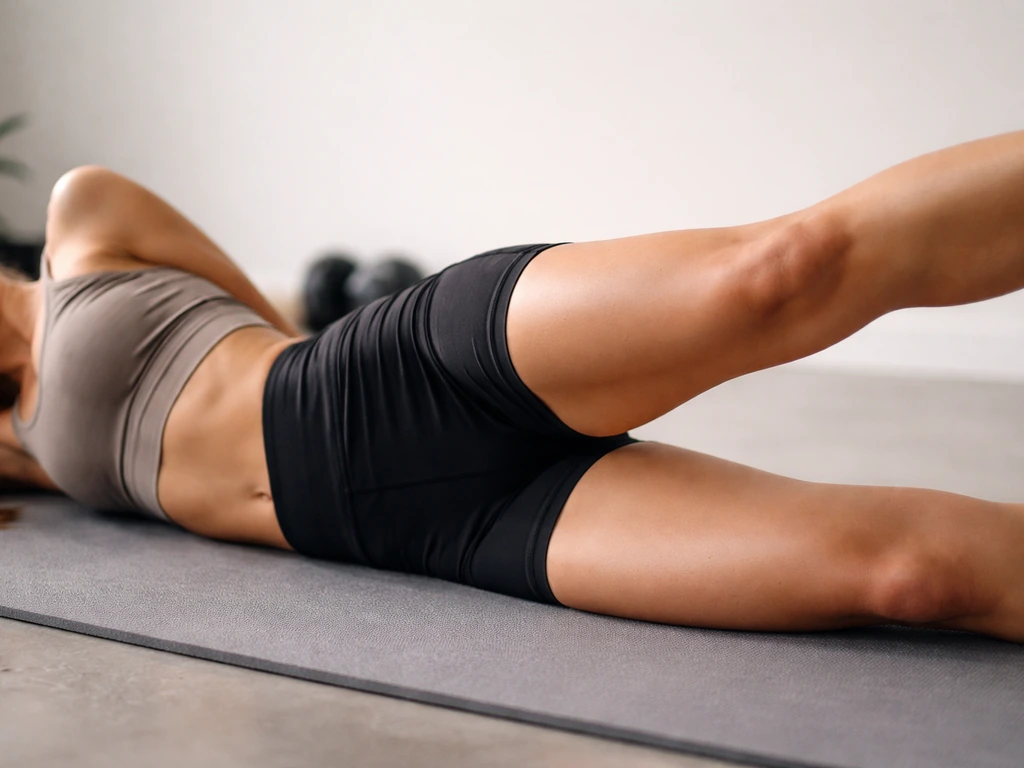
Quick anatomy check: what the TFL is and why it matters
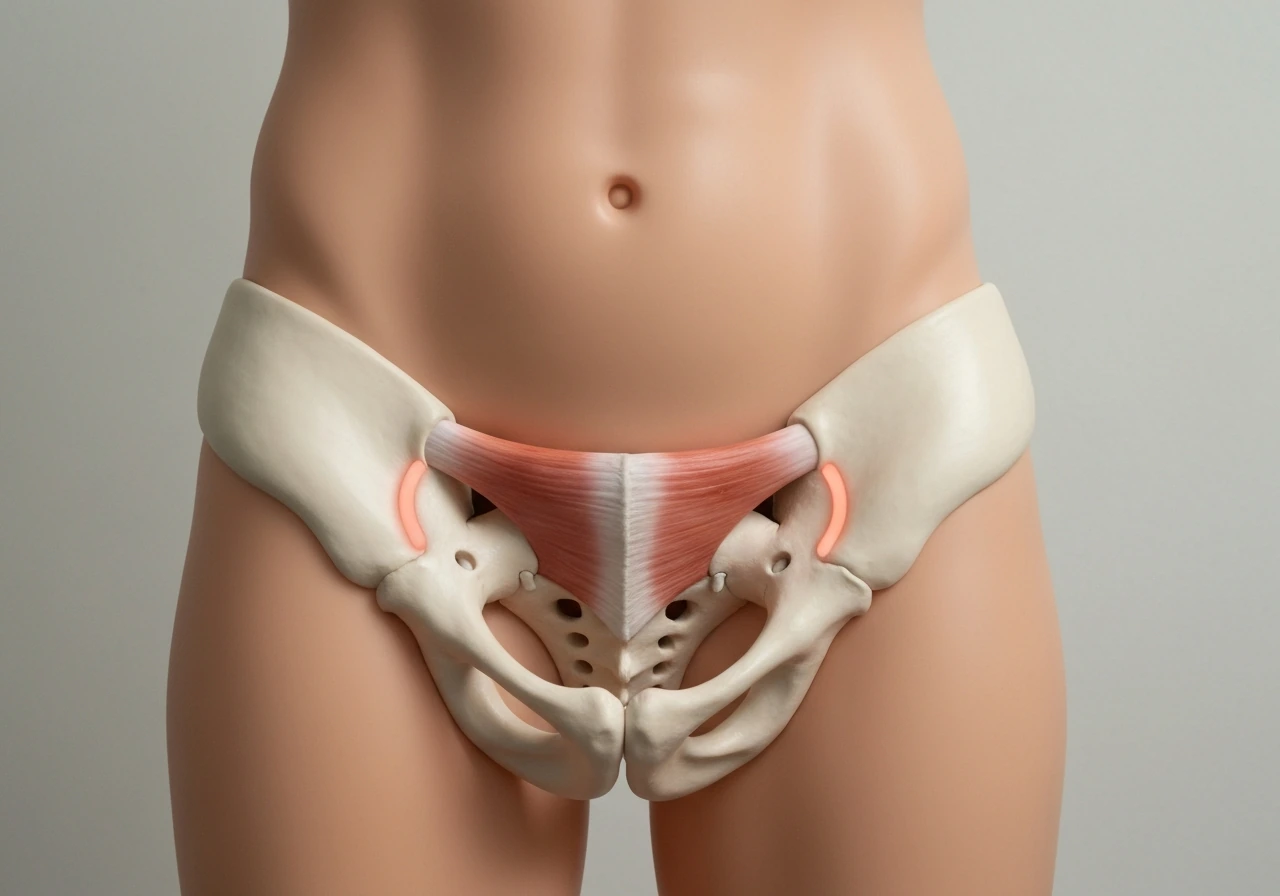
The tensor fasciae latae blank" rel="noopener noreferrer">originates from the anterior superior iliac spine (ASIS) and the outer lip of the iliac crest, basically right at the front-top corner of your pelvis. It travels down and connects into the iliotibial tract, that thick fibrous band running along the outside of your thigh to the knee. This is why TFL weakness or tightness often shows up as lateral knee pain or outer hip discomfort, not just hip issues.
Functionally, the TFL helps with hip flexion, hip abduction (moving the leg out to the side), and internal rotation of the hip. It also contributes to lateral knee stability through the IT band. During walking and running, it works alongside the gluteus medius and gluteus maximus to keep your pelvis level and your knee tracking properly. When it's underactive, you tend to see a contralateral pelvic drop (the opposite hip dipping down on each step) and increased dynamic knee valgus, which is the knee caving inward.
The TFL gets a bad reputation as a "tight" muscle that just needs stretching, but that tightness often comes from weakness and overuse compensation. When the glutes aren't pulling their weight, the TFL gets recruited more than it should, which makes it feel tight even though what it actually needs is to get stronger and share the load better. Stretching alone doesn't fix that.
How to target the TFL: cues, activation drills, and common substitutions
The biggest challenge with TFL training is that several muscles overlap in function, especially the hip flexors (iliopsoas, rectus femoris) and the gluteus medius. When you do abduction-based exercises, it's easy to feel your hip flexors gripping at the front or your quad kicking in, especially if you let your pelvis tilt or your leg externally rotate. That's compensation, and it means the TFL and glute med aren't doing the job.
To isolate the TFL more deliberately, place two fingers lightly on the muscle belly itself, just below and slightly behind your ASIS on the outer front of your hip. It's a small, roughly fist-sized area. When you abduct or flex your hip with slight internal rotation (toes turned slightly inward rather than out), you should feel a contraction right there. If you feel your front hip flexors or your quads engaging more than that spot, you're substituting.
Key activation cues to use
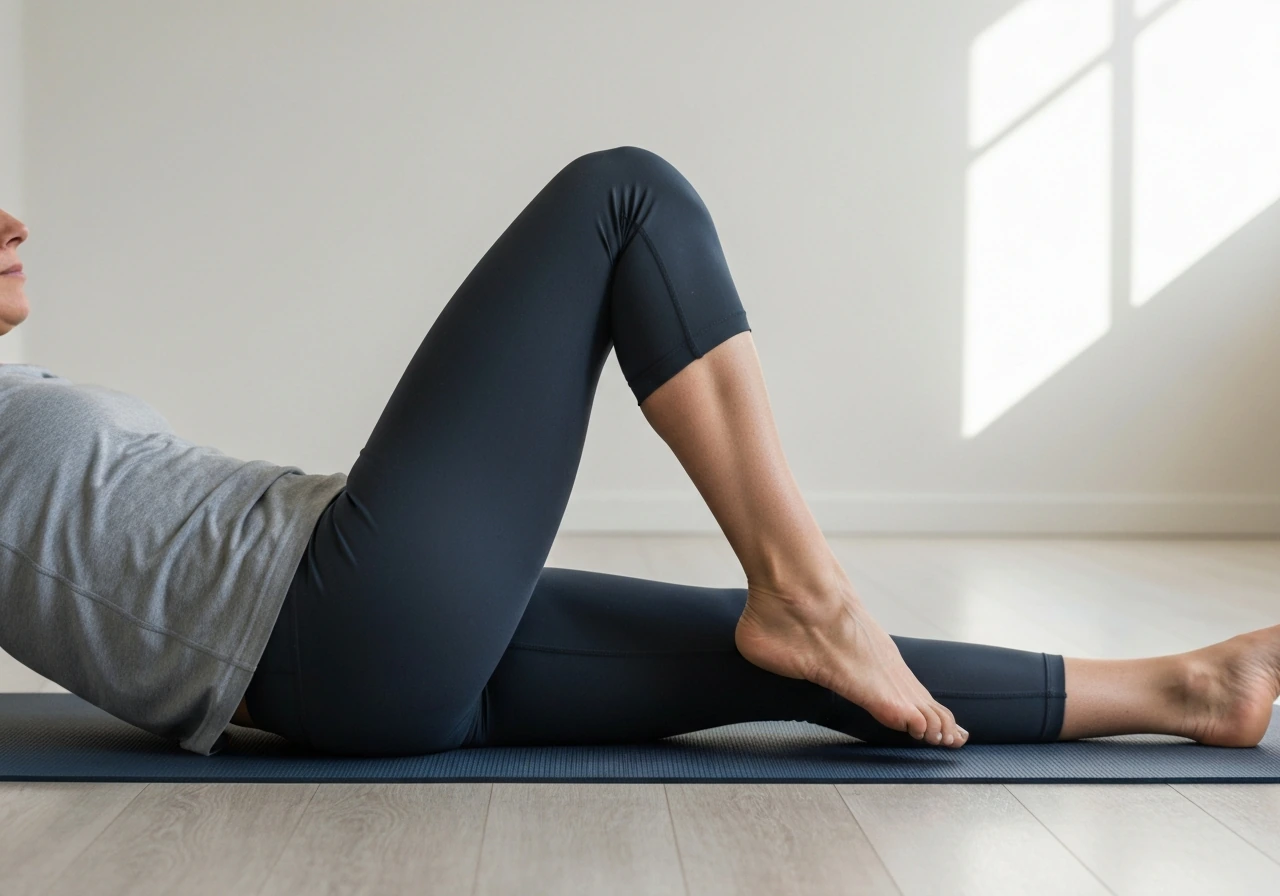
- Keep your pelvis neutral: don't let the hip hike up or tilt forward when you lift the leg.
- Slight internal rotation: toes pointing slightly toward the floor (not outward) during side-lying abduction helps shift load toward the TFL.
- Think 'push out and slightly forward,' not just 'lift up.' The TFL is an abductor but also a flexor, so the movement plane matters.
- Don't grip with your lower back or hip flexors. If you feel your lower back arching or your groin pulling, you've lost neutral.
- Use tactile feedback: put a hand on the muscle to confirm it's contracting before adding resistance.
EMG research shows that during exercises like the clamshell, activation patterns vary a lot between the gluteus medius, TFL, and gluteus maximus depending on technique and hip position. You're not going to perfectly isolate one muscle, and that's fine. The goal is to get the TFL contributing meaningfully rather than being mostly passive or over-dominant in a way that causes pain.
Best TFL hypertrophy exercises (with form breakdowns)
Because the TFL is a relatively small muscle with limited isolated loading options, you'll be working it through compound hip abduction and hip flexion movements, using a mix of bodyweight, resistance bands, and cable-based exercises. If you're looking for a full, dog-specific routine, see the guide on how to make your dog grow muscle for the right approach compound hip abduction and hip flexion. The priority is progressive resistance and a full range of motion through the hip.
Side-lying hip abduction
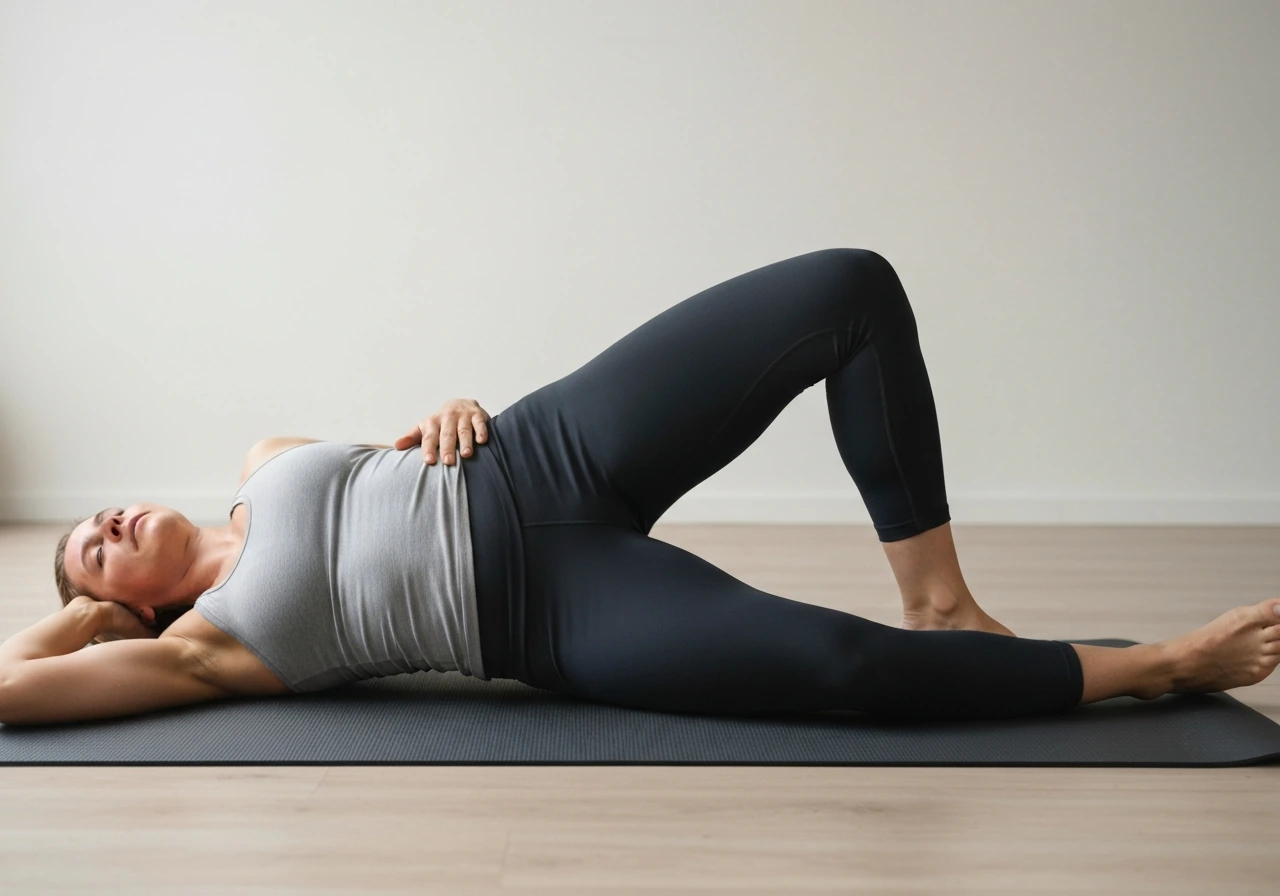
This is your foundational TFL exercise. Lie on your side with your body in a straight line, bottom knee slightly bent for stability. Keep your top leg straight with toes slightly down (internal rotation). Lift the top leg to about 40 to 45 degrees, pause for a second at the top, then lower slowly over 3 counts. The slow eccentric is where a lot of the growth stimulus comes from. Add a resistance band around the thighs just above the knee to increase load as you get stronger.
Cable hip abduction (standing)
Attach an ankle cuff to a low cable pulley. Stand sideways to the machine with the working leg farthest from the cable. Keep your stance leg slightly bent, core braced, and sweep the working leg out to the side in a controlled arc. Don't let your torso lean away to compensate. The cable provides constant tension through the full range, which is a clear advantage over bodyweight alone for building muscle. Add a slight forward lean (about 20 degrees) to shift the movement more into TFL territory.
Clamshell with resistance band
Place a light-to-moderate resistance band just above the knees. Lie on your side, hips stacked, knees bent to about 45 degrees. Keep your feet together and rotate the top knee up toward the ceiling as high as you can without your pelvis rolling back. The difference between the clamshell and the straight-leg abduction is that the clamshell recruits more gluteus medius and external rotators. Use the clamshell early in training to build base stability before moving to loaded abduction. Research supports it as an effective early-rehab and muscle-building entry point when abductors are weak.
Hip hike (Trendelenburg strengthening)
Stand on a step with the non-working foot hanging off the edge. Let the hanging hip drop slightly below level (controlled), then drive it back up using the stance-leg hip abductors. This is one of the most functional ways to train the TFL and glute med together since it mimics what they actually do during gait. Start without added weight, and progress by holding a light dumbbell on the hanging side.
Lateral band walk
Place a resistance band around your ankles or just above the knees. Stand in a quarter squat, toes straight ahead. Step sideways maintaining tension in the band, keeping your knees tracking over your toes and not letting them cave inward. This exercise is cumulative: the TFL and glute med have to work continuously to maintain band tension. Keep steps controlled and moderate width (not tiny shuffle steps). Ten steps each direction counts as one set.
Single-leg squat or step-down
Step onto a low box and slowly lower one foot toward the floor while the stance leg controls the descent. The TFL and glute med fire to prevent knee valgus and pelvic drop during this movement. Research on step-down mechanics directly links hip abductor strength to improved pelvic control. This is a great finisher or progression exercise once you have basic abduction strength established.
Training plan: sets, reps, frequency, and progressive overload
The TFL is a small muscle, but it responds to hypertrophy training principles just like any other muscle: mechanical tension, adequate volume, progressive overload, and enough recovery. Because the TFL is a small muscle, the same muscle-mass principles apply when you're learning how to grow mass muscle. If your goal is how to grow muscle mass fast, focus on progressive overload, enough weekly volume, and consistent recovery so you can push muscle growth safely.
Current evidence supports training a muscle twice per week compared to once per week for better hypertrophy outcomes when volume is equated, and aiming for around 10 working sets per week per muscle group as a reasonable target for growth. A systematic review and meta-analysis summarizes resistance-training volume effects and reports an overall responsive weekly set range for hypertrophy when training volume is manipulated [around 10 working sets per week per muscle group](https://pmc. ncbi. nlm.
nih. gov/articles/8884877/).
| Level | Exercises per session | Sets per exercise | Reps | Weekly sessions | Weekly TFL sets |
|---|---|---|---|---|---|
| Beginner | 2 (clamshell + hip hike) | 2-3 | 12-15 | 2 | 8-12 |
| Intermediate | 3 (cable abduction + lateral walk + step-down) | 3 | 10-12 | 2-3 | 10-15 |
| Advanced | 3-4 (cable abduction + loaded hip hike + step-down + band walk) | 3-4 | 8-12 | 3 | 12-18 |
For progressive overload, use this hierarchy: first increase reps to the top of the target range, then increase resistance (band thickness, cable weight, dumbbell), then increase sets. Don't jump resistance too quickly. The TFL is small and the movement patterns are nuanced, so form breaks down fast when the load is too high. A 5 to 10 percent resistance increase per week is plenty when you're consistently hitting clean reps.
Rest periods of 60 to 90 seconds between sets work well here. You're not dealing with large prime movers that need 3 minutes to recover. Keep rest short enough to maintain a training effect but long enough to keep your form sharp on the next set.
Sample beginner weekly structure
- Day 1: Clamshell with band (3x12 per side), Hip hike on step (3x10 per side), Lateral band walk (3x10 steps each direction)
- Day 2: Rest or lower body compound work (squats, lunges)
- Day 3: Side-lying hip abduction with band (3x12 per side), Step-down with bodyweight (2x8 per side)
- Day 4-7: Rest or upper body / full rest days
Nutrition + protein for muscle growth (age-friendly targets)
Building muscle in any part of your body, including the TFL, requires enough protein and enough total calories to support tissue repair and growth. There's no way around this. You can do the perfect training program and still spin your wheels if your nutrition is off.
For protein, a practical daily target is 1. 6 to 2. 2 grams per kilogram of body weight. A Morton et al.
meta-analysis/meta-regression of protein supplementation on resistance training-induced muscle gains suggests that a daily protein intake around ~1. 6 g/kg/day is near an optimal range for hypertrophy effects in healthy adults, with diminishing additional benefit beyond that.
If you're 70 kg (154 lbs), that's roughly 112 to 154 grams of protein per day. Older adults should lean toward the higher end, around 1. 8 to 2. 2 g/kg, because muscle protein synthesis becomes less efficient with age and requires a stronger stimulus.
Per-meal dosing matters too: research supports around 0. 4 g/kg per meal in older adults to maximize muscle protein synthesis, compared to the general recommendation of 0. 25 g/kg per meal for younger adults. That works out to roughly 25 to 40 grams of protein per meal, distributed across 4 to 6 meals per day.
On total calories: if you're genuinely trying to build muscle, a small caloric surplus of 200 to 300 calories above your maintenance is ideal. If you're trying to build muscle while losing fat (a realistic goal especially for beginners), keep protein high at around 2.2 to 2.4 g/kg and let your calories sit slightly below maintenance. The TFL, being a small muscle, doesn't demand enormous caloric investment, but it's still part of your overall muscle-building environment.
Practically: prioritize whole food protein sources like eggs, chicken, fish, Greek yogurt, and legumes. Time a protein-containing meal or snack within 1 to 2 hours after training to support recovery. This isn't magic, but it does keep muscle protein synthesis elevated when it's naturally elevated post-exercise.
If you're interested in building the TFL alongside broader goals like building lean muscle or adding overall muscle mass, the same protein and calorie principles scale up without needing a completely different approach. If you’re specifically aiming for how to grow lean muscle, keep your plan focused on progressive overload and enough protein while avoiding a diet that’s too aggressive.
Recovery, stretching/mobility vs strength, and avoiding flare-ups
Recovery for TFL growth follows the same rules as any small muscle: you need 48 hours between direct training sessions, enough sleep (7 to 9 hours is where most of the muscle repair happens), and smart progression that doesn't spike volume too fast. Delayed onset muscle soreness (DOMS) after your first few sessions is normal and expected. It's a sign of mechanical stress and micro-damage from the training stimulus, not injury. It should peak around 24 to 48 hours post-session and resolve by 72 hours. If it persists beyond that or sharpens, something else is going on.
On the stretching versus strengthening debate: most TFL tightness and associated lateral hip pain comes from the muscle being overloaded and understrength, not from being genuinely short. Aggressive stretching of the IT band or TFL, especially with lateral hip pain, can actually compress the gluteal tendons against the greater trochanter and worsen symptoms. This is a well-documented clinical pattern in greater trochanteric pain syndrome (GTPS). So if stretching makes your outer hip hurt, stop doing it and prioritize loading instead.
That said, a little gentle mobility work before training to wake up the hip and improve range of motion is fine and often helpful. Think dynamic hip circles, leg swings, or quadruped rocking rather than prolonged static stretches in a hip-adducted position (like the classic figure-four or pigeon pose). Those positions can aggravate lateral hip structures when they're already irritated.
Specific things to avoid if you have lateral hip tenderness: crossing your legs when sitting, sleeping with your top knee dropped inward without support, and doing deep hip adduction stretches. These positions compress the very tendons and bursae that share real estate with the TFL insertion zone. Managing load and position is the first line of treatment before anything else.
Troubleshooting: if you can't feel it, it hurts, or progress stalls
You can't feel the TFL contracting
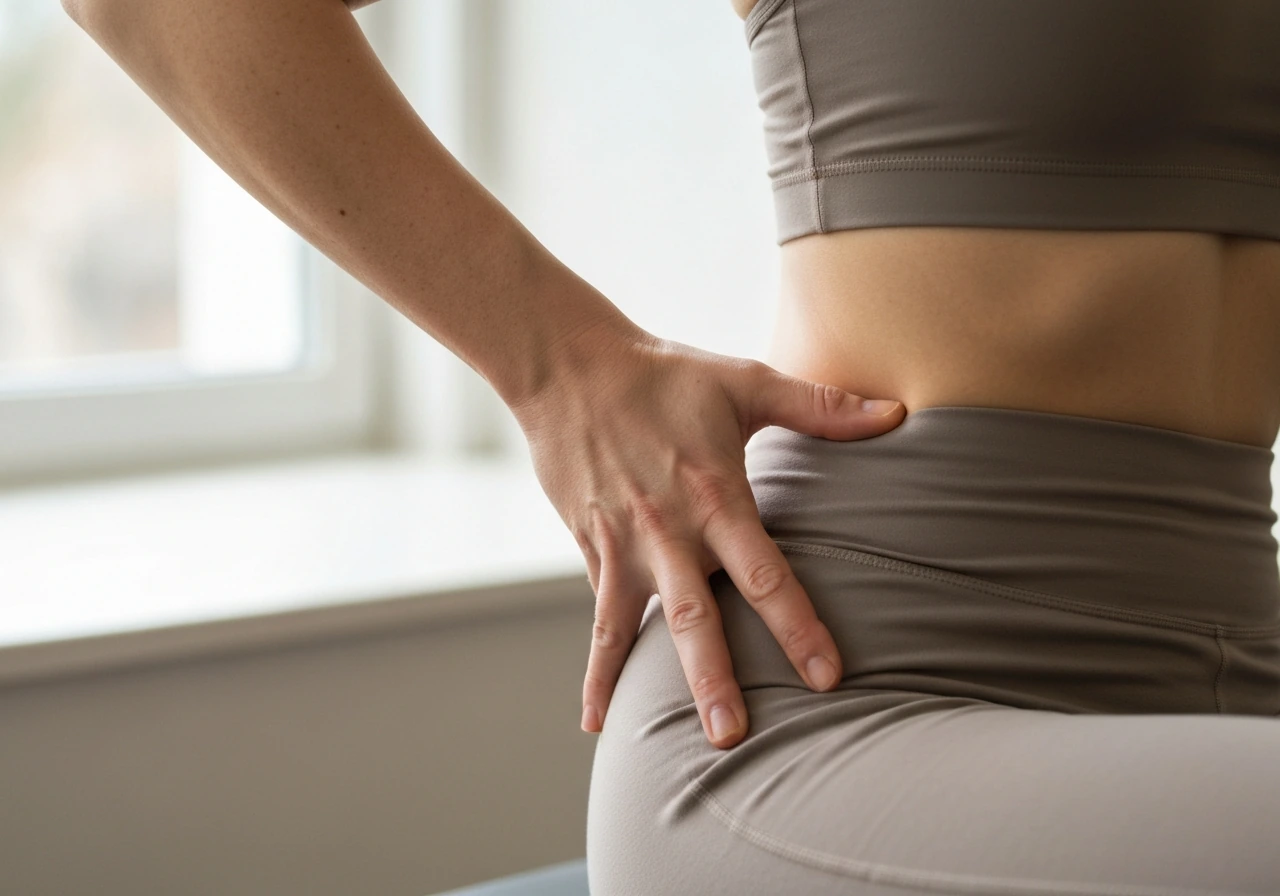
This is the most common issue. If you can't feel the TFL working, go back to basics: put your hand on the muscle belly and do the smallest possible movement that should recruit it, like a tiny side-lying hip abduction with no resistance. If you still feel nothing there, try adding the internal rotation cue (toes angled slightly down or inward) and slowing the movement down to a 4-second lift. The tactile feedback from your hand on the muscle helps your nervous system find the connection. It usually takes a few sessions to develop a reliable mind-muscle connection here, especially if the glutes and hip flexors have been compensating for a long time.
It hurts when you train it
Sharp pain at the outer hip during resisted abduction or palpation tenderness over the greater trochanter region is a red flag for greater trochanteric pain syndrome, not just DOMS or training soreness. GTPS is commonly reproduced by resisted abduction and direct palpation over the lateral hip. If this matches what you're experiencing, dial back the load significantly, avoid the positions that compress the hip (leg crossing, hip adduction stretches), and consider whether you need a few sessions with a physiotherapist before pushing through. Training into sharp pain here won't accelerate progress and can prolong recovery significantly.
Lateral knee pain is appearing
If you're getting pain at the outer knee rather than the outer hip, this is more consistent with IT band syndrome, which makes sense given that the TFL's distal attachment is the IT band itself. IT band syndrome typically presents as lateral knee pain that's worse with repetitive flexion-extension movements like running or cycling. The connection to TFL training is direct: hip abductor weakness is a contributing factor to IT band problems. But if you're getting acute lateral knee pain during training, reduce volume, avoid high-repetition step-down work temporarily, and check that your knee is tracking properly during all exercises and not collapsing inward.
Progress has stalled
If you've been training the TFL consistently for 6 to 8 weeks and nothing seems to be changing, run through this checklist. Are you actually overloading progressively, or are you doing the same band and the same reps every session? Are you hitting close to 10 working sets per week? Is your protein intake consistently at your target, not just on training days?
Are you sleeping enough? Are your form and cues still correct, or has technique slipped as you got comfortable with the movement? Most plateaus trace back to one of these, not some mysterious physiological barrier. The TFL is a small muscle and it will respond to progressive loading, but it won't respond to doing the same light band clamshell every day indefinitely.
FAQ
How often should I train my TFL to grow it without irritating my hip?
Aim for 2 sessions per week on the same schedule, and keep at least 48 hours between them. If you get lateral-hip tenderness that worsens from session to session, reduce volume by 30 to 50 percent for a week and rebuild slowly.
What rep ranges work best for TFL hypertrophy?
Use a practical mix that still builds mechanical tension, for example 8 to 15 reps for the loaded abduction moves and 12 to 20 reps for band or cable work. Stop each set with clean form, not until you feel hip flexors gripping hard.
How can I tell if my hip flexors or quads are taking over instead of TFL?
During the set, keep your pelvis from tilting and use a slight internal-rotation cue (toes slightly down or inward). If you feel burning at the front of the hip or the thigh muscles rather than the small outer-front spot, lower load and slow the tempo (especially the eccentric).
Should I train the TFL through pain or only through discomfort?
Use a clear rule: muscle burn and mild effort are fine, sharp pain or joint-like pain is not. If you get sharp outer-hip pain during resisted abduction or direct touch over the greater trochanter, treat it as a red flag for GTPS and back off immediately.
If I can't feel TFL activation, what is the fastest way to fix the mind-muscle connection?
Start with the smallest possible side-lying hip abduction and have your hand on the TFL belly. Add only one variable at a time, usually internal-rotation first, then slower tempo (for example 4 seconds up, 3 seconds down). Do this for a few sessions before adding resistance.
Do I need heavy weights to grow the TFL?
No, the TFL can grow with bands and cables as long as you reach near-effort consistently, typically 1 to 3 reps left in reserve on most working sets. Because it's small, overly heavy loads often break form into hip flexion or pelvic sway.
Is clamshells enough for TFL growth, or should I switch exercises quickly?
Clamshells are useful early, especially when abductors are weak, but use them as a base, not your only tool. After 2 to 4 weeks, add more direct loaded abduction or cable work so the TFL actually gets progressive overload through a full arc.
What tempo should I use, and does eccentric training matter for the TFL?
Yes, tempo matters. A common effective pattern is a 1 to 2 second lift with a 3 second controlled lower, particularly on side-lying or cable abductions. The eccentric is often what exposes weakness and creates growth stimulus if you keep technique clean.
How do I progress if my band is maxed out but my form still looks good?
First try reducing rest to keep effort high, then increase reps toward the top of the target range, then move to a thicker band, add a cable load, or progress to single-leg or step-based abduction patterns.
Why do I feel lateral hip tightness after I train the TFL, is that normal?
A delayed soreness peak 24 to 48 hours after training is normal, especially early on. If the tightness becomes sharper, lasts beyond 72 hours, or is easily reproduced by resisted abduction and palpation, you likely exceeded tolerable load or you are dealing with GTPS rather than simple training soreness.
What should I avoid if I suspect greater trochanter pain syndrome?
Avoid positions that compress the lateral hip and increase tissue irritation, such as leg crossing while sitting, sleeping with the top knee dropped inward, and deep hip adduction stretches. Replace them with gentle hip mobility and pain-free loaded abduction progressions.
My knee pain is on the outside during steps or running, is that always TFL-related?
Not always. Outside knee pain that tracks with repetitive knee flexion-extension can point more toward IT band syndrome, where hip abductor weakness is a contributing factor. Temporarily reduce high-rep step-down volume and prioritize controlled band or cable abduction with good knee tracking.
How do I build the TFL if I have limited hip range of motion?
Don’t force end-range. Use a range where you can maintain pelvic alignment and still feel the TFL belly. Progress range only after you can keep internal-rotation cues and avoid compensating with the torso.
How much protein and calories do I need specifically for small muscles like the TFL?
Use the same targets as for any muscle: 1.6 to 2.2 g protein per kg bodyweight, and a small surplus of about 200 to 300 calories if you are mainly trying to gain. If you are losing fat, keep protein higher and don’t expect the TFL to grow if your total calories are too low for too long.