Growing lean muscle means adding muscle tissue while keeping fat gain to a minimum. It's not a magic trick or a special body type, it's the result of eating in a small, controlled surplus, training with enough volume and progressive challenge, and recovering well enough that your body has a reason and the resources to build. If you've been spinning your wheels doing random workouts or eating whatever and calling it a "bulk," this guide is going to give you a much cleaner path forward.
How to Grow Lean Muscle: Nutrition, Training, and Recovery

Marcus Kellerman
5 Apr 2026
What "lean muscle" actually means
When people say they want to build lean muscle, what they're really describing is a favorable shift in body composition: more muscle, roughly the same (or less) fat. The scale might go up a little, but your body fat percentage goes down or stays flat, and you look and feel more muscular. That's the goal.
Here's the key physiological reality: muscle and fat are separate tissues. Your body can build one without dramatically adding the other, but only if you're giving it the right inputs. If you eat in a large calorie surplus thinking "more food = more muscle," most of the excess goes to fat. If you eat at a steep deficit trying to stay super lean, you'll struggle to add meaningful muscle mass. The sweet spot is a modest surplus, typically 200 to 300 calories above your maintenance intake, that gives your body just enough fuel to build without padding on fat.
This approach is sometimes called a "clean bulk" or "lean bulk," but don't get too attached to the label. What matters is the concept: controlled surplus, high protein, consistent training, and patience. Beginners have one big advantage here, they can often build muscle and lose fat simultaneously (a process sometimes called body recomposition), because their bodies are so responsive to new training stimuli. Intermediate and advanced lifters usually need to choose one goal at a time, though the principles remain the same. If you're trying to grow muscle and lose fat at the same time, recomposition is possible but tends to be slower than a dedicated lean-gaining phase.
Nutrition for lean mass: calories, protein, carbs, and meal timing
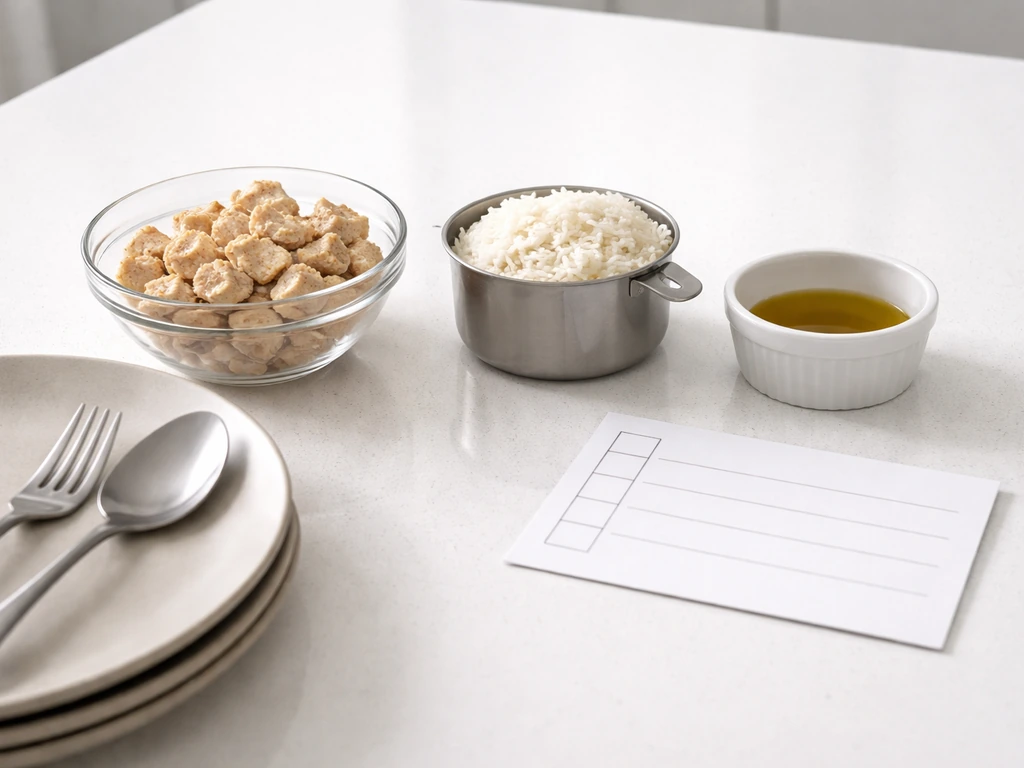
Set your calories first
Start by estimating your total daily energy expenditure (TDEE) using any reputable online calculator, you'll input your age, weight, height, and activity level. Then add 200 to 300 calories on top of that number. That's your lean-gaining target. Track it loosely for the first two weeks and check your weight. If you're gaining more than about 0.5–1 pound per week consistently, trim 100 calories. If you're not gaining at all after two weeks, add 100 calories. Adjust based on what's actually happening, not just the math.
Protein: the non-negotiable

Protein is the single most important nutrition variable for lean muscle gain. The International Society of Sports Nutrition (ISSN) recommends 1.4 to 2.0 grams of protein per kilogram of body weight per day for exercising individuals looking to support muscle growth. In practical terms, if you weigh 80 kg (about 176 lbs), you're targeting roughly 112 to 160 grams of protein daily. I'd push most people toward the higher end of that range, around 1.8 to 2.0 g/kg, especially if you're new to training or tracking macros for the first time. It gives you a comfortable buffer.
For distributing that protein across the day, the ISSN nutrient timing guidelines suggest aiming for roughly 20 to 40 grams of high-quality protein every 3 to 4 hours. This keeps muscle protein synthesis elevated throughout the day rather than spiking it once and letting it drop. In practice, that usually works out to 3 to 5 meals or meals-plus-snacks. Good sources include chicken breast, eggs, Greek yogurt, cottage cheese, salmon, lean beef, and whey or casein protein powders when whole food isn't convenient.
One thing worth clearing up: protein timing around your workout matters far less than people think. A meta-analysis looking specifically at pre- versus post-workout protein timing found no clear hypertrophy advantage when total daily protein was matched between groups. So don't stress about slamming a shake the second you re-rack the bar. Just make sure you're hitting your daily protein target consistently.
Carbs, fats, and what's left after protein
Once you've set calories and protein, fill the rest of your intake with carbohydrates and fats in a ratio that works for your preferences and training. Carbohydrates are your primary fuel for resistance training, they replenish muscle glycogen, support performance, and can indirectly drive better workouts. For higher-intensity or longer training sessions, prioritizing carbs is especially worthwhile. A practical starting split for most people: roughly 40 to 50 percent of calories from carbs, 25 to 35 percent from protein, and 20 to 30 percent from fat. If a different ratio feels better for your energy and satiety, that's fine, the research consistently shows that macro ratios are secondary to total protein and total calories.
Training plan to build muscle efficiently
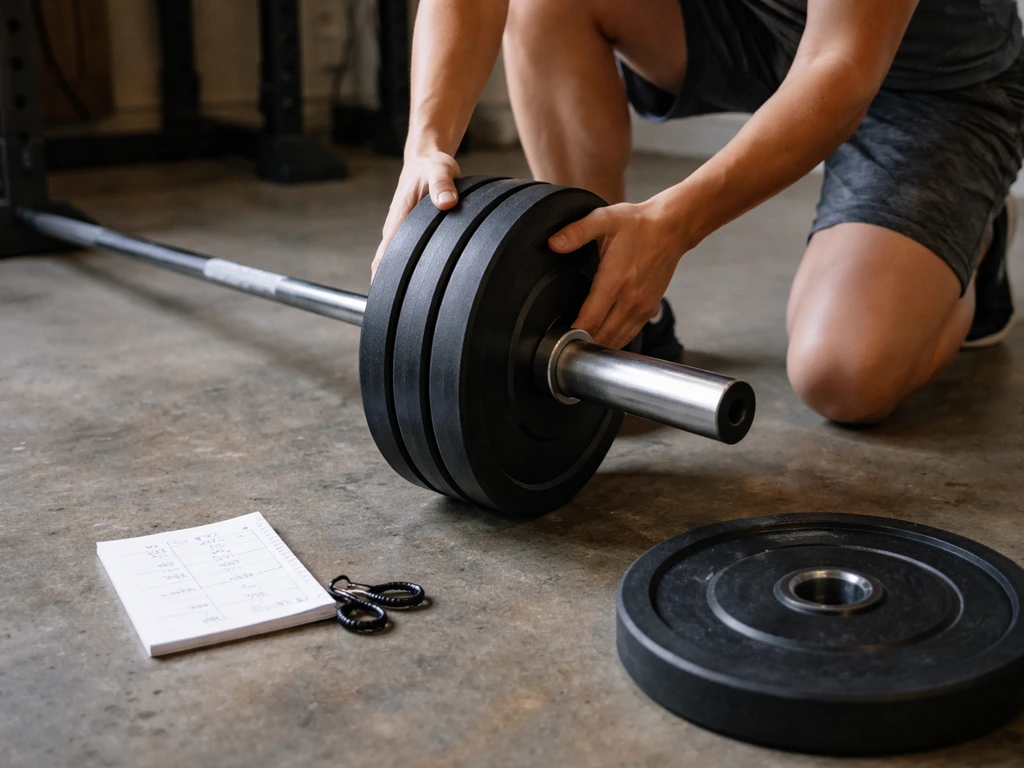
Progressive overload: the actual driver of muscle growth
Muscle grows when it's repeatedly challenged with more than it's used to. That's progressive overload, and it's the non-negotiable foundation of any good training plan. Practically, this means adding weight to the bar, doing more reps at the same weight, adding a set, reducing rest periods, or improving technique to create more tension, something has to progress over time. If you're doing the exact same workout you did three months ago, your body has zero reason to add more muscle.
Volume: how many sets per muscle group per week

Research by Schoenfeld and colleagues found a clear dose-response relationship between weekly training sets per muscle group and hypertrophy, more sets (up to a point) produces more growth. The data grouped volume into three categories: fewer than 5 sets per week, 5 to 9 sets per week, and 10 or more sets per week, with progressively better hypertrophy outcomes as volume increased. For most people in a lean-gaining phase, targeting 10 to 20 working sets per muscle group per week is a reasonable range. Beginners can start at the lower end (10 or fewer) and still make great progress. Intermediates can push toward 15 to 20.
Split that volume across at least 2 sessions per muscle group per week. A full-body routine 3 days a week or an upper/lower split 4 days a week both accomplish this well and leave room for recovery. If you want to grow muscle mass fast, training frequency and volume matter more than any specific "magic" routine.
Exercise selection: compound first, isolation second
Build your program around the big compound lifts, squat, deadlift, bench press, overhead press, barbell row, pull-ups, and Romanian deadlifts. These recruit the most muscle mass per exercise, allow the heaviest loading, and give you the most bang for your programming buck. Supplement with isolation work (curls, lateral raises, leg extensions, cable flyes) to address weak points or add volume to lagging muscles. A good lean-gaining session might be 3 to 4 compound movements followed by 2 to 3 isolation exercises, keeping rep ranges mostly in the 6 to 15 range where mechanical tension and metabolic stress both contribute to hypertrophy.
Don't overthink exercise variety at first. Mastering a handful of quality movements and progressively overloading them over months will do more for your physique than constantly rotating exercises. Consistency and progression trump novelty.
A simple 8-week starting framework
| Training Day | Focus | Compound Movements | Weekly Sets Per Muscle |
|---|---|---|---|
| Day 1 (Mon) | Upper Body | Bench Press, Barbell Row, Overhead Press | 10–12 sets upper |
| Day 2 (Tue) | Lower Body | Squat, Romanian Deadlift, Leg Press | 10–12 sets lower |
| Day 3 (Wed) | Rest or Light Cardio | Active recovery / walking | — |
| Day 4 (Thu) | Upper Body | Pull-Ups, Incline DB Press, Cable Row | 10–12 sets upper |
| Day 5 (Fri) | Lower Body | Deadlift, Bulgarian Split Squat, Leg Curl | 10–12 sets lower |
| Day 6–7 | Rest or NEAT Activity | Walking, mobility, low-stress movement | — |
After 8 weeks, add 1 to 2 sets per muscle group per week and reassess. Volume should climb gradually as your work capacity and recovery improve.
Staying lean while gaining: cardio, NEAT, and avoiding bulk creep

Does cardio hurt muscle gain?
This is one of the most common fears in the lifting world, and the short answer is: not much, if you do it smartly. A systematic review and meta-analysis looking at concurrent aerobic and strength training found that interference with hypertrophy is not consistently observed at the whole-muscle level. That said, program specifics matter, excessive cardio volume, high-intensity sessions done right before lifting, or not eating enough to support both stressors can all blunt gains. The practical take: 2 to 3 moderate-intensity cardio sessions per week of 20 to 30 minutes each (walking, cycling, light rowing) support cardiovascular health and help you stay lean without meaningfully eating into muscle-building adaptations.
The American Heart Association recommends at least 150 minutes per week of moderate-intensity aerobic activity for general health. You don't need to hit that entire target through dedicated cardio sessions, it can be broken up across the week, and it plays nicely with a lean-gaining phase when managed thoughtfully.
NEAT: your underrated leanness tool

Non-exercise activity thermogenesis (NEAT) refers to all the calories you burn outside of formal exercise: walking around the house, fidgeting, taking the stairs, doing yard work. Research published on NEAT in human energy homeostasis shows it's a meaningful contributor to daily energy expenditure, and that reductions in NEAT combined with excess calorie intake are a key pathway to fat accumulation over time. This is highly relevant during a lean-gaining phase, because people often unconsciously move less when they're eating more. Keep your step count up (aim for 7,000 to 10,000 steps per day), take walking breaks, and don't let increased food intake become an excuse to sit more.
Preventing "bulk creep"
Bulk creep is what happens when your "small surplus" quietly becomes a large surplus because you stopped paying attention. You eat out a few more times a week, your portions get bigger, and suddenly you're 500 calories over maintenance instead of 200 to 300. The result is a lot more fat gained alongside whatever muscle you built. The fix is simple but requires some discipline: weigh yourself 2 to 3 times per week (use the weekly average, not daily fluctuations) and track food loosely even if you don't count every gram. If your weekly average weight is climbing faster than about 0.5 to 1 pound per week, pull back slightly on calories or increase movement.
Recovery and supplements that support lean gains
Sleep and stress: the underrated variables
If you're training hard and eating right but sleeping 5 to 6 hours a night, you're leaving a significant amount of muscle gain on the table. Growth hormone release, muscle protein synthesis, and cellular repair all peak during sleep. Aim for 7 to 9 hours per night and take sleep quality seriously: consistent sleep/wake times, a cool dark room, and cutting screen time before bed all help. Chronic high stress (cortisol elevation) also works against muscle building by increasing protein breakdown and impairing recovery. This doesn't mean you need a stress-free life, just be aware that overtraining, under-eating, poor sleep, and high life stress all compound each other.
Deloading and injury prevention
Every 4 to 8 weeks, consider a deload week where you drop training volume by 30 to 50 percent (keep intensity, just reduce sets and frequency). This allows connective tissue, joints, and the nervous system to catch up with the training stimulus. Ignoring this step is how smart people end up sidelined with tendinopathies and overuse injuries. A week of reduced training doesn't erase your gains, it lets you come back and push harder. This matters even more if you're incorporating exercises that place significant demand on the tensor fasciae latae or hip stabilizers. Understanding how to grow the TFL muscle specifically is a niche topic, but it's a good reminder that individual muscles have their own training demands and deserve targeted attention when you have weak links.
Supplements worth your money
Supplements are tools, not shortcuts. Most of the industry is noise. Here's what the evidence actually supports for lean muscle gain:
- Creatine monohydrate: The most well-researched performance supplement available. The ISSN's position stand confirms creatine supplementation is safe and effective for increasing strength, power, and lean mass over time. You can load with 5 grams four times daily for 5 to 7 days to rapidly saturate muscle stores, or simply take 3 to 5 grams daily without a loading phase (it achieves the same result, just takes a few weeks longer). Either approach works.
- Protein powder: Not magic, just convenient protein. Whey digests quickly and is rich in leucine (which acutely triggers muscle protein synthesis). Casein digests slowly and works well before bed. Use them to fill gaps when whole food intake falls short.
- Caffeine: The ISSN reports that caffeine improves exercise performance at doses of roughly 3 to 6 mg per kilogram of body weight. Better workouts over time can indirectly support more muscle gain. Pre-workout coffee works just fine for most people.
- Vitamin D and omega-3s: Not directly anabolic, but deficiencies in these are common and can impair training quality, recovery, and hormonal health. Worth supplementing if your diet and sun exposure are limited.
Everything else, BCAAs when you're already hitting protein targets, "muscle builders," proprietary blends, is largely a waste of money for someone eating enough protein.
Tracking progress and adjusting over time
What to track and how often
Tracking progress for lean muscle gain requires more than just watching the scale. Body weight alone tells you very little, muscle is denser than fat, water fluctuates daily, and glycogen storage changes with carb intake. Use a combination of the following:
- Weekly average body weight (weigh yourself 3 to 5 mornings per week, average the readings)
- Strength metrics: are you adding reps or weight to your key lifts over time? Stalled strength over 3 to 4 weeks often signals a need to eat more or recover better.
- Progress photos every 2 to 4 weeks under consistent lighting and posing — the camera often captures changes the mirror misses
- Tape measurements: waist, hips, chest, arms, and thighs taken monthly give you a clear body composition signal without needing DEXA scans
- How you feel: energy during workouts, sleep quality, and recovery speed are all meaningful biofeedback
Realistic timelines: what to expect in 8 to 16 weeks
Beginners can realistically gain 1 to 2 pounds of lean muscle per month in optimal conditions, with the fastest gains in the first several months of consistent training. Intermediates typically see 0.5 to 1 pound per month. Over 8 to 16 weeks of adherence to the plan outlined here, a beginner might add 2 to 4 pounds of actual muscle tissue, which is a meaningful, visible change in body composition even if the scale only moves a little. This aligns with what research-informed frameworks describe as realistic rates of lean mass gain: progress depends on adherence, starting body composition, sleep, stress, and individual genetics.
The mistake most people make is quitting too early because the scale didn't move fast enough. Muscle gain is slow by design, that's not a flaw, it's human physiology. Trust the process, keep a log, and let the strength numbers and the mirror guide you. If you want a deeper dive into strategies for growing mass muscle beyond the beginner phase, the principles build naturally on what you learn here.
When and how to adjust your plan
After 4 weeks, review your data. If strength is going up, weight is climbing at roughly 0.5 to 1 pound per week, and you feel energized, keep going, don't change what's working. If strength has stalled and weight isn't moving, bump calories by 100 to 150 and check your sleep and stress. If weight is climbing faster than 1 pound per week and you see more fat accumulation (waist measurements climbing, definition decreasing), drop 100 to 150 calories or add a short cardio session. Make one adjustment at a time and give it 2 weeks before judging the effect.
One thing that often gets overlooked: the population doing this isn't just 25-year-old beginners. If you're older, the fundamentals don't change, protein needs may actually be slightly higher per kg to compensate for anabolic resistance, and recovery takes a bit longer. That's context, not a barrier. Muscle responds to training stimulus at 50 and 60 the same way it does at 25, just with a slightly different timeline. And while this guide focuses on humans specifically, the broader question of how exercise and nutrition affect different populations is worth exploring, even something as specific as how to help your dog build muscle follows some surprisingly parallel principles around progressive activity and adequate protein intake.
Your actual starting point
You don't need a perfect plan to start, you need a good-enough plan executed consistently. Set your calories at maintenance plus 200 to 300. Hit 1.6 to 2.0 grams of protein per kilogram of body weight every day, spread across 3 to 5 meals. Train 3 to 4 days a week with progressive overload built in. Sleep 7 to 9 hours. Add 3 to 5 grams of creatine monohydrate daily. Walk enough to keep NEAT from tanking. Track your weight, your strength, and your photos. Adjust when the data tells you to, not when you feel like it. Repeat for 16 weeks. That's the plan, and it works.
FAQ
How do I know if my surplus is too big for lean muscle gain?
Aim for about 0.25 to 0.5% of your body weight gain per week. If you gain faster than that for two consecutive weeks, reduce calories by 100 to 150, because the “clean bulk” window is narrow and extra weight usually shows up as fat.
What should I do if my weight is not increasing but my workouts feel strong?
If your weekly scale average is flat for 2 weeks but your strength is rising, don’t automatically add calories. First check whether you are actually meeting protein and whether your training load is truly progressing, then adjust carbs slightly before making a big calorie jump.
Can I grow lean muscle while losing fat at the same time (body recomposition)?
You can, but plan for a slower timeline and more conservative expectations. Use the same modest surplus targets when possible, keep training volume on the lower end (about 10 to 15 working sets per muscle per week), and prioritize sleep because recomposition requires more consistency to work.
How should I set my fats and carbs if I want a lean bulk but I do not track macros strictly?
Make your protein target non-negotiable first, then choose a carb level that lets you train hard. A practical way to start is to keep fat around 0.6 to 1.0 g/kg while calories rise, because very low fat can hurt satiety and some people feel worse during training.
How close to failure should I train when trying to grow lean muscle?
For leaning-gaining, use working sets per muscle as your anchor, not total sets. Stop each set with about 0 to 3 reps in reserve most of the time, and only push to near-failure on a few top sets per exercise, otherwise recovery usually limits progress.
What is the most time-efficient way to increase volume for lean muscle growth?
If you are short on time, increase training density by adding sets to the same session instead of doubling exercises. For example, keep a stable exercise list and add one extra set per muscle on your main lift pattern days, then reassess after 2 weeks.
What if my strength is going up but my body composition does not change much?
If you are gaining strength but not building the look you want, check whether the exercise is actually stimulating the target muscle. Try cues that improve range of motion and control, adjust exercise selection for leverage, and add 2 to 4 weekly sets to the lagging muscle before you change calories.
Is it okay to do intermittent fasting while trying to grow lean muscle?
Yes, and it can help compliance, but keep it “consistent enough.” Aim for meal timing that hits your daily protein target, and distribute doses so you land roughly 3 to 5 protein feedings per day, especially if you struggle to eat enough at meals.
Do I really need creatine, and when should I take it?
Creatine monohydrate is one of the few supplements with consistently positive results. A simple approach is 3 to 5 g daily, timing it does not matter much, but take it consistently and continue while cutting or maintaining if you want to keep performance benefits.
Should I take BCAAs or “muscle builder” supplements if I hit my protein?
If you already hit your protein daily, adding BCAAs rarely adds extra hypertrophy. The higher-value check is whether you are meeting total protein and calories, then whether your training volume and progression are adequate.
How should I track progress beyond the scale?
Use a small set of metrics: weekly average body weight, waist circumference (once or twice per week), strength trends on key lifts, and progress photos every 2 to 4 weeks under consistent lighting and posture. Scale alone is easily misled by water and glycogen.
How do I know I need a deload, and how often should I do it?
Deloads are most useful when reps start getting worse at the same weight, sleep quality drops, or joint aches increase despite stable food and training. Start conservatively every 4 to 8 weeks, then extend it to 6 to 10 weeks if you recover well and are not adding new volume aggressively.
What if I bulked too aggressively and I am gaining fat faster than expected?
If you gain too much fat, reduce the surplus first, do not crash into a big deficit. A good move is to cut 100 to 150 calories and add 2 to 3 moderate cardio sessions or extra steps, then hold that change for 2 weeks to evaluate.
Does lean muscle gain work the same way if I am older than 40?
If you are older, you may need slightly more time to see strength and muscle changes, and recovery can lag. Keep protein on the higher end of the range and consider starting with the lower end of volume (around 10 working sets per muscle per week) until your joints and fatigue stabilize.