To grow mass muscle, you need three things working together: a training stimulus that forces your muscles to adapt, enough food to fuel that adaptation, and enough recovery time for growth to actually happen. Get all three right consistently, and muscle growth is essentially guaranteed. Miss one, and you'll spin your wheels. This guide covers all three in practical, actionable detail.
How to Grow Mass Muscle: Gym Plan, Nutrition, Recovery

Marcus Kellerman
4 Apr 2026

What actually makes muscles grow
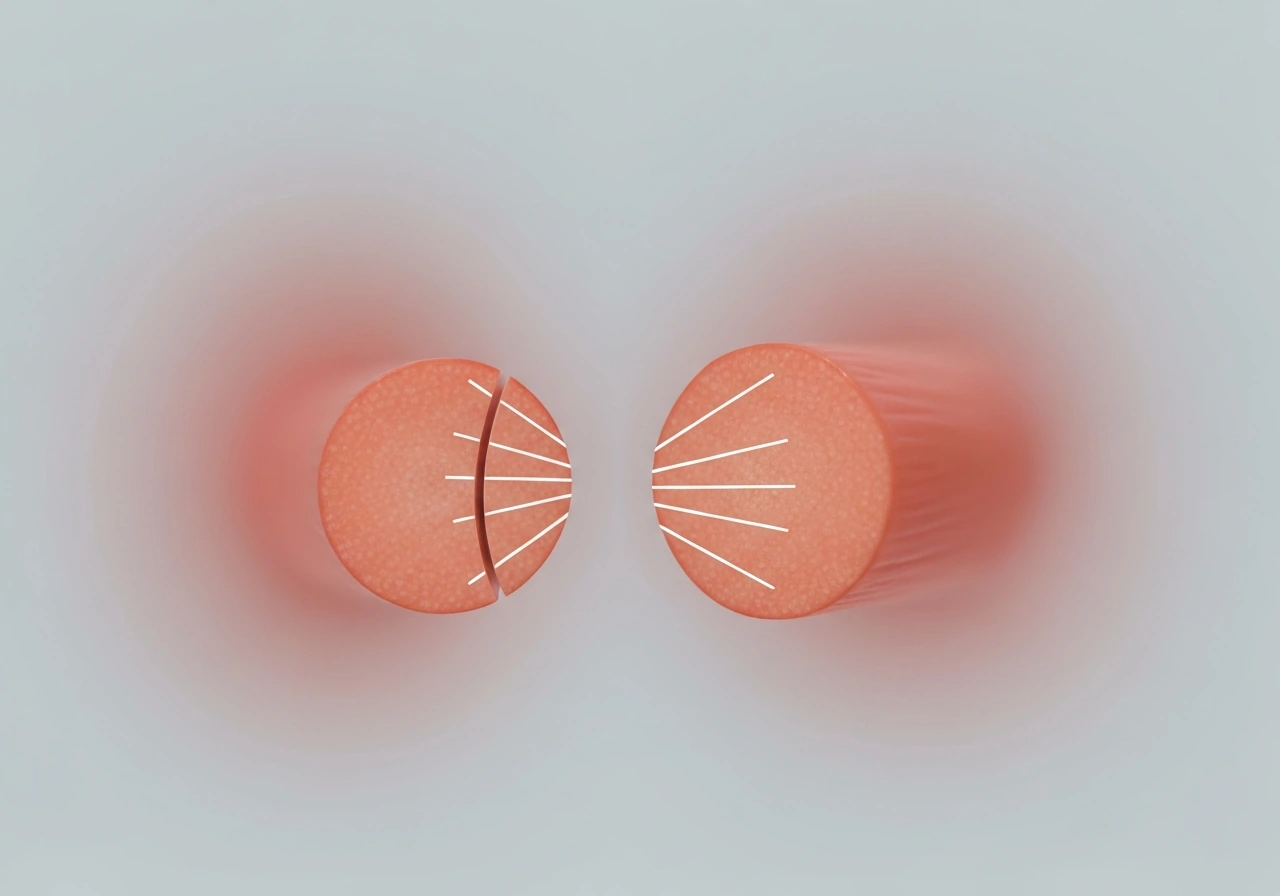
Muscle growth, technically called hypertrophy, happens when your muscle fibers increase in cross-sectional area. The primary trigger is mechanical overload: applying tension to a muscle beyond what it's used to handling. That tension kicks off a cascade of molecular events, including activation of satellite cells (the muscle's repair crew), myofibrillar remodeling, and an increase in muscle protein synthesis. These aren't abstract processes. Within 24 to 72 hours of a hard training session, satellite cells are already entering a growth phase, laying the groundwork for bigger fibers.
Here's what's worth knowing from a practical standpoint: you won't see visible changes in the mirror for at least 6 to 7 weeks. MRI and muscle biopsy data consistently show that measurable increases in fiber cross-sectional area aren't typically detectable until that timeframe, even though your body's anabolic signaling fires up much sooner. So if you're two weeks in and wondering whether it's working, stay the course. The process is happening; it just takes time to show up.
One myth worth killing early: you don't need to feel destroyed after a workout for it to count. Soreness is not a reliable indicator of muscle growth. Research from the NSCA makes this clear: there's no good causal evidence linking delayed onset muscle soreness (DOMS) to hypertrophy, and swelling doesn't even track well with how sore you feel. The NSCA Strength & Conditioning Journal article questions whether delayed-onset muscle soreness is a valid indicator of hypertrophy magnitude delayed onset muscle soreness (DOMS) to hypertrophy. Chase progressive overload, not pain.
Training for size: the variables that actually matter
Progressive overload is the non-negotiable. Your muscles only grow when they're forced to handle more than they're used to. That can mean adding weight to the bar, doing more reps with the same weight, adding sets, or reducing rest. All of these count. The important thing is that the challenge keeps increasing over time.
Volume: how many sets you need
Weekly training volume (total sets per muscle group per week) has a dose-response relationship with muscle growth. More sets generally means more growth, up to a recoverable limit. Research meta-analyses confirm this: each additional set per week is associated with a measurable increase in hypertrophy effect size. For most people aiming to grow mass muscle, targeting 10 to 20 working sets per muscle group per week is a solid, evidence-backed range. Beginners can start at the lower end and still see excellent results. More advanced lifters often need to push toward the higher end as their muscles adapt.
Frequency: how often to train each muscle
When weekly volume is equated, training each muscle group twice a week appears to produce better hypertrophy than once a week. This is why full-body or upper/lower splits often outperform classic bro splits for pure size, especially for beginners and intermediates. The reasoning is straightforward: spreading volume across two sessions lets you do quality work with better form and more manageable fatigue per session.
Intensity and rep ranges
Good news here: you don't have to lift brutally heavy all the time to get big. A network meta-analysis found that a wide range of loads can produce similar hypertrophy as long as you're managing volume and working with genuine effort. Whether you're doing sets of 6 or sets of 20, if you're getting close to your limit by the end of the set, it counts. Practically, a mix of 6 to 15 reps per set covers the bases well. Heavier compound lifts in the 6 to 10 range, accessory work in the 10 to 15 range, that's a formula that works for most people.
Training to failure: necessary or not?

You don't need to grind every set to absolute failure. A 2022 systematic review found no statistically significant difference in hypertrophy between training to failure versus stopping a few reps short, when total volume was equated. Stopping 1 to 3 reps shy of failure (called reps in reserve) is generally smarter: you accumulate the same growth stimulus with less joint stress, fatigue, and injury risk. Save true failure sets for your last set on isolation exercises occasionally, not every single set of every workout.
Rest periods
For compound, multi-joint exercises like squats, deadlifts, rows, and presses, rest 2 to 3 minutes between sets. For single-joint isolation work like curls, lateral raises, and triceps pushdowns, 60 to 90 seconds is usually enough. The goal is to recover enough to do quality work on your next set, not to rush through and accumulate fatigue for its own sake.
What to eat to actually get bigger

You can train perfectly and still not grow if you're not eating enough. Muscle tissue is metabolically expensive to build. Your body needs a calorie surplus and adequate protein. Those two things do most of the heavy lifting nutritionally.
Calorie surplus
For most people, adding around 250 to 500 calories per day above your maintenance intake is the practical starting point for gaining lean muscle mass. Sports nutrition guidance from organizations like the GSSI and NCAA puts the range at roughly 10 to 20 percent above your typical intake, or about 300 to 500 extra calories daily depending on your size and sex. A modest surplus keeps fat gain in check while still providing enough energy for muscle protein synthesis to run at full speed. If you're gaining more than about 0.5 to 1 pound per week, you're likely overshooting and gaining more fat than necessary.
Protein: the non-negotiable macro
The International Society of Sports Nutrition (ISSN) position stand on protein and exercise sets the effective range at 1. 4 to 2. 0 grams of protein per kilogram of body weight per day for most exercising individuals. That covers the majority of muscle-building goals.
An ISSN position stand on protein and exercise reports that an overall daily protein intake of about 1. 4 to 2. 0 g/kg/day is sufficient for most exercising individuals to support muscle gain and maintenance [about 1. 4 to 2.
0 g/kg/day protein intake](https://link. springer. com/article/10. 1186/s12970-017-0189-4).
If you're in a calorie deficit (trying to add muscle while losing fat simultaneously, which is possible but harder), pushing toward 2. 3 to 3. 1 g/kg/day helps preserve lean mass. For a 180-pound (82 kg) person eating in a surplus, that means roughly 115 to 165 grams of protein daily as a target range.
Carbs and fats
After protein is dialed in, carbohydrates and fats share the remaining calories. Carbs fuel your training sessions and support recovery, so prioritizing them around workouts makes sense. Fats support hormone production, including testosterone, which matters for muscle growth. There's no single magic ratio, but roughly 40 to 50 percent of calories from carbs, 25 to 35 percent from protein, and 20 to 30 percent from fats is a reasonable starting framework for a muscle-building phase.
Protein timing
Protein timing is real but not magic. The ISSN confirms that consuming protein before or after resistance training is synergistic with the training stimulus, meaning it amplifies the muscle protein synthesis response. Getting 20 to 40 grams of protein within a couple of hours of your workout (before or after) is a smart habit.
Individual protein doses around 20 to 25 grams appear to maximally stimulate muscle protein synthesis in most people, which gives you a practical portion size for meals and shakes. One underrated strategy: a protein-rich snack before bed, like cottage cheese, Greek yogurt, or a casein shake. Research supports that pre-sleep protein intake can enhance overnight muscle protein synthesis, essentially letting your body do building work while you sleep.
Supplements worth considering (and what to skip)
Most supplements are noise. A few have solid evidence behind them. Here's the short list that's actually worth your attention.
- Creatine monohydrate: The most researched and most effective supplement for muscle growth. A dose of 3 to 5 grams per day increases muscle creatine stores over 3 to 4 weeks and has been shown in systematic reviews to enhance muscle hypertrophy when combined with resistance training. No loading phase is necessary at that dose. Take it daily, timing doesn't matter much.
- Protein powder: Not magic, just convenient food. If you're struggling to hit your daily protein target through whole foods, whey, casein, or a plant-based protein powder is an easy fix. It's not superior to chicken or eggs; it's just easier to use around training.
- Caffeine: A real ergogenic aid for resistance training. Doses of 3 to 6 mg per kilogram of body weight taken about 60 minutes before training can improve performance, meaning you can do more work, which translates to a better growth stimulus over time. A 180-pound person would target roughly 245 to 490 mg. Know your tolerance and don't take it so late in the day that it wrecks your sleep.
- Everything else (BCAAs, pre-workout blends, testosterone boosters): For most people eating adequate protein, BCAAs are redundant. Most pre-workout blends are just caffeine with expensive extras. Testosterone boosters are largely unproven. Save your money.
Recovery is when growth actually happens
You don't grow in the gym. You grow between sessions. The gym provides the stimulus; recovery provides the environment for that stimulus to produce results. This distinction changes how you think about rest days.
Sleep is your most powerful recovery tool

Sleep deprivation directly sabotages muscle growth at the hormonal level. One study found that just five nights of sleep restriction reduced postprandial muscle protein synthesis by roughly 18 percent. That's not a minor inconvenience, that's nearly a fifth of your muscle-building capacity gone because you didn't sleep enough. Aim for 7 to 9 hours. If you're chronically getting six or fewer, no amount of extra sets or protein shakes will fully compensate.
Stress and cortisol
Chronic psychological stress elevates cortisol, which is catabolic, meaning it works against muscle growth. You can't always control life stress, but you can manage it actively: structured training itself helps, as does sleep, nutrition, and deliberate downtime. If your life is extremely stressful, that's worth factoring into your training volume. Sometimes doing a little less training and recovering better produces better results than grinding through high-volume sessions on poor sleep and high stress.
Rest days and soreness
Most people benefit from 1 to 2 full rest days per week, or from structuring training so that any given muscle group gets at least 48 hours of recovery before being trained again. Active recovery like walking, light stretching, or low-intensity cardio is fine on rest days and can actually help clear metabolic waste and reduce perceived soreness. Speaking of soreness: don't use it as your guide. As mentioned earlier, DOMS doesn't correlate reliably with growth. You can have a phenomenally productive training session and feel little soreness the next day, especially once you're adapted to your program. That's not a sign things aren't working.
How to start in the gym
If you're new to resistance training or returning after a long break, the best program is one you'll actually do consistently. Here's what that looks like in practice.
Beginner routine (3 days per week, full body)
Three full-body sessions per week hits every major muscle group twice or more, which is ideal for beginners. Each session should include a lower-body push (squat variation), a lower-body pull (deadlift variation), an upper-body push (press variation), and an upper-body pull (row or pull-down variation). Start with 3 sets of 8 to 12 reps per exercise, pick a weight where the last 2 to 3 reps of each set are genuinely challenging, and add weight or reps each week. That weekly progression is your progressive overload in action.
| Day | Exercise 1 | Exercise 2 | Exercise 3 | Exercise 4 |
|---|---|---|---|---|
| Monday | Goblet squat 3x10 | Romanian deadlift 3x10 | Dumbbell press 3x10 | Seated cable row 3x10 |
| Wednesday | Leg press 3x12 | Dumbbell deadlift 3x10 | Incline dumbbell press 3x12 | Lat pulldown 3x12 |
| Friday | Bulgarian split squat 3x10 each leg | Trap bar deadlift 3x8 | Barbell overhead press 3x10 | Dumbbell row 3x12 each arm |
Run this or something like it for 8 to 12 weeks before adding complexity. Consistency on a simple program beats sporadic effort on a sophisticated one every time. If your goal is specifically to build lean tissue without excess fat gain, a lean muscle-focused approach can help you dial in the nutrition side alongside your training.
Intermediate progression (4 days per week, upper/lower split)
After 8 to 12 weeks of consistent training, move to an upper/lower split: two upper-body days and two lower-body days per week. This lets you increase weekly volume per muscle group while still allowing adequate recovery between sessions. Upper days focus on chest, back, shoulders, and arms. Lower days focus on quads, hamstrings, glutes, and calves. Each muscle group is now getting 10 to 16 working sets per week, which is right in the sweet spot for continued growth.
If you're wondering how to accelerate your results once you're past the beginner stage, strategies specifically focused on building muscle mass faster can help you identify which variables to prioritize next.
A note on the tensor fasciae latae (TFL)
Most standard programs underemphasize hip stabilizers. If you're dealing with hip or knee discomfort during lower-body training, it's worth learning about how to strengthen the TFL muscle, since it plays a role in hip stability and can affect how well your squats and deadlifts feel over time.
Tracking progress and adjusting when you stall
Muscle growth is slow by design. Expect to gain roughly 0.5 to 2 pounds of actual muscle per month under good conditions, with beginners at the higher end and experienced lifters at the lower end. That math means you won't notice dramatic changes week to week. Track over months, not days.
What to track
- Body weight: weigh yourself 3 to 5 mornings per week and track the weekly average, not daily fluctuations
- Strength on key lifts: if you're getting stronger on your main compound movements, muscle growth is almost certainly following
- Measurements: tape measure around arms, chest, waist, and thighs every 4 weeks captures changes the scale misses
- Progress photos: taken in the same lighting, same time of day, every 4 weeks
- Training log: record sets, reps, and weights so you can see progressive overload happening over time
When progress stalls
If weight on the scale and measurements are flat for 3 to 4 consecutive weeks, here's how to diagnose and fix it. The most actionable first lever is volume. Because there's a clear dose-response relationship between weekly training sets and muscle growth, when progress stalls the first move is to gradually add 2 to 4 sets per week to lagging muscle groups. The second lever is calories. If you're not gaining weight, you're not in a sufficient surplus. Add 150 to 200 calories per day and reassess after two weeks. Don't rearrange training days or switch programs as your first response. Frequency manipulation, when volume is equated, doesn't dramatically change outcomes. Fix the basics first.
Some people want to grow muscle and lose fat at the same time. It's possible, especially for beginners and those returning from a break, but it requires specific adjustments to both your surplus and protein targets. Building muscle while losing fat simultaneously requires understanding how to manage your energy balance without undercutting muscle protein synthesis.
Common mistakes that kill progress
- Not eating enough: the single most common reason people don't grow, especially among people who fear fat gain
- Changing programs every 2 to 3 weeks before adaptations can accumulate: stick with a program for at least 8 weeks
- Prioritizing cardio over resistance training when the goal is size: cardio is healthy, but it competes with recovery resources if overdone
- Skipping sleep consistently and expecting full growth anyway: as covered, this directly blunts muscle protein synthesis
- Using soreness as a success metric: you can have a great, growth-promoting workout and feel fine the next morning
- Not tracking anything: without data, you can't tell if you're improving or just maintaining
One more thing on timelines: don't evaluate a program after two weeks. Remember, detectable changes in muscle fiber size typically don't appear until 6 to 7 weeks at the earliest. Give any new approach a minimum of 8 to 12 weeks of genuine, consistent effort before drawing conclusions. Building mass muscle is a multi-month process. The people who get the best results are the ones who treat it that way.
Finally, if you're wondering how broadly these principles apply, the fundamentals of mechanical overload, protein intake, and recovery work across virtually all populations. Even canine muscle development follows similar physiological principles around resistance, nutrition, and recovery, which tells you how deeply rooted these mechanisms are in mammalian biology. For humans, applying them consistently over months is the entire game.
FAQ
What should I do if I’m following the plan but my weight and measurements are not changing?
If you are progressing but the scale and waist are not moving, your first check should be intake accuracy (weigh food, include oils, sauces, drinks). Also confirm you are truly in a surplus, not just eating “more,” and make sure you are hitting your target protein and weekly working sets, since low volume or undertraining can blunt gains even when calories are adequate.
Do I have to train through pain to grow mass muscle?
Pain is not required, but joint discomfort is a signal to modify. Reduce the range of motion that causes sharp pain, lower the load slightly, or substitute an exercise pattern (for example, front-foot elevated split squat instead of deep back squat). If discomfort persists into the next day or worsens week to week, treat it as a programming issue, not normal training.
How often should I take sets to failure when I’m trying to maximize muscle gain?
For hypertrophy, the key is each muscle gets enough hard sets, not that every set goes to failure. A practical rule is keep most sets at 1 to 3 reps in reserve, and treat failure as a rare last-set option for isolation movements only. This helps you maintain weekly volume without accumulating excessive fatigue.
My weekly set count is high, why am I still not gaining muscle?
If you are hitting 10 to 20 sets per muscle per week but progress stalls, look for “effective” volume. Many people count sets that are too light or too far from failure. Use a stronger effort check (last 1 to 3 reps should be challenging) and ensure consistent technique and range of motion before adding more sets.
What if I’m too sore or fatigued to train hard again 48 hours later?
If you cannot recover between sessions, you likely need less total volume per muscle or more spacing. For example, drop from 16 to 10 working sets for the most stressed muscles for 2 to 3 weeks, prioritize sleep, and extend rest periods on compounds. A good sign you adjusted correctly is that your performance and reps start stabilizing again.
Should I do cardio or light workouts on rest days to help muscle growth?
Rest days should still support recovery. Use light walking, easy cycling, or mobility work, and avoid turning rest days into another intense stimulus that steals recovery. If your legs are the limiting factor, schedule upper-body emphasis on the “rest” day rather than doing full-body hard work.
How should I distribute protein during the day for best results?
Protein targets work best when spread across the day, not when crammed into one meal. A simple approach is 3 to 5 doses of about 20 to 40 grams, depending on body size, and one higher-protein dose before bed. If you struggle to reach your total, use shakes or add lean protein to existing meals rather than changing your whole diet at once.
How do I know my calorie surplus is right, and how should I adjust it?
You can grow muscle without perfect tracking, but you do need feedback loops. Weigh yourself 3 to 7 mornings per week, use the weekly average, and adjust calories if that average is not trending up. If you overshoot fat gain, reduce the surplus by 100 to 150 calories and rerun the adjustment for two weeks.
I’m new to lifting, how should I progress week to week without burning out?
If you are a beginner and your strength jumps quickly, you can progress without fancy programming, but you should still manage fatigue. Add weight or reps within the rep range every week, keep technique consistent, and avoid increasing sets too soon. When you exceed your recovery capacity, progress slows, so adjust by reducing load selection complexity before cutting volume.
How should I restart training if I’m coming back after months off?
If you are returning after a long break, expect lower performance for 1 to 3 weeks. Start lighter, use a slightly smaller range initially if needed, and rebuild volume gradually. A common mistake is returning at old loads and old set counts, which can cause injury risk and long recovery delays.
What rep range should I choose to grow the most muscle for my style?
Your “best” rep range is the one that lets you achieve consistent effort and maintain technique. If you prefer heavier sets, keep them in a rep range where you can still leave 1 to 3 reps in reserve and control the movement. If you prefer higher reps, avoid turning everything into frantic reps that reduce control and range.
How do I make sure I’m doing “counting” sets, not just doing lots of work?
To avoid counting junk volume, use an effort threshold and repeatability threshold. If you are not near your limit by the end of the set, the set likely does not transfer. Also, if range of motion is wildly inconsistent from week to week, progression is harder and gains can lag even when the number of sets is the same.
Can I gain muscle with minimal fat gain, and what should I change first?
If you want lean mass while minimizing fat gain, aim for the smaller end of the surplus range and keep weekly weight gain modest. Also consider using a “maintenance” or slight surplus approach while training hard if you are already prone to gaining fat. The key is not changing training frequency first, it is keeping protein high and adjusting surplus based on scale trends.
If my strength is improving but the mirror is not, how long should I wait?
Track progress beyond the scale. Use at least two metrics like waist measurement plus strength on key lifts (or reps at a given load). If strength is rising but weight is flat, you may be recomping, and visible changes can still take 6 to 7 weeks. If strength drops and measurements are flat, revisit volume and calorie intake.
How should I adjust my training when I’m dealing with high stress?
If you are very stressed, your recovery capacity drops, so the same plan can become too much. Instead of adding more intensity, temporarily reduce weekly sets for the most demanding muscles and protect sleep time. If life stress is extreme, deloading for 1 week can improve output for the next training block.
When should I change my program if I’m not seeing results?
A good practical benchmark is 2 to 3 nonconsecutive weeks to judge whether adjustments are working, but do not judge a new program after 2 weeks. If after 8 to 12 weeks your volume, calories, and effort are consistent and you are still not gaining any strength or size, then change one variable at a time, usually volume first or calorie surplus second.