Yes, the masseter can grow. It's a skeletal muscle, it responds to mechanical overload just like your biceps or quads, and there's real clinical evidence showing measurable increases in masseter thickness and bite force following structured jaw-training protocols. The catch is that 'training' for the masseter looks different from lifting weights, the safety margin is narrower than most muscles, and a handful of conditions (active TMJ pain, recent jaw fracture, bruxism) change what you can safely do and when.
Can the Masseter Muscle Grow? Conditions and Training Plan

Marcus Kellerman
27 Apr 2026
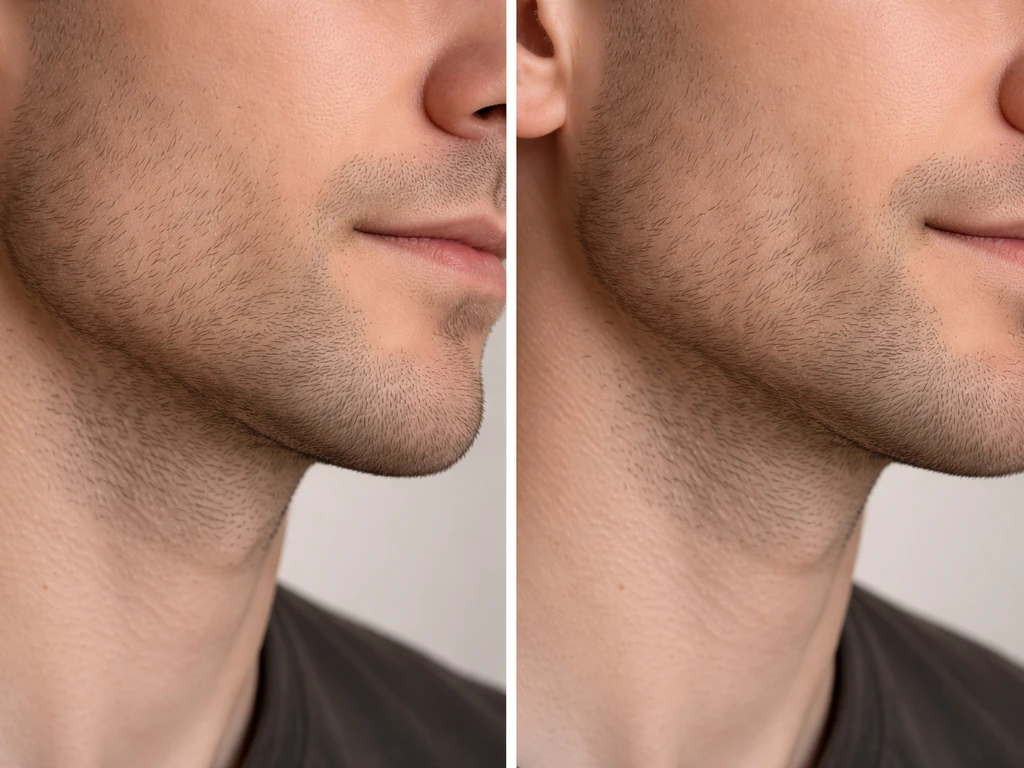
If none of those apply to you right now, you can start building toward a stronger, fuller jaw today. If you want a stronger, fuller-looking jaw, follow a structured, safe jaw-training plan that progressively overloads the masseter and lets it recover structured jaw-training plan.
Can the masseter hypertrophy like other muscles
The masseter is skeletal muscle, full stop. It has the same basic architecture as your chest or glutes: actin-myosin filaments, satellite cells, motor units that respond to tension. That means the same overload-driven hypertrophy mechanisms that grow every other muscle in your body apply here too. Clinical case reports document benign masseter hypertrophy in people who chew heavily or clench habitually, and imaging studies using ultrasound and MRI have measured those changes with precision.
That same sort of case-based adaptation is part of the broader question of whether can face muscles grow with consistent, safe jaw loading. One published case report even walked through the full diagnostic workup of unilateral masseter enlargement using ultrasound and nuclear MRI, confirming that jaw-muscle size changes are clinically measurable, not just anecdotal.
Randomized controlled trials have gone further by testing structured chewing-based training programs and measuring outcomes like masseter muscle thickness and occlusal (bite) force before and after. The results show quantifiable adaptation. So when someone asks whether jaw muscles can actually grow from training, the physiological and clinical answer is yes, with the same caveats that apply to any small muscle group: the stimulus has to be sufficient, consistent, and progressive, and you need to give the tissue time to adapt.
One myth worth clearing up early: the masseter is not uniquely resistant to training because it's a 'face muscle.' Face muscles broadly are capable of adaptation, though the masseter is one of the few jaw muscles large and accessible enough to meaningfully target. The masseter's job is to generate bite force, so loading it means providing controlled chewing resistance. That's the training stimulus.
What growth requires: training stimulus, overload, and recovery
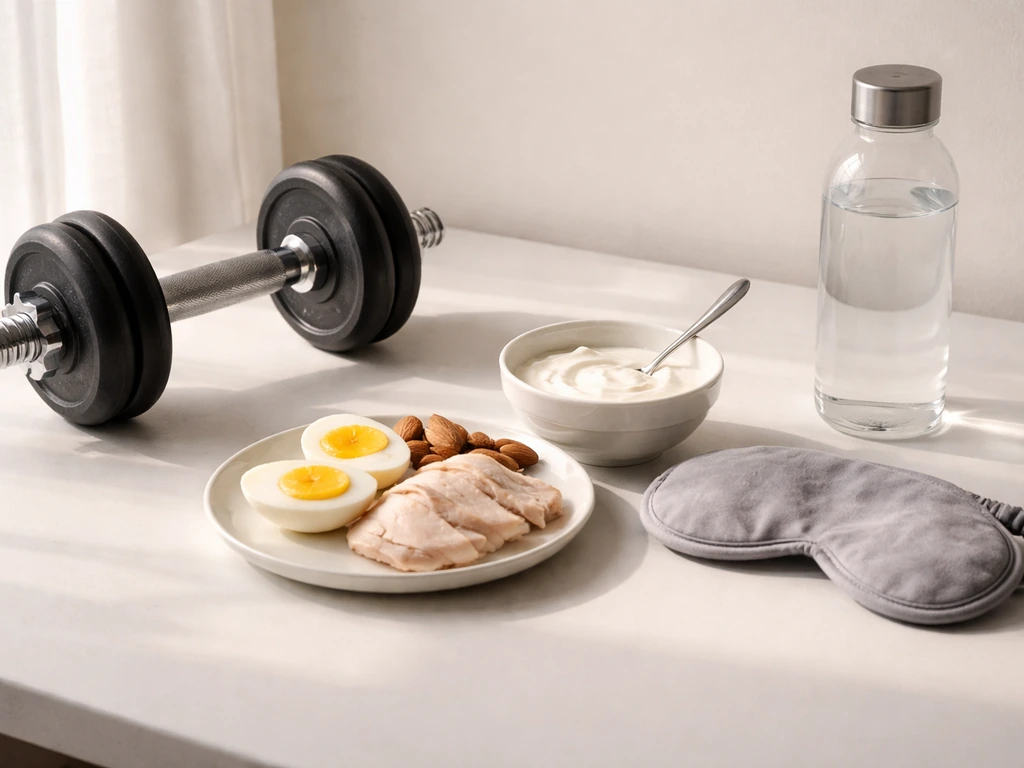
Muscle hypertrophy requires three things regardless of which muscle you're talking about: a mechanical overload stimulus, adequate nutrition (especially protein), and sufficient recovery between sessions. The masseter is no different. What changes is how you deliver each of those three ingredients.
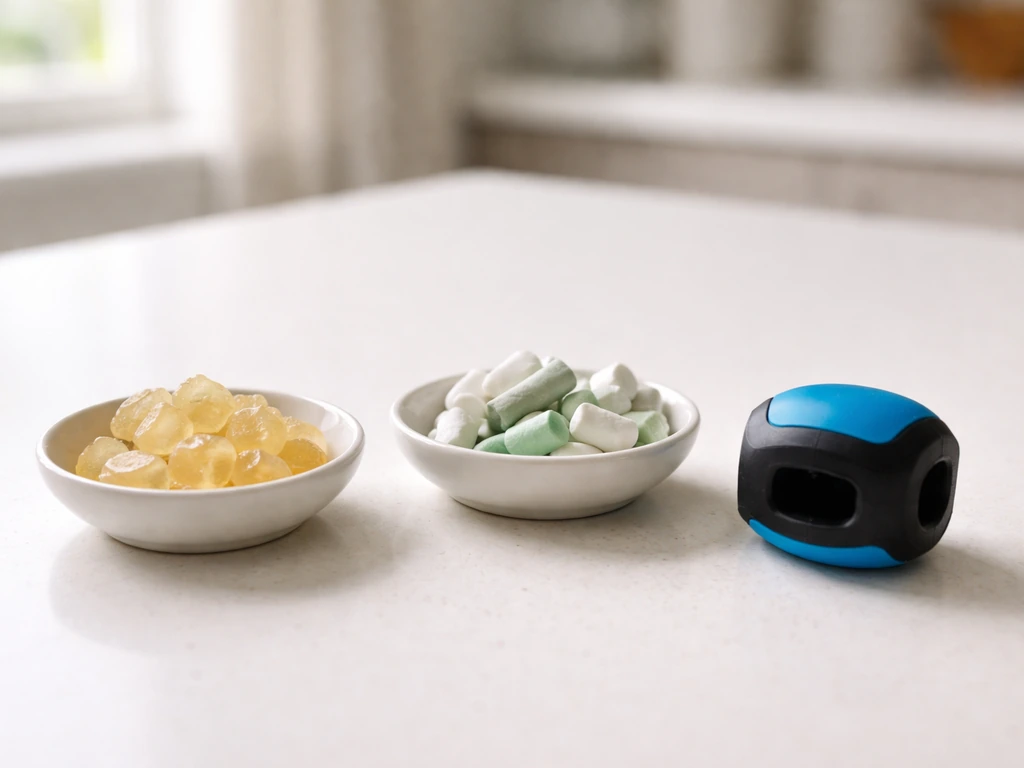
Mechanical tension is the central driver of hypertrophy. For most muscles you create that tension with external resistance. For the masseter, resistance comes from what you're chewing or biting against. Soft food chewing barely registers as a training stimulus. Hard, resistant textures or dedicated jaw-training tools (mastic gum, jaw exercise devices) create the kind of mechanical load that can drive adaptation over time. If you are thinking about whether does chewing gum grow masseter muscle, treat gum as only one possible loading method and follow the same progressive overload and TMJ-safe rules mastic gum. The key principle here is progressive overload: the load needs to increase gradually as the muscle adapts, otherwise you plateau.
Recovery matters just as much. The masseter is active every time you eat and talk, so it's already doing low-level work all day. That means deliberate training sessions need to be dosed carefully. Overdoing jaw training doesn't accelerate growth; it accumulates fatigue in a muscle that can't fully rest the way your glutes can between squat sessions. Practical recovery means limiting dedicated jaw-training bouts, sleeping enough (7 to 9 hours is still the target), and managing stress, since jaw clenching under stress adds uncontrolled load that can tip the system toward dysfunction rather than growth.
Jaw training options and a safe progression plan (today's steps)
Here's how to start. The goal in week one isn't maximum load; it's establishing a baseline your jaw can handle without soreness or joint irritation. Start conservative, add load gradually, and let the tissue tell you whether the dose is right.
Training tool options
| Tool | Resistance Level | Best For | Notes |
|---|---|---|---|
| Mastic gum | Low to moderate | Beginners, daily practice | Natural resin; chewed in sets like reps, not all day |
| Falim / sugar-free hard gum | Moderate | Intermediate progression | Tougher than regular gum; use in controlled sets |
| Jaw exercise devices (silicone chew tools) | Moderate to high | Intermediate to advanced | Resistance is adjustable on some models; check force rating |
| Hard natural foods (carrots, almonds) | Variable | Adjunct, not primary training | Inconsistent resistance; fine to include but hard to program |
| NMES devices (neuromuscular electrical stimulation) | Passive to moderate | Rehabilitation or older adults with low bite force | Used in clinical trials; not a standard consumer product yet |
A simple progression plan to start today
- Weeks 1 to 2: 2 to 3 sessions per week, 3 sets of 20 to 30 chews per side on mastic or a low-resistance jaw tool. Rest 60 seconds between sets. Stop immediately if you feel joint clicking, pain, or jaw fatigue that persists after the session.
- Weeks 3 to 4: Add one set per session or move to a slightly harder medium (firmer gum or low-resistance jaw tool). Monitor for any jaw soreness the next morning.
- Weeks 5 to 8: Progress to 4 to 5 sets or a higher-resistance tool. Keep frequency at 3 sessions per week maximum. Rest days between sessions are not optional.
- Month 3 onward: Maintain consistency rather than constantly pushing load. Take progress photos or jaw measurements every 4 to 6 weeks. Adaptation at the masseter is slower and subtler than larger muscle groups, so you need a long comparison window.
- Always warm up: chew soft food or do gentle jaw circles for 2 minutes before a harder training session. This is genuinely useful, not just a formality.
Realistic timeline: most people start seeing a visible difference in jaw definition somewhere between 3 and 6 months of consistent training, assuming nutrition and recovery are on point. Functional changes like improved bite force can appear sooner. If you're looking for dramatic jaw widening, understand that bone structure and genetics set the ceiling; training can fill out the muscle belly noticeably but won't restructure your skull.
Masseter growth after injury: healing, clearance, and modified training
Jaw injuries change the timeline significantly. The two most common scenarios are mandibular (jaw) fractures and TMJ injuries. Both require medical clearance before you resume any kind of loading, and both have specific return-to-function protocols that should not be rushed.
After a mandibular fracture, particularly one treated with open reduction and internal fixation (ORIF), diet is progressively advanced from liquids to soft foods to normal textures over weeks to months depending on healing. Research on return-to-normal diet after mandibular fractures emphasizes conservative, individualized timelines rather than a fixed schedule. Attempting jaw training before your surgeon clears you for normal chewing is not worth it. Once cleared, start at the very beginning of the progression plan above, not at whatever level you were before the injury.
TMJ injuries or flare-ups are a different case. During active symptoms, the clinical guidance is consistent: eat soft foods, avoid hard and chewy textures, and don't add extra jaw loading. That means jaw training is off the table until symptoms resolve and a clinician has cleared you to resume. After clearance, begin with the lightest possible resistance and treat early sessions as diagnostic: if pain returns, that's a signal to back off and reassess, not push through.
The good news is that muscle atrophy after jaw injury is a real phenomenon, and once you're cleared, the masseter responds to reloading just as other muscles do after detraining. You'll likely regain baseline size and function faster than you built it the first time, assuming nutrition is adequate.
Do masseters grow with age: expected changes and how to adjust
Age affects masseter growth the same way it affects hypertrophy everywhere else in the body: more slowly, but not impossibly. Older adults experience what's called anabolic resistance, meaning the muscle protein synthesis response to both exercise and protein intake is blunted compared to younger adults. You need a stronger stimulus and better nutrition precision to get the same result. That's the honest reality, but it's not a reason to skip training.
Randomized controlled trials have specifically tested jaw-strengthening protocols in older adults, including gum-chewing exercise programs and NMES-synchronized chewing exercises, and found measurable improvements in both masseter muscle thickness and bite force. So the adaptation is absolutely happening; it just requires more patience and a tighter approach to the inputs.
For older adults, a few practical adjustments matter. First, protein intake needs to be at the higher end of the recommended range (more on this in the next section) because anabolic resistance raises the threshold for stimulating muscle protein synthesis. Second, recovery between sessions should be generous: 48 to 72 hours between jaw training sessions is reasonable, and skipping a session is better than training through fatigue or soreness. Third, TMJ health becomes more important to monitor with age, since joint degeneration is more common and the margin between productive loading and irritation narrows. If you're over 60, it's worth a quick conversation with your dentist before starting a dedicated jaw-training program.
Nutrition and protein for jaw-muscle growth (plus calories and recovery)
Muscles don't grow without the raw material to build new tissue. That means protein and enough total calories. The masseter isn't exempt from this rule just because it's small. If you're in a significant caloric deficit, your body's ability to drive hypertrophy anywhere is compromised.
For protein, the evidence-based target for supporting hypertrophy in adults doing resistance training falls between 1.6 and 2.0 grams per kilogram of bodyweight per day. If you're older, lean toward the higher end of that range to overcome anabolic resistance. Spreading protein across 3 to 4 meals rather than loading it all into one sitting improves utilization. Whey protein has good evidence behind it for supporting muscle health in older adults specifically, making it a practical option if hitting protein targets through whole food alone is difficult.
On supplementation: creatine monohydrate has solid meta-analytic support for enhancing skeletal muscle hypertrophy when combined with resistance training. Mayo Clinic notes that creatine monohydrate is a common creatine form and summarizes typical dietary creatine intake and body replacement ranges, providing safety and context for supplementation creatine monohydrate has solid meta-analytic support for enhancing skeletal muscle hypertrophy. It's not jaw-specific, but if you're training your masseter as part of a broader muscle-building goal, creatine (3 to 5 grams per day) is worth including. Vitamin D is worth correcting if you're deficient, but don't expect it to directly accelerate hypertrophy on its own; the evidence doesn't support that beyond deficiency correction.
Sleep and stress management aren't optional extras. Growth hormone release peaks during deep sleep, and chronic stress elevates cortisol, which actively opposes muscle protein synthesis. For a muscle as small as the masseter, these systemic factors matter just as much as they do for larger muscle groups. Seven to nine hours of sleep per night is still the target, whatever your age. The American Heart Association recommends 7 to 9 hours of sleep for adults, and provides separate guidance for older adults (age 65 and older) Seven to nine hours of sleep per night is still the target.
Safety, TMJ/dental red flags, and tracking results over time
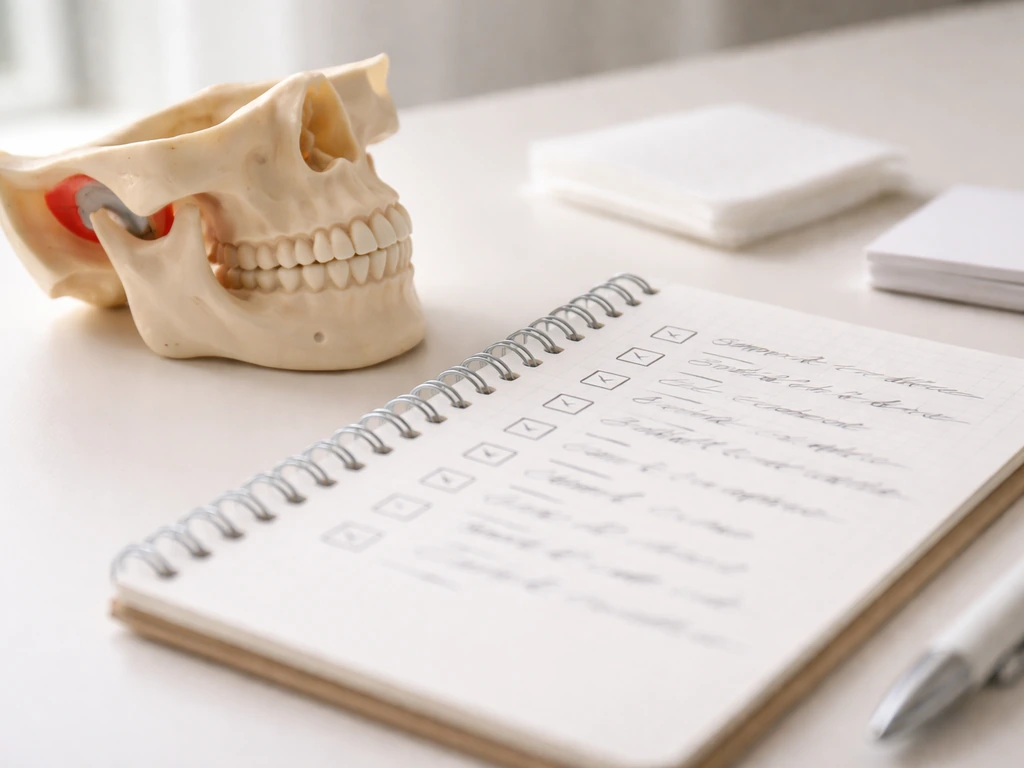
Jaw training has a narrower safety margin than most muscle training because the temporomandibular joint is a precision structure with close relationships to your teeth, ears, and neck. The research on gum chewing and temporomandibular disorders makes clear that more chewing is not automatically beneficial, especially for people with existing TMJ susceptibility. Getting this wrong doesn't just mean a sore jaw; it can mean joint inflammation, tooth wear, headaches, and clicking or locking that takes months to resolve.
Stop training and see a clinician if you notice any of these
- Pain in or around the jaw joint (in front of the ear) during or after training
- Clicking, popping, or grinding sounds from the TMJ that are new or worsening
- Jaw locking or difficulty opening your mouth fully
- Tooth pain, sensitivity, or changes in your bite after starting jaw training
- Headaches concentrated at the temples that correlate with training sessions
- Jaw fatigue that persists more than a few hours after a session
Bruxism (teeth grinding or jaw clenching, especially at night) is worth flagging before you start. Bruxism already loads the masseter heavily and unpredictably, which is why benign masseter hypertrophy is documented in grinders. Adding more deliberate training load on top of that can push an already-stressed system into dysfunction. Talk to your dentist, get a nightguard if you need one, and address the grinding before you add extra jaw work.
Tracking progress is genuinely useful here and keeps you honest. Ultrasound measurement of masseter thickness is used in clinical research precisely because it's reliable and non-invasive. You're probably not getting regular ultrasounds, but you can track jaw width with a soft tape measure (measure at the widest point of your jaw from the front), take consistent photos from the same angle every 4 weeks, and optionally test bite force subjectively by noting how your jaw feels during a standardized chewing task. Changes will be gradual: expect to compare month 1 to month 4 rather than week to week.
The bottom line is that the masseter can absolutely grow with the right training, nutrition, and recovery approach, and the evidence for that is solid. The path to getting there safely is straightforward: start light, progress slowly, eat enough protein, sleep well, and treat any TMJ or dental symptoms as a hard stop signal rather than something to train through.
If you're wondering how to grow smooth muscle more broadly, the same priorities of progressive overload and recovery still apply. If you're wondering can smooth muscle grow more broadly, the same priorities of progressive overload and recovery still apply. If you're recovering from a jaw injury or dealing with age-related changes, the same principles apply with extra patience built in. There's no shortcut, but there's also no mystery here.
It's just muscle physiology applied to a smaller, more delicate system.
FAQ
How long should I wait before increasing the difficulty of my jaw training?
Increase only after a full week without delayed soreness, worsening joint clicking, or tenderness that lasts into the next day. If you feel “good” the same day but symptoms appear later, keep the load the same for another 7 days. For most people, jumps in difficulty should be gradual, about every 2 to 4 weeks rather than daily.
What are the best signs that I am training too hard for my masseter?
Too much loading usually shows up as TMJ pain (especially in front of the ear), tooth sensitivity, headache, jaw locking or worsening clicking, or soreness that persists beyond 24 to 48 hours. If any of these appear, stop the session, drop resistance the next time, and consider a dental or TMJ evaluation if symptoms repeat.
Can I grow my masseter if I mostly chew soft foods?
Soft foods often fail to create enough mechanical tension, so you may get minimal adaptation. If your current diet is mostly soft, you can still build a stimulus by using controlled resistance that matches TMJ-safe guidelines (and keeping it conservative at first), then gradually increasing load as tolerated.
Does clenching without chewing help, or does it increase risk?
Sustained clenching can add load without the controlled chewing pattern you want, and it can worsen bruxism-related stress on the joint and teeth. If you are going to practice “jaw work,” prioritize controlled resistance that you can dose and monitor, and avoid trying to turn stress clenching into training.
Is gum chewing enough to grow the masseter?
Gum can contribute, but the real question is whether you are reaching sufficient, progressively increased resistance without irritation. Many people under-load (too soft, too little total effort) or overdo it (too long, too close to fatigue). Treat it like a tool you dose, not a guaranteed hypertrophy method.
How should I handle progress plateaus in masseter training?
If thickness or functional bite feels unchanged for 4 to 6 weeks, the first fix is usually dosing: reduce fatigue by spacing sessions farther apart or cutting total volume, then reintroduce a small load increase. Common mistake is “more is better,” but for a small muscle with a narrow safety margin, too much volume often stalls progress.
Can I train the masseter every day?
Most people should not. Because the masseter is already active all day, daily dedicated training often increases irritation risk without meaningfully improving recovery. A practical guideline is to start with longer gaps between sessions (for example, 48 to 72 hours), then adjust based on symptoms and soreness duration.
Should I worry about tooth wear or dental damage while training?
Yes. Even if the muscle adapts, hard or repeated biting against resistant surfaces can increase tooth wear and sensitivity. If you notice increasing enamel wear, pain with biting, or discomfort in specific teeth, stop the hardest loading option, reduce resistance, and consider a dentist assessment, especially if you grind at night.
Can imaging or a specific test confirm muscle growth for me personally?
Ultrasound and MRI are used in studies to measure thickness changes, but they are usually not routine for individuals. For at-home tracking, use consistent photos and a tape measure at the same landmark, and watch function (how hard you can chew without symptoms). If you want objective confirmation, ask your clinician about ultrasound availability.
What should I do if I notice asymmetry, one masseter bigger than the other?
Mild asymmetry can be normal, but sudden change, persistent one-sided pain, or progressive enlargement should be evaluated. In particular, ask a dentist or TMJ specialist if you have unilateral clicking, chewing becomes easier on one side, or you develop tenderness on one muscle.
Will masseter growth widen my jaw bone, or is it just muscle size?
Training mainly increases muscle belly size and bite force, it does not reliably reshape the underlying skull structure. If you are young, genetics still set the ceiling, and any visible change is typically muscle-related rather than bone remodeling.
Does age change what I should target for protein and session timing?
Yes. With older age, anabolic resistance means you may need higher protein consistency and more patience. Also consider longer recovery between sessions if soreness or joint symptoms show up quickly, and keep TMJ monitoring stricter because irritation is more common with age.
If I have bruxism, can I start training at all?
You can sometimes build masseter strength, but you should do it only after addressing grinding risk, often with a dentist-made nightguard and a plan to reduce nighttime clenching triggers. A common mistake is adding jaw-training load on top of uncontrolled bruxism, which can push you into headaches, worsening tooth sensitivity, or TMJ flare-ups.
When should I stop and seek medical clearance before continuing jaw training?
Stop immediately and get clearance if you have new or worsening TMJ pain, a recent jaw fracture, suspected dental injury, worsening clicking or locking, or any symptom that changes how you can bite normally. If you recently had surgery or trauma, follow your clinician’s return-to-chewing protocol rather than resuming based on how you feel.