Research backs this up. A cross-sectional study on professional athletes found that they had meaningfully thicker masseter muscles than non-professionals, with ultrasound measurements showing roughly 15.6–15.9 mm in professionals versus 13.6–13.8 mm in non-athletes. That's a real structural difference driven by years of higher-intensity physical demand and likely dietary habits. You won't double your jaw width, but 1–3 mm of additional masseter thickness over several months of dedicated training is a realistic and meaningful outcome.
What you'll notice first isn't usually size. It's bite force and endurance. The muscle gets stronger and more fatigue-resistant before visible hypertrophy becomes obvious in the mirror, which is normal for any muscle you're training from scratch. Visible jawline definition tends to follow after a few months of consistent work, assuming body fat is not masking the change.
Best training approaches: masseter-focused movements and jaw-resistance options

The masseter's primary job is jaw closing and side-to-side chewing motion. To grow it, you need to load that movement with enough resistance to stimulate mechanical tension and metabolic stress, the same drivers behind any muscle's hypertrophy. Here are the most practical methods, ranked by effectiveness and safety.
Jaw resistance devices
Dedicated jaw resistance trainers (often marketed as jaw exercisers or bite trainers) are the closest thing to 'lifting weights' for your masseter. They provide calibrated resistance in the 20–60 lb range depending on the model, and you perform controlled bite reps against that resistance. This approach most closely mimics submaximal bite force training protocols used in clinical research, where resisted masticatory training produced measurable functional adaptations in bite force and EMG output. Look for devices with clear resistance ratings so you can actually progress load over time.
Hard-texture food chewing
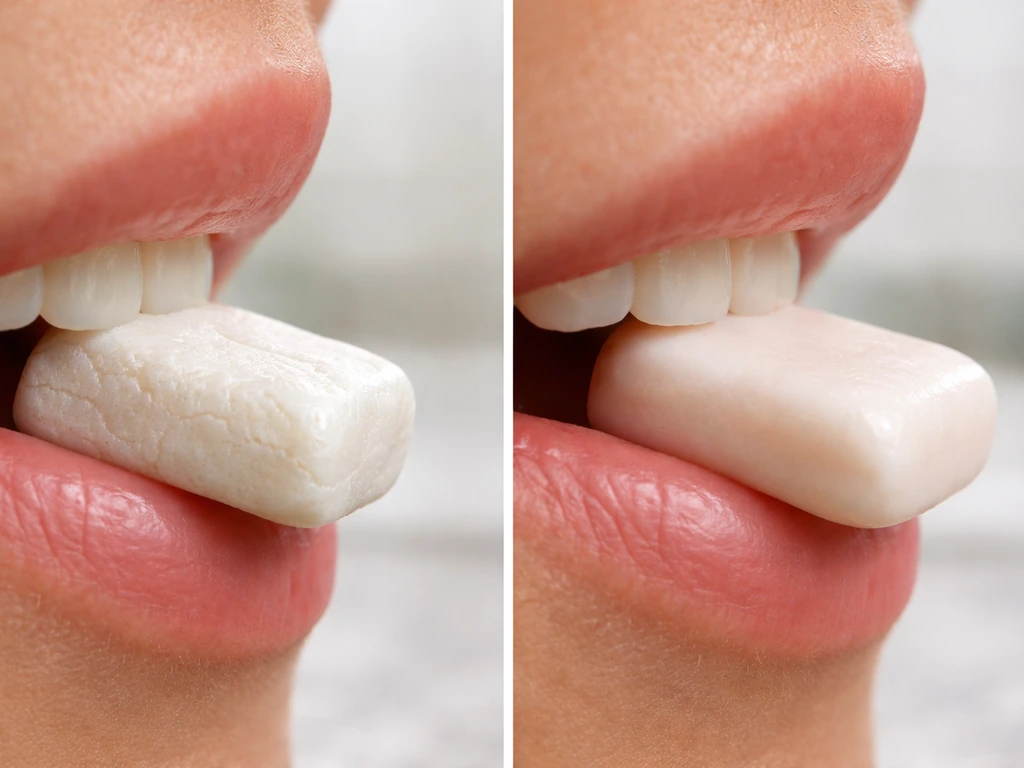
Eating tough foods like jerky, dried squid, raw carrots, or hard cheeses loads the masseter in a functional way during meals. It's not precise, but it's cumulative. Think of this as your 'incidental volume,' similar to walking more when you're trying to improve leg conditioning. It won't replace dedicated training, but a diet that includes regularly chewed fibrous or firm foods keeps baseline masseter activity higher than a soft-food diet.
Chewing gum (with caveats)
Chewing gum gets a lot of attention online and the science is more nuanced than most people realize. Harder gum bases do increase masseter activity and fatigue compared to soft gum, which means there's a real stimulus there. A PubMed-indexed systematic review and meta-analysis also reports that gum chewing affects outcomes such as xerostomia and salivary flow rate, showing that chewing gum has been studied systematically for specific clinical results [gum chewing increases masseter activity and fatigue](https://pubmed. ncbi.
nlm. nih. gov/37340436/). But whether that stimulus is enough to drive hypertrophy is a different question.
Research on chewing gum and masseter muscle growth suggests it can contribute to muscle activity and endurance adaptations but is unlikely to be a primary hypertrophy driver on its own. Use it as a supplement to resistance training, not a replacement.
Neuromuscular electrical stimulation (NMES)
This one is less DIY but worth knowing about. A randomized controlled trial found that NMES synchronized with chewing exercises produced greater increases in bite force and masseter thickness than chewing exercises alone in older adults. If you have access to a physical therapist or sports clinic that offers NMES, it's a legitimate add-on for people who have difficulty generating enough voluntary bite force to drive adaptation on their own. For healthy adults with no jaw issues, it's more of an advanced tool than a necessity.
How to structure workouts (frequency, intensity, sets/reps, progression)
The masseter recovers faster than large muscle groups but is also more susceptible to chronic overuse irritation if you skip rest. Treat it like a small muscle group such as the forearms or calves: higher frequency is fine, but intensity has to be managed. Here's a simple framework to follow:
| Variable | Beginner (Weeks 1–4) | Intermediate (Weeks 5–12+) |
|---|
| Frequency | 3 days/week | 4–5 days/week |
| Sets per session | 2–3 sets | 3–4 sets |
| Reps/duration | 10–15 bite reps or 30 sec chew bouts | 15–20 reps or 45–60 sec bouts |
| Resistance level | Light to moderate (20–30 lb on device) | Moderate to heavy (30–50+ lb) |
| Rest between sets | 60–90 seconds | 60–90 seconds |
| Progression trigger | Add reps before adding resistance | Increase resistance when top of rep range feels easy |
One important note on isometric training: research on isometric jaw exercises showed that maximum bite force can improve with training, but muscle hypertrophy is harder to achieve through isometric holds alone, and masseter EMG activity during standardized biting actually decreased after 6 weeks of isometric-only training. This suggests the muscle becomes more efficient rather than bigger. For size, prioritize dynamic (through-range) loading with jaw resistance devices over holding maximum bites.
Keep sessions short, 10–15 minutes max. The masseter has a relatively small cross-sectional area and accumulates fatigue quickly. High-volume sessions done too often are where people run into jaw soreness, clicking, or early signs of overuse. Quality reps with controlled resistance beat grinding through fatigue.
How long it takes and what affects your timeline (including 'fast' expectations)
Realistic timeline: most people notice improved bite strength within 3–4 weeks. Visible changes in jaw definition or masseter fullness typically take 8–16 weeks of consistent training, and that's assuming good nutrition and sleep. Don't let anyone on YouTube convince you otherwise.
Several factors shape how quickly you'll see results. Genetics matters for jaw muscle fiber composition and baseline thickness. Body fat percentage affects whether hypertrophy shows externally. Training age in jaw-specific work plays a role too: if you've never done any dedicated masseter training, you'll likely see faster early gains (newbie response) before progress plateaus. And just like with other face muscles that can grow, the masseter responds to the same principles of progressive overload and adequate recovery that apply to any skeletal muscle in the body.
If you're chasing 'fast' results, the honest answer is: optimize every variable simultaneously. Train 4–5 days a week with progressive resistance, hit your protein targets, sleep 7–9 hours, and stay consistent. There is no shortcut that compresses an 8-week adaptation into 2 weeks. Anyone selling a 'jaw transformation in 30 days' program is selling you on newbie gains at best and dangerous overtraining at worst.
Training one side vs both sides (symmetry, imbalance checks, safety)
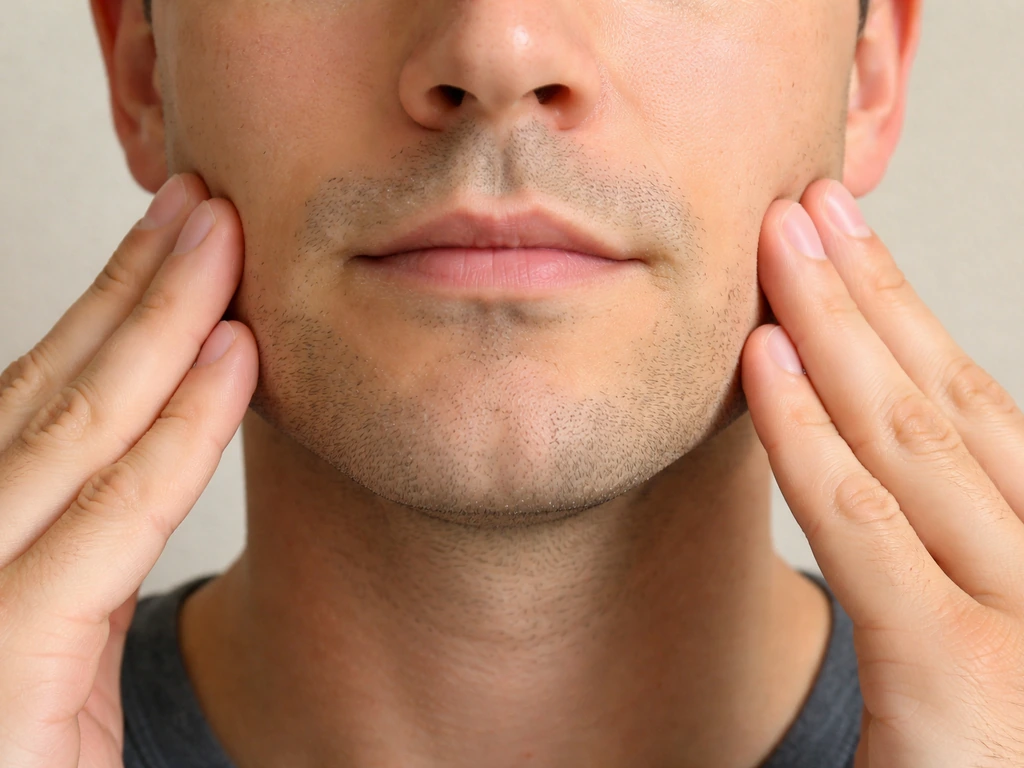
Most people have some degree of masseter asymmetry already. You probably chew more on one side without realizing it, and over years that creates a size and strength discrepancy. If your goal is symmetry, you need to address this intentionally rather than assuming bilateral training will self-correct it.
To check your own imbalance: place two fingers along each masseter (just in front of your ear, along your lower jaw) and clench firmly. The side that feels harder or more prominent is usually your dominant side. If there's a noticeable difference, here's how to approach it:
- Do your bilateral resistance training as normal for volume and strength.
- Add 1–2 extra sets on the weaker side per session using unilateral chewing (place the device or tough food on the weaker side only).
- Reassess every 4 weeks. Don't keep loading the weaker side indefinitely once balance is restored.
- Avoid trying to 'shrink' the dominant side by skipping it. Undertrained muscles can lead to compensatory tension patterns.
On safety: training one side harder than the other does carry some risk if taken too far. Asymmetric jaw loading can shift bite patterns and create uneven pressure on the temporomandibular joint (TMJ). Keep unilateral work conservative, no more than 20–30% extra volume on the weaker side, and stop if you notice clicking, popping, or pain near the ear or jaw joint. Those are signals that the TMJ is being stressed, not just the muscle.
Nutrition, protein, and recovery to support hypertrophy
The masseter doesn't get a special nutrition plan. It needs the same environment as every other skeletal muscle you're trying to grow: enough protein to support synthesis, enough total calories to avoid a catabolic deficit, and enough sleep for anabolic hormones to do their job.
Protein target: aim for 0.7–1 gram per pound of bodyweight daily (roughly 1.6–2.2 g/kg). Distribute it across 3–5 meals rather than front-loading or back-loading, since muscle protein synthesis responds better to regular doses of 25–40 grams than to one large serving. This is the same approach you'd use for growing any other muscle, and the masseter is no exception. Understanding how smooth muscle differs from skeletal muscle in its growth mechanisms makes it clearer why these protein targets apply specifically to skeletal muscles like the masseter, which respond to voluntary training in a way that smooth muscle simply doesn't.
Sleep is probably the most underrated recovery tool for jaw training specifically. The masseter is active during bruxism (nighttime teeth clenching), which many people do unknowingly. If you're already grinding at night, training on top of that can push recovery demand past what sleep can repair. If you wake up with jaw soreness or headaches, get assessed for bruxism before adding more jaw training volume.
On caloric intake: if you're in a significant caloric deficit, hypertrophy anywhere in the body slows dramatically. A modest surplus of 200–300 calories above maintenance is ideal for muscle growth without excessive fat gain. If you're cutting, expect slower masseter progress and prioritize maintenance of existing muscle over adding new mass.
Common Reddit myths and mistakes to avoid (safety and effectiveness)
A lot of masseter training advice circulating on forums mixes real physiology with bro-science. Here's what to take seriously and what to ignore.
Myth: Chewing gum all day is the fastest path to a bigger jaw
This one is everywhere. The problem is that chronic high-volume gum chewing is associated with temporomandibular disorder risk, not jaw gains. A systematic review specifically examining the link between gum chewing and TMD found that hard gum increases masseter activity and fatigue, but chronic repetitive chewing without adequate rest is a known contributor to masticatory muscle overuse. The muscle needs recovery stimulus, not constant low-grade irritation. If gum is part of your plan, limit sessions to 10–15 minutes of harder gum, not hours of casual chewing.
Myth: More soreness means more growth
Jaw soreness after a session can mean you've stimulated the muscle. It can also mean you've irritated the TMJ or surrounding connective tissue. Unlike your biceps, where DOMS is a pretty benign indicator of training effect, jaw soreness sits close to the joint and nerve-dense structures. Don't chase jaw soreness as a growth signal. Chase progressive overload on the resistance device and improving bite endurance. Soreness that lingers more than 48 hours, or pain that radiates toward your ear or temple, means you've overdone it.
Myth: Mewing alone will grow your masseter
Tongue posture doesn't load the masseter. Mewing may have benefits related to oral posture and nasal breathing, but it is not a masseter hypertrophy stimulus. Muscles grow in response to mechanical tension and metabolic stress applied to the muscle fibers themselves. Resting tongue position does neither.
Myth: Jaw training is too risky to bother with
The opposite overcorrection also exists. Some people avoid any jaw training because they've read about TMD risks. The reality is that structured, progressive, submaximal jaw resistance training is well-tolerated in healthy adults and has even been used therapeutically for people with TMD. The key is submaximal loading (not biting at 100% of your max every session), adequate recovery, and listening to joint signals. The same logic applies to understanding whether smooth muscle can grow versus skeletal muscle: the mechanisms and risks are completely different, and conflating them leads to poor decisions either way.
Your practical starting plan
Week 1–4: 3 days per week, 2–3 sets of 10–15 reps with a jaw resistance device at light-to-moderate resistance. Add 1–2 sets of bilateral hard-texture food chewing at meals. Assess bite symmetry at the end of week 4.
Week 5–12: Increase to 4–5 days per week, 3–4 sets per session, progressively increase resistance when the top of your rep range feels easy. Add unilateral correction sets if symmetry assessment revealed imbalance. Continue protein targets (0.7–1 g/lb/day) and prioritize 7–9 hours of sleep.
Week 12+: By this point you should have measurable improvements in bite force, likely some visible change in masseter fullness, and a clear sense of how your jaw recovers. Continue progressive overload. If you've plateaued, add volume before adding intensity, and reassess nutrition and sleep first before assuming the training approach is the problem.