Yes, chewing gum can technically stimulate the masseter muscle, but the honest answer is: it's a weak training stimulus that produces modest results at best. If you're chewing gum hoping to carve out a sharper jawline or noticeably bigger jaw muscles, you need to understand exactly what's happening physiologically, what the research actually shows, and why there are safer, more effective ways to get there.
Does Chewing Gum Grow the Masseter Muscle? Evidence, Limits

Marcus Kellerman
20 Apr 2026

How chewing gum could actually build muscle
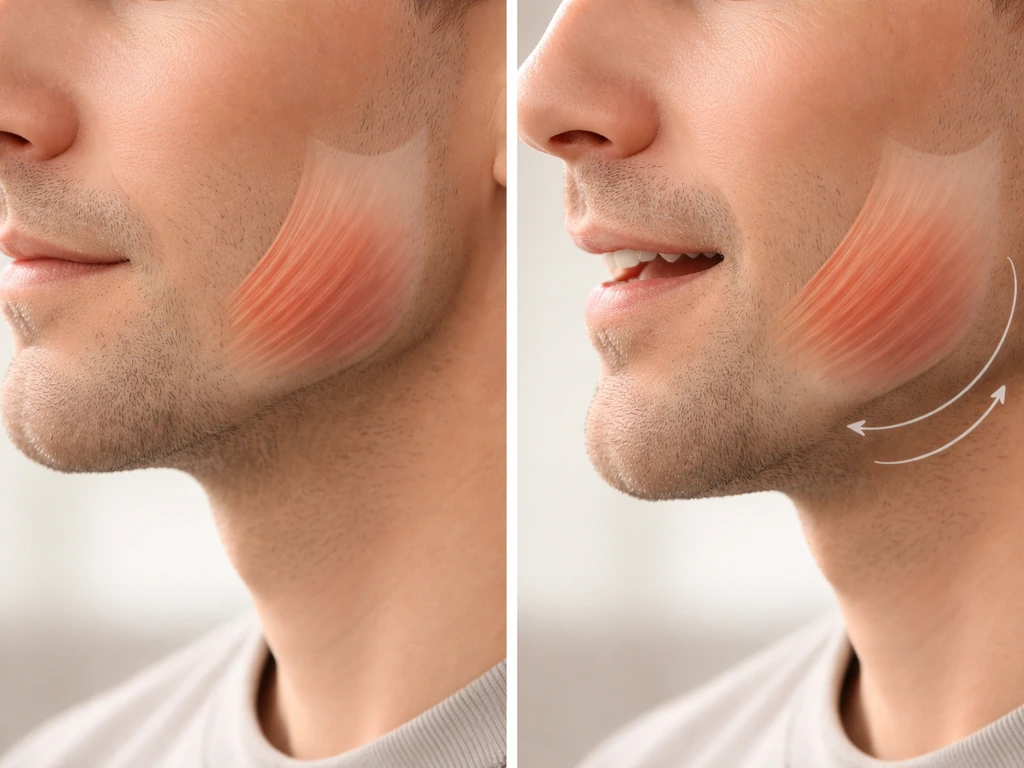
The masseter is one of the primary muscles of mastication. Its job is to elevate the mandible (close your mouth) and generate the biting force needed to grind and chew food. It's a skeletal muscle, which means it responds to the same basic growth signals as your biceps or quads: mechanical loading. When a muscle is placed under sufficient tension repeatedly over time, it triggers intracellular signaling that drives muscle protein synthesis, increases fiber cross-sectional area, and remodels the muscle's internal architecture. That process is hypertrophy, and it applies to jaw muscles just as much as leg muscles.
Chewing gum creates repeated low-level contractions of the masseter. Each chew is essentially a small resistance rep. The question isn't whether that stimulus exists; it's whether it's strong enough, frequent enough, and progressive enough to actually drive meaningful muscle growth. Spoiler: in most cases, it isn't, but the mechanism is at least real.
What the research actually says about masseter size and gum chewing
There are legitimate randomized controlled trials studying gum-chewing as a jaw training intervention. Researchers have measured outcomes like masseter muscle thickness (via ultrasound), occlusal force, bite force, and mandibular shape. A systematic review of these studies found that gum-chewing training did improve some orofacial function variables in healthy adults, including maximum tongue pressure, cheek pressure, occlusal contact force, and maximal bite force. That's a real functional improvement.
However, that same body of research found that some studies showed no positive effects on EMG activity or masticatory muscle outcomes specifically. In older adults, gum-chewing training has been shown to improve maximum bite force, which is a meaningful finding for that population. In a randomized controlled trial in older adults, gum-chewing training led to significantly higher maximum bite force after the intervention compared with baseline In older adults, gum-chewing training has been shown to improve maximum bite force. But improved bite force doesn't automatically mean bigger muscle. Strength gains can come from neural adaptations, improved coordination, and motor unit recruitment changes long before visible hypertrophy kicks in.
Ultrasound is the standard tool for measuring masseter thickness, and it can detect real differences between resting and contracted states. The catch is that some apparent thickness changes are state-dependent: the muscle looks thicker during contraction simply because it's contracting, not because it's grown. Long-term structural hypertrophy requires consistent progressive loading over weeks to months, and gum chewing rarely provides the intensity or progressive overload needed to drive that kind of change reliably.
The dose problem: how much chewing is actually needed

This is where gum chewing as a training method really falls apart for most people. Gum study protocols that actually showed functional improvements weren't casual chewing sessions. One structured dosing example from the systematic review involved 15 minutes of total daily gum chewing broken into three 5-minute sessions. That's deliberate, timed, consistent training, not absent-minded chewing during a Zoom call.
Even more telling: one intervention measured that chewing gum for 5 minutes on one side at less than maximal contraction actually decreased resting masseter muscle output as measured by surface EMG. That suggests that casual, submaximal gum chewing may not even maintain existing muscle activation levels in some contexts, let alone build new tissue.
Compare that to what the resistance training literature tells us about hypertrophy: you need sufficient mechanical tension, adequate volume, and progressive overload over time. Gum provides low resistance, low tension, and no mechanism for progression. You can't add more weight to gum. For most people, their actual daily gum chewing (a stick here and there, mostly casual) is nowhere near the structured dosing used in studies that showed even modest functional benefits.
What to realistically expect: strength, size, and timeline
If you commit to a structured gum-chewing protocol (think deliberate sessions, consistent frequency, at least 4 weeks minimum), here's an honest breakdown of what you might experience.
| Outcome | Realistic Expectation | Timeline |
|---|---|---|
| Bite force improvement | Modest gains possible, especially in older adults or those with reduced jaw use | 4–8 weeks of consistent training |
| Masseter strength (functional) | Likely improved via neural adaptation before any structural change | 4–12 weeks |
| Visible muscle size (hypertrophy) | Minimal to none from gum alone; requires higher-intensity progressive loading | Unlikely without dedicated jaw training |
| Jaw appearance change | Very unlikely from gum chewing; body fat, genetics, and facial structure dominate appearance | N/A for gum alone |
| Endurance/chewing efficiency | Possible improvement, particularly relevant for older adults | 4–6 weeks |
The bottom line is that gum chewing is more likely to improve jaw endurance and bite force function than to produce the kind of visible masseter hypertrophy that would change how your jaw looks. The bottom line is that gum chewing is more likely to improve jaw endurance and bite force function than to produce the kind of visible masseter hypertrophy that would change how your jaw looks, and that is quite different from questions like can smooth muscle grow. Visible changes in jaw mass depend heavily on genetics, body fat levels, and the intensity of your training stimulus. Gum chewing simply doesn't clear the bar for the last one.
Risks you need to know before you start chewing more
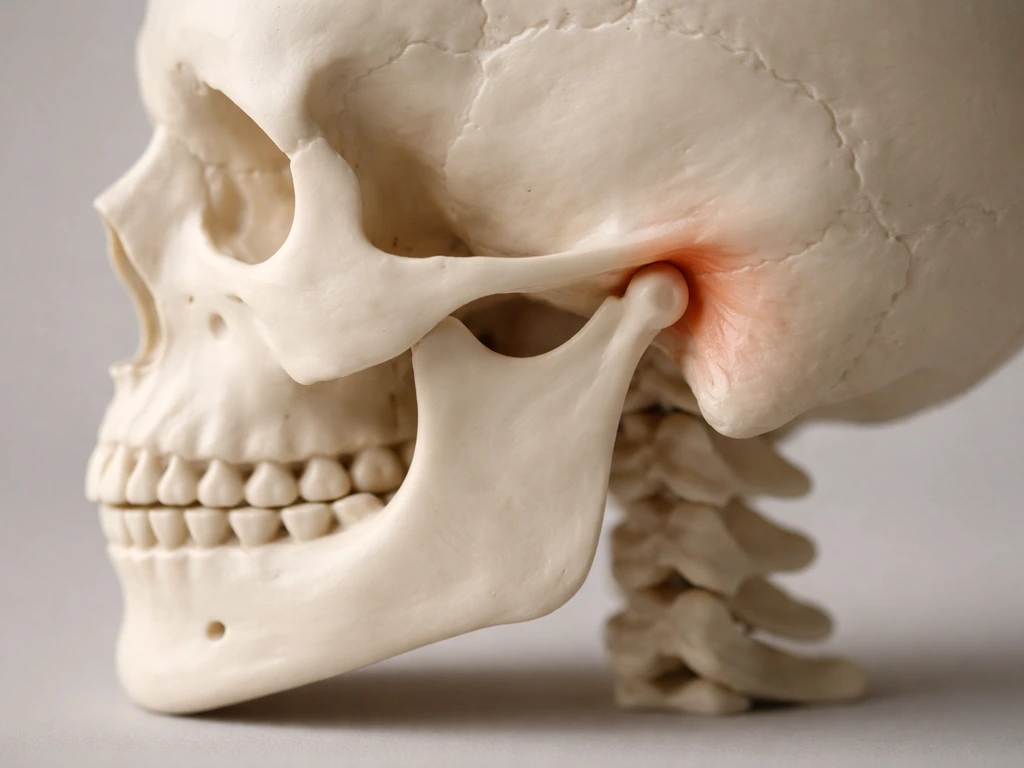
This is the section most fitness content skips, and it matters. The masseter is intimately connected to the temporomandibular joint (TMJ), and overuse of the jaw muscles can create real problems. The USC Orofacial Pain and Oral Medicine Center explicitly advises patients to eliminate gum from their lifestyle, noting there is enough evidence that gum chewing can cause TMJ pain and headaches. Multiple clinical self-care programs for temporomandibular disorder (TMD) list avoiding gum as a first-line recommendation.
Beyond joint pain, excessive occlusal force over time is linked to accelerated tooth wear, damage to dental restorations, and enamel erosion. This is the same mechanism that makes bruxism (teeth grinding) destructive: sustained or excessive jaw muscle loading creates forces your teeth and joint weren't designed to sustain indefinitely.
You should stop chewing gum and talk to a healthcare provider if you experience any of the following.
- Jaw pain or soreness that persists after chewing sessions
- Clicking, popping, or locking of the jaw joint
- Headaches, especially at the temples or behind the eyes
- Ear pain or a feeling of fullness in the ear
- Tooth sensitivity or visible wear on tooth surfaces
- Neck or facial muscle tension that doesn't resolve with rest
Certain people should avoid gum chewing as a training method entirely: anyone with existing TMD or TMJ dysfunction, people with chronic jaw pain or bruxism, those with significant dental restorations or enamel erosion, and anyone who has had jaw surgery or structural jaw issues. For this group, even sugar-free gum marketed for oral health is a risk, not a benefit.
Better ways to actually grow the masseter
If your real goal is to develop the masseter muscle, whether for functional reasons, aesthetic reasons, or both, gum chewing is the lowest-rung tool available. If you want to learn how to grow smooth muscle, focus on the specific biology and training approach for smooth muscle tissue grow the masseter muscle. If you're specifically looking for how to grow smooth muscle, the approach and biology are very different from skeletal muscle like the masseter. Here's what the evidence and training principles point to instead.
Isometric jaw exercises
Randomized controlled trials have used isometric jaw exercises to assess masseter muscle thickness via ultrasound in older adults, with structured protocols running twice daily for 4-week periods. Isometric contractions (pressing the jaw against resistance without movement) allow you to generate higher force than gum chewing, which is closer to the mechanical tension threshold needed for hypertrophy. These can be done with your hand providing gentle resistance or with purpose-built jaw trainers.
Chewing harder, denser foods strategically
Whole foods that require genuine chewing effort (raw carrots, tough cuts of lean meat, fibrous vegetables) provide more resistance than gum and come with nutritional benefits. This isn't glamorous advice, but it's grounded in the same loading principle: more resistance means more mechanical tension, which means a stronger training signal.
Progressive loading with jaw trainers
Commercial jaw resistance devices (silicone chewing trainers with defined resistance levels) allow something gum never can: progressive overload. You can move from lower resistance to higher resistance as your jaw adapts, mirroring how you'd program any other muscle group. Research has also looked at neuromuscular electrical stimulation (NMES) combined with chewing exercises as a way to amplify jaw muscle activation beyond what voluntary effort alone produces, though that's a clinical tool rather than something you'd use at home.
Support your jaw training with general muscle-building fundamentals
The masseter responds to the same recovery and nutrition signals as every other skeletal muscle. If you're not eating enough protein (typically 1.6 to 2.2 grams per kilogram of body weight per day for muscle growth), not sleeping enough, or chronically under-recovered, no jaw training program will produce optimal results. This is the same framework that applies to building muscle anywhere in the body: consistent mechanical stimulus plus adequate nutrition plus sufficient recovery. The jaw isn't a special case.
Your practical plan starting today
Here's how to approach this sensibly based on everything above. If you want the step-by-step approach, see how to grow masseter muscle for progressive jaw training that focuses on tension and hypertrophy.
- Decide your actual goal first. If you want better jaw function or bite force (especially relevant for older adults or those recovering from reduced jaw use), structured gum chewing in timed sessions can be a reasonable starting point. If you want visible masseter hypertrophy, skip gum and go straight to isometric exercises or a progressive jaw trainer.
- If you try gum-based training, make it structured: three 5-minute sessions per day, using a firmer sugar-free gum, chewing deliberately (not mindlessly), alternating sides to avoid asymmetry. Do this consistently for at least 4 weeks before evaluating results.
- Add isometric jaw exercises 2 times per day. Apply gentle upward resistance with your hand under your chin as you try to open your mouth, and gentle downward resistance on your chin as you close. Hold each for 5 to 10 seconds. Start with 3 sets per direction and build from there.
- Track your progress properly. Functional tracking is easier than visual: measure your maximum comfortable bite force by biting down on a firm food item and noting endurance and comfort over weeks. If you have access to a clinician who uses ultrasound, a baseline and follow-up measurement of masseter thickness is the gold standard.
- Monitor for warning signs every week. If you feel jaw soreness, joint clicking, or headaches, cut volume immediately and rest for several days. Don't push through jaw pain the way you might push through muscle soreness in a gym lift.
- Lock in your nutrition and sleep. Protein targets, sleep quality, and recovery habits are just as relevant for jaw muscle growth as for any other muscle. If you're already dialed in here, your jaw training will be more productive. If you're not, that's the higher-leverage fix.
- Reassess after 6 to 8 weeks. If you've been consistent and want more progress, graduate to a dedicated jaw resistance trainer with progressive resistance levels. If you've had persistent pain or discomfort, stop and consult a dentist or orofacial pain specialist before continuing.
The masseter muscle is a real skeletal muscle that can grow and adapt, and it's worth understanding how face muscles in general respond to training. If you are trying to make can face muscles grow, focus on progressive resistance and adequate training stimulus instead of relying on gum. But gum chewing sits at the very low end of the effective-stimulus spectrum. It's not useless, but it's not going to give you the jaw development most people searching this question are actually after. Use it as a supplement to real jaw training, not as the training itself, and you'll have a much clearer picture of what's actually working.
FAQ
If gum does not grow the masseter much, is there any point in chewing at all?
For most people, casual gum chewing will not drive visible masseter hypertrophy because it lacks progressive overload. If you do use gum, treat it like a timed training tool (not background habit), and be realistic that any benefit is more likely to be endurance or bite strength than jaw-size change.
What symptoms mean gum chewing is making my TMJ or jaw worse?
To minimize risk, avoid chewing if your jaw clicks, locks, or feels painful during or after chewing. Also stop if you notice new headaches, ear pressure, or worsening facial soreness, since these can signal TMJ irritation rather than training adaptation.
Is sugar-free gum safer for masseter growth or TMJ health than regular gum?
Sugar-free gum can still increase occlusal loading, so it does not meaningfully reduce the mechanical risks to your jaw and teeth. “No sugar” helps with cavities, but it does not make the training stress on your masseter and TMJ safer.
Why might my bite feel stronger even if my masseter size does not increase?
Even if gum slightly improves bite force, you can gain strength without measurable thickness increases. Early changes often come from better motor coordination and neural drive, so you may feel “stronger” before you ever see structural growth.
How reliable is ultrasound for telling whether gum grew my masseter?
Yes, measuring can be misleading. Ultrasound thickness changes during contraction can look like growth even when the muscle is simply contracting or swelling temporarily. True hypertrophy requires consistent, time-based training and you would expect resting measurements to shift over weeks.
What’s a better substitute for gum if my goal is jaw muscle development?
If you want the closest “training” alternative to gum, use isometric jaw work (pressing the jaw against gentle resistance) or graded jaw-resistance devices that let you increase difficulty over time. Whole foods that genuinely require harder chewing can also add resistance, but progress is less controllable.
Who should avoid gum chewing as a jaw-training method?
If you have existing TMD, chronic jaw pain, bruxism, significant enamel erosion, or major dental restorations, gum chewing can be a poor choice because it increases repetitive bite forces. In these cases, skipping gum and getting individualized guidance from a dentist or orofacial pain clinician is the safer first move.
How can I tell whether gum sessions are too much for my jaw?
A practical sign is pain-free tolerance: if you can chew for short, structured sessions without increased jaw pain the next day, that is a better indicator than muscle soreness alone. Persistent or worsening discomfort, however, is a stop signal.
Does chewing gum “just sometimes” still help, or does it need to be consistent?
If your schedule is inconsistent, gum rarely becomes an effective enough stimulus to change resting masseter size. If you cannot commit to consistent, timed sessions, it’s usually better to invest that effort into a progressive jaw-resistance routine where the dose and difficulty are easier to control.