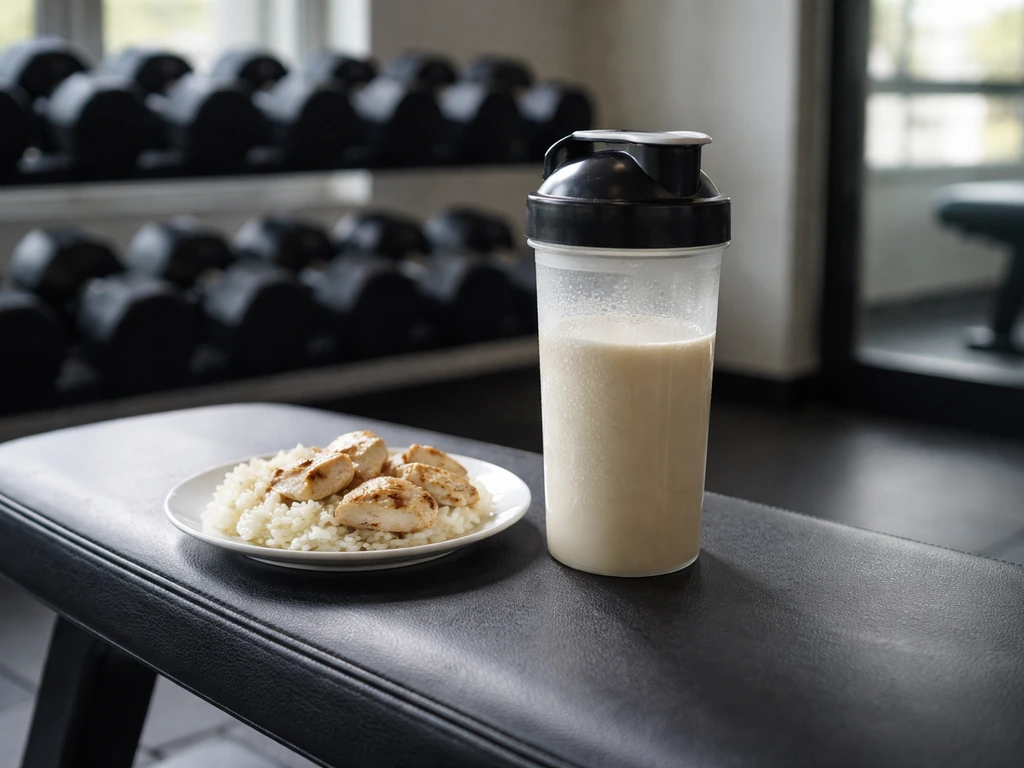
Yes, whey protein can help you grow muscle, but not on its own. What it does is give your body high-quality protein, packed with leucine and essential amino acids, that stimulates muscle protein synthesis (MPS) after resistance training. Whey doesn't replace the training stimulus or your overall diet. Think of it as a convenient, effective tool for hitting your daily protein target, one that happens to work exceptionally well around workouts. If you're training consistently and eating enough, adding whey can absolutely move the needle on muscle growth.
Does Whey Protein Grow Muscle? Evidence and Dosing Guide

Marcus Kellerman
4 Jun 2026
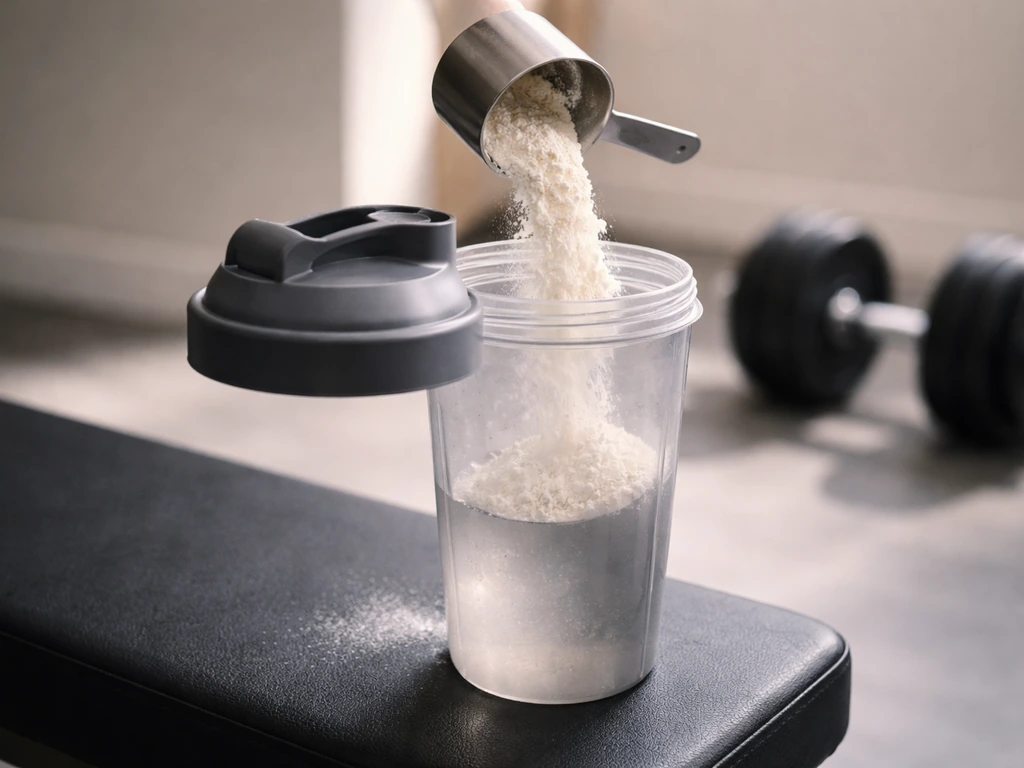
How whey actually triggers muscle growth
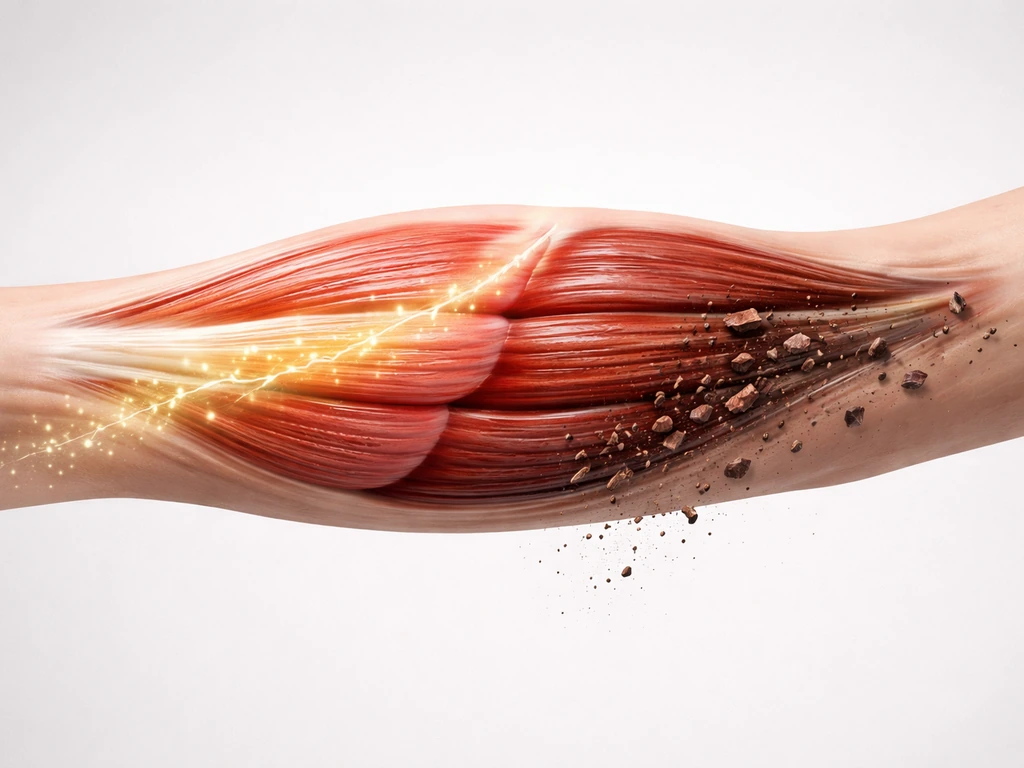
Muscle growth comes down to a balance between muscle protein synthesis and muscle protein breakdown. When MPS consistently outpaces breakdown over days and weeks, you accumulate new muscle tissue. Resistance training kicks off that process, but protein (specifically the amino acids you absorb from it) is what fuels the construction side of the equation.
Whey is a fast-digesting protein derived from cow's milk, and it stands out for two reasons. First, it has a complete amino acid profile with a high concentration of leucine, the amino acid that acts as the primary trigger for MPS via the mTOR signaling pathway. Second, because it digests quickly, it floods your bloodstream with amino acids fast, producing a sharp, robust spike in MPS after a workout. Research comparing protein sources head-to-head after resistance exercise found MPS from whey to be around 122% greater than casein and about 31% greater than soy in acute measurements. That's a meaningful difference in the short term, even if the long-term picture is more nuanced.
Over time, consistently stimulating MPS through training, protein intake, and recovery is what adds up to visible muscle gain. Whey's speed and leucine content make it particularly well-suited to doing that job efficiently after a training session.
How much whey to take and when
Grams per serving
For most people, around 20 grams of whey protein per serving is the sweet spot for maximizing MPS after exercise. Research shows that myofibrillar MPS increases roughly 49% with 20 g of whey and about 56% with 40 g, meaning doubling the dose gives only a modest extra bump of 10 to 20%. That said, 40 g can make sense if your next meal is six or more hours away, or if you're a larger, heavily muscled individual. Going much higher than that in a single sitting doesn't add much; excess amino acids get oxidized for energy rather than going into muscle.
Daily total and timing
Your total daily protein intake matters far more than any single dose or timing strategy. A protein dose, response meta-analysis (0.5 to 3.5 g/kg body weight/day) found total protein intake is positively associated with lean mass gains across that dosing range, not just calories alone protein dose–response meta-analysis (0.5 to 3.5 g/kg body weight/day). For most people who train, a target of 1.4 to 2.0 grams of protein per kilogram of body weight per day covers muscle growth and maintenance. If you're in a calorie deficit (cutting while trying to preserve muscle), bumping that up toward 2.3 to 3.1 g per kg of fat-free mass per day helps protect what you've built. Research suggests gains level off around 1.62 g/kg/day for most people doing resistance training, so chasing numbers well above 2.0 g/kg probably isn't worth it unless you're specifically dieting or an outlier.
Timing does matter somewhat, but don't overthink it. Taking whey within a couple of hours before or after a resistance training session is associated with greater MPS and mTOR activation compared with skipping peri-workout protein entirely. That said, the International Society of Sports Nutrition is clear that timing benefits are most reliable when total daily protein is already adequate. In other words, hitting your daily number across three to five meals or servings is the foundation. Using whey as your post-workout protein is a practical way to simultaneously nail your timing and your totals.
Whey vs other proteins: does the source really matter?

Whey wins in acute MPS comparisons, but the longer-term picture is closer than you might expect. Here's a practical breakdown:
| Protein Source | Digestion Speed | Leucine Content | Acute MPS Response | Best Use Case |
|---|---|---|---|---|
| Whey | Fast | High (~10–11% of protein) | Highest | Post-workout, anytime you need a quick hit |
| Casein | Slow | Moderate | Lower acutely, sustained longer | Before bed or when meals are far apart |
| Soy | Moderate | Moderate | ~31% lower than whey acutely | Good plant-based alternative when leucine is matched |
| Mixed plant proteins | Varies | Varies | Similar to whey when leucine-matched | When dairy-free; combine sources to complete amino acids |
A 12-week resistance training trial found no significant differences in muscle growth or strength between soy and whey when both were matched for leucine content. A separate meta-analysis came to a similar conclusion: soy produces comparable lean mass and strength gains to animal-based proteins when total protein and leucine are equated. So the practical takeaway is this: whey is the most convenient, leucine-dense option, making it the easiest choice for most people. But if you can't use whey or prefer another source, matching your total daily protein and leucine content largely closes the gap.
Casein has its own role. Because it digests slowly and delivers amino acids steadily over four to seven hours, it may be worth using before bed or in longer gaps between meals. Whey and casein aren't competitors so much as tools for different situations. Some lifters use both.
Whey alone won't do it: what else needs to be in place
Whey is a supplement in the literal sense: it supplements an otherwise solid approach. If you're not training with progressive overload, not eating enough calories, or not sleeping, whey won't save you. If you're wondering whether BCAA supplements can grow muscle, the key issue is that muscle growth still depends on getting enough total protein and triggering muscle protein synthesis. If you are wondering whether Pilates can grow muscle, it depends on how intense your sessions are and whether you progressively challenge your body over time. Here's what actually drives muscle growth, with protein fitting into the picture:
- Progressive resistance training: you need to consistently challenge your muscles with increasing load, volume, or difficulty over time. This is the non-negotiable driver of hypertrophy.
- Sufficient total calories: building muscle requires at minimum a neutral energy balance, and often a slight caloric surplus (roughly 200 to 300 calories above maintenance for most people). You can build muscle in a small deficit, but it's slower and harder.
- Adequate carbohydrates: carbs fuel training and support recovery by replenishing glycogen. They also have a protein-sparing effect, meaning they reduce the amount of protein your body burns for energy.
- Total daily protein: aim for 1.4 to 2.0 g/kg/day spread across meals, using food first and whey to fill gaps.
- Sleep and recovery: muscle is built during rest, not during the workout itself. Seven to nine hours of sleep is where a lot of the adaptation happens.
Whey fits into this picture by making it easier to hit your daily protein target without eating five chicken breasts. It's quick, portable, and predictable in its amino acid content. Think of it as a reliable backup for days when whole-food protein is inconvenient, not as a replacement for a solid diet.
Who benefits most from whey, and who should think twice

Who gets the most out of it
- Beginners and intermediate lifters: if you're not consistently hitting 1.4 to 2.0 g/kg/day of protein from food, whey is the simplest fix.
- Older adults: muscle protein synthesis becomes less sensitive to protein as you age (called anabolic resistance), meaning you may need more leucine per serving to get the same MPS signal. Whey's high leucine content (~2.8 g per 25 g serving) makes it especially useful here. Research suggests the leucine threshold for robust MPS is higher in older adults than in younger people.
- People in a caloric deficit: whey helps preserve lean mass when calories are restricted. A study found whey maintained myofibrillar protein synthesis during short-term energy restriction compared to an isocaloric carbohydrate control.
- Anyone who struggles to eat enough protein from whole foods: athletes with high volume, people with small appetites, or those with busy schedules often find whey fills the gap efficiently.
Who needs to be careful or look for alternatives
- Lactose intolerance: whey concentrate contains small amounts of lactose. Whey isolate has most of the lactose removed and is often well-tolerated by people with lactose intolerance. If you're still getting digestive issues with isolate, a plant-based protein (pea, rice, or soy) is a sensible switch.
- Milk allergy (not the same as lactose intolerance): if you have a true allergy to cow's milk proteins, whey is off the table entirely, as it's a milk-derived protein. Both Johns Hopkins and food allergy organizations are clear that whey-containing products should be strictly avoided if you have a milk allergy. Plant-based proteins are the right choice here.
- Kidney disease: for healthy adults, there's no consistent evidence that high-protein diets (including whey supplementation) damage kidney function. Systematic reviews of healthy populations show no adverse effects on GFR or kidney markers. However, if you have existing chronic kidney disease, your doctor or dietitian may recommend limiting protein intake depending on your eGFR. Don't self-prescribe high-protein diets in that context.
- People already hitting protein targets from whole food: if you're eating 170 g of protein daily from chicken, eggs, fish, and Greek yogurt, adding whey shakes on top isn't going to produce additional muscle growth.
Choosing a product
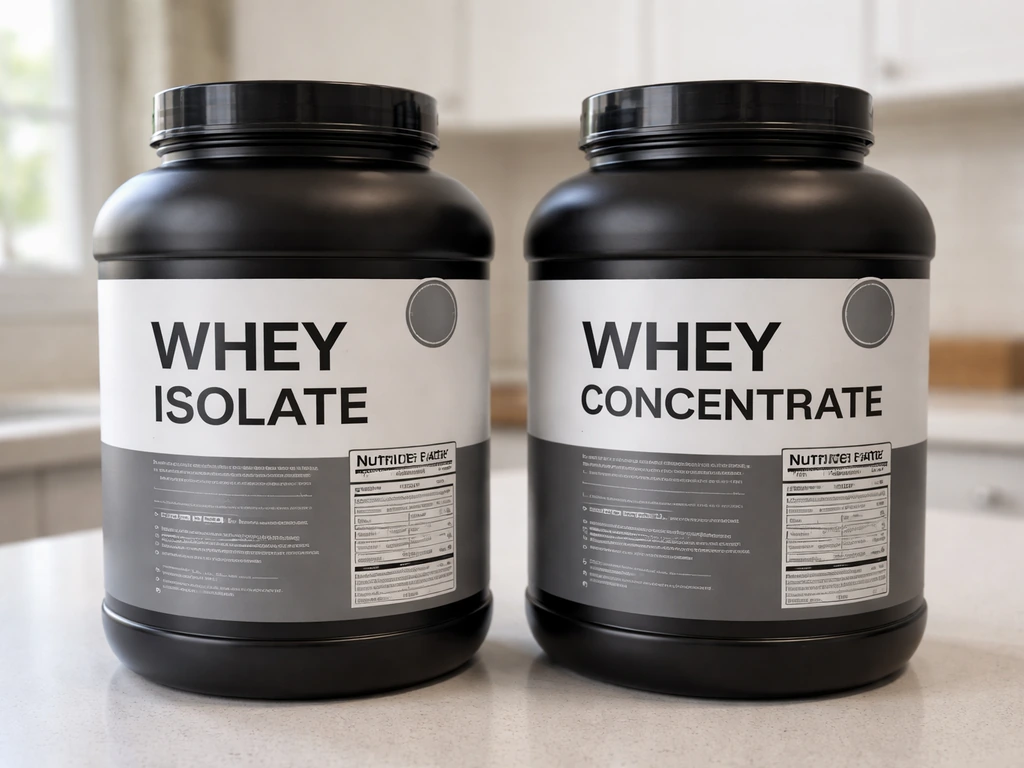
Look for a whey isolate or a quality concentrate with at least 20 to 25 grams of protein per serving and minimal added sugars. Third-party tested products (NSF Certified for Sport, Informed Sport, or Informed Choice logos) give you confidence that what's on the label is actually in the container. Flavoring and texture are personal preferences; the protein content is what matters.
What results to expect and how to track them
Be realistic about timelines. Noticeable muscle gain takes time even under good conditions. If you want to know whether gaining muscle makes your waist grow, the key is how your body composition changes and whether you are in a surplus or deficit. For most people training consistently with adequate protein, expect meaningful changes in body composition to take eight to twelve weeks before they're visible in the mirror or measurable on a scale. Early gains (first two to four weeks) are largely neuromuscular, meaning your nervous system is adapting and you're getting stronger without a lot of actual muscle tissue being added yet. Actual hypertrophy ramps up after that initial phase.
Adding whey to an already-good program probably won't produce dramatic overnight changes if your diet was close to adequate beforehand. But if you were under-eating protein, the difference can be noticeable within six to eight weeks: better recovery between sessions, less soreness, and gradual strength increases that compound into real size gains over time.
What to actually track
- Strength progression: are you lifting more weight or doing more reps with the same weight over four to six week blocks? This is the most reliable early indicator that your muscles are adapting.
- Body measurements: measure upper arms, chest, thighs, and waist every four weeks. The scale lies (muscle is denser than fat), but a tape measure tells a cleaner story.
- Body weight trend over time: weigh yourself three to four mornings per week and average the numbers. A slow upward trend of 0.25 to 0.5 kg per month in a bulk, or stable weight with increasing strength in a recomp, signals you're on track.
- Training performance and recovery: are you recovering between sessions? Are workouts feeling productive rather than depleted? Better recovery is often the first thing people notice when protein intake improves.
- Progress photos: taken in the same lighting, same angles, every four weeks. Subjective, but often motivating and useful for seeing gradual changes you stop noticing day to day.
Evaluate your approach after at least eight to twelve weeks before deciding it isn't working. Muscle growth is slow by nature, and protein supplements don't change that timeline as much as consistency does. If strength is going up and you're recovering well, the process is working even if the mirror hasn't caught up yet.
One more thing worth noting: whey is one of the most studied and practical protein supplements out there, but it's not the only tool with evidence behind it. blank" rel="noopener noreferrer">ACSM maintains a repository of its position stands, and the ACSM page is an index/landing page for those pronouncements rather than a single protein supplementation hypertrophy statement. Do peptides (like collagen peptides) actually help you grow muscle, and how do they compare with whey? If you're exploring other supplements in this space, ingredients like branched-chain amino acids (BCAAs) and adaptogens such as ashwagandha have also been studied for their roles in muscle recovery and growth, though their effects differ from what whey delivers. Whey's advantage is that it provides complete protein with a full amino acid profile, not just isolated components.
FAQ
How much whey should I take if I already hit my daily protein with food?
If you already consistently meet your daily protein target, whey is optional. Use it only to fill specific gaps (for example, you cannot reach your total protein on a travel day), otherwise it can displace whole foods without adding meaningful extra muscle growth. Track total protein for 3 to 7 days to confirm you are actually short before increasing servings.
Does whey grow muscle if I do not lift weights or do progressive overload?
Whey cannot replace the training stimulus. If resistance training is missing or not progressing, you may build less muscle, even if protein intake is high, because muscle protein synthesis is not repeatedly stimulated with adequate effort. In that case, whey may still help overall recovery and maintenance, but it will not drive hypertrophy by itself.
Is it better to take whey right after my workout or before?
Either can work if it helps you hit daily protein and peri-workout timing. If your next meal is several hours away or you tend to miss post-workout eating, taking whey within a couple of hours after training is a convenient option. If you struggle to eat early but can eat later, a pre-workout or between-meals dose may fit better, as long as totals for the day are reached.
What if I am lactose intolerant, can I still use whey?
Many lactose-intolerant people do fine with whey isolate because it has less lactose than concentrate, but sensitivity varies. If symptoms occur, switch to isolate, reduce the dose, or try a non-dairy complete protein source. Also consider taking it with food to slow digestion, especially if you get stomach discomfort.
Should I take more than 40 grams at once to maximize muscle gain?
More is not always better. Beyond a certain point, extra amino acids are more likely to be oxidized rather than used for muscle. If you want a larger dose, splitting it across meals or servings is usually more effective than one very large shake.
Do I need whey if I am vegetarian or vegan?
You do not need whey, you need complete daily protein that is high enough in essential amino acids and leucine. If you avoid dairy, plant proteins can work well, but you may need to combine sources and adjust serving sizes to match leucine and total protein. Using whey is just a convenient shortcut if it fits your diet.
Does whey help cutting or will it make me gain fat?
Whey itself does not cause fat gain, total calories do. During a calorie deficit, whey can help preserve muscle by making it easier to reach a higher protein intake while keeping calories controlled. If you notice fat gain, the most common cause is that overall calories are higher than you think due to added snacks or sweetened mix-ins.
Can I use whey to increase strength even before I see muscle size?
Yes. In the first weeks of training, strength gains often outpace visible size due to nervous system adaptations and improved coordination. Whey can support recovery and provide amino acids for muscle building, but it will not make hypertrophy immediate, so look at strength and performance alongside body measurements over time.
What should I look for on a whey label to be sure it is worth buying?
Aim for products that provide about 20 to 25 grams of protein per serving with minimal added sugar and a clear nutrition label. Choosing isolate or a higher-quality concentrate can reduce unwanted carbs or lactose if that matters to you. Third-party testing can reduce the risk of contamination, but protein per serving and overall ingredients still matter.
Is whey isolate better than whey concentrate for muscle growth?
For most people, muscle growth results are similar when the doses and total daily protein are matched, because the key factors are total protein, essential amino acids, and leucine. Isolate can be preferable if you want less lactose, fewer carbs, or easier digestion. If your budget is tighter, concentrate is often a cost-effective choice.
How long should I wait before deciding whey is not working for me?
Give it at least 8 to 12 weeks after implementing consistent training and adequate total protein. If strength is improving and you are recovering well, the process is likely working even if the mirror changes lag. If nothing improves after 12 weeks, reevaluate training progression, sleep, calorie balance, and whether your total protein is truly reaching your target.