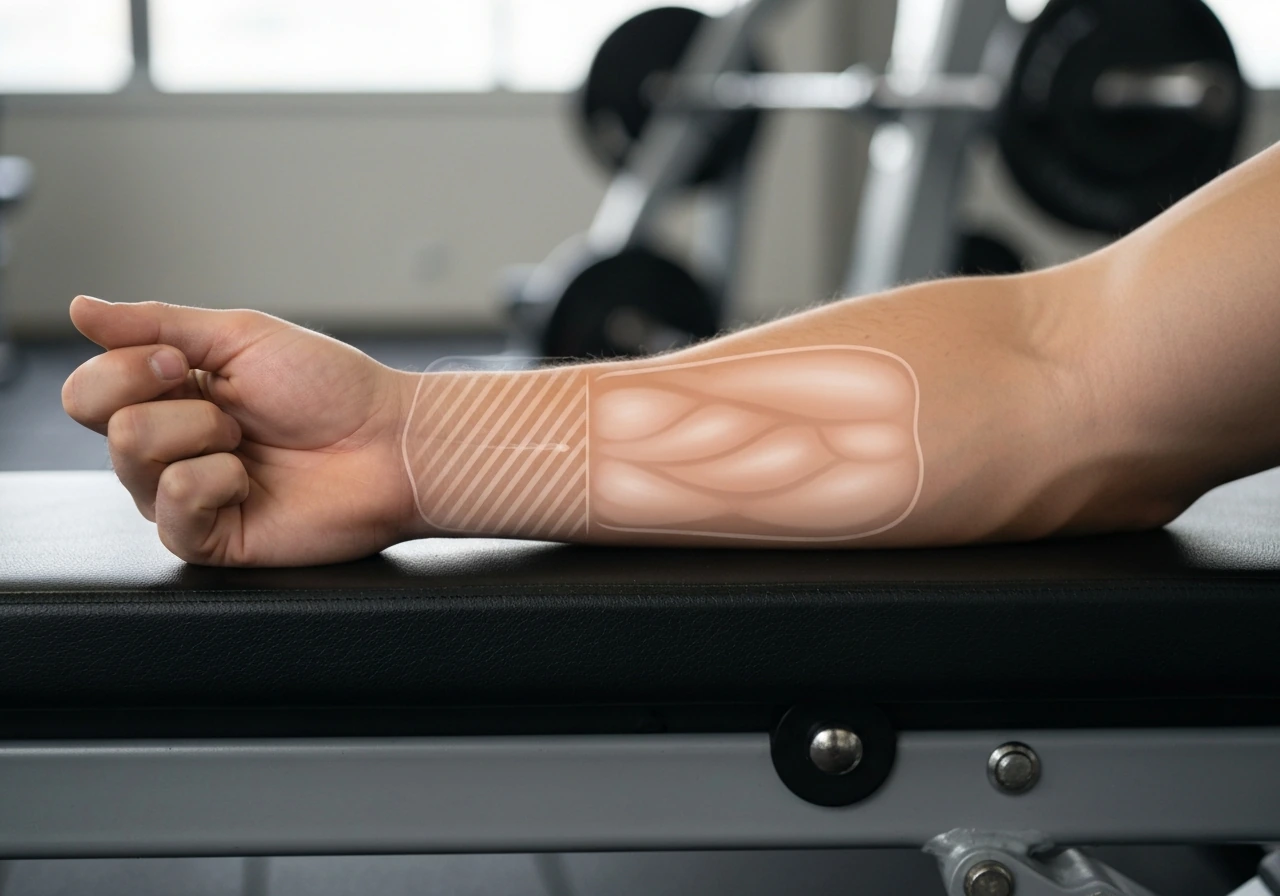
You can grow fast-twitch muscle fibers, and the training approach is different enough from typical hypertrophy work that it's worth doing deliberately. The core strategy is combining heavy compound lifts, explosive power work (sprints, jumps, med ball throws), and moderate-rep strength sets with long rest periods, then backing that up with enough protein, calories, and sleep to actually build tissue. You won't fully convert one fiber type into another, but you can make your fast-twitch fibers significantly bigger, stronger, and better recruited, and that's what actually shows up in how you look and perform. In practice, the fastest muscle to grow is usually the fast-twitch dominant muscles you train hard with progressive overload.
How to Grow Fast Twitch Muscles: Training Plan and Timeline

Marcus Kellerman
27 Apr 2026

What fast-twitch fibers actually are (and what you can realistically change)
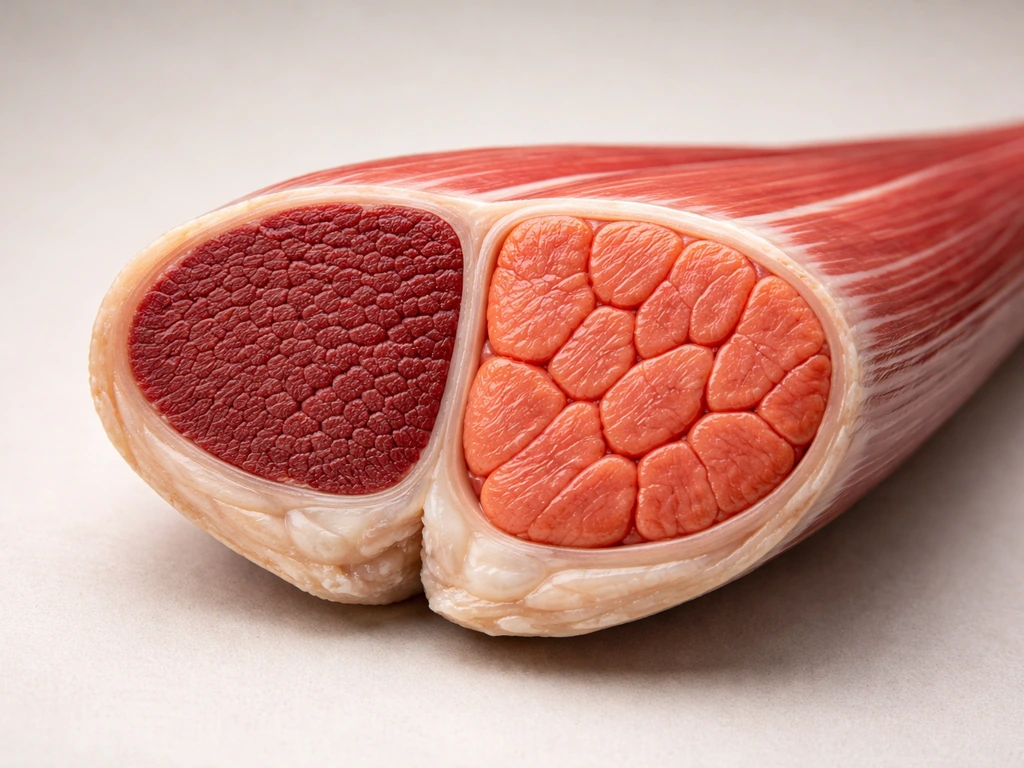
Human skeletal muscle has three main fiber types: type I (slow-twitch, highly fatigue-resistant, aerobic), type IIa (fast oxidative glycolytic, intermediate in both speed and fatigue resistance), and type IIx, sometimes called IIb-like in humans (the most powerful, most fatigable, and most glycolytic). When people talk about 'fast-twitch muscles,' they mostly mean type IIa and IIx fibers. These fibers contract faster, generate more force per fiber, and are bigger in cross-section than type I fibers in most people, which is exactly why targeting them pays off for both size and power.
Your fiber-type distribution is partly genetic, and you can't fully override that. The research is clear that complete phenotype conversion, turning a type I fiber permanently into a type IIx, doesn't happen in humans. What does happen is partial shifting, mainly between the IIa and IIx subtypes, and meaningful changes in fiber size (cross-sectional area) and neuromuscular recruitment. Sprint and power training can nudge the balance toward faster phenotypes in some studies, but the effect is typically partial. The bigger win from targeted training is neural: you get better at recruiting your existing fast-twitch fibers more forcefully and rapidly, and those fibers get bigger. Both matter.
One important myth to kill early: fast-twitch fibers aren't just for sprinters or elite athletes. Everyone has them, and in untrained people they're often underdeveloped precisely because everyday movement and light cardio barely recruit them. If you've never trained explosively or lifted heavy, you have a lot of untapped fast-twitch potential sitting there.
Can you actually grow fast-twitch fibers? Realistic outcomes and timelines
Yes, fast-twitch fibers respond to hypertrophy training and often grow more than slow-twitch fibers under the right stimulus. The catch is that structural gains take time, most resistance training research shows measurable hypertrophy changes on timelines of 6 to 24 weeks, not days. Don't expect to see visible size changes in two weeks. Fast-twitch muscle growth in the neck depends on targeting the neck muscles with progressive overload, since muscle tissue typically changes over weeks rather than days.
What you will notice sooner (often within 2 to 4 weeks) is improved power output and force production, because early gains are dominated by neural adaptations: better motor unit recruitment, faster rate coding, and improved inter-muscular coordination. The muscle tissue itself catches up later.
For a realistic 8-week picture: weeks 1 to 3 are mostly neural gains and technique improvement. Weeks 4 to 6, you should notice strength and power metrics clearly moving up. By weeks 6 to 8, muscle size changes start becoming measurable, especially in fast-twitch-dominant areas like glutes, hamstrings, quads, shoulders, and upper back. If you're a beginner, you'll see faster early progress. If you're more advanced, the gains are slower but the ceiling is higher with proper programming. Older adults can absolutely grow fast-twitch fibers, age slows but doesn't stop hypertrophy, and power training is actually one of the most important things older adults can do to preserve muscle quality.
One thing worth knowing: if you're asking whether fast-twitch fibers grow faster than slow-twitch fibers under a strength-focused program, the answer is generally yes, type II fibers tend to show greater hypertrophic response to heavy, low-rep, explosive training compared to type I fibers under the same protocol. That's an advantage you can deliberately exploit.
Training methods that actually hit fast-twitch fibers

Fast-twitch fibers are recruited when force demands are high or movement speed is high, or both. That means you need training that either loads heavy enough to demand maximum motor unit recruitment, moves fast enough to require high-threshold motor units, or fatigues the slow-twitch fibers first so the fast-twitch fibers have to step in. Here are the methods that deliver:
- Heavy compound lifting at 80–95% of your 1-rep max (1–5 reps): Squats, deadlifts, trap bar deadlifts, hip thrusts, bench press, rows, and overhead press at high intensities force maximum motor unit recruitment. This is your foundation.
- Explosive lifting (50–70% 1RM, moved as fast as possible): Jump squats, trap bar jumps, speed deadlifts, push press, and hang power cleans train rate of force development—a key fast-twitch quality. The bar speed is the point, not the load.
- Plyometrics: Box jumps, depth jumps, broad jumps, bounding, and medicine ball throws. Meta-analysis evidence supports plyometrics for improving power-related fitness in trained adults, and they're accessible at almost any training level.
- Sprint-style conditioning: Short sprints (10–40 meters), hill sprints, or sprint intervals on a bike or assault bike. These maximally recruit fast-twitch fibers in the lower body and create a potent metabolic stress that supports muscle growth.
- Moderate-rep sets taken close to failure (6–10 reps): As you fatigue during a set, your body recruits higher-threshold fast-twitch units to maintain force. Sets of 6–10 with controlled tempo—especially on compound movements—are excellent for fast-twitch hypertrophy.
One thing to avoid: doing all your training 'fast' with light loads. Light weights moved quickly don't create enough mechanical tension to meaningfully challenge fast-twitch fibers. You need both the speed intent and the load to be substantial. Combine heavy days with explosive days rather than choosing one or the other.
How to program volume, intensity, rest, and frequency
Programming for fast-twitch growth has a few specific requirements that differ from generic hypertrophy programs. Rest periods need to be longer (2 to 4 minutes between heavy and explosive sets) because fast-twitch fibers fatigue quickly and need more recovery to perform at their best next set. Cutting rest short just means you're training slower-twitch fibers by the end of the workout.
Frequency should be at least twice per week per muscle group, research supports that twice-weekly training promotes superior hypertrophic outcomes versus once-weekly when volume is equated.
A 2019 systematic review and meta-analysis found that once training volume is considered (equated), the overall difference between training a muscle 1 day per week versus 3+ days per week is modest, while higher frequency still tends to be favorable when volume is matched [difference between 1 day per week and 3+ days per week is modest once volume is equated](https://www. tandfonline. com/doi/abs/10. 1080/02640414.
2018. 1555906). And volume needs to accumulate: multiple sets per exercise (2 to 4 working sets minimum) consistently outperform single-set approaches for hypertrophy.
| Training Variable | Fast-Twitch Target | Notes |
|---|---|---|
| Intensity (heavy lifting) | 80–95% 1RM, 1–5 reps | Maximizes motor unit recruitment |
| Intensity (explosive work) | 50–70% 1RM, maximal intent | Rate of force development focus |
| Reps for hypertrophy | 4–8 reps per set | Can go up to 10 near failure |
| Sets per exercise | 3–4 working sets | Single sets are insufficient |
| Rest between sets | 2–4 minutes | Full recovery needed for quality reps |
| Frequency per muscle group | 2x per week minimum | Research-supported for hypertrophy |
| Weekly volume | 10–20 hard sets per muscle group | Build gradually; start at the lower end |
A practical 4-day split works well here: two lower-body days (one heavy strength focus, one explosive/power focus) and two upper-body days structured the same way. If you're training 3 days a week, use full-body sessions where you lead with a heavy compound, follow with an explosive movement, and finish with accessory work. The key principle is always to do your heavy or explosive work first, when your nervous system is fresh, and leave fatigue-based work for later in the session.
When you combine sprint work or plyometrics with lifting in the same session, schedule the power/speed work before the lifting, not after. Research on concurrent training shows that doing sprint intervals before strength training can reduce subsequent strength output, so at minimum separate them by several hours if you must do both in one day, or put them on different days when possible.
Progressive overload: the non-negotiable
Your fast-twitch fibers won't keep growing without progressively greater demands. Add 2.5 to 5 kg to your main lifts every 1 to 2 weeks when you can complete all reps cleanly. On explosive work, progress by adding load, increasing jump height targets, or shortening ground contact time. If you're running sprints, progress by reducing rest, adding a slight incline, or tracking and improving your split times. Log everything, if you're not tracking, you're guessing.
Nutrition to fuel fast-twitch muscle growth
Training is the stimulus, but nutrition is what actually builds the tissue. For fast-twitch hypertrophy specifically, you need to nail protein, overall calories, and carbohydrate timing around your hardest sessions.
Protein
Aim for 1.6 to 2.2 grams of protein per kilogram of bodyweight per day. The ISSN's position on protein and exercise supports 1.4 to 2.0 g/kg/day as sufficient for most exercising individuals to maintain a positive protein balance, and going slightly higher (up to 2.2 g/kg) gives you a useful buffer, especially if you're in a slight calorie deficit or doing high-volume training. Spread this across 3 to 5 meals rather than trying to hit it all at dinner. Each meal should contain at least 25 to 40 grams of a quality protein source.
Calories
You can't grow muscle efficiently in a large calorie deficit. For most people trying to add fast-twitch mass, a modest calorie surplus of 200 to 400 calories above your maintenance level is the sweet spot, enough to support muscle protein synthesis and recovery without excessive fat gain. If you're a beginner or returning from a long break, you can often make good progress at maintenance calories (body recomposition is real at this stage). Leaner doesn't always mean 'more fast-twitch', undereating consistently will limit your fast-twitch gains more than anything else.
Carbohydrates around hard sessions
Fast-twitch fibers run primarily on glycogen, which comes from carbohydrates. When you're doing heavy lifting, sprints, or plyometrics, your glycogen demands are high. Eat a carbohydrate-containing meal 1 to 2 hours before your session (rice, oats, potatoes, fruit, whatever works for you) and include carbs in your post-workout meal as well. Trying to do explosive, heavy training in a consistently depleted glycogen state will blunt your performance and your results. Low-carb approaches have their place, but they are not optimal for the type of high-intensity, fast-twitch training this program requires.
Supplements and recovery that actually matter
Creatine monohydrate
Creatine is the most well-supported supplement for the type of training that targets fast-twitch fibers. It replenishes phosphocreatine stores rapidly between high-intensity efforts, which directly benefits short-duration, explosive, and heavy work, exactly your training. The ISSN recommends either a loading protocol of around 20 grams per day (split into four 5-gram doses) for 5 to 7 days, followed by a maintenance dose of 3 to 5 grams per day, or simply starting at 3 grams per day for 28 days to reach the same elevated stores more gradually. Both approaches work. Creatine monohydrate is cheap, safe, and effective, there's no practical reason not to use it if your goal is fast-twitch performance and growth.
Sleep
Sleep is where the actual muscle repair and growth happens, and it's where the fast-twitch adaptations from your training get consolidated. Research consistently shows that sleep deprivation negatively impacts strength and power performance, the exact qualities you're trying to build. Aim for 7 to 9 hours per night. If your training quality has dropped, your recovery feels off, or your motivation is low, poor sleep is often the culprit before anything training- or nutrition-related. This is especially true for older adults, where insufficient sleep has associations with reduced muscle quality over time.
Deloads and managing fatigue
Heavy lifting and explosive work accumulate fatigue faster than moderate hypertrophy training, because the neuromuscular demand is higher. Plan a deload week every 4 to 6 weeks, reduce volume by about 40 to 50% (keep intensity similar) and focus on moving well, not working hard. You will not lose muscle in one easy week. You will, however, come back the following week noticeably stronger and more explosive, which is exactly what drives the next block of fast-twitch growth. Skipping deloads is one of the most common reasons progress stalls.
Other recovery basics
- Manage stress: Chronic high cortisol blunts muscle protein synthesis and impairs recovery from explosive training.
- Stay hydrated: Even mild dehydration impairs power output and force production.
- Don't over-rely on DOMS as a progress signal: Fast-twitch training can produce significant soreness early on, but soreness is not required for growth—especially after you've adapted to the training style.
- Caffeine (3–6 mg/kg before training): Practical, well-supported for improving power output, force production, and training volume on high-intensity sessions.
Your next 4 to 8 weeks: tracking and troubleshooting
Here's how to approach the next two months with clarity. The first two weeks are about learning the movements and establishing baselines, record your lifts, jump distances or heights, sprint times, and bodyweight. Don't chase intensity before technique is solid, especially on Olympic-style lifts or depth jumps. Weeks 3 through 6 are when you push progressive overload hard and start to see real power improvements. By weeks 6 to 8, you should see measurable size changes and significantly improved performance on your tracked exercises.
- Week 1–2: Establish movement quality and record baselines (main lift weights, jump height or distance, body measurements or photos, bodyweight).
- Week 3–6: Apply progressive overload consistently. Add load to main lifts when you complete all sets cleanly. Log every session.
- Week 4–5: Assess your energy levels, sleep quality, and performance trend. If power output is dropping, check sleep and calorie intake before assuming the program needs to change.
- Week 6: Plan your first deload. Reduce volume by ~50% for one week.
- Week 7–8: Return to full training with fresh legs. You should hit new personal bests on multiple lifts. Compare measurements and photos to week 1.
What to do if progress has stalled
If your strength and power metrics aren't moving after 4 to 6 weeks of consistent training, check these in order: Are you actually training with enough intensity on your main lifts (80%+ of 1RM)? Are you sleeping 7+ hours? Are you eating enough protein and total calories? Are you resting long enough between sets? Most stalls trace back to one of these four things, not a broken program. If you're genuinely plateaued on all of them after 8 weeks, increase weekly set volume by 2 to 4 sets per muscle group and reassess in another 3 to 4 weeks.
One more thing worth being honest about: if you've read questions like 'why won't my muscle grow? ' before, you already know that consistency is the part most people underestimate. The training stimulus for fast-twitch development is more demanding than typical gym work, but it's also more rewarding, both in terms of how you feel (more powerful, more athletic) and what you see.
Stick with the program long enough to actually get results, and adjust based on real data, not week-to-week feelings. A meta-analytical review also reports that [plyometric training improves vertical jump height with statistically significant effects](https://pmc. ncbi. nlm.
nih. gov/articles/PMC2465309/), and the size of the effect varies by jump type such as the squat jump (SJ), countermovement jump (CMJ), and drop jump (DJ).
FAQ
How do I know I’m actually training fast-twitch fibers, not just getting sore from heavy lifting?
Use performance quality as your marker. If your heavy and explosive reps start slowing down noticeably, jump heights drop across sets, or bar speed declines, you are likely losing high-threshold recruitment. Keep speed intent high, stop sets with a clear threshold of quality (for example, once power output falls for consecutive sets), and use longer rests so you can reproduce force rather than just accumulate fatigue.
What’s the right rep range for fast-twitch growth on my heavy days?
Aim for low to moderate reps on main lifts, typically about 3 to 6 reps for most compound movements, while keeping 1 to 3 reps in reserve for earlier sets and pushing closer to failure only when technique remains crisp. The key is that the set should demand high motor unit recruitment, not that it becomes a grind. Accessories can use a slightly higher rep range if needed, but keep the first movement of the session power-oriented and heavy.
Can I grow fast-twitch muscles with bodyweight-only training?
Yes, but it’s easier to miss the “high-threshold, high-force” requirement. You’ll need true progression, such as harder variations (weighted dips, pistol progressions, loaded jumps), plus explosive training like maximal-effort plyometric work. If you cannot reliably increase load, height, or difficulty over time, your fast-twitch gains will likely plateau.
How much cardio can I do without interfering with fast-twitch muscle growth?
Keep cardio limited and avoid making it a fatigue priority. Short intervals are less disruptive than long steady sessions, but the biggest issue is scheduling and recovery, since your plan already has high neuromuscular demand. If leg training quality drops (less jump height, weaker power output), reduce cardio volume or move it to a separate day far from your heavy and explosive sessions.
Should I do sprints or plyometrics if I have knee, ankle, or lower-back issues?
Start with the lowest-impact option that still produces speed and high-threshold effort. For many people this means med-ball throws, sled pushes (if tolerated), or longer rest explosive work with controlled landings. If pain appears during technique execution, lower the intensity first, reduce volume, and consider swapping plyometrics for machine-based explosives or trap-bar jumps to reduce joint stress.
How often per week should I train explosive work for best results?
A practical target is 2 exposures per week per major muscle group, and total sessions of explosive work typically stay within 2 to 4 per week depending on your recovery. If explosive output is falling across weeks, you are probably doing too much or resting too little. Use your logged jump height, sprint times, or throw distance to decide whether to maintain, reduce, or add volume.
What should I do if my strength is improving but muscle size is not?
First check nutrition and volume. If protein and calories are consistent and you’re still not gaining, increase working sets per muscle group gradually (for example, add 1 to 2 sets on the movements that best match your target muscle), while keeping heavy and explosive work high quality. Also verify you’re progressing the overload, since fast-twitch fibers need repeated, increasing demands to accumulate cross-sectional area.
What if I’m gaining weight quickly, but my performance and strength are not improving?
That pattern often points to surplus calories that are too large or recovery that is being taxed by poor sleep or insufficient training quality. Reduce the surplus toward the smaller range (or return to maintenance), keep rest periods adequate, and ensure your main lifts and explosive work are performed at intended intensity with clean reps. Weight gain without performance gains can be mostly fat or fluid, especially if training loads are not genuinely challenging.
Do I need to deload even if I’m not lifting to failure?
Yes, because fast-twitch programs create fatigue through neuromuscular demand, not just muscle exhaustion. Even with conservative reps, performance and bar speed can drift as recovery falls. A deload every 4 to 6 weeks helps restore high-quality force production, which is especially important for explosiveness and heavy top sets.
How long does creatine take to work, and do I need to cycle it?
Creatine supports fast-twitch performance both quickly and gradually. With a loading phase, performance benefits can appear within the first week for some people, while the no-loading approach may take closer to a month to reach similar stores. Cycling is not necessary for most lifters, consistency at 3 to 5 g daily (monohydrate) is usually the simpler route.
What’s the best way to troubleshoot a plateau if my tracked numbers stay the same for 4 to 6 weeks?
Check the four likely levers in order: intensity on main lifts, sleep, protein and total calories, and rest periods. Then confirm progression is real (bar weight, jump height, ground contact time, sprint splits, or throw distance changing over time). If all are in place, add volume slowly, usually by 2 to 4 additional working sets per muscle group per week over several sessions, and reassess after another 3 to 4 weeks.